The Paris AtlasCharting the artists, works, and places worth returning to.

Art & literary movement · Paris · 1924–1966

Surrealism

Poetry written asleep, paintings assembled from dreams, and a Paris movement run with a pope's discipline — Surrealism organized the irrational, and its orbit runs from Desnos's trances to the Villa Seurat's prose.

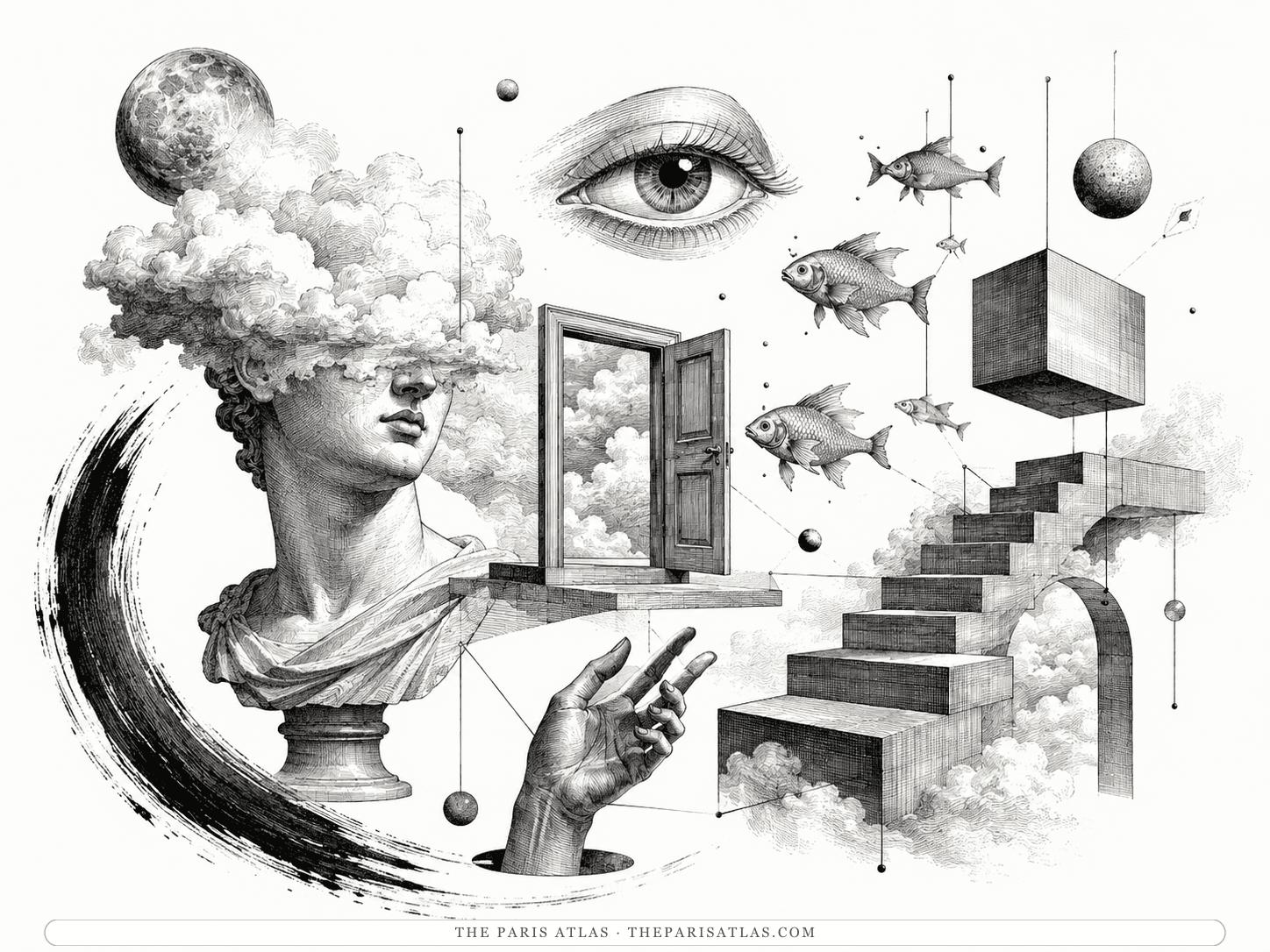
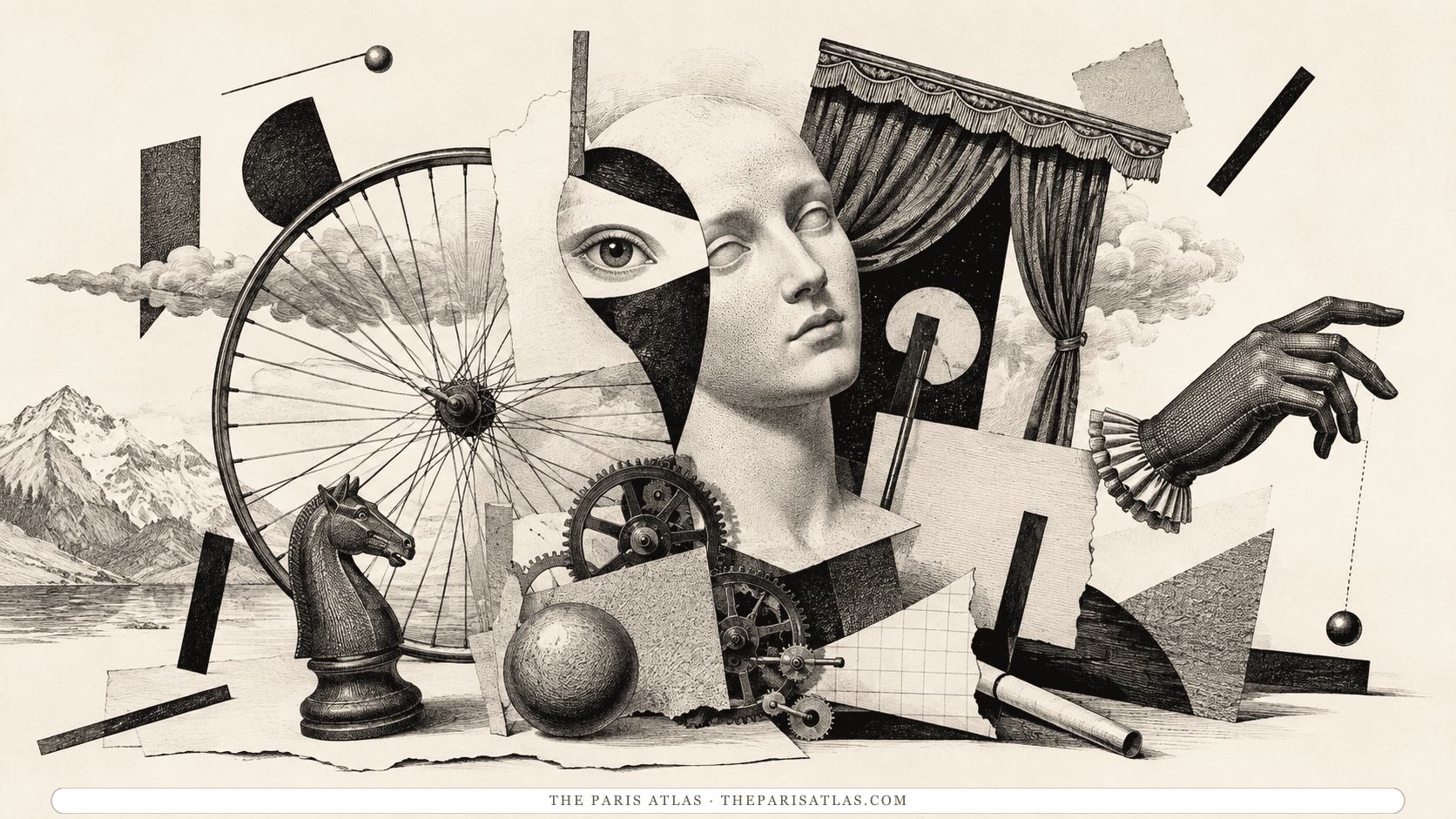
Pen-and-ink dream collage — a classical bust with clouds for eyes, a floating eye, a door opening onto sky, fish swimming through air, and an impossible staircase
Editorial illustrationThe marvelous, inventoried: clouds for eyes, a door onto the sky, fish in the air, stairs to nowhere — the movement's grammar in one plate.

The dream, organized

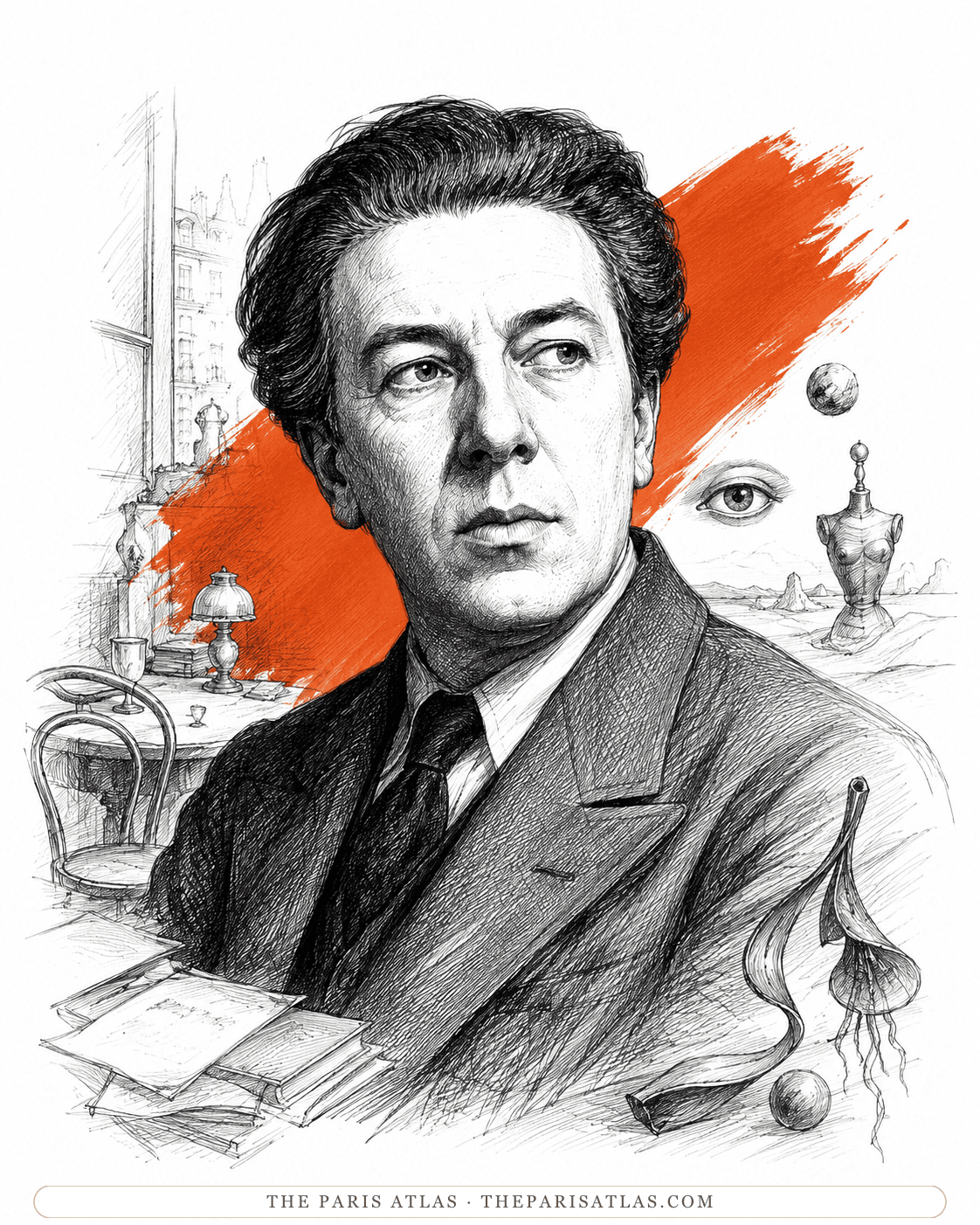
Surrealism began as a word before it was a movement: Guillaume Apollinaire coined 'sur-réalisme' in 1917, in the orbit of the scandalous ballet Parade, to name art that went beyond realism rather than against it. The word outlived him and found its organizer in André Breton, who — with the wreckage of Dada behind him and Freud's consulting room in view — published the Manifesto of Surrealism in 1924: the marvelous is beautiful, dreams are evidence, and 'pure psychic automatism' is a method.

What made Paris Surrealism unlike any avant-garde before it was its machinery: a Bureau of Surrealist Research open to the public, journals, exhibitions, group séances — and a membership Breton ran with doctrinal severity, complete with trials and excommunications. The joke that Breton was 'the pope of Surrealism' was funny because it was administrative fact.

The methods produced the era's most exportable images — automatic writing, the exquisite corpse, dream transcription, objects estranged from their functions — and by the thirties the movement had crossed from the little magazines into painting's front rank: Ernst, Miró, Magritte, Dalí. The war scattered the Surrealists toward New York, where their methods seeded the next avant-garde; the movement formally survived until Breton's death in 1966, but its images had long since escaped anyone's discipline.

Who belonged — and who wouldn't sign

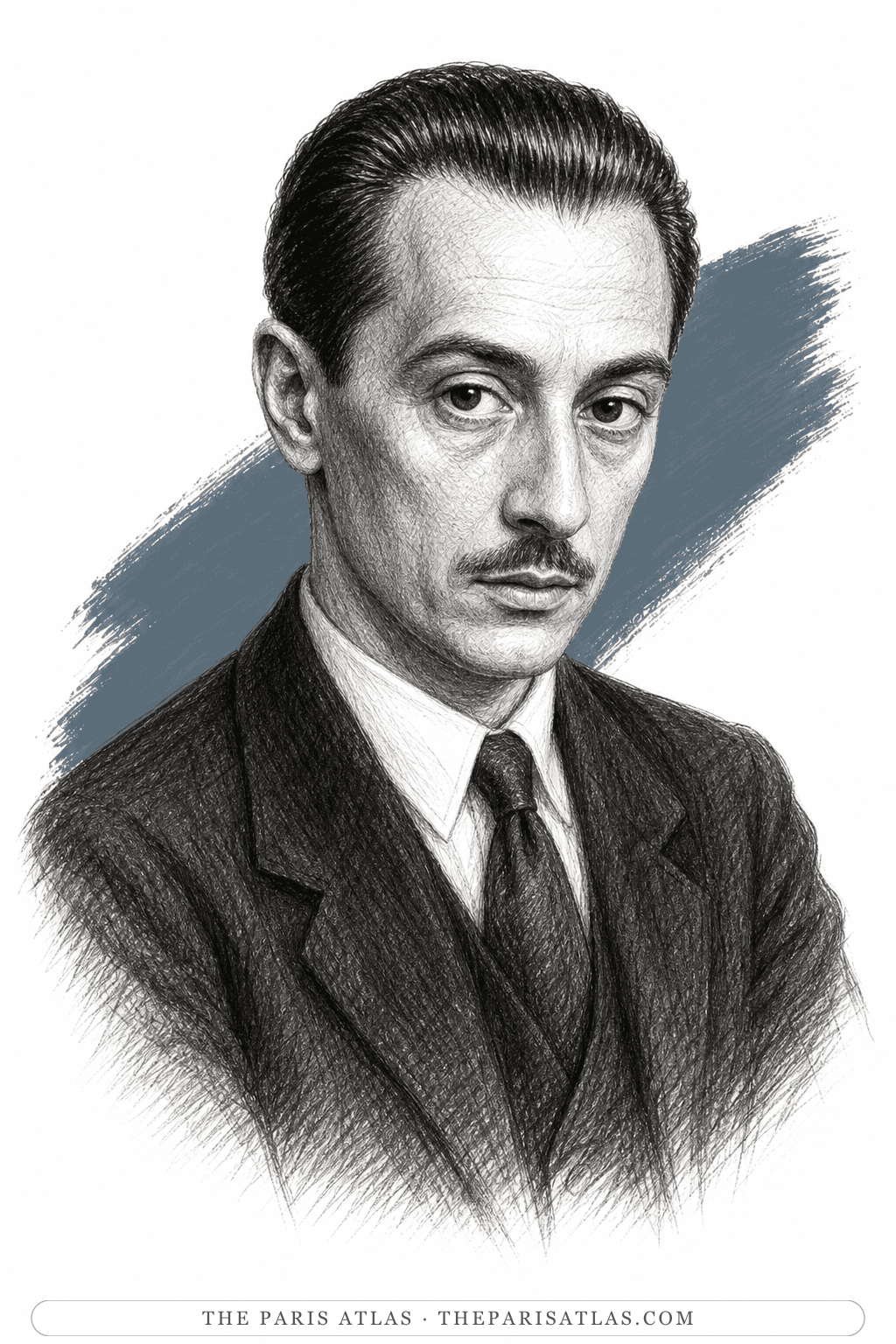
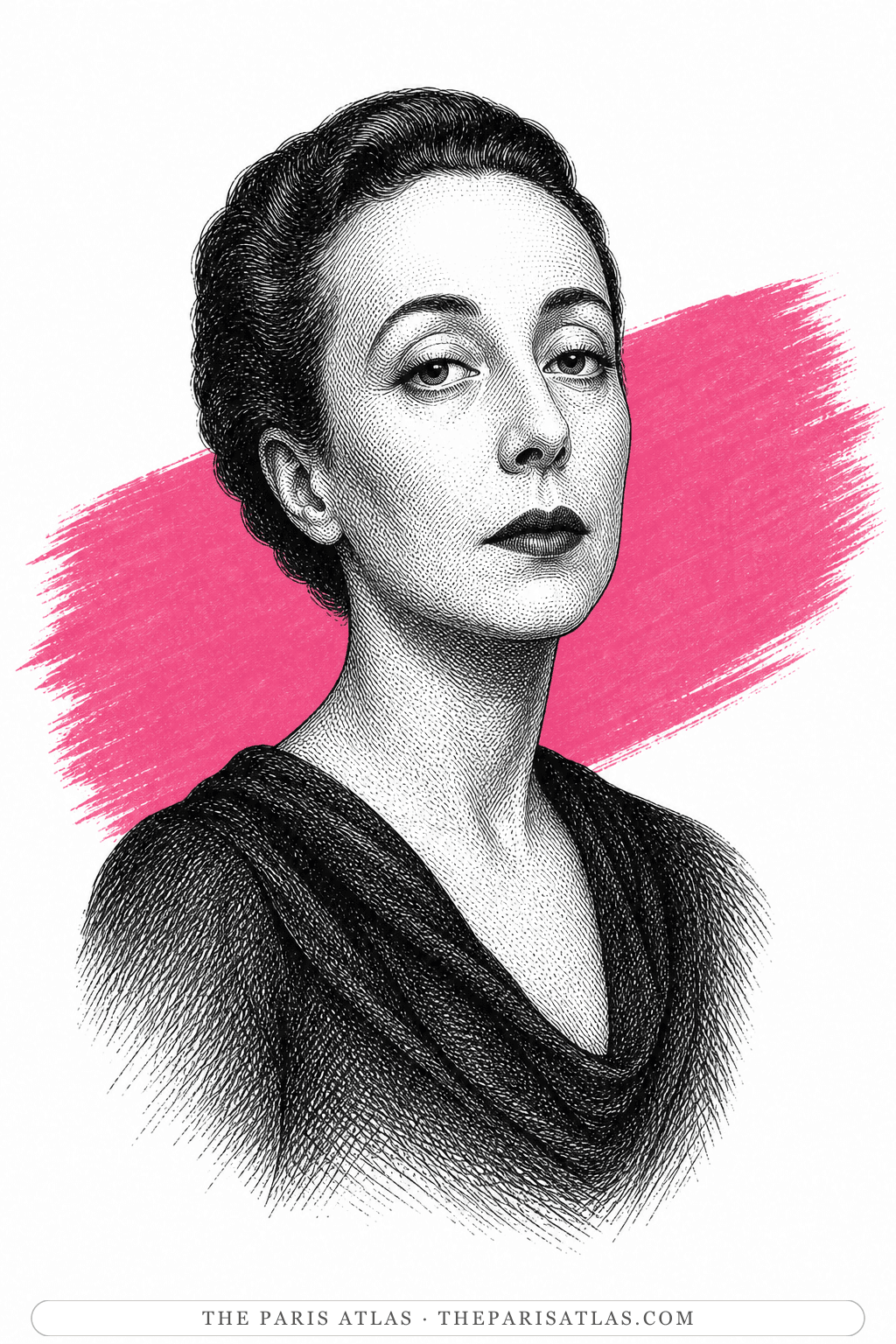
The founding core was literary: Breton, Louis Aragon, Paul Éluard, Philippe Soupault — and Robert Desnos, the movement's natural wonder, who could drop into trance during the 'sleeping fits' and produce poems on demand. Breton crowned Desnos Surrealism's prophet in the first Manifesto, then expelled him in the Second — the standard arc of proximity to the pope — after which Desnos simply kept writing, better than most of the faithful, until the Resistance and Terezín ended the story.

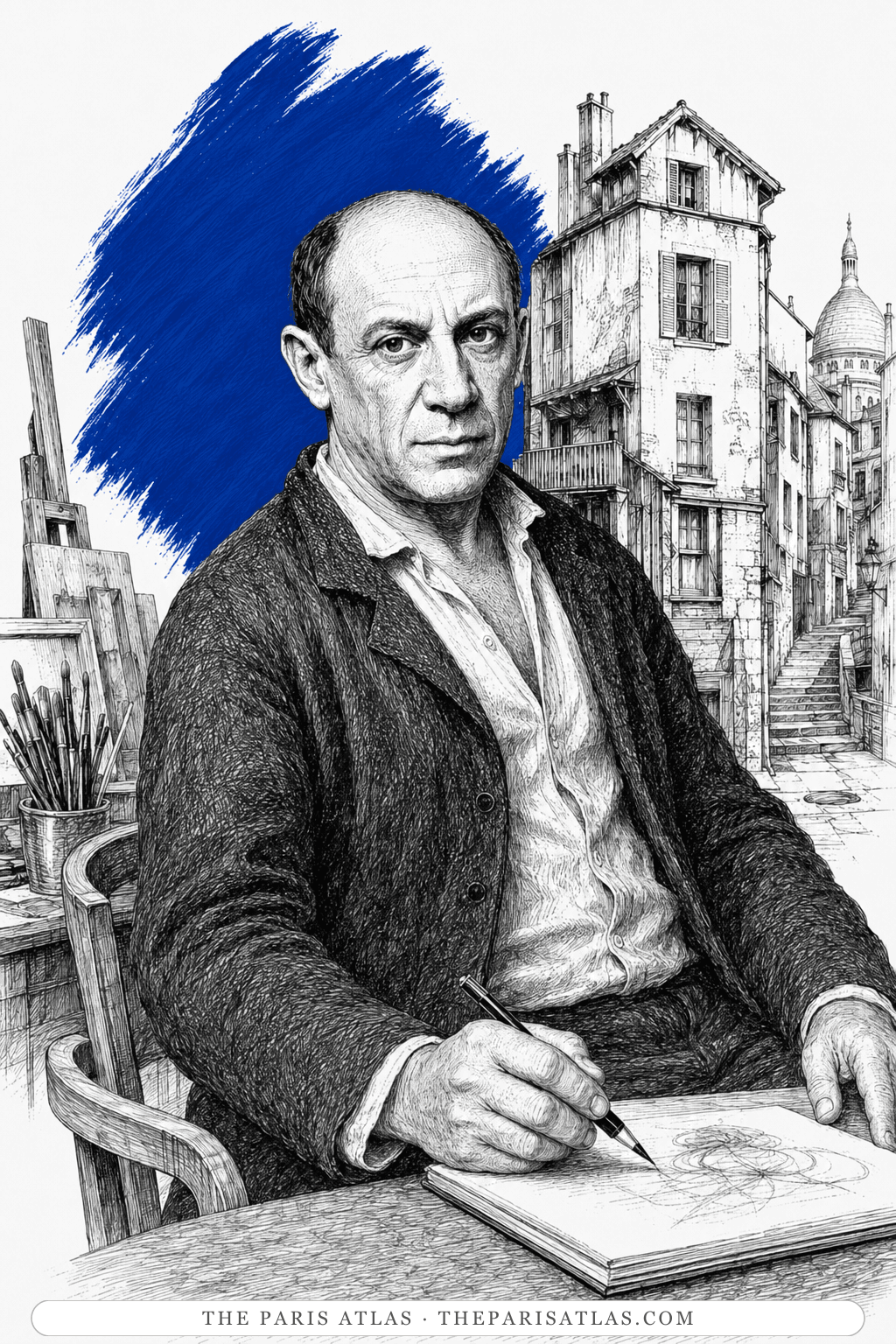
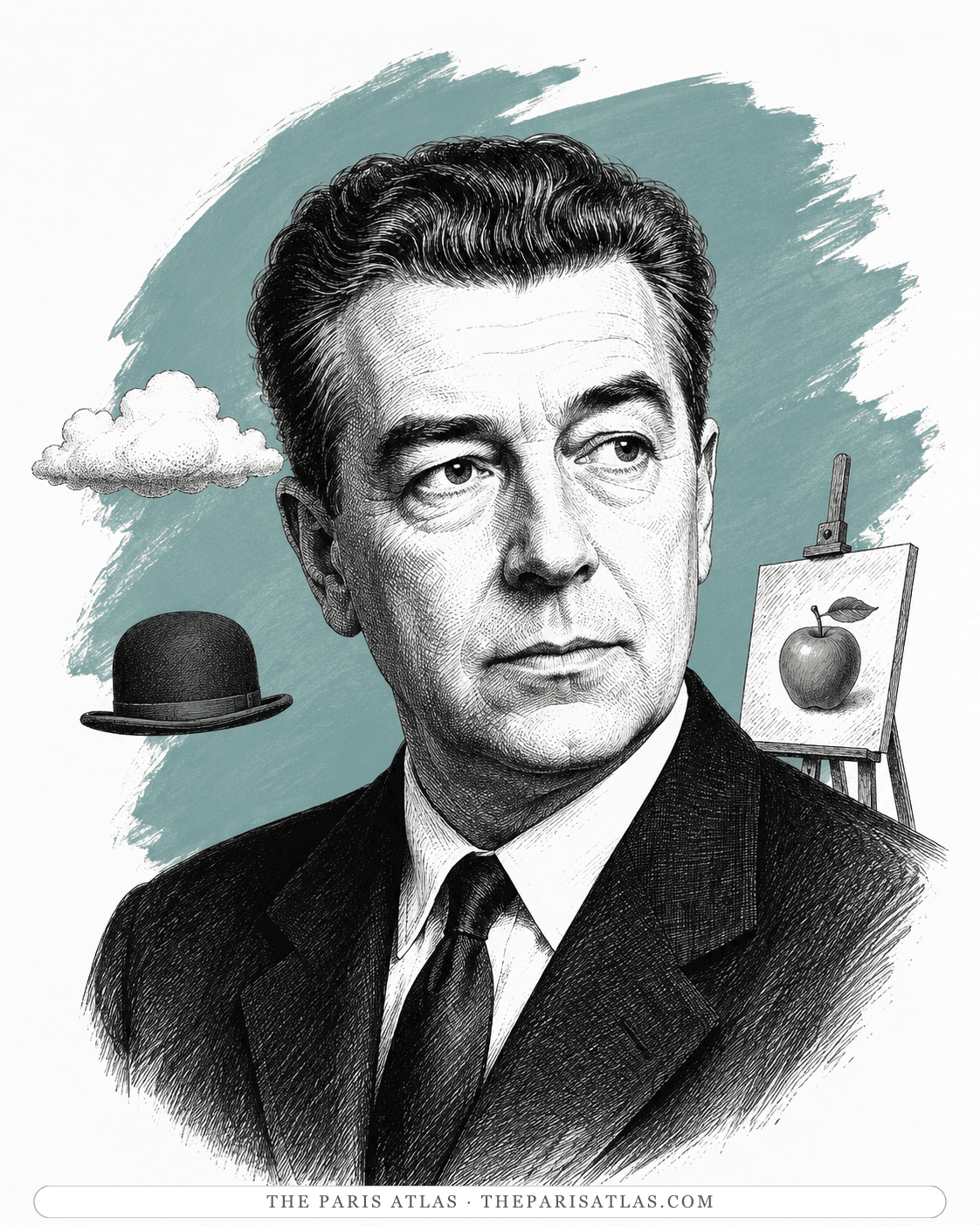
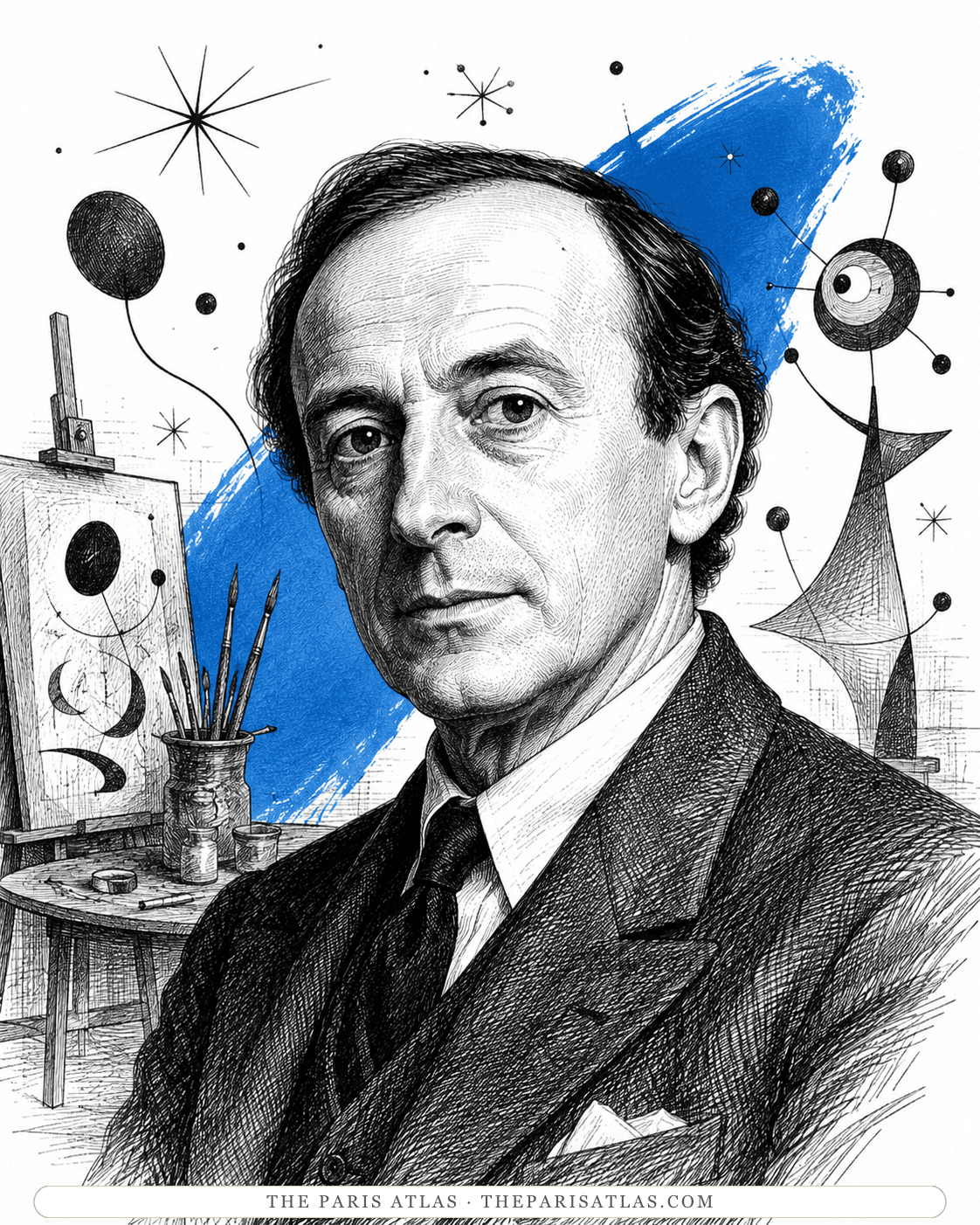
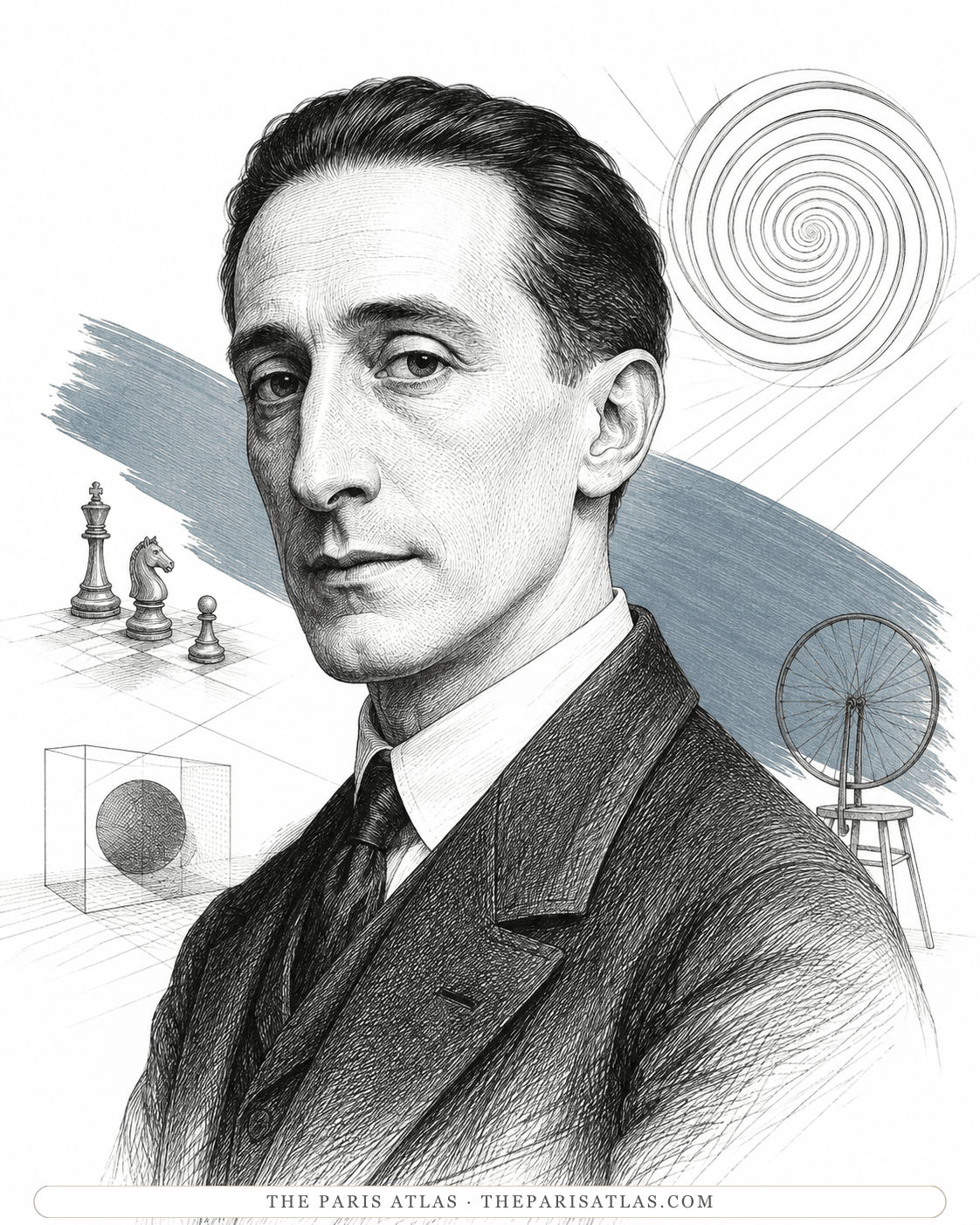
Painters gave the movement its public face — Max Ernst, Joan Miró, René Magritte, Salvador Dalí, with Man Ray photographing the lot — while Picasso occupied the position only he could: exhibited with the Surrealists, claimed loudly by Breton, and never a member of anything but himself. The movement's Paris geography ran from the rue Fontaine studio of Breton to the rue Blomet studios of Miró and Masson — a few hundred meters of the city producing a world's worth of images.

The Surrealist thread through these pages

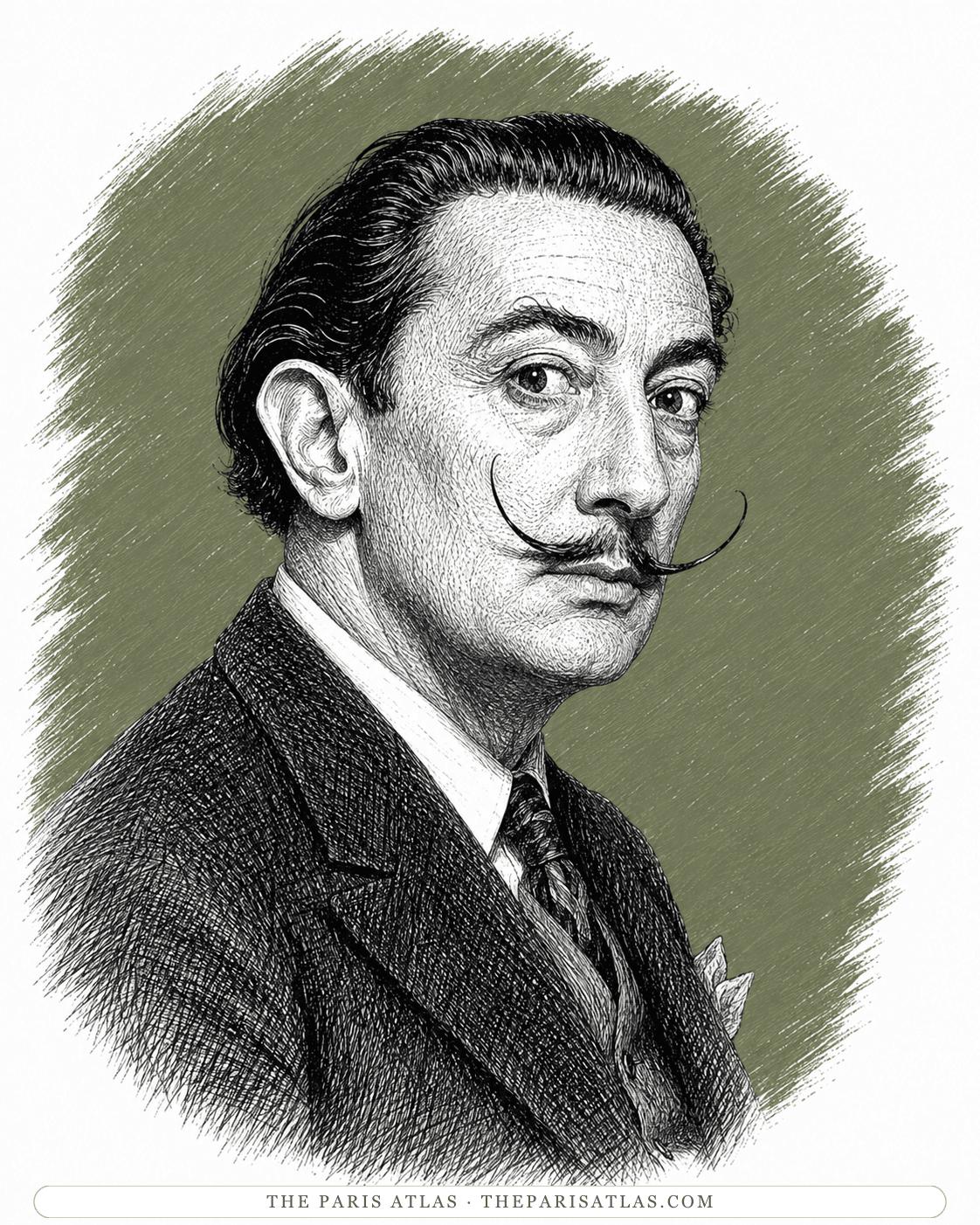
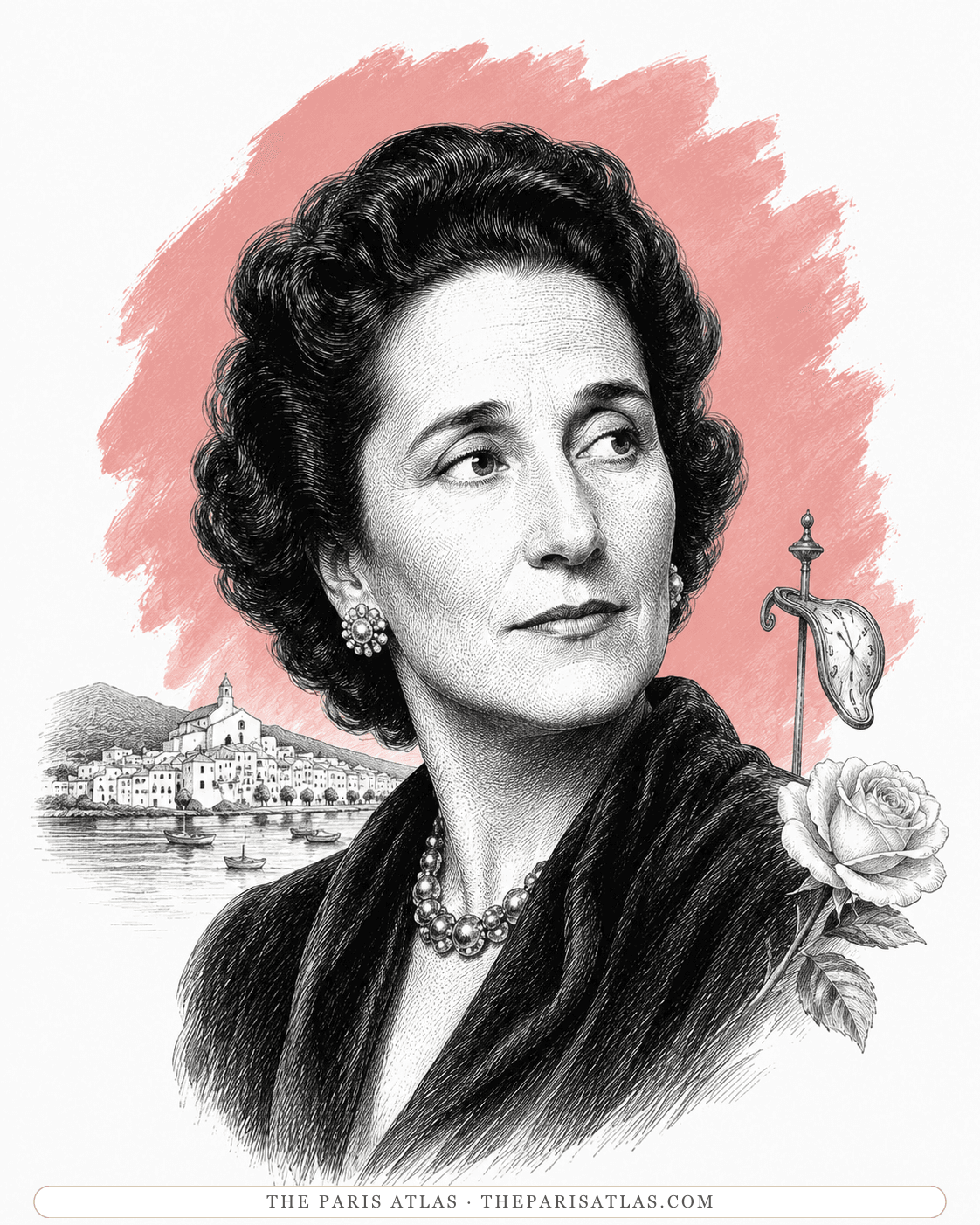
The movement's deepest holdings here belong to Salvador Dalí: his profile anchors a cluster that runs from The Great Masturbator, painted at Cadaqués in the summer of 1929, through The Persistence of Memory, to Un Chien Andalou — the film he wrote with Luis Buñuel in six days, and the work that carried him into the group. Gala Dalí ties that painted wing back to the founding poets: she arrived in the movement's circle as Paul Éluard's wife a decade before she left it as Dalí's manager and wife.

The literary corpus reaches Surrealism from its edges. Robert Desnos connects it to the Céline story — the trance-poet turned anti-fascist journalist who clashed with the novelist over the pamphlets. Anaïs Nin's House of Incest is the shelf's one genuinely Surrealist prose work in English, written at Louveciennes with the movement's methods and none of its membership; Henry Miller's Black Spring flights run on the same fuel. Brassaï photographed for the Surrealist-adjacent journal Minotaure while shooting the nocturnal Paris of our Miller pages; and Antonin Artaud, the movement's most incandescent casualty, burns through the 1931–1934 volume of Nin's Diary.

Even the Lost Generation's cafés brush against it: the same Montparnasse terraces served both congregations, and the riots at modernist premieres that Huddleston reports were often Surrealist productions. Paris in the twenties was not big enough for the movements to avoid each other — which is exactly what makes our graph worth drawing.

In the atlas's catalog

The movement's works cataloged so far, from the holding institutions' records. Reproductions appear only where the rights are verified.

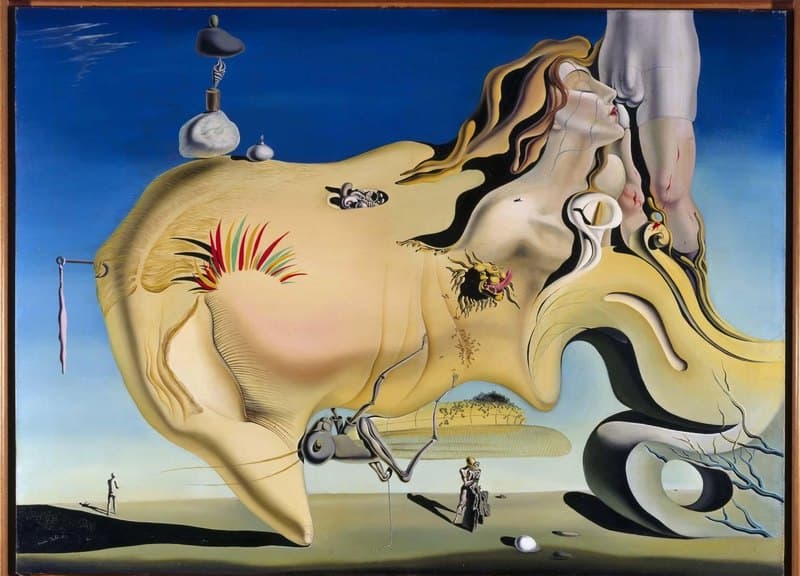
The Great Masturbator: a large soft yellow head lying nose-down against a blue sky, a grasshopper where the mouth should be, and a woman's head rising from the back of it

Artwork reproduction

Painting · Surrealism

The Great Masturbator

Salvador Dalí · 1929 · Oil on canvas

Dalí painted it at Cadaqués at the end of the summer Gala stayed. The Reina Sofía in Madrid has held it since the 1990 bequest.

Salvador Dalí, The Great Masturbator, 1929. Museo Nacional Centro de Arte Reina Sofía. Image © the rights holder, shown under fair use.

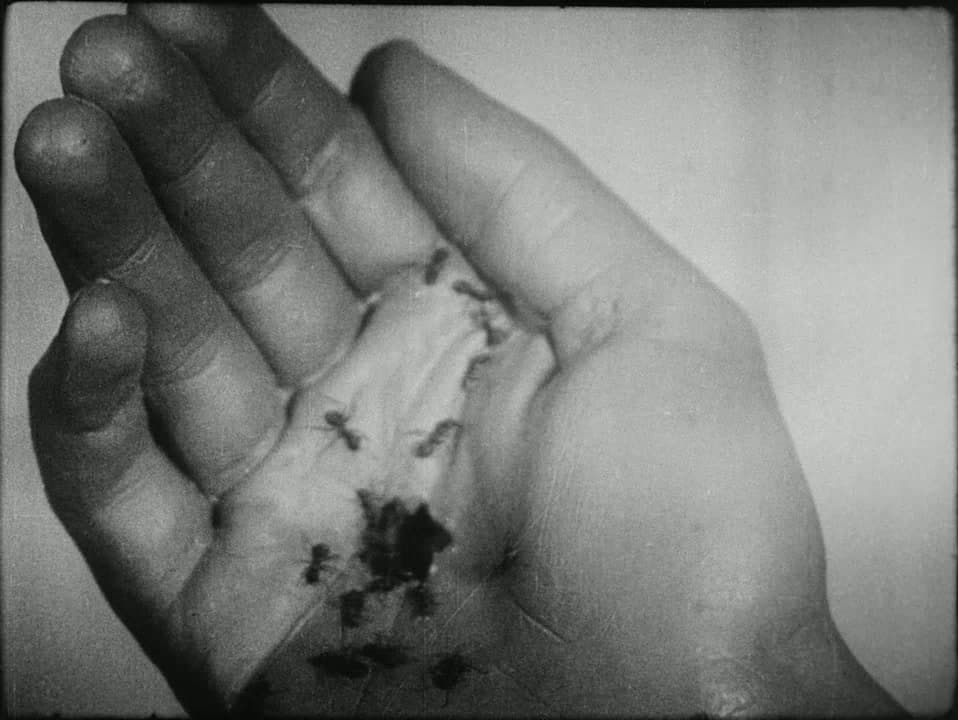
Ants crawl from a dark hole in the center of an open palm, in close-up, from Un Chien Andalou

Artwork reproduction

Film

Un Chien Andalou

Luis Buñuel · 1929 · Surrealist film

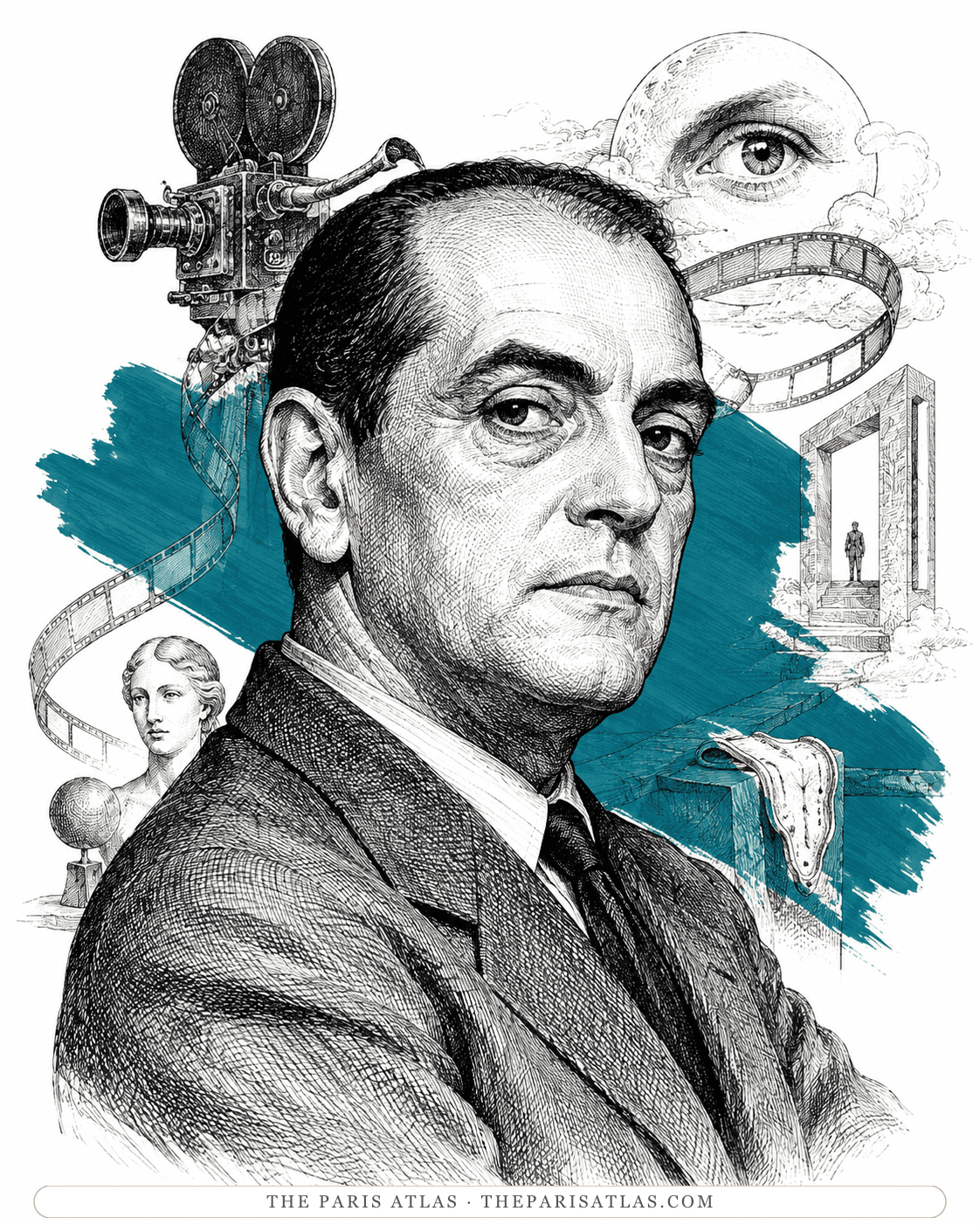
A cloud crosses the moon; a razor crosses an eye — and cinema acquires its most famous seventeen minutes. Written in six days by two young Spaniards trading dreams, on one rule: no image that could be explained. Ants pour from a hole in a palm, a man drags pianos loaded with dead donkeys and live priests, and a Paris premiere its director attended with stones in his pockets ends, to his disgust, in applause.

Luis Buñuel, Salvador Dalí, Un Chien Andalou, 1929. Image: public domain (US).

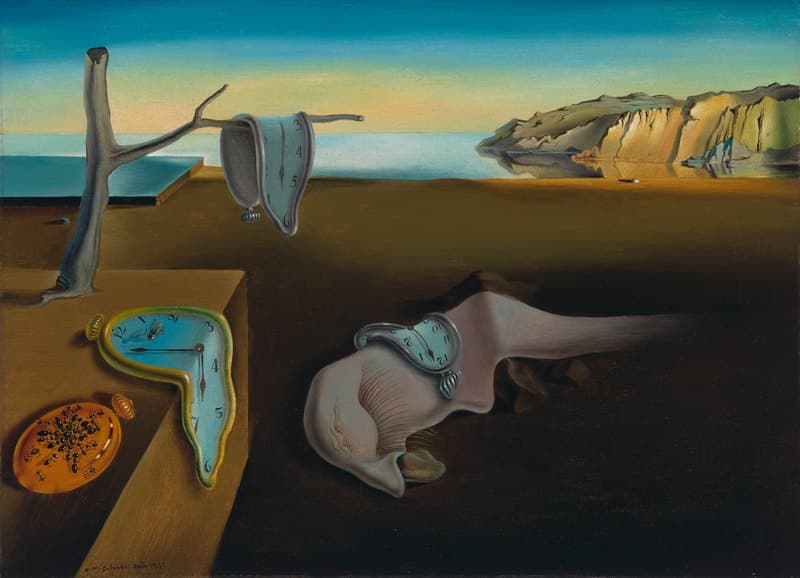
The Persistence of Memory: three limp watches and a closed watch covered in ants, on a bare shore below yellow Catalan cliffs, with a soft profile head lying on the ground

Artwork reproduction

Painting · Surrealism

The Persistence of Memory

Salvador Dalí · 1931 · Oil on canvas

Dalí painted the melting watches in 1931, on a canvas smaller than a sheet of paper. The Museum of Modern Art has had it since 1934.

Salvador Dalí, The Persistence of Memory, 1931. The Museum of Modern Art. Image © the rights holder, shown under fair use.

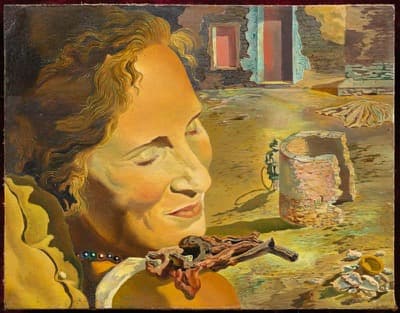
Portrait of Gala with Two Chops Balanced on Her Shoulder: Gala shown in profile before a Portlligat landscape with two lamb chops resting on her shoulder.

Artwork reproduction

Painting · Surrealism

Portrait of Gala with Two Chops Balanced on Her Shoulder

Salvador Dalí · c. 1934 · Oil on wood panel

Dalí compressed Gala, two lamb chops and a sunlit stone courtyard into a panel smaller than a credit card. His later explanation connected the meat with a desire to devour her.

Salvador Dalí, Portrait of Gala with Two Chops Balanced on Her Shoulder, c. 1934. Fundació Gala-Salvador Dalí, Figueres. Image © the rights holder, shown under fair use.

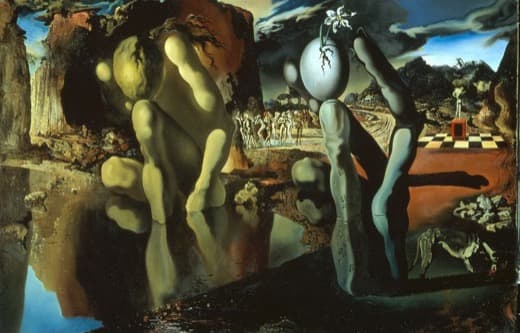
Metamorphosis of Narcissus by Salvador Dalí: a crouching figure beside water mirrored by a stone hand holding an egg and a narcissus flower

Artwork reproduction

Painting · Surrealism

Metamorphosis of Narcissus

Salvador Dalí · 1937 · Oil on canvas

Salvador Dalí turned the crouching Narcissus into a stone hand holding an egg and flower. This guide explains the double image, the Greek myth, the companion poem, and the painting's documented journey from Edward James to Sigmund Freud and Tate.

Salvador Dalí, Metamorphosis of Narcissus, 1937. Tate, London. Image © the rights holder, shown under fair use.

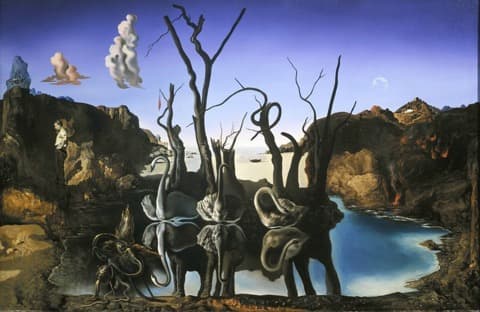
Swans Reflecting Elephants: three swans and bare trees reflected in a lake so that their bodies, necks, and reflections also form three elephants

Artwork reproduction

Painting · Surrealism

Swans Reflecting Elephants

Salvador Dalí · 1937 · Oil on canvas

Salvador Dalí turned three swans and their reflections into three elephants. This guide shows how the double image works and traces the painting from Edward James through Nazi looting to its present private collection.

Salvador Dalí, Swans Reflecting Elephants, 1937. Private collection. Image © the rights holder, shown under fair use.

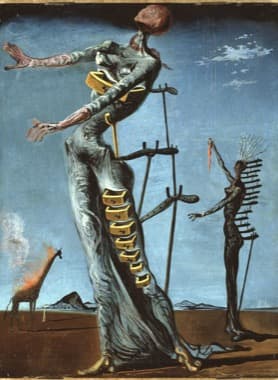
The Burning Giraffe: a tall blue figure with open drawers and red hands supported by crutches, a smaller skeletal figure, and a giraffe burning in the distance

Artwork reproduction

Painting · Surrealism

The Burning Giraffe

Salvador Dalí · c. 1937 · Oil on wood panel

Salvador Dalí's small 1937 painting shows two distorted human figures supported by crutches while a giraffe burns in the distance. This guide separates what is visible from what the surviving records can prove.

Salvador Dalí, The Burning Giraffe, c. 1937. Emanuel Hoffmann Foundation, on permanent loan to the Öffentliche Kunstsammlung Basel. Image © the rights holder, shown under fair use.

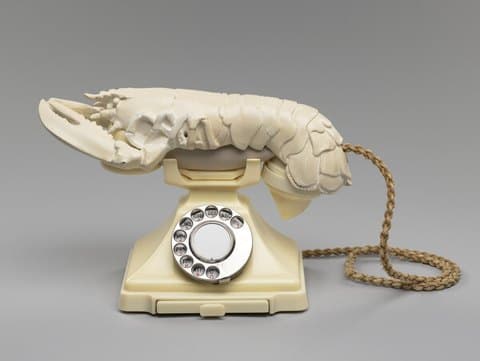
Lobster Telephone: a cream 1930s Bakelite rotary telephone with a white plaster lobster lying along the top where the receiver rests, a braided cord curling away

Artwork reproduction

Sculpture · Surrealism

Lobster Telephone

Salvador Dalí · 1938 · Painted plaster and Bakelite telephone

A working 1930s telephone with a painted plaster lobster fitted over its receiver, designed by Dalí for the patron Edward James and fabricated by Green & Abbott. Eleven lobster receivers turned a Surrealist image into a functional household object.

Salvador Dalí, Edward James, Lobster Telephone, 1938. National Galleries of Scotland. Image © the rights holder, shown under fair use.

Key works

The defining works already in the atlas, each with its own page.

Follow it through the atlas

Timeline

  1. 1917

    Apollinaire coins 'sur-réalisme' in the orbit of Parade — the word arrives before the movement.

  2. 1919

    Breton and Soupault write The Magnetic Fields — automatic writing's first sustained experiment.

  3. 1924

    The Manifesto of Surrealism and the Bureau of Surrealist Research open for business; Desnos reigns over the sleeping fits.

  4. 1929

    The Second Manifesto purges the ranks — Desnos among the excommunicated — while Un Chien Andalou brings Dalí and Buñuel into the fold.

  5. 1930s

    The painters carry it worldwide — Ernst, Miró, Magritte, Dalí — while Minotaure gives it a deluxe journal.

  6. 1938

    The International Surrealist Exhibition in Paris: the movement as immersive spectacle, mannequins and coal sacks included.

  7. 1940s

    War scatters the Surrealists to New York, where the methods seed Abstract Expressionism's generation.

  8. 1966

    Breton dies; the church closes, the images long since everywhere.

Surrealism: frequently asked questions

What is Surrealism?

A Paris art and literary movement, launched by André Breton's Manifesto of Surrealism in 1924, built on the conviction that dreams are evidence, the marvelous is beautiful, and "pure psychic automatism" is a working method. It produced automatic writing, the exquisite corpse, dream transcription, and objects estranged from their functions.

Who founded Surrealism?

André Breton organized and led it, running the movement with such doctrinal severity that the joke about him being "the pope of Surrealism" was administrative fact. The word itself came earlier: Guillaume Apollinaire coined "sur-réalisme" in 1917, around the ballet Parade, to name art that went beyond realism rather than against it.

When did Surrealism start and end?

It began with the 1924 Manifesto and formally survived until Breton's death in 1966 — though its images had long since escaped anyone's discipline. The war of the 1940s scattered the Surrealists to New York, where their methods seeded the next avant-garde.

What techniques did the Surrealists use?

Automatic writing, the collaborative drawing game called the exquisite corpse, group séances and "sleeping fits" that produced poems in trance, and dream transcription — all methods for bypassing conscious control. In painting the aim was the same: everyday objects estranged from their ordinary use.

Who were the main Surrealist artists and writers?

The founding core was literary — Breton, Louis Aragon, Paul Éluard, Philippe Soupault, and the trance-poet Robert Desnos. The painters gave it its public face: Max Ernst, Joan Miró, René Magritte, and Salvador Dalí, with Man Ray photographing them. Picasso exhibited with them but was never a member of anything but himself.

Sources

  • Tate — Surrealism (art term)
  • MoMA — Surrealism (collection term)
  • Encyclopaedia Britannica — Surrealism