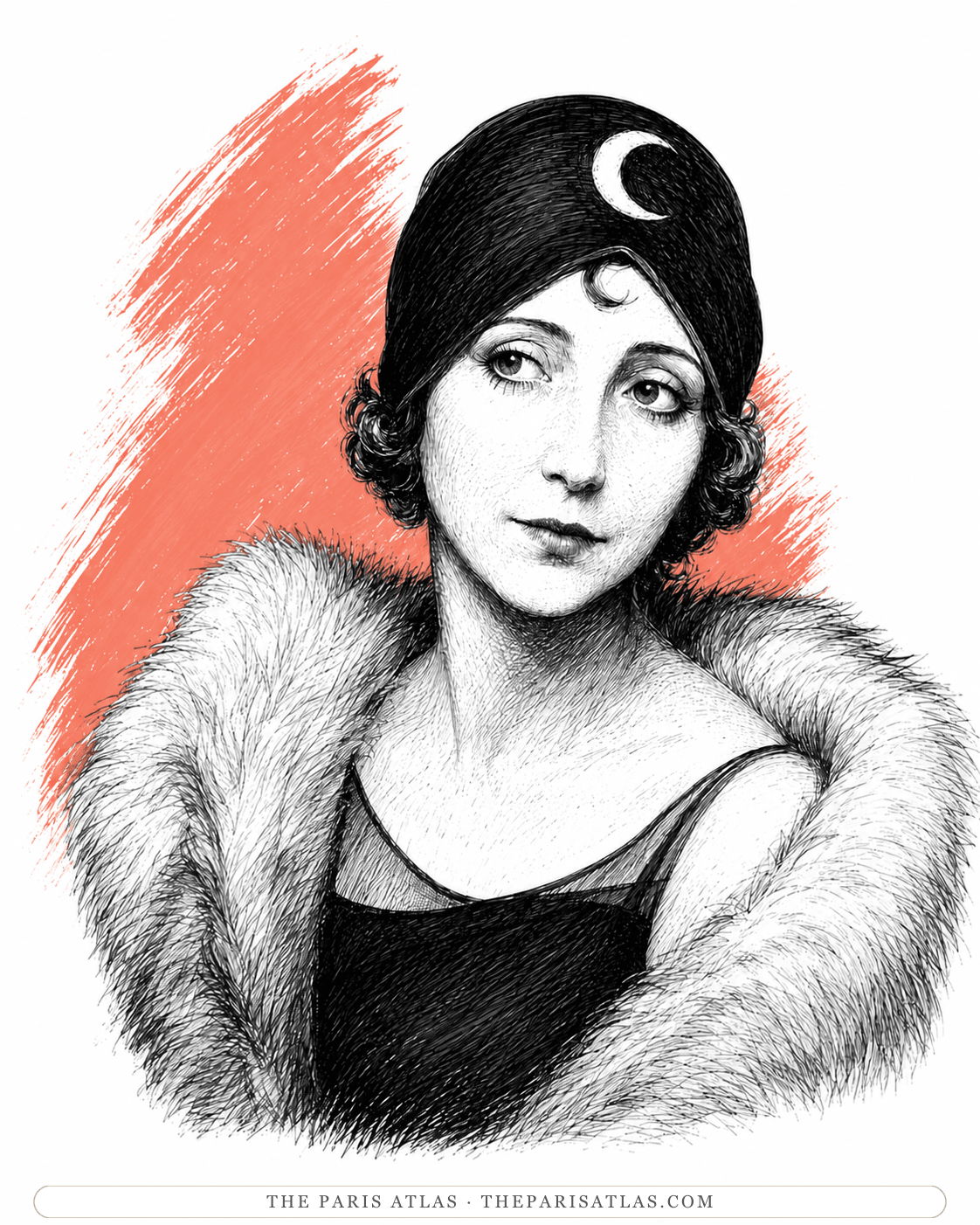


House of Incest
by Anaïs Nin
Her first fiction: a surrealist prose poem of mirrors, sisters, and drowned rooms, printed on the Villa Seurat's own press in 1936.
- 1936
About Anaïs Nin
The story, briefly
Spoiler-freeNot a novel but a fever: seven movements of dream-prose in which the narrator moves through a house of mirrors with the women who are and are not herself, seeking a way out of self-enclosed love into the world. Nin called the writing of it her 'season in hell'; it remains the purest distillate of her art. (A prose poem — nothing here to spoil.)
The story, in more detail
The book was built from the diary's dream-sediment: nightmares and analytic material of the early thirties, worked and reworked at Louveciennes while Miller, next door in every sense, hammered at Black Spring. Its title scandal is deliberate but interior — the 'incest' is figurative, the self loving its own reflections — and its lineage runs to Rimbaud, whose Season in Hell Nin kept close while writing.
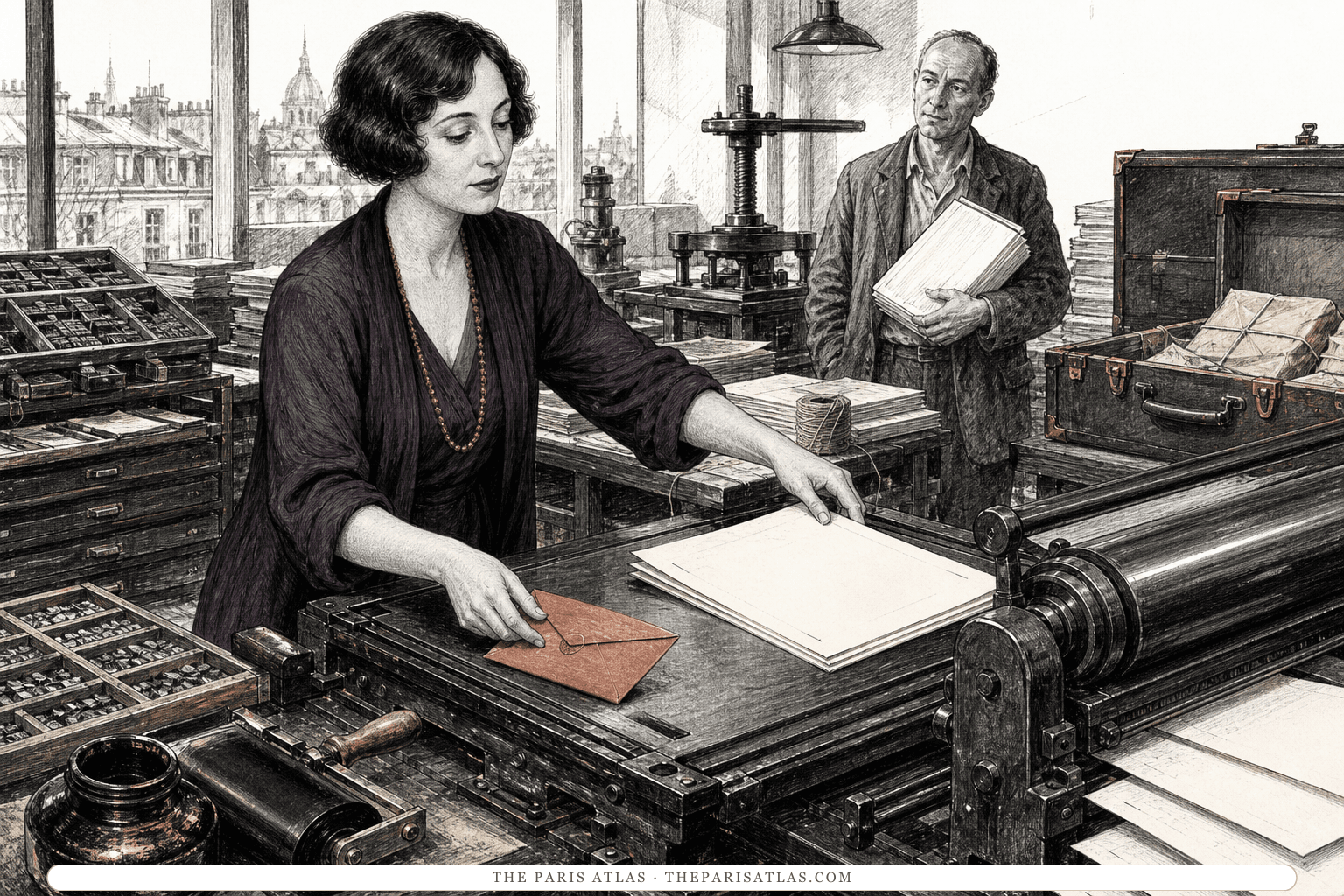
It appeared in 1936 from Siana Editions — 'Anaïs' backwards — the small Villa Seurat imprint run with Miller and friends, in an edition of a few hundred copies. The commercial world had no shelf for it; the faithful did, and its reputation has compounded quietly ever since: the source-book of Nin's imagery, the bridge between the diary and the continuous novel, and one of the era's few genuinely surrealist works in English prose.
What's inside
Seven connected movements of dream-prose. The narrator is born from water and memory; encounters Sabina, the fiery double, and the sister-figure Jeanne, searching the house for her lost brother; and wanders the House of Incest itself — rooms of mirrors where love cannot escape its own reflection. The imagery repeats and transforms — water, glass, paralysis, the dance — until the final figure appears: the dancer who lost her arms and learned to dance without them, the book's single, hard-won gesture toward release.
It asks to be read the way its images move — aloud, slowly, without demanding a plot. At seventy-odd pages it is an afternoon's reading and a long residence afterward; most of Nin's later fiction unpacks material first compressed here.
Themes and analysis
The self inside the house of mirrors
The fractured mirrors also suggest a problem of narration. In passages quoted by Chanda Lynn Evans, the narrator describes conflicting reflections and imagines that telling the whole truth would require writing four pages at once, moving backwards to recover what ordinary sequence leaves behind. A single line of explanation cannot accommodate those simultaneous experiences. The prose's returns and competing images can therefore be read as attempts to give that difficulty a form. The reader encounters a self through overlapping impressions, rather than receiving one account that settles what every reflection means.
Dancing with what remains
The dancer's movement is not confined to the loss pictured here. As Chanda Lynn Evans notes, her arms return, and the closing gesture opens her hands rather than tightening their grasp. That change matters alongside the inhabitants' fear of leaving the house: an opening can be available without feeling safe to enter. The dance offers another way to respond to passing experience, through movement and release rather than possession. Read this way, the ending's turn toward daylight is an enacted possibility, not simply an explanation that makes the preceding fears disappear.
Documented connections

Discussed in
The Diary of Anaïs Nin, 1931–1934
The diary records Nin shaping her experience of June Miller into the prose poem that became House of Incest.

Discussed in
The Diary of Anaïs Nin, 1934–1939
Nin identifies the memory of Helba Huara's dance as material she had already transformed into House of Incest.
Why we recommend it
The distillate
Everything in Nin — the mirrors, the water, the doubles — first appears here at maximum compression.
Genuine English surrealism
The movement's methods, rare in English prose, practiced without apology or dilution.
The armless dancer
The closing image is one of the era's indelible pages — release imagined as dancing without what you lost.
What this book explores
From the Journal
Henry Miller and Anaïs Nin
Nin paid for Tropic of Cancer with six hundred dollars borrowed from her psychoanalyst, then wrote its preface. The affair is the part everyone knows. The money is the part that got the book printed.
Timeline
early 1930s
Nin works and reworks the diary's dream-material at Louveciennes, Rimbaud close at hand — the writing she called her 'season in hell.'
1936
Siana Editions — 'Anaïs' backwards, the small Villa Seurat imprint run with Miller and friends — publishes it in a few hundred copies, her first work of fiction.
2020
Swallow Press publishes a new edition with an introduction by Allison Pease.
Book editions
Hardcover
- Hardcover
- Siana Editions
- 1936
Paperback
- Paperback
- Swallow Press
Reader reviews
Readers may also like
The Diary of Anaïs Nin, 1931–1934
The quarry: these dreams surface first in the diary's entries.
Read our take
Tender Buttons
The shelf's other language experiment — Stein dismantling the object, Nin dissolving the self.
Read our take
Black Spring
Written next door in the same years — Miller's surrealist flights, from the same house of material.
Read our takeHouse of Incest: frequently asked questions
Who wrote House of Incest?
Anaïs Nin. Published in 1936, it was her first work of fiction.
What is House of Incest?
Not a novel but seven movements of dream-prose, in which the narrator moves through a house of mirrors with the women who are and are not herself, seeking a way out of self-enclosed love into the world.
What kind of book is it?
A prose poem — the purest distillate of Nin's Surrealist-influenced style, with no conventional plot.
How was it written?
Built from the dream-material of her diary in the early 1930s and reworked at Louveciennes. Nin called writing it her "season in hell."
Is it connected to her other work?
Yes. Its figure Sabina reappears as the central character of her later novel A Spy in the House of Love.
If you like Anaïs Nin
Explore authors with a similar voice, perspective, and influence.

Henry Miller
The entangled careers of the Villa Seurat: she financed and prefaced his scandal, he detonated her prose — and each wrote the other into the century's record.
View author
Louis-Ferdinand Céline
The doctor of the Paris slums who wrote the century's blackest, funniest novel — and changed the sound of French prose.
View author
Martha Gellhorn
War correspondent who covered the Spanish Civil War, D-Day, and conflicts across five more decades; Hemingway's third wife, 1940–1945.
View author
References
References
The sources below include the primary text, editions, scholarship, archival materials, and other records that informed this page. They document House of Incest, its publication, and its place in literary history.


1House of Incest
NovelAnaïs Nin, 1936Used forThe primary text represented by this page, used for descriptions of the work’s contents and for any quoted passages shown here.
2Empowerment through Writing and the Search for "Self" out of Violence: Virginia Woolf and Anaïs Nin — MPhil thesis
WebsiteUniversity of Glasgow, 2002Used forThesis printed pp. 131–135 visually checked, including quotations and footnotes. First paragraph analyzes quoted primary passages; the returning-arms account is explicitly attributed to Evans. No full primary-volume reading or therapeutic claim.

3Henry Miller: A Chronology and Bibliography
ArchiveBern Porter, 1945Used forArchival evidence used to document the historical record connected to House of Incest.
4Anaïs Nin: A Biography
BiographyG. P. Putnam's Sons, 1995Used forUsed for the book’s composition, Villa Seurat publication, and its relationship to Nin’s diaries.
5Anaïs: The Erotic Life of Anaïs Nin
BiographyLittle, Brown, 1993Used forUsed as an independent biographical account of Nin’s early fiction and the circle around its publication.
6Anaïs Nin Papers — diary, March–September 1938
ArchiveUCLA Library Special CollectionsUsed forThe archival finding aid supplies primary documentary context for Nin’s diaries and manuscripts from the period.
7house of incest — edition and reception record
WebsiteOhio University PressUsed forDocuments the dated edition or contemporary reception included in the timeline.
i
Why these sources are here
The primary text is the baseline reference for every book page. Additional references document publication history, interpretation, and historical context where that evidence is available.
 Explore more resources