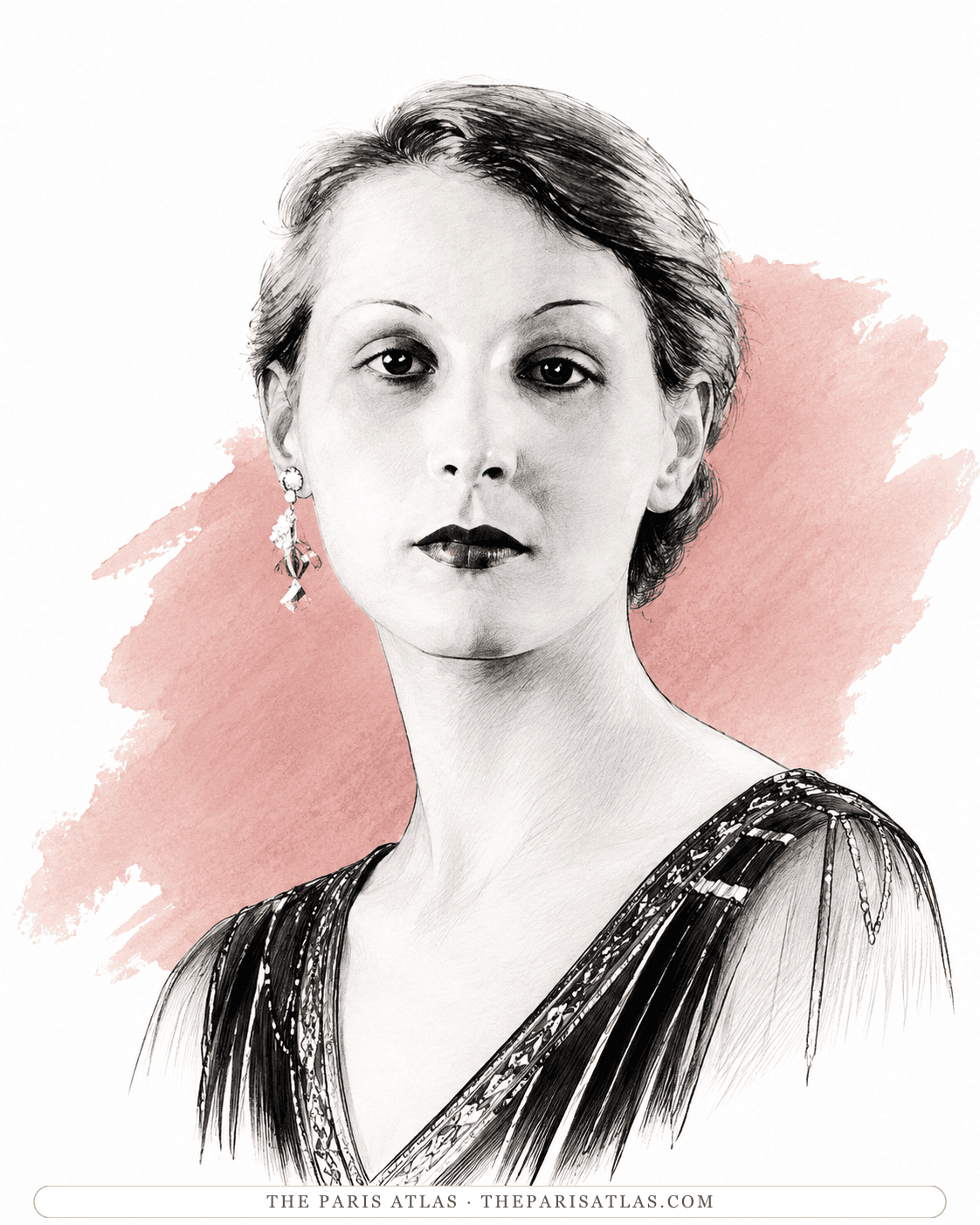
Henry Miller and Anaïs Nin
The story usually arrives as a love triangle. The decade's more consequential fact is that Anaïs Nin found the money that printed Henry Miller's first novel, wrote its preface, and paid the rent on the room where he worked.
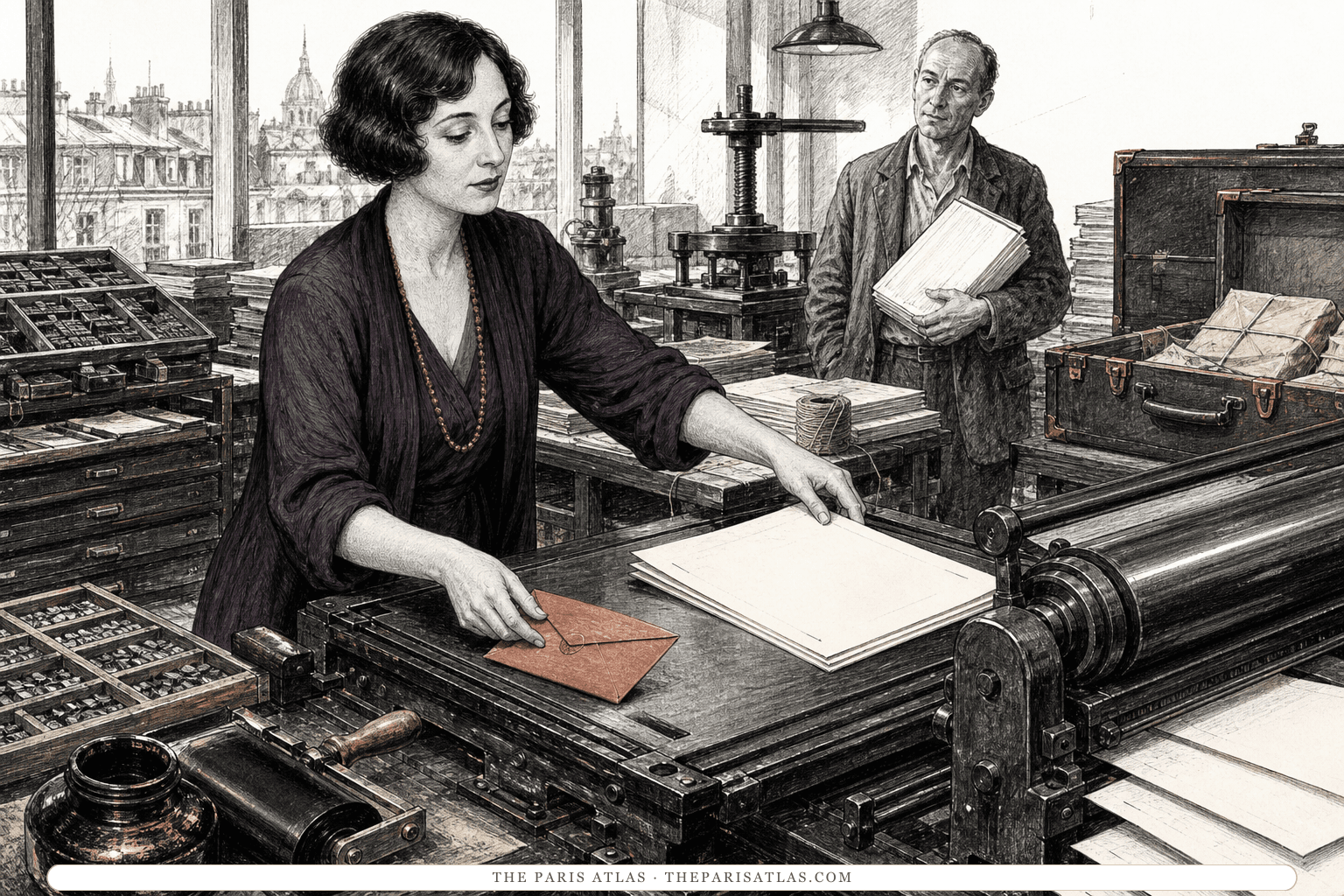
Henry Miller came to Paris with no money, no publisher, and a novel no respectable English-language house would touch. Anaïs Nin had a husband who worked in a bank, a psychoanalyst willing to lend her money, and a conviction that the novel had to exist. Between the manuscript and a printing press stood about six hundred dollars, and Nin was the one who went and got it.[1][2]
Tropic of Cancer was published in Paris in September 1934 by Jack Kahane's Obelisk Press, in an edition of a thousand copies, with a preface by Nin at the front of it. Miller wrote every sentence of the book. Nin is the reason it was set in type.[3][1]
That is not the version most people know. The relationship usually reaches readers through Henry & June, the 1986 volume drawn from Nin's unexpurgated journals, or through the film Philip Kaufman made from it in 1990. Both are about three people — Nin, Miller, and Miller's wife June — behaving badly in a beautiful city, and it is a good story. Literary history has always found a triangle easier to cast than a printing bill.[1]
For most of the decade the printing bill mattered more. Nin was Miller's reader, his advocate, and his patron. She found the money for his book and wrote its preface. She paid the rent on his studio at 18 Villa Seurat. She fed him, introduced him, and covered the conditions under which a man with no income could go on working like a writer. Then, when publishers showed no comparable enthusiasm for her own books, she started a press and printed them herself.[1][2]
Louveciennes, winter 1931
They met in December 1931 at 2 bis rue de Montbuisson in Louveciennes, fifteen kilometres west of Paris, where Nin lived with her husband, the banker Hugh Parker Guiler. The introduction came through Richard Osborn, who worked at Guiler's bank and was also the lawyer Nin had consulted about the contract for her book on D. H. Lawrence. Osborn brought Miller out for lunch, and Miller came for the lunch.[1][2]
Nin was twenty-eight and about to publish her first book. Miller was thirty-nine, turned forty that month, and had been writing for years without a published novel or anything resembling a career. He arrived with a manuscript and an appetite. Nin had a dining table.[1][3]
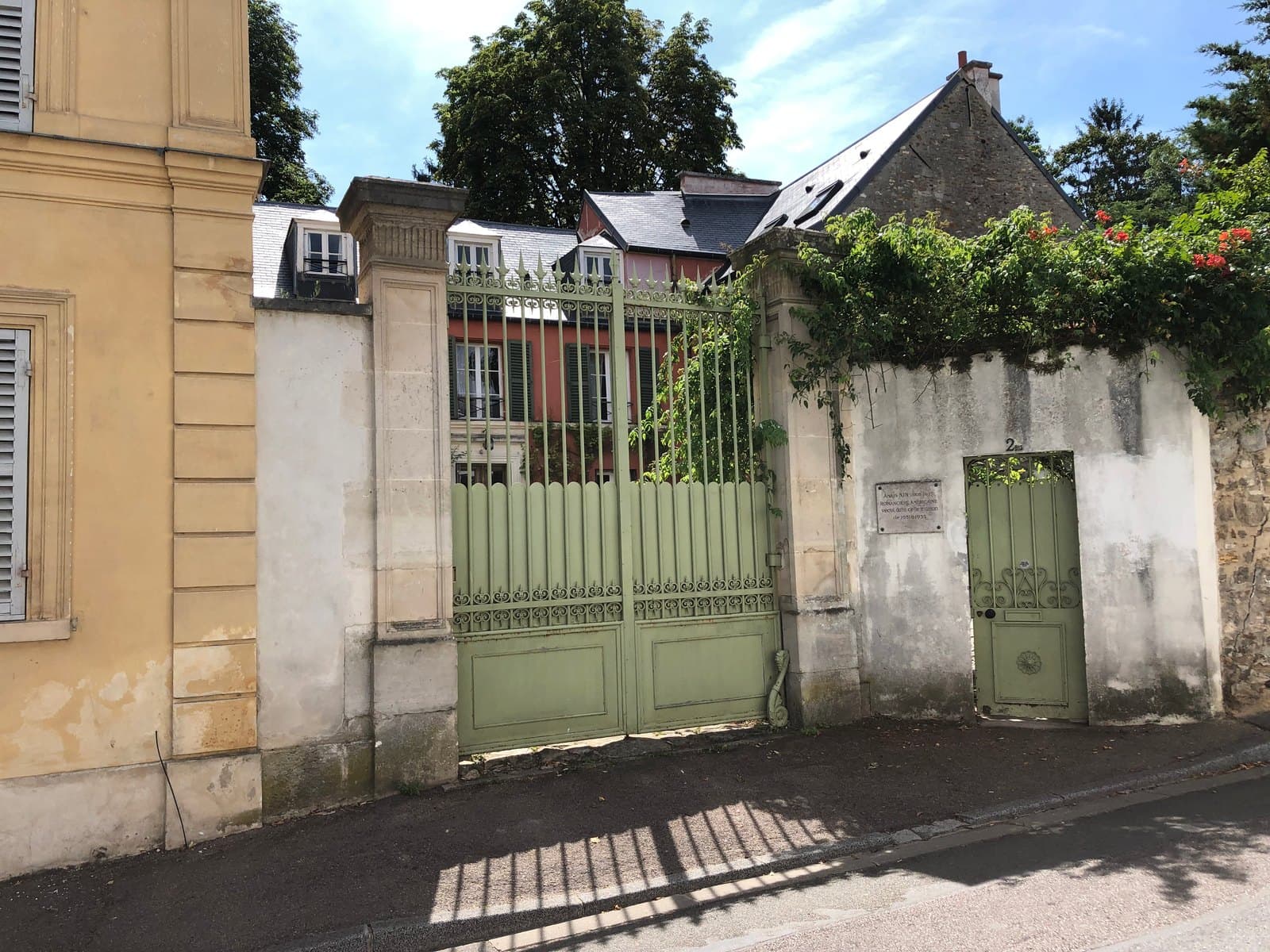
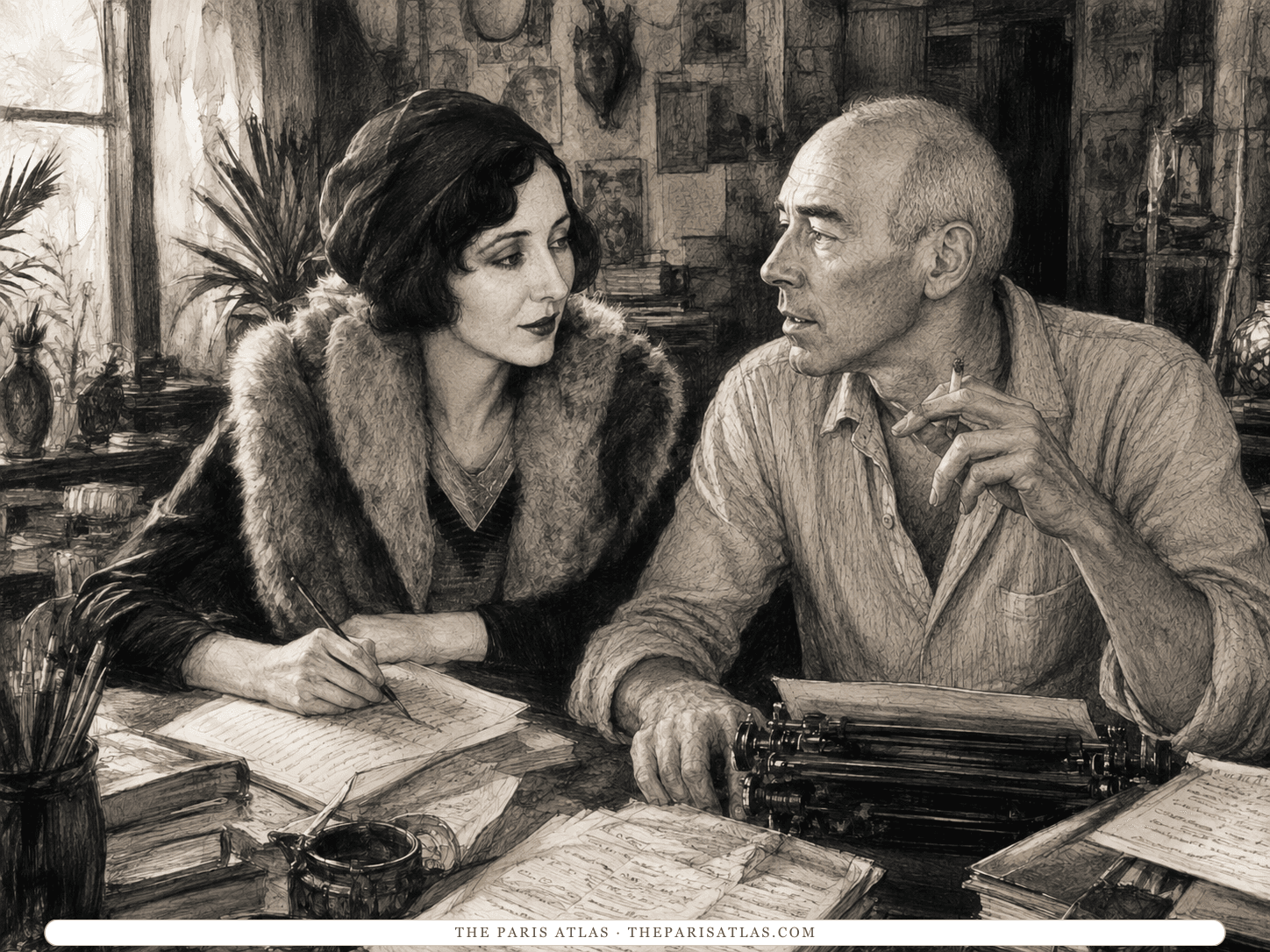
The house became one of the fixed points of Miller's Paris. He came out from the city to eat, argue, read, and leave manuscripts in Nin's hands, and the first pages of the published diary open on it. She became the serious reader he did not have and, before long, the money he could not earn. Those two things get collapsed into romance, as though affection naturally produces editorial labour, meals, loans and rent. It does not, and someone still has to find the money.[4]
The house is private and stays private. A plaque beside the pedestrian door records that Nin lived there. You can see the wall, the gates, and the spot where the story starts, and then the street takes over again.
June, and the story people remember
June Miller came over from New York and stayed a few months, and she entered Nin's diary almost immediately. The attraction recorded there was at least the equal of the attraction to Henry. She was hard to pin down even standing in the room: she changed stories, names, and versions of herself, and she left very little writing of her own. Henry and Anaïs became the people who preserved her, which also made them the people who controlled the preservation.[4][1]
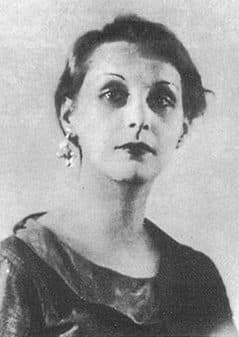
The entries about June and Henry were cut from the diary volumes published in Nin's lifetime. They appeared after her death, in Henry & June in 1986, and Kaufman's film four years later gave the relationship the shape it still has in most people's heads.[1]
The film is not the diary, and the diary is not the notebook. Between what happened and what reaches a viewer sit decades of revision, omission and adaptation, and every layer had an editor.
The six hundred dollars
By 1934 Miller had a finished novel and nowhere to publish it. Tropic of Cancer was explicit, profane, and legally impossible in Britain and America. Kahane's Obelisk Press in Paris specialised in exactly the English-language books that respectable London and New York houses preferred to pretend had never been written, and Kahane wanted it. The problem was money. Printing takes paper, typesetting and labour, and printers want cash rather than conviction. Miller had conviction.[3]
Nin went to Otto Rank. Rank had been one of Sigmund Freud's closest associates and was among the best-known analysts of his generation. Nin had been his patient and would shortly become his assistant. She got roughly six hundred dollars out of him and put it into Miller's book.[1][2]
Six hundred dollars in 1934 is roughly fifteen thousand in today's money. Set against an ordinary income it reads larger still. The median American family lived on about $1,160 a year in the mid-1930s, so the loan came to something over six months of a household's entire earnings, spent on printing one novel by a writer nobody had published.
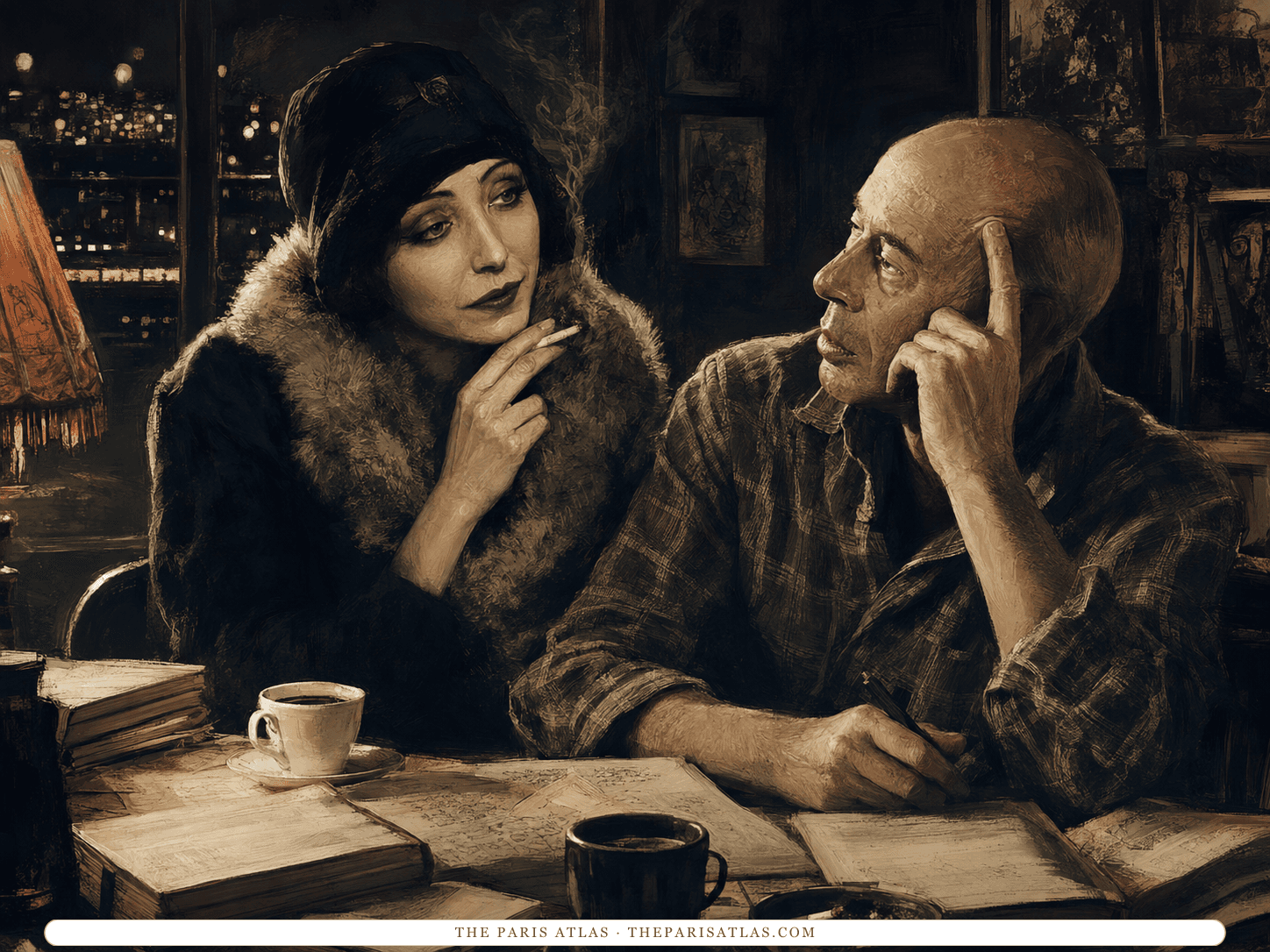
The route was strange even by the standards of Paris publishing: from an analyst to his patient, from the patient to a banned novelist, from the novelist to a publisher whose stock was liable to be seized at the border. The book went to press. Nin's name went on the preface, introducing a writer almost nobody had read and defending a novel readers were officially warned not to own. The front wrapper of the first edition carried that warning in plain type — not to be imported into Great Britain or the U.S.A. — which is one dependable way to make a book irresistible. Copies crossed borders in luggage and coat pockets, and customs officers took the ones that did not.[3]
Whose book is it? Miller's, entirely. The style, the obscenity, the comedy and the damage are all his. But writing a book and publishing one are different acts, and the second happened because a woman with access to a banker's money decided it should, then argued the case in the book's own opening pages.
The husband missing from the diary
The six hundred dollars came from Otto Rank. Everything around it came from Hugh Guiler. His salary kept the Louveciennes house, and the house is what made the rest possible: the table, the meals, the guest who could turn up hungry and leave with encouragement or cash.[1]
Guiler is barely in the diary volumes published in Nin's lifetime. Readers met a woman moving among lovers, artists, apartments and emergencies with almost none of the financial machinery that kept the movement possible anywhere in view. The husband vanished from the page while his income went on paying the bills outside it.[4][1]
That Nin paid for Miller is true. That she earned the money she paid with is not.
It would be just as wrong to say the money was simply not hers. Guiler did not tell her to finance Tropic of Cancer and Rank did not pick the manuscript. Nin read it, believed it, went and asked for the loan, and put her name on the front. The resources came out of her marriage. The decision was hers alone.
18 Villa Seurat
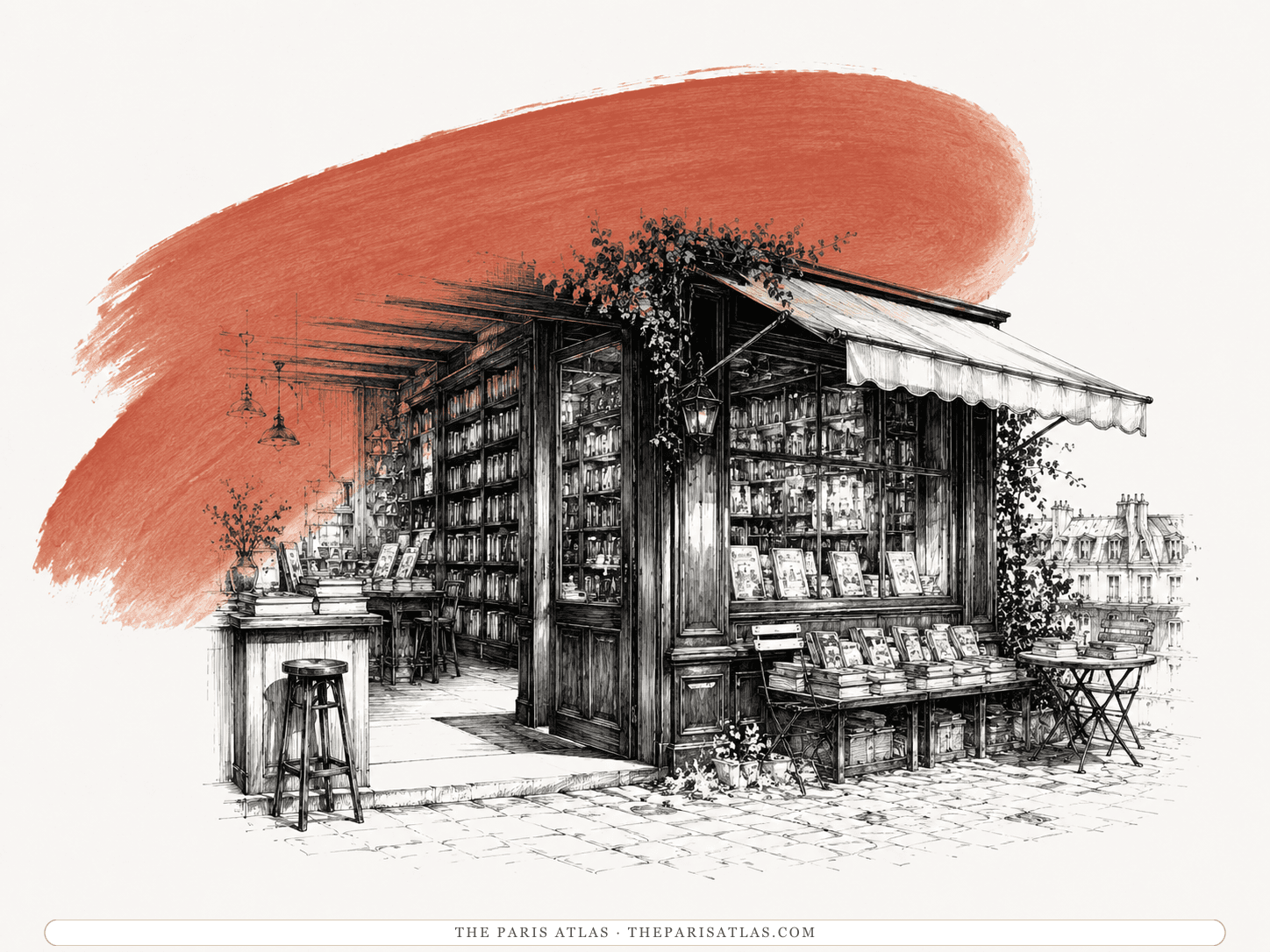
Miller moved into a studio at 18 Villa Seurat in 1934, the year the novel came out, and stayed until 1939. Villa Seurat is a short street in the 14th arrondissement, built in the 1920s as studios for artists and sculptors. It looks nothing like the Paris of boulevards and hotel lobbies. It is narrow, residential, and easy to walk past without noticing that several careers were being improvised behind the doors.[3]
Nin paid the rent. The studio became the middle of a small, quarrelsome, productive circle: manuscripts went round, Lawrence Durrell turned up, Alfred Perlès came and went, and Kahane printed what larger houses would not. The street was short and the arguments were not.[3][2]
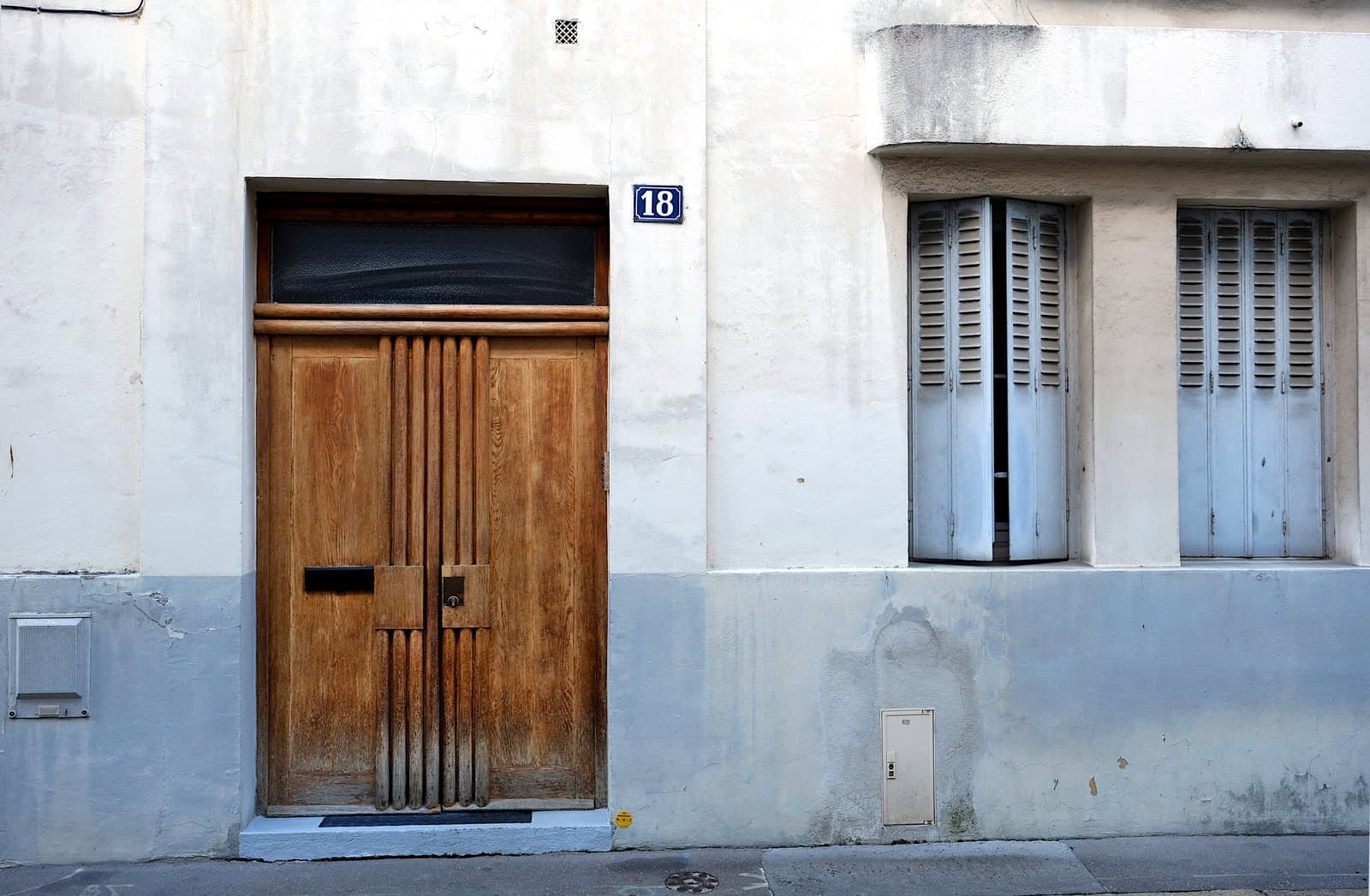
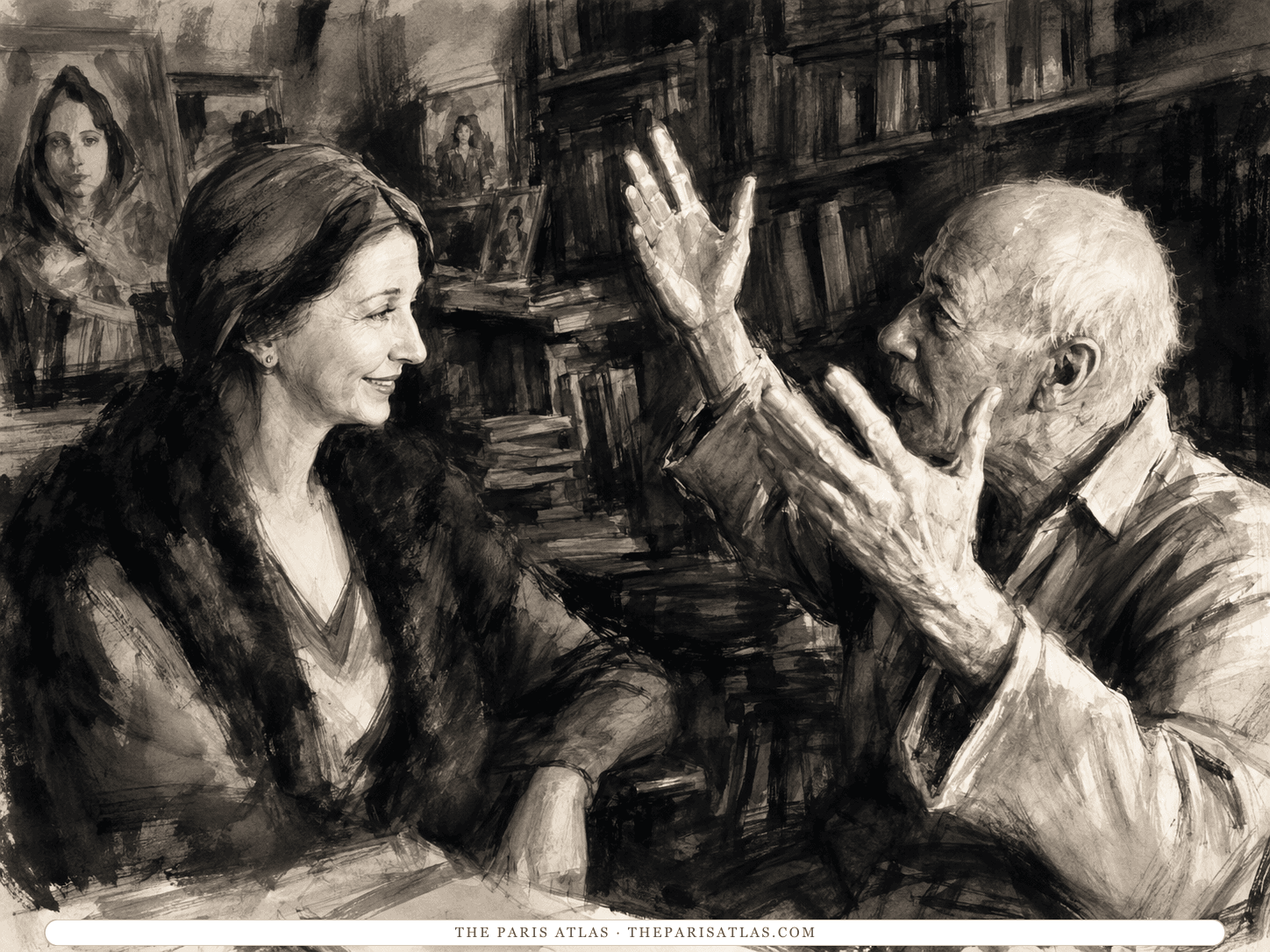
The address was less a home than a small publishing economy for people who were unpublished, banned, broke, or some productive combination of the three. It also made the imbalance at the centre of the arrangement hard to miss. Nin had financed Miller's novel, written its preface, and kept the roof over the desk. When she tried to publish her own fiction, nothing comparable came to meet her.
Villa Seurat is a public street, and number 18 is visible from it. The studios are private homes, so the door is where the visit ends.
Publishing Anaïs backwards
In 1935 Nin helped found a press with Miller and Durrell and called it Siana Editions, which is Anaïs spelled backwards. The joke is neat and it also describes the situation exactly: the publishing world would not make room for her, so she reversed her name and became a publisher.[2][1]
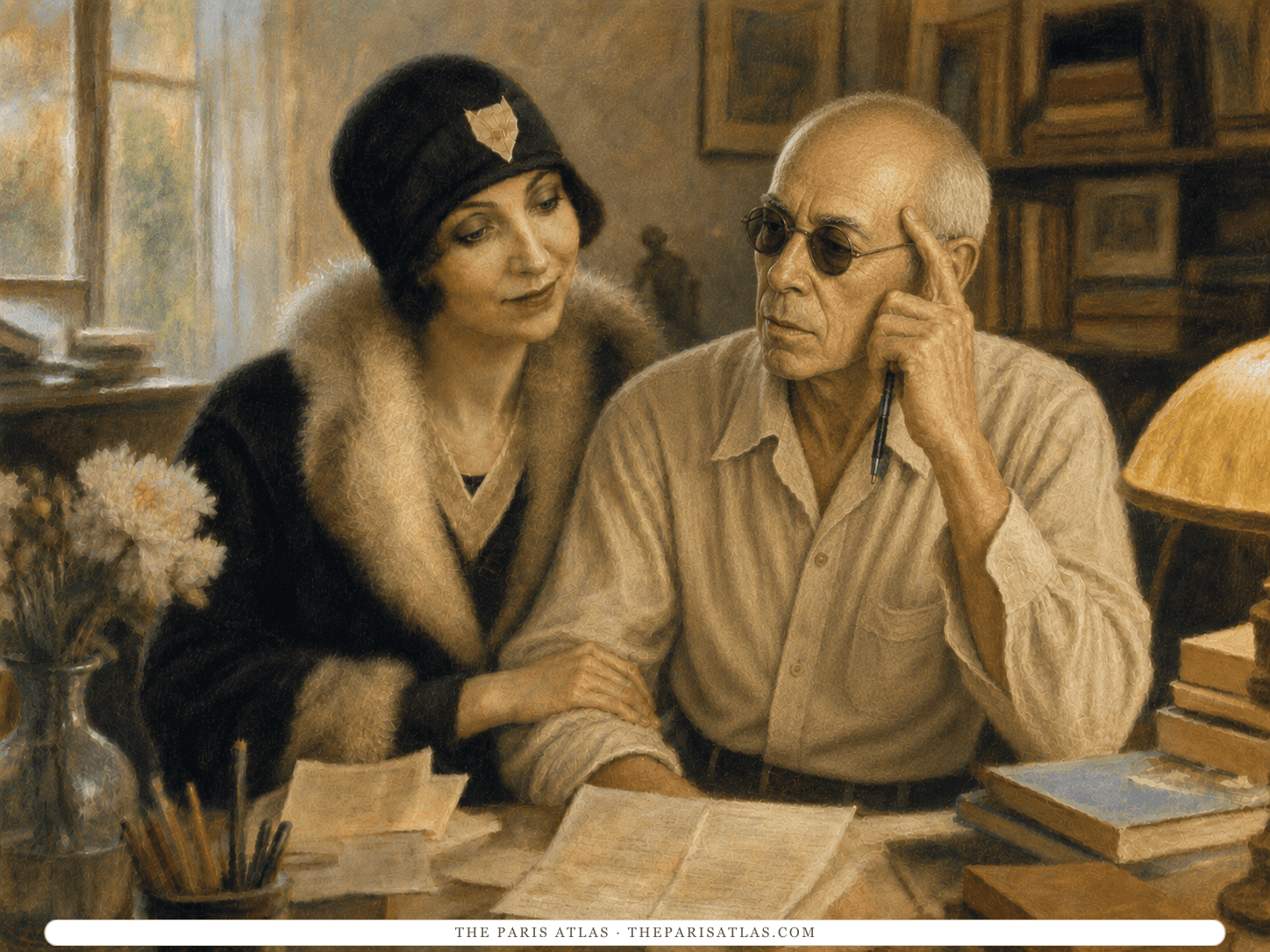
House of Incest came out under that imprint in 1936, printed at the Imprimerie Sainte Catherine in Bruges in an edition of 249 copies. It was small, expensive to make, and never going to earn back what it cost. Winter of Artifice followed in 1939 from Obelisk, in the Villa Seurat Series, weeks before the war shut the whole operation down. This was publishing without any of the comfort of scale: a manuscript became a stack of sheets, the sheets became parcels, and the parcels were posted, carried, or confiscated. Nin had made Miller publishable. She was still trying to make herself visible.[2][1]
The houseboat, and the drift
Nin kept two houseboats, not one, and the retellings usually merge them. From the autumn of 1936 she rented the first, moored at the quai du Pont-Royal; her lover Gonzalo Moré called it Nanankepichu, a Quechua word he translated for her as "not a home", and the name is in her diaries in his sense, not a biographer's. The second was La Belle Aurore, owned by the actor Michel Simon, which she took on 28 February 1938 and gave up that August when boats were ordered out of the city for the King of England's visit and it had to be towed to Neuilly.[2][1]
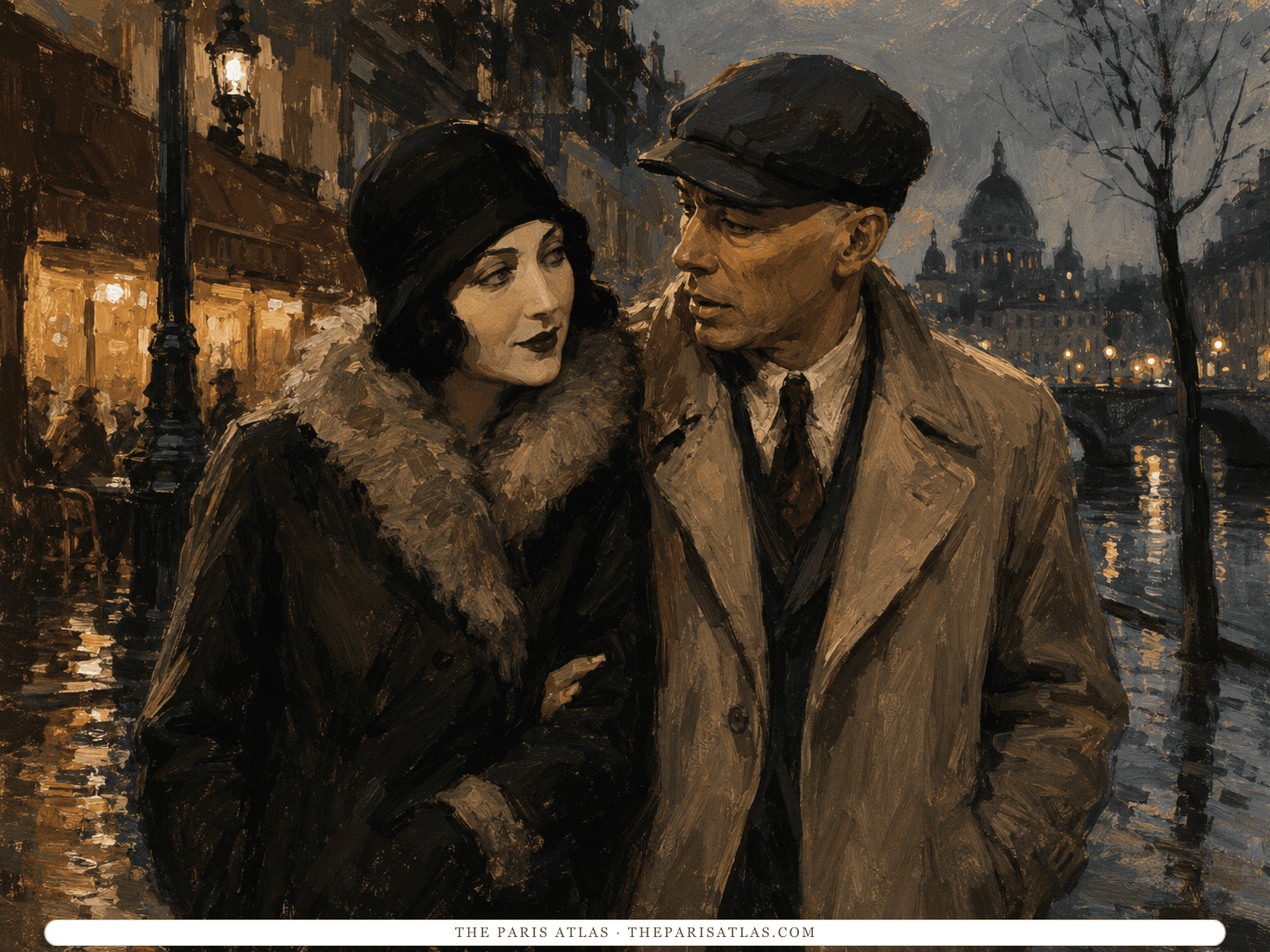
The boat is a useful marker because it sat outside all of Miller's addresses. Louveciennes had been the domestic centre and Villa Seurat the literary one; the boat belonged to Nin's rearrangement of her own life, and by then Miller was no longer the centre of every room in it. In 1939 the war scattered the circle. She went to New York and set type by hand at her own Gemor Press; he went to Greece and then to California. The Paris years did not end in a break between two people. They ended in borders.[1][3]
The boat is gone. The quai du Pont-Royal is still a quai, and it is the one address in the story you can stand on without asking anyone's permission.
Big Sur, 1947
Paris was not the end of it. A study of Miller's Big Sur years puts a visit from Nin in 1947 and describes the reunion as a disappointment to both of them, the old intimacy past recovering. Nin's diary volume for 1944 to 1947 covers a journey across the country to California in the same period, though whether those pages carry the meeting is a question for the pages themselves.
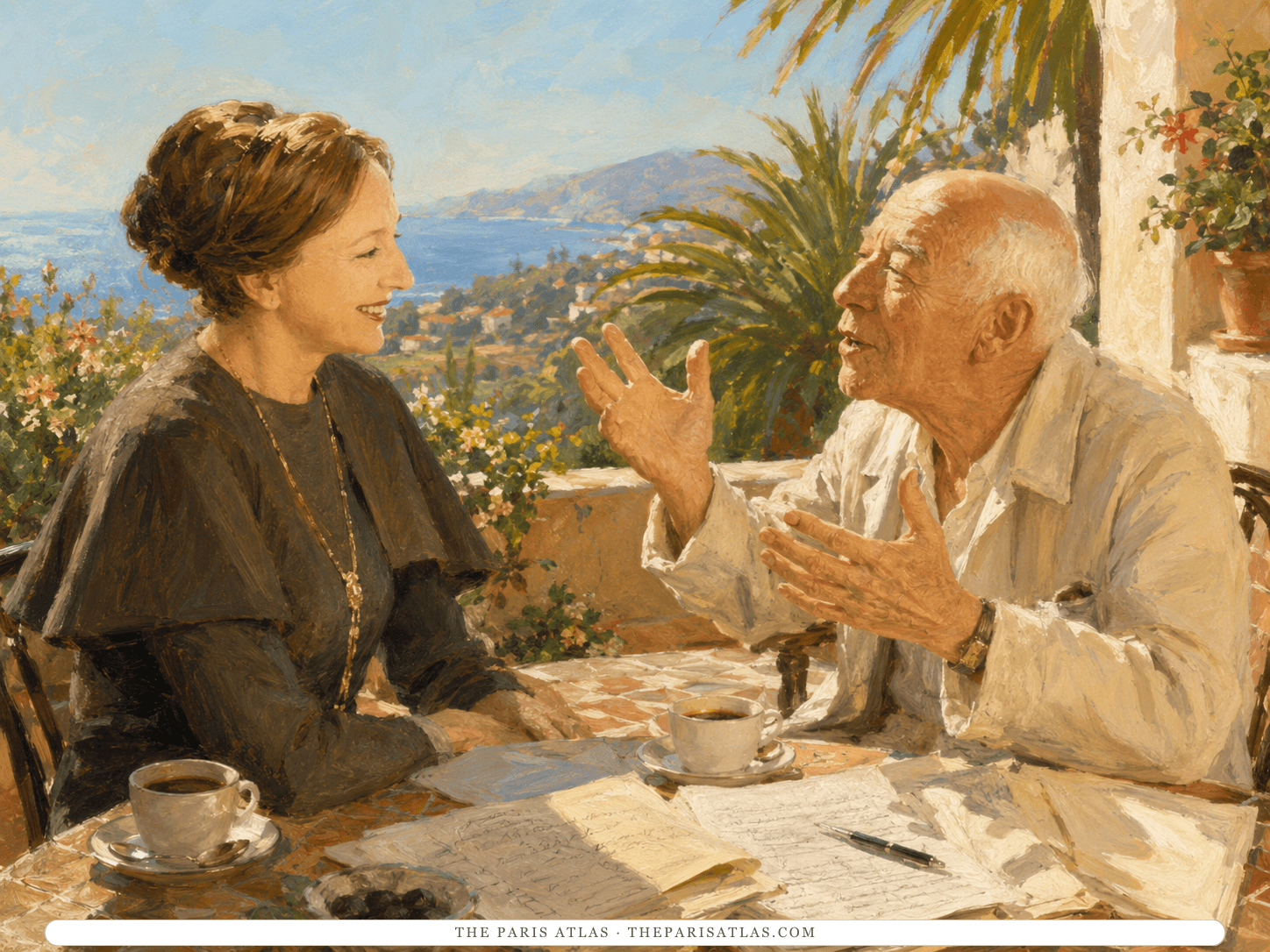
Miller's neighbour Emil White, interviewed by the Los Angeles Times in 1988, remembered evenings at the Nepenthe bar up the coast with Miller, Nin, Man Ray, Benny Bufano and Eric Barker in the room. He did not date them. The Anaïs Nin Foundation holds a photograph of the two of them captioned only "Henry and Anaïs in their later years", with no year, place or photographer attached.
Did they see each other after Paris? Yes. The best-dated occasion is 1947 in Big Sur. The later photograph is real but undated, which is a different thing from unproven.
What Miller gave back
Follow only the money and Miller becomes a man who took things, which is satisfying and incomplete. He read Nin closely, argued with her, and kept telling her that the diary she treated as private was stronger than the fiction she was sending out to strangers.
In 1937 he, Perlès and Durrell took over a magazine belonging to an American golf club outside Paris and rebuilt its contents around themselves, on condition that two pages an issue still went to club news. On page one of the October issue ran an announcement seeking subscribers for an edition of Anaïs Nin's diary. The edition never appeared. Nobody published the diary for another twenty-nine years.[3]
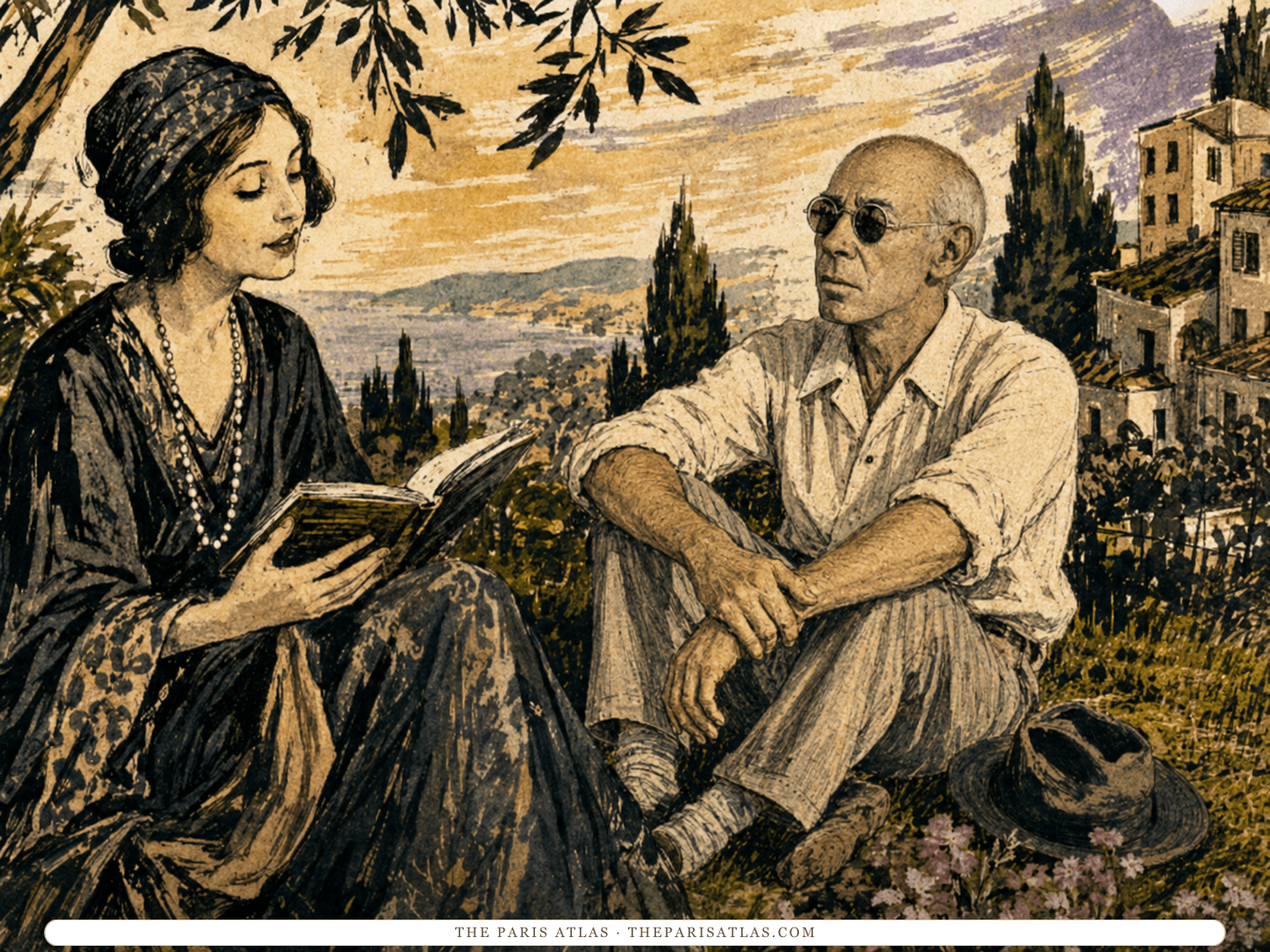
What Miller offered was not stability, since he had none to offer. He offered recognition, at a point when recognition was one of the few things he had in quantity. Nin's help produced results you could hold: a printer paid, a studio kept, a manuscript turned into a book with a wrapper and a price. Miller's help took thirty years to show up.
What each wrote about the other
Miller put Nin and the whole circle into prose fast, changing names when it suited him. Nin put Miller into a diary she then spent thirty years cutting and rearranging. The first volume appeared in 1966, when she was sixty-three, and made her famous. It also presented a carefully managed life: the affairs reduced, Guiler nearly gone, the finances almost invisible. The woman who had borrowed money, financed books and worked a hand press appeared instead as a figure drifting through literary Paris on no visible means.[4][1]
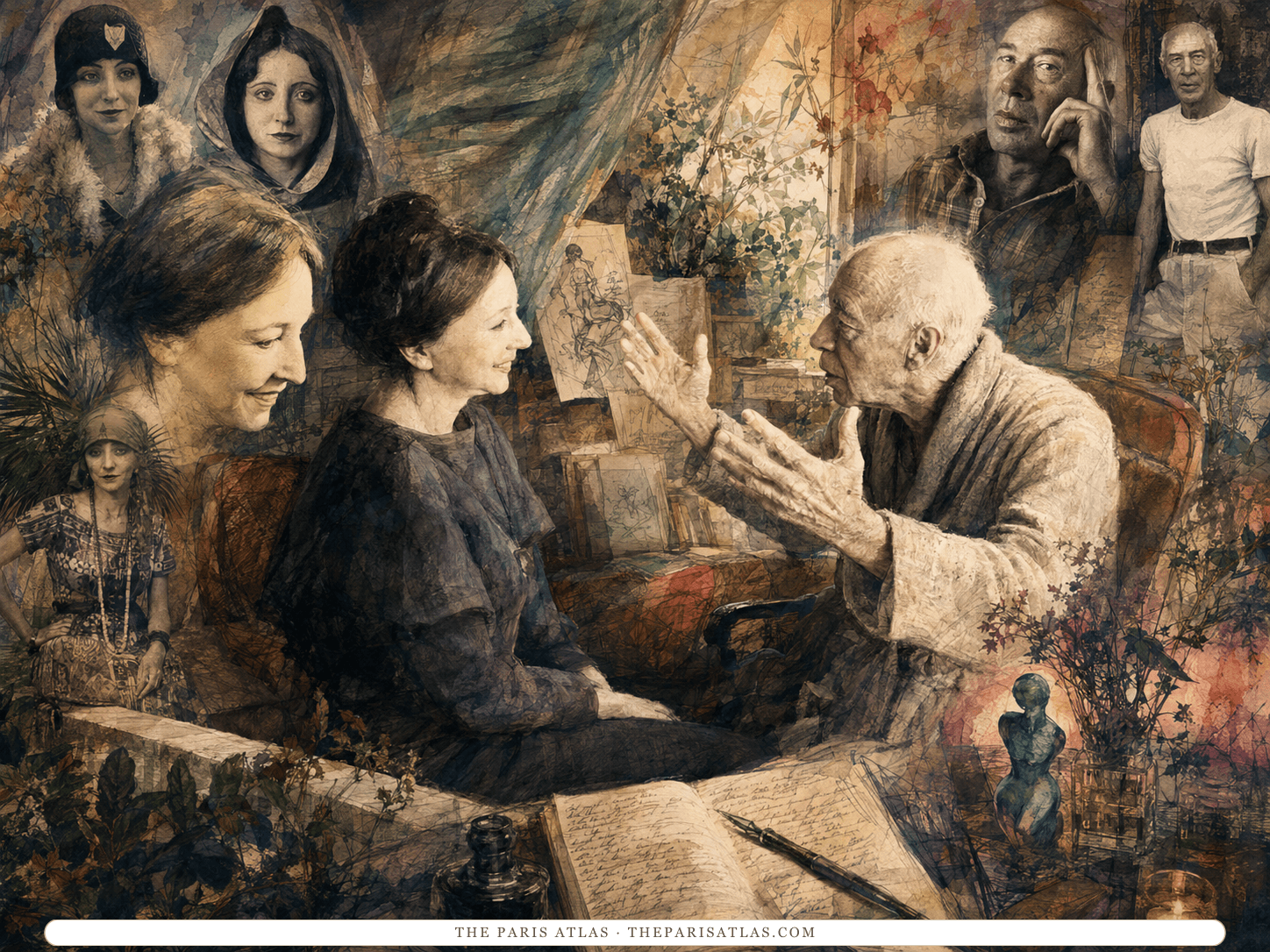
The unexpurgated editions published after her death put most of it back — Henry & June in 1986, Incest in 1992, and the volumes after them. They did not only add sex. They added accounting, and a reader could finally see who paid, who borrowed, who waited, and who got edited out.[1]
So which version is true? All of these are documents, and none of them is neutral. The 1966 diary is what Nin was prepared to publish, the 1986 book is what her executors released, and Miller's novels are what he could get away with. The disagreements between them are the most interesting thing either writer left behind.
What the decade cost them both
Miller got his book, and then the career the book made. He spent the rest of the thirties in a room Nin paid for, and he never repaid the loan in any form a bank would recognise. What he had to offer instead was an opinion about her work that he held loudly, early, and for free.
Nin got the slower half of the bargain. She had backed everybody else's books, printed her own in editions of a few hundred, and gone largely unread into her sixties. When the diary finally appeared in 1966 it made her one of the most widely read writers of the decade, and it did it on the strength of the private work Miller had been shouting about since 1937.[1]
He was right about her thirty years early, which was no use to her at the time and none to him either. She was right about him immediately, and it cost six hundred dollars.
Sources and notes
1. The meeting. The Anaïs Nin Foundation's account "When Anaïs Met Henry" gives the late-1931 lunch at Louveciennes, Richard Osborn's introduction, Nin's work on her D. H. Lawrence study, and her first recorded impression of Miller.
2. The affair, in their own words. A Literate Passion: Letters of Anaïs Nin and Henry Miller, 1932–1953, edited by Gunther Stuhlmann, is the primary published record of the correspondence — the manuscript criticism, the arguments about money, and June.
3. Tropic of Cancer, the money and the ban. Louis Menand's "Banned Books and Blockbusters" in The New Yorker covers Jack Kahane and the Obelisk Press, Kahane's want of capital, Nin's failed attempts to place the manuscript elsewhere, the money that came through Otto Rank, the September 1934 publication, and the wrapper's warning against importing the book into Britain or the United States. The six hundred dollars is a figure reconstructed by biographers rather than one taken from a surviving receipt, which is why this piece says "roughly". The present-day equivalent uses the Bureau of Labor Statistics consumer price index, whose annual average for 1934 was 13.4 against 333.952 in June 2026. The median American family income of $1,160 is the figure for 1935–36, the closest years the federal consumer purchases surveys cover.
4. Villa Seurat, and who paid for it. Miller's own chronology, published by the Henry Miller Memorial Library, dates his move to 18 Villa Seurat to 1934 and his departure to June 1939, and confirms that Lawrence Durrell did not meet him until 1937. That Nin supported Miller financially through these years is stated in the description of the Henry Miller papers at the University of Kansas. That the support specifically covered the studio rent is standard in the biographies rather than documented in an archival record.
5. Miller as Nin's editor and advocate. Northwestern University's description of its Anaïs Nin Collection records that much of her early unpublished material was proofread by Miller and carries his notes. The subscription notice for an edition of her diary ran on page one of the October 1937 issue of The Booster, the magazine Miller, Alfred Perlès and Durrell took over from an American golf club outside Paris.
6. Siana Editions. Princeton's Graphic Arts collection confirms that Nin self-published House of Incest under Siana Editions and that the imprint is her name reversed. First-edition catalogues give the 1936 printing as 249 copies.
7. The houseboats. The moorings and the name Nanankepichu come from Nin's diaries; the translation "not a home" is Gonzalo Moré's as she reports it, not a biographer's gloss. That there were two boats — the 1936 vessel Moré named, and Michel Simon's La Belle Aurore taken on 28 February 1938 — follows Noël Riley Fitch, who calls the second "another houseboat", and Deirdre Bair, who dates the taking and the August relinquishment.
8. Big Sur, 1947. Knigge's Henry Miller in Big Sur, 1944–1962 places a visit from Nin in 1947 (p. 29) and describes the reunion as a disappointment to both. Emil White's recollection of evenings at Nepenthe with Miller, Nin, Man Ray, Benny Bufano and Eric Barker was given to Miles Corwin of the Los Angeles Times, 5 September 1988; White did not date them. The Diary of Anaïs Nin, Volume Four: 1944–1947 covers a journey to California in the same period, but we have not read the pages and do not cite them as proof of the meeting.
9. The diaries, edited and unexpurgated. The Anaïs Nin Foundation's biography and diary pages give the 1936 House of Incest, the 1966 first diary volume and its reception, and the sequence of edited and unexpurgated volumes. Henry & June, drawn from the uncensored journals, appeared in 1986. Hugh Guiler's banking career and his near-absence from the published life are discussed in "Swinging: The Double Life of Anaïs Nin" in Public Books.




 Explore more resources