Scott and Ernest: A Friendship in Five Rounds
Fitzgerald talked Scribner's into wanting Hemingway before the two had ever met, edited The Sun Also Rises into its famous opening, and was repaid in fiction. The era's defining literary friendship, round by round.
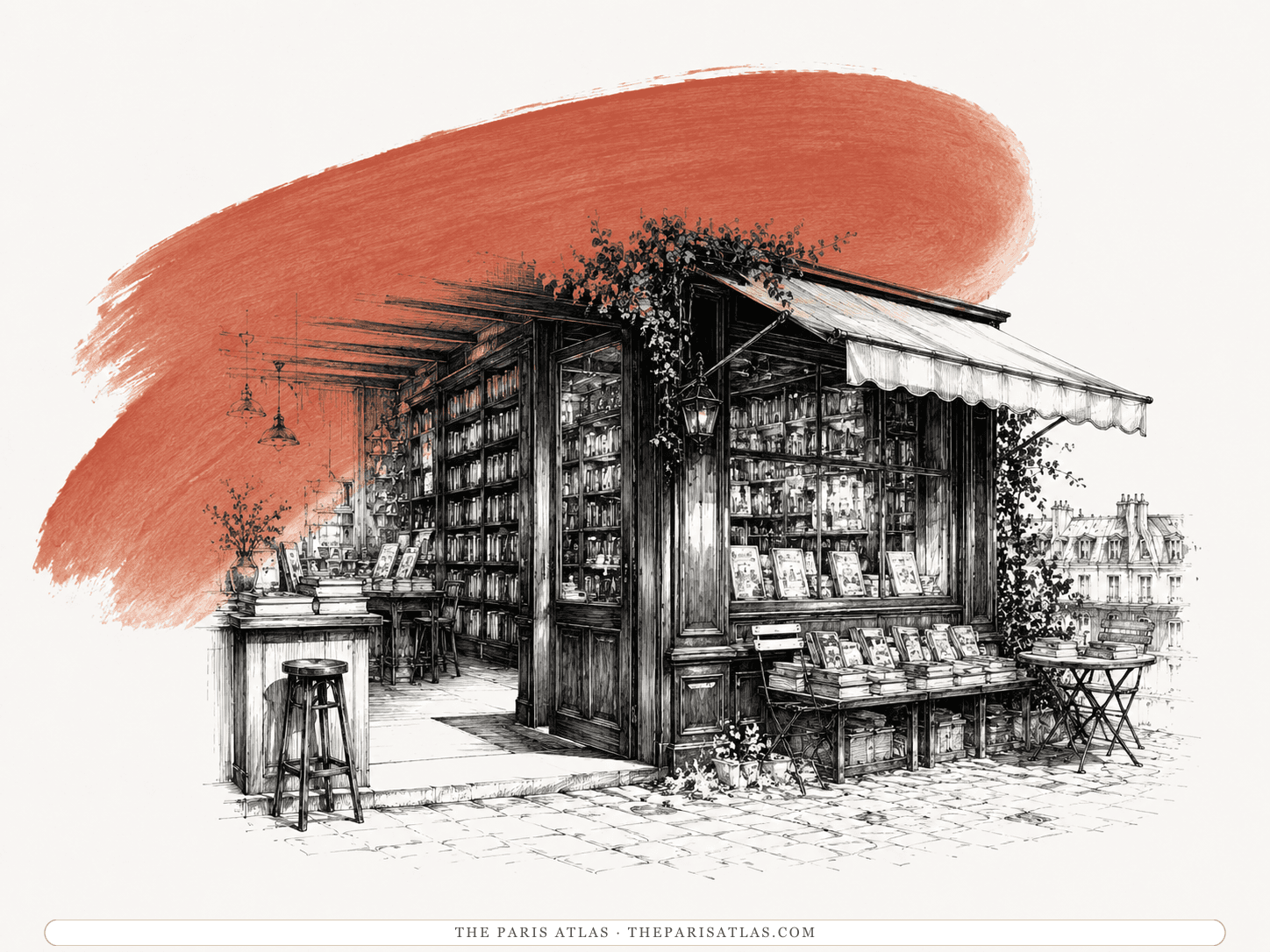
In the spring of 1925, the most famous young novelist in America walked into a bar off the Boulevard du Montparnasse looking for a writer almost nobody had read. F. Scott Fitzgerald was twenty-eight; The Great Gatsby was two weeks old. Ernest Hemingway was twenty-five, and his entire published output was a pair of Paris-printed pamphlets that together had sold a few hundred copies. Of the two men at the bar of the Dingo, only one was a celebrity — and he was the one doing the admiring.[1]
The admiration predated the handshake. Months earlier, in the fall of 1924, Fitzgerald had written to his editor at Scribner's, the great Maxwell Perkins, urging him to look up a young man named Hemingway in Paris — he misspelled the name with two m's — on the strength of little more than sketches in small magazines and the word of the American colony. Fitzgerald was a compulsive and generous talent-scout, and this was the best call of his scouting career. By the time he reached the Dingo, he wasn't making a discovery. He was collecting one.[2][1]
Round one: the Dingo Bar
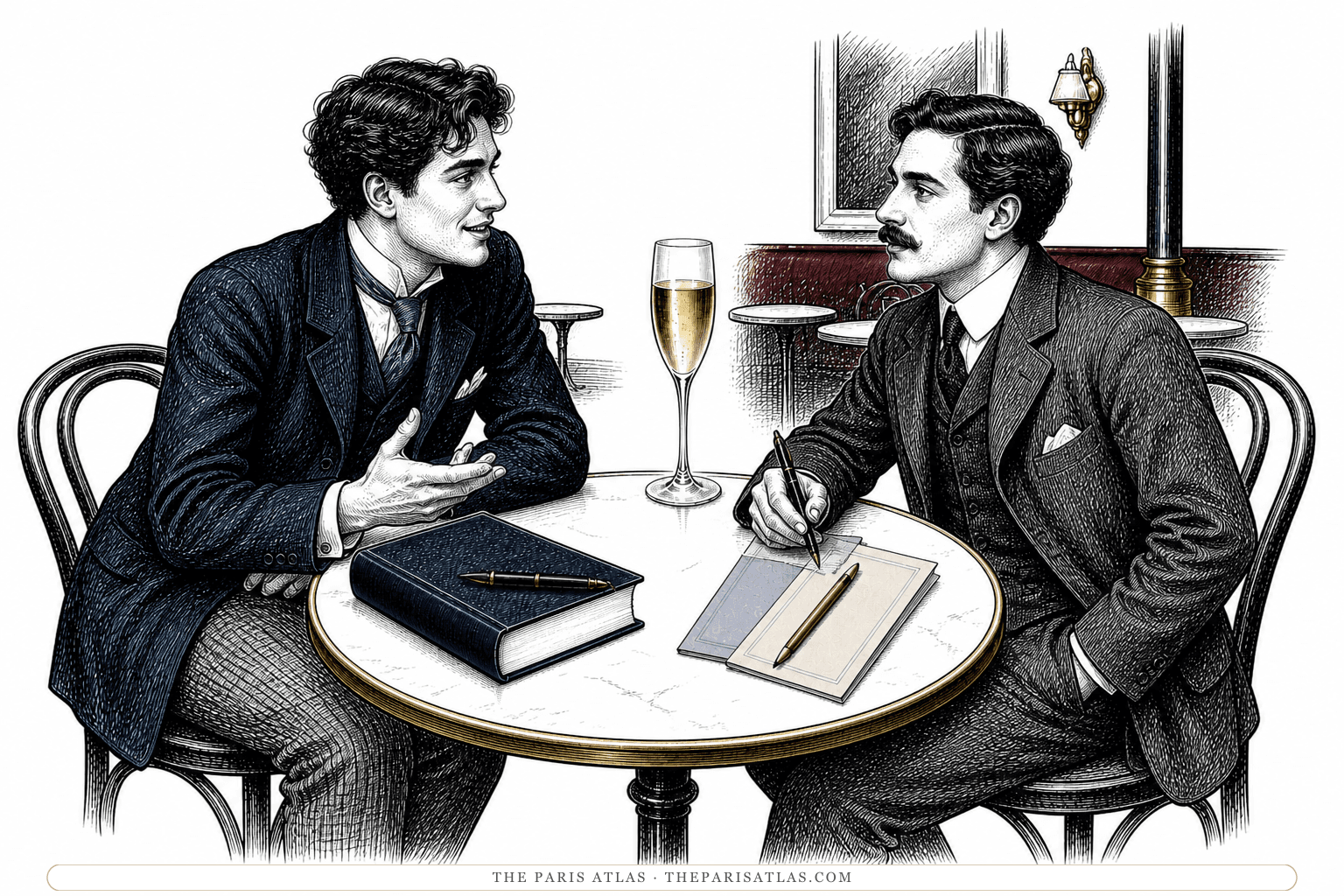
The meeting itself we know mostly from Hemingway, who staged it thirty-five years later in A Moveable Feast with the deck stacked: Fitzgerald talking too much and too warmly, asking intimate questions no stranger should ask, and wilting theatrically under the champagne while the younger man watched with a clinician's eye. Read it with care — it is a portrait painted by the survivor, long after the quarrels. What no account disputes is how fast the adoption took. Within days Fitzgerald was pressing books on him; within weeks, the two were on the road together.[3]
Round two: the road from Lyon
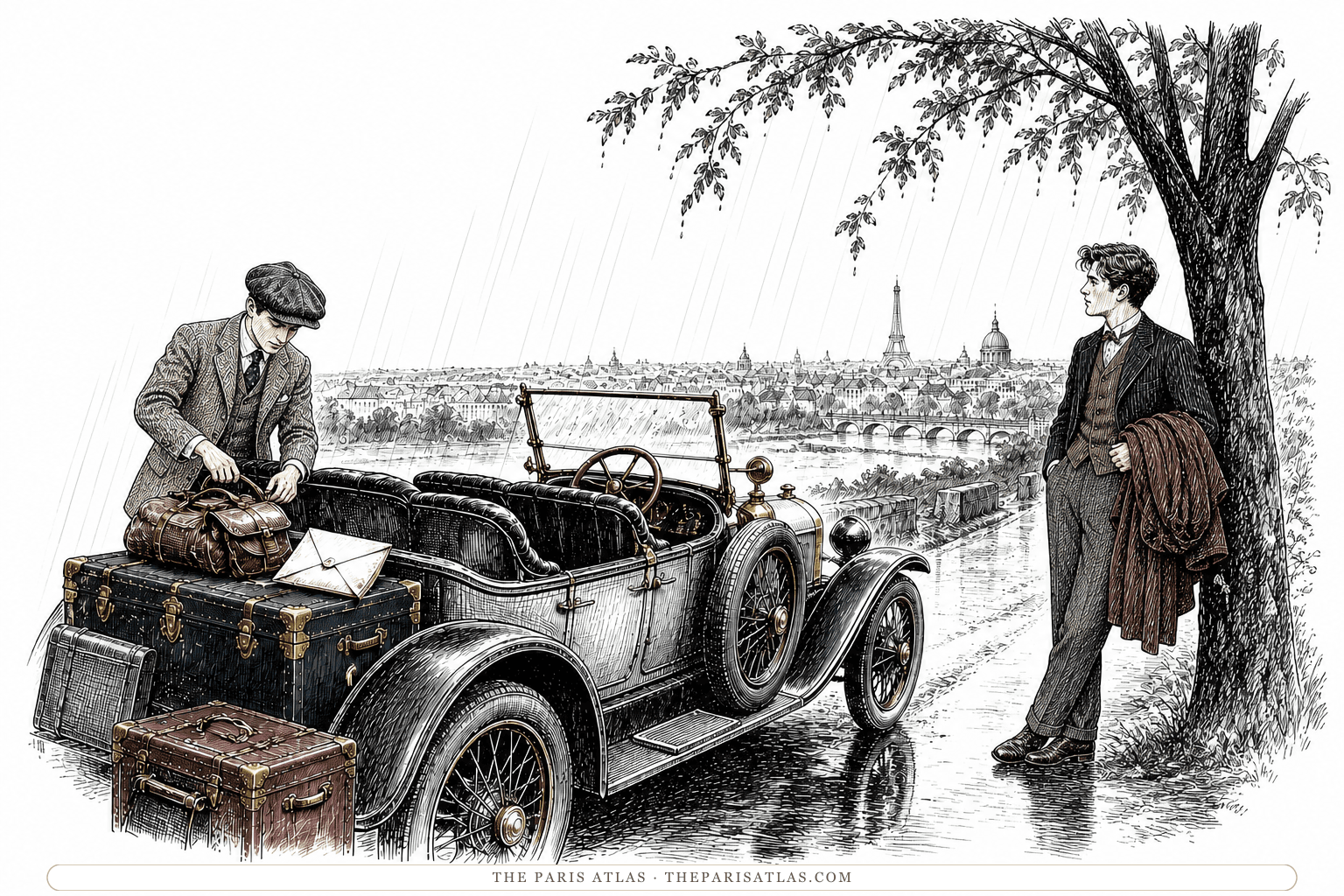
The road trip is the friendship's great comic set piece. The Fitzgeralds had abandoned their Renault in Lyon; Scott recruited Ernest to help retrieve it, missed the train they'd agreed on, and turned up to claim a car with no roof — Zelda had had the damaged top cut away entirely. The two novelists drove back toward Paris in open weather, stopping under trees when it rained, and at a hotel along the way Fitzgerald took to bed convinced he was dying of congestion of the lungs, demanding thermometers while Hemingway played nurse and took notes he would spend, with interest, decades later.[3]
What the comedy obscures is what the same season accomplished. Fitzgerald spent 1925 quietly restructuring his new friend's career: talking him up to Perkins, steering him toward Scribner's, and cheering the contractual escape from Hemingway's first publisher that made the move possible. When The Sun Also Rises appeared in 1926, it did so from Fitzgerald's own house, with Fitzgerald's own editor. No agent of the era did more for a rival's fortunes, and Fitzgerald never once called him a rival.[2][1]
Round three: sixteen pages
The favor that mattered most fit in an envelope. In the summer of 1926, at Juan-les-Pins, Fitzgerald read the typescript of The Sun Also Rises and sent back roughly ten handwritten pages of criticism aimed almost entirely at the novel's opening — a long, throat-clearing biography of its characters that he judged, bluntly, unworthy of what followed. Hemingway grumbled, then cut the entire original opening before the book went to press. The novel the world knows starts cold on Robert Cohn's boxing career because Fitzgerald told its author where the real first page was.[2]
Three years later Fitzgerald tried the same service on A Farewell to Arms and got the era's most famous rejection slip in return: pages of careful notes sent back bearing a scrawled three-word obscenity and the author's initials. The ledger between them was reversing. Hemingway now outranked his patron and had begun to resent the debt — and Fitzgerald, whose own next novel was five years of false starts away, had begun to need the friendship more than it needed him.[2][1]
His talent was as natural as the pattern made by the dust on a butterfly's wings.
Round four: the unraveling
The thirties took them apart. Zelda's illness and the bills of her care consumed Fitzgerald; the drinking he had performed as charm became the fact of his days; and in early 1936 he did the thing Hemingway could least forgive — confessed his collapse in public, in the Crack-Up essays for Esquire. Hemingway's judgment arrived in the same magazine that August, inside a short story. The Snows of Kilimanjaro paused, mid-fiction, to pity 'poor Scott' by name and mock his romance of the very rich. Fitzgerald's reply was a single dignified letter asking to be left out of Hemingway's fiction; in the book version, the name became 'Julian.'[1]
One detail of that swipe deserves its footnote. The famous exchange about the rich — the earnest observation that they are different, deflated by the retort that the difference is money — did happen. But the record shows the deflating line was delivered across a lunch table to Hemingway, at Hemingway's expense, by the critic Mary Colum. In the story, he reassigned his own humiliation to Fitzgerald. Among writers, there may be no colder use of a friend.
Round five: the ledger
They saw each other for the last time in Hollywood in 1937, briefly and awkwardly. In the fall of 1940, weeks before his heart stopped at forty-four, Fitzgerald — sober, working, halfway through the novel that would restore his name — wrote Hemingway a warm letter about For Whom the Bell Tolls. Generous to the end, and to the same address. Two decades later, an aging Hemingway wrote Fitzgerald into A Moveable Feast in three chapters that manage to be condescending, unfair, and helplessly loving at once, opening with the sentence about the butterfly's wings that reads today like an epitaph he knew he owed.[1][3]
Tally the ledger and it isn't close. Fitzgerald gave Hemingway a publisher, an editor, the true opening of his first great novel, and a decade of advocacy without envy. Hemingway gave Fitzgerald immortality — on Hemingway's terms, in Hemingway's prose, wearing the face Hemingway drew. Every friendship between writers carries that clause in fine print: whoever writes last, writes both parts. It is worth remembering, walking past the site of the Dingo on the rue Delambre, which of the two men walked in that April believing in the other one completely.




 View source