The Paris AtlasCharting the artists, works, and places worth returning to.
Cover of Nightwood by Djuna Barnes

Nightwood

by Djuna Barnes

The 1936 novel about a woman named Robin Vote and the four people who cannot stop following her — edited for Faber by T. S. Eliot, who cut about thirteen pages and then wrote the introduction.

Published
1936
Pages
208
Shelf rating
4.5

About Djuna Barnes

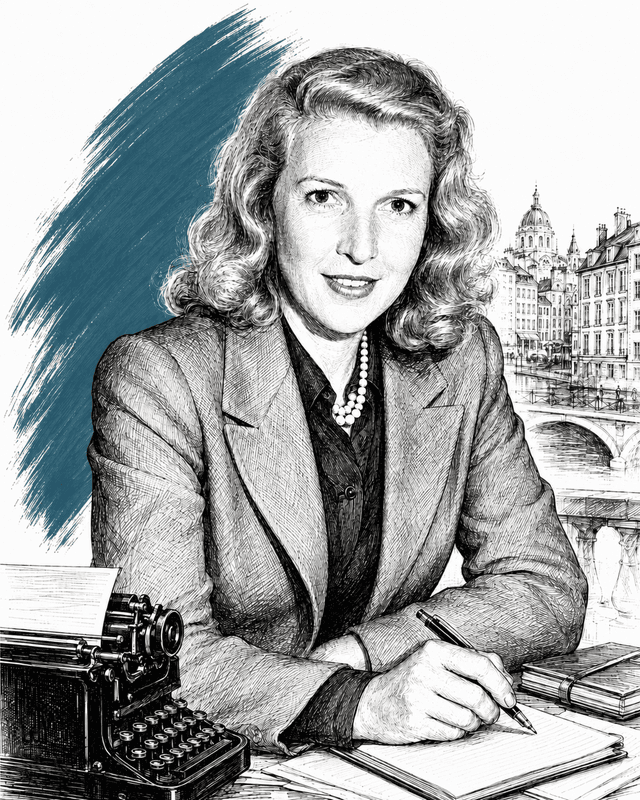
Illustrated portrait of Djuna Barnes
Djuna Barnes

3 books on our shelves

The story, briefly

Spoiler-free

A short novel about desire between women, set mostly in Paris in the 1920s. Robin Vote marries a man who wants a son, leaves him, lives with an American woman named Nora Flood, leaves her too, and is followed by all of them into the night. Around the four principals talks Doctor Matthew O'Connor, an unlicensed Irish-American doctor who holds most of the book's speech. Djuna Barnes wrote it out of the end of her own roughly nine-year relationship with the artist Thelma Wood; T. S. Eliot edited it for Faber and Faber, wrote the introduction, and made it famous. The prose is difficult and the pleasure is in the sentences.

The story, in more detail

Djuna Barnes was an American journalist and illustrator who lived in Paris through the 1920s. For roughly nine years she lived there with Thelma Wood, an artist from St. Louis who worked in silverpoint; the relationship ended, or changed character, by December 1927. Barnes began writing the novel out of it, perhaps as early as that year, and later described the book to her friend Emily Coleman in three words: "my life with Thelma."

It took three versions and most of a decade. She wrote through the summers of 1932 and 1933 at Hayford Hall, the English country house Peggy Guggenheim rented, and dedicated the finished book to Guggenheim and to Guggenheim's lover, the critic John Ferrar Holms. Publishers turned it down again and again. T. R. Smith at Liveright rejected it three times and asked her to write it over; Clifton Fadiman at Simon and Schuster replied in July 1935 that "no standard publishing house could take it." Coleman, who thought parts of it sentimental and the whole thing a structural failure, also thought it a work of genius, and campaigned for it. She edited the typescript hard, persuaded Barnes to fold one character into another and to move the Jenny chapter forward, and in November 1935 sent the book to T. S. Eliot at Faber and Faber with a letter arguing that it must be published whatever its faults.

Eliot took it. Faber's worry was the censor: the firm planned an expensive first printing partly to keep the book away from a prosecution. Eliot and his colleague Frank Morley went through the typescript in blue and red pencil and removed about thirteen pages, most of them the doctor's monologues, and softened phrases that touched on sex or religion. Barnes met Eliot in London in June 1936 and told him, by her own account, "I'll take anything from you, Mr. Eliot." She did not take everything: he wanted the last chapter dropped as an anti-climax, and she refused, and by the time he wrote his introduction he had changed his mind and called it essential.

Faber published Nightwood in 1936. Harcourt, Brace brought out the American edition in 1937 with Eliot's introduction attached, which is where most readers still meet it. Sales were small and it was out of print in the United States by 1945, with Harcourt's plates destroyed; James Laughlin of New Directions approached Barnes that July, brought it back the following year, and it has stayed in print since. In 1995 Dalkey Archive Press published the pre-Eliot typescript as Nightwood: The Original Version and Related Drafts, edited by Cheryl J. Plumb, so the cuts can now be read alongside the book.

The full plot

What happens, beginning to end — the ending included. Open when you're ready.

Vienna, 1880. A woman gives birth to a son, names him Felix, and dies within the hour. His father, Guido Volkbein, a Jew of Italian descent who had invented a barony for himself and bought two old portraits to pass off as his parents, was already dead. Felix grows up to keep the invented title, work at the Crédit Lyonnais, bow to strangers who look important, and haunt circuses and theatres where the performers carry titles as false as his own. At a party in Berlin he meets Doctor Matthew O'Connor, an Irish-American who talks without stopping and turns out not to be a licensed doctor, and Nora Flood, an American woman doing advance publicity for a circus.

In Paris the doctor takes Felix to a hotel room where a young American woman has fainted among potted palms and cut flowers. Her name is Robin Vote. Felix courts her, marries her, takes her to Vienna to show her the buildings he loves, and asks her for a son who will honour the past. She has the child, curses through the birth, tells Felix she never wanted him, and walks out.

Robin turns up next with Nora Flood, who met her at a circus in New York and closed her American house to follow her. They buy an apartment in the rue du Cherche-Midi and fill it with circus chairs and church hangings. Then Robin begins going out at night alone, and Nora begins lying awake. Into that arrangement comes Jenny Petherbridge, a widow four times over who furnishes her life with other people's things and takes Robin the way she has taken everything else.

Nora climbs six flights at three in the morning to ask the doctor what the night does to people. She finds him in bed in a woman's nightgown and a wig, and he talks to her until dawn. Felix, in another chapter, takes him to dinner and talks about his son Guido, a frail boy who wants to enter the church. Whatever the question, the doctor answers it at length.

How it ends — spoilers aheadThe final movement, ending included. Open when you're ready.

Why we recommend it

  1. A love story between women, printed openly in 1936

    Faber and Faber published it in London with the subject on the surface rather than in code, and priced the first edition high partly to keep the book out of a courtroom.

  2. Doctor Matthew O'Connor

    An unlicensed Irish-American doctor who talks for most of the book and is the character everyone remembers. Eliot cut him back and still wrote that he could not think of a character in the book who had not gone on living in his mind.

  3. It reads like nothing else

    Barnes wrote sentences that move by association rather than by event, and refused every publisher who asked her to turn it into a conventional novel. One editor rejected it three times and kept asking her to write it again; she kept sending it out as it was.

What this book explores

The people in its pages

Nightwood has a small cast, and one of them, Robin Vote, is the reason for most of the others. Barnes drew Robin from Thelma Wood, the artist she had lived with in Paris; she said so in her letters. Doctor Matthew O'Connor was drawn from Dan Mahoney, a figure known to the Paris expatriates. The rest are invented, though Emily Coleman, the friend who edited the book, recognised enough of Barnes's own life in it to warn her how readers would take it.

  • Robin Vote

    The young American woman the whole novel follows: she marries, has a child, leaves, is loved by two women in turn, and never explains herself to anyone.

  • Doctor Matthew O'Connor

    An Irish-American who calls himself a doctor, has no licence to practise, and does most of the talking in the novel.

  • Nora Flood

    An American who ran a house full of poets and beggars, then closed it, followed Robin Vote to Paris, and spent years waiting up for her.

  • Baron Felix Volkbein

    A Viennese-born clerk at a Paris bank, carrying a title his father invented, who marries Robin Vote because he wants a son who will honour the past.

  • Jenny Petherbridge

    A widow four times over who furnishes her life out of other people's, and takes Robin Vote away from Nora Flood.

Also in the book

  • Frau Mann

    A trapeze artist billed as the Duchess of Broadback, who gives Felix Volkbein his first invitation into titled company.

  • Guido

    The son Felix Volkbein wanted: a frail, watchful boy who wants to enter the church and never grows to full size.

Bring it to book club

  • Robin Vote almost never speaks, and never explains herself. Does that make her a character or a space for the other four to fill?
  • The doctor talks for pages at a time and rarely answers the question he was asked. Is he helping Nora, or using her?
  • T. S. Eliot cut about thirteen pages, mostly the doctor's stories, on the grounds that too much of him distorted the shape of the book. Having read it, do you think he was right?
  • Barnes told Emily Coleman she married Robin to Felix in order to answer people who assumed two women would not love each other if a man had ever slept with them. Does the first chapter feel like an argument?
  • Eliot's introduction insists the book is not a study of abnormal people but of universal human misery. Does that reading serve the novel, or protect it?
  • The last chapter is three pages long and explains nothing. Barnes refused to cut it. What would the book be without it?

A complete discussion guide is on our editorial calendar. Join the letter to hear when it ships.

Timeline

  1. 1920s

    Djuna Barnes lives in Paris with the artist Thelma Wood, for roughly nine years by her editor Cheryl Plumb's count.

  2. 1927

    The relationship with Wood ends, or changes character, by December. Barnes may have begun the novel this year.

  3. 1932–1933

    Barnes writes through two summers at Hayford Hall, the English country house rented by Peggy Guggenheim, to whom the book is dedicated with Guggenheim's lover, the critic John Ferrar Holms.

  4. 1934

    Barnes writes to Emily Coleman in April: "I can't get the book accepted anywhere, it is now at the fifth publisher." In August T. R. Smith at Liveright turns the second version down as well.

  5. 23 June 1935

    Barnes settles on the title in a letter to Emily Coleman, because it sounds like nightshade — poison, night and forest in one word.

  6. November 1935

    Coleman, having edited the typescript hard, sends it to T. S. Eliot at Faber and Faber with a letter arguing that whatever its faults it must be published.

  7. January 1936

    Eliot tells Coleman he is impressed and that he and another Faber director want to publish, once they have convinced the chairman. By April the worry is the censor, and the plan is an expensive edition to keep the book out of a prosecution.

  8. June 1936

    Barnes meets Eliot in London. He and Frank Morley cut about thirteen pages and soften wording around sex and religion; he changes "buggers" to "boys" and she tells Coleman, "Imagine trying to wake Eliot up."

  9. 1936

    Faber and Faber publish Nightwood in London.

  10. 1937

    Harcourt, Brace publish the American edition, arranged by Eliot and carrying his introduction — the version most readers still meet.

  11. 1945–1946

    Out of print in the United States and refused by several houses, the novel is taken up by James Laughlin of New Directions, who keeps it in print.

  12. 1995

    Dalkey Archive Press publishes Nightwood: The Original Version and Related Drafts, edited by Cheryl J. Plumb, printing the typescript as it stood before Eliot's cuts.

Book editions

Paperback edition cover
Paperback
New Directions
2006
ISBN-13
9780811216715
The standard edition — T. S. Eliot's 1937 introduction plus a preface by Jeanette Winterson
Paperback
Paperback
Faber and Faber
The British edition, from the house that first published it
Paperback
Paperback
Dalkey Archive Press
1995
Nightwood: The Original Version and Related Drafts, edited by Cheryl J. Plumb — the typescript before Eliot's cuts, with the drafts and the full editorial record
Ebook
Ebook
Audiobook
Audiobook

Reader reviews

Loading reviews…

Cover of Giovanni's Room by James Baldwin

Giovanni's Room

James Baldwin

James Baldwin's 1956 novel about an American man in Paris who cannot admit what he wants. Written twenty years later, in plain sentences rather than difficult ones, it is the other side of the same subject: a book that puts desire between people of the same sex at the centre and refuses to apologise for it.

Read our take
Cover of House of Incest by Anaïs Nin

House of Incest

Anaïs Nin

Anaïs Nin's first book of fiction, published in Paris in 1936, the same year as Nightwood. It is short, dreamlike and written to be read the way a poem is read, and it works the same way Nightwood does: by image rather than by event.

Read our take
Cover of The Pure and the Impure by Colette

The Pure and the Impure

Colette

Colette's 1932 book of conversations and portraits, largely about desire, including long, unembarrassed passages on women who love women in the Paris of the same decade. Where Barnes writes it as a novel, Colette reports it as a journalist.

Read our take
Cover of Three Lives by Gertrude Stein

Three Lives

Gertrude Stein

Gertrude Stein's 1909 book of three stories, the work that showed a generation of writers in Paris that English sentences could be bent out of their ordinary shape and still carry a life. Barnes bent them in a different direction, but Stein had already made the experiment respectable.

Read our take

Recommended alongside Ladies Almanack, Ryder, The Well of Loneliness and Nadja.

Nightwood: frequently asked questions

Who wrote Nightwood?

Djuna Barnes, an American writer, journalist and illustrator who lived in Paris through the 1920s. It was published in 1936 and is the book she is known for.

What is Nightwood about?

A young American woman, Robin Vote, and the four people who cannot stop following her: the man she marries, the two women she lives with in turn, and an unlicensed doctor who talks about all of it. It is set mostly in Paris in the 1920s, and the love stories at its centre are between women.

Is Nightwood hard to read?

Yes. The sentences are long and associative, the doctor's monologues run for pages, and nothing is explained. The standard paperback runs to about two hundred pages, and most readers take it slowly. T. S. Eliot, who edited it, wrote that only sensibilities trained on poetry could wholly appreciate it.

Did T. S. Eliot really edit Nightwood?

He did. Eliot was a director at Faber and Faber, took the book on in 1936, and went through the typescript with his colleague Frank Morley. They removed about thirteen pages — mostly the doctor's stories — and softened wording around sex and religion. Eliot also wrote the introduction that has been printed with the book ever since.

Was Robin Vote a real person?

Robin Vote is a fictional character, drawn from Thelma Wood, an artist from St. Louis who worked in silverpoint and lived with Djuna Barnes in Paris for roughly nine years. Barnes described the novel in a 1935 letter as "my life with Thelma."

Which edition of Nightwood should I read?

The New Directions paperback, which carries Eliot's 1937 introduction and a preface by Jeanette Winterson, is the standard one. Dalkey Archive's Nightwood: The Original Version and Related Drafts, edited by Cheryl J. Plumb in 1995, prints the typescript before Eliot's cuts and is worth having if you want to see what was taken out.