
Books like Giovanni's Room

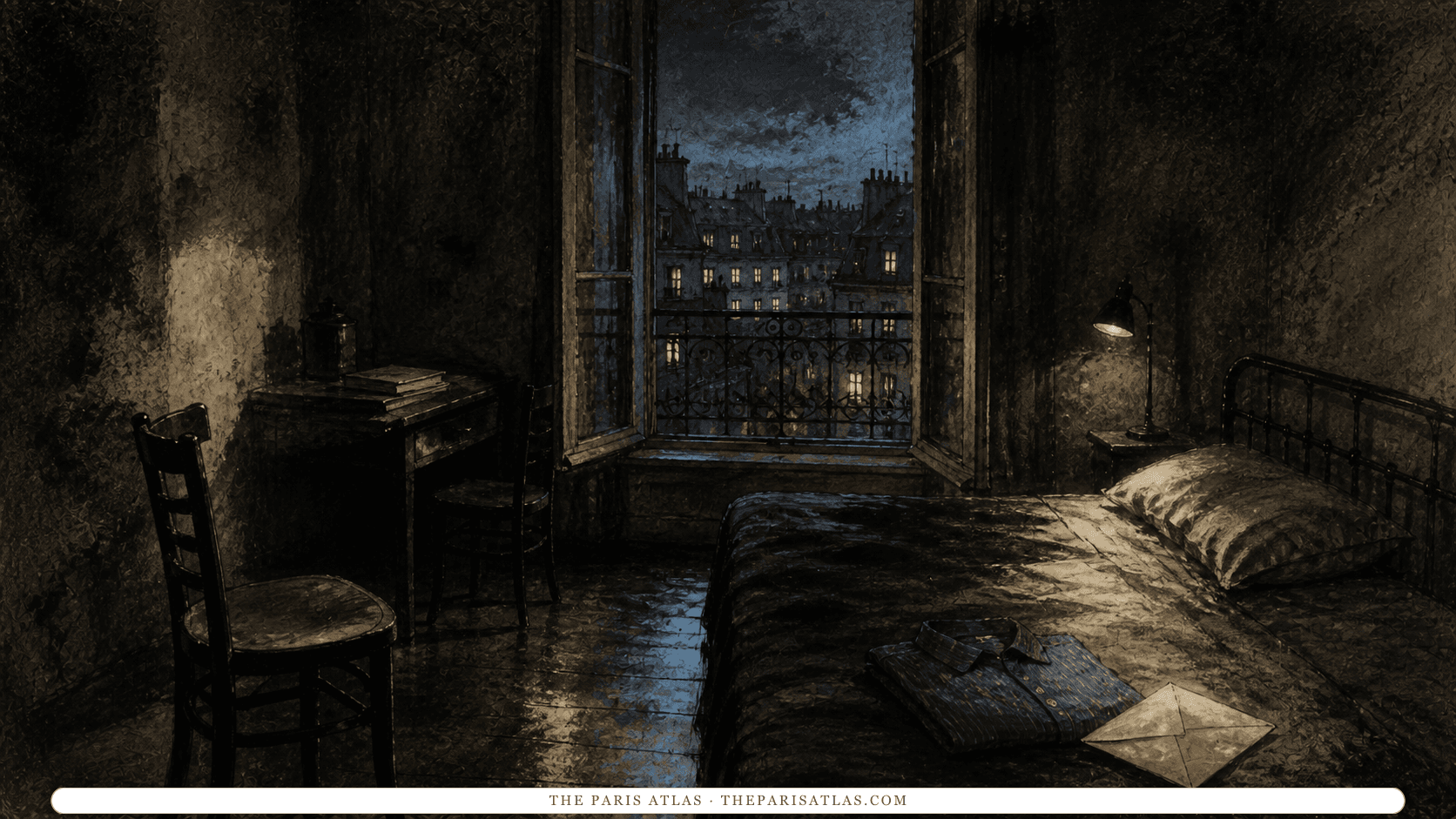
Giovanni’s Room is a love story about wanting something badly and being terrified of what wanting it might mean. David is an American in Paris, caught between his relationship with Hella and his desire for Giovanni, while shame, masculinity, fear, and self-deception slowly make it impossible for him to simply choose the life he wants. If you want more books about queer desire, impossible love, identity, loneliness, and people hurting themselves by trying to become who they think they are supposed to be, start here.
What readers love about Giovanni's Room
- A love affair made more painful by shame and fear than by lack of feeling
- Paris as a place where another life seems briefly possible
- Queer desire written with intimacy rather than distance
- Characters torn between what they want and what society expects from them
- Baldwin’s beautiful, direct writing about love, loneliness, masculinity, and regret

Maurice grows up knowing that the life expected of him — respectable career, marriage, proper English adulthood — does not fit the person he actually is. Like David, he spends years trying to suppress or explain away his desire for men before love forces the question into the open. Maurice is gentler and ultimately more hopeful than Giovanni’s Room, which makes the two books especially interesting together: they begin with remarkably similar fears and imagine very different ways out of them.
About the author
 E. M. Forster
British novelist and essayist whose fiction examines intimacy, convention, class, and the difficulty of living honestly.

A young woman working in a New York department store becomes fascinated by an elegant older woman, and what begins as attraction turns into a relationship that threatens the conventional futures expected of both of them. Like Giovanni’s Room, it understands how exhausting it is to love someone while constantly measuring that love against what the outside world will allow. The crucial difference is that Highsmith lets possibility remain where Baldwin gives us tragedy.
About the author
 Patricia Highsmith
American novelist of psychological crime whose charming, amoral outsiders—including Tom Ripley—made desire, identity, deception, and murder disturbingly intimate.

If you want more Baldwin rather than simply another queer novel, this is the next one. Another Country follows a tangled group of friends and lovers in New York through sex, race, bisexuality, marriage, jealousy, friendship, and grief, with nearly everyone wanting something they cannot admit cleanly. It is much bigger and messier than Giovanni’s Room, but Baldwin is asking many of the same questions about what happens when fear and shame enter a relationship before love has a chance to save it.
About the author
American novelist and essayist who left Harlem for Paris at twenty-four with forty dollars, and wrote the books that made him the most quoted witness to race, sex and belonging in twentieth-century America.
Read about Baldwin
Jim Willard falls in love with another young man and then spends years carrying that attachment through a world that expects him to become conventionally heterosexual. Vidal was unusually direct for the period about a gay protagonist who is neither confused about his attraction nor magically “cured” of it. It is colder and more confrontational than Baldwin, but it shares Giovanni’s Room’s interest in masculinity, desire, and the damage created when a man cannot build an honest life around what he knows about himself.
About the author
 Gore Vidal
American novelist, essayist, and public intellectual who wrote directly about sexuality, politics, history, and power.

George is moving through an ordinary day after the death of his longtime partner, trying to teach, eat, talk to people, and continue existing inside a world that barely recognizes the relationship he has lost. It is quieter than Giovanni’s Room, but just as precise about loneliness and the private weight of queer love. Read it if the aftermath of David and Giovanni’s relationship stayed with you as strongly as the affair itself.
About the author
 Christopher Isherwood
British-American novelist and memoirist whose work follows queer lives, exile, memory, and everyday intimacy.

Set in wartime Britain, the novel follows Laurie, a wounded young soldier navigating his attraction to men at a time when those relationships must remain hidden. He finds himself pulled between different kinds of love and different ideas of what a queer life can look like. Like David, he is not simply deciding whom he loves; he is deciding what kind of person he is willing to become in order to live with that love.
About the author
 Mary Renault
British novelist known for psychologically precise fiction about hidden love, moral choice, and classical antiquity.

Michel begins the book with a respectable marriage and a recognizable place in society, then discovers desires that make his old identity increasingly difficult to inhabit. Gide is more oblique about sexuality than Baldwin, but the psychological connection is strong: both books are fascinated by the moment when a person realizes that the self he has constructed may have very little to do with what he actually wants.
About the author
French novelist and essayist, Nobel laureate 1947, co-founder of the Nouvelle Revue Française and one of the most influential French writers of the first half of the twentieth century. Camus regarded him as the French moralist whose responsibility-of-the-writer position his own 1957 Nobel lecture deliberately echoed.
Read about Gide
Genet writes openly about men, sex, theft, prostitution, prison, betrayal, and wandering through Europe, taking everything conventional society considers shameful and refusing to be ashamed of it. In that sense he is almost David’s opposite. David desperately wants his desires to coexist with a respectable identity; Genet builds an identity out of precisely the things respectability rejects. Read it if Giovanni’s Room made you wonder what the book would look like without David’s desire to be accepted.
About the author
French novelist, poet, playwright, filmmaker and political writer who transformed abandonment, imprisonment, homosexuality, crime and revolt into lyrical prose and a theater of masks, ritual and unstable identities.
Read about Genet
Mishima’s narrator learns very young that his desires do not resemble those expected of him, so he begins constructing a socially acceptable version of himself for everyone else to see. He tries to desire women correctly, behave correctly, and convince himself that performance can eventually become reality. Few books come as close to Giovanni’s Room in capturing the exhausting split between what a man actually wants and the man he thinks he must pretend to be.
About the author
Japanese novelist and playwright whose work explores desire, beauty, performance, identity, and self-invention.
Read about Mishima
Set largely among expatriates in Paris, Nightwood follows obsessive relationships, sexual ambiguity, jealousy, abandonment, and people who seem most alive after everyone else has gone to bed. It is much more difficult and dreamlike than Baldwin, but the emotional world overlaps: foreigners in Paris trying to make lives around desires that do not fit comfortably inside conventional society. Read it if Giovanni’s nighttime Paris was part of what you wanted to remain inside.
About the author
American writer and illustrator (1892–1982). She was a New York newspaper reporter for eight years before she was a novelist, spent the 1920s and 1930s in Paris, and wrote Nightwood, the 1936 novel T. S. Eliot took to Faber and introduced.
Read about Barnes
White’s narrator knows he is attracted to boys but spends much of his youth hoping, scheming, and even seeking treatment in an attempt to become heterosexual. The book can be very funny, but underneath the comedy is the same painful mechanism Baldwin understood so well: shame makes a person participate in his own unhappiness. If David’s attempts to prove something about his masculinity frustrated and fascinated you, this goes directly to the origins of that kind of self-deception.
About the author
 Edmund White
American novelist, memoirist, and critic whose books chronicle queer identity, desire, shame, friendship, and literary life.

A teenage boy becomes consumed by his attraction to an older male guest staying with his family in Italy, and the novel lingers over anticipation, embarrassment, sex, jealousy, memory, and the terror of revealing how badly you want another person. It is warmer and more sensual than Giovanni’s Room, but both books understand how a brief relationship can divide a life into a before and an after.
About the author
 André Aciman
American novelist and essayist whose writing returns to desire, memory, exile, and the lives imagined around a lost love.

A writer looks back on the secret relationship he had with another boy as a teenager in provincial France. One of them can imagine a life in which his sexuality becomes part of who he is; the other cannot escape the expectations surrounding him. It is short, restrained, and devastating, and if the tragedy of Giovanni’s Room for you was not that David failed to love Giovanni but that he was too afraid to live honestly with that love, this is an exceptionally close match.
About the author
 Philippe Besson
French novelist whose restrained fiction often looks back on secrecy, queer love, memory, and regret.

Nick Guest enters the wealthy, politically connected world of a British family in the 1980s and becomes both participant and outsider, pursuing men while enjoying a life whose acceptance of him is much more conditional than it first appears. The novel is broader and more social than Baldwin’s, but both understand how class, respectability, beauty, and desire can make someone feel simultaneously invited into a world and fundamentally excluded from it.
About the author
 Alan Hollinghurst
British novelist whose books examine queer desire, beauty, class, memory, and the conditions attached to social acceptance.

Will is young, wealthy, sexually confident, and living in 1980s London with apparently none of David’s hesitation about sleeping with men. That makes the book an interesting counterpoint to Giovanni’s Room: sexual freedom has expanded enormously, but loneliness, class, power, exploitation, and the need to understand the queer lives that came before him have not disappeared. Read it if you want to see what changes — and what does not — when the closet is no longer the entire story.
About the author
Alan HollinghurstBritish novelist whose books examine queer desire, beauty, class, memory, and the conditions attached to social acceptance.













References
The sources below include the primary text, editions, archives, and critical context used to establish what distinguishes Giovanni's Room.


1Giovanni's Room
NovelDial Press, 1956Used forPrimary text included as part of the documented record for Books like Giovanni's Room.

2A New Biography Offers the Most Intimate Portrait Yet of One of the 20th Century's Greatest Authors
PeriodicalSmithsonian magazine, 2025Used forContemporary reporting or criticism used to document the historical reception and context of Books like Giovanni's Room.
3Exploring James Baldwin's Old Haunts in New York and Paris
PeriodicalT: The New York Times Style Magazine, 2020Used forContemporary reporting or criticism used to document the historical reception and context of Books like Giovanni's Room.
4Baldwin in France
WebsiteNational Museum of African American History and CultureUsed forWeb source consulted for documented facts and historical context presented on the Books like Giovanni's Room page.
These references support the guide's description of the comparison book. The read-alike matches themselves are editorial recommendations, explained individually above.
 Explore more resources
Newsletter
Tell us what you loved, and we'll find your next book.
Every Friday: one recommendation, the reasons it earns your time, and what to read after it. Reply with your last favorite and we'll answer.