

Tropic of Cancer
Both books make forbidden experience the center of autobiographical literature.
Read our take
by Jean Genet
Jean Genet turns theft, prisons, sex, betrayal, and wandering through Europe into a defiantly beautiful literary autobiography.
Genet writes from a life deliberately built outside respectable society. Theft, prostitution, desire, imprisonment, and betrayal become the substance of an autobiographical book that refuses apology and transforms degradation into ritual and style.[1]
The narrator looks back on years spent moving through Europe without stable work or money, surviving through begging, theft, sex work, and temporary alliances. In Barcelona he lives with the devoted beggar Salvador but becomes obsessed with Stilitano, a one-handed Serbian deserter whose beauty, cruelty, and indifference seem almost sacred to him. When Stilitano leaves, Genet keeps wandering and turns each arrest, prison, lover, and humiliation into part of a private mythology.[1]
In Central Europe, Genet and the street singer Michaelis Andritch attempt to use counterfeit Polish money and are arrested in Katowice. In Antwerp, he encounters Stilitano again and enters a criminal circle involving opium, prostitution, robbery, Robert, and the intimidating Armand. Elsewhere, Inspector Bernardini makes police authority itself an object of fascination. The remembered episodes move by association, not calendar order, because the book follows the emotional power that these men and places still hold for the narrator.[1]
Lucien offers a different kind of relationship: mutual tenderness and protection rather than worship or domination. That ordinary affection threatens the narrator’s determination to live outside accepted morality. Near the end, Stilitano’s heroic image is punctured when he becomes lost in a fairground Palace of Mirrors and needs Robert to rescue him. The book ultimately turns toward writing itself. Genet’s greatest theft is his seizure of the language of holiness, beauty, and moral seriousness for a life respectable society had declared shameful.[1]
A nonlinear autobiographical account of Genet’s years among thieves, lovers, prisons, and the European underworld.
Genet begins by explaining the moral world he has chosen rather than by supplying a neat origin story. He remembers severe poverty in Barcelona’s Barrio Chino, where hunger, begging, temporary shelter, public sex, and police danger are ordinary. Salvador, a melancholy beggar and lover, will beg on Genet’s behalf and offers a degree of steadiness. Genet nevertheless turns toward the more dangerous Stilitano.
Stilitano is a Serbian deserter from the Foreign Legion who has lost one hand. Genet invests his gestures, clothes, body, criminal reputation, and refusal of tenderness with enormous symbolic power. Stilitano’s departure deepens the narrator’s habit of converting desire into myth. Later men are repeatedly measured against the impossible figure Genet has created from him.
In Czechoslovakia, Genet meets the street singer Michaelis Andritch. They travel together and try to circulate counterfeit Polish zlotys, but are arrested in Katowice. Police force them to perform degrading work, including cleaning toilets. Genet is painfully aware of Michaelis seeing his humiliation, yet he later claims that experience as part of the identity he is making. Prison is both a real punishment and a symbolic confirmation of his chosen allegiance to criminals.
In Antwerp, Genet encounters Stilitano again among schemes involving opium, border crossings, prostitution, and robbery. Robert’s closeness to Stilitano provokes Genet’s jealousy, while the brutal Armand becomes another object of attraction and submission. Genet wants to belong to these men and also imagines betraying them, making treachery feel like a perversely intimate act.
Other relationships test this outlaw philosophy. Inspector Bernardini, a police figure in Marseille, makes the authority that threatens Genet erotically compelling. Lucien does the opposite: his gentleness and mutual protectiveness offer something closer to reciprocal love. If Genet can accept ordinary care and responsibility, the rigid line he draws between his criminal morality and the reader’s respectable morality becomes harder to maintain.
Late in the book, Stilitano remains powerful in memory but also appears vain, jealous, comic, and childlike. At a fairground he becomes lost inside a Palace of Mirrors and must be led out by Robert. The episode does not erase Genet’s desire. It reveals how much of Stilitano’s grandeur was created by the narrator’s imagination. From there the book turns from what happened to what writing can make the past mean.
The ending does not resolve a final crime, reunite Genet with one lover, or show him rejecting his past. Because the book is built from remembered episodes, its real resolution concerns the narrator’s relationship to memory. What he possesses at the end is not social rehabilitation but authorship.
Stilitano’s comic diminishment is essential. For much of the book, Genet gives him almost supernatural masculine authority. When Stilitano becomes helpless among the mirrors and Robert must rescue him, the scene exposes how much of that authority was a projection. The maze of reflections also describes a book in which desire, memory, fantasy, and self-invention continually alter one another.
Lucien poses a second challenge. Mutual tenderness draws Genet toward recognizable forms of care and responsibility. This prevents the celebration of betrayal from becoming a simple doctrine: the narrator’s philosophy keeps meeting emotional experiences it cannot fully explain.
The final emphasis is on literary transformation. Genet has taken theft, prison, prostitution, homosexuality, domination, and shame and made them the material of a highly controlled prose work. His private idea of saintliness is not conventional goodness; it is a reversal of the values imposed on him. The book gestures toward a projected continuation, but its central act is complete: the outcast has become the person who names and interprets the world that named him.
This is the endpoint of an artistic argument, not the settled endpoint of Jean Genet’s life. The historical author and the narrator overlap, but the book reshapes the past after the events. Its ending should therefore be read as a literary conclusion rather than a neutral biographical record.
The book is called a journal, but it does not proceed day by day. Genet moves between Barcelona, Antwerp, Brno, Katowice, Marseille, prisons, border crossings, and childhood according to memory and emotional association. A gesture by Stilitano can lead to an earlier humiliation, another lover, a reflection on cowardice, and then back to the scene that began the movement.
This structure makes desire more important than dates. People remain present according to the intensity with which Genet remembers them, and events are arranged to support or complicate his argument about shame, betrayal, beauty, and crime. Readers should not force the episodes into a perfectly reliable travel itinerary that the book itself never promises.
Reversing conventional morality. Genet refuses to let the courts, police, churches, and respectable readers who condemn him hold the sole right to define virtue. Theft, treason, homosexuality, imprisonment, and degradation are described in language that those institutions normally reserve for nobility or holiness. This does not make every criminal act ethically good; it challenges who gets to control the moral vocabulary.
Crime, sainthood, and ritual. Criminals become saints, prison can resemble a sacred destination, and betrayal can acquire ceremonial importance. Catholic imagery supplies the force of this reversal. Genet does not merely reject sacred language; he takes it for people society has treated as profane.
Desire, masculinity, and domination. Genet is often drawn to men who appear powerful, cruel, indifferent, or dangerous. Stilitano and Armand embody a masculinity he both worships and submits to. Sexual desire is inseparable from hierarchy, humiliation, police power, and the wish to possess another man through imagination.
Betrayal as intimacy. The desire to betray a loved man can seem, in Genet’s system, like proof that the attachment is important enough to destroy dramatically. It is one of the book’s most disturbing reversals. Lucien’s tenderness prevents treachery from becoming a complete moral system because mutual care survives inside the narrator’s outlaw world.
Shame and self-possession. Hunger, dirty clothes, forced labor, imprisonment, ridicule, and sexual stigma are intended to diminish the narrator. He tries to seize control of their meaning by converting them into beauty, erotic charge, or artistic material. Writing becomes a way to control what once controlled him.
The respectable reader. Genet addresses a moral world that has rejected him. He wants its readers to see beauty where they have been trained to see disgrace, but he refuses to make himself harmless in order to win sympathy. That struggle makes the book intimate and confrontational at the same time.
Genet writes in a highly lyrical, image-rich first person. Physical grime can produce floral imagery, a criminal’s gesture can open into a meditation on grace, and a prison humiliation can become a reflection on holiness. The prose moves between the sacred and the obscene because the collision performs the book’s central work: beauty and filth, tenderness and violence, sanctity and crime must occupy the same sentence.
The sentences can be formal and controlled even when the events are chaotic. The book follows memory and philosophical argument rather than a calendar, so it may initially feel disorienting to readers expecting a conventional memoir. Its repetitions are deliberate. Genet returns to certain men and scenes because each return changes what they mean.
The narrator openly turns himself into a myth. He magnifies desired men, rearranges experience into symbols, and makes lyricism more important than neutral description. The reader is not asked to accept every claim as objective fact. The interest lies in watching Genet manufacture a sovereign identity from dependence, shame, exclusion, and desire.
The book draws on documented parts of Genet’s life: state care, Mettray, army service, desertion, movement across Europe, theft, sex work, arrest, and imprisonment. The narrator also bears the author’s name. These overlaps make autobiography central, but they do not turn the book into a police record or a neutral memoir.
Genet reorganizes events, enlarges people through desire, and makes each memory serve a literary design. He later described the “I” of his autobiographical writing as a magnified character. The most reliable truth in the book is often the force of the narrator’s perception, not the exact chronology or independent factual accuracy of every episode.
One small contradiction demonstrates the need for caution. In The Thief’s Journal, Genet says he was told he had been born at 22 rue d’Assas. Later archival scholarship places his birth at the Maternité Tarnier at 89 rue d’Assas. Both facts belong in the record: one shows what the book says, while the other shows what later research found.
The publication history has two common sources of confusion: 1948 versus 1949 in French, and 1954 versus 1964 in English. The first limited French edition appeared in 1948. Gallimard’s revised trade edition followed in 1949. Bernard Frechtman’s complete English translation appeared in Paris in 1954, while Grove Press first published it in the United States in 1964.
Frechtman’s translation remains the standard English version in major Grove editions. Because the 1948 and 1949 French texts are not identical, readers comparing a specific passage should identify both the translation and the French version behind it. The BnF also records established titles in many other languages, confirming the book’s wide international circulation.
No major direct feature-film or television adaptation of The Thief’s Journal was verified in the available production sources. Genet wrote and directed the short film Un Chant d’Amour and wrote other screenplays, but those are separate works and should not be presented as adaptations of this book.
Genet places sex, crime, betrayal, and social exclusion at the center of serious literature without asking permission.
Genet’s shaping of his own experience asks readers to distinguish a performed identity from a straightforward confession.
The elaborate prose turns experiences society condemns into subjects for serious artistic attention.

The first-person narrator, a deliberately magnified literary version of the author who turns his outlaw past into art.

A one-handed Serbian deserter and criminal whom Genet turns into his most commanding object of desire.

The lover whose gentleness and reciprocal care pose the strongest challenge to Genet’s outlaw morality.

A melancholy Barcelona beggar whose practical devotion offers Genet a steadier love than the one he chooses to pursue.

A street singer and lover who travels with Genet during their failed counterfeit-money scheme.

A physically powerful criminal whose brutality both attracts and frightens the narrator.

A young criminal whose closeness to Stilitano provokes Genet’s jealousy and whose practical care later cuts through Stilitano’s legend.
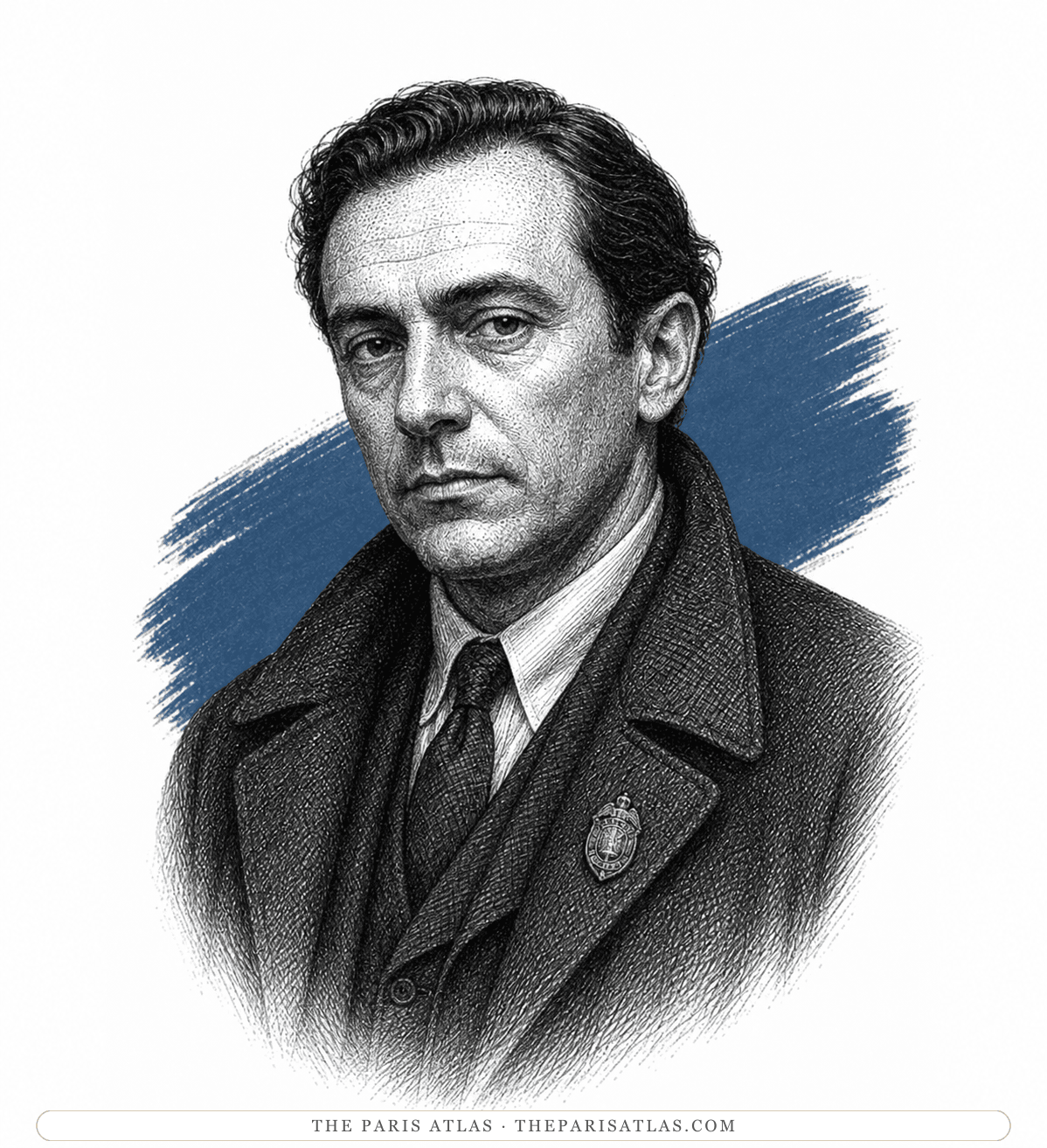
A Marseille police figure who makes the authority capable of punishing Genet part of the narrator’s erotic world.

A thief and prison acquaintance whose conduct helps Genet distinguish courage from mere violence or swagger.

A desired criminal figure whose beauty, fear, cowardice, and fascist associations make him morally disturbing and difficult to simplify.

Genet’s absent biological mother, included only through the limited facts the narrator and historical record can support.
July–August 1946
Extracts from Journal du voleur appear in Les Temps modernes.
Autumn 1948
A limited private first edition associated with Albert Skira appears in Geneva.
July 1949
Gallimard publishes a revised French trade edition containing cuts or alterations made by Genet.
1954
Olympia Press in Paris publishes Bernard Frechtman’s first complete English translation, with a foreword by Jean-Paul Sartre.
1964
Grove Press publishes Frechtman’s translation in the United States.
2018
Grove Atlantic republishes the translation with Sartre’s foreword and a new introduction by Patti Smith.
2021
The Bibliothèque de la Pléiade republishes the original 1948 French text.

Both books make forbidden experience the center of autobiographical literature.
Read our take

A later transgressive book that pushes indecency and formal disruption still further.
Read our takeIt is best read as an autobiographical novel rather than a neutral factual memoir. Many broad experiences correspond to Jean Genet’s life, but he reorganizes events, mythologizes people, and openly turns memory into art.
A limited private edition associated with Albert Skira appeared in Geneva in 1948, followed by Gallimard’s revised French trade edition in July 1949. That is why some older summaries give 1949 even though library and archival records document the 1948 edition.
Genet removed or changed passages for the 1949 Gallimard edition. The original 1948 text was restored in the 2021 Pléiade edition, so wording and page references can vary according to the version used.
Bernard Frechtman’s first complete English translation appeared from Olympia Press in Paris in 1954. Grove Press published it in the United States in 1964, so 1964 is the first U.S. Grove edition, not the first complete English translation.
Stilitano is a one-handed Serbian deserter and criminal who becomes Genet’s most intense object of desire and admiration. Late comic scenes expose his childishness and show how much of his magnificence was created by the narrator’s imagination.
It is not ordinary Christian goodness. Genet uses saintliness as a private category in which shame, criminality, betrayal, punishment, and exclusion can be transformed through total acceptance and poetic imagination.
The narrator does not offer conventional repentance. He treats theft as both a means of survival and part of a chosen identity, although tenderness, fear, vanity, and other people’s needs repeatedly complicate his grand declarations.
Lucien offers mutual tenderness and protection rather than domination. That reciprocal care threatens Genet’s claim that he belongs entirely to an inverted criminal morality and makes Lucien an important challenge to the narrator’s self-mythology.
The scene reduces Stilitano from a mythic masculine idol to a confused man who needs Robert to guide him out. It also mirrors the book’s method, in which memory and desire create reflections that the narrator later recognizes as partly his own inventions.
No major direct feature-film or television adaptation was verified in the available production sources. Genet’s short film Un Chant d’Amour and films based on his other work are separate and should not be mislabeled as adaptations of this book.
Explore authors with a similar voice, perspective, and influence.

The Brooklyn dropout who arrived in Paris broke at thirty-eight and wrote the exuberant, banned books that ended American censorship.
View author
Writer, collector, and host of the rue de Fleurus salon where modern art and the Lost Generation were curated in the same room.
View author
The doctor of the Paris slums who wrote the century's blackest, funniest novel — and changed the sound of French prose.
View authorThe sources below include the primary text, editions, scholarship, archival materials, and other records that informed this page. They document The Thief’s Journal, its publication, and its place in literary history.


Publisher record for the Bernard Frechtman translation and Grove edition.
National-library authority record for the work’s early editions and textual history.
BnF exhibition context for Genet, Sartre, and the book’s dedication.
Archival manuscripts, proofs, early-edition history, and evidence of Genet’s revisions.
Scholarly account of Bernard Frechtman’s translation and the 1954/1964 publication history.
Library record for the first complete English translation published by Olympia Press.

Publisher account of the 1964 U.S. edition and 2018 republication.
The primary text is the baseline reference for every book page. Additional references document publication history, interpretation, and historical context where that evidence is available.
 Explore more resources