
Guy
A thief and prison acquaintance whose conduct helps Genet distinguish courage from mere violence or swagger.
To act decisively within the criminal world without relying on empty displays of toughness.
The book

Who they are in the book
Spoiler-freeGuy is one of the bold criminals Genet remembers while defining his private ideas of courage, criminal vocation, and honor. He matters less as the center of a sustained relationship than as a test of the narrator’s moral vocabulary.
The portrait is restrained because Genet distinguishes real boldness from theatrical violence. Guy’s calmness helps the narrator examine which forms of criminal behavior he treats as admirable.
How Guy Is Portrayed
- Compact and toughHis physical presence suggests experience without making him an oversized brute.
- Calm expressionAn absence of swagger becomes part of the courage Genet attributes to him.
- Plain appearanceInstitutional or working-class clothes keep him grounded in the prison and criminal world.
- A moral exampleGenet uses his conduct to separate courage from violence and reputation from action.
The narrative provides no full later fate for Guy. He remains important as an example inside Genet’s argument about criminal honor.
If you like The Thief’s Journal


If you like Jean Genet
Explore authors with a similar voice, perspective, and influence.

Henry Miller
The Brooklyn dropout who arrived in Paris broke at thirty-eight and wrote the exuberant, banned books that ended American censorship.
View author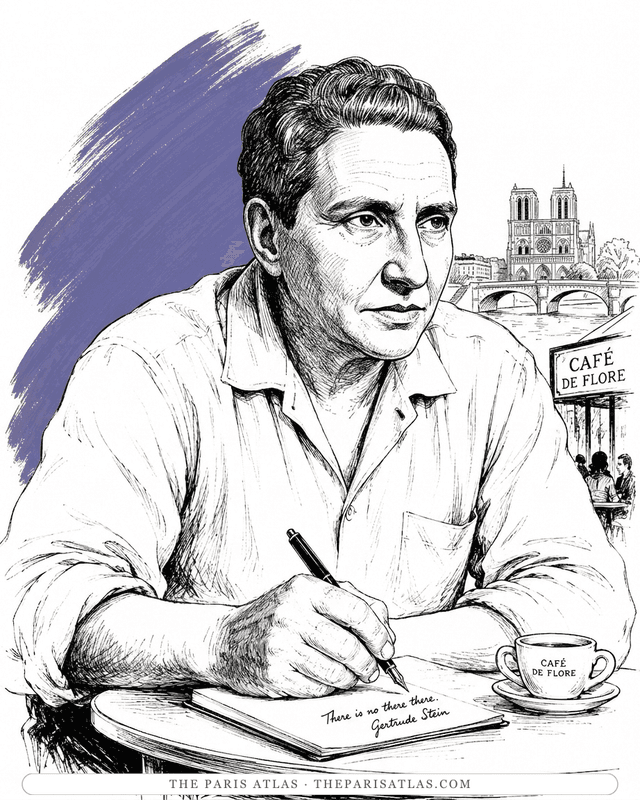
Gertrude Stein
Writer, collector, and host of the rue de Fleurus salon where modern art and the Lost Generation were curated in the same room.
View author
Louis-Ferdinand Céline
The doctor of the Paris slums who wrote the century's blackest, funniest novel — and changed the sound of French prose.
View author