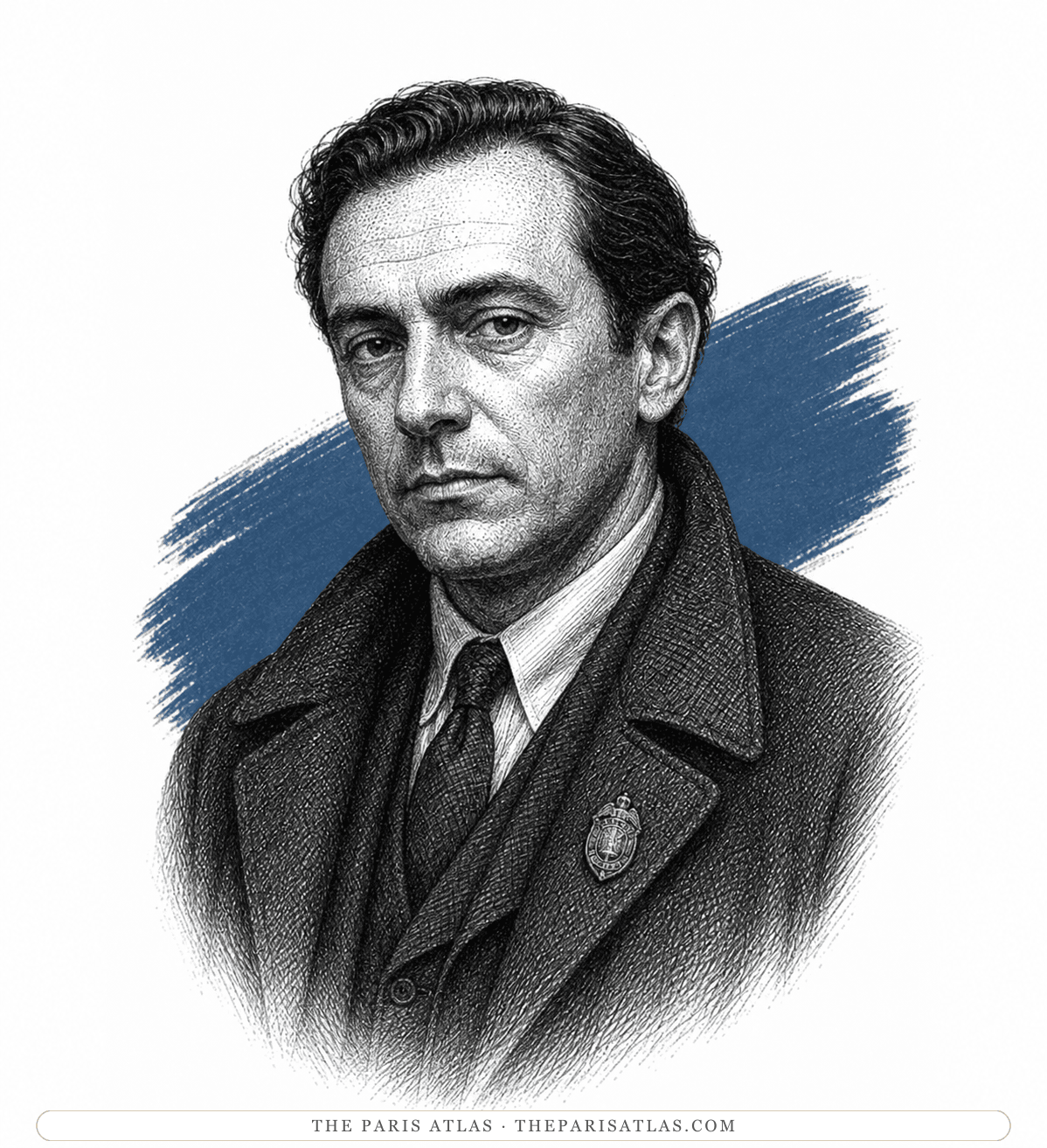
Inspector Bernardini
A Marseille police figure who makes the authority capable of punishing Genet part of the narrator’s erotic world.
To retain institutional command while conducting a private intimacy across the line between policeman and thief.
The book

Who they are in the book
Spoiler-freeBernardini is a police or secret-police figure connected with Marseille who becomes Genet’s lover or intimate fascination. His presence collapses the simple opposition between criminal and policeman.
Genet is drawn to the badge, official posture, and threat of domination even though Bernardini belongs to the institutions that arrest and punish men like him. The attraction shows how power can be resisted and desired at the same time.
How Inspector Bernardini Is Portrayed
- Controlled appearanceA restrained suit or period coat makes authority visible without theatrical menace.
- The badge mattersOfficial insignia carries erotic meaning for Genet because it represents lawful power over him.
- Intelligent reserveThe narrator associates him with calculation rather than the blunt force of Armand.
- Private and official at onceIntimacy never fully removes the institutional difference between them.
The remembered relationship ends without a detailed later-life account. Its importance lies in making authority itself part of Genet’s desire.
If you like The Thief’s Journal


If you like Jean Genet
Explore authors with a similar voice, perspective, and influence.

Henry Miller
The Brooklyn dropout who arrived in Paris broke at thirty-eight and wrote the exuberant, banned books that ended American censorship.
View author
Gertrude Stein
Writer, collector, and host of the rue de Fleurus salon where modern art and the Lost Generation were curated in the same room.
View author
Louis-Ferdinand Céline
The doctor of the Paris slums who wrote the century's blackest, funniest novel — and changed the sound of French prose.
View author