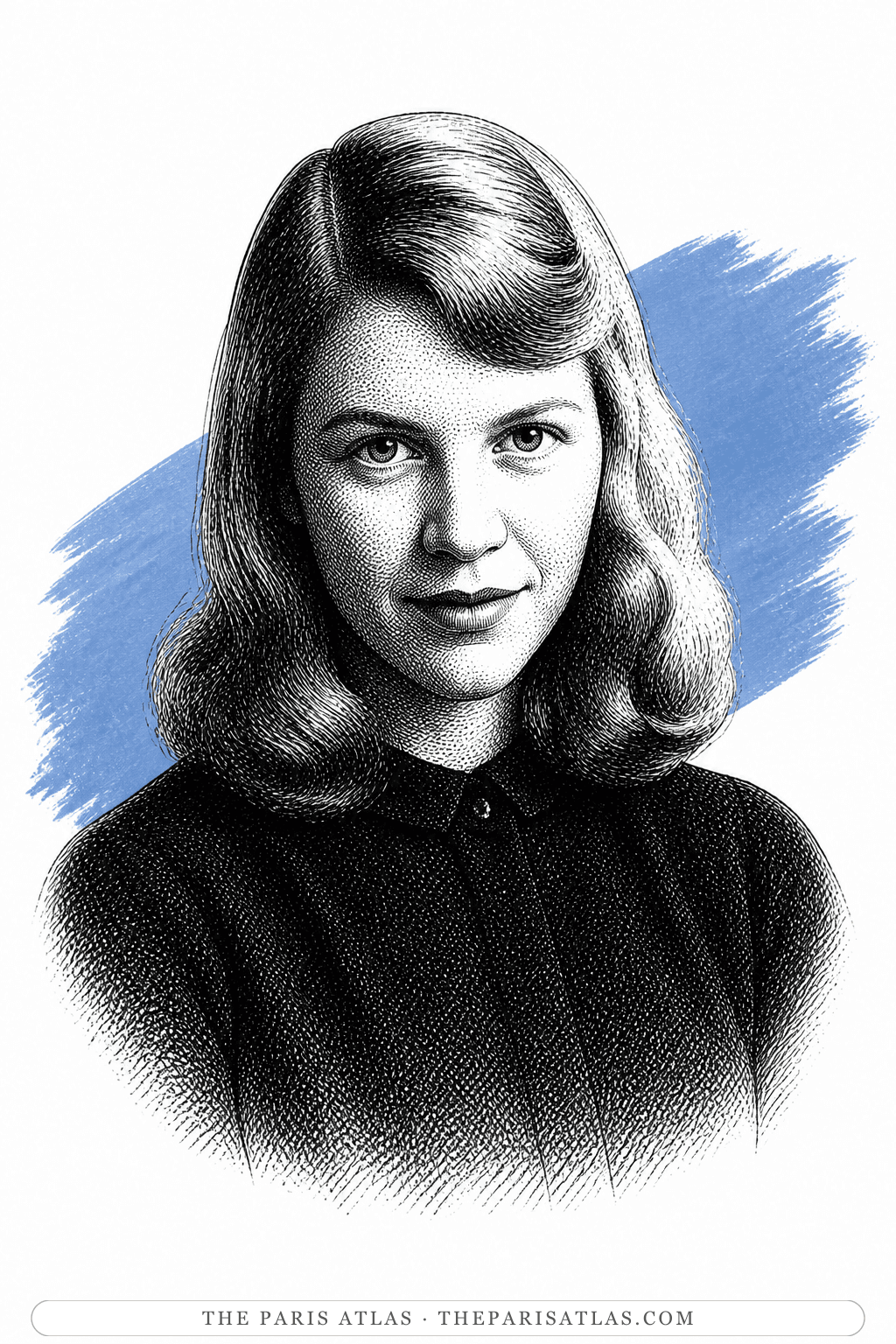

The Bell Jar
The novel grew out of the summer of 1953 that the first journal records, and out of the therapy notes of 1958 and 1959.
Read our takeThe Unabridged Journals of Sylvia Plath
Sylvia Plath
by Sylvia Plath
Every surviving journal Sylvia Plath kept from her first year at Smith College to the last year of her life, printed in full in 2000, with the spelling mistakes left in.
The Unabridged Journals of Sylvia Plath prints all twenty-three journals and journal fragments that Smith College owns, from 1950 to 1962. Karen V. Kukil, the curator of the Plath papers at Smith, edited the book for Frieda Hughes and Nicholas Hughes, who own their mother's copyrights.[1] Faber published it in London in April 2000 as The Journals of Sylvia Plath, and Anchor Books followed in New York that October.[2][3] A much shorter selection had appeared in 1982. About sixty percent of the new book had never been printed before.[4]
Sylvia Plath kept a journal from 1950, the year she went to Smith College, until a few months before she died. The book opens in 1950 with a teenager in Wellesley, Massachusetts, and closes in 1962 with a mother of two in a village in Devon. In between are Smith, a breakdown and a suicide attempt in 1953, the Fulbright year at Cambridge, Paris, marriage to Ted Hughes, a year teaching at Smith, and a year in Boston.[1][5]
Plath used the notebooks as a workshop as much as a diary. They are full of plots for short stories, notes on which magazines might take them, and notes on what she was reading.[6] They are also full of food, clothes, weather, sex, money and quarrels. Karen V. Kukil said the book shows Plath's zest for life as clearly as her interest in death.[1]
The book is a transcription, not a tidied text. Karen V. Kukil and two colleagues at Smith, Barbara Blumenthal and Susan Barker, kept Plath's punctuation, capitals, odd spellings and underlinings exactly as they are in the notebooks. Each journal is printed whole, and a note at the back describes what the notebook itself looks like.[1]
Two things are missing, and the book says so. Plath's eight earliest diaries, from 1944 to 1949, are at the Lilly Library at Indiana University and are not included. The last two journals, which covered the final three years of her life, do not survive: one disappeared, and Ted Hughes said he destroyed the other.[6]
The journals run in the order Plath wrote them, each notebook printed whole. The earliest runs from 1950 to 1953: her first years at Smith College and the depression of the summer of 1953.[5][1]
The Cambridge journals follow, from 1955 and 1956. They cover the Fulbright year, the trips to France, the night she met Ted Hughes in February 1956, and the first months of the marriage in Spain.[1][7]
Next come the American years. Plath taught English at Smith in 1957 and 1958, then moved to Boston with Ted Hughes and went back into therapy with Ruth Beuscher. The Boston section includes the two journals that were sealed until 1998.[1][8]
The last section covers 1959 to 1962: Yaddo, the move back to England in December 1959, and scattered notes from Court Green, the house in Devon. Karen V. Kukil's notes and a long index close the volume.[1][6]
The last pages are from the summer of 1962 in North Tawton, Devon. Plath describes the death of a neighbour, Percy Key, on 27 June 1962, and walking behind his coffin to the cemetery two days later. She comes home over the hill picking foxgloves.
Nothing survives after that. The two journals that covered the end of 1959 to early 1963 are gone. In 1982 Ted Hughes wrote that one had disappeared and that he had destroyed the other so that Plath's children would not have to read it.
Ted Hughes inherited Sylvia Plath's papers when she died in 1963. Before he sold her remaining manuscripts to Smith College in 1981, he had the journals typed up. Jill Ker Conway, then president of Smith, arranged the purchase.
The Dial Press published The Journals of Sylvia Plath in New York in 1982. Frances McCullough was the editor and Ted Hughes the consulting editor. Frances McCullough worked from the typescript, not from the notebooks, and printed about a third of what Plath wrote. Jacqueline Rose, reviewing the full edition in 2000, recalled that the 1982 editor had spoken of removing the intimacies and the nasty bits.
The Smith College exhibition on the journals notes that Ted Hughes has been criticised for editing his wife's journals selectively. The charge is that his cuts left a dark, unbalanced and inaccurate record of her life. Karen V. Kukil made a similar point about what was lost. The 1982 selection kept most of the big events and most of Plath's thoughts about writing, but dropped the ordinary days, the funny passages and much of her best description.
Two of the journals, written between 1957 and 1959, were sealed by Ted Hughes until 2013, fifty years after Plath's death. They include the notes Plath kept on her sessions with her therapist, Ruth Beuscher, in Boston.
On 14 September 1998 Ted Hughes unsealed them and allowed Karen V. Kukil to transcribe them, on the understanding that every original journal would be open to the public once the book came out. He died at home six weeks later, on 28 October 1998. Work on the transcription began that same September, on 933 manuscript pages.
The therapy notes open on three pages typed on pink Smith memorandum paper. In them Plath writes about the double standard of the 1950s, about her own behaviour, and about her mother. Part of the passage is written in her mother's imagined voice, asking where her nice girl went.
The same notes connect straight to The Bell Jar. Plath records that her mother gave her a book called The Case for Chastity. In the novel, Esther Greenwood's mother hands her a Reader's Digest article called In Defense of Chastity.
Paris comes into the journals during Plath's Fulbright year at Cambridge. She spent the New Year of 1955 to 1956 in France with Richard Sassoon, an American she had loved since her Smith years, and wrote a New Year's Eve entry there.
In the spring vacation of 1956 she went back to Paris to find Richard Sassoon and learned that he had left. She stayed on anyway. Julia Gordon-Bramer notes that she spent those weeks mourning him, unsettled by Ted Hughes, and seeing an old boyfriend from America, Gordon Lameyer. Her letters and journals are the main record of the visit.
She came back in June 1956 with Ted Hughes, whom she had married in London on 16 June, at the start of their honeymoon. Plath drew while she was in France that year. Karen V. Kukil points to the page where she says she was learning Paris through the fiber of her hand.
From Paris the couple went on to Spain for the summer. The journals follow them to Benidorm, with live rabbits in cages at the market and a rabbit stew Plath cooked for Ted Hughes's twenty-sixth birthday on 17 August 1956. Smith College keeps a photograph of the two of them in Paris that August, taken by Plath's brother, Warren Plath.
Much of the new material is Plath planning fiction. Luke Ferretter counted plot outlines for four short stories she finished that are now lost or survive only in scraps. He counted outlines for eighteen more that she never finished.
The longest outline, from May 1959, is for a story about a lonely bank clerk called Emmett Hummel. Plath told herself to begin it and never did. In 1959 she also resolved to write a novel about a college girl's suicide, the subject The Bell Jar later took up.
The journals are also where she practised describing things. At Yaddo, the artists' colony in Saratoga Springs, New York, where she and Ted Hughes spent nearly three months in 1959, she described two woodpeckers in the tall pines. Karen V. Kukil calls Plath's account of giving birth to her son Nicholas at home in 1962 some of her most powerful prose.
The index is a research tool in its own right. Karen V. Kukil identified the books, songs and places Plath mentions without naming them herself. She also broke Plath's own life into entries such as her clothes, her cooking and the Smith College buildings she wrote about.
through the fiber of my hand
mind living on paper and flesh living in offspring
my male muse, my pole-star centering me steady & right
About sixty percent of the text was new in 2000. The restored passages include the therapy notes, the first meeting with Ted Hughes in full, and a great deal of ordinary, funny, everyday writing.
The summer of 1953, the chastity book her mother gave her, and the resolution to write a novel about a college girl's suicide are all here, years before the novel.
Dozens of story plots, notes on where to send them, reading notes and practice descriptions show how Plath worked, day to day.
The journals cover the New Year of 1955 to 1956 in France, the spring of 1956 alone in Paris after Richard Sassoon had gone, and the honeymoon that began there.
1950
The earliest journal now at Smith College begins, in the year Plath enters Smith.
1956
Spring vacation in Paris, looking for Richard Sassoon. In June she returns with Ted Hughes at the start of their honeymoon.
1958–1959
In Boston, Plath goes back into therapy with Ruth Beuscher and keeps notes on the sessions. Ted Hughes later seals these journals until 2013.
1963
Plath dies in London on 11 February. Ted Hughes inherits her papers.
1981
Smith College buys Plath's papers, including the journals, from the Plath estate.
1982
The Dial Press publishes The Journals of Sylvia Plath, a selection of about a third of the text, edited by Frances McCullough.
1998
Ted Hughes unseals the two closed journals on 14 September, and transcription begins at Smith. He dies on 28 October.
2000
Faber publishes the complete journals in London in April. Anchor Books publishes The Unabridged Journals of Sylvia Plath in New York on 17 October.
2014
Faber reissues The Journals of Sylvia Plath 1950–1962 in paperback on 2 January.


The novel grew out of the summer of 1953 that the first journal records, and out of the therapy notes of 1958 and 1959.
Read our take

Ted Hughes's collected edition of 1981, which dates the poems Plath wrote during the years the journals cover.
Read our take
Plath's first book of poems, published in 1960, written during the years the journals cover.
Read our take
Another writer's diary published after heavy editing, with more of the text restored later.
Read our take
Virginia Woolf on money, time and a room to write in. The journals keep returning to the same problem, and Plath was reading Woolf closely.
Read our takeThe complete text of the twenty-three journals and fragments Sylvia Plath kept from 1950 to 1962 that belong to Smith College. Karen V. Kukil edited it, and it was published in 2000. The book keeps Plath's spelling, punctuation and underlining exactly as she wrote them.
The 1982 book, edited by Frances McCullough with Ted Hughes as consulting editor, printed about a third of the text. Frances McCullough worked from a typescript rather than the notebooks. The 2000 edition prints everything at Smith College, and about sixty percent of it was new.
No. Eight early diaries from 1944 to 1949 are at the Lilly Library at Indiana University and are not included. The two journals covering the last three years of her life are gone. In 1982 Ted Hughes wrote that one had disappeared and that he had destroyed the other.
He said so in 1982, explaining that he did not want her children to have to read it. Luke Ferretter notes that an unsent draft letter from Ted Hughes to Jacqueline Rose also survives. In that draft he wrote that he hid the last journal.
Two journals written between 1957 and 1959, including Plath's notes on her therapy with Ruth Beuscher. Ted Hughes had sealed them until 2013. He unsealed them on 14 September 1998, six weeks before he died.
Almost. Faber's The Journals of Sylvia Plath, 1950–1962 is complete. Anchor's American edition shortens a few names to initials and leaves out twelve sentences, on pages 358 and 444–445. The page numbers are otherwise the same.
Yes. They cover the New Year of 1955 to 1956 in France with Richard Sassoon and the spring of 1956, when she went to Paris to find him. They also cover her honeymoon with Ted Hughes, which began in Paris in June 1956.
The manuscripts are in the Sylvia Plath collection of the Mortimer Rare Book Collection at Smith College, which bought them from the Plath estate in 1981. The copyrights belong to Plath's children, who asked Karen V. Kukil to edit the edition.
Explore authors with a similar voice, perspective, and influence.
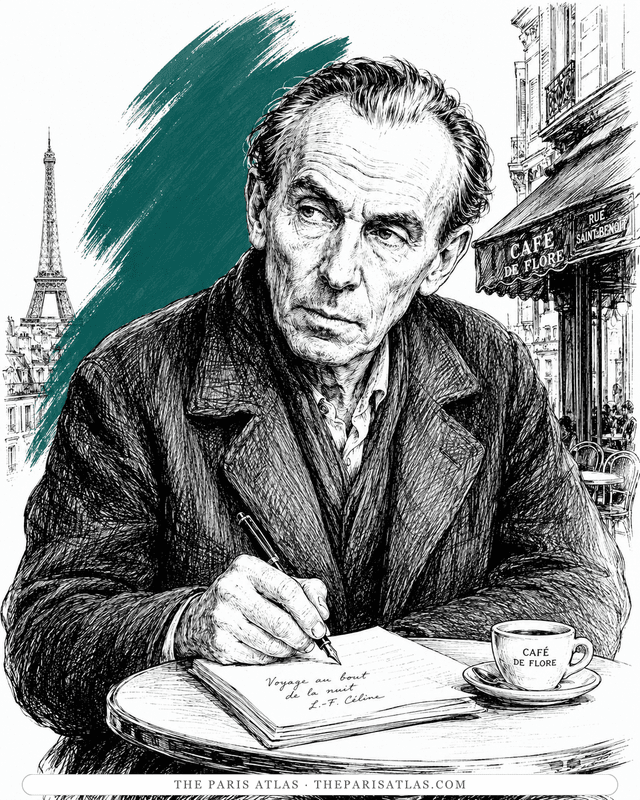
The doctor of the Paris slums who wrote the century's blackest, funniest novel — and changed the sound of French prose.
View author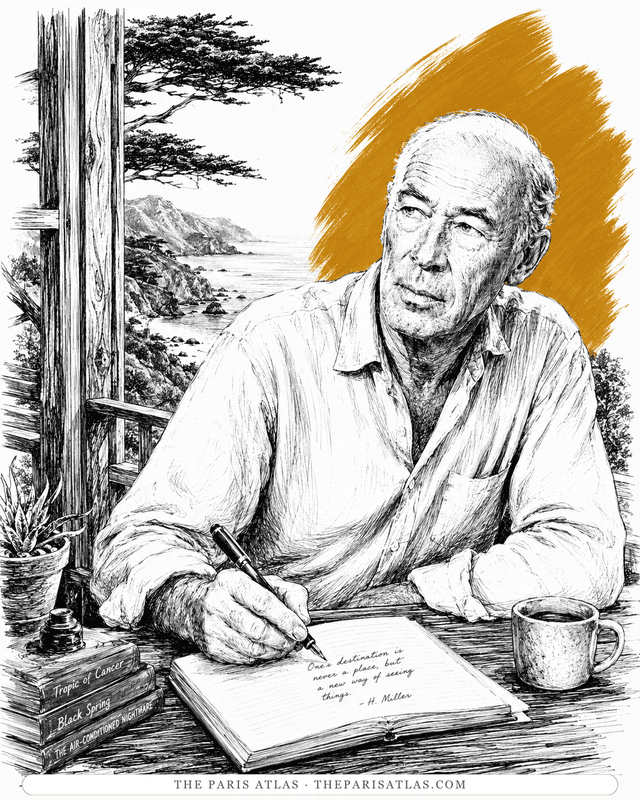
The Brooklyn dropout who arrived in Paris broke at thirty-eight and wrote the exuberant, banned books that ended American censorship.
View author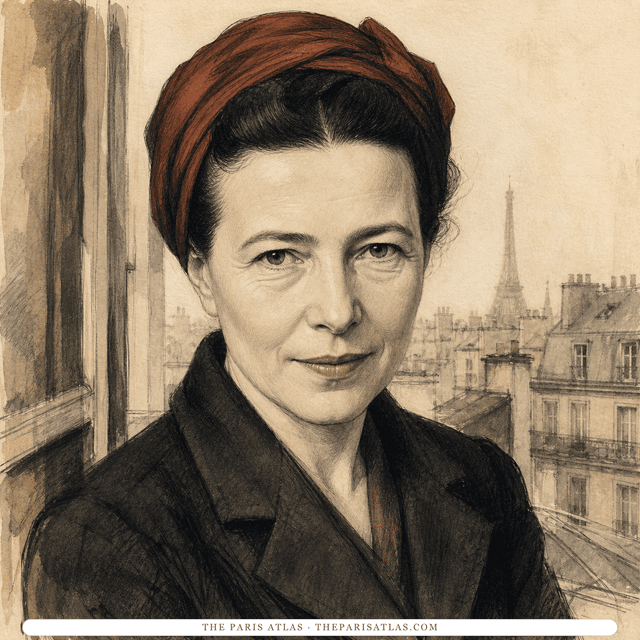
French writer and philosopher whose novels, memoirs, and social analysis examined freedom, gender, responsibility, aging, and the material conditions that shape a life.
View authorThe sources below include the primary text, editions, scholarship, archival materials, and other records that informed this page. They document The Unabridged Journals of Sylvia Plath, its publication, and its place in literary history.
The editor's own account: the commission from Frieda Hughes and Nicholas Hughes, the transcription, the unsealing in 1998, the 1981 sale, and short located quotations printed by permission of Random House.
Smith College exhibition text on the 1982 and 2000 editions, and the April 2000 London publication.

Publisher's page for the Anchor paperback, published 17 October 2000.
Library of Congress catalog record and publisher's description: the Anchor edition, its pagination, and the sixty percent of new material.
Smith College exhibition text on the journal of 1950 to 1953 and the 1981 purchase of the papers.
Luke Ferretter on what the edition contains and omits: the Lilly Library diaries, the lost last journals, the American omissions, the story plots and the index.
Julia Gordon-Bramer on the 1956 journals, used for the New Year's Eve entry of 1955 in France and April 1956 in Paris.
Smith College exhibition text on the 1958 to 1959 therapy journal, with a reproduced passage.
Publisher's page for the Anchor ebook, used for its ISBN and date.
Faber's page for the current British paperback, used for its ISBN and date.
Open Library edition records, used to confirm the Faber 2000 and 2001 ISBNs.
Jacqueline Rose's review of the Faber edition, on the 1982 cuts and the sealed therapy journals.
Smith College Libraries guide: the Paris photograph of August 1956 and the date of the marriage.
The Anchor edition itself.
Plath's letters to 1956, the other main record of the Paris visits.
Biographical frame: the Fulbright year and the marriage to Ted Hughes.
The Ted Hughes Society's life of Hughes, for the date of his death.
The primary text represented by this page, used for descriptions of the work’s contents and for any quoted passages shown here.
The primary text is the baseline reference for every book page. Additional references document publication history, interpretation, and historical context where that evidence is available.
 Explore more resources