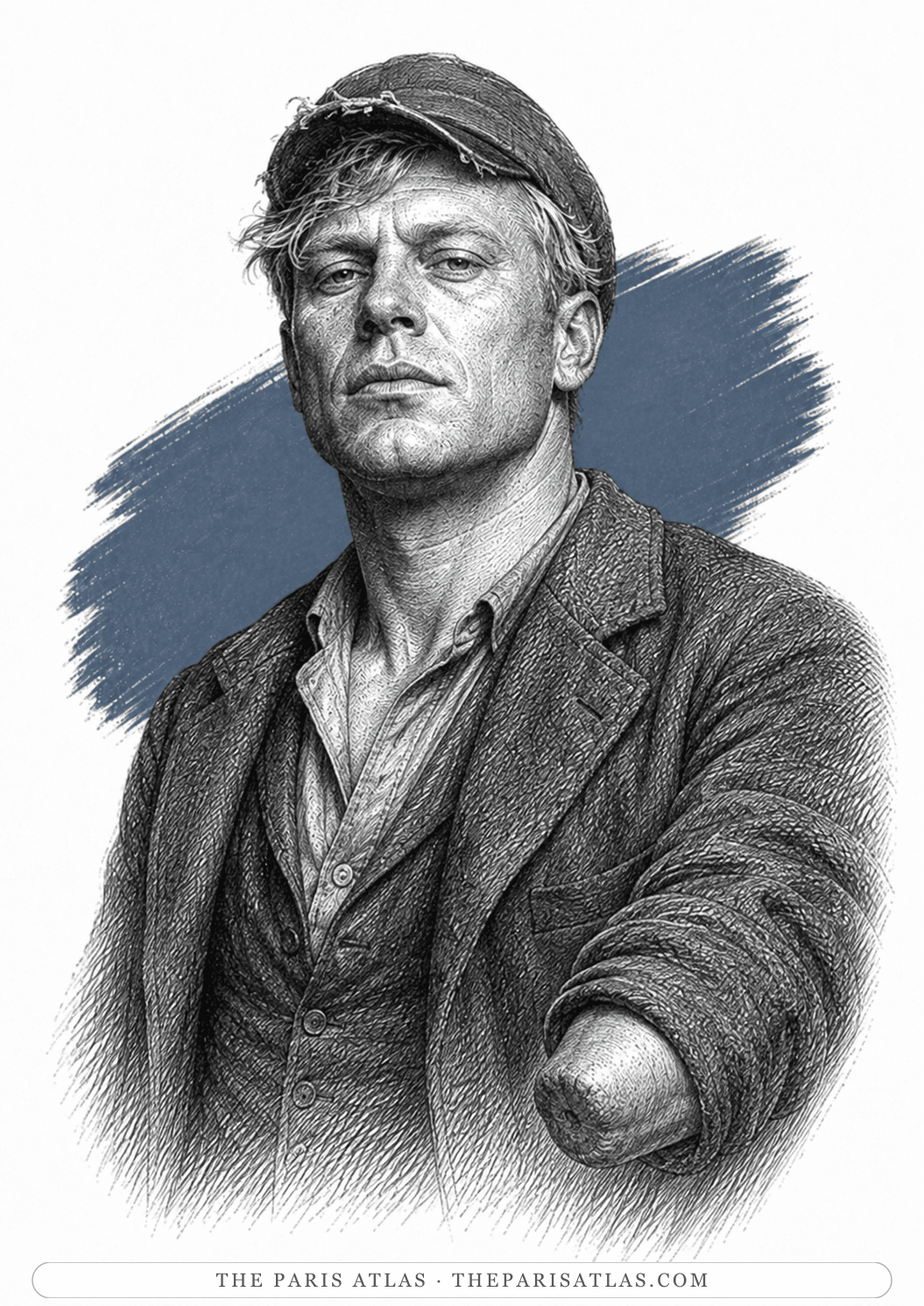
Stilitano
A one-handed Serbian deserter and criminal whom Genet turns into his most commanding object of desire.
To survive, control his circumstances, and remain free of the emotional claims Genet tries to place on him.
The book

At a glance
- Serbian
- Foreign Legion deserter
- Barcelona and Antwerp
Who they are in the book
Spoiler-freeStilitano is a Serbian deserter from the Foreign Legion whom Genet first sees in Barcelona and later encounters again in Antwerp. His missing hand, physical confidence, criminal activity, and emotional distance make him both a real companion in the remembered world and the greatest idol created by the narrator’s desire.
The book gradually reveals that his aura is not the whole person. Jealousy, vanity, childish behavior, and dependence coexist with the sovereign image Genet has built. This gap between Stilitano and the narrator’s version of him is central to the book’s examination of self-mythologizing.
How Stilitano Is Portrayed
- Physically commandingGenet remembers a large, powerful body whose movements can seem unexpectedly graceful.
- One hand missingHis disability is always visible in Genet’s description but is absorbed into, rather than allowed to cancel, his intimidating presence.
- A broken-visored capHis worn clothing becomes part of the visual mythology Genet constructs around him.
- Emotionally withholdingHis refusal to provide uncomplicated tenderness intensifies Genet’s obsession.
- Criminal authoritySmuggling, opium, border crossings, and control over other men reinforce his status in the narrator’s imagination.
- Comic vulnerabilityLate scenes show him jealous, childlike, and capable of helpless confusion, weakening the legend without erasing it.
At a fairground, Stilitano becomes lost in a Palace of Mirrors and must be guided out by Robert. The scene punctures his earlier image of invulnerability and exposes the power of Genet’s projection.
If you like The Thief’s Journal


If you like Jean Genet
Explore authors with a similar voice, perspective, and influence.
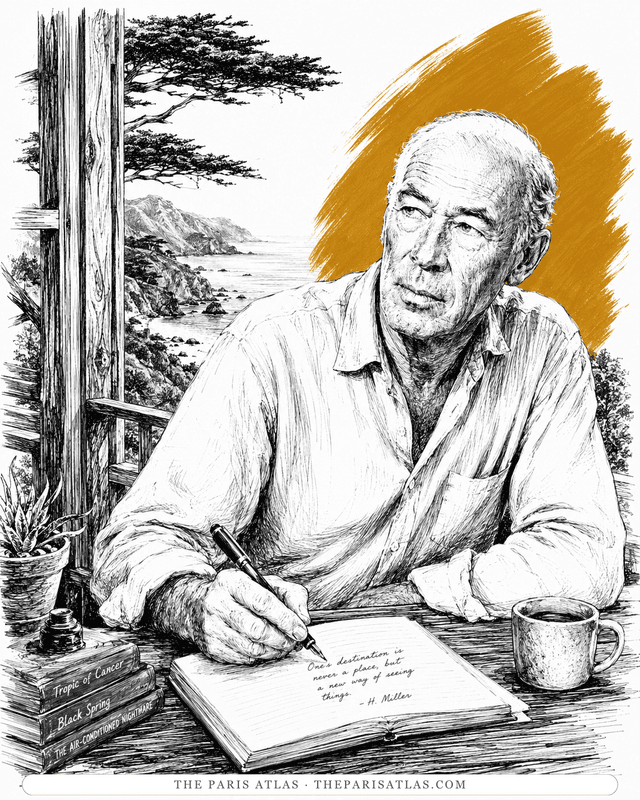
Henry Miller
The Brooklyn dropout who arrived in Paris broke at thirty-eight and wrote the exuberant, banned books that ended American censorship.
View author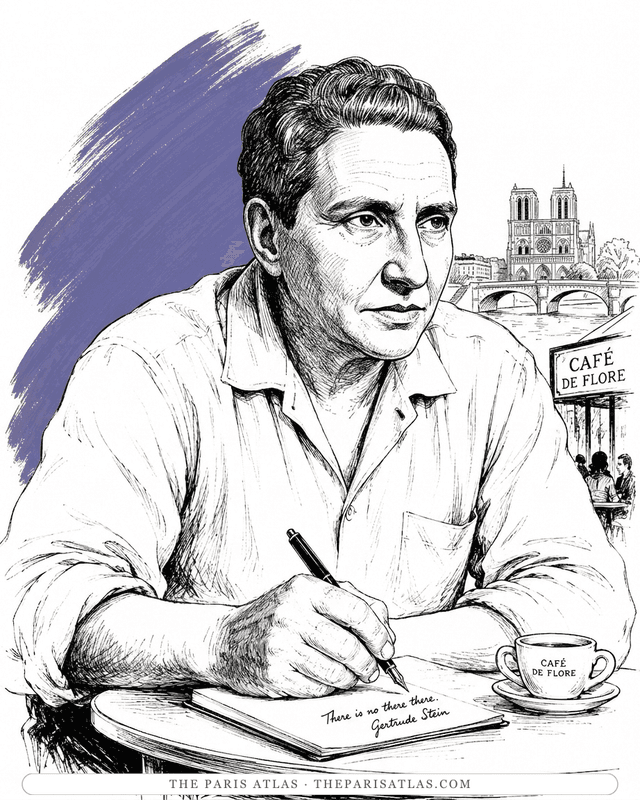
Gertrude Stein
Writer, collector, and host of the rue de Fleurus salon where modern art and the Lost Generation were curated in the same room.
View author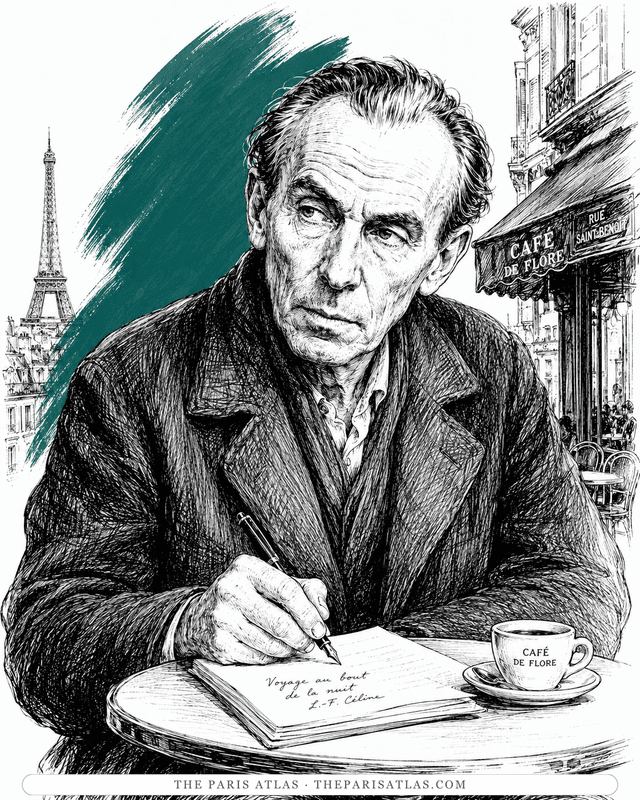
Louis-Ferdinand Céline
The doctor of the Paris slums who wrote the century's blackest, funniest novel — and changed the sound of French prose.
View author