
Reflections on the Death of Mishima
How Yukio appears in its pages: The Japanese novelist, playwright, actor, and nationalist public figure whose 1970 death Miller tries to understand.
Japanese novelist and playwright whose work explores desire, beauty, performance, identity, and self-invention.
Yukio Mishima was a Japanese novelist, playwright, short-story writer and actor. He was born Kimitake Hiraoka in Tokyo on 14 January 1925 and published under a pen name that his schoolteachers invented for him when he was sixteen. He wrote Confessions of a Mask, The Temple of the Golden Pavilion and the four-novel sequence The Sea of Fertility. He was nominated for the Nobel Prize in Literature five times during the 1960s.[1]
He wrote across almost every form available to him: novels, short stories, essays, screenplays, and plays for the modern stage as well as for the noh and kabuki theatres. He often built fiction out of events that had been in the newspapers, including a 1950 arson attack in Kyoto and a Tokyo election campaign. He also acted in films, directed one, modelled for photographers, and trained for fifteen years in weights, kendo and karate.
From his mid-thirties Mishima's politics became the public part of his life. He argued that postwar Japan had traded its traditions for consumer comfort, and in 1968 he founded a private militia called the Tatenokai. On 25 November 1970 he and four of its members seized an office at a Japan Self-Defense Forces base in Tokyo, and Mishima called on the soldiers there to mount a coup. He died by suicide the same day, aged 45.
Yukio Mishima was born Kimitake Hiraoka on 14 January 1925 in Yotsuya, a district of central Tokyo. His father, Azusa Hiraoka, was an official in the Ministry of Agriculture and Commerce. His mother, Shizue Hiraoka, was the daughter of the fifth principal of the Kaisei Academy, a Tokyo school.[2] The household was crowded. Two parents, two grandparents, a younger sister named Mitsuko, a younger brother named Chiyuki and a staff of servants all lived in the same rented house.
His paternal grandmother, Natsuko Hiraoka, took the boy away from his parents when he was an infant and kept him in her own rooms for several years. She was a granddaughter of the daimyo of Shishido, and she held on to aristocratic manners after marrying Sadatarō Hiraoka, a bureaucrat who became governor-general of Karafuto Prefecture on Sakhalin. She would not let her grandson go out in the sunlight, play sport, or play with other boys. He spent his days alone, or with female cousins and their dolls.
Natsuko was prone to violent outbursts, and several biographers trace Mishima's later fascination with death to those years. She also gave him the theatre. When he was thirteen she took him to his first kabuki play, The Treasury of Loyal Retainers, which retells the story of the 47 rōnin. His other grandmother, Tomi Hashi, took him to his first noh play. He began going to performances every month.
Mishima was returned to his parents at the age of twelve. His father admired military discipline and thought Natsuko had raised the boy too softly. Azusa Hiraoka once held his son up against the side of a speeding steam locomotive. He also searched the boy's room for signs of what he called an effeminate interest in literature, and tore up the manuscripts he found. Mishima kept writing in secret, protected by his mother, who read every new story first.
Mishima was enrolled at the age of six in the Gakushūin, the Peers' School in Tokyo. It had been founded in the Meiji period to educate the imperial family and the children of the old feudal nobility. He began writing stories at twelve, working from the Japanese classics, from the myths of the Kojiki and of Greece, and from a shelf of European writers. Those writers included Raymond Radiguet, Jean Cocteau, Oscar Wilde, Rainer Maria Rilke, Thomas Mann, Friedrich Nietzsche and Charles Baudelaire. He studied German as well.
In 1941, at sixteen, he wrote a story called Forest in Full Bloom for the school literary magazine. His teacher Fumio Shimizu was impressed enough to place it in the outside journal Bungei Bunka instead. Shimizu and his fellow editors invented the pen name Yukio Mishima so that the boy's father would not find out. They took Mishima from the railway station of that name, and Yukio from yuki, the Japanese word for snow, which they had seen on Mount Fuji from the train.
The story appeared as a small book of 4,000 copies in 1944, a short print run forced by the wartime paper shortage. Mishima published it as a keepsake, expecting to die in the war. On 9 September 1944 he graduated at the top of his Gakushūin class. Emperor Hirohito attended the ceremony, and Mishima was later given a silver watch at the Imperial Household Ministry.
A conscription notice reached him on 27 April 1944, and in May he passed the examination as a second-class recruit. At his medical check on 10 February 1945 he had a cold, and the army doctor recorded it as tuberculosis. Mishima was declared unfit for service and sent home. He did not correct the doctor. In Confessions of a Mask he suggests that he lied to get the diagnosis, and the unit he would have joined was later sent to the Philippines, where few men came back.
The day before that medical check he had written a farewell letter to his family ending "Long live the Emperor!", and enclosed clippings of his hair and nails as mementoes. The war took people close to him anyway. His mentor, the nationalist writer Zenmei Hasuda, shot his commanding officer and then himself four days after Japan surrendered. Mishima's sister Mitsuko died of typhoid fever on 23 October 1945, at seventeen, after drinking untreated water. He read poetry at a memorial service for Hasuda in November 1946.
In January 1946 Mishima carried two manuscripts to the novelist Yasunari Kawabata's house in Kamakura and asked for help. Kawabata recommended them. The magazine Ningen printed The Cigarette in June 1946 and The Middle Ages that December. Mishima's father still wanted a bureaucrat rather than a novelist in the family, so Mishima read law at the University of Tokyo, attending lectures by day and writing at night.
He graduated in 1947 and took a post at the Ministry of Finance. One year of it exhausted him, and his father agreed to let him resign and write full time. His first novel, Thieves, was published in 1948. Confessions of a Mask followed in 1949, a semi-autobiographical account of a young homosexual man who builds a mask in order to pass in ordinary society. It sold heavily and made Mishima a celebrity at twenty-four.[1]
In 1952 he travelled around the world and published the journey as The Cup of Apollo. Greece had fascinated him since childhood, and the visit produced The Sound of Waves in 1954. It is a love story between a young fisherman and a girl who dives for pearls and abalone, set on a small island and modelled on the Greek tale of Daphnis and Chloe. The book was a bestseller. Left-wing critics attacked it for celebrating old-fashioned Japanese values, and some readers began calling Mishima a fascist.
The Temple of the Golden Pavilion, published in 1956, retells a real crime. In 1950 a mentally ill monk burned down the Kinkaku-ji temple in Kyoto, and Mishima worked the case into a novel.[1] Kyōko no Ie followed in 1959. It splits him into four young men, a boxer, a painter, an actor and a businessman, and he described the book as his own research into the nihilism he found in himself.
Mishima worked from documented events more often than from invention. The Temple of the Golden Pavilion follows the Kyoto arson case of 1950. After the Banquet, published in 1960, tracked the politician Hachirō Arita's campaign for governor of Tokyo so closely that Arita sued him for invasion of privacy. The short story Patriotism, from the same year, is set inside the failed army revolt known as the February 26 incident.
He wrote in many forms at once. Novels, short stories, essays, criticism, travel writing, screenplays and libretti all sit in the same working life, along with plays for the modern shingeki stage and for the noh and kabuki theatres. He rewrote classical models directly. The Frolic of the Beasts, published in 1961, is a version of the fourteenth-century noh play Motomezuka by Kiyotsugu Kan'ami, and his early story The Middle Ages borrows the language of medieval Japanese verse.
The prose itself is dense and ornamental. The writer Andrew Rankin describes the work by "its luxurious vocabulary and decadent metaphors, its fusion of traditional Japanese and modern Western literary styles, and its obsessive assertions of the unity of beauty, eroticism, and death". Those three, beauty, eroticism and death, return in book after book. He could also work well outside that register. Beautiful Star, published in 1962, comes close to science fiction.
Mishima began weight training in 1955 and kept to three sessions a week for the last fifteen years of his life. He reached fifth dan in kendo, second dan in battōjutsu and first dan in karate, and he boxed briefly in 1956. His 1968 essay Sun and Steel sets out the reasoning. He objected to the value intellectuals placed on the mind over the body, and he trained so that his own body would stand equal to his mind.
He married Yōko Sugiyama, the daughter of the painter Yasushi Sugiyama, on 1 June 1958. Their daughter Noriko was born in 1959 and their son Iichirō in 1962. While he was writing the novel Forbidden Colors, Mishima visited gay bars in Japan. His sexual orientation bothered his wife, and she denied his homosexuality after his death.
Much of his working life was public. He acted in Yasuzo Masumura's film Afraid to Die in 1960 and sang its theme song, and he appeared in Black Lizard in 1968 and Hitokiri in 1969. In 1966 he directed and starred in a film of his own story Patriotism. He posed for the photographer Eikoh Hosoe's book Ba-ra-kei: Ordeal by Roses. In 1967 readers of the magazine Heibon Punch voted him Mr Dandy, ahead of the actor Toshiro Mifune.
From his mid-thirties his politics were explicit and constant. He praised the traditional culture of Japan and opposed Western-style materialism, postwar democracy, globalism and communism. His argument was that Japan was giving up its kokutai, or national essence, and turning into a rootless country. In the story Voices of the Fallen Heroes, published in 1966, he criticised Emperor Hirohito for renouncing his own divinity after the war. Mishima wrote that the soldiers of the February 26 revolt and the kamikaze pilots had died for a living god, and that the renunciation had made their deaths meaningless.
Two books of the late 1960s set out the position at length. On Hagakure, published in 1967, is a defence of bushido built around an Edo-period treatise that valued a warrior's readiness to die. On the Defense of Culture, published in 1968, argues that the emperor stands at the centre of Japanese culture. In the same year Mishima founded the Tatenokai, or Shield Society, a private militia raised to protect the dignity of the emperor as a symbol of national identity.
Mishima died by suicide on 25 November 1970, aged 45, inside the Ichigaya headquarters of the Japan Self-Defense Forces in central Tokyo. The method was seppuku, the ritual self-disembowelment of the samurai tradition, carried out with a blade. He had completed his final novel that morning, and the suicide had been planned in advance.[1]
He arrived at Ichigaya with four members of the Tatenokai, the militia he had founded two years earlier. They went into the commandant's office and took him hostage. Mishima then stepped out onto the balcony above the parade ground and addressed the soldiers gathered below. He called on the Japan Self-Defense Forces to rise up, to overturn Article 9 of the 1947 constitution, and to restore both Japan's right to defend itself and the divinity of the emperor. The soldiers did not follow him. He went back inside and killed himself.
Mishima had spent fifteen years rebuilding his body, and for a decade before Ichigaya he had been writing about dying young and by choice. Patriotism, written in 1960, ends with an army officer cutting open his own stomach after a failed revolt. On Hagakure, written in 1967, argues that a warrior's willingness to die was the source of Mishima's own vitality as a writer. In that book he wrote that a futile death still has the dignity of a human death, and that no death may be called futile.
The war was part of it as well. He had been sent home from his army medical examination in February 1945, while the unit he would have joined was sent to the Philippines, where few of its men survived. Researchers have argued that his guilt at that escape marked the rest of his life and his writing. His own diary entry after the surrender promised to preserve what he called Japanese irrationality.
Mishima had argued through the 1960s that the prosperity of postwar Japan was hollow. He held that the emperor's renunciation of divinity had emptied out the deaths of the war, and that the constitution of 1947 had left the country with no right to an army of its own. He had made the same demand in print for years before he made it from the balcony. He was buried at Tama Cemetery in Tokyo.
Mishima was nominated for the Nobel Prize in Literature five times in the 1960s, in 1963, 1964, 1965, 1967 and 1968. The 1968 prize went to Yasunari Kawabata, the writer who had helped him into print after the war. Mishima judged that a second Japanese laureate was unlikely to follow soon. He was among the youngest writers ever nominated.
Not every book landed well. Kyōko no Ie sold 150,000 copies in a month in 1959 and was still panned across the literary press, and it was quickly labelled his first failure. Mishima took the reception hard. The Sound of Waves had already been attacked from the left for glorifying old Japanese ethics, a charge he answered years later by saying those ethics still lay at the bottom of Japanese hearts.
His plays have kept a reputation of their own. In 1994 the Japanese theatre magazine Theater Arts called Madame de Sade, written in 1965, the greatest drama in the history of postwar theatre. The play sets six women arguing about the Marquis de Sade, and it grew out of an obscenity trial over a Japanese translation of Sade that was running while Mishima wrote.
He is counted among the most important postwar stylists of the Japanese language. His political activities divided opinion while he was alive, and in Japan that argument has continued since his death. Readers outside Japan mostly meet him through Confessions of a Mask and The Temple of the Golden Pavilion, both of which have stayed in print in English for decades.[3]
Born Kimitake Hiraoka on 14 January in Yotsuya, Tokyo, the son of a government official.
Enrolled at six in the Gakushūin, the Peers' School in Tokyo.
Returned to his parents at twelve, after years spent in his grandmother Natsuko Hiraoka's rooms.
Publishes Forest in Full Bloom at sixteen; his teachers invent the pen name Yukio Mishima to hide it from his father.
Graduates top of his Gakushūin class on 9 September, with Emperor Hirohito present at the ceremony.
An army doctor records his cold as tuberculosis on 10 February; he is declared unfit and sent home.
Takes two manuscripts to Yasunari Kawabata in Kamakura; the magazine Ningen prints The Cigarette in June.
Graduates in law from the University of Tokyo and takes a post at the Ministry of Finance.
Publishes Confessions of a Mask, which makes him a celebrity at twenty-four.
Travels around the world and publishes the journey as the travelogue The Cup of Apollo.
Publishes The Sound of Waves, a bestseller that left-wing critics attack for celebrating old Japanese values.
Begins weight training, which he keeps up three times a week for the rest of his life.
Publishes The Temple of the Golden Pavilion, built on the burning of the Kinkaku-ji temple in Kyoto in 1950.
Marries Yōko Sugiyama on 1 June; their daughter Noriko is born in 1959 and their son Iichirō in 1962.
Founds the Tatenokai, a private militia, in the year Yasunari Kawabata wins the Nobel Prize in Literature.
Dies by suicide by seppuku on 25 November at the Ichigaya base in Tokyo, after calling on the soldiers there to mount a coup.
How Yukio appears in its pages: The Japanese novelist, playwright, actor, and nationalist public figure whose 1970 death Miller tries to understand.
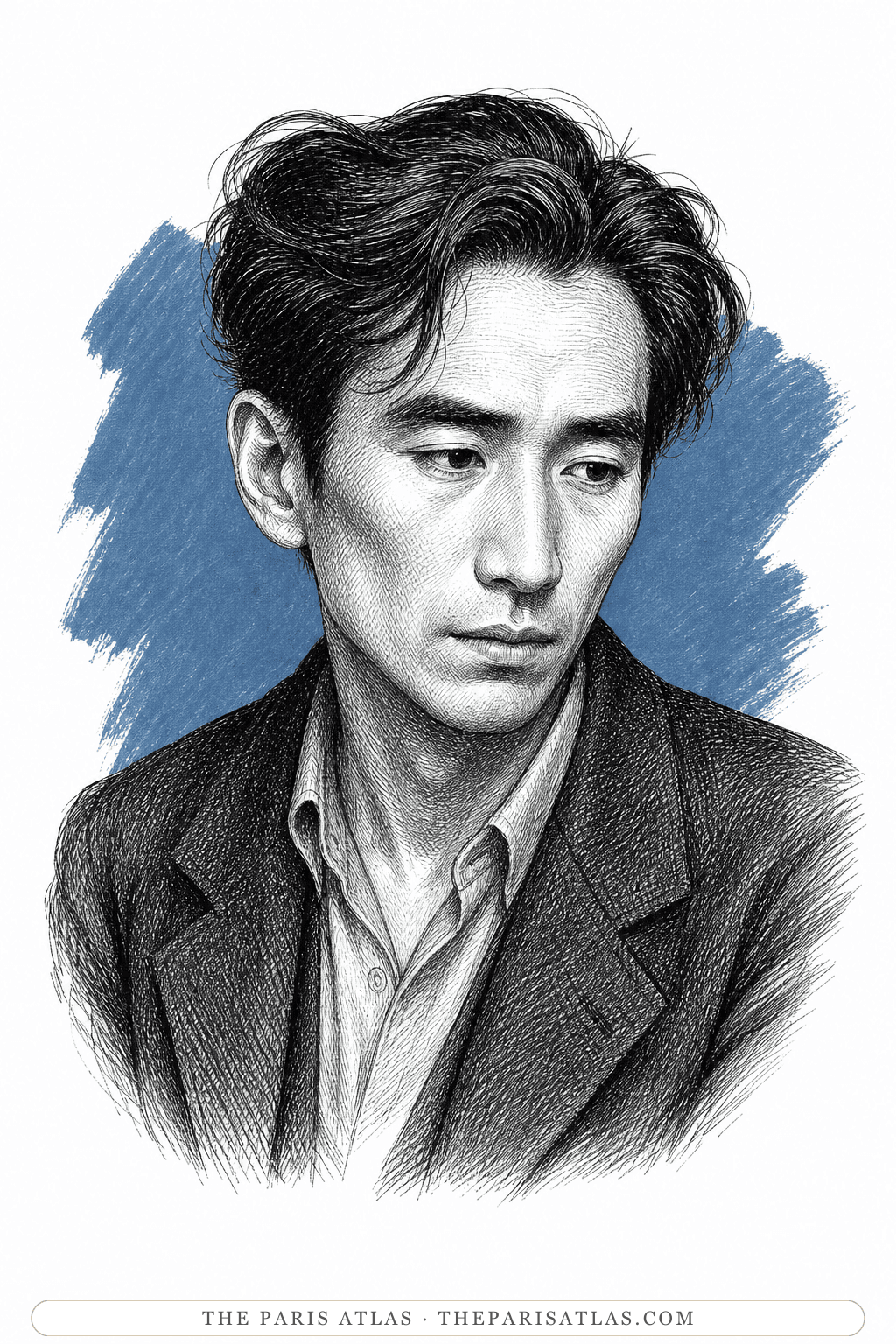
Met · 1947
Yukio Mishima and Osamu Dazai met briefly in 1947, when Mishima was twenty-two. Dazai was already a popular novelist known for writing about suicide, and the encounter left a lasting impression on Mishima.
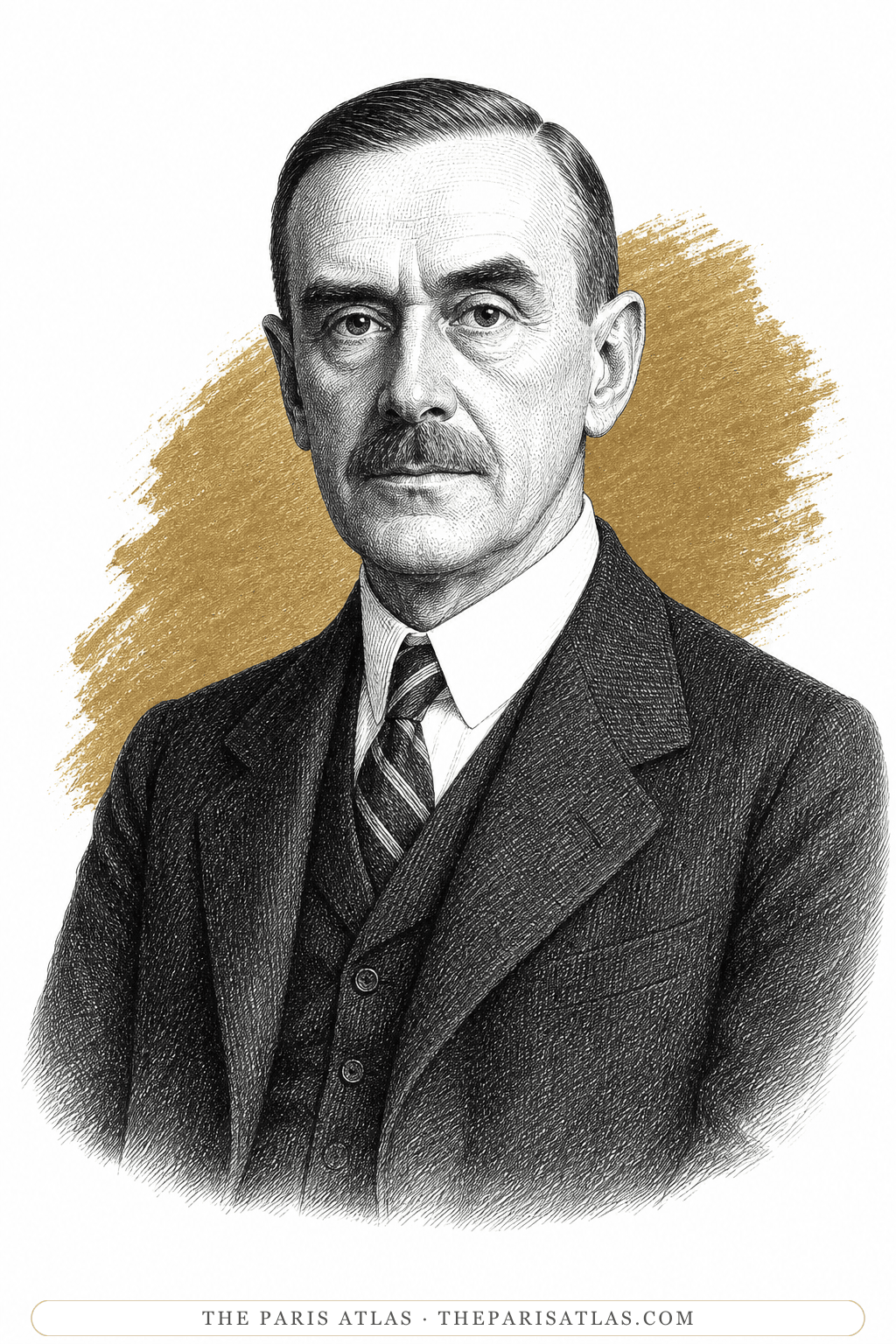
Mishima is named among the later novelists whose work Mann's fiction shaped.
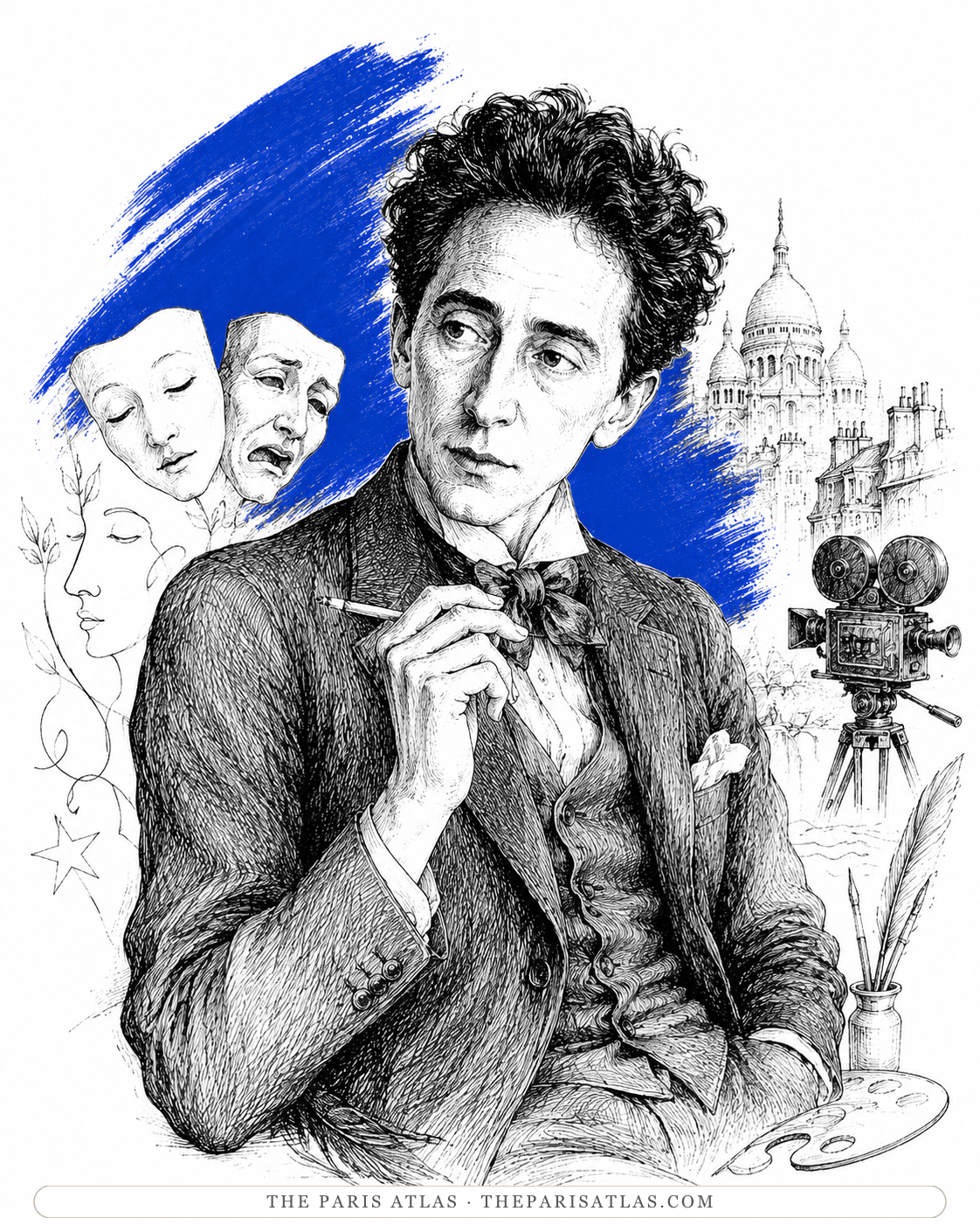
Jean Cocteau is one of the European writers named among the models of Mishima's schoolboy fiction, which he began at twelve. Cocteau worked across novels, plays and film, and Mishima went on to write in the same spread of forms.
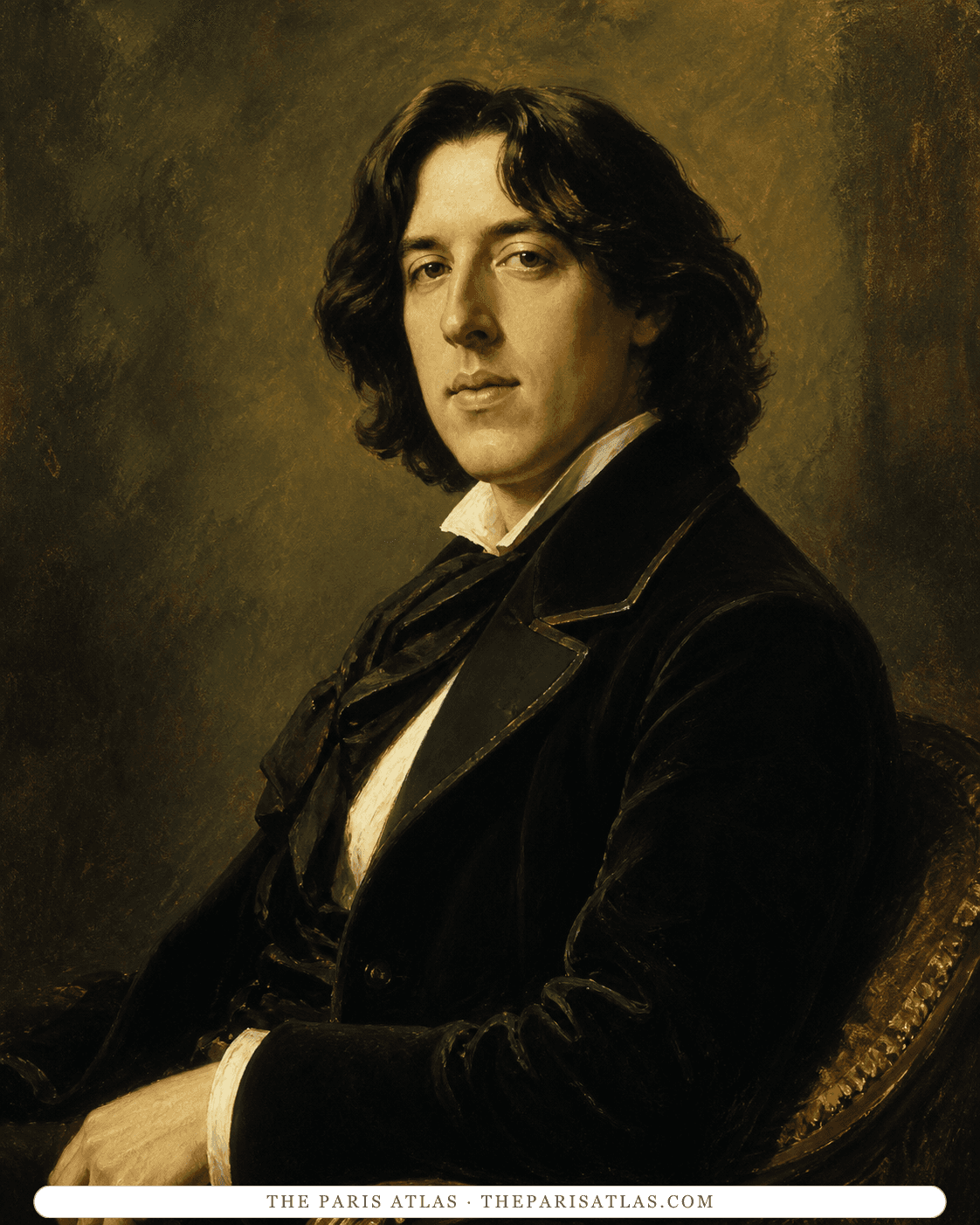
Mishima began writing stories at twelve, at the Gakushūin school in Tokyo. Accounts of those years name Oscar Wilde among the European writers he worked from, alongside Raymond Radiguet, Jean Cocteau, Rainer Maria Rilke, Thomas Mann, Friedrich Nietzsche and Charles Baudelaire.

A young man performs the life expected of him and hopes the performance will eventually become real.
Yukio Mishima (1925–1970) was a Japanese novelist, playwright, short-story writer and actor, and one of the most important postwar stylists of the Japanese language. He was born Kimitake Hiraoka in Tokyo and took his pen name at sixteen, when schoolteachers invented it to keep his father from finding out he was publishing. His books include Confessions of a Mask, The Temple of the Golden Pavilion, The Sound of Waves and the four-novel sequence The Sea of Fertility. In 1968 he founded a private militia, the Tatenokai, and he died two years later in a failed attempt to provoke a military coup.
Mishima died by suicide on 25 November 1970, aged 45, by seppuku, the ritual self-disembowelment of the samurai tradition. That morning he finished his final novel. He then went with four members of the Tatenokai, the private militia he had founded in 1968, to the Ichigaya headquarters of the Japan Self-Defense Forces in central Tokyo. They took the commandant hostage in his own office, and Mishima went out onto the balcony and addressed the soldiers below. He called on them to rise up, overturn Article 9 of the 1947 constitution, and restore both Japan's right to its own defence and the divinity of the emperor. The soldiers did not follow him. He went back inside and killed himself. The death had been planned in advance, and he was buried at Tama Cemetery in Tokyo.
Confessions of a Mask (1949) and The Temple of the Golden Pavilion (1956) are the two most widely read. Confessions of a Mask is a semi-autobiographical novel about a young homosexual man who builds a mask in order to pass in ordinary society, and it made Mishima famous at twenty-four. The Temple of the Golden Pavilion is drawn from a real case, the burning of the Kinkaku-ji temple in Kyoto by a monk in 1950. The Sound of Waves (1954) was his first bestseller, and The Sea of Fertility is the four-novel sequence he was finishing when he died. Among the plays, Madame de Sade (1965) has the largest reputation.
No. He was born Kimitake Hiraoka, and Yukio Mishima was a pen name invented for him by other people. In 1941 his teacher Fumio Shimizu decided to publish the sixteen-year-old's story Forest in Full Bloom in the journal Bungei Bunka, and he and his fellow editors picked the name so that Mishima's father would not recognise the author. Azusa Hiraoka disapproved of his son writing fiction and had torn up his manuscripts. The editors took Mishima from a railway station of that name, and Yukio from yuki, the Japanese word for snow, which they saw on Mount Fuji from the train.
The Tatenokai, or Shield Society, was a private militia that Mishima founded in 1968 to protect the dignity of the emperor as a symbol of national identity. It was legal under postwar Japanese law, though its aims ran against the pacifism the country had adopted after 1945. Scholars read it as an attempt to reclaim the prewar values of loyalty that Mishima believed postwar Japan had weakened. Four of its members went with him to the Ichigaya base on 25 November 1970.
No. He was nominated five times during the 1960s, in 1963, 1964, 1965, 1967 and 1968, and he was one of the youngest writers ever put forward. The 1968 prize went instead to Yasunari Kawabata, the older novelist who had helped Mishima into print in 1946 by recommending his early stories to a magazine. Mishima concluded that the Swedish Academy was unlikely to choose a second Japanese writer soon.
Met · 1947
Yukio Mishima and Osamu Dazai met briefly in 1947, when Mishima was twenty-two. Dazai was already a popular novelist known for writing about suicide, and the encounter left a lasting impression on Mishima.
Influenced by
Mishima is named among the later novelists whose work Mann's fiction shaped.
Influenced by
Jean Cocteau is one of the European writers named among the models of Mishima's schoolboy fiction, which he began at twelve. Cocteau worked across novels, plays and film, and Mishima went on to write in the same spread of forms.
Influenced by
Mishima began writing stories at twelve, at the Gakushūin school in Tokyo. Accounts of those years name Oscar Wilde among the European writers he worked from, alongside Raymond Radiguet, Jean Cocteau, Rainer Maria Rilke, Thomas Mann, Friedrich Nietzsche and Charles Baudelaire.
The sources below include biographies, scholarly essays, interviews, and primary materials that informed this page. They reflect both the historical record and ongoing critical conversations about Yukio Mishima and their work.

Authority record used for the birth and death dates, the family names, and the external identifiers.
The publisher's author page, used for the English-language titles and editions in print.

Reference biography cross-checked for the childhood, the school years, the wartime medical examination, the publishing career, and the death.
Inoue Takashi on the life and work: the debut at sixteen, Confessions of a Mask, The Temple of the Golden Pavilion, The Sea of Fertility, and the death at Ichigaya.
The Nobel Prize's own nomination archive, which lists all five Literature nominations — 1963, 1964, 1965, 1967 and 1968 — and names the nominator in each year.

Andrew Rankin's study of Mishima's ideas, the source of the description of his style quoted here, and of the reading of the death as part of the work.
John Nathan's biography, written by Mishima's English translator from interviews with his family and friends, and the standard account of the childhood, the war years and the publishing career.
Kirsten Cather of the University of Texas at Austin on the events at Ichigaya on 25 November 1970 and how they were reported.
The museum at Lake Yamanaka that holds Mishima's manuscripts, notebooks, letters and photographs, including the drafts of Confessions of a Mask, The Sound of Waves and The Temple of the Golden Pavilion.
These references anchor the page in the documented record and in the scholarly conversations around Yukio Mishima. Every claim on this page traces back to one or more of the works listed here.
 Explore more resources