The Paris AtlasCharting the artists, works, and places worth returning to.

Oscar Wilde

Irish playwright, novelist, poet, essayist, and editor whose social comedies, only novel, fairy tales, and prison writing joined wit to serious questions about art, class, sexuality, punishment, and freedom.

18 books on our shelvesComplete list of Oscar Wilde books

Details

Lived
1854–1900
Born
16 October 1854
Birthplace
Dublin, Ireland
Died
30 November 1900 · aged 46
Place of death
Paris, France
Nationality
Irish
Married
Constance Lloyd · 1884–1898
Children
Cyril Holland, Vyvyan Holland
Roles
AuthorPlaywrightPoetEditor
Also known as
Oscar Fingal O'Flahertie Wills Wilde · Sebastian Melmoth

About Oscar Wilde

Oscar Fingal O'Flahertie Wills Wilde was an Irish playwright, novelist, poet, essayist, and editor. He wrote The Picture of Dorian Gray, his only novel, and The Importance of Being Earnest, a comedy about invented identities and the rules of respectable society.

Wilde is often reduced to a list of clever sayings or to the trials that ended his public career. The books show a wider writer. His fairy tales examine poverty and selfishness; his essays argue about art and political freedom; his comedies expose the arbitrary rules behind marriage and status; his prison writing describes what punishment does to a person.

Dublin, Oxford, and the Aesthetic movement

Oscar Wilde was born in Dublin on 16 October 1854. His mother, Jane Wilde, was an Irish nationalist poet who published as Speranza. His father, William Wilde, was an eye and ear surgeon and a writer on Irish archaeology and folklore. Oscar studied classics at Trinity College Dublin and at Magdalen College, University of Oxford.

After Oxford, Wilde became a public spokesman for Aestheticism, a movement that argued that art should be valued for beauty and form rather than forced to teach a moral lesson. He lectured in Britain and the United States, edited the magazine The Woman's World, and turned his dress and conversation into parts of a public performance. His essays later made the argument more complex: art does not simply copy life, and criticism can itself be creative work.

Marriage, stories, and The Picture of Dorian Gray

Wilde married Constance Lloyd in 1884. Constance Wilde was a writer, lecturer, and campaigner for women's dress reform, not only the wife of a famous man. They had two sons, Cyril and Vyvyan. During these years Wilde published The Happy Prince and Other Tales and A House of Pomegranates, literary fairy tales written for adults as well as children.

The Picture of Dorian Gray first appeared in a magazine in 1890 and caused hostile reviews because critics saw sexual and moral danger in it. Wilde revised and expanded the story for the 1891 book. Its central device is simple: Dorian Gray remains young while a hidden portrait records age and wrongdoing. The book uses that impossible bargain to ask whether a beautiful public face can be separated from responsibility for private acts.

The plays and Salome in Paris

Between 1892 and 1895, Wilde became one of London's most successful playwrights. Lady Windermere's Fan, A Woman of No Importance, An Ideal Husband, and The Importance of Being Earnest use courtship, blackmail, hidden parents, false names, and threatened scandal to reveal how respectable society protects some people and punishes others.

Wilde wrote Salome in French. The one-act tragedy follows Salome as she demands the head of the imprisoned prophet Jokanaan. British censorship prevented the planned London performance because the play represented biblical characters. The French text was published in Paris in 1893, and the first production opened there in 1896 while Wilde was in prison.

Trials, prison, and the law against sex between men

Wilde had a relationship with Lord Alfred Douglas, a British poet. Douglas's father, the Marquess of Queensberry, accused Wilde of posing as a sodomite. Wilde sued him for criminal libel in 1895. The case collapsed when the defense presented evidence about Wilde's sexual relationships with men, and the government then prosecuted Wilde under a law that criminalized sexual acts between men.

After one jury failed to agree, a second trial convicted Wilde of gross indecency. He received two years of imprisonment with hard labor. At Reading Gaol he wrote the long letter later called De Profundis. After release he wrote The Ballad of Reading Gaol, a poem about an execution and the damage caused by prison itself.

The final years in France

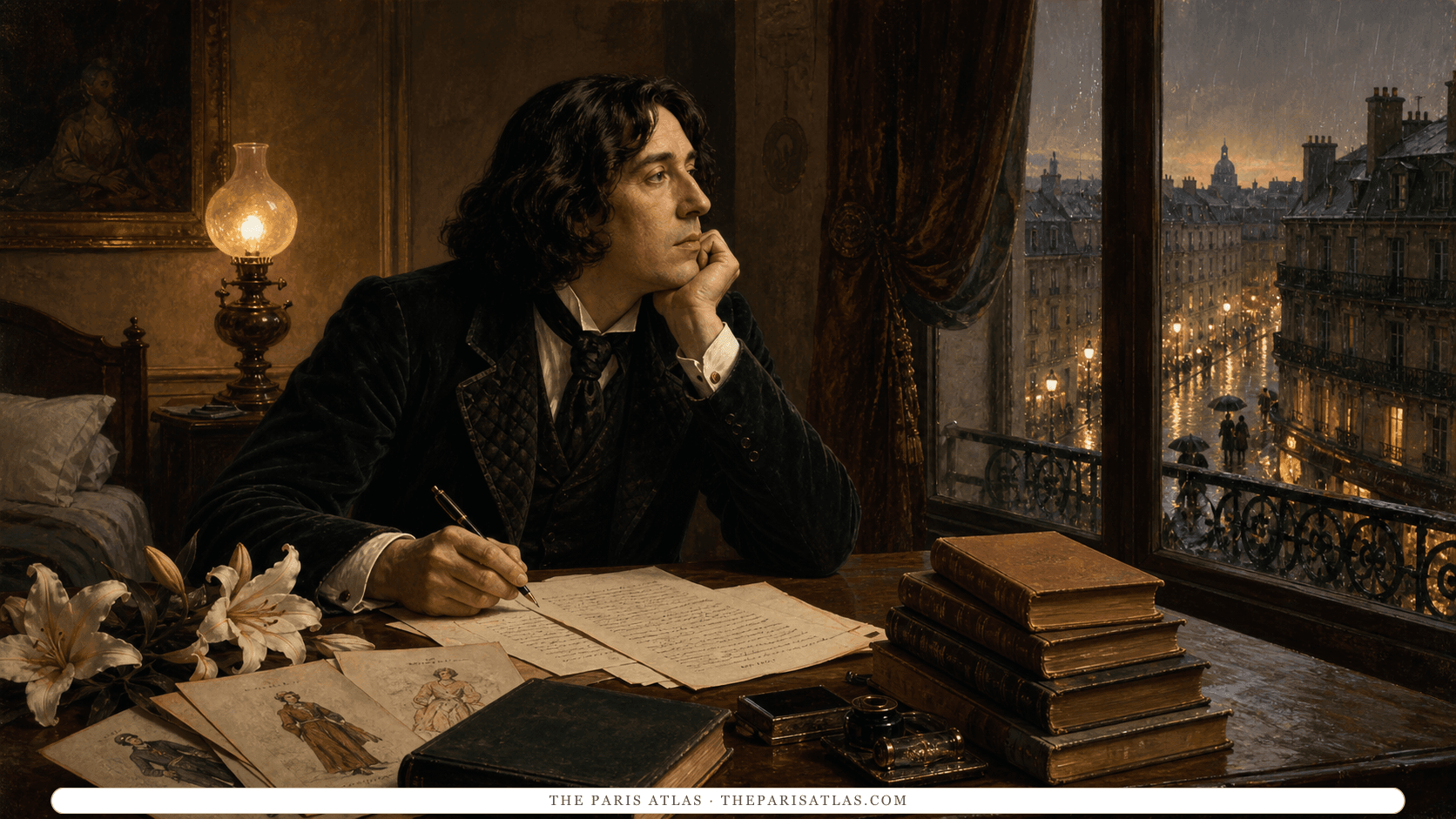
Wilde left Britain after his release in 1897 and used the name Sebastian Melmoth. He lived in France with little money and spent his final months at the Hôtel d'Alsace, now L'Hotel, at 13 rue des Beaux-Arts in Paris. Lord Alfred Douglas and Wilde briefly reunited after prison, then separated again.

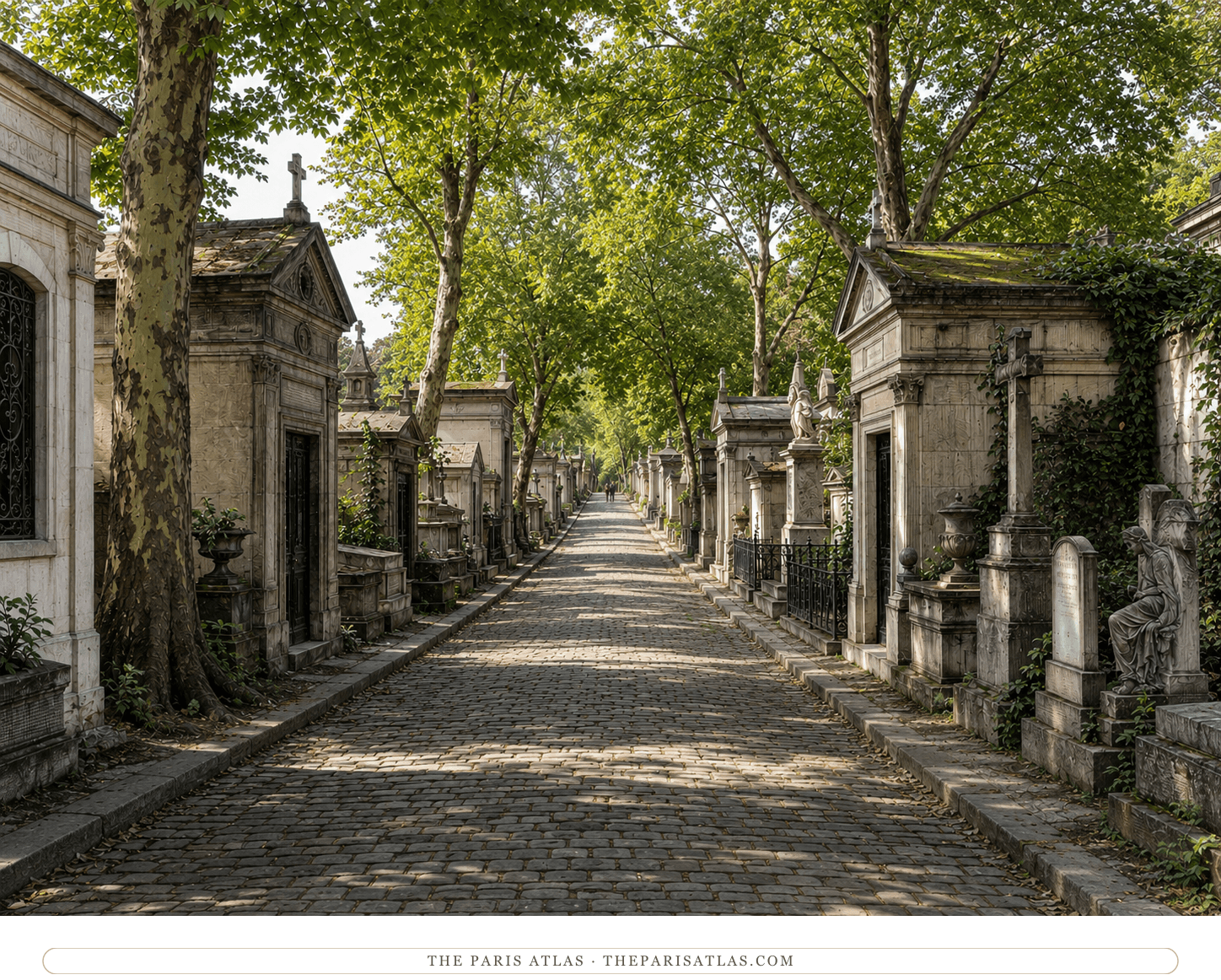
Oscar Wilde died at the Paris hotel on 30 November 1900. He was forty-six. He was first buried outside central Paris at Bagneux Cemetery. His remains were moved in 1909 to Père Lachaise Cemetery, where the sculptor Jacob Epstein's monument now marks the grave in division 89.

Life events

  1. 1854

    Born in Dublin on 16 October.

    Wilde, Oscar (1854–1900)

  2. 1878

    Wins Oxford's Newdigate Prize for the poem Ravenna and completes his degree.

    Oscar Wilde

  3. 1884

    Marries Constance Lloyd; their sons Cyril and Vyvyan are born in 1885 and 1886.

    Oscar Wilde

  4. 1890–1891

    Publishes the magazine and expanded book versions of The Picture of Dorian Gray.

    Greg Buzwell, Oscar Wilde's The Picture of Dorian Gray

  5. 1893

    Publishes the original French text of Salomé in Paris.

    Wilde's Salomé

  6. 1895

    An Ideal Husband and The Importance of Being Earnest open in London; Wilde is later convicted of gross indecency and sentenced to two years with hard labor.

    Oscar Wilde

  7. 1897

    Leaves prison and Britain, settles in France, and writes The Ballad of Reading Gaol after release.

    Oscar Wilde

  8. 1900

    Dies at the former Hôtel d'Alsace, now L'Hotel, at 13 rue des Beaux-Arts in Paris.

    The history of L'Hotel Paris; Wilde, Oscar (1854–1900)

  9. 1909

    His remains are transferred to Père Lachaise Cemetery.

    Ville de Paris — Plan du cimetière du Père-Lachaise (2022)

Start here

The Importance of Being Earnest

It is short, immediately funny, and introduces Oscar Wilde's method of exposing social rules through names, manners, and perfectly timed dialogue.

Books by Oscar Wilde

Poetry

Oscar Wilde's first commercial book, a decorated collection shaped by classical myth, Catholic imagery, travel, love, and the Aesthetic movement.

4.2

Essays & criticism

Four essays and dialogues in which Oscar Wilde argues that criticism is creative, art need not copy life, and a work should not be reduced to a moral lesson.

4.6

Drama

Oscar Wilde's one-act tragedy, written in French, in which Salome demands the head of the prophet Jokanaan after he rejects her.

4.6

De Profundis

Oscar Wilde1905(posth.)

Memoir & autofiction

Oscar Wilde's long prison letter to Lord Alfred Douglas, combining accusation, self-criticism, memory, suffering, art, and a new interpretation of Christ.

4.6

Popular reading paths

Want the full backlist and where each title fits? See every Oscar Wilde book in publication order.

Oscar Wilde’s Places

The cataloged places connected to Oscar Wilde — through the books, and through the documented record.

Places you can enter today appear first, followed by addresses to see from outside and sites that have vanished.

Questions about Oscar Wilde

Who was Oscar Wilde?

Oscar Wilde was an Irish playwright, novelist, poet, essayist, and editor born in Dublin in 1854. He wrote The Picture of Dorian Gray, The Importance of Being Earnest, fairy tales, art criticism, political essays, and prison writing.

What is Oscar Wilde best known for?

Oscar Wilde is best known for the comedy The Importance of Being Earnest and his only novel, The Picture of Dorian Gray. He is also remembered for his other society plays, fairy tales, essays, and the prison poem The Ballad of Reading Gaol.

Which Oscar Wilde book should I read first?

Start with The Importance of Being Earnest if you enjoy comedy, The Picture of Dorian Gray if you want a novel, or The Happy Prince and Other Tales if you prefer short stories.

Why was Oscar Wilde imprisoned?

A British court convicted Oscar Wilde in 1895 of gross indecency under a law used to prosecute sexual acts between men. He was sentenced to two years of imprisonment with hard labor.

Did Oscar Wilde write Salome in French?

Yes. Oscar Wilde wrote Salomé in French. The French text was published in Paris in 1893, an illustrated English edition followed in 1894, and the first production opened in Paris in 1896.

Where did Oscar Wilde die?

Oscar Wilde died on 30 November 1900 at the Hôtel d'Alsace, now L'Hotel, at 13 rue des Beaux-Arts in Paris. He is buried in Père Lachaise Cemetery.

Sourced claims

Every connection the graph holds for Oscar, with the evidence behind it.

Buried at · 1909

Père-Lachaise Cemetery

Oscar Wilde died in Paris in 1900 and was first buried at Bagneux Cemetery. His remains were transferred to Père Lachaise Cemetery in 1909. Jacob Epstein's monument was installed over the grave in division 89.

Ville de Paris — Plan du cimetière du Père-Lachaise (2022)

Sources and further reading

  • Wilde, Oscar (1854–1900)
  • Works catalogued under Oscar Wilde
  • Greg Buzwell, Oscar Wilde's The Picture of Dorian Gray
  • Oscar Wilde
  • Wilde's Salomé
  • The history of L'Hotel Paris
Browse all authors