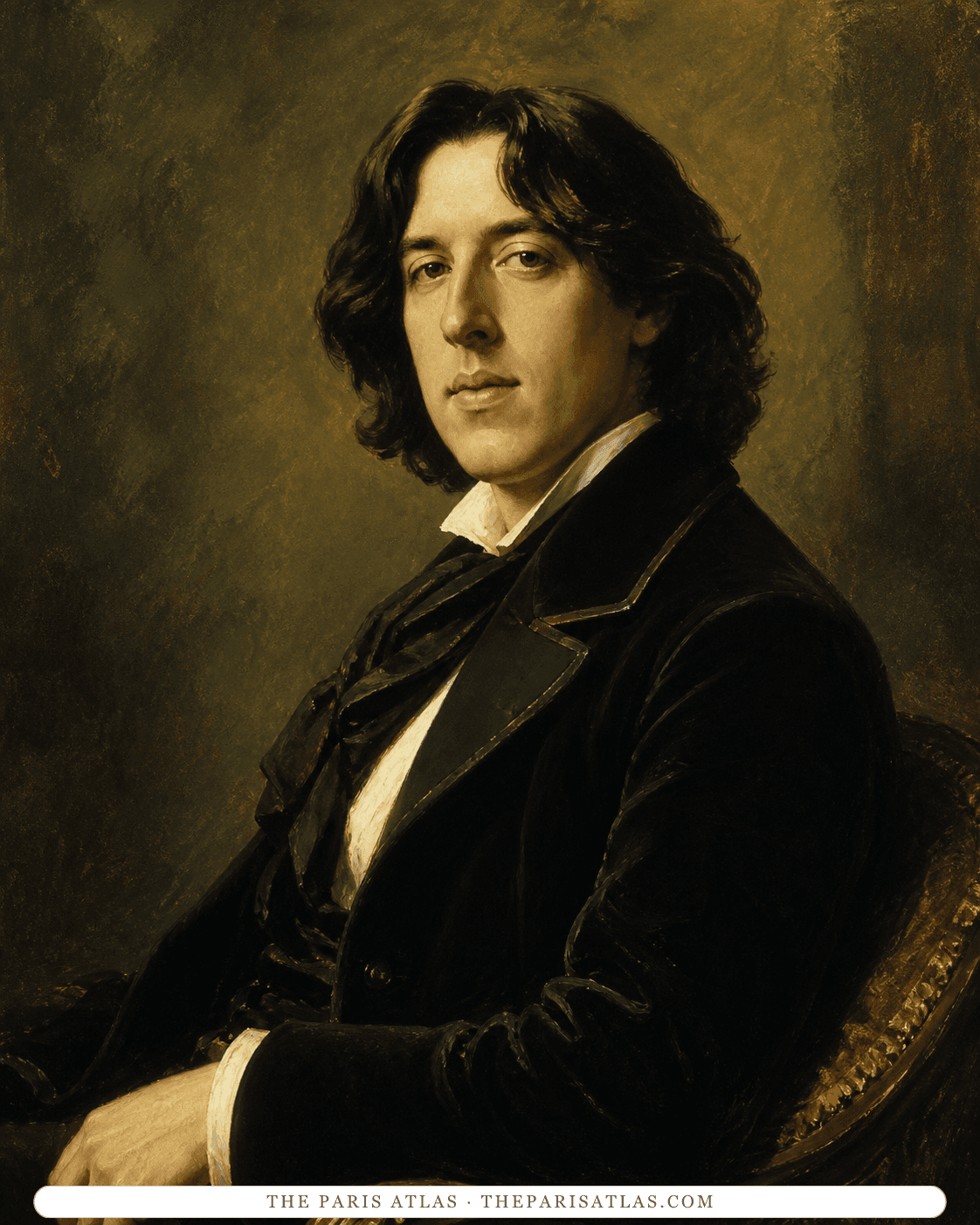

Vera; or, The Nihilists
Oscar Wilde's first play, a Russian political melodrama about a revolutionary torn between a planned assassination and love for the future ruler.
Read our take
by Oscar Wilde
An early five-act blank-verse tragedy in which a young man seeking revenge in Renaissance Italy falls in love with the wife of the ruler he plans to kill.
The Duchess of Padua follows Guido Ferranti, a young man who comes to Padua to avenge his father's death and falls in love with Beatrice, the Duchess married to the man he has sworn to kill. Wilde wrote the play in blank verse in 1883 for the American actress Mary Anderson, who paid him a $1,000 advance and then declined to produce it. It was finally staged in New York in 1891 under the title Guido Ferranti and closed within three weeks. The play is Wilde apprenticing on the material Shakespeare, Massinger, and Shelley had left behind — and it is his weakest full-length work.
Wilde wrote The Duchess of Padua in Paris in the autumn of 1883, in a small room at the Hôtel Voltaire on the Quai Voltaire (the same hotel he stayed in on his return visits to Paris throughout the 1880s). Mary Anderson had commissioned the play through her agent Steele Mackaye on 15 September 1882 with an advance of $1,000 and a promise of $4,000 more on completion. Wilde delivered the finished manuscript in March 1883. Anderson rejected it in April, citing the play's difficult central role and the unfashionability of blank-verse tragedy on the American stage. Wilde kept the $1,000.
The play was privately printed by Wilde in a small edition of twenty copies in 1883, with the intention of showing it to other potential producers. Nothing happened for eight years. In January 1891 Lawrence Barrett produced it in New York under the changed title Guido Ferranti (Wilde's name kept off the playbill, so the New York reviewers would judge it on its merits), with Barrett himself as Guido and Minna Gale as the Duchess. It opened to mixed reviews on 26 January 1891 at the Broadway Theatre and closed after twenty-three performances when Barrett's own poor health forced him to leave the cast.
The play was never staged in Wilde's lifetime under his own name. Its first English production waited until 1907, at Munich's Deutsches Volkstheater in German translation. The play's blank verse is closer to Massinger's The Duke of Milan than to Shakespeare, and Wilde later regarded it as unpublishable — Robert Ross had to argue him into allowing it into the 1908 Methuen collected edition. Modern readers approach it as a document of Wilde's apprenticeship, not as a play they would stage.
Act I opens in the market square of Padua. Guido Ferranti, a young Perugian, is met by a masked stranger, Count Moranzone, who reveals that Guido's real father was murdered years earlier by Simone Gesso, the Duke of Padua, and that Guido must now enter the Duke's household and take revenge. Guido swears to do it.
Acts II and III place Guido at the Duke's court, where he becomes the Duke's favourite and falls in love with Beatrice, the Duke's beautiful young wife, whom the Duke treats cruelly. When Guido comes to the Duke's chamber at night to murder him, Beatrice — also in the chamber — has already killed her husband to free herself to love Guido. Guido, horrified, rejects her.
Acts IV and V move to a public trial. Beatrice, believing herself abandoned, denounces Guido as the murderer. He does not defend himself. In prison, awaiting execution, Guido is visited by Beatrice, who has taken poison. He drinks the same poison after her death and both die together. The final scene is the traditional Renaissance-tragedy stage-strewn-with-bodies of an Elizabethan revenge play.
Guido tries to make revenge replace every other attachment, even the friendship he has just renounced. His oath turns this demand into a performance of absolute control over his future. The Duchess's passing glance interrupts it before he can finish condemning beauty, and the dropped dagger gives his divided will a visible form. Her entrance answers an extended speech without dialogue. The audience sees how precarious his resolution is before Guido even learns the identity of the woman who unsettles it.
The departing Duchess looks back, but Guido makes no answering sign. This missed exchange reverses the force of their first glance: attention that once interrupted vengeance now fails to interrupt rejection. He has defended mercy toward the Duke, yet cannot offer it to Beatrice when she asks. His acknowledgement of cruelty comes only after she leaves, and the arriving soldiers interrupt his attempt to call her back. The curtain marks a lost opportunity, not merely the division between two rooms.
It gives completists the bridge between Wilde's first political melodrama and his mature theatre.
Read Salome first for a far stronger Wilde tragedy.
Wilde wrote the play in blank verse in 1883 for the American actress Mary Anderson, who rejected it. When it was finally staged, in New York in 1891 under the title Guido Ferranti, it closed within three weeks.

A young Perugian, brought to Padua by Count Moranzone to avenge his real father's murder. Guido swears revenge in Act I, is placed in the Duke's household, and falls in love with Beatrice — after which the revenge plot collides with the love plot.
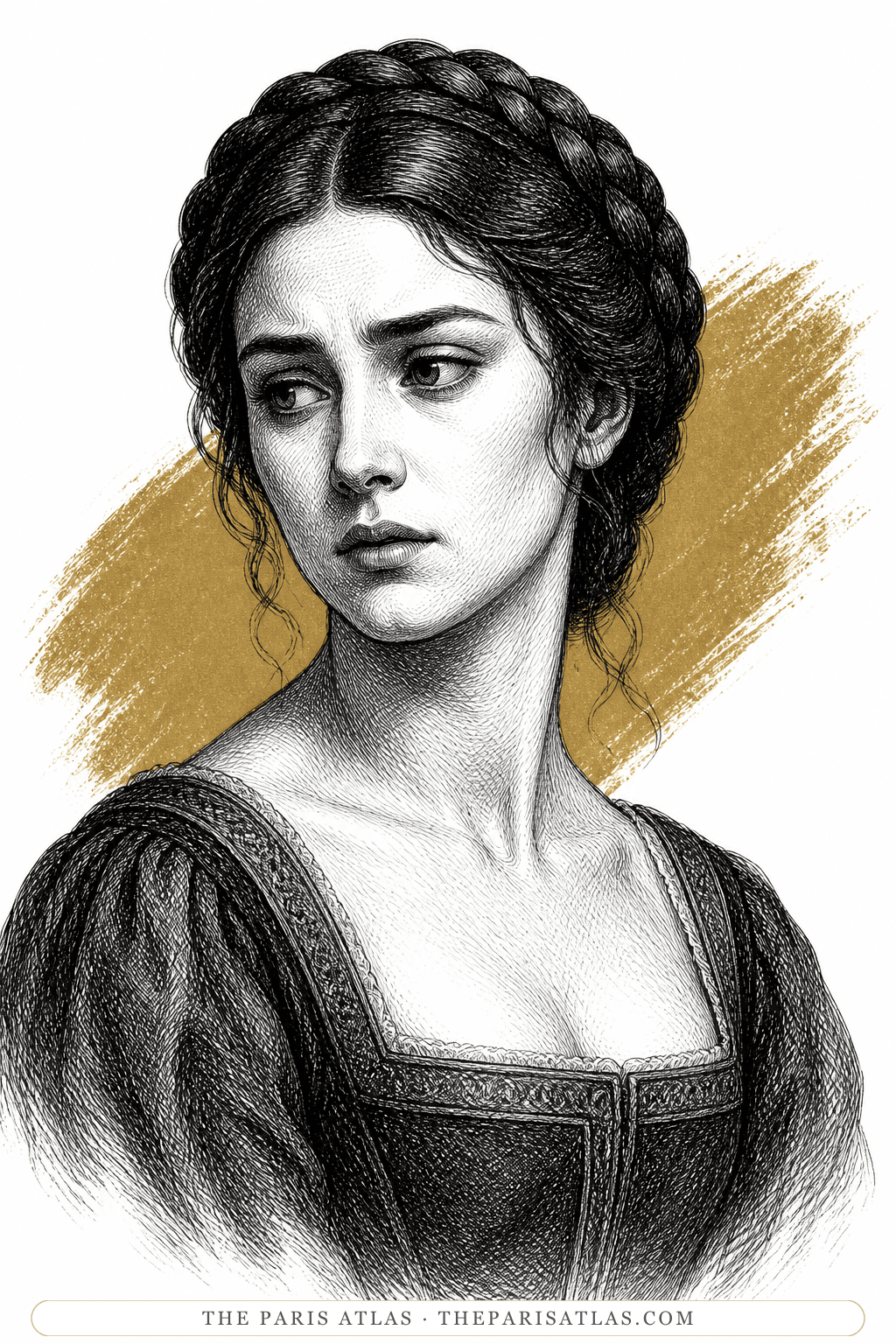
The young wife of the cruel Duke Simone Gesso, in love with Guido. She kills her husband herself in the darkness of his chamber to free herself to marry Guido, and is rejected by him for the killing. Her denunciation of Guido at trial and her final suicide by poison are the play's tragic engine.
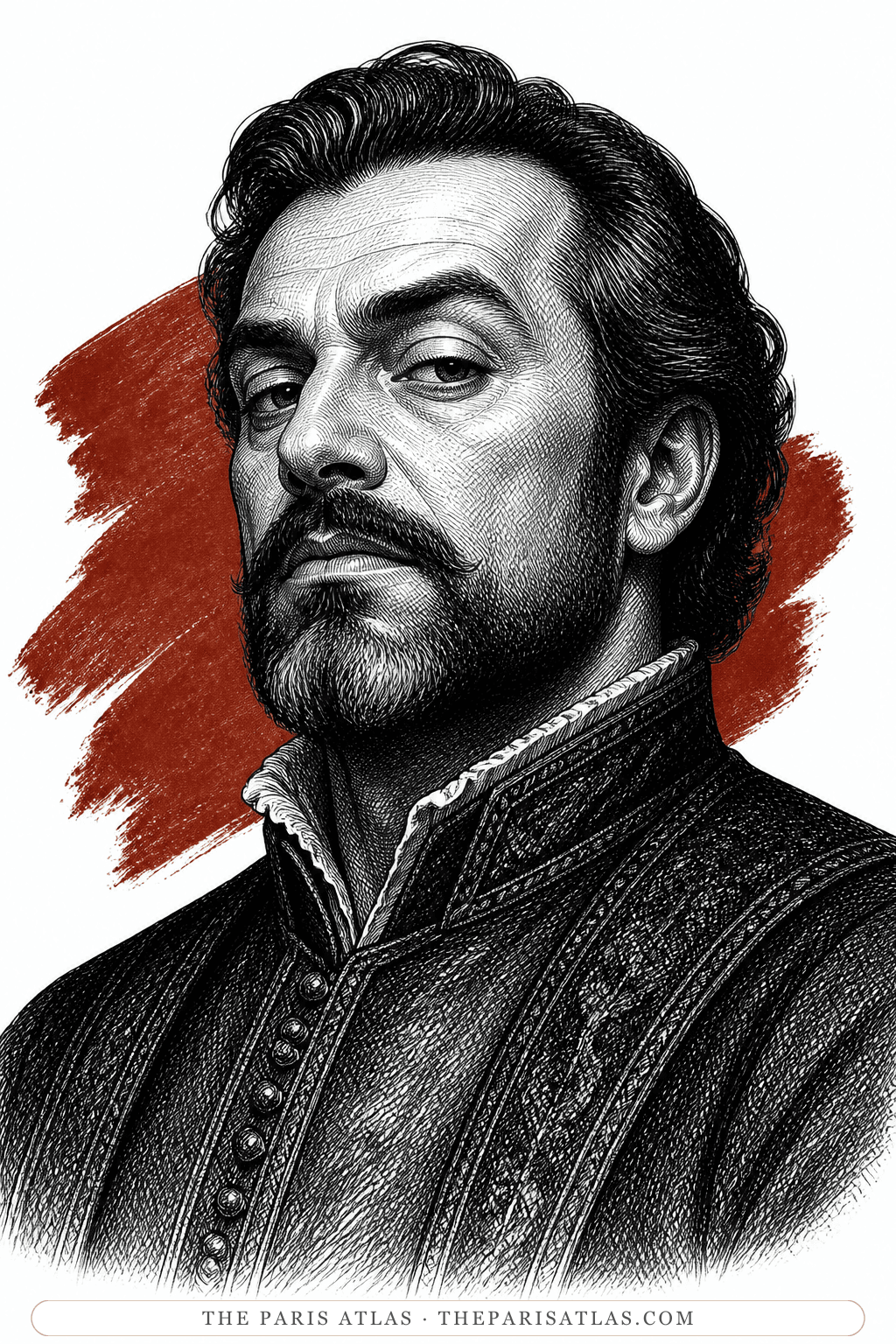
The tyrannical ruler of Padua. He killed Guido's father years before the play begins, treats his young wife Beatrice cruelly, and is killed offstage by Beatrice in Act III (rather than by Guido, as the revenge plot had planned).

The masked stranger of Act I who reveals to Guido that the Duke murdered his father, and who insists Guido carry out the revenge. He is the play's shadowy engine — Wilde's version of Elsinore's ghost.
15 September 1882
Steele Mackaye commissions the play from Wilde on behalf of the American actress Mary Anderson, with a $1,000 advance and a promise of $4,000 more on completion.
Autumn 1883
Wilde writes the play in Paris at the Hôtel Voltaire on the Quai Voltaire.
March 1883
Wilde delivers the finished manuscript. Anderson rejects it in April; Wilde keeps the $1,000.
1883
Wilde privately prints twenty copies for possible other producers.
26 January 1891
Lawrence Barrett stages the play in New York at the Broadway Theatre under the title Guido Ferranti, with Barrett as Guido and Minna Gale as the Duchess. Wilde's name is kept off the playbill.
February 1891
The New York production closes after twenty-three performances when Barrett's poor health forces him out of the cast.
1907
The play is first staged in German translation at Munich's Deutsches Volkstheater — the first production under Wilde's name and the correct title.
1908
Robert Ross includes the play in the Methuen collected edition of Wilde's works over Wilde's own recorded reservations.
Oscar Wilde's first play, a Russian political melodrama about a revolutionary torn between a planned assassination and love for the future ruler.
Read our take
Oscar Wilde's one-act tragedy, written in French, in which Salome demands the head of the prophet Jokanaan after he rejects her.
Read our takeGuido Ferranti comes to Padua to avenge his real father's murder by Simone Gesso, the Duke of Padua. Guido enters the Duke's household, falls in love with Beatrice, the Duke's abused young wife, and comes to the Duke's chamber at night to kill him — only to find that Beatrice has already killed the Duke herself to free herself to marry Guido. Guido rejects her for the killing; Beatrice denounces him at trial; both die by poison in prison together. It is Wilde working inside the conventions of nineteenth-century verse tragedy about Renaissance Italy.
When Lawrence Barrett finally produced the play in New York in January 1891, eight years after Wilde had written it, he changed the title to Guido Ferranti so that the New York reviewers would judge it on its merits without knowing it was by the notorious Wilde. Wilde's name was kept off the playbill. The 1891 New York production is the play's only substantial nineteenth-century staging.
Mary Anderson (1859–1940) was the biggest American stage actress of the 1880s. Her agent Steele Mackaye commissioned The Duchess of Padua from Wilde in September 1882 with a $1,000 advance and a promise of $4,000 more on completion. Wilde delivered the manuscript in March 1883; Anderson rejected it in April, citing the difficulty of the central role and her doubt about the commercial appeal of blank-verse tragedy on the American stage. Wilde kept the $1,000.
Wilde is working entirely inside the conventions of nineteenth-century verse tragedy about Renaissance Italy — Shelley's The Cenci (1819) and Browning's Sordello (1840) are the closest precedents. The blank verse is competent but derivative, the plot follows Massinger's The Duke of Milan closely enough that the resemblance was noticed by contemporary critics, and Wilde had not yet found the dialogue-driven approach that would produce Lady Windermere's Fan nine years later. Wilde himself regarded the play as unpublishable and Robert Ross had to argue him into allowing it into the 1908 Methuen collected edition.
Not in Wilde's lifetime. The 1891 New York production ran under the changed title Guido Ferranti with Wilde's name kept off the playbill. The first English production under Wilde's name and the correct title waited until 1907, at Munich's Deutsches Volkstheater in German translation, and the first British stage production not until the twentieth century.
Vera (1880) and The Duchess of Padua (1883) are Wilde's two apprentice full-length plays — the melodrama about nineteenth-century Russian revolutionaries and the blank-verse tragedy about Renaissance Italian revenge, both written before Wilde found the comedy of manners that would become his mature voice from 1892 onwards. Both plays flopped in commercial productions and Wilde later regarded both as unpublishable. They belong on the shelf together as a diptych of Wilde before Wilde.
Explore authors with a similar voice, perspective, and influence.
Both writers use style, performance, and social comedy to examine the roles assigned to women, artists, and people whose private lives do not fit public rules.
View author
The doctor of the Paris slums who wrote the century's blackest, funniest novel — and changed the sound of French prose.
View author
The Brooklyn dropout who arrived in Paris broke at thirty-eight and wrote the exuberant, banned books that ended American censorship.
View authorThe sources below include the primary text, editions, scholarship, archival materials, and other records that informed this page. They document The Duchess of Padua, its publication, and its place in literary history.


The primary text represented by this page, used for descriptions of the work’s contents and for any quoted passages shown here.
Selected passages in acts I and III of the 1916 text; no full-play or performance-version comparison.

Used to place The Duchess of Padua within Oscar Wilde's published work and verify its bibliographic context.
Used for independent biographical, archival, or historical context surrounding Oscar Wilde's career and the period in which The Duchess of Padua appeared.
Used to cross-check authorship, chronology, and the work's place in Oscar Wilde's wider catalogue.
Used to verify Oscar Wilde's bibliography and place The Duchess of Padua within the broader chronology of Oscar Wilde's career.
The primary text is the baseline reference for every book page. Additional references document publication history, interpretation, and historical context where that evidence is available.
 Explore more resources