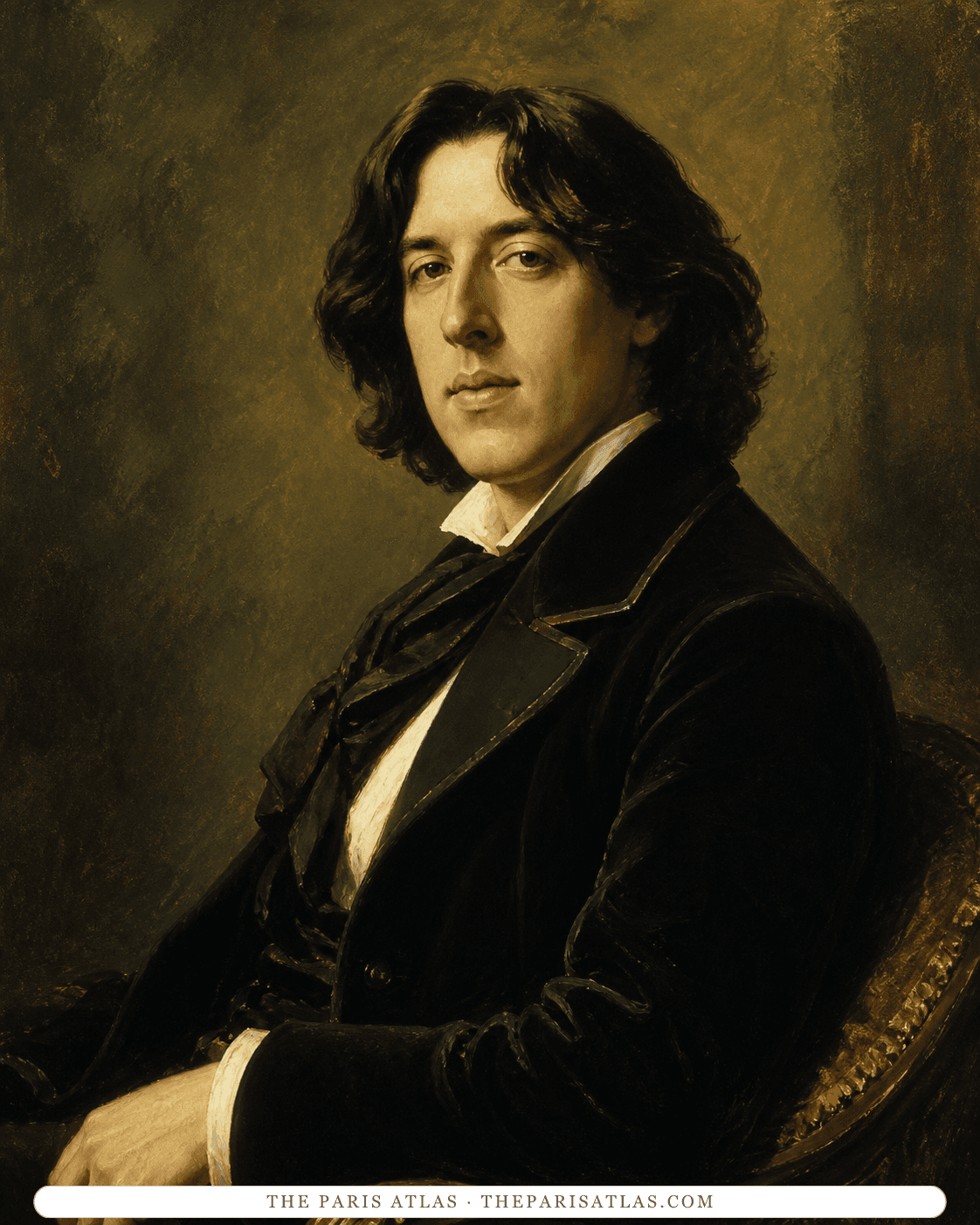

The Duchess of Padua
An early five-act blank-verse tragedy in which a young man seeking revenge in Renaissance Italy falls in love with the wife of the ruler he plans to kill.
Read our take
by Oscar Wilde
Oscar Wilde's first play, a Russian political melodrama about a revolutionary torn between a planned assassination and love for the future ruler.
Vera; or, The Nihilists follows Vera Sabouroff, a young peasant woman who joins a revolutionary group after the Russian government imprisons her brother. She is ordered to kill the new Czar, Alexis, who has been secretly a member of the group and whom she loves. Wilde completed a draft at twenty-six in 1880; the first production opened in New York in August 1883 and closed after one week. It is Wilde's first play, his first commercial failure, and — with The Duchess of Padua — one of the two full-length apprentice works he made before finding the comedy of manners that would produce Lady Windermere's Fan in 1892.
Wilde wrote the play in London in the autumn of 1880, in the year after leaving Oxford. He had been reading the London press coverage of the Narodnaya Volya (People's Will) revolutionary movement in Russia, which had made several assassination attempts on Alexander II and which would succeed in killing him on 13 March 1881. Wilde's play draws its title from the general term the English press used for Russian revolutionaries, and its plot from newspaper accounts of Russian revolutionary trials.
The play was scheduled to open at London's Adelphi Theatre in December 1881, but Wilde withdrew it three weeks before the premiere after Alexander II's assassination in March 1881 made the subject politically sensitive — the assassinated Czar was Queen Victoria's cousin's father-in-law, and the incoming Alexander III was Queen Victoria's cousin. Wilde suspended the production 'in the present state of political feeling in England' (his own words to the press).
The play was finally staged in New York in August 1883 by the American actress Marie Prescott, who paid Wilde a $1,000 advance and starred in the title role. It opened at the Union Square Theatre on 20 August 1883 to hostile reviews (the New York Times called it 'crass and puerile') and closed on 28 August after eight performances. Wilde attended the New York opening. He never allowed the play to be produced again in his lifetime, and it did not receive a London production until 1922, twenty-two years after his death.
The Prologue is set in a Russian country inn on the Moscow-Novgorod road. Vera Sabouroff, the innkeeper's daughter, watches her brother Dmitri being marched into Siberian exile in a chain gang of political prisoners. Dmitri gives her a slip of paper with the names and passwords of the Nihilist revolutionary group in Moscow. Vera swears to take her brother's place among them.
Act I moves to Moscow five years later. Vera is now a leading member of the Nihilists, whose meetings take place in a cellar under the code names of the members. A new recruit, Alexis, has joined; the group knows him only under his revolutionary alias. He and Vera fall in love. In the middle of the act the Czar is shot dead and Alexis is revealed as the new Czar of Russia.
Acts II–IV work out the moral crisis. The Nihilists order Vera to kill Alexis. She goes to the palace at midnight with a poisoned dagger. Alexis promises reform — the end of censorship, the freeing of political prisoners, land redistribution — and asks her to marry him. Vera cannot resolve the conflict between her revolutionary oath and her love; the play ends with Vera stabbing herself and telling the assembled Nihilists that Alexis has been assassinated. Her death saves him.
Vera's offer precedes her recognition of Dmitri: she responds to the prisoners' exhaustion before their suffering becomes a family matter. The necklace has an intimate value that the sergeant translates into appearance and weight. Her gift buys a moment of rest and conversation, not freedom. When her father later offers money for his son's release, the transaction fails. The scene distinguishes permission to relieve suffering from the power to end it, preparing the turn from compassion toward revenge.
Alexis's speech gives the crown an almost limitless reach, then makes that power seem small beside his isolation. The contrast continues in the view of Moscow: the cold city contains the passionate lives he cannot see from his room. He insists on Vera's trust while dismissing the page's warning and sending his watchers away. His confidence therefore makes him vulnerable. The audience hears certainty becoming dangerous, rather than receiving his declaration of safety as a reliable description of the palace.
It shows Oscar Wilde learning to write for the stage through a form very different from his later comedies.
Read it after the four society comedies, not as a first example of his drama.
Written at twenty-six on Russian revolutionary conspirators and staged briefly in New York in 1883, the play was a commercial failure — worth reading for what Wilde thought a political tragedy should look like before he learned to write comedy.

The play's protagonist — the daughter of a rural Russian innkeeper who joins the Nihilists after her brother Dmitri is exiled to Siberia. Vera is the group's most committed member by Act I and is chosen to assassinate the new Czar. Her love for Alexis (the Czar) and her revolutionary oath cannot both survive, and she resolves the conflict by killing herself.

The heir to the Russian throne, secretly a member of the Nihilist revolutionary group under an assumed name. When his father is assassinated at the end of Act I he becomes the Czar the Nihilists have sworn to kill — and the man Vera loves. His promised reforms in Act IV are the play's argument that a person can be both a revolutionary and a ruler.
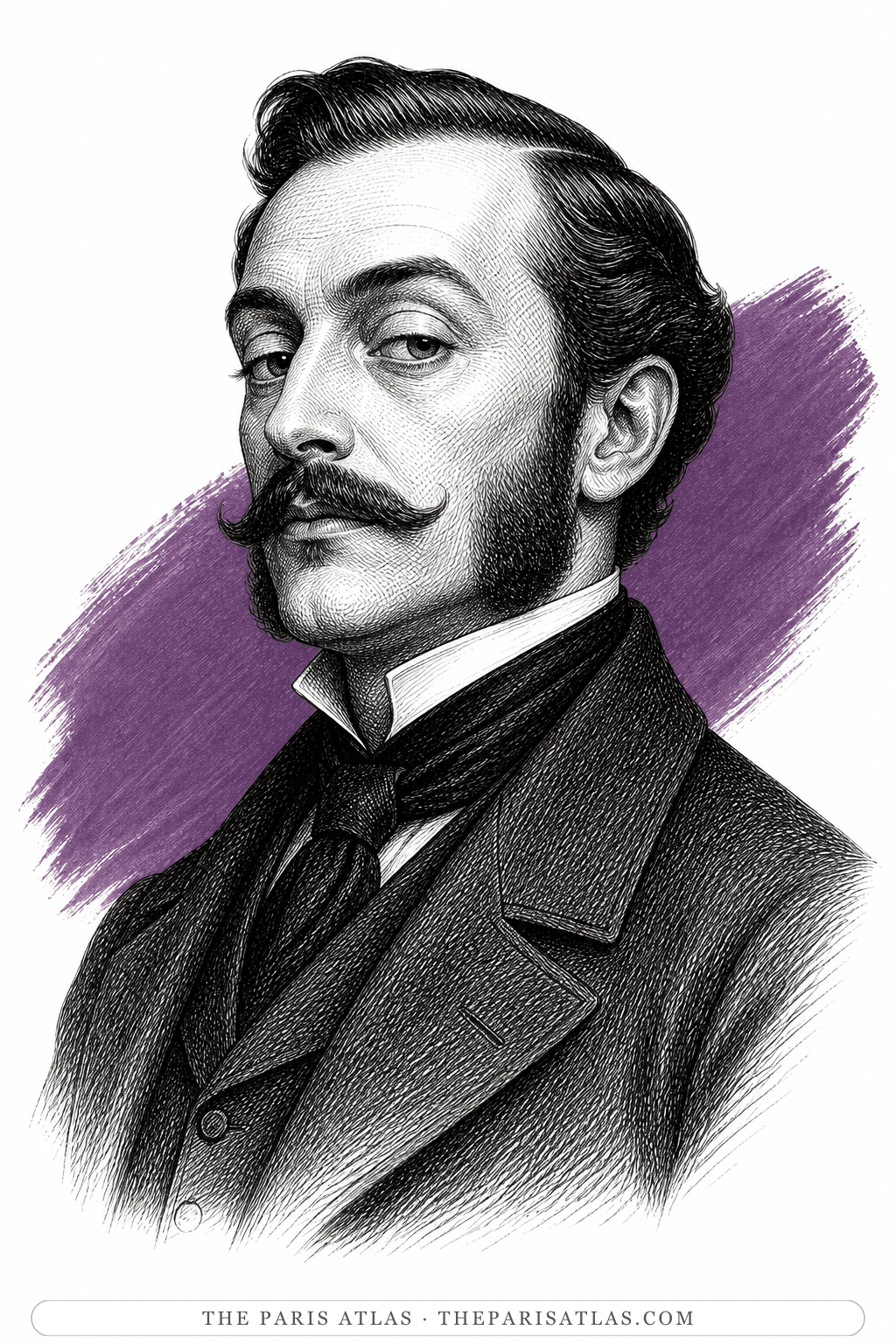
The Russian Chancellor, the play's cynical intriguer. He is Wilde's first fully Wildean character on stage — the aristocrat whose paradoxes and epigrams do the play's philosophical work. Some of his lines were reused in Lord Henry Wotton's dialogue in The Picture of Dorian Gray a decade later.
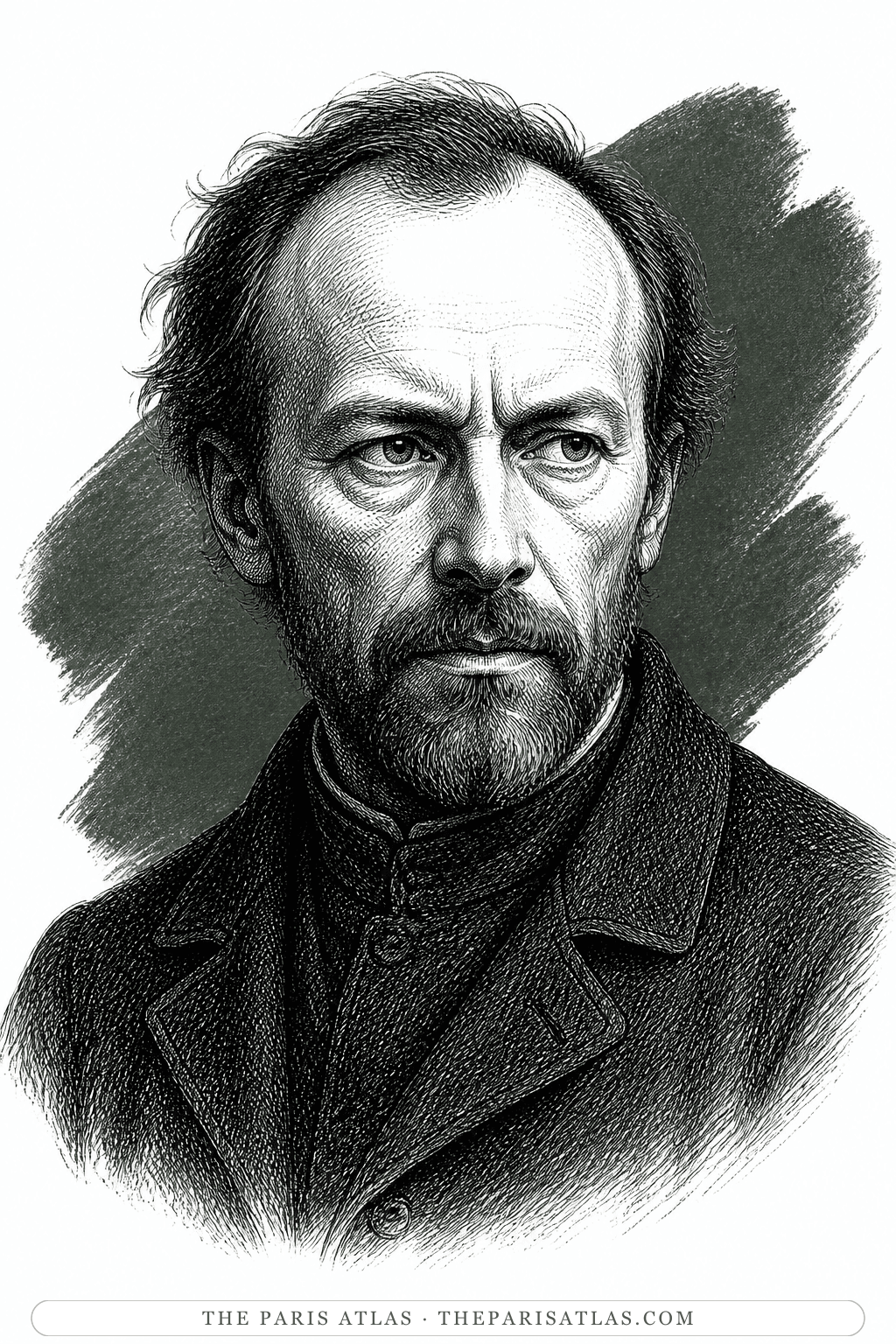
The president of the revolutionary group. He orders Vera to carry out the assassination and confronts her at the play's climax when Alexis appears to have been killed. He is Wilde's stand-in for the intellectual leadership of Narodnaya Volya as the London press had described it.
Autumn 1880
Wilde writes Vera in London at age twenty-six, one year out of Oxford, drawing on London press coverage of Narodnaya Volya.
1880
Wilde has a small edition privately printed for possible producers.
13 March 1881
Narodnaya Volya assassinates Czar Alexander II in Saint Petersburg.
November 1881
Wilde withdraws Vera from its scheduled Adelphi Theatre London premiere three weeks before opening, citing 'the present state of political feeling in England.'
20 August 1883
The American actress Marie Prescott stages Vera at New York's Union Square Theatre with Wilde in attendance. She plays the title role; the play is directed and produced by Prescott herself.
28 August 1883
The New York production closes after eight performances following hostile reviews.
1922
Vera receives its first London production, twenty-two years after Wilde's death.
An early five-act blank-verse tragedy in which a young man seeking revenge in Renaissance Italy falls in love with the wife of the ruler he plans to kill.
Read our take
Oscar Wilde's best-known comedy: two men invent useful false identities, two women insist on marrying someone named Ernest, and a handbag resolves the plot.
Read our takeIt is Wilde's first play — a political melodrama about Vera Sabouroff, a young Russian peasant woman who joins the Nihilist revolutionary movement after her brother is exiled to Siberia, is ordered to assassinate the new Czar (Alexis, whom she loves and who has secretly been a fellow revolutionary), and resolves the impossible conflict by killing herself so he lives.
In London in the autumn of 1880, when he was twenty-six and one year out of Magdalen College, Oxford. He was reading the London press coverage of the Narodnaya Volya (People's Will) revolutionary movement, which had been making assassination attempts on Alexander II of Russia and would succeed on 13 March 1881.
The play was scheduled to open at London's Adelphi Theatre in December 1881. Wilde withdrew it three weeks before the premiere after the March 1881 assassination of Alexander II made the subject politically sensitive — the assassinated Czar was Queen Victoria's cousin's father-in-law and the incoming Alexander III was Queen Victoria's cousin. Wilde's press statement suspended the production 'in the present state of political feeling in England.'
In New York, on 20 August 1883, at the Union Square Theatre. The American actress Marie Prescott produced it (paying Wilde a $1,000 advance) and starred in the title role. The reviews were hostile — the New York Times called it 'crass and puerile' — and the play closed on 28 August after eight performances. Wilde attended the opening.
No. After the 1881 cancellation Wilde never allowed the play to be produced in London, and its first London production waited until 1922, twenty-two years after his death. The play's twentieth-century revival history is thin: it is Wilde's least-staged full-length work.
It is the first of two apprentice full-length plays Wilde wrote before finding his mature comic voice — Vera (1880, political melodrama) and The Duchess of Padua (1883, Renaissance blank-verse tragedy). Both plays flopped commercially. Wilde would not have a stage success until Lady Windermere's Fan opened at the St James's Theatre in February 1892, twelve years after Vera. Some of Prince Paul Maraloffski's Wildean lines from Vera are reused in Lord Henry Wotton's dialogue in The Picture of Dorian Gray.
Explore authors with a similar voice, perspective, and influence.
Both writers use style, performance, and social comedy to examine the roles assigned to women, artists, and people whose private lives do not fit public rules.
View author
The doctor of the Paris slums who wrote the century's blackest, funniest novel — and changed the sound of French prose.
View author
The Brooklyn dropout who arrived in Paris broke at thirty-eight and wrote the exuberant, banned books that ended American censorship.
View authorThe sources below include the primary text, editions, scholarship, archival materials, and other records that informed this page. They document Vera; or, The Nihilists, its publication, and its place in literary history.


The primary text represented by this page, used for descriptions of the work’s contents and for any quoted passages shown here.
Prologue and selected Act IV passages in the 1902 text; no full-play or acting-version comparison.

Used to place Vera; or, The Nihilists within Oscar Wilde's published work and verify its bibliographic context.
Used for independent biographical, archival, or historical context surrounding Oscar Wilde's career and the period in which Vera; or, The Nihilists appeared.
Used to cross-check authorship, chronology, and the work's place in Oscar Wilde's wider catalogue.
Used to verify Oscar Wilde's bibliography and place Vera; or, The Nihilists within the broader chronology of Oscar Wilde's career.
The primary text is the baseline reference for every book page. Additional references document publication history, interpretation, and historical context where that evidence is available.
 Explore more resources