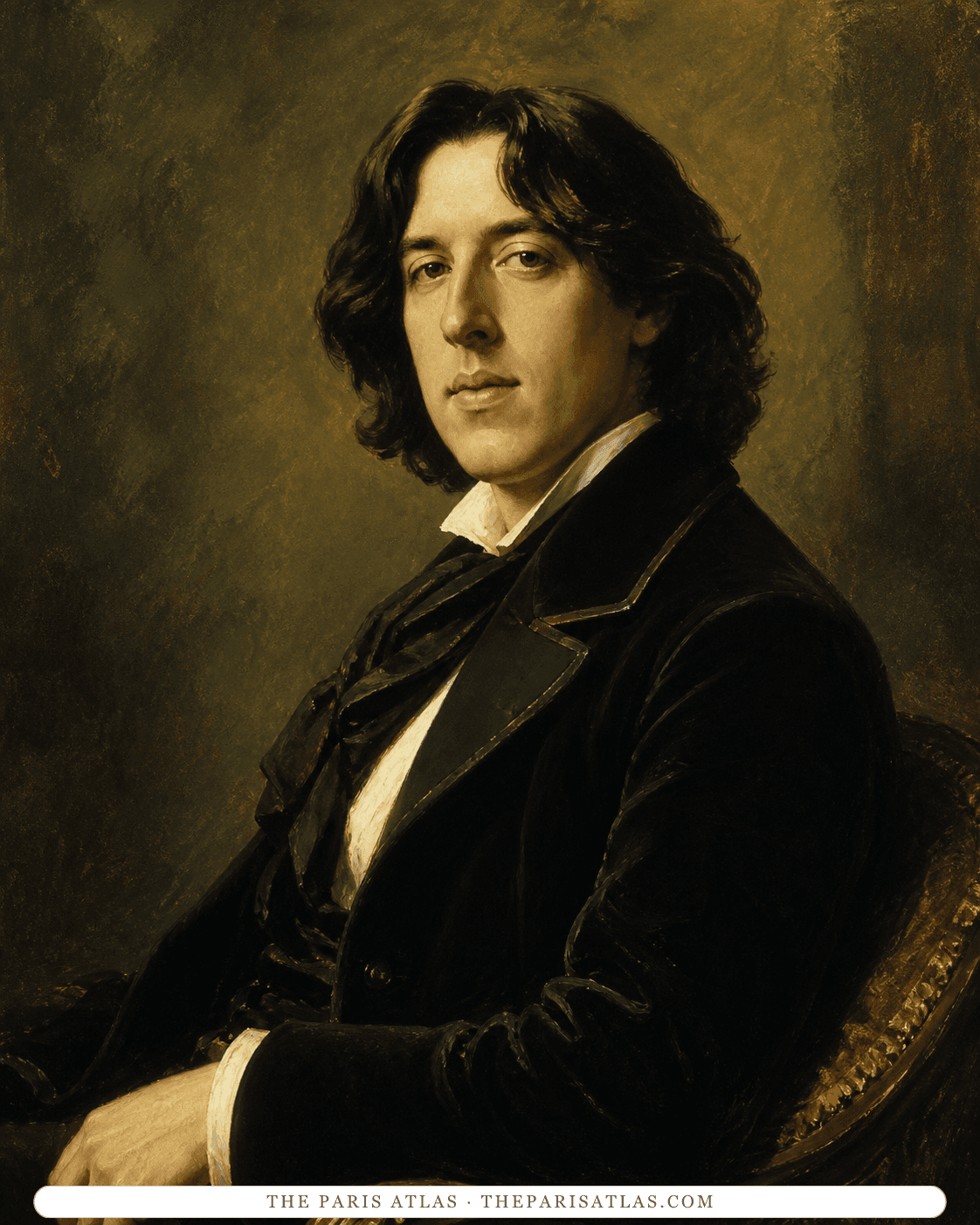

Oscar Wilde's only novel: a beautiful young man stays unchanged while his hidden portrait records age, cruelty, and guilt.
Stories in which hidden rooms, supernatural events, inherited fears, and divided identities expose what respectable life tries to conceal.
Gothic fiction turns a fear or secret into a place, object, or body that cannot be ignored. A locked room may hold the evidence of a double life. A portrait may change while its subject does not. A family house may preserve the damage its owners refuse to name.
The form began in the eighteenth century with castles, imprisoned heirs, and supernatural warnings, then moved into nineteenth-century cities and private homes. Its settings changed, but its basic method remained: the past returns, the surface lies, and a person who appears secure discovers that identity is less stable than it seemed.
Oscar Wilde's The Picture of Dorian Gray belongs here because its supernatural portrait makes concealed conduct visible. The novel also uses the Gothic form to examine beauty, desire, influence, and the split between a respectable public face and a secret private life.
Oscar Wilde's only novel: a beautiful young man stays unchanged while his hidden portrait records age, cruelty, and guilt.

A sensational 1919 crime novel where opium, cocaine, theater, private scandal, and London nightlife form one conspiracy.

A magical experiment turns pregnancy into the center of a war between occult factions, competing wills, and enormous egos.

A rational surgeon confronts an occultist who turns fascination, coercion, and forbidden experiment into Gothic terror.

A collection of Crowley’s sinister, decadent, occult, and darkly comic short fiction.

Crowley’s short, hallucinatory tale of psychic connection, suffering, altered consciousness, and psychological horror.

Poe's first collected tales place Gothic terror beside comic exaggeration, literary parody, and speculative adventure.

A young stowaway's voyage moves from mutiny and shipwreck into an Antarctic world his account cannot explain.

A mother who escaped slavery faces a haunting that brings her family's buried history into the present.

An unexpected fortune gives Pip the life he wants and makes him misjudge the people who care for him.

A creator abandons the being he brings to life, then struggles to escape the claims it makes on him.

A secluded young woman writes the history she has been unable to tell her only friend.

A miser's haunted night asks what his money, memories and remaining time could do for other people.

Hugo's French title names the cathedral, not the bell-ringer. The book is about the building, and it saved it.

A boy is sent south to find the father who left him, and finds a decaying house full of people with nowhere else to go.

A workhouse orphan asks for more gruel, walks to London, and falls in with Fagin's gang of child thieves.

Twelve stories chosen by Poe's publisher, with all three Paris cases of C. Auguste Dupin beside The Gold-Bug, The Black Cat and the House of Usher.

Ray Bradbury's 1962 novel about two boys, one father, and a carnival that comes to a small Illinois town in late October.

William Faulkner's most famous short story: a proud old woman dies in her decaying house, and the town finally breaks open the room upstairs.

William Faulkner's 1936 novel: four people try to piece together the story of Thomas Sutpen, who built a plantation out of nothing and was destroyed by the son he refused to acknowledge.

A young sailor signs onto a Nantucket whaler whose captain means to spend the whole voyage hunting one white whale.

The collection that holds "Young Goodman Brown", a young Puritan's night in the forest among his neighbours at a witches' meeting.

A wizard's curse from the Salem witch trials hangs over a family house for two hundred years, until the last Pyncheons open a cent-shop.

A young Italian count who looks exactly like an ancient statue of a faun kills a man for the woman he loves, and grows up.

A woman in Puritan Boston is sentenced to wear a red letter A for life, and refuses to name her child's father.

Hawthorne's first book of stories, from a minister who hides his face behind a black veil to four old friends who drink from the Fountain of Youth.
Newsletter
The Friday letter explains one book at a time — what style it works in, why that matters, and where to go next.