
The Bluest Eye
Morrison's first novel also examines vulnerability within a family and the responsibility of the surrounding community.
Read our take
A mother who escaped slavery faces a haunting that brings her family's buried history into the present.
Beloved is Toni Morrison's 1987 novel about Sethe, a formerly enslaved woman living near Cincinnati in 1873. Her home is haunted by a dead child. Paul D's arrival offers companionship, but a mysterious young woman named Beloved draws Sethe back toward memories she has tried to contain. The novel won the 1988 Pulitzer Prize for Fiction.
Morrison reveals the family's history through interrupted recollections and changing points of view. Readers must revise their understanding as experiences that once seemed separate become connected. The broken chronology makes remembering part of the action.
Household objects carry unusual emotional weight. A quilt, a doorway, food, and a child's headstone can hold experiences that a neat account of events would leave out. The haunting makes private grief physically disruptive.
The book asks what freedom requires after escape. Safety, bodily ownership, family attachment, paid work, and a place among neighbors remain difficult questions. Its supernatural elements belong to this inquiry into ordinary needs.
Sethe killed her young daughter when enslavers came to reclaim the family. Years later, she and Denver recognize the returning Beloved as that daughter. Their household becomes increasingly isolated.
Beloved's demands consume Sethe's attention. Denver eventually seeks help beyond the house, bringing neighbors back into a family history they had shunned.
Women gather to intervene. Sethe attacks an arriving white man, mistaking the present for a renewed threat. Beloved disappears.
Denver moves toward work and education. Paul D returns to care for the exhausted Sethe. Their possible future remains tentative, and the final pages question what it means to forget a story.
A sensation or a remembered phrase can move the narrative away from 1873 before the reader knows the full history it carries. Morrison makes the experience of remembering interrupt the form of the novel. Information arrives through people for whom retrieving it has a cost.
The publisher's reading guide draws attention to smells, songs and retellings that bring earlier places into the present. Read through those transitions, chronology becomes more than a puzzle to solve. Putting events in order cannot by itself remove the force with which an earlier experience returns.
The young woman's arrival gives Sethe a person to feed, explain herself to and seek forgiveness from. Beloved's needs become increasingly difficult to distinguish from Sethe's need to repair what happened. The household's isolation allows that relation to absorb the practical work necessary to keep living.
Sethe and Denver's recognition of Beloved does not oblige the reader to reduce every aspect of her presence to a solved identity. Her place in the novel joins a particular family loss to experiences that exceed one person's memory. The uncertainty keeps the haunting from becoming a mechanism neatly explained and put aside.
Slavery has attacked the characters' ability to claim a body, a family and a future. The novel's questions about attachment therefore cannot be separated from the power that treated people and their children as property. Sethe's attempt to protect her family emerges within that history without becoming harmless because her motive is protection.
The reading guide's questions about Baby Suggs's bodily self-recognition and the uncertain fates of those left behind point toward different dimensions of freedom. Legal release and geographic escape change conditions, but people still need ways to inhabit a self whose relationships and memories have been violently disrupted.
Denver's search for help places need before neighbors who have kept their distance. Food, possible employment and the women's intervention return a social world to the house. The turn depends on concrete acts of assistance as well as recognition of a shared history.
Paul D's return likewise offers care without establishing that Sethe has recovered or that everything can now be forgotten. The final coda makes passing on and forgetting the story difficult to separate. The novel leaves the reader responsible for remembering a history from which the surviving characters still need some freedom.
The opening, Beloved's arrival, and Part Three's Denver, neighbors, intervention, Paul D and coda sequences.
Discussion questions on sensory memory, identity, bodily freedom and the ending.
124 was spiteful.
It was not a story to pass on.
Later recollections alter the meaning of earlier scenes. Returning to the opening after finishing the novel reveals how much Morrison has already placed there.
Motherhood, friendship, and neighborly help receive separate tests. The book makes care a practical activity whose meaning cannot be settled by good intentions alone.
The haunting gives loss a presence that must be lived with. Supernatural uncertainty sharpens the historical questions instead of resolving them.
1987
Alfred A. Knopf publishes Beloved in New York.
1988
Beloved wins the Pulitzer Prize for Fiction.
2004
Vintage issues paperback ISBN 9781400033416 on June 8. Later printings under this ISBN have updated introductory material.

Morrison's first novel also examines vulnerability within a family and the responsibility of the surrounding community.
Read our take
An earlier Morrison novel approaches family history through a journey, inherited names, and remembered stories.
Read our take
Douglass's first-person testimony provides a different form for reading about enslavement and the pursuit of freedom.
Read our takeIt follows Sethe, a mother who escaped slavery, and the family history that haunts her home in Ohio. A young woman's arrival makes that history impossible to keep separate from the present.
The main present begins near Cincinnati in 1873. Memories return to enslavement in Kentucky and the family's escape in 1855.
Sethe and Denver identify her with Sethe's dead daughter. Her bodily presence and the conflicting accounts surrounding her invite several readings; the novel does not reduce her to one explanation.
Denver is Sethe's surviving daughter. Her movement from isolation toward neighbors, work, and education becomes crucial to the ending.
It won the Pulitzer Prize for Fiction in 1988, the year after its first publication. Morrison received the Nobel Prize in Literature in 1993.
The selected paperback is Vintage ISBN 9781400033416, first issued in June 2004. The publisher's current printing has 368 pages and an introduction by Honorée Fanonne Jeffers; earlier printings differ.
Explore authors with a similar voice, perspective, and influence.
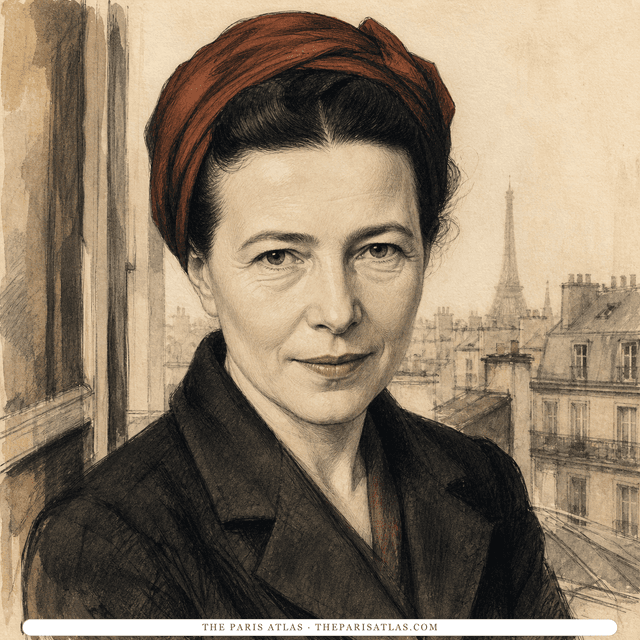
French writer and philosopher whose novels, memoirs, and social analysis examined freedom, gender, responsibility, aging, and the material conditions that shape a life.
View author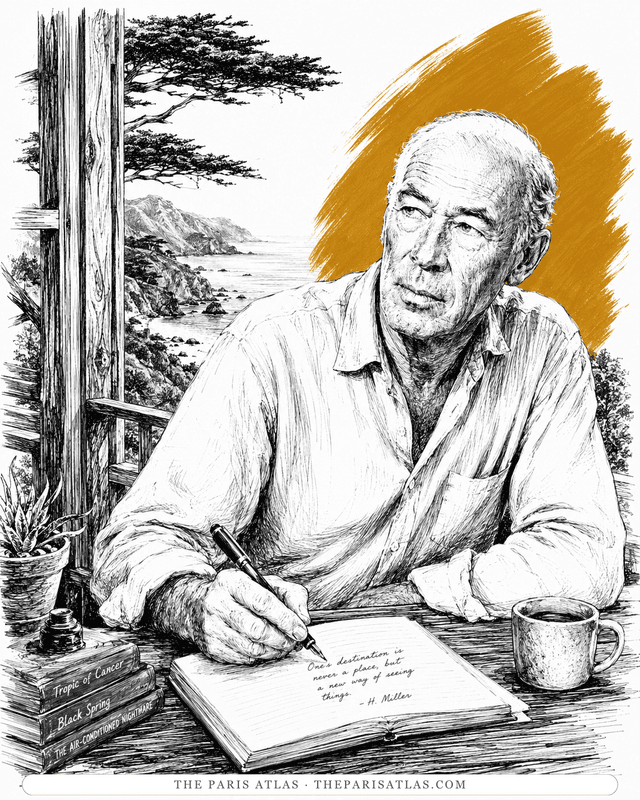
The Brooklyn dropout who arrived in Paris broke at thirty-eight and wrote the exuberant, banned books that ended American censorship.
View author
The American novelist who invented Yoknapatawpha County, the imaginary Mississippi county he called himself sole owner and proprietor of, and who spent the autumn of 1925 in a room at 26 rue Servandoni beside the Luxembourg Gardens — all but unpublished, calling himself a tramp, and walking to the café used by the Irish novelist James Joyce simply to look at him.
View authorThe sources below include the primary text, editions, scholarship, archival materials, and other records that informed this page. They document Beloved, its publication, and its place in literary history.


The primary text represented by this page, used for descriptions of the work’s contents and for any quoted passages shown here.
Primary text for the character readings, brief plot account, and final quotation. The public course copy is hosted through CUNY Academic Commons; its hosting is not presented as a publisher authorization.
Selected ISBN, publication date, current printing's extent and introduction credit, publisher excerpt, and book description.

Original Knopf publication in 1987, within Morrison's bibliography.
Official 1988 Fiction winner record.
Discussion questions on sensory memory, identity, bodily freedom and the ending.
The primary text is the baseline reference for every book page. Additional references document publication history, interpretation, and historical context where that evidence is available.
 Explore more resources