The Paris AtlasCharting the artists, works, and places worth returning to.
  • Author
  • Editor
· American · 1931–2019

Toni Morrison

American novelist and Nobel laureate; a correspondent and ally of James Baldwin who gave a eulogy at his 1987 funeral.

5 books on our shelves

In images

Details

Lived
1931–2019
Born
18 February 1931
Birthplace
Lorain, Ohio, United States
Died
5 August 2019 · aged 88
Place of death
New York City, United States
Nationality
American
Married
Harold Morrison · 1958–1964
Children
Harold Ford Morrison, Slade Morrison
Roles
AuthorEditor
Also known as
Chloe Ardelia Wofford

About Toni Morrison

Toni Morrison was an American novelist, editor and teacher whose eleven novels changed what the center of American literature could look and sound like.[1] She published The Bluest Eye at thirty-nine while raising two sons and working in publishing, wrote Beloved after leaving that job, and in 1993 became the first Black woman awarded the Nobel Prize in Literature.[2]

Before the prizes, she spent nearly twenty years editing books.[1] At Random House she helped bring Black history, argument and imaginative writing into print while writing her own fiction before dawn.[3] Her novels do not stop to translate Black life for an assumed white reader: they place memory, family, beauty, violence and haunting inside communities whose language is already complete.

Toni Morrison began her first novel in the hours before her children woke. By day she taught and then edited other writers; by dawn she built a fictional Ohio town around a Black girl who longs for blue eyes. The Bluest Eye appeared in 1970, when Morrison was thirty-nine. It was the start of a body of work that made the interior lives of Black women and families central to American fiction without explaining them for an outsider's comfort.

Lorain, Howard and Cornell

She was born Chloe Ardelia Wofford on 18 February 1931 in Lorain, Ohio, the second of four children in a working-class family.[1] Her parents, George and Ramah Wofford, carried Southern stories, songs and warnings into the industrial town on Lake Erie. Morrison read widely, learned Latin, joined the Catholic Church at twelve and took Anthony as her baptismal name; Toni grew from that name at school.

At Howard University in Washington she studied English, acted with the Howard University Players and traveled through the segregated South with the troupe. She graduated in 1953, completed a master's thesis at Cornell on suicide i[1]n the fiction of Virginia Woolf and William Faulkner, and returned to Howard to teach. There she met the Jamaican architect Harold Morrison. They married in 1958, had two sons and divorced in 1964.

The editor in the room

Morrison entered publishing in 1965 at the textbook company L. W. Singer and moved to Random House in 1968, eventually becoming the first Black woman to serve as a senior editor in its trade division.[3] She edited fiction and nonfiction by Black writers and public figures, among them Toni Cade Bambara, Gayl Jones, Angela Davis and Muhammad Ali. The point was not a separate shelf of respectable representation. It was to publish the range of Black political and imaginative life as part of the record.

Her most unusual editorial project was The Black Book (1974), a collage of advertisements, patents, photographs, newspaper notices, music and family documents assembled as a people's history rather than a conventional narrative.[3] While working on it, she encountered the 1856 case of Margaret Garner, an enslaved woman who killed her daughter rather than allow the child to be returned to slavery. More than a decade later that history became Beloved.

Eleven novels

The Bluest Eye was followed by Sula (1973), a fierce study of female friendship and a town's need for an outsider, and Song of Solomon (1977), the family quest that brought Morrison a national readership.[4] Tar Baby (1981) moved the argument about race, class and desire to a Caribbean island. After leaving Random House in 1983, she wrote Beloved (1987), then Jazz (1992) and Paradise (1997), a loose trilogy that travels from slavery through the Great Migration to an all-Black Oklahoma town.

Beloved won the 1988 Pulitzer Prize.[1] It is not a documentary retelling of Margaret Garner's life but a ghost story about what history does when it has not been buried: Sethe's dead daughter returns to a house already crowded with memory. Morrison followed the trilogy with Love, A Mercy, Home and God Help the Child. Across the eleven novels, chronology breaks, voices overlap and the supernatural often arrives without announcement because memory itself does not proceed in a straight line.

Nobel laureate and teacher

Morrison joined Princeton's faculty in 1989 and founded the Princeton Atelier, bringing artists together to make new work with students.[1] In 1993 she became the eighth woman and first Black woman to receive the Nobel Prize in Liter[2]ature. Her lecture begins as a story: young visitors test an old blind woman by asking whether the bird in their hands is alive or dead. She answers that the bird is in their hands, then turns the riddle into an argument about language as a living thing for which its users are responsible.

She continued writing novels, essays, plays, a libretto and children's books with her son Slade, and taught at Princeton until 2006. President Barack Obama awarded her the Presidential Medal of Freedom in 2012.[1] She died in New York on 5 August 2019, aged eighty-eight.

Toni Morrison and James Baldwin

Morrison and James Baldwin belonged to different literary generations but shared an argument about the moral uses of language. They corresponded, read one another and became friends. When Baldwin died in France in December 1987, Morrison spoke at his memorial in New York. Her eulogy, later published as Life in His Language, addressed him directly and thanked him for the language he had made available to her.

The connection between them is not a decorative association between famous writers. Baldwin's work helped clear a public space for Morrison's, and Morrison became one of the people who explained what his sentences had given the writers who followed him. What links them is a body of books, essays and documented meetings, not simple acquaintance.

How she got into publishing

Morrison did not choose publishing as a career.[3] Her marriage ended in 1964 and she went back to Lorain, Ohio, with a three-year-old son and another on the way, needing an income. She answered a classified advertisement in the New York Review of Books for a job at a textbook division of Random House in Syracuse, got it, and moved east with two babies. She was thirty-four.

Syracuse was lonely, and the loneliness is where the first novel came from. She stole time to write, she said later, and kept the writing well away from what she called her real work. The Bluest Eye took five years, because she en[5]joyed doing it too much to hurry.

In 1968 she transferred to New York and the scholastic division, and settled in Queens rather than Manhattan, because she wanted a garden. The move into trade publishing happened by accident: the president of Random House came across The Bluest Eye in a bookshop and asked whether the author was the same woman who worked upstairs. Robert Gottlieb, then editor-in-chief at Knopf, told her he liked her too much to hire her, on the grounds that hiring someone means being willing to fire them. He became her editor instead.

She kept quiet about the writing for years. Random House did not learn she had written a novel until the New York Times reviewed it.[3]

The list she built, 1968–1983

For nineteen years Morrison was a working trade editor, and she used the position deliberately. She was the only editor in the building publishing her own fiction while acquiring other people's, and she spent the leverage on Black writers whom mainstream publishing was not printing.

She discovered Gayl Jones and published Corregidora.[3] She edited Toni Cade Bambara and Angela Davis, and collections of the writing of Huey P. Newton and James Baldwin. She published Muhammad Ali's autobiography The Greatest.[3]

The clearest case of what she was doing is Henry Dumas, a poet shot dead by a transit officer in the New York subway in 1968 in what appears to have been mistaken identity. Morrison published his work after his death and then campaigned for it herself, sending copies to Bill Cosby, Ossie Davis, Ruby Dee and every film executive and television host she could reach. He was brilliant, she wrote, and magnetic, and an incredible artist.

Asked years later why she had done it, she said she had not marched and had not joined anything, but she could make sure there was a published record of the people who did.[3]

The Black Book, 1974

The book Morrison said she was proudest of does not carry her name. The Black Book, published by Random House in 1974 and compiled by Middleton A. Harris, is a scrapbook of three centuries of African American life: newspaper cuttings, photographs, bills of sale, advertisements, handbills, sheet music. It has no chapters and no argument. Morrison edited it without a credit and wrote the foreword.

Random House did not want it and could not see who would buy a book with that title. Her own mother, Ramah Wofford, is on the cover.[3] Writing about it in Black World in 1974, Morrison described what she had been trying to make. It was a genuine Black history book, she said, one that simply recollected Black life as lived. It had no order, no chapters and no major themes, but it had coherence and sinew.

Margaret Garner, and where Beloved came from

While assembling The Black Book, Morrison came across a nineteenth-century newspaper account of Margaret Garner. Garner was born into slavery in Boone County, Kentucky, in 1834.[6] On 27 January 1856 she crossed the frozen Ohio into Cincinnati with her husband and four children. Federal marshals reached the house within hours. When they found her in a back room she had cut her two-year-old daughter's throat rather than see the child taken back.

The trial that followed was one of the longest fugitive-slave hearings on record. Her lawyer argued that earlier journeys into free territory had already made her free; the judge refused and returned the family to their enslaver,[6] who moved and then sold them before a murder warrant could be served. Margaret Garner died of typhoid in 1858.

More than a decade after The Black Book appeared, that cutting became the frame of Beloved (1987).[4] Morrison returned to the case again in 2005, writing the libretto for the opera Margaret Garner.

Beloved, the protest letter, and the Pulitzer

Beloved was published in 1987 and did not win the National Book Award.[4] On 19 January 1988 the New York Times reported that forty-eight Black writers and critics had signed a statement of tribute to Morrison, published in the New Y[7]ork Times Book Review that month. It noted that she had by then received neither the National Book Award nor the Pulitzer Prize. The signatories denied the letter was aimed at any particular prize.

Beloved won the Pulitzer Prize for Fiction on 31 March 1988.[1] The episode has been argued about ever since, largely over whether a letter of that kind can be said to have influenced a jury. What is not in dispute is that forty-eight writers thought the omission worth putting their names to.

Paris: the Condorcet chair and a month inside the Louvre

Morrison's French connection is stronger than most English accounts of her suggest. The École normale supérieure records that in 1994, months after the Nobel, she held the Condorcet chair, held jointly by the Collège de France and[8] the ENS. In December 2003 the ENS made her a docteure honoris causa, and she gave an address in the rue d'Ulm called “The foreigner's home: of language and demons”.

In November 2006 the Louvre invited her to be its Grand Invité, the second person to hold the role, with a month of the museum's programming at her disposal.[9] She took the same title, The Foreigner's Home, and built the whole month around displacement and exile.

Her starting point was Théodore Géricault's The Raft of the Medusa, which she called the perfect metaphor for people set adrift looking for new homes, wandering between despair and hope. Excluding the height of the slave trade, she said in her opening lecture, the movement of peoples was greater then than it had ever been.

The programme she commissioned was unusually physical for a museum. In the Melpomène Gallery the choreographer William Forsythe and the artist Peter Welz revisited Francis Bacon's last unfinished portrait. Forsythe danced a solo on a large sheet of white paper with graphite fixed to his hands and feet, so that a dance made from a drawing became a drawing. Morrison's reason for wanting a choreographer was that dance gives you the body in motion, and the obligation to see the body as the real and final home. Elsewhere she paired drawings by Géricault, Le Brun, Seurat and Degas with film, including Samuel Beckett's 1965 short with Buster Keaton, and had rappers perform a poetry slam in front of the Medusa.

Life events

  1. 1931

    Born Chloe Ardelia Wofford in Lorain, Ohio, on 18 February.

  2. 1953

    Graduates from Howard University with a degree in English.

  3. 1955

    Completes a master's degree in American literature at Cornell.

  4. 1968

    Joins Random House, where she becomes the first Black woman senior editor in the trade division.

  5. 1970

    Publishes her first novel, The Bluest Eye, at thirty-nine.

  6. 1977

    Song of Solomon brings her a national readership and major awards.

  7. 1987

    Publishes Beloved and speaks at James Baldwin's memorial that December.

  8. 1988

    Beloved wins the Pulitzer Prize for Fiction.

  9. 1989

    Joins Princeton University as the Robert F. Goheen Professor in the Humanities.

  10. 1993

    Becomes the first Black woman awarded the Nobel Prize in Literature.

  11. 2012

    Receives the Presidential Medal of Freedom.

  12. 2019

    Dies in New York on 5 August, aged eighty-eight.

Toni Morrison quotes

Verbatim, as recorded by the witnesses of the era — sources on every quotation.

Oppressive language does more than represent violence; it is violence.
— Toni Morrison, Nobel Lecture, 7 December 1993
Writing before dawn began as a necessity.
— Toni Morrison, The Art of Fiction No. 134, The Paris Review, 1993
We die. That may be the meaning of life. But we do language. That may be the measure of our lives.
— Toni Morrison, Nobel Lecture, 7 December 1993
All 27 Toni Morrison quotes

People Toni Morrison Knew

Relationships with other people, with sources for each connection.

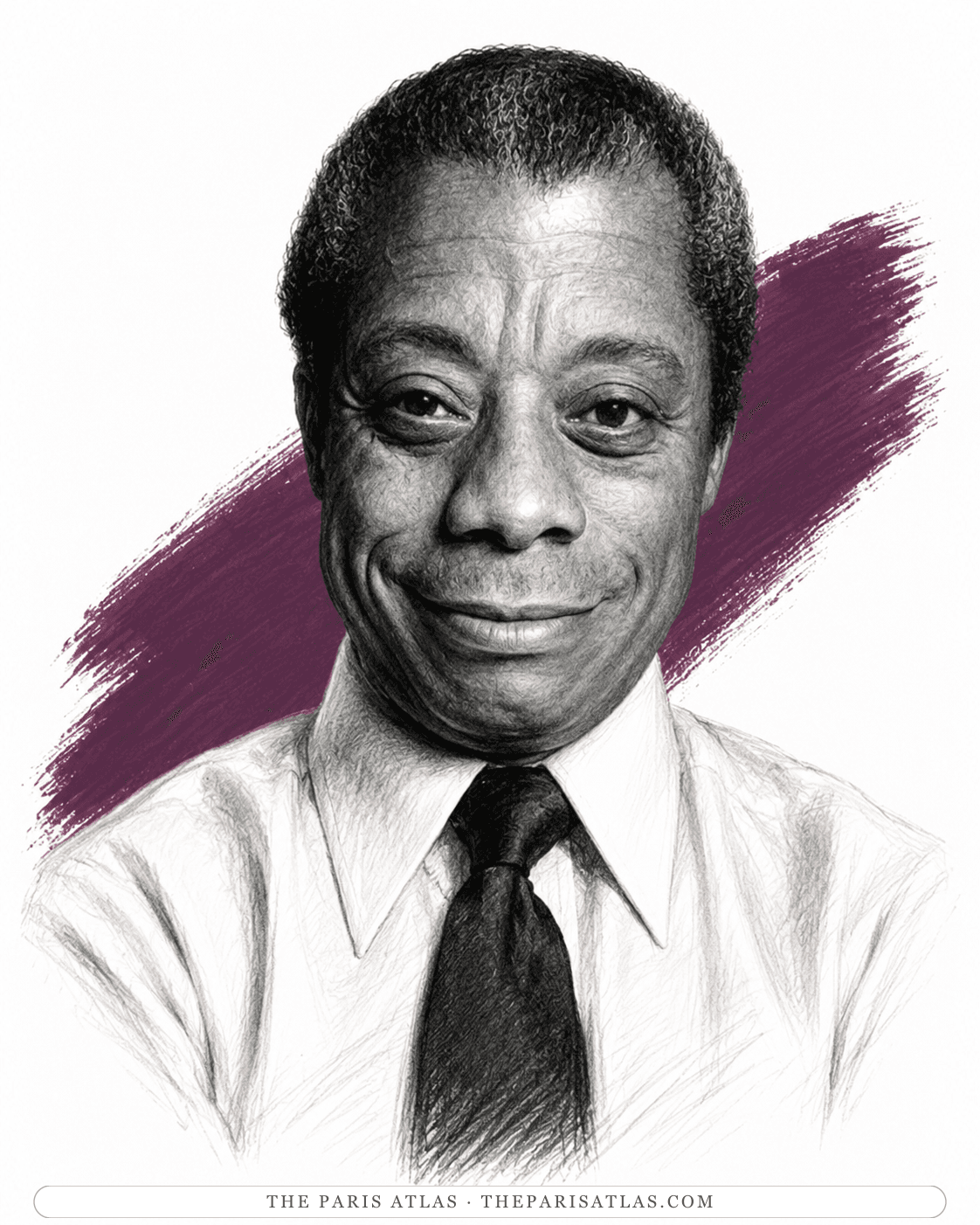
Illustrated portrait of James Baldwin

James Baldwin

  • Author
  • Playwright
  • Critic
  • +1

Met

Morrison is named among the significant correspondents in Baldwin's papers at the Schomburg Center. Baldwin said she was literally his ally; Morrison gave a eulogy at his 1987 funeral in which she said he had given the Black literary world three gifts — language, courage, and tenderness.
— James Baldwin papers, 1936–1992 (Sc MG 936), finding aid; Comrades in the Struggle

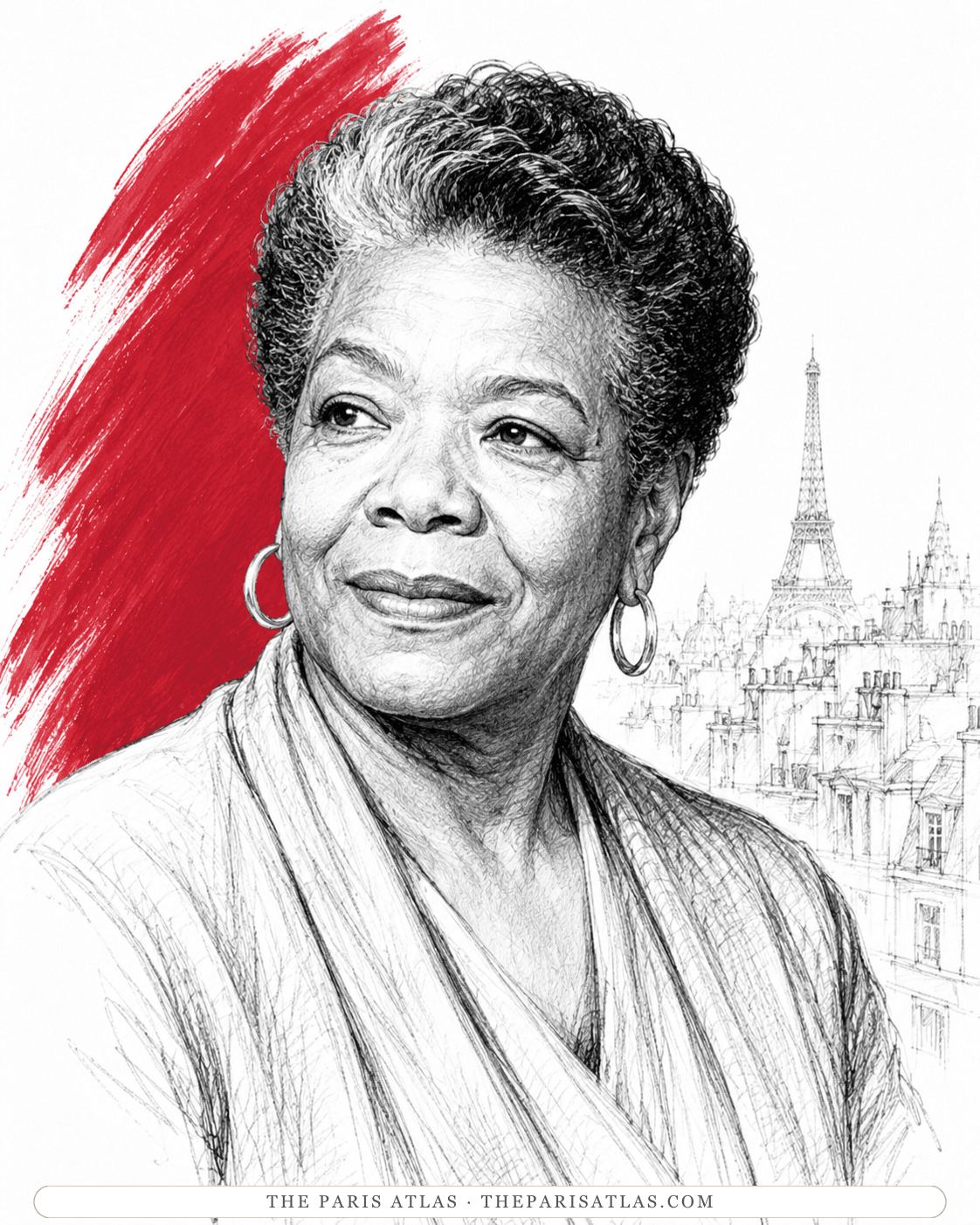
Illustrated portrait of Maya Angelou

Maya Angelou

  • Poet
  • Author

Met

Angelou's papers at the Schomburg Center include her letters to Morrison, whom the library describes among her friends and fellow writers.

— The Wisdom & Stories of Maya Angelou at the Schomburg Center (2024)

Books by Toni Morrison

Cover of The Bluest Eye by Toni Morrison

Modernist fiction

A Black girl in Ohio longs for blue eyes, while a childhood friend remembers the world that taught her to want them.

4.5
Cover of Sula by Toni Morrison

Modernist fiction

Toni Morrison's second novel: two Black girls in a small Ohio town become best friends, and one of them grows into the woman the whole town decides to fear.

4.5
Cover of Song of Solomon by Toni Morrison

Historical fiction

Milkman Dead's search for his family's origins turns a coming-of-age story into an inquiry about inheritance and belonging.

4.5
Cover of Recitatif by Toni Morrison

Short stories

Toni Morrison's only published short story: two girls meet in a children's shelter, one Black and one white, and Morrison never tells you which is which.

4.0
Cover of Beloved by Toni Morrison

Historical fiction

A mother who escaped slavery faces a haunting that brings her family's buried history into the present.

5.0

Questions about Toni Morrison

What is Toni Morrison best known for?

For eleven novels centered on Black American life, especially Beloved, Song of Solomon, The Bluest Eye, Sula and Jazz. Beloved won the Pulitzer Prize, and Morrison received the 1993 Nobel Prize in Literature.

What did Toni Morrison do as an editor?

She worked in publishing for nearly twenty years and became the first Black woman senior editor in Random House's trade division. She edited books by Toni Cade Bambara, Gayl Jones, Angela Davis and Muhammad Ali, and helped assemble The Black Book, a documentary history of Black American life.

Why is Beloved important?

Beloved turns the historical violence of American slavery into an intimate ghost story about memory, motherhood and survival. Morrison drew its starting point from the documented case of Margaret Garner but created a fictional family and community around it.

Did Toni Morrison know James Baldwin?

Yes. They corresponded, read one another and became friends. Morrison spoke at Baldwin's 1987 memorial and later published the eulogy Life in His Language, thanking him for what his writing made possible for writers after him.

When did Toni Morrison win the Nobel Prize?

In 1993. She was the first Black woman to receive the Nobel Prize in Literature and the eighth woman to receive the literature prize at that time.

Connections and Sources

Toni Morrison’s connections to people, places, and works, with the sources behind each one.

Met

James Baldwin

Morrison is named among the significant correspondents in Baldwin's papers at the Schomburg Center. Baldwin said she was literally his ally; Morrison gave a eulogy at his 1987 funeral in which she said he had given the Black literary world three gifts — language, courage, and tenderness.

— James Baldwin papers, 1936–1992 (Sc MG 936), finding aid; Comrades in the Struggle

Met

Maya Angelou

Angelou's papers at the Schomburg Center include her letters to Morrison, whom the library describes among her friends and fellow writers.

— The Wisdom & Stories of Maya Angelou at the Schomburg Center (2024)

References

References

The sources below include biographies, scholarly essays, interviews, and primary materials that informed this page. They reflect both the historical record and ongoing critical conversations about Toni Morrison and their work.

  1. 1abcdefghToni Morrison memorial resolution

    Official record
    Princeton University, 2020
    Used for

    Education, editing career, Princeton appointments, complete novel sequence and institutional remembrance.

    View source
  2. 2abToni Morrison — Biographical

    Biography
    Nobel Prize Outreach, 1993
    Used for

    The Nobel Foundation's biographical record for the 1993 laureate.

    View source
  3. 3abcdefghiGhosts in the House, by Hilton Als

    Website
    The New Yorker
    Used for

    Hilton Als's 2003 profile, the fullest account of how Morrison entered publishing and what she acquired at Random House.

    View source
  4. 4abcToni Morrison — Bibliography

    Official record
    Nobel Prize Outreach
    Used for

    Publication chronology for novels, nonfiction and children's books.

    View source
  5. 5↑Toni Morrison, The Art of Fiction No. 134

    Website
    The Paris Review
    Used for

    The Paris Review interview, The Art of Fiction No. 134, the source of the editing and writing quotations.

    View source
  6. 5↑Toni Morrison, The Art of Fiction No. 134

    Website
    The Paris Review
    Used for

    Primary interview on her writing practice, editing and the making of Beloved.

    View source
  1. 6abMargaret Garner (1834-1858)

    Website
    BlackPast
    Used for

    Account of the Margaret Garner case of 1856 and the trial that followed.

    View source
  2. 7↑48 Black Writers Protest by Praising Morrison

    Website
    The New York Times
    Used for

    The New York Times report of 19 January 1988 on the statement signed by forty-eight Black writers and critics.

    View source
  3. 8↑Toni Morrison, Docteure Honoris Causa 2003, chaire Condorcet 1994

    Website
    Ecole normale superieure PSL
    Used for

    The École normale supérieure's own record of the 1994 Condorcet chair and the 2003 honorary doctorate.

    View source
  4. 9↑Rap and Film at the Louvre? What's Up With That?

    Website
    The New York Times
    Used for

    Alan Riding's report from Paris on Morrison's month as the Louvre's Grand Invité in November 2006.

    View source
  5. 10Toni Morrison — Nobel Lecture

    Essays
    Nobel Foundation, 1993
    Used for

    Primary text of Morrison's Nobel lecture and its language parable.

    View source
i
Why these sources are here

These references anchor the page in the documented record and in the scholarly conversations around Toni Morrison. Every claim on this page traces back to one or more of the works listed here.

Explore more resources
Browse all authors