I Know Why the Caged Bird Sings
How Maya appears in its pages: The narrator, followed from age three to seventeen — the future Maya Angelou, called Ritie by her family and Maya by her brother.
Read the character guideAmerican poet, memoirist, and performer whose I Know Why the Caged Bird Sings (1969) opened a seven-volume autobiography. She toured Europe with Porgy and Bess in the 1950s, met James Baldwin in Paris, and recited at Bill Clinton’s 1993 inauguration.
Maya Angelou was born Marguerite Annie Johnson in St. Louis in 1928 and remade herself many times over — silent child, teenage mother, dancer, calypso singer, expatriate, civil rights organizer, memoirist, professor, and the poet who spoke at a presidential inauguration. The thread through every version is her voice: she lost it as a child, recovered it through poetry read aloud, and spent the rest of her life learning to command a room.
She is best known for I Know Why the Caged Bird Sings (1969), the first of seven autobiographies, and for poems such as “Still I Rise” and “Phenomenal Woman.” She met James Baldwin in 1950s Paris while touring with Porgy and Bess; he later helped push her toward the memoir that made her name.
Maya Angelou was born Marguerite Annie Johnson in St. Louis, Missouri, on 4 April 1928.[1] When she was three her parents divorced, and she and her older brother, Bailey Johnson Jr., were sent alone by train to Stamps, Arkansas, to live with their paternal grandmother, Annie Henderson, who ran the town’s Black general store. It was Bailey who called her “Maya,” and the name held.
Stamps was segregated in the ordinary, daily way of the 1930s South, and the store sat at the center of her childhood — the place where cotton pickers were weighed and paid, and where she learned to watch and to listen.
On a visit to her mother in St. Louis, at seven or eight, Angelou was raped by her mother’s boyfriend. After she testified, the man was found beaten to death, and the child concluded that her words had killed him. She stopped speaking, to almost everyone, for close to five years.[1] A family friend named Bertha Flowers drew her back toward language by reading poetry aloud and insisting that a poem is not finished until it is spoken. The recovery of that voice is the story her whole life keeps retelling.
In the early 1940s Angelou rejoined her mother, Vivian Baxter, in California. She studied dance and drama, and still in her teens she talked her way into a job as San Francisco’s first Black female streetcar conductor. Weeks after she finished high school in 1945, at seventeen, she gave birth to her son, Guy Johnson.
Guy was the fixed point of the decades that followed. The need to support him drove the run of jobs — cook, waitress, dancer — that she later set down in Gather Together in My Name, and his safety shaped nearly every move she made.
In the early 1950s she was dancing in San Francisco nightclubs, and at the Purple Onion she assembled the stage name that became her real one. She sang calypso, recorded the album Miss Calypso, and in 1954 and 1955 toured Europe as a dancer in a State Department production of Porgy and Bess.[1]
It was her first sustained time outside the United States, and it changed her sense of what race and nationality meant. In Paris she performed and taught dance, and there she met James Baldwin — the beginning of one of the closest friendships of her life. Years later Baldwin would help move her from the stage toward the page.
By the end of the 1950s Angelou had settled into New York’s Black literary world. She joined the Harlem Writers Guild, acted in Jean Genet’s play The Blacks alongside James Earl Jones and Cicely Tyson, and after hearing Martin Luther King Jr. speak, she and the comedian Godfrey Cambridge staged a revue, Cabaret for Freedom, to raise money for his Southern Christian Leadership Conference.
The revue led to a job: for a time she served as the SCLC’s northern coordinator. Her activism was not a second career bolted onto the first. Performing, storytelling, and organizing were different uses of the same skill, holding a room.
In 1961 Angelou left the United States again, with the South African freedom fighter Vusumzi Make and with Guy. They lived in Cairo, where she worked as an editor at the English-language Arab Observer, and then in Accra, where she wrote for Ghanaian newspapers and joined a community of Black American expatriates drawn to newly independent Ghana.
Soon after they arrived, Guy was badly hurt in a car accident and spent months recovering; Angelou stayed rather than leave him. It was in Ghana that she came to know Malcolm X[2], and there that her idea of Africa as an ancestral home met the harder fact that her history and her fight were still American.
Angelou returned to the United States in 1965 to help Malcolm X build his new Organization of Afro-American Unity. Weeks later, on 21 February 1965, he was assassinated.[2] Three years after that, Martin Luther King Jr., who had asked her to work for him again, was killed on 4 April 1968 — her fortieth birthday. For years afterward she did not celebrate the day.
James Baldwin and the Random House editor Robert Loomis pressed her to write. She resisted autobiography, then found its form: I Know Why the Caged Bird Sings, published in 1969, built from scene and dialogue with the architecture of a novel and closing with the birth of her son.[1] It made her famous and opened a door for Black women’s life writing that had barely been ajar.
Caged Bird became the first of seven autobiographies that carried her life forward volume by volume. Her poetry — Just Give Me a Cool Drink of Water ’fore I Diiie, nominated for a Pulitzer Prize, and And Still I Rise (1978), with “Still I Rise” and “Phenomenal Woman” — drew its force from being spoken, out of Black musical and pulpit traditions.
She moved among forms without settling into one. She wrote for the screen, worked in film and television, and earned an Emmy nomination for her part in the 1977 miniseries Roots. The performer never left; she became the rhythm of the writer.
In 1982 Wake Forest University named Angelou its first Reynolds Professor of American Studies, a post she held for the rest of her life, teaching poetry, race, and Shakespeare through performance and insisting that students defend a position out loud.[1]
On 20 January 1993 she recited “On the Pulse of Morning” at Bill Clinton’s inauguration, the first poet to read at one since Robert Frost in 1961 and the first Black woman ever to do so.[1] The child who had feared her own voice was now speaking for the country.
Angelou received the Presidential Medal of Freedom from Barack Obama in 2011 and published a final memoir about her mother, Mom & Me & Mom, in 2013. She died at home in Winston-Salem, North Carolina, on 28 May 2014, at eighty-six.[1] In 2022 she became the first Black woman depicted on a U.S. quarter. I Know Why the Caged Bird Sings, meanwhile, remains one of the most frequently challenged books in American schools.
Born Marguerite Annie Johnson in St. Louis, Missouri, on 4 April.
After her parents’ divorce, she and her brother, Bailey Johnson Jr., are sent to their grandmother Annie Henderson in Stamps, Arkansas.
Raped during a visit to her mother in St. Louis; after her attacker is found dead, she falls almost silent for close to five years, drawn back to speech by Bertha Flowers and poetry read aloud.
Rejoins her mother, Vivian Baxter, in San Francisco and studies dance and drama.
Becomes San Francisco’s first Black female streetcar conductor.
Finishes high school and, at seventeen, gives birth to her son, Guy Johnson.
Marries Tosh Angelos; from her married name and her brother’s nickname she later builds the stage name Maya Angelou.
Tours Europe as a dancer in a State Department production of Porgy and Bess; performs and teaches dance in Paris, where she meets James Baldwin.
Records the album Miss Calypso as a nightclub singer and dancer.
Moves to New York and joins the Harlem Writers Guild.
Hears Martin Luther King Jr. speak and, with Godfrey Cambridge, produces the revue Cabaret for Freedom for the SCLC; soon becomes its northern coordinator.
Performs in Jean Genet’s The Blacks Off-Broadway, then leaves for Cairo with Vusumzi Make and her son.
Works as an editor at the English-language Arab Observer in Cairo.
Moves to Accra, Ghana, and writes for Ghanaian newspapers; Guy is seriously hurt in a car accident.
Comes to know Malcolm X in Ghana.
Returns to the United States to help build Malcolm X’s Organization of Afro-American Unity; he is assassinated on 21 February.
Martin Luther King Jr. is assassinated on 4 April, her fortieth birthday.
Publishes I Know Why the Caged Bird Sings, the first of seven autobiographies.
Publishes the poetry collection Just Give Me a Cool Drink of Water ’fore I Diiie, later nominated for a Pulitzer Prize.
Writes the screenplay for the film Georgia, Georgia.
Nominated for an Emmy for her role in the television miniseries Roots.
Publishes And Still I Rise, containing “Still I Rise” and “Phenomenal Woman.”
Publishes The Heart of a Woman.
Wake Forest University names her its first Reynolds Professor of American Studies.
Recites “On the Pulse of Morning” at Bill Clinton’s inauguration on 20 January, the first Black woman to read a poem at one, and publishes Wouldn’t Take Nothing for My Journey Now.
Publishes Letter to My Daughter.
Receives the Presidential Medal of Freedom from Barack Obama.
Publishes Mom & Me & Mom, a last memoir about her mother, Vivian Baxter.
Dies at home in Winston-Salem, North Carolina, on 28 May, aged eighty-six.
Becomes the first Black woman depicted on a U.S. quarter.
Every person under the sound of my voice is a soldier. You are either fighting for your freedom or betraying the fight for freedom or enlisted in the army to deny somebody else's freedom.
Ask for what you want and be prepared to pay for what you get.
Intelligence always had a pornographic influence on me.
How Maya appears in its pages: The narrator, followed from age three to seventeen — the future Maya Angelou, called Ritie by her family and Maya by her brother.
Read the character guide
How Maya appears in its pages: Angelou's younger self, seeking work under the name Rita while raising her son.
Read the character guide
How Maya appears in its pages: The memoir's narrator, a mother and performer developing her work as a writer and organizer.
Read the character guide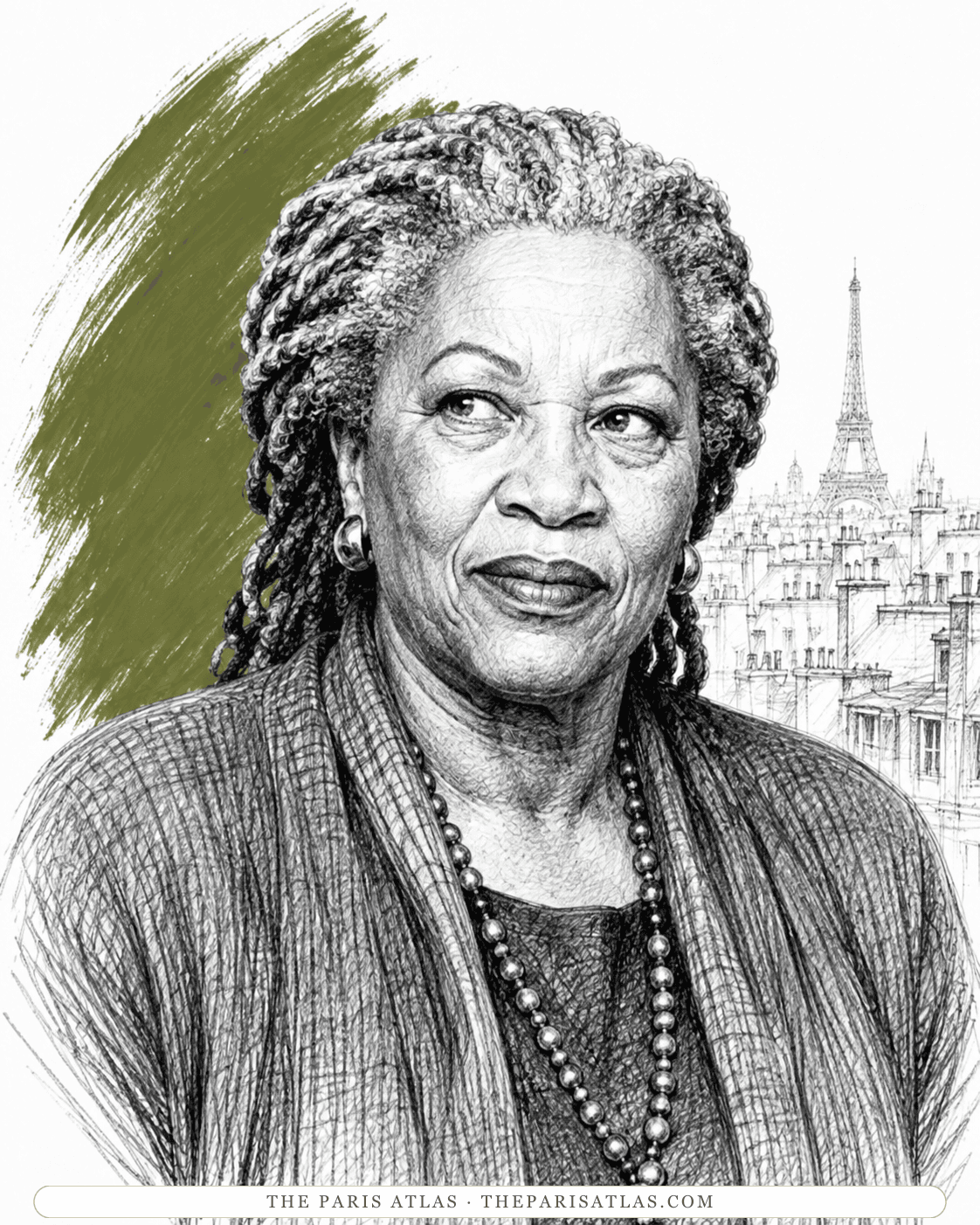
Met
Angelou's papers at the Schomburg Center include her letters to Morrison, whom the library describes among her friends and fellow writers.
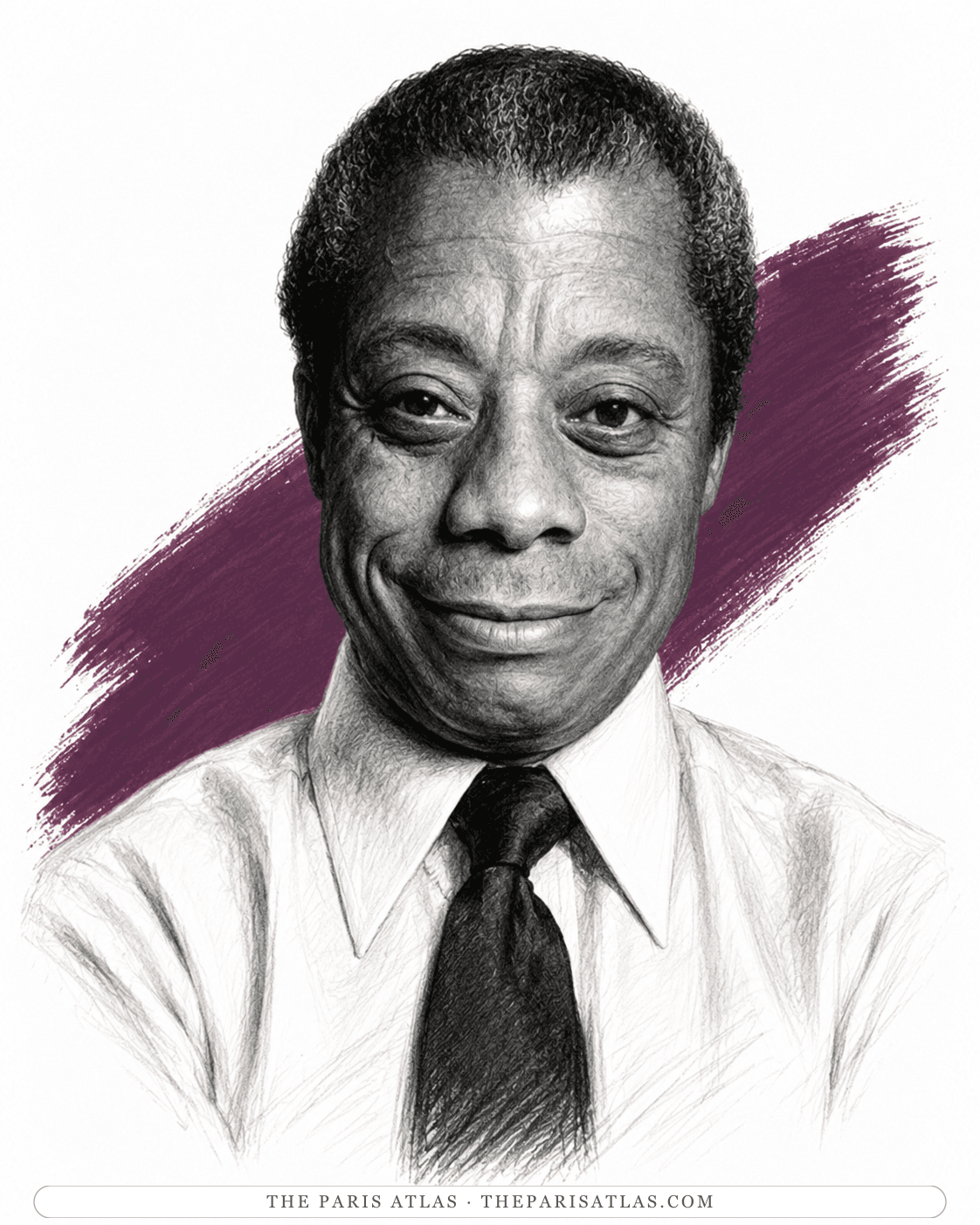
Met
They met in the 1950s, when Angelou came through France with the touring production of Porgy and Bess. They called each other brother and sister; Baldwin wrote the liner notes for her 1969 poetry album, and Angelou gave a eulogy at his funeral in 1987.
The most famous of Maya Angelou’s seven autobiographies: a Black girl’s childhood in the segregated South, and how she got her voice back.
Angelou's second memoir follows a young mother trying to earn a living and find a place for herself after World War II.

Angelou's third poetry collection joins bodily confidence and resistance to poems of hurt, labor, family, and memory.
Angelou's fourth memoir follows her move into New York's literary and political life while her son grows toward independence.

Twenty-eight short pieces published at eighty for the daughters Maya Angelou never had, from a Stamps childhood to a dinner in Senegal with a friend she met in Paris.
Maya Angelou died of natural causes at her home in Winston-Salem, North Carolina, on 28 May 2014, aged eighty-six. Her health had been failing, and she cancelled a planned appearance shortly before her death.
Guy Johnson, her only child, born in 1945 when she was seventeen. Concern for him runs through her memoirs and shaped decades of her decisions about work and travel; he was seriously injured in a car accident in Ghana in the 1960s and later became a poet himself.
Angelou married at least twice — to the electrician and would-be musician Tosh Angelos in the early 1950s, and to the writer Paul du Feu in the 1970s — and she was famously reticent about the exact number. Her memoir The Heart of a Woman also describes her relationship with the South African freedom fighter Vusumzi Make.
It is one of the most frequently challenged books in American schools. Objections usually cite its account of Angelou’s childhood rape, its sexual content, and its language. Its defenders argue those passages are the source of the book’s honesty, and it has stayed on school reading lists for more than fifty years.
“Still I Rise” and “Phenomenal Woman” are her best-known poems, both from the late 1970s. She also wrote “On the Pulse of Morning,” which she recited at Bill Clinton’s 1993 inauguration before a national audience.
In 2022 she became the first honoree in the U.S. Mint’s American Women Quarters program, and the first Black woman depicted on a U.S. quarter. The reverse shows her with arms raised, a bird in flight, and a rising sun, imagery drawn from her poetry.
She worked with both. Around 1960 she served as northern coordinator of King’s Southern Christian Leadership Conference, and in Ghana she came to know Malcolm X, returning to the United States in 1965 to help build his Organization of Afro-American Unity weeks before he was assassinated. King was killed on her fortieth birthday in 1968.
Met
Angelou's papers at the Schomburg Center include her letters to Morrison, whom the library describes among her friends and fellow writers.
Met
They met in the 1950s, when Angelou came through France with the touring production of Porgy and Bess. They called each other brother and sister; Baldwin wrote the liner notes for her 1969 poetry album, and Angelou gave a eulogy at his funeral in 1987.
The sources below include biographies, scholarly essays, interviews, and primary materials that informed this page. They reflect both the historical record and ongoing critical conversations about Maya Angelou and their work.


Web source consulted for documented facts and historical context presented on the Maya Angelou page.

Archival evidence used to document the historical record connected to Maya Angelou.
Wake Forest's own memorial site: the Reynolds professorship she was named to in 1982, the thirty-two years she held it, the courses she taught, and the 1973 visit that began the relationship.
The President's remarks at the East Room ceremony of 15 February 2011 presenting the 2010 Medal of Freedom, which recount the childhood years when she stopped speaking.
First-person evidence and historical context used in preparing the Maya Angelou page.
Web source consulted for documented facts and historical context presented on the Maya Angelou page.
Web source consulted for documented facts and historical context presented on the Maya Angelou page.
Web source consulted for documented facts and historical context presented on the Maya Angelou page.
Web source consulted for documented facts and historical context presented on the Maya Angelou page.
These references anchor the page in the documented record and in the scholarly conversations around Maya Angelou. Every claim on this page traces back to one or more of the works listed here.
 Explore more resources