The Paris AtlasCharting the artists, works, and places worth returning to.

In their own words

Maya Angelou quotes

227 quotations, each verified against its source and credited to the work it comes from — the wording as Maya Angelou wrote or said it, not as the internet passes it around. Page 1 of 10.

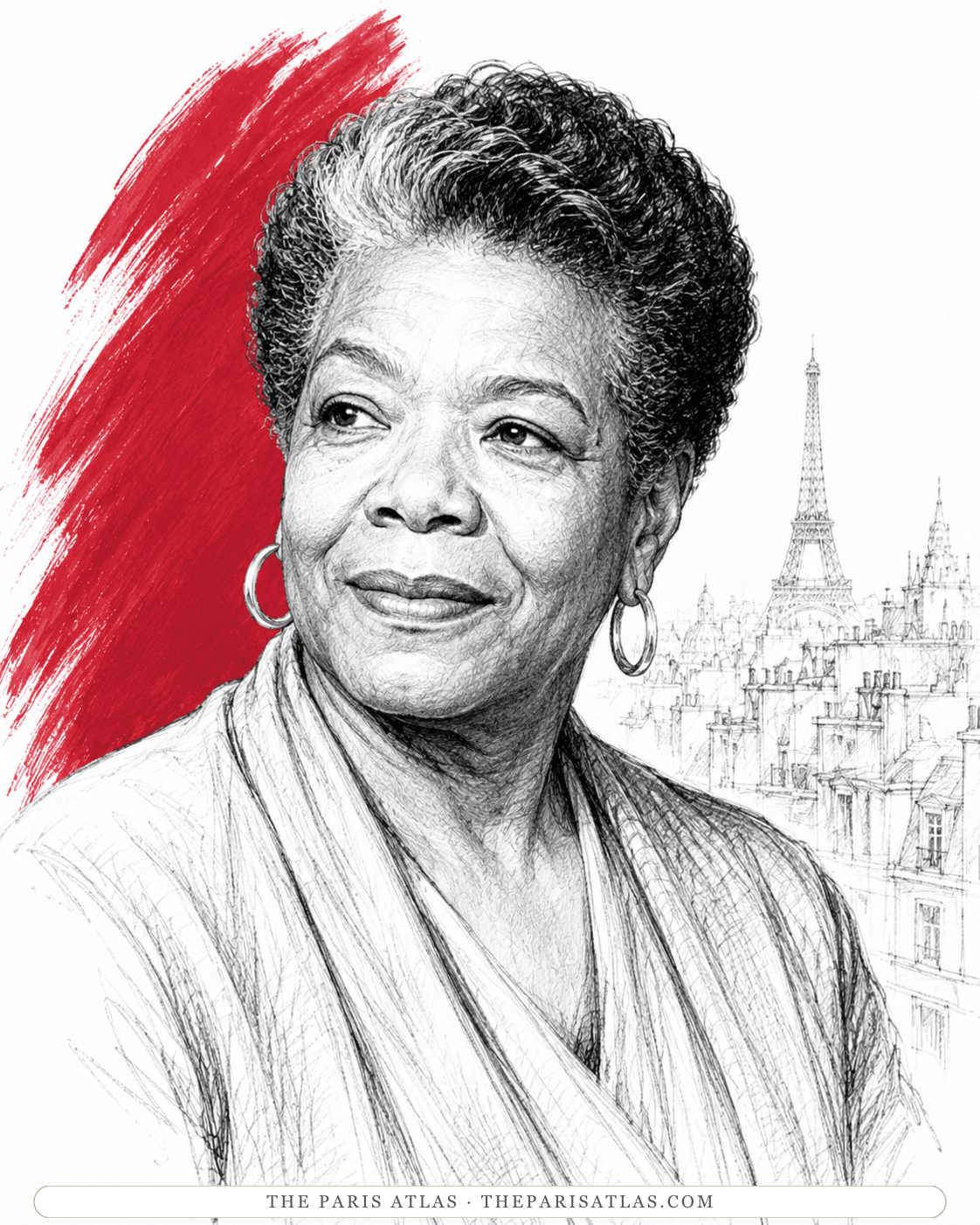
Illustrated portrait of Maya Angelou
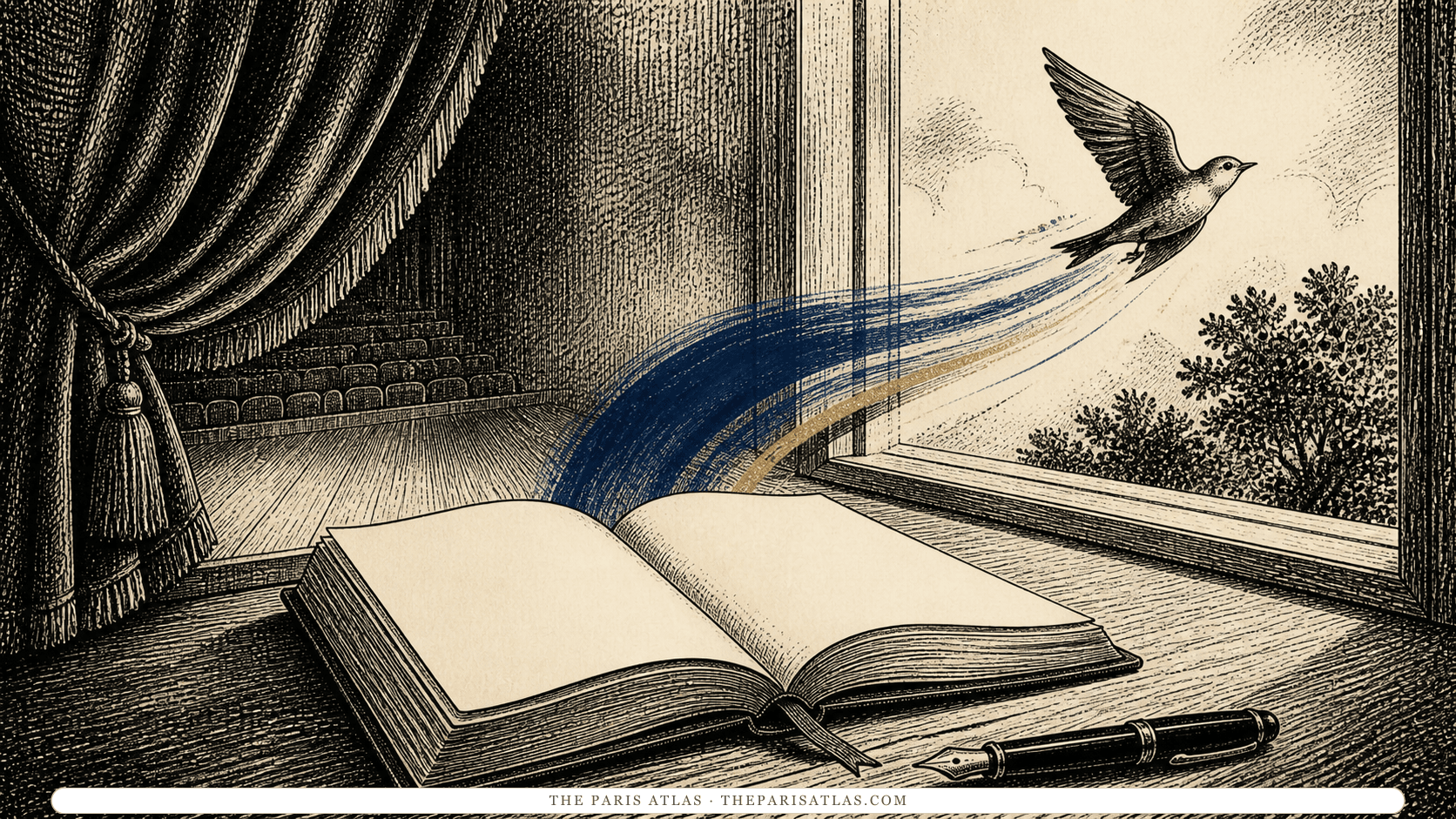
Pen-and-ink illustration of an open memoir, a theater curtain, and a bird taking flight

How these quotes were checked

How we decide whether a quote is genuine

Maya Angelou is one of the most quoted writers in English and one of the most misquoted. Lines she never wrote circulate under her name in classrooms, greeting cards and government publications, and in 2015 one of them was printed on a United States postage stamp bearing her portrait.

A line enters this collection only when its wording can be checked against one of her books, a published interview, or a recorded speech. Where a famous sentence turns out to belong to somebody else, it is listed below with the person who wrote it and the year, rather than left off quietly.

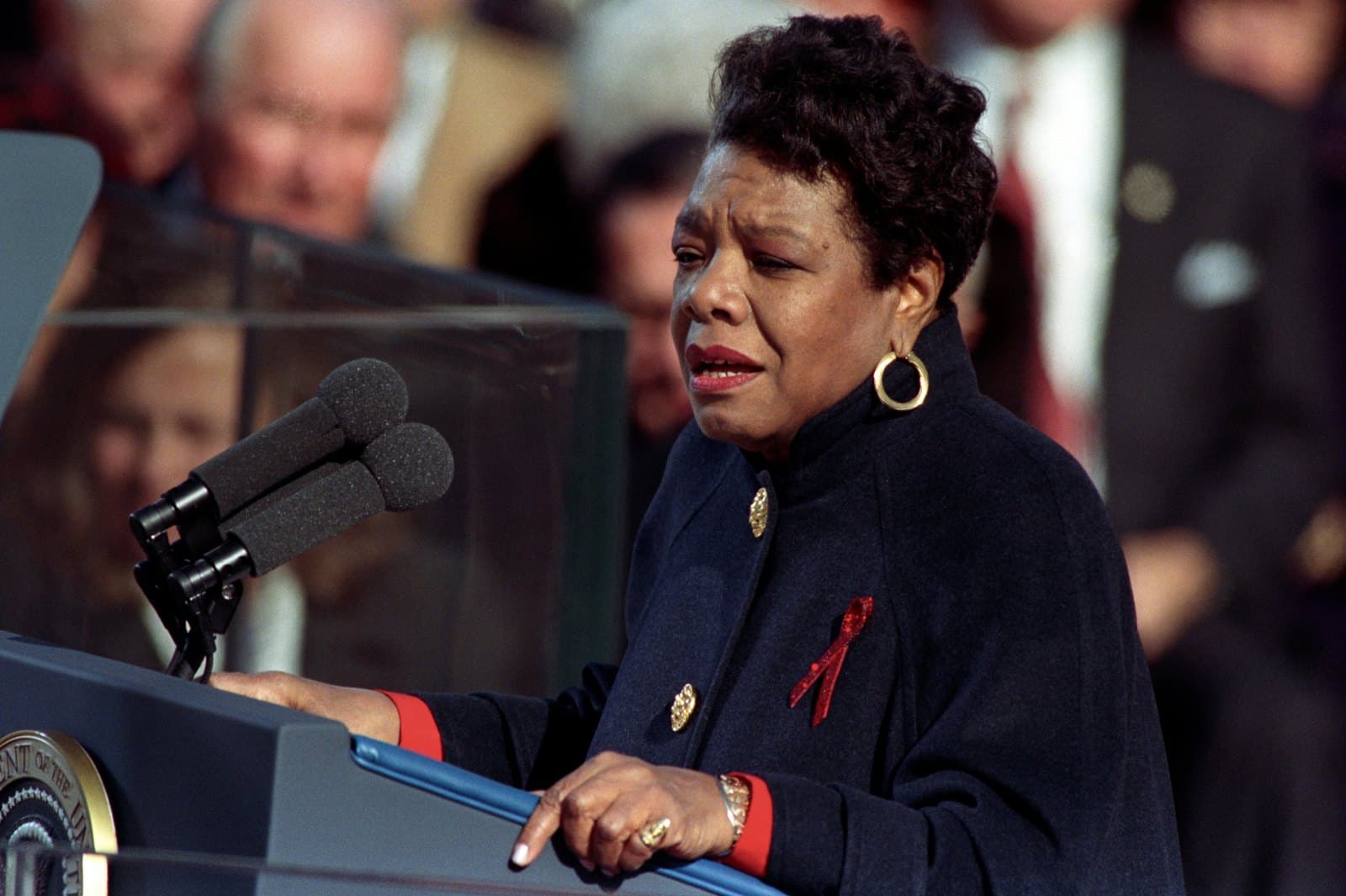
Maya Angelou reciting from a lectern bearing the presidential seal at an outdoor ceremony, wearing a dark coat and a red ribbon, microphones before her and dignitaries behind
Maya Angelou reciting “On the Pulse of Morning” at Bill Clinton’s inauguration on 20 January 1993 — the first Black woman to read a poem at a presidential inauguration. White House Photograph Office; via Wikimedia Commons. Public domain.

Four famous Maya Angelou quotes, fact-checked

A sentence linked to Maya Angelou may be exact, shortened, remembered by someone else, or unsupported. Each label below explains what the available evidence actually proves.

Misattributed

“I've learned that people will forget what you said, people will forget what you did, but people will never forget how you made them feel.”

The earliest known appearance is in Richard L. Evans's 1971 collection Richard Evans' Quote Book, where it is credited to Carl W. Buehner, an official of The Church of Jesus Christ of Latter-day Saints. It circulated under Buehner's name through the 1980s and 1990s. The link to Angelou began around 2003, when a chain email reassigned a set of “I've learned that…” sayings from H. Jackson Brown Jr.'s 1991 book Live and Learn and Pass It On to her, and appended this sentence to the group.

  • — Garson O'Toole, They May Forget What You Said, But They Will Never Forget How You Made Them Feel (2014)
Misattributed

“A bird doesn't sing because it has an answer, it sings because it has a song.”

Written by the children's author Joan Walsh Anglund in her 1967 poetry collection A Cup of Sun, where the bird is “he” rather than “it”. The United States Postal Service printed the line beside Angelou's portrait on a stamp issued in April 2015, and President Barack Obama had attributed it to her at the 2013 National Medal of Arts ceremony. When the error was raised, the Postal Service said it would have chosen another line had it known, and kept the stamp in circulation. Angelou quoted the sentence often; the attribution to her was made by other people.

  • — Maya Angelou: A bird… sings because it has a song (2017)
Misattributed

“There is no greater agony than bearing an untold story inside you.”

Zora Neale Hurston wrote it, in her 1942 autobiography Dust Tracks on a Road, in a chapter about the compulsion to write: “There is no agony like bearing an untold story inside you.” It is usually reprinted in the longer form above and credited to Angelou, often to I Know Why the Caged Bird Sings, which does not contain it.

  • — Garson O'Toole, There Is No Agony Like Bearing an Untold Story Inside You (2020)
  • — Zora Neale Hurston, Dust Tracks on a Road: An Autobiography (1942), Chapter 11, pages 220-221
Reported speech

“When someone shows you who they are, believe them the first time.”

This one does appear to be hers, but not from a book. Oprah Winfrey has described it as the most useful thing Angelou ever taught her, and reports Angelou saying it to her directly, along with the follow-up: “Baby, they show you and show you, and you still don't believe what you see.” No published book, interview or speech transcript has been found carrying the sentence, so it is recorded here as reported by a named witness rather than verified against a text.

  • — Oprah Winfrey, What Oprah Knows for Sure About Her Teacher and Friend Maya Angelou

The Heart of a Woman (1981) quotes

Every person under the sound of my voice is a soldier. You are either fighting for your freedom or betraying the fight for freedom or enlisted in the army to deny somebody else's freedom.
— Malcolm X (dialogue) · Maya Angelou, The Heart of a Woman (1981), Chapter 11
Ask for what you want and be prepared to pay for what you get.
— Vivian Baxter (dialogue) · Maya Angelou, The Heart of a Woman (1981), Chapter 1
Intelligence always had a pornographic influence on me.
— Maya Angelou (narration) · Maya Angelou, The Heart of a Woman (1981), Chapter 8
Never give up on him. Never deny him. And remember, he is freer than those who hold him behind bars.
— Martin Luther King, Jr. (dialogue) · Maya Angelou, The Heart of a Woman (1981), Chapter 6
Since you're black, you have to hope for the best. Be prepared for the worst and always know that anything can happen.
— Vivian Baxter (dialogue) · Maya Angelou, The Heart of a Woman (1981), Chapter 3
If one is lucky a solitary fantasy can totally transform one million realities.
— Maya Angelou (narration) · Maya Angelou, The Heart of a Woman (1981), Chapter 13
It is my neck and my life. I will live it whole or not at all.
— Guy (dialogue) · Maya Angelou, The Heart of a Woman (1981), Chapter 20
At last, I'll be able to eat the whole breast of a roast chicken by myself.
— Maya Angelou (narration) · Maya Angelou, The Heart of a Woman (1981), Chapter 20
Never, never let a person know you're frightened. And a group of them … absolutely never.
— Vivian Baxter (dialogue) · Maya Angelou, The Heart of a Woman (1981), Chapter 1
I know now that until the lowliest Negro sharecropper in the South is free, I am not free.
— Ralph Bunche (dialogue) · Maya Angelou, The Heart of a Woman (1981), Chapter 14
Every try will not succeed. But if you're going to live, live at all, your business is trying.
— John Killens (dialogue) · Maya Angelou, The Heart of a Woman (1981), Chapter 6
You've got to work. Write each sentence over and over again, until it seems you've used every combination possible, then write it again.
— John Henrik Clarke (dialogue) · Maya Angelou, The Heart of a Woman (1981), Chapter 2
Let me leave first, baby. I hate to see the back of someone I love.
— Vivian Baxter (dialogue) · Maya Angelou, The Heart of a Woman (1981), Chapter 1
Black people are letting white Americans know that the time is coming for ballots or bullets.
— Malcolm X (dialogue) · Maya Angelou, The Heart of a Woman (1981), Chapter 11
all I had to do, really had to do, was stay black and die. Nothing could be more interesting than the first, or more permanent than the latter.
— Maya Angelou (narration) · Maya Angelou, The Heart of a Woman (1981), Chapter 18
Keep on telling the truth, Maya. Stay on the stage. I don't mean the night-club stage, or the theatrical stage. I mean on the stage of life.
— Odetta (dialogue) · Maya Angelou, The Heart of a Woman (1981), Chapter 5
Sister, in this country a Negro is always about to get killed, so that ain't nothing. But you tell your husband that a black man was ready to lay down his life for you. That's all.
— Buddy (dialogue) · Maya Angelou, The Heart of a Woman (1981), Chapter 11
There is a silent scream, which tears through the veins, separating the muscles, pinching the nerves, yet the body seems to remain immobile.
— Maya Angelou (narration) · Maya Angelou, The Heart of a Woman (1981), Chapter 16
most black revolutionaries, most black radicals, most black activists, do not really want change. They want exchange.
— Vusumzi Make (dialogue) · Maya Angelou, The Heart of a Woman (1981), Chapter 12
The root cause of racism and its primary result is that whites refuse to see us simply as people.
— Vusumzi Make (dialogue) · Maya Angelou, The Heart of a Woman (1981), Chapter 12
I came from a race used to violence and habituated to loss.
— Maya Angelou (narration) · Maya Angelou, The Heart of a Woman (1981), Chapter 19
Permit? If we left it to you whites we'd be in the same shape as our folks in South Africa. We'd have to have a permit to breathe.
— Maya Angelou (dialogue) · Maya Angelou, The Heart of a Woman (1981), Chapter 11
Don't you ever threaten me. I am an African. I do not scare easily and I do not run at all.
— Vusumzi Make (dialogue) · Maya Angelou, The Heart of a Woman (1981), Chapter 13
I'll put my foot in that door up to my hip until women of every color can walk over my foot, get in that union, get aboard a ship and go to sea.
— Vivian Baxter (dialogue) · Maya Angelou, The Heart of a Woman (1981), Chapter 1
I'm not going to run. 'Cause once you do, you have to keep on running.
— Guy (dialogue) · Maya Angelou, The Heart of a Woman (1981), Chapter 5

From the books

Every book with a quote collection of its own, each line verified against the text.

Questions about Maya Angelou quotes

Did Maya Angelou say “people will forget what you said, but never how you made them feel”?

No. The sentence first appears in print in 1971, credited to Carl W. Buehner. It reached Angelou through a chain email around 2003 that reassigned a batch of sayings from H. Jackson Brown Jr.'s 1991 book Live and Learn and Pass It On to her and added this line to them.

Did Maya Angelou write “a bird doesn't sing because it has an answer”?

No. Joan Walsh Anglund published it in A Cup of Sun in 1967, two years before I Know Why the Caged Bird Sings. The United States Postal Service still printed it on a stamp honouring Angelou in April 2015, and kept the stamp in circulation after the mistake was pointed out.

Where does “there is no greater agony than bearing an untold story inside you” come from?

Zora Neale Hurston's 1942 autobiography Dust Tracks on a Road, where the wording is “There is no agony like bearing an untold story inside you.” It is regularly credited to Angelou and to I Know Why the Caged Bird Sings, which does not contain it.

Did Maya Angelou say “when someone shows you who they are, believe them the first time”?

Almost certainly, but not in print. Oprah Winfrey reports Angelou saying it to her in conversation and calls it the most useful lesson she was given. Because no book, interview or transcript carries the sentence, it is listed here as reported rather than verified.

Why are so many quotations wrongly attributed to Maya Angelou?

Her name lends authority to a sentence about dignity, courage or how to treat people, which is the kind of sentence that travels furthest online. She also quoted other writers generously in interviews and on stage, and a line she admired could be reprinted a few times before the quotation marks fell away. The title of I Know Why the Caged Bird Sings is itself borrowed, from Paul Laurence Dunbar's 1899 poem “Sympathy”.

References

References

The sources below are the editions, archives, and full-text searches used to verify the quotations on this page. Every line was checked against one or more of them before it appeared here.

  1. 1They May Forget What You Said, But They Will Never Forget How You Made Them Feel

    Website
    Quote Investigator, 6 April 2014, 2014
    Used for

    Attribution research on the most widely circulated line credited to Angelou.

    View source
  2. 2Maya Angelou: A bird… sings because it has a song

    Website
    Professor Buzzkill, 3 April 2017, 2017
    Used for

    The Joan Walsh Anglund original and the 2015 postage stamp.

    View source
  1. 3There Is No Agony Like Bearing an Untold Story Inside You

    Website
    Quote Investigator, 25 August 2020, 2020
    Used for

    Zora Neale Hurston's 1942 wording and its later reassignment.

    View source
  2. 4What Oprah Knows for Sure About Her Teacher and Friend Maya Angelou

    Website
    Oprah.com
    Used for

    Oprah Winfrey's first-hand account of a line Angelou never published.

    View source
i
Why these sources are here

Verification is the point of this collection: a quotation is listed only when its wording has been checked against the sources above, and the attribution notes record what each check found about the famous lines that failed.

Explore more resources

Newsletter

Join our newsletter

New stories about art, literature and famous places around the world.

Unsubscribe anytime.