
Beloved
Morrison's later novel gives another form to family memory, childhood vulnerability, and a community's responsibilities.
Read our take
A Black girl in Ohio longs for blue eyes, while a childhood friend remembers the world that taught her to want them.
The Bluest Eye is Toni Morrison's first novel, published in 1970. Set in Lorain, Ohio, in the early 1940s, it centers on eleven-year-old Pecola Breedlove and her wish for blue eyes. Claudia MacTeer's narration places childhood experience beside later understanding. Family life, poverty, racism, and standards of beauty shape the girls' sharply different ways of seeing themselves.
The opening imitates a children's reading primer, then removes its punctuation. A supposedly simple picture of a happy household becomes difficult to read. Morrison makes the language of an ideal home itself a subject for examination.
Claudia's memories preserve a child's anger and misunderstanding. Her older voice can also reconsider what happened. This double perspective lets affection and resentment coexist without requiring either feeling to cancel the other.
In her foreword, Morrison explains that she wanted to investigate a child accepting other people's contempt as truth. She describes Pecola's family as an extreme case, rather than a representative Black household. That distinction matters when reading the novel's violence.
Morrison also questions her own formal choices. She hoped the fragmented narrative would make readers examine their participation in judging Pecola. Her dissatisfaction with readers merely pitying the girl makes the foreword a useful challenge to a comfortable reading.
The opening primer presents family happiness as if it were immediately visible and easy to read. Repetition then removes the spacing and punctuation that made its sentences seem natural. The change turns familiarity into an obstacle: the same reassuring words become difficult to process.
Placed before the narrative, that dismantling invites attention to the standards through which households are judged. A seemingly innocent model can exclude lives that do not resemble it. Morrison makes the form of the lesson available for questioning before its assumptions have settled into the background.
Blue eyes promise Pecola more than a different feature. She imagines that beauty might alter how others treat her and what kind of world she has to face. Her wish directs the burden of change toward her own body instead of toward the people who harm or disregard her.
In her foreword, Morrison identifies the acceptance of contempt as a central problem. The distinction matters: the novel is concerned with how a child learns to regard an imposed judgment as self-evident. It gives no reason for a reader to accept the judgment that Pecola has absorbed.
After hearing that Pecola is pregnant, Claudia and Frieda try to connect the growth of marigolds with the baby's survival. The action gives them something to do in a situation the adults around them have failed to make safe. Their proposed bargain translates an overwhelming injury into a task children can attempt.
The failure of the flowers and the baby's death do not establish the sisters' guilt. Their effort exposes the disparity between affection and effective protection. The seasonal movement consequently offers no dependable promise that new growth will repair what a community has permitted.
Morrison's foreword questions whether the novel's fragmentation succeeded in making readers examine their participation in judging Pecola. That dissatisfaction offers a demanding way to approach the book: feeling sorry for the girl can still leave the standards used against her intact.
The histories of people who hurt her also require careful distinctions. Explaining how contempt and damage are transmitted does not excuse an adult's violence. Nor should the extremity of the Breedloves' household be turned into a general description of Black family life; Morrison explicitly rejects that representative burden.
The opening primer and Morrison's foreword, especially the discussion of internalized contempt, readerly pity and the family's nonrepresentative extremity.
The authorized opening excerpt and its accounts of childhood judgment.
Secondary synopsis for the marigold episode and the baby’s death; the publisher excerpts above do not extend to these later events.
But was it really like that?
listen for truth in timbre
Claudia's changing distance from her memories gives the prose unusual emotional range. An injury remembered sharply can acquire another meaning without becoming unreal.
Children listen to adults whose words they cannot fully understand. Tone, gesture, and rhythm become meaningful forms of knowledge in their own right.
Pecola's wish invites readers to ask where an apparently private desire comes from. The novel connects self-image with the judgments circulating through everyday life.
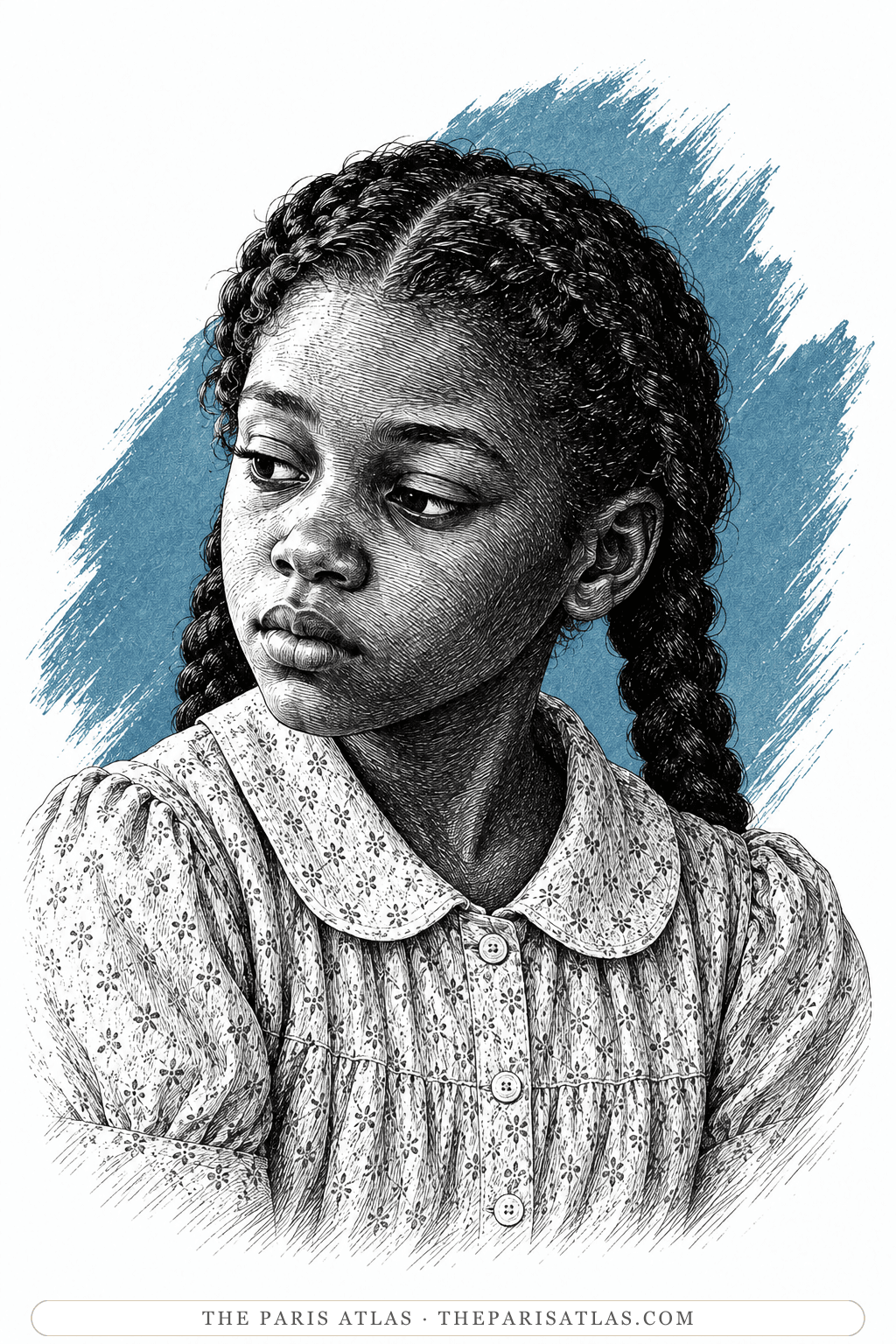
The eleven-year-old girl whose wish for blue eyes gives the novel its title.
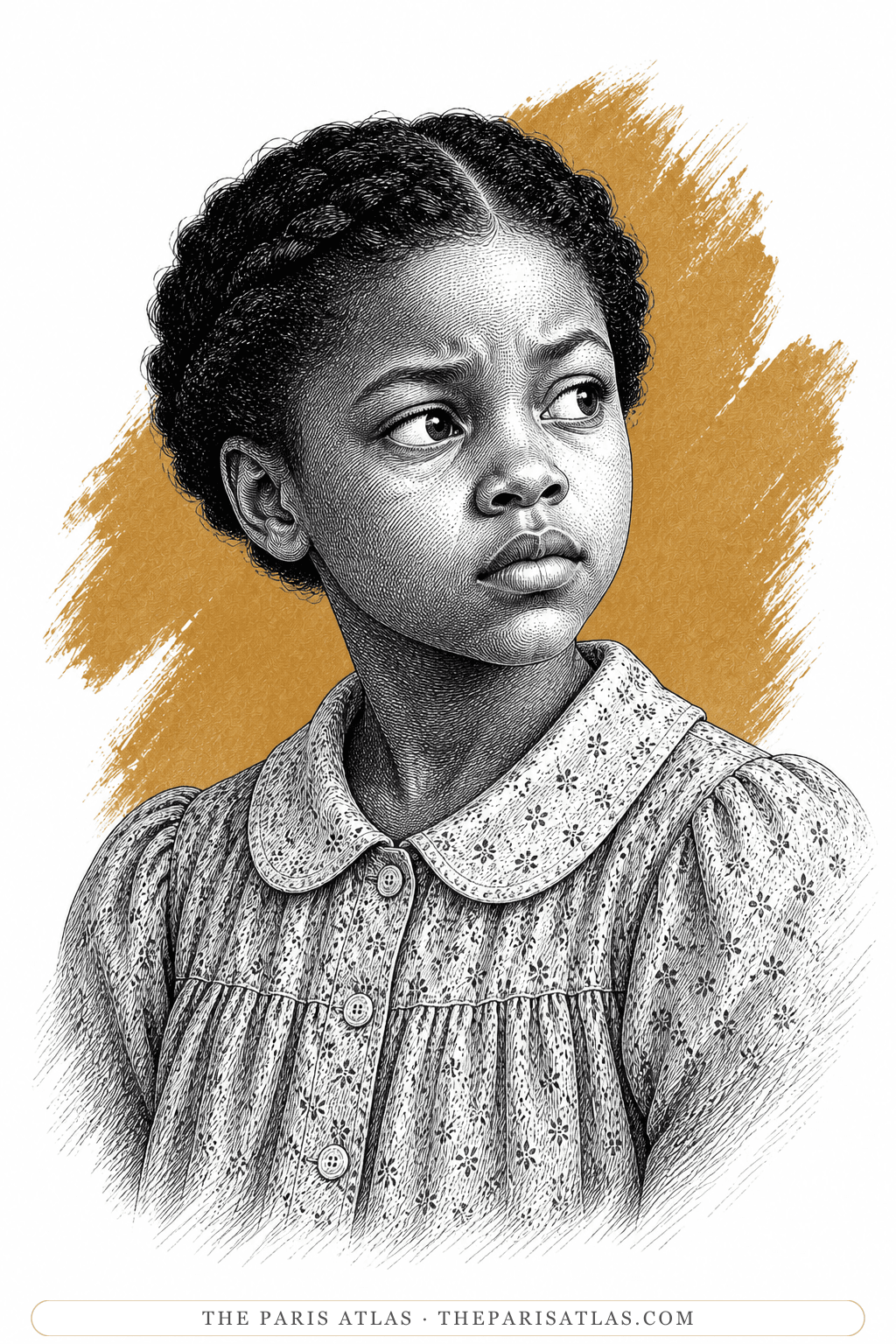
Frieda's younger sister, whose childhood recollections give the novel one of its central voices.
1962
Morrison begins the story that develops into The Bluest Eye, according to her later foreword. She dates its development into a book to 1965.
1970
Holt, Rinehart and Winston publishes Morrison's first novel in New York.
2007
Vintage issues paperback ISBN 9780307278449 on May 8.

Morrison's later novel gives another form to family memory, childhood vulnerability, and a community's responsibilities.
Read our take
A different Morrison coming-of-age story follows a young man's search for family history.
Read our take
Hughes's novel also follows a Black child's education within a Midwestern family, with distinct voices and values among the adults.
Read our takeIt centers on Pecola Breedlove, an eleven-year-old Black girl who longs for blue eyes. The novel examines the family experiences and social judgments that shape her desire.
Yes. Holt, Rinehart and Winston published it in 1970. Sula followed in 1973, and Song of Solomon in 1977.
Claudia MacTeer provides first-person childhood recollections, often reconsidered from an older perspective. Other sections use different narrative viewpoints, so Claudia does not narrate every part.
It is set in Lorain, Ohio, during the early 1940s. Morrison also grew up in Lorain, but the novel's characters should not be treated as a factual record of her childhood.
It names Pecola's longing for the blue eyes she associates with beauty and acceptance. That desire gives the novel a way to examine how racial standards of beauty become personal judgments.
The current Vintage listing for ISBN 9780307278449 credits Jacqueline Woodson's introduction and 224 pages. The ISBN was first issued in 2007; the new introduction belongs to a later printing.
Explore authors with a similar voice, perspective, and influence.
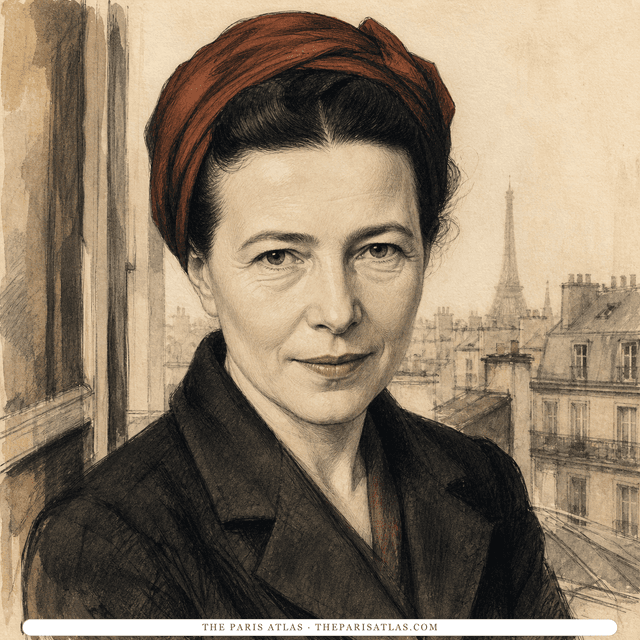
French writer and philosopher whose novels, memoirs, and social analysis examined freedom, gender, responsibility, aging, and the material conditions that shape a life.
View author
The Brooklyn dropout who arrived in Paris broke at thirty-eight and wrote the exuberant, banned books that ended American censorship.
View author
The American novelist who invented Yoknapatawpha County, the imaginary Mississippi county he called himself sole owner and proprietor of, and who spent the autumn of 1925 in a room at 26 rue Servandoni beside the Luxembourg Gardens — all but unpublished, calling himself a tramp, and walking to the café used by the Irish novelist James Joyce simply to look at him.
View authorThe sources below include the primary text, editions, scholarship, archival materials, and other records that informed this page. They document The Bluest Eye, its publication, and its place in literary history.


The primary text represented by this page, used for descriptions of the work’s contents and for any quoted passages shown here.

Original publication and the sequence of Morrison's early novels.
Pecola's age and central desire; selected edition, ISBN, extent, and current introduction credit.
Author's account of the novel's development, purpose, and form. The sample is from a separate UK printing; its pagination does not describe the selected US edition.
Primary text for Claudia's changing account of illness and care.
Available primary pages for edition history, adult conversation, Claudia's age, and the short quotations. This is a limited preview, not a complete text.
Setting in the early 1940s and the novel's place in discussions of race and beauty.
Secondary synopsis for the marigold episode and the baby’s death; the publisher excerpts above do not extend to these later events.
The primary text is the baseline reference for every book page. Additional references document publication history, interpretation, and historical context where that evidence is available.
 Explore more resources