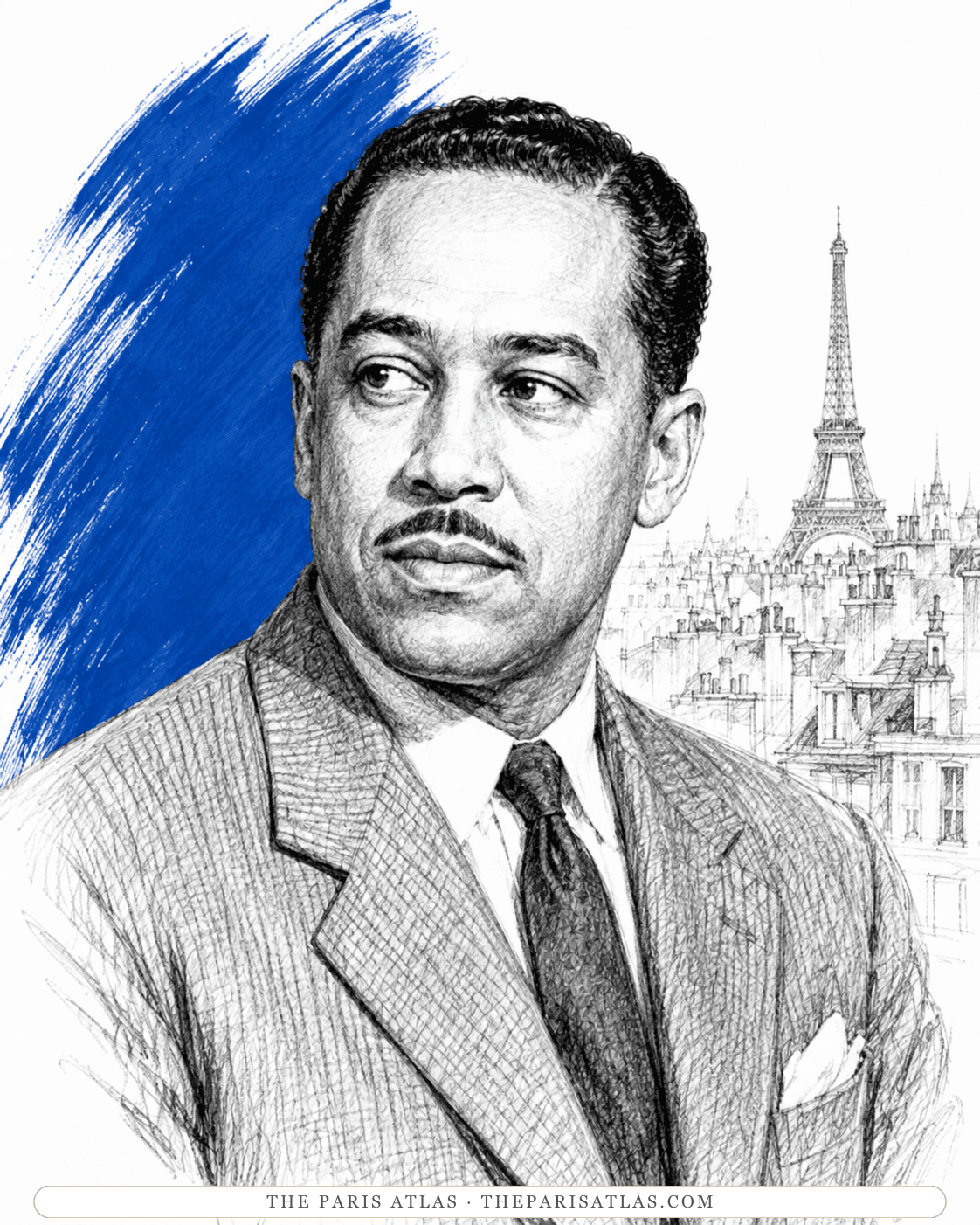

The Big Sea
Hughes's autobiography recounts the childhood, work, and travel behind his writing. It offers a useful comparison with Sandy's fictional upbringing.
Read our take
A Black boy grows up among the work, arguments, faith, and music of his Kansas family before moving to Chicago.
Not Without Laughter is Langston Hughes's first novel, published by Alfred A. Knopf in 1930. It follows Sandy from childhood in the fictional Kansas town of Stanton into adolescence in Chicago. His grandmother Hager supports the household by washing clothes, while his mother Annjee works in domestic service. His father's guitar and his aunt Harriett's singing offer pleasures that Hager's strict religion cannot quite contain. Sandy learns from each family member while deciding what education might make possible for him.
The novel opens with a cyclone that tears the porch from Hager's house. After protecting Sandy, Hager goes to comfort a bereaved white neighbor. Sandy must wait outside, frightened for his absent mother. The episode introduces Hager's generosity alongside the child's need for attention.
Paid work shapes the household's choices. Harriett objects to overwork and sexual harassment at the country club. Annjee brings food home from her employer's kitchen, hoping to please her husband Jimboy. Hager measures her earnings against schoolbooks, clothes, and repairs.
Sandy encounters racial exclusion in ordinary institutions. A teacher seats Black pupils behind the white children despite announcing an alphabetical arrangement. An amusement park advertises free entry to every child, then turns Black children away. Hughes shows these exclusions through the expectations they destroy.
Family members disagree about how to respond. Hager insists on forgiveness and Christian duty. Harriett voices anger at exploitation. Sandy's prosperous aunt Tempy prizes formal education and social standing, but distances herself from poorer Black neighbors. Sandy's growing judgment draws on these competing examples.
Sandy grows up in Hager's house while Jimboy repeatedly leaves Stanton in search of work or travel. Annjee eventually joins her husband elsewhere, leaving Sandy with his grandmother. Harriett also leaves home and begins the unsettled journey that leads to a career as a blues singer.
After Hager dies, Sandy moves into Tempy's more comfortable home. Books and schooling widen his ambitions, but Tempy's contempt for working-class Black life troubles him. At sixteen, he goes to Chicago to rejoin Annjee and takes a hotel elevator job.
The elevator's long hours threaten Sandy's return to school. Annjee needs his earnings and wants him to keep working. When Harriett performs in Chicago, Sandy and Annjee attend her show and reunite with her afterward.
Harriett offers money so Sandy can continue his education. Her decision fulfills an ambition Hager held for him, despite the arguments that once divided mother and daughter. The novel closes with Sandy listening appreciatively to church singing in Chicago.
Hager, Harriett, Annjee, Jimboy and Tempy offer conflicting examples of how a Black person might live with dignity. Religious duty, paid work, music, affection and social advancement do not line up as a single lesson. Sandy's development depends on attending to what each person knows and what each position leaves out.
The differences remain inside a family whose members need one another. Hager's faith can sustain care while constraining Harriett; Tempy can supply books and comfort while teaching contempt for poorer neighbors. The novel makes judgment more demanding than choosing a wholly admirable adult to imitate.
Schoolbooks and clothes have to be paid for through washing and domestic service. Those expenses make Sandy's future part of the household's present workload. Education is not an abstract opportunity equally available to anyone prepared to value it.
The Chicago elevator job repeats the problem when Sandy's own earnings become necessary. Working helps the family now but threatens the schooling that could alter his future. The conflict gives Annjee's position a material basis even as it shows why an immediate need cannot be the only measure of what her son should do.
A classroom arrangement announced as alphabetical becomes a racial division. An amusement park's invitation to every child proves to have an unannounced exception. Sandy first has a reason to expect inclusion, then discovers that a general promise was never intended to apply to him.
These incidents make exclusion something learned through disappointed expectation. The reader sees the gap between the institution's account of itself and the practice a child encounters. Hughes does not need an exceptional villain to show how apparently ordinary arrangements teach people where others intend to place them.
The blues and the church have seemed to represent opposed ways of life. Harriett's success as a singer allows her to support the education Hager wanted for Sandy, bringing practical help from the daughter whose choices caused conflict. Their disagreement does not prevent an ambition from passing between them.
Sandy's final appreciation of church singing likewise need not repudiate the music he has learned to value elsewhere. The ending gives him a way to carry several inheritances forward. It keeps educational hope connected to the working people and cultural practices from which a narrow idea of advancement might have asked him to distance himself.
The complete 1930 novel, especially the family disagreements, classroom and amusement-park exclusions, Sandy's paid work, and the closing Harriett and church-singing scenes.
I’ve got to go back to school.
Is you happy, chile?
Hager, Harriett, Annjee, and Tempy want different things from work, faith, and family. Their disagreements give Sandy several examples to consider as he grows.
Schoolbooks require money, and paid work consumes time. Sandy's education depends on practical help from relatives as well as his own determination.
Songs accompany evenings at home, religious services, and public performances. The novel describes who listens, who objects, and what memories the music brings back.

The boy whose childhood in Stanton and move to Chicago organize the novel.
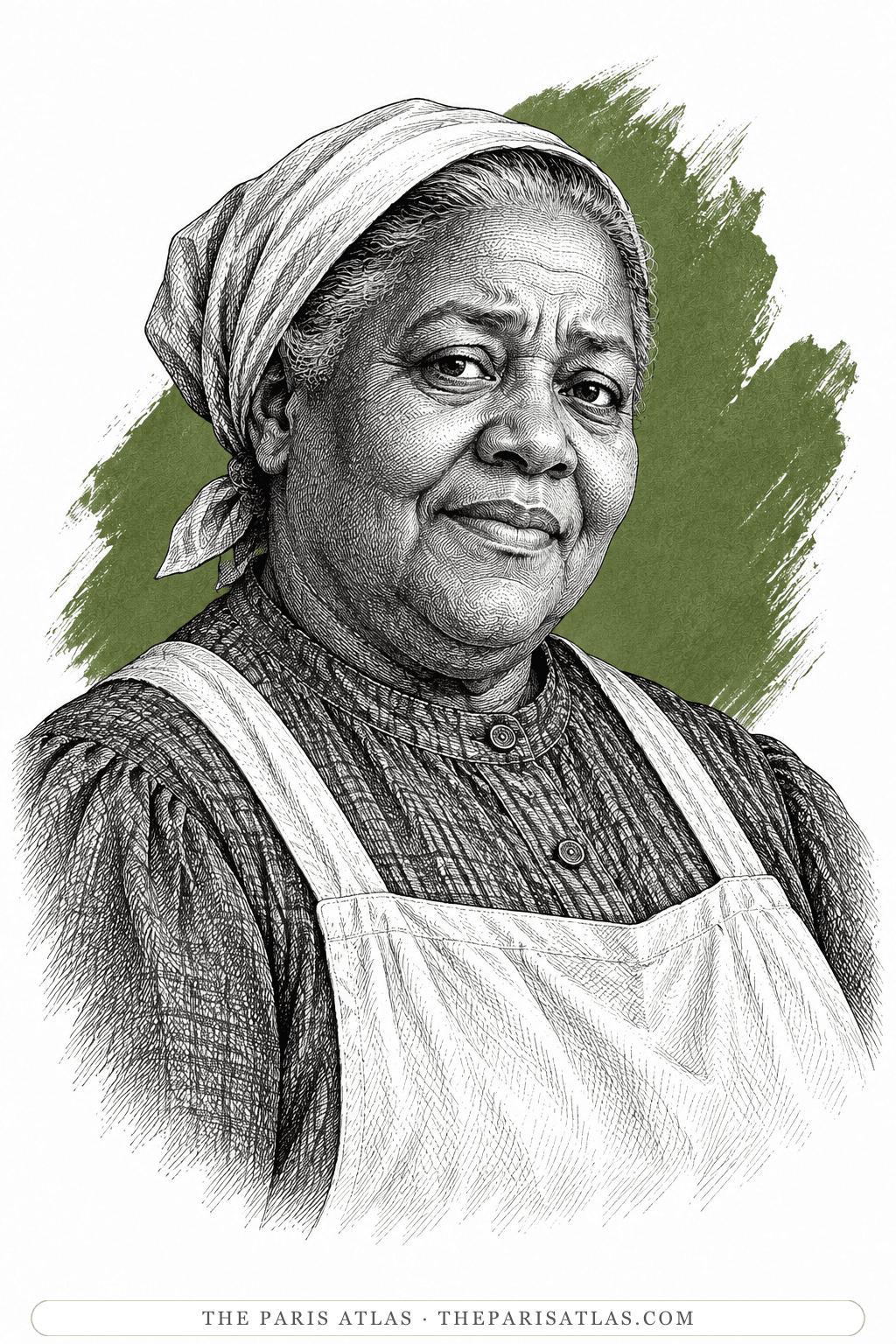
Sandy's grandmother, a laundress whose earnings, faith, and care sustain the household.

Sandy's youngest aunt, who resists domestic service and becomes a blues performer under the name Harrietta Williams.
May 28, 1930
Hughes writes to Joel Spingarn asking to dedicate the novel to him and Amy Spingarn. The letter is held by the New York Public Library.
1930
Alfred A. Knopf publishes Not Without Laughter, Hughes's first novel.
2026
Vintage publishes the selected 256-page paperback with an introduction by Bryan Washington on January 6.

Hughes's autobiography recounts the childhood, work, and travel behind his writing. It offers a useful comparison with Sandy's fictional upbringing.
Read our take
Hughes's earlier poetry collection also makes blues performance and Black everyday life central subjects.
Read our take
Sandy explicitly thinks of Frederick Douglass while defending his wish to study. Douglass's own account describes learning under the restrictions of slavery.
Read our takeThe novel follows Sandy, a Black boy growing up in Kansas and later Chicago. His family, education, employment, and encounters with racism shape his plans for adult life.
Sandy is a fictional character. Hughes drew on his Midwestern childhood, but the novel should not be read as a factual autobiography. The Big Sea is Hughes's later account of his own early life.
Most of the novel takes place in Stanton, a fictional Kansas town. Its final chapters follow sixteen-year-old Sandy to Chicago during World War I.
Harrietta is the professional name used by Sandy's aunt Harriett when she performs as a blues singer. The final chapter presents her Chicago appearance as the Princess of the Blues.
Alfred A. Knopf first published it in 1930. The selected Vintage paperback is a 2026 edition with different pagination.
The Vintage paperback published January 6, 2026, has an introduction by Bryan Washington. Its ISBN is 9798217007554 and the publisher lists 256 pages.
Explore authors with a similar voice, perspective, and influence.

The doctor of the Paris slums who wrote the century's blackest, funniest novel — and changed the sound of French prose.
View author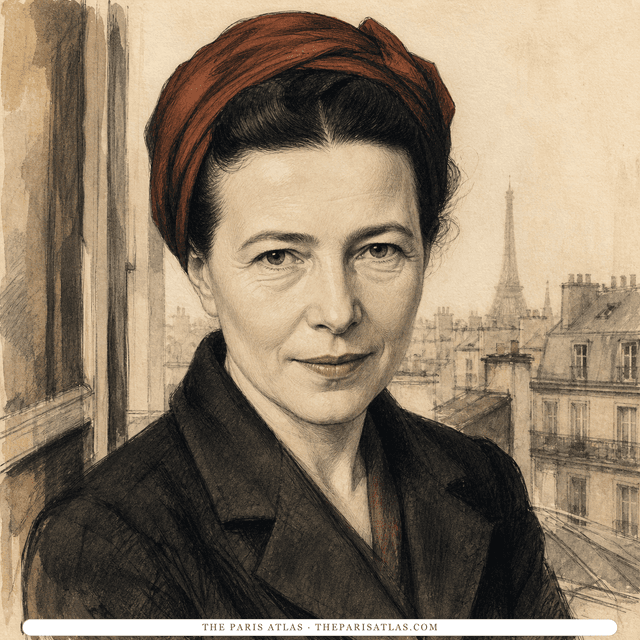
French writer and philosopher whose novels, memoirs, and social analysis examined freedom, gender, responsibility, aging, and the material conditions that shape a life.
View author
The Brooklyn dropout who arrived in Paris broke at thirty-eight and wrote the exuberant, banned books that ended American censorship.
View authorThe sources below include the primary text, editions, scholarship, archival materials, and other records that informed this page. They document Not Without Laughter, its publication, and its place in literary history.


The primary text represented by this page, used for descriptions of the work’s contents and for any quoted passages shown here.
Primary text for plot, character readings, music, and quotations. The transcription's introductory publisher label is inaccurate; the original Knopf imprint is established separately by catalog records.

Original Knopf publication in 1930.
Selected Vintage edition, ISBN, page count, introduction, and the novel's relation to Hughes's childhood.
May 28, 1930 dedication request to Joel and Amy Spingarn.
The primary text is the baseline reference for every book page. Additional references document publication history, interpretation, and historical context where that evidence is available.
 Explore more resources