
Jonah's Gourd Vine
Zora Neale Hurston
Jonah's Gourd Vine
Hurston's first novel, three years earlier, with the same Eatonville speech and a preacher who cannot reconcile the pulpit with his appetites.
Read our takeTheir Eyes Were Watching God
Zora Neale Hurston
Janie Crawford comes home barefoot, sits on her own porch, and tells a friend the whole of her life — written in seven weeks in Haiti and published in September 1937.
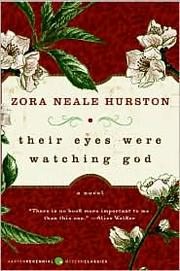
Janie Crawford walks back into Eatonville, Florida, in overalls, with her hair down, and the neighbours on the store porch watch her pass without getting an answer. She gives the answer to one person, her friend Pheoby Watson, and the novel is that telling. Janie has had three husbands. Logan Killicks wanted a second mule. Joe Starks built the town and then wanted her silent in it. Vergible Woods, called Tea Cake, taught her checkers and took her down to the muck to pick beans. Zora Neale Hurston wrote the book in seven weeks in Haiti, on a Guggenheim Fellowship, and J.B. Lippincott published it in Philadelphia on 18 September 1937.[1][2] Richard Wright attacked it within two weeks. The book then went out of print for decades, and came back in 1978.
Hurston gives the novel two voices and keeps them separate. An outside narrator opens the book in full literary English, with ships and horizons and judgment. Janie and everyone else in Eatonville speak in Florida Black speech, written as it sounds, with the vowels and the grammar left in. Neither voice corrects the other. A reader who has been told that dialect is comic relief finds instead that the funniest and the cleverest talk in the book is the talk on the store porch, and that the outside narrator never condescends to it.[3]
The frame does specific work. Janie is telling her story to Pheoby Watson, and Pheoby is under instruction to carry it back to the porch. So the novel is a woman taking possession of her own account after a trial in which lawyers and neighbours had it for a day. What the reader receives is narrated by the outside voice rather than transcribed in Janie's own words. Hurston moves in and out of her head, which lets the book say things Janie would not say aloud.[3]
The composition is unusually fast and unusually personal. Hurston was forty-four when she fell in love with a Columbia graduate student in his early twenties, named in the Big Read guide as Percy Punter. He asked her to give up her career and marry him. She refused, went to Haiti, and wrote the novel there in seven weeks, in her own words to embalm all the tenderness of her passion for him.[3] The hurricane at the end draws on a five-day storm she had lived through in the Bahamas in 1929.[1]
Reception split along political lines and stayed split for thirty years. Richard Wright, a year from publishing Native Son, wrote that the novel carried no theme, no message, no thought, and that it was addressed to a white audience whose chauvinistic tastes Hurston knew how to satisfy. Alain Locke's review in January 1938 asked when she would get around to social document fiction.[1] Every Hurston book was out of print when she died in 1960. The University of Illinois Press reissued this one in 1978 with a foreword by Sherley Anne Williams, and it has not been out of print since.[4][3]
Janie Crawford, in her forties, walks back into Eatonville, Florida, alone, in overalls, with her hair loose. The neighbours on Joe Starks's old store porch make what they can of it. Janie goes to her own house, and her friend Pheoby Watson brings her supper, and Janie tells her everything.[3]
Raised by her grandmother Nanny, who had been enslaved, Janie is married at sixteen to Logan Killicks, a much older farmer with sixty acres. Killicks buys a second mule and expects her to plough. Joe Starks comes down the road with money and ambition, and Janie leaves with him. Starks buys land, founds an all-Black town, has himself made mayor, opens a store and raises the first street lamp. He also stops his wife from speaking in public, keeps her behind the counter, and hits her. Starks dies after years of silence between them.
Vergible Woods, who everyone calls Tea Cake, is younger than Janie, has no money, and plays the guitar. He teaches her checkers and takes her fishing at midnight. Against the whole town's advice she marries him and goes down to the muck below Lake Okechobee to pick beans, where their one-room house becomes the place everyone gathers. The work is hard and the two of them are happy in a way Janie has not been before.[1]
A hurricane comes up off Lake Okechobee. The Seminole families go east early; the white landowners stay, and Tea Cake reads their staying as a sign the storm is small. When the water comes it breaks the dike, and Janie and Tea Cake run for high ground through floodwater. Janie is swept off a piece of roofing and grabs the tail of a swimming cow. A rabid dog on the cow's back goes for her, and Tea Cake kills it, and it bites him through the cheek.
Weeks later the rabies arrives. Tea Cake becomes suspicious, delirious and armed. He fires a pistol at Janie, and she shoots him with a rifle to save her own life, and he dies with his teeth in her arm. She is tried the same day in front of a white judge and an all-white jury. The Black men who worked beside her on the muck crowd the courtroom believing she murdered him, and are not called to speak. White women in the gallery take her side. She is acquitted, buries Tea Cake in Palm Beach in a coffin she pays for, and goes home to Eatonville.
The novel closes on the porch with Pheoby Watson, who says she has grown ten feet higher just from listening. Janie goes upstairs alone, and Hurston gives her the sense of Tea Cake present in the room, and the horizon pulled in like a great fish-net with so much of life in its meshes.
Hurston opens with ships and horizons, then narrows to one sentence of plot: so the beginning of this was a woman and she had come back from burying the dead. Somebody is already dead on the first page. A reader who knows the title also gets the title's source in the same opening, where the dead are described as the sudden dead, their eyes flung wide open in judgment. Both phrases are planted before Janie has a name.
The choice costs Hurston all the suspense and buys her something else. A reader cannot spend the novel wondering whether the marriage to Tea Cake will last, so the reading attention goes to how Janie talks and what she notices. The book is not built to surprise. The book is built so that a woman's account of her own life arrives after the fact, from a woman who already knows how it turned out and tells it anyway.
Then the voice changes. The outside narrator hands the story to Janie on her back porch, with lemonade and one listener, and the register drops from ships and horizons into Florida speech. Hurston makes the handover audible. A reader can hear the moment the book stops being narrated at Janie and starts being told by her.
Janie's grandmother, called Nanny, marries her at sixteen to Logan Killicks for sixty acres and a house with an organ in the parlour. Killicks wants a second mule and buys one so Janie can plough behind it. Hurston writes almost nothing about his inner life, which is the treatment he gets. What Janie learns under him is not about him at all: she finds out that she knew things that nobody had ever told her, for instance the words of the trees and the wind.
Joe Starks arrives in a coat and a hat, buys land, founds the town of Eatonville, becomes its mayor, and puts up the first street lamp. At the lamp-lighting he preaches over it: and when Ah touch de match tuh dat lamp-wick let de light penetrate inside of yuh, and let it shine, let it shine, let it shine. Mrs. Bogle answers by singing Jesus, the light of the world. Hurston lets Starks be genuinely impressive here and then shows the cost: he will not let his wife make a speech, and he will not let her sit on the store porch where the talk is.
Tea Cake's courtship is a checkers game. He teaches her to play, which nobody had bothered to do, and she says he has taught her the maiden language all over. The phrase is doing precise work. Janie's complaint about the first two marriages was never only about work or money. Janie had been shut out of the talk, and the third husband's gift is a vocabulary.
Hurston does not make Tea Cake safe. He takes Janie's money for a night out, plays cards, gets cut with a razor, and beats her once, and the novel reports the beating without excusing it and without abandoning him. The marriage is the best thing that happens to Janie and it is not a reward. A reader looking for a husband who deserves her will not find one in any of the three.
In Chapter 6 a yellow mule belonging to a man named Bonner becomes the town's running joke. The men on the store porch invent whole scenes about the mule, argue about it, hold competitive lies about how thin it is, and eventually give it a funeral. Hurston had spent years writing down exactly this kind of talk in Florida for Mules and Men, and here she puts the fieldwork straight into a novel.
The mule is also the book's argument in an animal. Nanny had told Janie that the Black woman is the mule of the world. Logan Killicks had bought a mule to work beside her. When the men on the porch turn a mule into a comic hero and bury it with speeches, Hurston is letting a whole town do in play what the novel does at length. What looks like a digression is the theme handled by the people it applies to.
Janie is standing behind the store counter for all of it, listening and forbidden to join in. That is the shape of the middle of the book: the best conversation in Eatonville happening ten feet from a woman who is not allowed to speak. Hurston does not state the injustice. She lets a reader hear a good scene and notice who is missing from it.
Down on the muck below Lake Okechobee, Janie and Tea Cake pick beans and the house fills every night with people and stories. The Seminole neighbours leave first, heading east. The white landowners stay. Tea Cake stays too, and Hurston makes the decision turn on a piece of reasoning: if the white people are not moving, the storm cannot be serious. The novel treats that as a fatal misreading of who has good information.
The title arrives in the middle of the storm, in one sentence: they seemed to be staring at the dark, but their eyes were watching God. Hurston had already used the words twice in different forms on the first page. A reader has been handed the phrase, then the storm, then the phrase again as its explanation. The people in the shack are not praying. The people in the shack are looking at something that is not answering.
Earlier, in Chapter 16, the narrator had said the same thing about smaller gods: half gods are worshipped in wine and flowers, real gods require blood. The line comes while Janie is watching a neighbour, Mrs. Turner, keep an altar to light skin and pale features. Hurston sets that petty worship beside the hurricane deliberately. One god takes flowers. The other takes a husband.
The book ends in a courtroom, and the courtroom is the second of two judgment scenes that bracket the action. Janie is tried by a white judge and an all-white jury, with the Black men of the muck sitting behind her wanting to testify against her and not permitted to. She is acquitted by the people with no claim on her and condemned by the people who knew her. Hurston then sends her home to give the account to Pheoby Watson, and the first page's promise is kept.
So the beginning of this was a woman and she had come back from burying the dead.
And when Ah touch de match tuh dat lamp-wick let de light penetrate inside of yuh, and let it shine, let it shine, let it shine
Half gods are worshipped in wine and flowers. Real gods require blood.
They seemed to be staring at the dark, but their eyes were watching God.
Almost everything else in the movement is set in a city. Hurston puts the intelligence in Eatonville, Florida, and on the bean fields below Lake Okechobee, and treats the talk there as literature rather than local colour.
Janie has just been tried in a courtroom where other people explained her. The novel is her giving the account back, to one friend, on her own porch, in her own speech.
Hurston had spent a decade writing down Florida talk in the field. The lying contests, the courtship jokes and the funeral for a mule come straight out of that work and are the funniest pages in the book.
Alice Walker found the novel through Hurston's folklore, called it the most important book to her, marked Hurston's unmarked grave in 1973, and published the search in Ms. magazine in March 1975. The revival of Hurston's whole catalogue starts there.
Tells the whole book to one friend on her own porch, after three marriages and a murder trial.
Younger, broke, funny, plays the guitar and teaches Janie checkers. The third husband, and the one the storm takes.
Founds Eatonville, makes himself mayor, raises the first street lamp, and will not let his wife speak in public.
Sixty acres, an organ in the parlour, and a second mule bought so Janie could plough behind it.
Janie's grandmother, born enslaved, who marries her at sixteen for safety and tells her the Black woman is the mule of the world.
The one listener. Brings the supper, hears the whole story, and is sent back to the porch with it.
1929
Hurston lives through a five-day hurricane in the Bahamas. The storm on the muck at the end of the novel draws on it.
1936
A Guggenheim Fellowship sends her to Jamaica and Haiti to study religious practice.
1936–1937
In Haiti she writes Their Eyes Were Watching God in seven weeks, after refusing a proposal from a much younger man and leaving New York to get away from him.
1937
J.B. Lippincott publishes the novel in Philadelphia on 18 September, 286 pages.
1937
Within two weeks Richard Wright reviews it as having no theme, no message, no thought, and accuses Hurston of writing for a white audience.
1938
J.M. Dent & Sons publishes the first British edition in London. In January, Alain Locke's review asks when Hurston will write social document fiction.
1960
Hurston dies in Fort Pierce, Florida, on 28 January. Every one of her books is out of print.
1973
Alice Walker finds the unmarked grave at Fort Pierce and pays for a headstone.
1975
Walker publishes In Search of Zora Neale Hurston in Ms. magazine in March.
1977
Robert Hemenway publishes the first Hurston biography.
1978
The University of Illinois Press reissues the novel in paperback with a foreword by Sherley Anne Williams. It has stayed in print since.
1995
The Library of America prints the novel in Zora Neale Hurston: Novels and Stories.




Jonah's Gourd Vine
Zora Neale Hurston
Hurston's first novel, three years earlier, with the same Eatonville speech and a preacher who cannot reconcile the pulpit with his appetites.
Read our takeMules and Men
Zora Neale Hurston
The Florida fieldwork the store-porch scenes are built from, published two years before the novel.
Read our takeDust Tracks on a Road
Zora Neale Hurston
Her own account of the Eatonville childhood that supplied the town, the talk and the store porch.
Read our take
Langston Hughes's 1930 novel of a Black childhood in a small Kansas town — the other Harlem Renaissance novel that stays out of Harlem.
Read our take
Toni Morrison on a girl taught to hate her own face, thirty-three years later; Mrs. Turner's altar in Chapter 16 is the same subject.
Read our take
Morrison again, building a novel out of Black folklore and family story the way Hurston did first.
Read our takeJanie Crawford comes home to Eatonville, Florida, in her forties and tells her friend Pheoby Watson the story of her life: three marriages, a town built by the second husband, a hurricane, and a murder trial. The novel is her account of how she came to have a voice of her own.
In Haiti, in seven weeks, during the 1936 to 1937 Guggenheim Fellowship that had sent her there to study religious practice. She had just refused to give up her career to marry a man twenty years younger, and said she wrote the novel to hold on to what she felt for him.
J.B. Lippincott published it in Philadelphia on 18 September 1937, in 286 pages. J.M. Dent & Sons brought out the first British edition in London the following year.
Richard Wright reviewed it within two weeks of publication and wrote that it carried no theme, no message, no thought, and that Hurston was writing for a white audience. He wanted Black fiction to make a case against racism. Hurston answered in a letter that she did not attempt to solve problems in her novels and preferred life as people actually live it.
Yes. Every Hurston book was out of print when she died in 1960. The University of Illinois Press reissued this one in paperback in 1978, with a foreword by Sherley Anne Williams, and it has stayed in print ever since.
No, not in the United States. Hurston died in 1960 and her estate controls the work through HarperCollins. HathiTrust's copyright review records the novel as in copyright and allows search only. Short quotations of the kind used here are fair use.
The Harper Perennial Modern Classics paperback, ISBN 9780061120060, is the estate's listed edition and prints the 1937 text. The Library of America volume Novels and Stories collects it with Hurston's three other novels and selected short fiction.
Hurston had spent a decade writing down Florida Black speech in the field for Mules and Men and refused to convert it into standard English on the page. The narration is in literary English and the talk is not, and the two registers sit side by side without either correcting the other.
Explore authors with a similar voice, perspective, and influence.

The doctor of the Paris slums who wrote the century's blackest, funniest novel — and changed the sound of French prose.
View author
French writer and philosopher whose novels, memoirs, and social analysis examined freedom, gender, responsibility, aging, and the material conditions that shape a life.
View author
The Brooklyn dropout who arrived in Paris broke at thirty-eight and wrote the exuberant, banned books that ended American censorship.
View authorThe sources below include the primary text, editions, scholarship, archival materials, and other records that informed this page. They document Their Eyes Were Watching God, its publication, and its place in literary history.


National Endowment for the Arts Big Read overview — the 18 September 1937 publication date, the seven weeks in Haiti, Richard Wright's and Alain Locke's reviews, the title sentence and the two judgment scenes.

Library of Congress catalog record for the 1937 J.B. Lippincott first edition — publisher, place, collation of 286 pages.
The Big Read teacher's guide — the located quotations used here, the narration and frame, the street-lamp scene, the mule-talk of Chapter 6, and the biography that supplies Percy Punter and the royalty figures.
Library of Congress catalog record for the 1978 University of Illinois Press reissue, the edition that ended the years out of print, with Sherley Anne Williams's foreword.
National Endowment for the Humanities on Eatonville, the Guggenheim year, and Alice Walker's search for the grave.
Library of Congress catalog record for the Library of America volume that prints this novel with Hurston's three others.
HathiTrust copyright determination, checked 20 September 2026: in copyright, search only in the United States.
The Hurston estate's own list of editions in print, used to confirm the current ISBNs and formats.
Open Library edition records, used to check that every ISBN listed here resolves to this book.
Charles King on the Florida field trips of 1927 to 1930 that supplied the store-porch talk.
Alice Walker's 1975 Ms. magazine account of finding and marking the grave — the essay that began the revival.
Library of America author page, for the shape of the catalogue and which volumes print which books.
The primary text represented by this page, used for descriptions of the work’s contents and for any quoted passages shown here.
The primary text is the baseline reference for every book page. Additional references document publication history, interpretation, and historical context where that evidence is available.
 Explore more resources