
Their Eyes Were Watching God
Zora Neale Hurston
Their Eyes Were Watching God
The same argument told from the wife's side three years later, with Joe Starks in the role of the man whose voice fills a town.
Read our takeJonah's Gourd Vine
Zora Neale Hurston
Zora Neale Hurston's first novel, 1934: a preacher with a great voice and no self-control, written by a preacher's daughter who borrowed the postage to mail the manuscript.
John Buddy Pearson can preach better than anyone in the county and cannot stay away from women. Zora Neale Hurston's first novel follows him from an Alabama sharecropping cabin across the creek to a better life, and into a marriage with a woman named Lucy who believes in him. He reaches the pulpit of Zion Hope, where the sermons rouse a congregation that also knows exactly what he does the rest of the week.[1] Hurston was the daughter of a Baptist preacher and built the book loosely on that.[2] J.B. Lippincott published it in Philadelphia in 1934, 316 pages, with an introduction by the novelist Fannie Hurst.[3] She had borrowed a dollar and eighty-three cents for the postage to send the manuscript, and the acceptance telegram arrived on the day she was served with an eviction notice.[2]
The title comes from the Book of Jonah, chapter 4, where a gourd vine grows over Jonah in a single night, shades him from the sun, and is killed by a worm the next morning. A reader who knows the passage has the shape of John Pearson's career before the novel starts: fast growth, real shelter, and a small thing at the root.
The book opens on weather rather than a person: God was grumbling his thunder and playing the zig-zag lightning thru his fingers.[4] Hurston wrote that sentence in 1934, three years before the ships and horizons that open Their Eyes Were Watching God. Her first novel already has the two registers she would use for the rest of her career — a high, biblical narrating voice, and Alabama and Florida speech written exactly as spoken.
The marriage is the spine. Lucy is the one person who sees what John could be and keeps saying so, and the publisher's own summary of the book calls her his long-suffering wife and his true love.[1] Around her are the other women: Mehaley, Big 'Oman, and Hattie, who buys hoodoo work to keep his attention.[4] The novel does not treat the hoodoo as a metaphor. Hurston had spent the preceding years documenting conjure practice in Florida and New Orleans for Mules and Men.[2]
The reception was warm and the timing was not. Reviewers praised it, and the National Endowment for the Humanities account calls it well received with unfortunate timing, arriving in the middle of the Depression.[5] Fannie Hurst, who had helped Hurston get into Barnard College, wrote the introduction.[3][6] Rita Dove wrote a new foreword for the 1990 paperback.[1]
John Buddy Pearson grows up in a sharecropping cabin in Alabama, on the poor side of a creek. He crosses it to work on the Pearson place, learns to read, and meets Lucy, who is younger, smaller and cleverer than he is. He marries her. He is also already involved with other women, and the pattern is set before the marriage begins.[1]
The couple move to Florida, to Eatonville, and John's gift declares itself. He can preach. The congregation of Zion Hope makes him their pastor, and his sermons and prayers rouse the church the way nothing else in the county does. He becomes a figure — respected, quoted, elected to office — while continuing to sleep with women who are not his wife. Lucy keeps the household together and keeps telling him what he could be.
Two forces work against him. One is the church itself, where rivals who want his pulpit collect his private life as evidence. The other is Hattie, who wants him and buys hoodoo work to get him.[4] Lucy's health fails. The marriage that held the whole structure up gives way, and John's standing goes with it.
Lucy dies, and John marries Hattie within weeks, which the town reads exactly as it looks. The second marriage is a disaster, the congregation turns on him, and he loses the pulpit of Zion Hope. He leaves Eatonville, works his way back toward respectability in another town, remarries a third time to a woman who is kind to him, and starts preaching again.
Driving home from a visit, distracted and pleased with himself, he takes his car across a railroad crossing in front of a train and is killed instantly. The last pages give him a funeral where the drums of Africa are heard under the church service. The gourd vine of the title has grown, sheltered a man, and been cut down at the root.
The novel opens on God grumbling his thunder and playing the zig-zag lightning through his fingers. Hurston is not being decorative. The sentence sets the register of the sermons that will carry the book, where God is a physical presence who handles weather. That register comes out of the Baptist preaching she had grown up inside and had been writing down in the field.
Notice what the sentence does not do. No character is introduced, no place is named, and no reader is oriented. Hurston starts with the voice, and the voice is a preacher's. A first novel that opens this way is announcing that the sermon is the form it will be measured against, not the drawing-room scene.
The high voice never becomes the only voice. John Pearson and everyone around him talk in Alabama and Florida speech, written as it sounds, and Hurston puts that talk beside the biblical narration without ranking them. Three years later Their Eyes Were Watching God would do the same thing more confidently. The technique arrives fully formed in 1934.
John Pearson's gift is real and the novel insists on it. He becomes the pastor of Zion Hope, and his sermons and prayers for cleansing rouse the congregation, which is the publisher's own account of the book. Hurston does not write a hypocrite whose eloquence is a trick. She writes a man whose eloquence and whose appetites come from the same place, which is far harder to dismiss.
The phrase the book gives him is a natchel man — a natural man, meaning a man of the body, the rest of the week. John says it about himself. He is not claiming an excuse and he is not repenting. He is stating a division in himself that he has no plan for, and the plot is what happens to a congregation, a wife and a career when nobody has a plan for it.
Church politics do the rest of the damage. A gifted preacher in a small town has enemies who want his pulpit, and his private life gives them their material. Hurston had grown up watching a Baptist congregation deal with exactly this, since her father was a preacher. The National Endowment for the Humanities account of her career describes the novel as loosely based on being the daughter of a troubled Southern preacher.
Lucy is the moral centre and she gets no reward for it. The publisher's summary calls her John's long-suffering wife and his true love, which are the two facts the novel keeps setting against each other. She is smaller, poorer and better educated than he is, she believes in his gift before anyone else does, and she spends the marriage absorbing the cost of it.
The other women are drawn briefly and sharply. Mehaley and Big 'Oman come before or beside the marriage. Hattie comes after, and she does not wait to be chosen — she buys hoodoo work to fix John's attention on her. Hurston lets the conjure be effective within the world of the novel, which is what a folklorist who had been initiated in New Orleans would do.
Hurston's own parents stand behind the pattern. Her mother was Lucy Ann Potts Hurston, who told her to aim past what was available, and her father was a Baptist preacher whose household came apart after Lucy died. A first novel that gives the wife her mother's first name and the husband her father's trade is not a coded autobiography, but it is not a coincidence either.
Read beside Their Eyes Were Watching God, the two novels look like one argument told twice from opposite sides. Jonah's Gourd Vine follows the man with the voice, and the wife is the person the voice is used on. Their Eyes Were Watching God follows the wife, and Joe Starks is the man with the voice. The 1934 book had to come first.
The circumstances of the sale are documented and worth stating plainly. Hurston borrowed a dollar and eighty-three cents to pay the postage on the manuscript. The telegram accepting it arrived on the same day she was served with an eviction notice. Bertram Lippincott was the editor who took it.
Reviewers liked the book. The National Endowment for the Humanities account describes it as well received, with unfortunate timing, because 1934 was a bad year to publish anything. Hurston's own income never recovered from that decade. The largest royalty any of her books ever earned was 943 dollars and 75 cents, and most of them were published during the Depression.
Publication order hides the working order. Jonah's Gourd Vine came out in 1934 and Mules and Men in 1935, so a reader meets the novel first. The folklore in it, though — the sermons, the conjure, the courtship talk — had been collected on the Florida and New Orleans expeditions of 1927 to 1930. The novel is the fieldwork spent before the fieldwork was published.
The book has kept good company since. The Library of America prints it first in Zora Neale Hurston: Novels and Stories, ahead of Their Eyes Were Watching God, Moses, Man of the Mountain and Seraph on the Suwanee. Rita Dove, who would become United States Poet Laureate, wrote the foreword for the 1990 paperback.
God was grumbling his thunder and playing the zig-zag lightning thru his fingers.
The high biblical narration and the Florida speech sit side by side from the first page, three years before Their Eyes Were Watching God does the same thing.
Hurston had been recording Baptist sermons in the field as performed compositions with their own rules, and John Pearson's pulpit scenes are those recordings turned into a character.
This novel follows the man with the great voice and the wife who absorbs the cost. The 1937 novel follows the wife. Reading them in order shows Hurston turning the same material around.
Hurston borrowed a dollar and eighty-three cents to mail the manuscript, and the acceptance telegram reached her on the day she was served an eviction notice.
Can preach better than anyone in the county and cannot leave women alone. Pastor of Zion Hope, and the publisher's own phrase for him is a living exultation.
John's wife: smaller, cleverer, better educated, the first person to see what he could be, and the one who absorbs the cost of it.
Wants John and does not wait to be chosen. Buys hoodoo work to fix his attention on her, and marries him weeks after Lucy's death.
One of the women in John's life before and around the marriage, drawn briefly and without apology.
Another of the women John cannot stay away from, from the Alabama years before Lucy.
1927–1930
Hurston collects sermons, songs, courtship talk and conjure practice across Florida, Alabama and New Orleans. The material will go into this novel before it goes into Mules and Men.
1933
Broke, she borrows a dollar and eighty-three cents for the postage to mail the manuscript to J.B. Lippincott. The telegram of acceptance from the editor Bertram Lippincott reaches her on the day she is served an eviction notice.
1934
J.B. Lippincott publishes Jonah's Gourd Vine in Philadelphia, 316 pages, with an introduction by Fannie Hurst. Reviews are good and the Depression is worse.
1935
Mules and Men follows, publishing the fieldwork the novel had already spent.
1937
Their Eyes Were Watching God turns the same material around, following the wife instead of the preacher.
1960
Hurston dies in Fort Pierce, Florida. This novel, like all her books, is out of print.
1990
Perennial Library reissues it with a new foreword by Rita Dove.
1995
The Library of America prints it first in Zora Neale Hurston: Novels and Stories.


Their Eyes Were Watching God
Zora Neale Hurston
The same argument told from the wife's side three years later, with Joe Starks in the role of the man whose voice fills a town.
Read our takeMules and Men
Zora Neale Hurston
The sermons, courtship talk and conjure in this novel come out of the fieldwork published the following year.
Read our takeDust Tracks on a Road
Zora Neale Hurston
Her own account of the Baptist preacher father and the mother named Lucy who stand behind the novel.
Read our take
Langston Hughes's 1930 novel of a Black family in a small town, published four years earlier out of the same Harlem circle.
Read our takeJohn Buddy Pearson, a sharecropper's son from Alabama with an extraordinary gift for preaching and no control over his appetites. He marries a woman named Lucy, becomes pastor of Zion Hope in Florida, and loses everything he has built through his own conduct and his rivals' use of it.
The Book of Jonah, chapter 4, where a gourd vine grows over Jonah in a single night, shades him from the sun, and is destroyed by a worm the following morning. The shape of the passage is the shape of John Pearson's career.
J.B. Lippincott published it in Philadelphia in 1934, in 316 pages, with an introduction by the novelist Fannie Hurst, who had helped Hurston gain admission to Barnard College. The editor who took the manuscript was Bertram Lippincott.
Loosely. Hurston was the daughter of a Baptist preacher in Eatonville, Florida, and of a mother named Lucy Ann Potts Hurston, and the National Endowment for the Humanities describes the novel as drawing on that household. The characters are invented.
No. HathiTrust's copyright review of the 1934 first edition returns in copyright with search-only access in the United States, and the Hurston estate controls the work through HarperCollins. Short located quotations of the kind used here are fair use.
Either order works, and reading this one first shows the method arriving. The 1934 novel follows the man with the great voice; the 1937 novel follows the woman that kind of voice is used on. Their Eyes Were Watching God is the easier entry point.
The Harper Perennial Modern Classics paperback, ISBN 9780061350191, is the current edition. The Library of America volume Novels and Stories prints it with Hurston's three other novels and selected stories.
Explore authors with a similar voice, perspective, and influence.
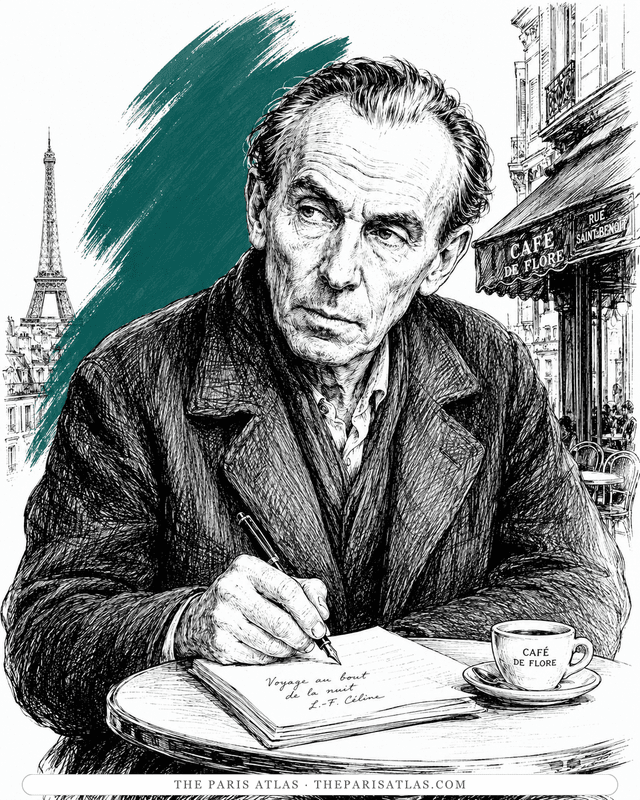
The doctor of the Paris slums who wrote the century's blackest, funniest novel — and changed the sound of French prose.
View author
French writer and philosopher whose novels, memoirs, and social analysis examined freedom, gender, responsibility, aging, and the material conditions that shape a life.
View author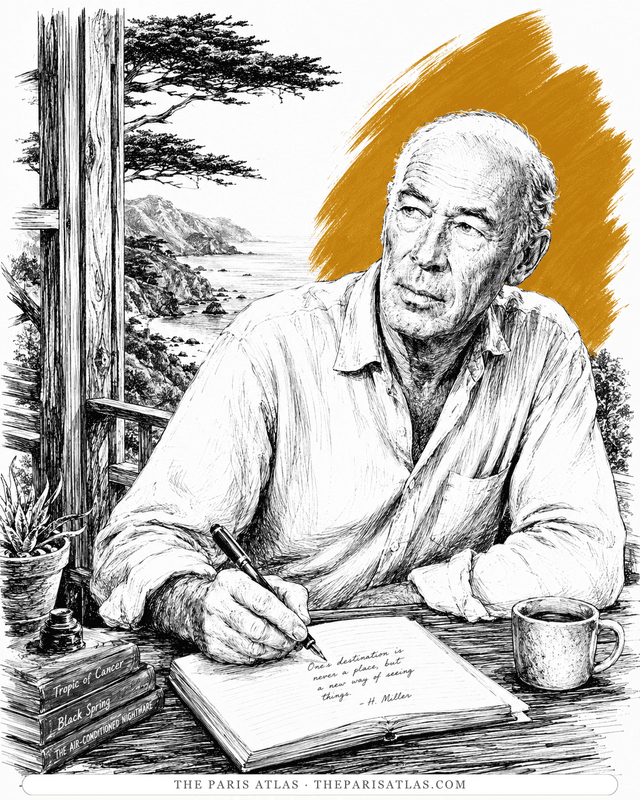
The Brooklyn dropout who arrived in Paris broke at thirty-eight and wrote the exuberant, banned books that ended American censorship.
View authorThe sources below include the primary text, editions, scholarship, archival materials, and other records that informed this page. They document Jonah's Gourd Vine, its publication, and its place in literary history.


Catalogue record for the 1990 Perennial Library edition, with Rita Dove's foreword, the collation, and the publisher's summary of Zion Hope, Lucy and the natchel man line.
Library of Congress catalog record for the 1934 J.B. Lippincott first edition — publisher, place, 316 pages, and the Fannie Hurst introduction, which the record spells Fanny.
Open Library work and edition records — the novel's first sentence as catalogued, the women of the book and Hattie's hoodoo, and the ISBNs checked against the titles they resolve to.

National Endowment for the Humanities on the novel's reception and the difficulty of publishing it during the Depression.
Barnard College on Hurston's admission, which Fannie Hurst helped arrange, and her degree in 1928.
National Endowment for the Arts Big Read teacher's guide — her mother Lucy Ann Potts Hurston, and the largest royalty any Hurston book earned.
HathiTrust copyright determination for the 1934 first edition, checked 20 September 2026: in copyright, search only.
Library of Congress catalog record for the Library of America volume that prints this novel first among her four.
The Hurston estate's own list of titles in print, used to confirm the current paperback.
Library of America author page, for the shape of the catalogue.
The primary text represented by this page, used for descriptions of the work’s contents and for any quoted passages shown here.
The primary text is the baseline reference for every book page. Additional references document publication history, interpretation, and historical context where that evidence is available.
 Explore more resources