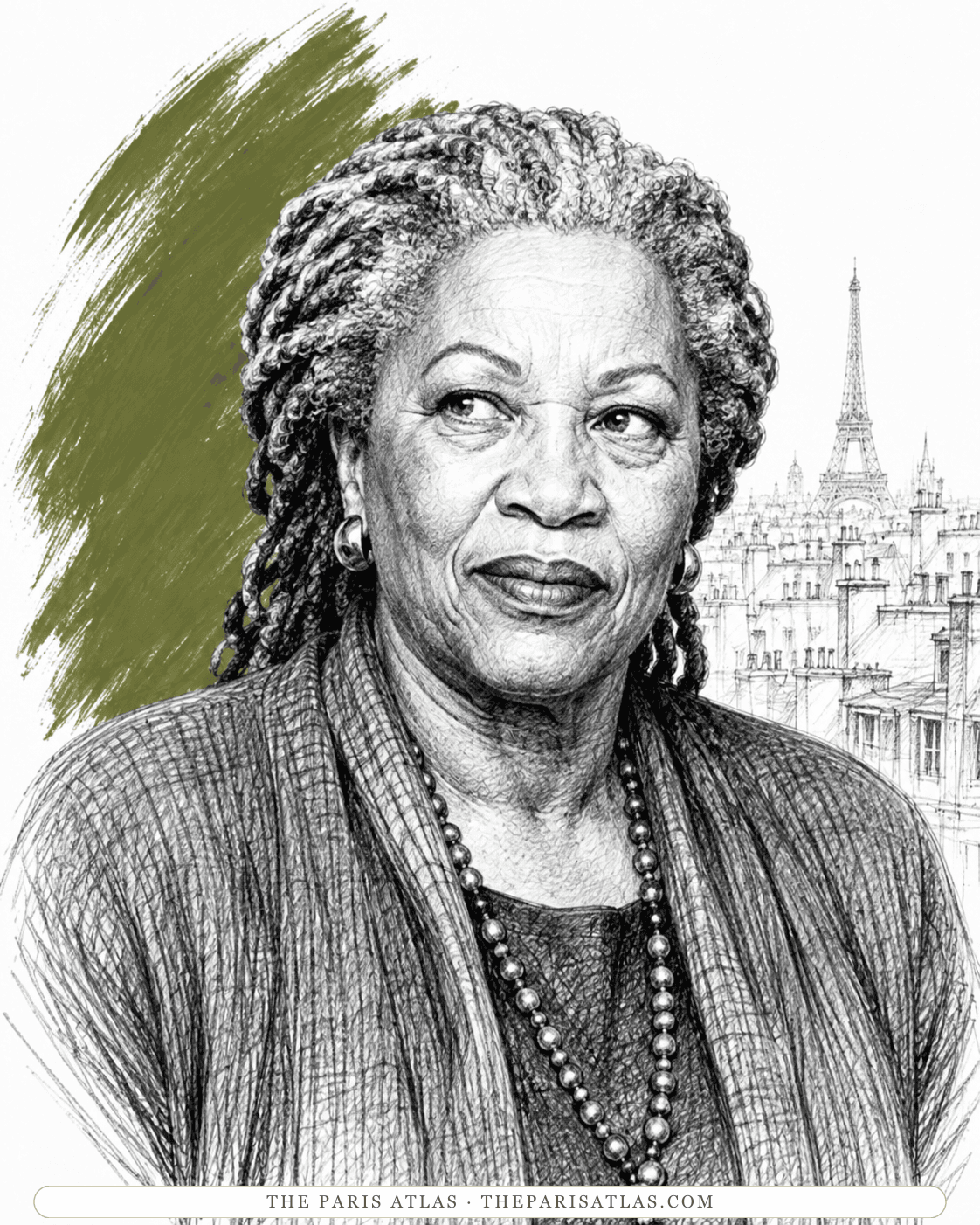
Sula
Toni Morrison
Sula
Morrison's second novel is also about two girls who meet as children and whose friendship breaks and holds as adults. The Princeton scholar Autumn Womack draws the same link.
Read our takeRecitatif
Toni Morrison
Toni Morrison's only published short story: two girls meet in a children's shelter, one Black and one white, and Morrison never tells you which is which.
Recitatif is the only short story Toni Morrison published. Twyla and Roberta share a room for four months at St. Bonaventure, a children's shelter, when they are eight. As adults they keep running into each other, at a diner, at a grocery store and at a protest.[1] One of them is Black and one is white, and the story never says which.[1] Morrison first published it in 1983 in Confirmation: An Anthology of African American Women, edited by Amiri Baraka and Amina Baraka.[2] Knopf reissued it as a small book on 1 February 2022, with an introduction by Zadie Smith.[1]
The first sentence sets the puzzle. Twyla, who tells the story, says, "My mother danced all night and Roberta's was sick."[3] Zadie Smith's introduction asks the question every reader starts asking. What kind of mother dances all night, a Black one or a white one?[4]
Twyla and Roberta are not orphans. Their mothers are alive and cannot look after them, and the two girls are put together in Room 406. Nobody else at the shelter wants to play with them, because they are not real orphans, so they play together.[3] Twyla's mother is called Mary. Roberta's mother visits one Sunday with a large cross on her chest and a big Bible, and refuses to shake Mary's hand.[3]
Someone else at the shelter matters more than either mother. Maggie works in the kitchen. She cannot speak, she is old, and she rocks when she walks. One day she falls in the orchard and the older girls laugh at her. Twyla and Roberta do nothing to help.[3]
Then the story jumps forward years at a time. Twyla is waitressing at a Howard Johnson's in upstate New York when Roberta walks in with a man, on her way to see Jimi Hendrix.[4] Twelve years after that they meet again at a new Food Emporium, and Roberta has married a rich man.[3] Each time they meet, they remember the shelter differently, and Maggie is the thing they disagree about most.
Twyla and Roberta are eight when they meet at St. Bonaventure, a shelter for children. Twyla's mother dances all night. Roberta's mother is sick. The girls share Room 406 for four months. One is Black and one is white, and the story never says which.[3][1]
At the shelter they watch the older girls laugh at Maggie, the mute kitchen woman, when she falls in the orchard. They call her names themselves. On a visiting Sunday, Roberta's mother refuses to shake hands with Twyla's mother. Roberta leaves the shelter first, and Twyla leaves a few months later.[3]
Years later Twyla is a waitress at a Howard Johnson's in upstate New York. Roberta comes in with a man, on her way to see Jimi Hendrix, and the two have almost nothing to say to each other.[4] Twelve years after that, Twyla, now married in Newburgh, meets Roberta at a Food Emporium. Roberta has married a rich man and lives in Annandale. They talk like old friends, but they already remember the past differently.[3]
When busing comes to the town's schools, the two women end up on opposite sides of a protest. Roberta now says Maggie was Black and that Twyla kicked her, and then that they both did. Twyla and Roberta carry signs aimed at each other.
Twyla thinks it over. She did not kick Maggie, but she wanted to, because Maggie reminded her of her own mother and she was glad Maggie could not scream. Roberta comes to a similar admission and is no longer sure whether Maggie was Black. The story ends with the two women ready, at last, to ask what happened to Maggie.
Morrison said exactly what she was trying to do. In the preface to Playing in the Dark, her 1992 book of essays, she called the story "an experiment in the removal of all racial codes from a narrative about two characters of different races for whom racial identity is crucial." Racial codes here means the signals readers use to guess someone's race, such as food, hair, music, clothes, jobs or neighborhood.
Race still matters to the plot. Twyla notes early on that she is stuck with a girl from a whole other race, and the adult fight between the two women is over school busing. What Morrison removes is the answer. Every detail could belong to either girl, so the reader has to do the guessing and then notice what the guess was based on.
The title points the same way. A recitative is the style of singing used for the talking parts of an opera, sung in the rhythm of ordinary speech with many words on one note. Zadie Smith reads the title as a clue. Twyla and Roberta are clearly two different people, but they are pitched on the same note, so the reader cannot tell them apart in the one way the reader most wants to.
The story is full of details that look like answers. Twyla loves the shelter food, which is Spam, Salisbury steak and Jell-O with fruit cocktail. Roberta hates it. Twyla's mother thinks popcorn and a can of Yoo-hoo is supper. Roberta's mother brings plenty of food, which Roberta refuses, and reads to her from the Bible.
Each detail tempts a reader to decide, and none of them settles it. Smith points out that a churchgoing mother of either race might refuse to shake hands with a mother of either race who dances all night. The Washington Post critic Ron Charles, quoted by the publisher, lists what the story makes readers test: clothing, food, hair and money.
Readers tend to split along their own lines. Smith cites the critic Elizabeth Abel, who found that most white readers take Twyla to be white and most Black readers take her to be Black. Smith admits her own guess changed as she read. At one point she was fairly sure Twyla was Black, and then a later detail sent her back to the start.
Maggie is the question the story keeps coming back to. She is the kitchen woman at St. Bonaventure, old, unable to speak, bow-legged, in a child's hat with earflaps. Twyla calls her sandy-colored. As girls, Twyla and Roberta shout names at her to see whether she can hear. Looking back, Twyla thinks she could, and is ashamed.
The story of Maggie keeps changing. At the start, Twyla says Maggie fell. Later Roberta insists the older girls knocked her down. Later still Roberta says Maggie was Black and that Twyla kicked her. Then she says they both kicked a Black woman who could not even scream. Twyla does not remember Maggie being Black, and wonders whether she could have forgotten.
In the end Twyla admits something harder than kicking. She did not kick Maggie, but she wanted to. Maggie reminded her of her own mother, who could not hear her either, and she was glad Maggie could not scream. Smith calls this one of the most stunning paragraphs Morrison ever wrote. Roberta reaches a similar conclusion a few pages later, and is no longer sure what color Maggie was.
The adult scenes are set in real places in upstate New York. Twyla marries a man from an old Newburgh family, a town about sixty miles north of Manhattan. Smith describes Newburgh, by the time Morrison wrote the story, as a struggling town hit by white flight. Roberta, now rich, lives in Annandale, which Twyla calls a neighborhood full of doctors and IBM executives.
The worst meeting is at a protest. Twyla's and Roberta's children are being bused to schools across town, and Twyla and Roberta end up on opposite sides of the picket line. They start carrying homemade signs aimed at each other, and the signs get more extreme each day. Twyla admits her own signs made no sense without Roberta's.
The busing fight is also when Roberta's story about Maggie gets worse. Smith connects the two. The women's shared past starts to change under the pressure of their present anger.
Zadie Smith dates the writing to 1980. The story appeared in 1983 in Confirmation, an anthology of writing by African American women edited by Amiri Baraka and Amina Baraka and published by William Morrow in New York. The Associated Press noted in 2022 that the anthology had long been out of print.
Morrison's publisher and Zadie Smith both call Recitatif the only short story Morrison ever wrote. The Princeton scholar Autumn Womack told the Associated Press that Morrison had written short fiction since her college years at Howard and Cornell, but never published a collection of stories. So the safest description is her only published short story.
Knopf published the story on its own on 1 February 2022, two and a half years after Morrison's death, with an introduction by Zadie Smith. The actor Bahni Turpin read the audiobook. The New Yorker ran an essay drawn from Smith's introduction on 23 January, nine days before publication. The publisher's page describes the book as a best seller and an NPR best book of the year.
My mother danced all night and Roberta's was sick.
The kitchen woman with legs like parentheses.
Things are not right. The wrong food is always with the wrong people. Maybe that's why I got into waitress work later—to match up the right people with the right food.
Morrison removed every sure sign of which girl is Black and which is white. Zadie Smith's introduction says the subject of the experiment is the reader, and a second reading shows why.
The mute kitchen woman the girls watched being mistreated becomes the center of the story. How each woman remembers her is the real argument between them.
Her only published short story can be read in an evening. The story shares the novels' interest in memory, in mothers, and in what people choose not to see.
The 2022 edition comes with a long essay by Zadie Smith that reads the story closely. The New Yorker printed a version of it before the book came out.
The narrator. Placed at St. Bonaventure at eight because her mother dances all night. Grows up to be a waitress, then a wife and mother in Newburgh.
Twyla's roommate at the shelter, placed there because her mother is sick. Later marries a rich man and moves to Annandale.
The old kitchen woman at St. Bonaventure, who cannot speak. What happened to her when she fell in the orchard is the story's central question.
Twyla's mother, who dances all night and whose idea of supper is popcorn and a can of Yoo-hoo.
Mrs. Itkin, the shelter worker who puts Twyla and Roberta in the same room. Nobody at St. Bonaventure calls her by her real name.
1980
Toni Morrison writes Recitatif, according to Zadie Smith.
1983
William Morrow publishes the story in Confirmation: An Anthology of African American Women, edited by Amiri Baraka and Amina Baraka.
1992
Harvard University Press publishes Morrison's Playing in the Dark. In its preface she calls the story an experiment in removing all racial codes from a narrative about two characters of different races.
2022
On 23 January The New Yorker publishes Zadie Smith's essay on the story, drawn from her introduction to the new edition.
2022
Knopf publishes Recitatif: A Story on 1 February, the first time it appears as a book of its own. Bahni Turpin reads the audiobook, and a large-print edition follows on 1 March.


Sula
Toni Morrison
Morrison's second novel is also about two girls who meet as children and whose friendship breaks and holds as adults. The Princeton scholar Autumn Womack draws the same link.
Read our take
Morrison's first novel is about a Black girl who wants blue eyes. Zadie Smith quotes Morrison's foreword to it in her introduction to Recitatif.
Read our take
Morrison's Pulitzer Prize novel, for readers who want to go from her shortest fiction to her most famous.
Read our takeTwo girls, Twyla and Roberta, who share a room at a children's shelter at eight and keep meeting as adults. One is Black and one is white, and Morrison never says which. The women also disagree about what happened to Maggie, a mute kitchen worker at the shelter.
The story does not say, and Morrison built it so that it cannot be settled. She described it as an experiment in removing all racial codes from a story about two characters of different races. Zadie Smith notes that readers' guesses tend to reveal more about the reader than the characters.
The old kitchen woman at St. Bonaventure, who cannot speak and walks with bowed legs. She falls in the orchard and the older girls laugh at her. As adults, Twyla and Roberta argue over whether she was pushed, whether they kicked her, and whether she was Black.
In 1983, in Confirmation: An Anthology of African American Women, edited by Amiri Baraka and Amina Baraka and published by William Morrow in New York. Knopf published it as a separate book on 1 February 2022.
Recitatif is the only short story she published. Her publisher and Zadie Smith both call it the only short story she ever wrote. The Princeton scholar Autumn Womack told the Associated Press that Morrison had written short fiction since college but never published a collection.
Recitatif is another spelling of recitative, the style of singing used for the talking parts of an opera, in the rhythm of ordinary speech. Zadie Smith reads the title as a clue: the two women's voices are different, but pitched so close that the reader cannot tell them apart by race.
The novelist Zadie Smith. The New Yorker published an essay drawn from her introduction on 23 January 2022, a week before the book came out.
Explore authors with a similar voice, perspective, and influence.
French writer and philosopher whose novels, memoirs, and social analysis examined freedom, gender, responsibility, aging, and the material conditions that shape a life.
View author
The Brooklyn dropout who arrived in Paris broke at thirty-eight and wrote the exuberant, banned books that ended American censorship.
View author
American novelist and composer whose expatriate fiction explores dislocation, unstable intimacy, fatalism, and North Africa.
View authorThe sources below include the primary text, editions, scholarship, archival materials, and other records that informed this page. They document Recitatif, its publication, and its place in literary history.

Library of Congress catalog record for the 2022 Knopf edition, including the copyright-page note on the 1983 first printing.
Library of Congress catalog record for the 1983 William Morrow edition of Confirmation, the anthology the story first appeared in.
Open Library edition records, used to confirm that each ISBN listed here resolves to Recitatif or to Confirmation.

Alan Riding's report from Paris on Morrison's month at the Louvre in November 2006, cited for the date of her Paris connection.
The primary text represented by this page, used for descriptions of the work’s contents and for any quoted passages shown here.
The primary text is the baseline reference for every book page. Additional references document publication history, interpretation, and historical context where that evidence is available.
 Explore more resources