The Sound and the Fury
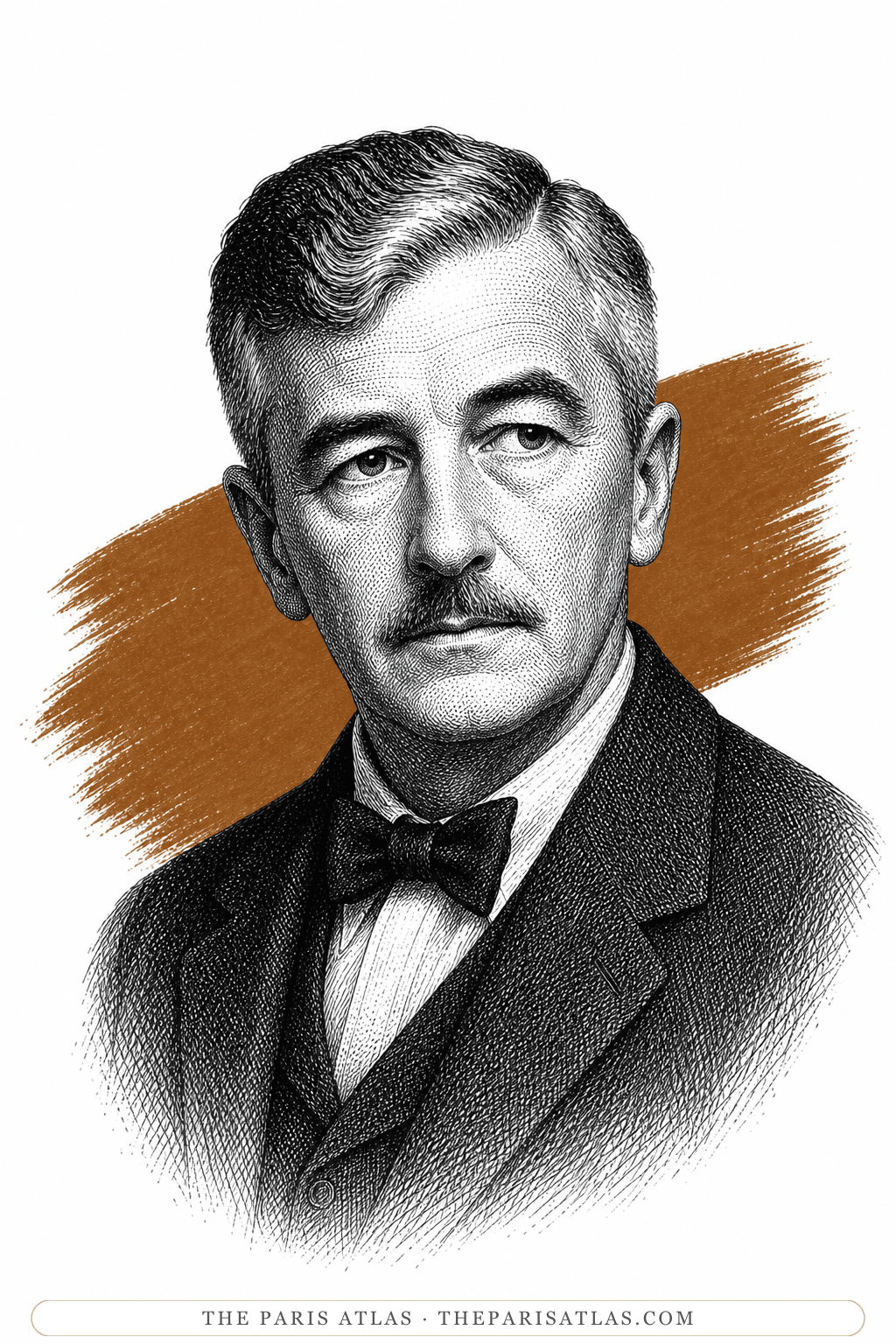
William Faulkner
The Sound and the Fury
Quentin Compson's first appearance, and the story of his last day at Harvard in June 1910.
Read our takeAbsalom, Absalom!
William Faulkner
William Faulkner's 1936 novel: four people try to piece together the story of Thomas Sutpen, who built a plantation out of nothing and was destroyed by the son he refused to acknowledge.
Absalom, Absalom! is William Faulkner's ninth novel, published in New York by Random House in 1936.[1] In September 1909 an old woman, Rosa Coldfield, calls young Quentin Compson to her house to tell him about Thomas Sutpen.[2] Sutpen arrived in Jefferson, Mississippi, in 1833 with no known past, a group of enslaved men and a captive French architect, and built a plantation of a hundred square miles.[3] Quentin, his father and his Harvard roommate, Shreve, spend the rest of the book working out what destroyed Sutpen's family. Race is at the center of the answer.[4]
The novel opens in a dark, shut-up room on a hot September afternoon in 1909. Rosa Coldfield, an old woman who has worn black for forty-three years, talks to Quentin Compson, who is about to leave for Harvard.[2] She is three times his age, and he has hardly exchanged a hundred words with her in his life.[3]
Her subject is Thomas Sutpen, her dead sister's husband, whom she calls a demon. Quentin already knows the outline, because the whole town does. Sutpen came from nowhere and married Rosa's sister Ellen. His son killed his daughter's fiancé at the gate of the house, then vanished.[3]
Quentin hears the story from Rosa, then from his father, who heard it from Quentin's grandfather, who heard parts of it from Sutpen himself.[3] Months later, in a cold dormitory room at Harvard, Quentin and his roommate, Shreve McCannon, try to put the pieces together.[5][3] Every version is different.
In 1833 Thomas Sutpen rides into Jefferson with no known past. He gets a hundred square miles of land from the Chickasaw agent, disappears, and returns with enslaved men and a French architect in chains. Together they build a great house.[3] In 1838 he marries Ellen Coldfield, the daughter of a respectable merchant, and they have Henry and Judith.[3]
Henry brings his university friend Charles Bon home, and Bon and Judith fall in love. Sutpen forbids the marriage. Henry renounces his father and leaves with Bon, and both go to war.[3] Ellen dies during the war. Her father, a conscientious objector, shuts himself in his attic and dies there. Rosa, Ellen's much younger sister, moves out to Sutpen's Hundred to live with Judith and Clytie.[3]
In 1865 Henry kills Bon at the gate and disappears. Sutpen comes home in 1866 to a ruined plantation. He becomes engaged to Rosa, then proposes that they have a child first and marry only if it is a boy. Rosa goes back to town and wears black for the rest of her life.[3]
Sutpen is killed by Wash Jones in 1869. Bon's son by a woman in New Orleans is raised by Judith and Clytie, and has a son of his own, Jim Bond. Judith dies of yellow fever in 1884 while nursing Bon's son. In September 1909 Rosa takes Quentin out to the half-ruined house at night. Hidden upstairs they find Henry Sutpen, come home four years earlier to die.
Three months later Rosa goes back with an ambulance to bring Henry to town. Clytie thinks the men have come to arrest him for Bon's murder and sets the house on fire. She and Henry die in it. Only Jim Bond, the last of Sutpen's line, is left, howling in the ruins. Rosa dies in January 1910. At Harvard, Shreve asks Quentin about the South, and the book ends with Quentin insisting that he does not hate it.
Five voices tell the story: an outside narrator, Rosa Coldfield, Quentin's father, Quentin and Shreve. They draw on a dozen other sources and on their own guesses, and they contradict each other. Stephen Railton, who built the University of Virginia's chapter-by-chapter guide to the book, warns that no event in it can be said for certain to have happened.
A student in 1958 compared the book to Wallace Stevens's poem Thirteen Ways of Looking at a Blackbird. Faulkner agreed. No one person can look at the truth, he said. Each teller sees part of Sutpen, and the reader, after all thirteen views, makes a fourteenth that Faulkner hoped was the true one.
He explained Shreve's part in 1957. Shreve was the one who kept the story tied to reality. If Quentin had been left alone to tell it, Faulkner said, it would have become completely unreal.
The first readers found it so hard that Faulkner added help. His editor, Hal Smith, was alarmed by the manuscript, and the 1936 edition ends with Faulkner's own map of the county, a family tree and a chronology of 33 events. Railton advises first-time readers not to look at that chronology early, because it gives away what the story holds back.
Sutpen was born in 1808 in the mountains of western Virginia, into a poor white family. When he was about fourteen his father sent him with a message to a plantation house. An enslaved man at the front door told him to go round to the back.
That moment gave him what the novel calls his design: to own a plantation, slaves and a house of his own, and to found a family line through a son. He left for the West Indies. As an overseer on a sugar plantation in Haiti he helped put down a slave revolt and married the planter's daughter. They had a son.
Then he left them both. He told Quentin's grandfather that his wife could never be part of the design, so he provided for her and put her aside. Only near the end does the book reveal why. He had learned that she had Black ancestry.
Faulkner took the title from the Bible, from King David's cry over his dead son Absalom in the Second Book of Samuel. He said the title came to him the moment he thought of a man who wanted sons, and whose sons destroyed him.
In Jefferson Sutpen married Ellen Coldfield in 1838 and had two children, Henry and Judith. With an enslaved woman he also had a daughter, Clytie. In 1859 Henry went to the university at Oxford and brought home a friend for Christmas, Charles Bon of New Orleans. Bon and Judith became engaged.
Sutpen recognized Bon as the son he had abandoned, and said nothing to him. On Christmas Eve 1860 he told Henry that Bon was his half-brother and forbade the marriage. Henry called his father a liar and rode off with Bon. They fought side by side through the Civil War.
In 1865, in the last months of the war, Sutpen called Henry to his tent and told him the rest. Bon's mother, he said, was part Black. Henry had been ready to accept a marriage between half-siblings. He would not accept this. When he and Bon rode home, Henry shot Bon dead at the gate of Sutpen's Hundred.
Donald Kartiganer, in the Mississippi Encyclopedia, puts this at the center of the book. Henry's murder of his Black brother, he writes, is the key to the history of Southern violence that the novel tells.
The novel uses the n-word 152 times, more than any other racial term in it. The count comes from a study by Johannes Burgers and Susan Scott Parrish, made for the Norton Critical Edition.
The word is not spread evenly. Most uses fall in chapter 7, which tells Sutpen's own story, and Sutpen is involved in 87 percent of the scenes where it appears. In the scene at the plantation front door alone it appears sixteen times. Burgers and Parrish read this as the moment a poor white boy learns both race and class at once.
The book's first page already uses it. Rosa describes Sutpen arriving with a band of enslaved Africans, and the slur she uses there comes back as a refrain through the book. Sutpen fights his slaves bare-handed for sport while his neighbors watch, and once his children watch too. Faulkner called those fights another instance of Sutpen's ruthlessness.
Sutpen's end is violent too. In 1868 he gets Milly Jones, the fifteen-year-old granddaughter of his handyman, Wash Jones, pregnant. When the baby is a girl he tells Milly it is too bad she is not a mare. Wash kills him with a scythe, then kills Milly and the baby, and dies charging a posse.
The novel took longer to reach Paris than Faulkner's earlier books. Éditions Gallimard published Absalon ! Absalon ! in 1953, translated by René-Noël Raimbault with Charles-P. Vorce. Gallimard issued a revised translation in 2000, with a preface and notes by the Faulkner scholar François Pitavy.
The story itself has French threads. Sutpen's architect is French, and Sutpen made his first fortune on a French planter's estate in Haiti, in a country whose language he had to learn. Faulkner's own time in Paris came a decade before the novel, in the autumn of 1925.
From a little after two oclock until almost sundown of the long still hot weary dead September afternoon they sat in what Miss Coldfield still called the office because her father had called it that
Her voice would not cease, it would just vanish.
the Quentin Compson preparing for Harvard in the South, the deep South dead since 1865 and peopled with garrulous outraged baffled ghosts
The mystery is not who killed Charles Bon but why. The answer comes only near the end.
Rosa, Mr. Compson, Quentin and Shreve each build a different Sutpen. Faulkner said the reader makes the fourteenth and truest picture.
Donald Kartiganer calls the murder of Charles Bon the key to the history of Southern violence the novel tells.
The young man of The Sound and the Fury is the main listener here, months before the day he dies in that novel.
A poor white boy from the Virginia mountains who builds a Mississippi plantation and a family, and loses both.
A young man from Jefferson, about to go to Harvard in 1909, who hears the Sutpen story and retells it.
Ellen Sutpen's younger sister, who has worn black for forty-three years and calls Sutpen a demon.
Sutpen's unacknowledged son by his first marriage, engaged to his half-sister Judith and shot by his half-brother Henry.
Sutpen's son, who kills Charles Bon at the gate in 1865 and comes home to die in secret.
Sutpen's daughter, engaged to Bon. After his death she raises his son.
Quentin's roommate at Harvard, who helps him reconstruct the story.
Sutpen's daughter by an enslaved woman. She keeps Henry hidden and sets the house on fire.
Sutpen's poor white handyman, who kills him with a scythe.
1936
Random House publishes Absalom, Absalom! in New York, with Faulkner's map, genealogy and chronology at the end.
1953
Gallimard publishes Absalon ! Absalon ! in Paris, translated by René-Noël Raimbault with Charles-P. Vorce.
1957
At the University of Virginia, Faulkner explains the title and Shreve's role in the story.
1958
Faulkner agrees with a student that the book is thirteen ways of looking at a blackbird, and says the reader makes the fourteenth.
1986
Random House publishes the corrected text.
2000
Gallimard publishes François Pitavy's revised French translation.
2032
The novel is due to enter the US public domain on 1 January.


The Sound and the Fury
William Faulkner
Quentin Compson's first appearance, and the story of his last day at Harvard in June 1910.
Read our takeLight in August
William Faulkner
Faulkner's earlier novel about race, also built around a man whose Black ancestry decides how the town treats him.
Read our take
Toni Morrison's novel about what slavery did to one family. Morrison wrote her Cornell master's thesis on William Faulkner and Virginia Woolf.
Read our take
James Baldwin's essay collection includes 'Faulkner and Desegregation', his answer to Faulkner's public statements on integration.
Read our takeThe rise and fall of Thomas Sutpen, a poor white boy who builds a plantation in Mississippi and tries to found a family dynasty. His son Henry kills Charles Bon, Sutpen's unacknowledged son by an earlier marriage. Quentin Compson and his Harvard roommate try to work out why.
Bon was engaged to Henry's sister Judith. Henry learned first that Bon was their half-brother, and could live with that. Then his father told him that Bon's mother had Black ancestry. Henry shot Bon at the gate of the plantation to stop the marriage.
It comes from the Bible. In the Second Book of Samuel, King David cries out for his son Absalom, who has rebelled against him and been killed. Faulkner said he thought of the title as soon as he thought of a man who wanted sons and whose sons destroyed him.
An outside narrator, Rosa Coldfield, Quentin's father, Quentin and his roommate Shreve McCannon. Their versions overlap and contradict each other.
Clytie burns down the Sutpen house with herself and Henry inside, and only Jim Bond, the last of Sutpen's line, is left. At Harvard, Shreve asks Quentin about the South, and Quentin insists that he does not hate it.
Yes. Quentin Compson is the same character. Absalom, Absalom! takes place between September 1909 and January 1910, a few months before the day in June 1910 that The Sound and the Fury describes.
The sentences are very long, the story is told out of order by four people who disagree, and the key facts come only near the end. Stephen Railton's online chronology at the University of Virginia was made to help first-time readers keep track.
Not yet. It was published in 1936, so in the United States it stays in copyright until 1 January 2032.
Explore authors with a similar voice, perspective, and influence.
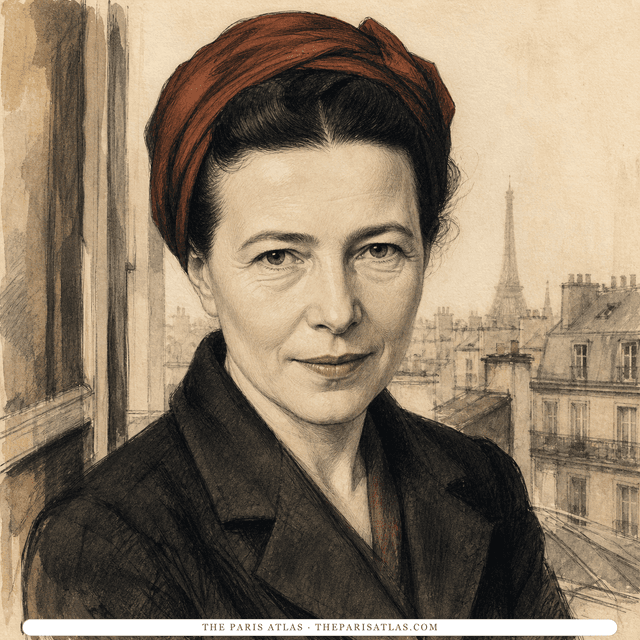
French writer and philosopher whose novels, memoirs, and social analysis examined freedom, gender, responsibility, aging, and the material conditions that shape a life.
View author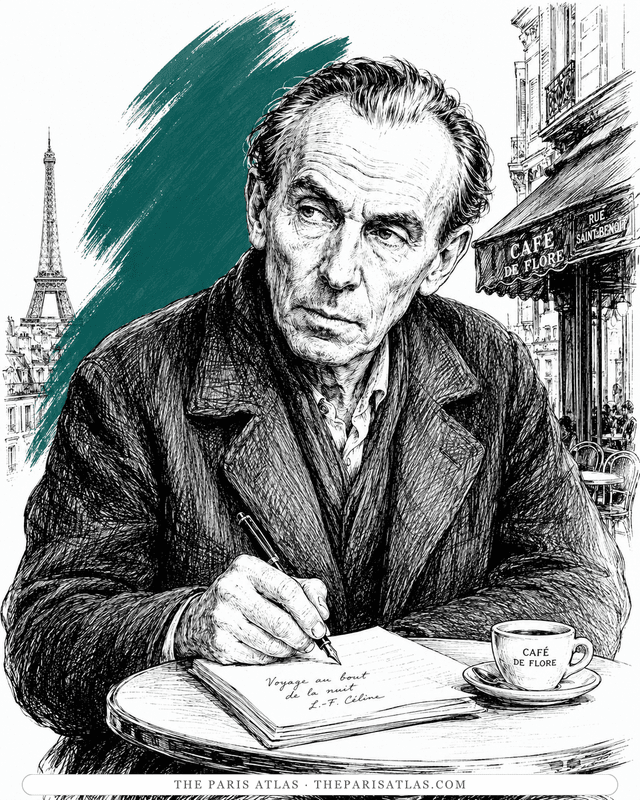
The doctor of the Paris slums who wrote the century's blackest, funniest novel — and changed the sound of French prose.
View author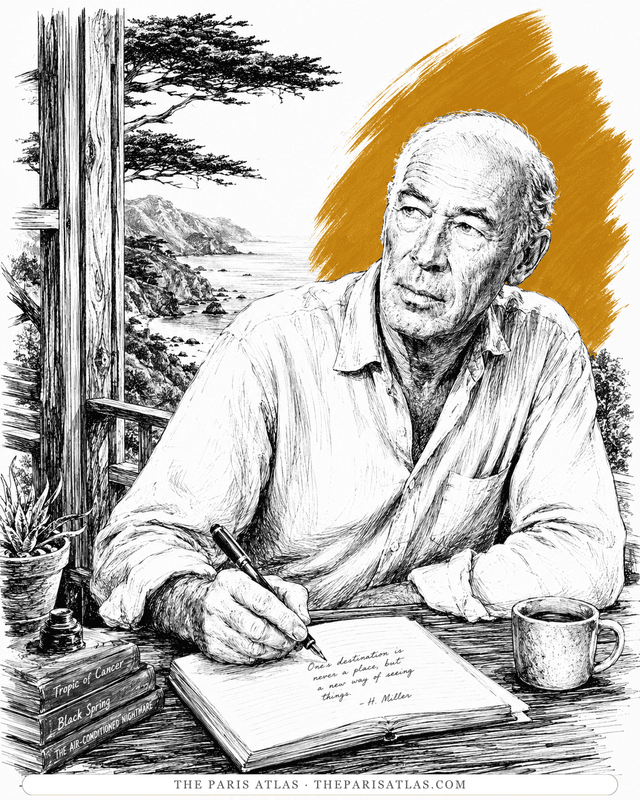
The Brooklyn dropout who arrived in Paris broke at thirty-eight and wrote the exuberant, banned books that ended American censorship.
View authorThe sources below include the primary text, editions, scholarship, archival materials, and other records that informed this page. They document Absalom, Absalom!, its publication, and its place in literary history.

Edition records confirming the first edition and the ISBNs listed here.

Donald Kartiganer on Charles Bon's murder as the key to the novel.
William E. Grant's summary for EBSCO Research Starters, used alongside the University of Virginia chronology for the Harvard frame.
Johannes Burgers and Susan Scott Parrish's count of the novel's racial language.
Faulkner on the title, on Shreve, and on Sutpen's ruthlessness.
Faulkner on thirteen ways of looking at a blackbird.
Library of America volume description and the note on the 1986 corrected text.
BnF record for the 1953 Gallimard translation.
BnF record for the 2000 revised translation.
The plaque at 26 rue Servandoni.
The primary text represented by this page, used for descriptions of the work’s contents and for any quoted passages shown here.
The primary text is the baseline reference for every book page. Additional references document publication history, interpretation, and historical context where that evidence is available.
 Explore more resources