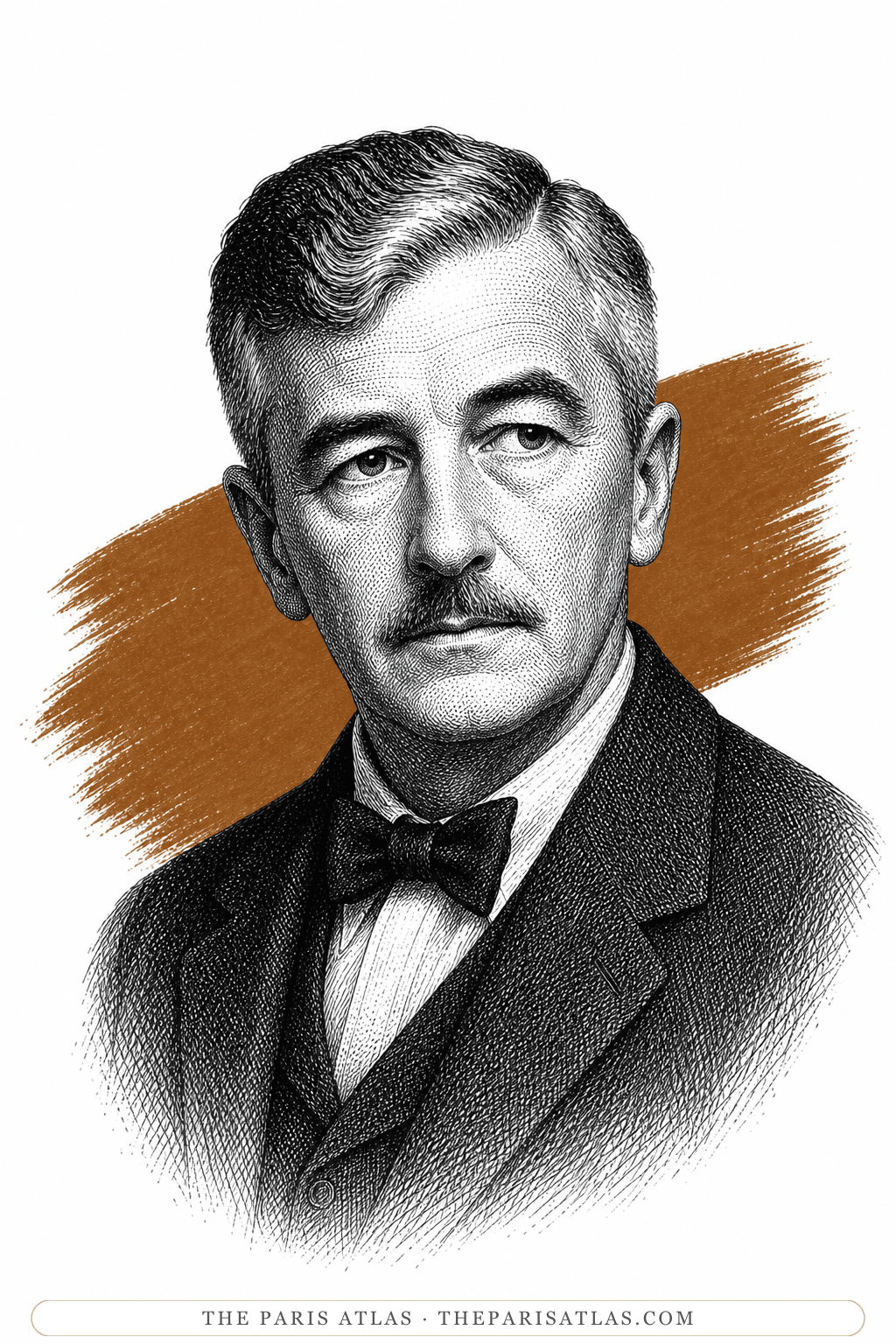
Absalom, Absalom!
William Faulkner
Absalom, Absalom!
Faulkner's next great novel about race in the South, also built around a man whose Black ancestry decides his fate.
Read our takeLight in August
William Faulkner
William Faulkner's 1932 novel: a pregnant girl walks into a Mississippi town on the day a woman is murdered, and a man who does not know his own race is hunted down.
Light in August is William Faulkner's seventh novel, published in New York in 1932 by Harrison Smith and Robert Haas.[1] Two stories run side by side in the town of Jefferson, Mississippi. Lena Grove, young, poor and pregnant, walks from Alabama to find the man who left her.[2] Joe Christmas, a drifter who has never known whether he has Black ancestry, kills the woman he has lived with for three years and is hunted down by the town.[3] Faulkner said the book began with Lena. He also said Joe's tragedy was that he did not know what he was, and knew he never would.[4]
The book opens on a country road. Lena Grove sits by a ditch, her shoes in her hand, and watches a wagon climb the hill toward her. She thinks that she has come from Alabama, a fur piece, and has been on the road almost four weeks.[2]
Her parents died when she was twelve, and she went to live with her brother McKinley at Doane's Mill, a sawmill village. She slept in a lean-to room and learned to open its window at night without a sound. Soon she was pregnant by a young man, Lucas Burch, who had since left town.[2] Her brother called her a whore. Two weeks later she climbed out of the window with thirty-five cents and a palm-leaf fan and set off to find Lucas.[2]
Strangers pass her along from wagon to wagon, and she believes all of them. She is sure Lucas will be glad to see her.[2] In Jefferson she is sent to the mill, where she expects to find Lucas Burch. The man there is Byron Bunch, a quiet mill hand who falls in love with her.[3]
On the day Lena arrives, a big old house outside Jefferson burns down. Its owner, Joanna Burden, is found inside with her throat cut.[3] The man the town will hunt for it is Joe Christmas.
Lena Grove walks from Alabama to Jefferson, looking for Lucas Burch, the father of her unborn child.[2] At the mill she meets Byron Bunch instead, who falls in love with her. From Byron's description of a worker who calls himself Joe Brown, Lena is sure he is Lucas Burch under a new name.[3]
The same day, Joanna Burden's house burns, and her body is found with the throat cut. Her relatives in New Hampshire offer a thousand-dollar reward. Joe Brown, who has been selling bootleg whiskey with Joe Christmas, tells the sheriff that Christmas did it.[3]
Long chapters go back over Joe Christmas's life: the orphanage, his years with McEachern, a first love with a waitress named Bobbie Allen, years of drifting, and three years with Joanna Burden.[3] After several days on the run he is caught, with the help of bloodhounds. His grandparents, Doc Hines and his wife, come to Jefferson. Doc Hines calls for him to be lynched.[3]
Joe escapes on the way to the courthouse and runs to Hightower's house. Percy Grimm follows him there, shoots him, and mutilates his body with a knife. Lena has meanwhile given birth in Joe's old cabin, with Byron and Joe's grandmother, Mrs. Hines, looking after her. Lucas Burch is brought to see her, climbs out of a back window and escapes on a freight train, after Byron fights him.
Three weeks later Lena, her baby and Byron are on the road again, riding with a truck driver toward Tennessee. Byron tries once to make love to her and is refused. The next morning he is waiting at a bend in the road, and climbs back onto the truck. Lena is still, calmly, looking for Lucas.
Faulkner told students at the University of Virginia that the novel began with Lena Grove. He had in mind a young girl with nothing, pregnant and determined to find her sweetheart. He said the idea came out of his admiration for the courage and endurance of women.
Lena's chapters are slow and calm. Faulkner describes the wagon coming up the hill as a shabby bead on a red string of road, hardly seeming to move. Everything around her is patient, and she is patient too. The Library of America calls her guileless.
Faulkner also tied the title to her. In Mississippi, he said, there are a few days every August when the light turns luminous, as if it came from an older time than Christianity. He thought Lena had something of that pagan quality. She was never ashamed of her child, whether it had a father or not.
Joe Christmas is left at an orphanage as a baby at Christmas time, which is where his name comes from. His grandfather, Doc Hines, put him there. Hines believed Joe's father had Black ancestry, and had let Joe's mother die in childbirth. The other children call Joe by a racial slur.
Nobody in the book ever proves what Joe is. A student at Virginia noticed this and asked whether Joe was supposed to be part Black. Faulkner answered that this was his tragedy. Joe did not know what he was, there was no way for him to find out, and so he felt he was nothing.
He didn't know what he was, and so he was nothing.
Late in the book Gavin Stevens, a man of the town, explains Joe's last hours as a conflict between his white blood and his Black blood. Faulkner called that a guess and a rationalization. The people who destroyed Joe decided what he was, he said, but Joe himself never knew.
Donald Kartiganer, in the Mississippi Encyclopedia, reads the novel the same way. He writes that Faulkner shows race as something a culture makes, not something in the blood, and that Joe's final freedom is his refusal to live by the town's two categories.
Joe is adopted by McEachern, a religious and heartless farmer who treats him cruelly. As a teenager Joe knocks McEachern unconscious at a country dance and leaves home. For years he drifts from town to town.
In Jefferson he lives in an old cabin near the house of Joanna Burden, a white woman from a family of Northern abolitionists whom the town shuns. They become lovers for three years. Toward the end she prays over him and tries to make him repent. One night she points an old pistol at him. It misfires, and he cuts her throat with a razor.
The town hunts Joe with bloodhounds. He is caught, escapes on the way to court and runs to the house of Gail Hightower, a disgraced minister. There a young man named Percy Grimm, leading a band of volunteers, shoots him and mutilates his body with a knife.
In March 1957 a student asked whether men like Grimm were common in the South, perhaps in the White Citizens' Councils. Faulkner said Grimm was a Nazi storm trooper, written in 1932 before he had heard of Hitler's storm troopers. Such men, he said, exist everywhere, and probably most of all in the White Citizens' Councils.
The novel uses the n-word, and much of its violence is racial violence. The murder, the manhunt, the call for a lynching and the killing of Joe are all told directly.
Gail Hightower lost his church years before the story starts. The town believes that his obsession with his grandfather's death in the Civil War drove his wife to ruin. The grandfather, as Faulkner told it, galloped into Jefferson to burn the Union army's stores. Now Hightower lives alone and dreams of Confederate cavalry charges.
Faulkner described him as a man of God who had failed every time. He believed he had failed his wife, and he failed Joe Christmas when courage might have saved him. What he had left was the memory of a brave grandfather riding into town.
Byron Bunch is Hightower's only friend. The Library of America notes that he works Saturdays at the mill because he thought it would keep a man out of trouble. He is the one who looks after Lena and makes her as comfortable as he can in the cabin where she has the baby.
Much of the novel is told in the present tense. Students asked whether that was a deliberate change of style. Faulkner said no. It just seemed the best way to tell the story, and a writer with a great deal pushing to get out has no time to bother with style.
Asked whether James Joyce's Ulysses had affected the book, he said it had probably influenced everything he ever wrote. So had everything else he ever read, he added, from the telephone directory up.
French readers had the novel within three years. Éditions Gallimard published Lumière d'août in Paris in 1935, translated and introduced by Maurice-Edgar Coindreau. Faulkner's own Paris time came earlier, in the autumn of 1925, at 26 rue Servandoni.
Sitting beside the road, watching the wagon mount the hill toward her, Lena thinks, ‘I have come from Alabama: a fur piece. All the way from Alabama a-walking. A fur piece.’
But it was because she believed that the people who saw her and whom she passed on foot would believe that she lived in the town too.
He’s going to send for me. He said he would send for me
It seems to hang suspended in the middle distance forever and forever, so infinitesimal is its progress, like a shabby bead upon the mild red string of road.
Faulkner said the book began with her. Her slow walk to Jefferson opens and closes the novel.
A man destroyed by a question nobody can answer, whether he is white or Black. Faulkner called not knowing his tragedy.
It stays in one town and follows a clear line of events, even with the long flashbacks into Joe's past.
The publisher quotes Ralph Ellison: for all his concern with the South, Faulkner was seeking out the nature of man.
A young pregnant woman from Alabama, walking to find Lucas Burch. Faulkner said the book began with her.
An orphan who has never known whether he has Black ancestry. He kills Joanna Burden and is hunted and killed by the town.
A quiet mill hand who falls in love with Lena and looks after her.
A disgraced minister who lives in dreams of his grandfather's cavalry raid. Joe Christmas is killed in his house.
A white woman from a family of Northern abolitionists, shunned by the town. Joe's lover for three years, and his victim.
The father of Lena's child, working in Jefferson under the name Joe Brown. He tries to collect the reward for Joe Christmas.
Joe's grandfather, who let Joe's mother die in childbirth, put Joe in the orphanage, and later calls for his lynching.
The young man who leads the volunteers who kill Joe. Faulkner called him a Nazi storm trooper before the name existed.
1932
Harrison Smith and Robert Haas publish Light in August in New York.
1935
Gallimard publishes Lumière d'août in Paris, translated and introduced by Maurice-Edgar Coindreau.
1957
At the University of Virginia, Faulkner says the book began with Lena Grove, explains the title, and calls Percy Grimm a Nazi storm trooper.
1990
Vintage International publishes the corrected text in paperback.
2002
The Modern Library publishes a hardcover edition on 2 April.
2028
The novel is due to enter the US public domain on 1 January.


Absalom, Absalom!
William Faulkner
Faulkner's next great novel about race in the South, also built around a man whose Black ancestry decides his fate.
Read our takeAs I Lay Dying
William Faulkner
Another Faulkner novel of poor country people traveling slowly toward Jefferson.
Read our takeA Rose for Emily
William Faulkner
Faulkner's most famous story is set in the same town, Jefferson, and also turns on a killing hidden in a house.
Read our take
James Baldwin's essay collection includes 'Faulkner and Desegregation', his answer to Faulkner's public statements on integration in the 1950s.
Read our takeTwo stories in the Mississippi town of Jefferson. Lena Grove, young and pregnant, walks from Alabama to find the man who left her. Joe Christmas, an orphan who does not know whether he has Black ancestry, kills the woman he has lived with and is hunted and killed by the town.
Faulkner said that for a day or two every August in Mississippi the light becomes luminous, like a light older than Christianity. He connected it with Lena Grove, who he thought had something pagan about her.
The novel never says. His grandfather believed Joe's father had Black ancestry, but nobody proves it. Faulkner said Joe's tragedy was that he did not know what he was and never could.
He escapes on the way to court and runs to Gail Hightower's house. Percy Grimm, leading a band of volunteers, shoots him there and mutilates his body with a knife.
The young man who hunts down and kills Joe Christmas. In 1957 Faulkner called him a Nazi storm trooper, written before he had heard of Hitler's storm troopers.
Lena, her baby and Byron Bunch are on the road toward Tennessee, riding with a truck driver. Lena is still looking for Lucas Burch, and Byron is still at her side.
Less than The Sound and the Fury or Absalom, Absalom!. The story stays in one town, but it breaks off for long chapters about Joe Christmas's past.
Not yet. It was published in 1932, so in the United States it stays in copyright until 1 January 2028.
Explore authors with a similar voice, perspective, and influence.
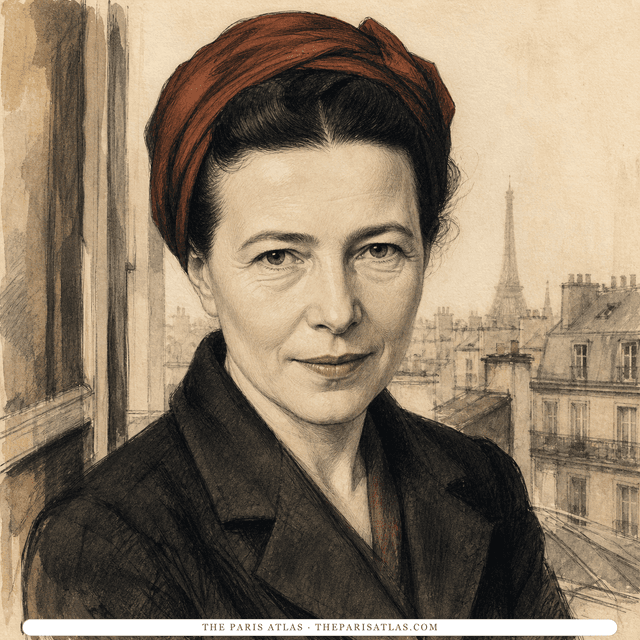
French writer and philosopher whose novels, memoirs, and social analysis examined freedom, gender, responsibility, aging, and the material conditions that shape a life.
View author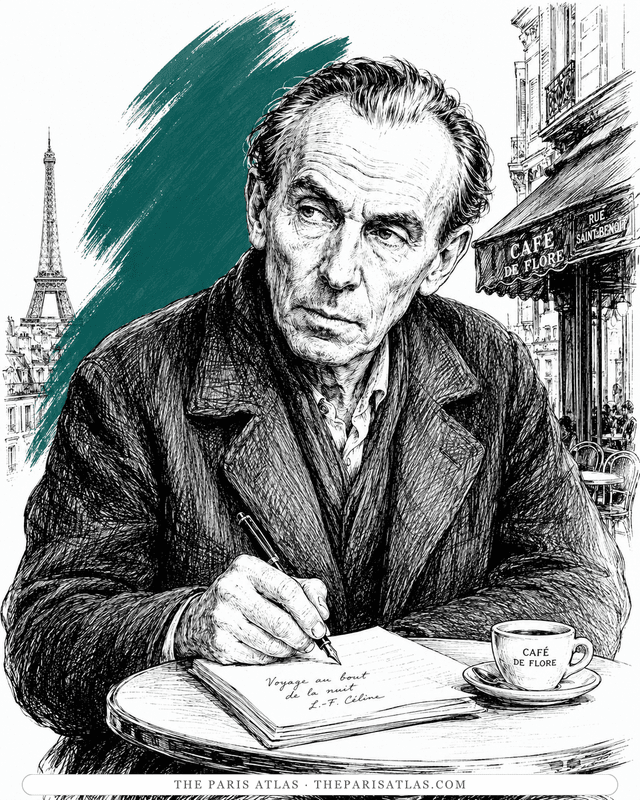
The doctor of the Paris slums who wrote the century's blackest, funniest novel — and changed the sound of French prose.
View author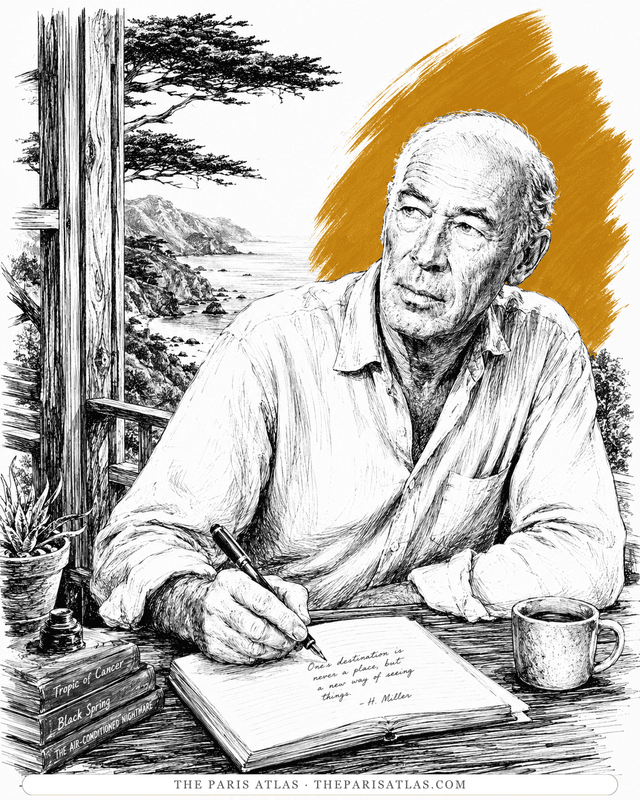
The Brooklyn dropout who arrived in Paris broke at thirty-eight and wrote the exuberant, banned books that ended American censorship.
View authorThe sources below include the primary text, editions, scholarship, archival materials, and other records that informed this page. They document Light in August, its publication, and its place in literary history.


Edition records confirming the first edition and the ISBNs listed here.
Faulkner on Lena Grove, Joe Christmas, Gavin Stevens, Hightower and the present tense.
Faulkner on the title.
Faulkner on Percy Grimm.
Faulkner on Hightower's ending.
Faulkner on the influence of Ulysses.

Donald Kartiganer on race in the novel.
Library of America volume description.
BnF record for the 1935 Gallimard translation.
The plaque at 26 rue Servandoni.
The primary text represented by this page, used for descriptions of the work’s contents and for any quoted passages shown here.
The primary text is the baseline reference for every book page. Additional references document publication history, interpretation, and historical context where that evidence is available.
 Explore more resources