
Breakfast at Tiffany's
Truman Capote
Breakfast at Tiffany's
Ten years later, and the moment the Southern voice is traded for a New York one.
Read our takeOther Voices, Other Rooms
Truman Capote
A boy is sent south to find the father who left him, and finds a decaying house full of people with nowhere else to go.
Random House published Truman Capote's first novel in January 1948, when he was twenty-three, and it made him famous before he had a body of work to be famous for.[1][2] Joel Harrison Knox is thirteen, his mother has died, and he is sent from New Orleans to a place called Skully's Landing to live with the father who abandoned him at birth. His father is not there to meet him, and for much of the book nobody will say where he is.[3] What Joel finds instead is a half-ruined house, a sharp-tongued stepmother, a cousin who never leaves his room, and a set of adults who all want something from a boy they have only just met.
The novel is a search that turns into a surrender. Joel arrives looking for Edward Sansom, and the search organises the first half of the book: the journey by lorry to Noon City, the wait, the questions nobody answers straight. When he finally finds his father the search collapses, because Edward Sansom is paralysed and cannot speak, and the only thing he can do is throw a red tennis ball across the floor to attract attention.
Around that emptiness Capote arranges the people who actually raise Joel. Amy Skully, his stepmother, is brisk and unkind and in her forties. Randolph, her cousin, owns the Landing, is in his thirties, dresses in a kimono, paints, drinks, and talks to Joel at enormous length about his own ruined life. Zoo, whose full name is Missouri Fever, keeps the house and wants to get to Washington. Jesus Fever, her grandfather, is very old and drives the mule.
Joel's one friend his own age is Idabel Thompkins, a girl from a neighbouring farm who wears her brother's clothes, fights, and refuses every version of being a girl that is offered to her. The two of them run away together and get as far as a travelling show, where Idabel attaches herself to Miss Wisteria, a midget woman, and Joel is left holding the situation on his own in the rain.
Capote was writing about himself and barely disguising it. He had been the boy sent to relatives in Alabama while his mother lived elsewhere, and the novel's Southern house, its heat and its stalled adults come straight out of that.[2] He said later that he had written it without knowing what it was about, and that he only understood the book years after finishing it.
Joel Harrison Knox, thirteen years old and newly motherless, travels from New Orleans to Noon City and then out to Skully's Landing, a decaying house in the Deep South, to live with the father who left before he was born.
His father is not there. Joel is received by Amy Skully, his stepmother, and by her cousin Randolph, who owns the place, and neither will tell him where Edward Sansom is. The household also contains Zoo, who keeps house and dreams of Washington, and her grandfather Jesus Fever, who is very old.
Joel makes one friend, Idabel Thompkins, a girl from a nearby farm who dresses in her brother's clothes. He is eventually taken upstairs and shown his father, who is paralysed and mute and communicates by rolling a red tennis ball across the floor.
Joel and Idabel run away to a travelling show. Idabel takes up with Miss Wisteria, a midget performer, the weather turns, and Joel is left alone and feverish. Randolph brings him back to the Landing.
Joel falls seriously ill and is nursed at the Landing, and when he recovers something in him has settled rather than been cured. Zoo has come back from her attempt to reach Washington, badly used on the road. Jesus Fever is dead.
In the last pages Joel sees a figure at an upstairs window beckoning him, a woman he has glimpsed before, and understands that it is Randolph. He walks towards the house and goes in. Capote gives the boy's acceptance of who he is entirely to that gesture, and never puts it into a sentence.
The whole plot is a boy looking for his father, and Capote does something hard with the discovery. Edward Sansom, when Joel is finally taken to him, is lying in an upstairs room, paralysed and mute, able to move his eyes and to roll a red tennis ball across the floorboards when he wants somebody. That is the reunion. The novel spends a hundred pages building an absence and then fills it with a man who cannot answer a single question.
The tennis ball is the book's best object because it is so ordinary. A ball is a thing a father throws to a son in a garden, and here it is the only speech a father has left. Capote never explains the image and never repeats it too often. He lets a reader notice that Joel came south hoping to be claimed by somebody, and that the one person obliged to claim him can only make a noise on the floor.
Randolph is the reason the novel is remembered as daring. He is a man in his mid-thirties living in a woman's kimono in a rotting house, in love with a boxer he met years before in Europe. He tells Joel about it in long unhurried monologues that occupy whole chapters. Nothing is coded. In an American novel of 1948 published by a major house, that is the thing that got the attention.
What Randolph is doing with Joel is left uncomfortable on purpose. He is the only adult who talks to the boy as though he were worth talking to, and he is also a man grooming a thirteen-year-old for company he cannot get elsewhere. Capote does not resolve that. Randolph's speeches are the most beautiful writing in the book and the most self-serving, and a reader is left holding both facts.
Idabel is Joel's equal and opposite. She is a girl who has decided not to be one, and Joel is a boy everybody keeps calling a girl, and their friendship works because neither of them has to explain. When Joel tries to kiss her she knocks him down, which is the closest the novel comes to a statement about either of them.
The reason the book still reads as strange is that it refuses to name what it is about. Joel is coming to understand something about himself, and Capote gives the understanding to a figure at a window rather than to a sentence. Harper Lee, who grew up next door to Capote in Monroeville, put a boy very like him into To Kill a Mockingbird twelve years later as Dill, and the comparison is instructive: Lee explains her children, and Capote does not.
Part of what happened in 1948 had nothing to do with the prose. The dust jacket carried a photograph by Harold Halma of the author reclining and looking directly at the camera, and it caused an argument of its own. Capote was twenty-three and looked much younger, and readers who had never heard of him formed an opinion from the picture before reading a page.
Capote said afterwards that the camera had caught him off guard. His biographer Gerald Clarke did not accept that, and wrote that Capote had posed himself and was responsible for both the picture and the publicity that followed it. The detail matters because it is the first instance of the pattern that ran through the rest of his life. The novel sold well, reaching ninth place on the New York Times list and staying there for nine weeks, and from that point on the writer was as much the product as the writing.
Other Voices, Other Rooms, a Southern novel about a boy sent to find his father, appeared in 1948, when he was twenty-three, and was a critical and financial success.
Published in January 1948 and written before that, with a command of the sentence that most novelists do not reach at forty. Worth reading simply as an early performance.
A rotting house, a paralysed father, an old woman in an upstairs window and a boy who cannot get an answer from anybody. All of the atmosphere of the form and none of the melodrama.
Randolph tells a thirteen-year-old about the man he loved, at length and without euphemism, in a novel from a major New York publisher. Very little American fiction of the decade does that.
Read it beside In Cold Blood to see what he put away. The same writer produced the humid lyricism here and the flat reported sentences of Kansas seventeen years later.
Thirteen years old, recently orphaned of his mother, sent south to a father he has never met. Small, fair and repeatedly told he looks like a girl.
Amy Skully's cousin and the owner of Skully's Landing, in his mid-thirties, painting and drinking in a kimono. He gives Joel the only real conversation in the house, and wants something in return.
Joel's father, once a boxing manager, now paralysed and unable to speak. He signals for attention by rolling a red tennis ball across the floor.
Joel's stepmother, in her late forties and sharp-tongued, who married Edward Sansom and now manages a house with no money in it.
A girl from a neighbouring farm who wears her brother's clothes and will not be handled. Joel's only friend of his own age, and the person he runs away with.
Missouri Fever, who keeps the house at the Landing and means to get to Washington. Her attempt to leave is one of the hardest passages in the book.
Zoo's grandfather, very old, who drives the mule and cart that brings Joel out to the Landing.
A performer with a travelling show, a small woman who takes an interest in Idabel and then in Joel. She appears late and changes everything.
1945
Capote sells "Miriam" to Mademoiselle; the O. Henry award that follows brings a book contract and a fifteen-hundred-dollar advance, which pays for this novel.
1947
Harold Halma photographs Capote reclining for the dust jacket, in the picture that becomes as well known as the book.
1948
Random House publishes Other Voices, Other Rooms in January, at 231 pages. Capote is twenty-three.
1948
The novel reaches ninth place on the New York Times best-seller list and stays there nine weeks, selling more than twenty-six thousand copies.
1988
Gerald Clarke's biography concludes that Capote posed himself for the jacket photograph and engineered the publicity around it.
1994
Vintage issues the paperback that becomes the standard American text.

Breakfast at Tiffany's
Truman Capote
Ten years later, and the moment the Southern voice is traded for a New York one.
Read our takeIn Cold Blood
Truman Capote
The opposite end of Capote's range, and the book that shows how far he travelled from this one.
Read our takeMusic for Chameleons
Truman Capote
Contains the late autobiographical pieces that return to the Alabama childhood this novel came out of.
Read our takeAnswered Prayers
Truman Capote
The last novel, and the other book in which Capote wrote his own life without much disguise.
Read our takeA thirteen-year-old boy called Joel Harrison Knox is sent, after his mother's death, to a decaying house in the Deep South to live with the father who abandoned him at birth. The father is not there, nobody will say why, and the novel is about what the household does to the boy while he waits.
Random House published it in January 1948, in an edition of 231 pages, when Capote was twenty-three. It was his first novel and an immediate critical and commercial success.
Substantially. Capote was born in New Orleans in 1924 and sent as a small child to relatives in Monroeville, Alabama, while his mother lived elsewhere, and the novel's Southern house and its stalled adults come out of that childhood. He said afterwards that he had not understood what the book was about until years after writing it.
A 1947 portrait by Harold Halma showing the twenty-three-year-old Capote reclining and staring into the camera. It drew as much comment as the novel. Capote claimed the camera had caught him unawares; his biographer Gerald Clarke concluded he had posed himself and was responsible for the publicity that followed.
Joel recovers from a serious illness and, in the closing pages, sees a figure beckoning from an upstairs window and recognises it as Randolph. He walks into the house. Capote gives the boy's acceptance of himself entirely to that gesture and never states it.
Breakfast at Tiffany's is shorter, funnier and much easier, and most readers should start there. Other Voices, Other Rooms rewards a reader who already likes Capote's sentences, because its plot is thin and its atmosphere is the point.
Explore authors with a similar voice, perspective, and influence.
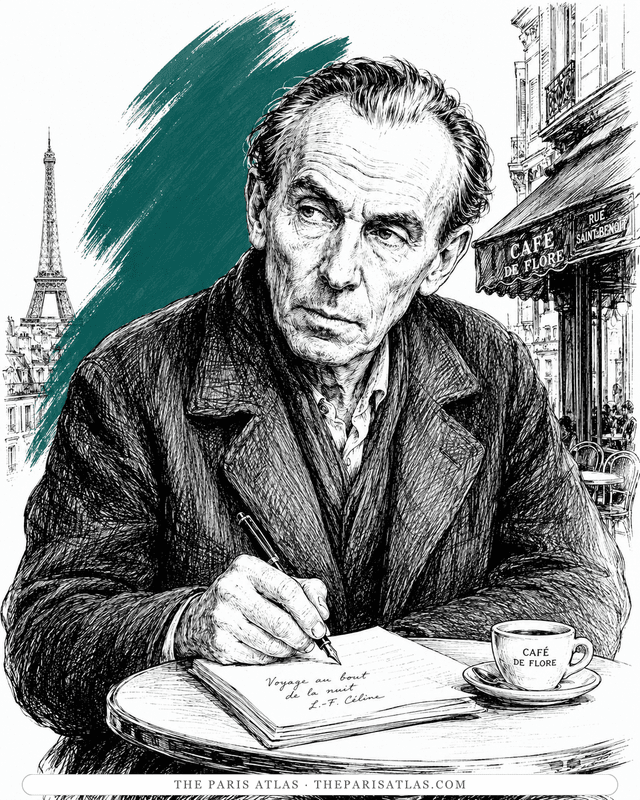
The doctor of the Paris slums who wrote the century's blackest, funniest novel — and changed the sound of French prose.
View author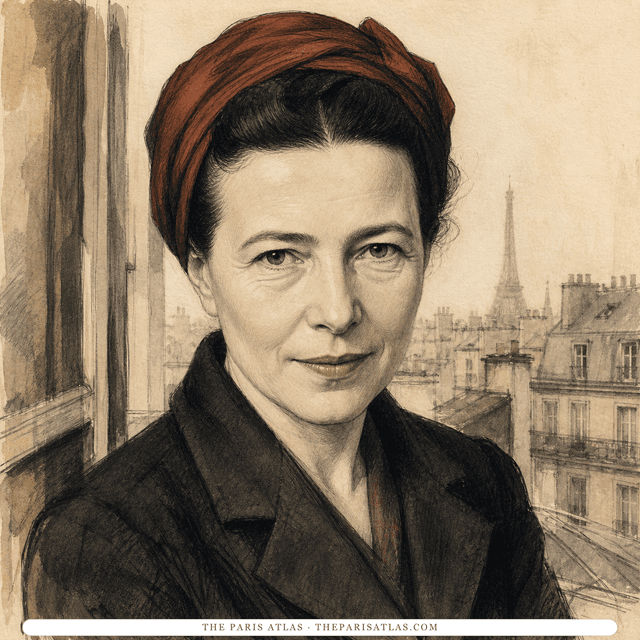
French writer and philosopher whose novels, memoirs, and social analysis examined freedom, gender, responsibility, aging, and the material conditions that shape a life.
View author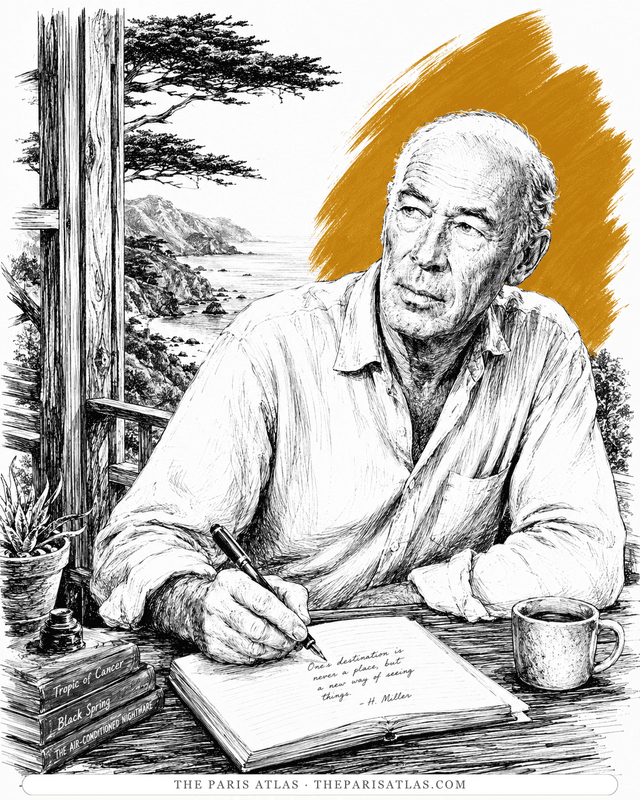
The Brooklyn dropout who arrived in Paris broke at thirty-eight and wrote the exuberant, banned books that ended American censorship.
View authorThe sources below include the primary text, editions, scholarship, archival materials, and other records that informed this page. They document Other Voices, Other Rooms, its publication, and its place in literary history.


Catalogue and edition records: the Random House first edition of January 1948 at 231 pages and LCCN 48005135, and the Vintage edition at LCCN 93006329.

Penguin Random House's catalogue record: the summons to the father, the decaying mansion at Skully's Landing, and the Vintage ISBN. Its summary gives Joel's age as twelve, where the novel gives thirteen.
Gerald Clarke's biography, the standard account of the writing, the Halma jacket photograph and the reception.
George Plimpton's oral biography, for the recollections of the Monroeville years the novel draws on.
The primary text is the baseline reference for every book page. Additional references document publication history, interpretation, and historical context where that evidence is available.
 Explore more resources