
Music for Chameleons (part one)
Six short pieces, including the Martinique sketch that gives the book its title and "Mojave", which Capote first published in 1975 as a chapter of Answered Prayers before moving it here.
Music for Chameleons
Truman Capote
Fourteen short pieces and a murder story, published in 1980 by a writer who had not finished a book in fifteen years.
Random House published Music for Chameleons in 1980, Truman Capote's first new book since In Cold Blood.[1] The volume comes in three parts. Part one is six short pieces, part two is a single long crime story called "Handcarved Coffins", and part three is seven conversational portraits.[1] Capote is the narrator throughout, standing next to somebody more interesting than himself and writing down what they say.[2] His publisher calls the result reportage, and most of it is, though part one mixes invented stories in with the reported ones without labelling which is which.
Part one carries the title piece and five others: "Mr. Jones", "A Lamp in a Window", "Mojave", "Hospitality" and "Dazzle".[1] "Music for Chameleons" itself is a few pages set in Martinique, where an elderly Creole woman plays the piano and lizards come out to listen. "Mojave" is the odd one out and has a history: Capote published it in Esquire in June 1975 as a chapter of his unfinished novel Answered Prayers, then took it out of the novel and printed it here as a story.[3]
Part two is "Handcarved Coffins", subtitled a nonfiction account of an American crime, and it runs to about eighty pages. A series of people in a western American town are killed, each having first received a small carved wooden coffin containing a photograph of themselves. The methods include a rattlesnake in a car. Capote tells it in dialogue with a detective, and the case does not end with an arrest.
Part three, "Conversational Portraits", is seven pieces: "A Day's Work", "Hello, Stranger", "Hidden Gardens", "Derring-do", "Then It All Came Down", "A Beautiful Child" and "Nocturnal Turnings".[1] "A Day's Work" has Capote going round New York with his cleaning woman. "Then It All Came Down" is an interview with one of the men convicted of the Manson murders. "A Beautiful Child" is an afternoon spent with Marilyn Monroe.
The last piece is Capote interviewing himself, and it produced the most quoted passage in the book. Asked whether God had helped him, he answered that he was not a saint yet. Then he listed what he was instead: an alcoholic, a drug addict, homosexual and a genius. He added that he could be all four and still be a saint.[4] He had been treated for alcoholism and drug addiction in the late 1970s, so the joke was not a pose.
Part one, "Music for Chameleons", holds six short pieces: the title sketch set in Martinique, "Mr. Jones", "A Lamp in a Window", "Mojave", "Hospitality" and "Dazzle". Some are reported and some are invented, and the book does not sort them for you.
Part two is "Handcarved Coffins", a single long account of a series of killings in a western American town, told mostly as dialogue with the detective on the case. Each victim first received a small carved coffin containing their own photograph.
Part three, "Conversational Portraits", holds seven pieces: "A Day's Work", "Hello, Stranger", "Hidden Gardens", "Derring-do", "Then It All Came Down", "A Beautiful Child" and "Nocturnal Turnings". The subjects range from Capote's cleaning woman to Marilyn Monroe to a convicted member of the Manson group.
The title piece is four or five pages long and does almost nothing, which is why Capote put it first. An elderly aristocratic woman in Martinique gives Capote mint tea, mentions in passing that she is drinking absinthe, and plays Mozart on the terrace. Lizards come out of the garden and settle on the stones to listen.
Nothing in the piece is explained and nothing is concluded, and the lizards are reported as a fact rather than offered as an image. Opening a comeback book with a sketch this slight is a decision about what the whole volume is for. Capote is announcing that he is no longer building large structures, and that he intends to write short and get out. After six years on the Kansas murders and fifteen more on a novel he could not finish, brevity was the point.
The long middle section is In Cold Blood done again at a tenth of the length and with the answer withheld. Somebody in a western American town is killing people, and each victim has received a miniature coffin, carved from balsa wood, with a photograph of themselves inside it. One killing uses rattlesnakes released into a car. Capote gives almost the whole thing as dialogue between himself and the investigator on the case.
Two choices distinguish it from the Kansas book. The town and the people are not named, which means a reader cannot check anything, and the case is never closed. Capote subtitles it a nonfiction account of an American crime, and readers have been arguing since about how much of it happened, in exactly the way they argue about In Cold Blood. Here he had no court record, no confession and no execution to anchor the story, which is either the reason the piece is frightening or the reason it cannot be trusted.
"A Beautiful Child" describes an afternoon in 1955 with Marilyn Monroe, after a funeral, drifting round Manhattan and ending up drinking champagne on a pier. Capote's method in the conversational portraits is to give himself almost no lines and let the other person talk. His own contribution is the questions and the stage directions.
The technique flatters the subject and conceals the writer, and the concealment is the trick. A reader comes away believing they have met Marilyn Monroe rather than read Capote, which is exactly the effect In Cold Blood had aimed at over four hundred pages. Set against "Then It All Came Down", an interview with one of the men convicted of the Manson killings, the range of the section becomes clear. The same flat attentive manner is applied to a film star and to a murderer, and it does not condescend to either.
The volume ends with Capote putting questions to himself, and it is the least guarded writing of his career. He was fifty-five, had been treated for alcoholism and drug addiction, had lost most of his friends over the Answered Prayers chapters four years earlier, and had not finished a book since 1966. The self-interview is where he accounts for all of that, in a form that lets him ask the questions an interviewer would not dare to.
Yes. More and more. But I'm not a saint yet. I'm an alcoholic. I'm a drug addict. I'm homosexual. I'm a genius. Of course, I could be all four of these dubious things and still be a saint.
The passage works because of the order of the list. Three admissions that cost him something are followed by a boast, and the boast is delivered in the same flat tone as the confessions. Then the sentence turns and takes all four back as compatible with sainthood. Capote is doing in four sentences what the conversational portraits do at length: giving a reader the whole of a person by reporting their speech and declining to comment on it. He died four years after the book appeared.
Yes. More and more. But I'm not a saint yet. I'm an alcoholic. I'm a drug addict. I'm homosexual. I'm a genius. Of course, I could be all four of these dubious things and still be a saint.
The conversational portraits do in eight pages what In Cold Blood does in four hundred: hand a reader a whole person by reporting their speech and refusing to interpret it.
"Handcarved Coffins" is eighty pages, subtitled a nonfiction account of an American crime, and ends without an arrest. Read it against the Kansas book to see what Capote did when he had no court record to lean on.
Part three puts an afternoon with a film star and an interview with a convicted killer in the same section, in the same attentive tone, and the juxtaposition is the argument.
Capote asks himself the questions nobody else would and answers them. The result is the most quoted paragraph he ever wrote about himself, and he was dead four years later.
Six short pieces, including the Martinique sketch that gives the book its title and "Mojave", which Capote first published in 1975 as a chapter of Answered Prayers before moving it here.
Subtitled a nonfiction account of an American crime, and about eighty pages long. A series of killings in an unnamed western town, each preceded by the delivery of a small carved coffin. Told as dialogue, and never solved.
Seven pieces in which Capote asks questions and mostly keeps quiet. Among them are an afternoon with Marilyn Monroe, a day out with his cleaning woman, an interview with a convicted member of the Manson group, and the self-interview that closes the book.
1975
Esquire publishes "Mojave" in June as a chapter of the unfinished Answered Prayers. Capote later removes it from the novel and prints it in part one of this book.
1977
Capote is treated for alcoholism and drug addiction, and work on Answered Prayers stops.
1980
Random House publishes Music for Chameleons, his first new book in fifteen years, in three parts with a preface on his own writing life.
1980
The New York Times reviews the book in August, and the self-interview at the end becomes the most quoted thing in it.
1984
Capote dies in Los Angeles on 25 August, aged fifty-nine. Music for Chameleons is the last book he completed.
1994
Vintage issues the paperback that becomes the standard American text.

In Cold Blood
Truman Capote
The book "Handcarved Coffins" is answering, and the last one Capote finished before this.
Read our takeAnswered Prayers
Truman Capote
"Mojave", in part one, was published in 1975 as a chapter of that novel and then removed from it.
Read our takeBreakfast at Tiffany's
Truman Capote
The earlier Capote who stands beside a more interesting person and narrates, in fiction rather than reportage.
Read our takeOther Voices, Other Rooms
Truman Capote
The Alabama childhood that the late autobiographical pieces here keep returning to.
Read our takeThree parts. Part one is six short pieces, including the Martinique title sketch and "Mojave". Part two is "Handcarved Coffins", an eighty-page account of a series of killings. Part three, "Conversational Portraits", is seven pieces including an afternoon with Marilyn Monroe and Capote's self-interview.
Both, deliberately. Most of the volume is reportage, and Capote's publisher describes it that way, but part one mixes invented stories in with reported ones and does not mark the difference. "Mojave" began life as a chapter of a novel.
A series of killings in an unnamed town in the western United States, in which each victim first received a small coffin carved from wood with a photograph of themselves inside. One killing used rattlesnakes. Capote subtitles it a nonfiction account of an American crime, tells it almost entirely in dialogue with the investigator, and ends without an arrest.
Marilyn Monroe. Capote describes an afternoon spent with her in Manhattan in the 1950s, following a funeral, and gives her most of the lines. He had wanted her to play Holly Golightly in the film of Breakfast at Tiffany's.
Capote interviewing himself, and the source of his best-known summary of his own life. Asked whether God had helped him, he replied that he was not a saint yet, and that he was an alcoholic, a drug addict, homosexual and a genius, and could be all four and still be a saint.
The last one he finished. Music for Chameleons appeared in 1980 and Capote died in 1984. Answered Prayers, the novel he had been promising since the 1960s, was unfinished and was published posthumously in 1987.
Explore authors with a similar voice, perspective, and influence.
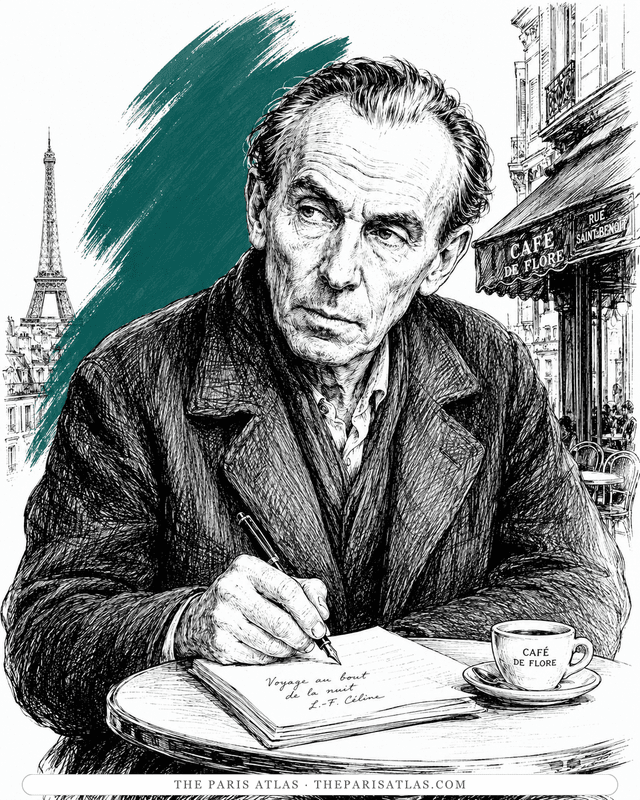
The doctor of the Paris slums who wrote the century's blackest, funniest novel — and changed the sound of French prose.
View author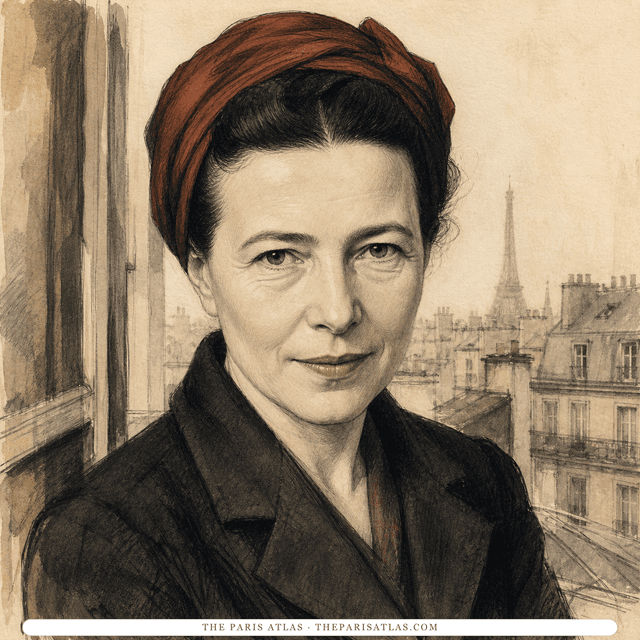
French writer and philosopher whose novels, memoirs, and social analysis examined freedom, gender, responsibility, aging, and the material conditions that shape a life.
View author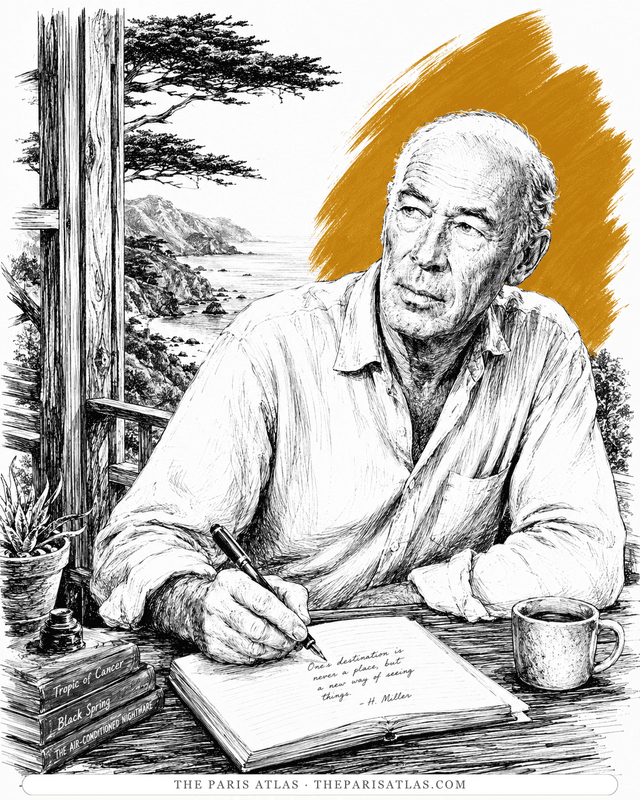
The Brooklyn dropout who arrived in Paris broke at thirty-eight and wrote the exuberant, banned books that ended American censorship.
View authorThe sources below include the primary text, editions, scholarship, archival materials, and other records that informed this page. They document Music for Chameleons, its publication, and its place in literary history.

Penguin Random House's catalogue record: the volume described as reportage, the Creole woman in Martinique, the killer who announces his victims' deaths, the Marilyn Monroe portrait, and the Vintage ISBN.

Gerald Clarke's biography, the standard account of the years between In Cold Blood and this book, and of "Mojave" being moved out of Answered Prayers.
Albin Krebs's obituary: the self-interview quoted in full, the treatment for alcoholism and drug addiction in the late 1970s, and the collapse after the Esquire chapters.
George Plimpton's oral biography, for the recollections of Capote in the late 1970s while these pieces were being written.
The primary text is the baseline reference for every book page. Additional references document publication history, interpretation, and historical context where that evidence is available.
 Explore more resources