The Scarlet Letter
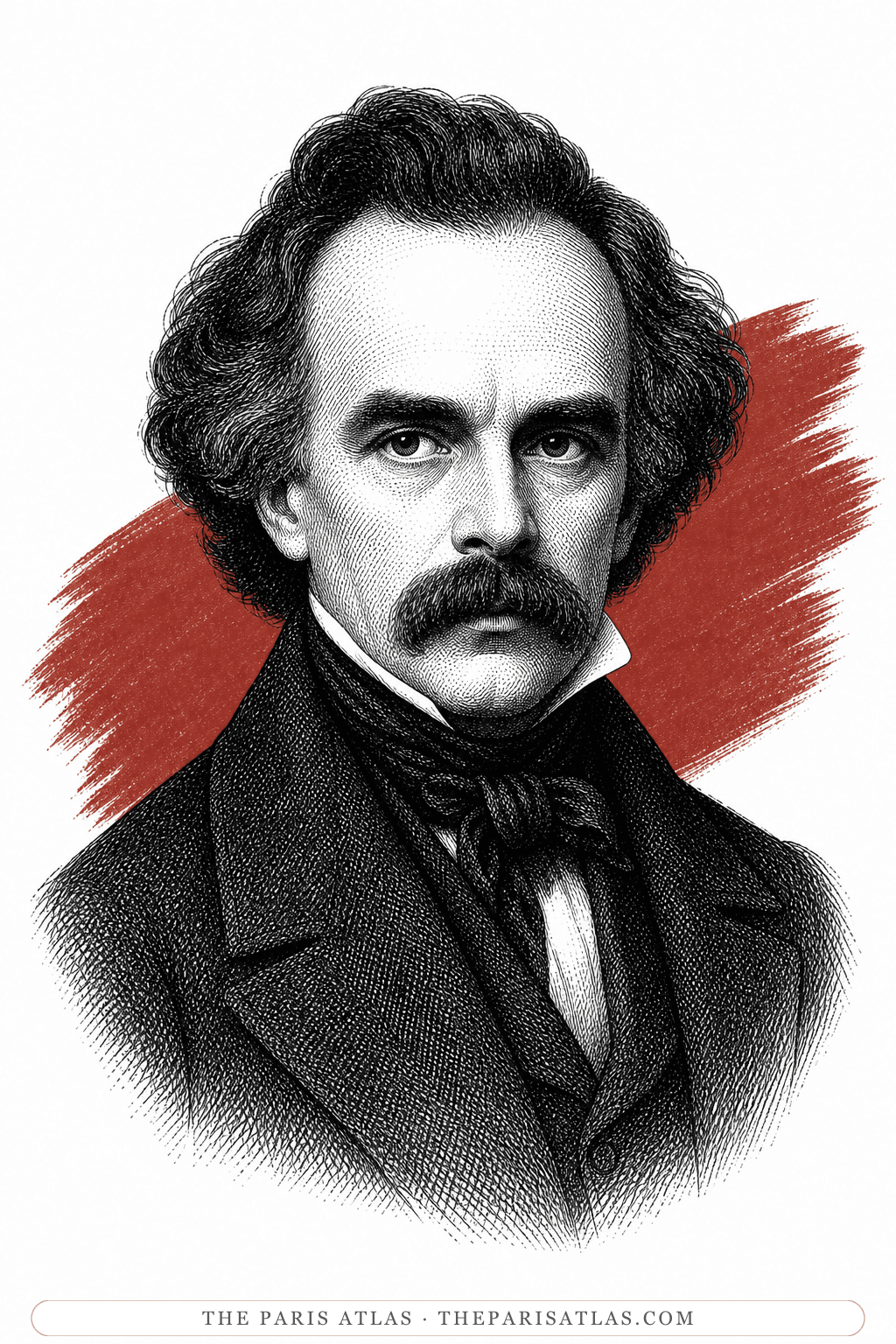
Nathaniel Hawthorne
The Scarlet Letter
Hawthorne's first novel, also about a hidden sin, a confession and a secret shared between a guilty pair.
Read our takeThe Marble Faun
Nathaniel Hawthorne
A young Italian count who looks exactly like an ancient statue of a faun kills a man for the woman he loves, and grows up.
The Marble Faun is the last novel Nathaniel Hawthorne finished, published in 1860. In London its title was Transformation. Four friends live among the artists of Rome. Miriam is a painter with a secret past, and Hilda is a young copyist from New England. Kenyon is an American sculptor, and Donatello is a carefree young Italian count who looks like the Faun of Praxiteles in the Capitol. One night on a cliff above the city, Donatello throws a stranger who has been haunting Miriam to his death. The rest of the book follows what the crime does to all four of them. Hawthorne found the idea in Rome in 1858. On the way home he passed through Paris with the draft, and he finished the book in England.
The idea came from a statue. On 22 April 1858 Hawthorne recorded a visit to the sculpture gallery of the Capitol in Rome, where he looked at the Faun of Praxiteles. In his notebook he imagined a family with faun blood in it, surviving from ancient times to the present. The tail might have been lost through marriage, he wrote, but the hairy ears might still turn up.[1] A week later he went back to the statue. He wrote that he kept thinking of writing a little romance about it.[1]
He began to plan the book that summer in Florence. On 27 July 1858 he noted that he seldom went out, because he was sketching out a romance.[2] The family had rented a large villa on a hill above the city, with an old tower said to be haunted. He told a friend he meant to put the whole villa into his romance. Henry James identified the house as the Villa Montauto, and said it became the Count's castle of Monte Beni.[3]
He wrote the first draft in Rome that winter. He told James T. Fields, his publisher, that he shut himself up for an hour or two every day to come to close grips with it.[4] In late May 1859 the family left Italy by sea for Marseilles. They crossed France to Paris and reached Havre on 21 June, on their way to England.[2] James says Hawthorne carried the novel with him and rewrote it in England.[3]
The rewriting took the rest of 1859. Much of it was done at Redcar, on the Yorkshire coast, and at Leamington. Fields says the manuscript was at the London printer's by November. Hawthorne told him he thought it was much his best romance.[4] He signed the preface at Leamington on 15 December 1859.[5]
The book opens in the sculpture gallery of the Capitol. Miriam, Hilda and Kenyon notice how much their friend Donatello looks like the marble Faun of Praxiteles. Kenyon points out that Donatello's thick curls make it impossible to see whether he has the Faun's pointed ears. Donatello is simple, playful and devoted to Miriam, who teases him.[6]
A strange man follows Miriam everywhere. The friends first met him months earlier in the catacomb of St Calixtus, and he now poses as her model. Miriam is clearly afraid of him. Hilda lives alone at the top of an old tower, where she keeps a lamp burning at a shrine of the Virgin and feeds a flock of white doves.[6]
After a moonlight walk the friends reach the edge of the Tarpeian Rock. Miriam tells Donatello that ancient Rome threw guilty men to their deaths from the cliff. The others walk on, and the model steps out of the shadows toward Miriam. Donatello seizes him and throws him over the edge. Hilda, coming back for Miriam, sees it happen.[6] The next day the dead man lies in state in the Capuchin church, dressed as a monk.[6]
The second volume moves to Monte Beni, Donatello's family castle in the Apennines. Kenyon visits and finds his friend sad, thoughtful and changed. He tries to model a bust of him. Hilda stays alone in Rome, unable to bear what she saw. At last she goes into St Peter's, a Protestant from New England, and pours out the story in a confessional.[7]
Miriam and Donatello meet again under the bronze statue of Pope Julius III in Perugia, and decide to stay together. Back in Rome, Hilda delivers a packet from Miriam to the Palazzo Cenci and disappears. During the Carnival a rosebud thrown from a balcony hits Kenyon, and he looks up to see Hilda again. Across the street, soldiers make an arrest that Kenyon does not see. Bystanders talk about a masked peasant woman and her handsome companion.
Hilda agrees to marry Kenyon, and they plan to go home to America. In the Pantheon, a kneeling woman in a penitent's veil raises her hands to bless them, and they realise it is Miriam. In a Conclusion added for a new edition, Kenyon says Donatello is in a prison dungeon. Asked whether his ears really matched the Faun's, he refuses to say.
Paris comes into the book's story twice. In January 1858 Hawthorne spent a freezing week in the city on his way from England to Rome, where the idea for the novel began. Eighteen months later he came back through Paris on the way to England, carrying the unfinished novel.
The family left Rome at the end of May 1859 and landed at Marseilles. They travelled up the Rhône to Avignon and Lyons, then went on to Geneva. Hawthorne gave up describing the rest of the journey across France. His next entry is dated from a hotel on the quay at Havre on 22 June. The family had arrived the evening before from Paris, and sailed that night for Southampton.
Paris read the book quickly. In 1860 the critic Émile Montégut reviewed the three-volume London edition of Transformation in the Revue des Deux Mondes. He called Hawthorne a pessimist and the novel an allegory of the heart. Retelling the story, he simply states that Donatello's ears were pointed and slightly furry. The novel itself never says so.
The first French translation listed by the Bibliothèque nationale de France came out in Paris in 1949. François Villaret translated it as Le Faune de marbre, with a preface by the critic René Lalou. José Corti published a new translation by Roger Kann in Paris in 1994.
The London publishers, Smith, Elder and Company, did not like Hawthorne's title, The Romance of Monte Beni. He sent them a dozen other ideas. They chose Transformation, and the book came out under that name in London in 1860, in three volumes. Hawthorne complained to Fields that the word gave one the idea of Harlequin in a pantomime. He told his Boston publisher to call it The Marble Faun.
The London firm paid well. Hawthorne told Fields he did not mind whether they liked the book, as long as they published it and paid him his £600. Ticknor and Fields published the American edition in Boston in 1860, in two volumes.
Readers wrote to ask what had really happened, so Hawthorne added a Conclusion to a new edition, dated Leamington, 14 March 1860. He admitted that to anyone asking whether Donatello had furry ears, the book was a failure. Then he answered some of the questions in a scene on the roof of St Peter's. Kenyon explains the packet and Hilda's disappearance, but he will not say anything about the ears.
Kenyon's studio is full of real statues. In the preface Hawthorne owns up to borrowing a bust of Milton and a statue of a pearl-diver from the studio of Paul Akers. He also took the Cleopatra of William Wetmore Story, whom he praised by name. Kenyon's Cleopatra gets a whole chapter of the novel.
Hawthorne joked that he was too honest to steal from a lady, or he would have used Harriet Hosmer's statue of Zenobia too. He also mentioned a bronze door by Randolph Rogers showing the life of Columbus. He said his praise of all these works was his real opinion, and that his sculptor was imaginary.
The preface also explains why the book is set in Italy. Hawthorne wrote that romance needs ruins, and that America had none. Henry James quoted the passage twenty years later. He thought it must have stayed in the minds of many Americans who had tried to set novels at home.
I did what ought to be done to a traitor!” he replied. “I did what your eyes bade me do, when I asked them with mine, as I held the wretch over the precipice!
The deed knots us together, for time and eternity, like the coil of a serpent!
Sin has educated Donatello, and elevated him.
The story moves through the Capitol, the catacombs, the Capuchin church, St Peter's, the Pantheon and the Carnival on the Corso.
The Faun of Praxiteles that gave Hawthorne his idea is the statue the four friends stand in front of in the first chapter, in the sculpture gallery of the Capitol.
He told his publisher he thought it much his best romance.
Kenyon wonders whether sin educated Donatello and made him a better man. Hilda is horrified, and the book leaves the question open.
A young Italian count from the castle of Monte Beni who looks exactly like the Faun of Praxiteles. Carefree and devoted to Miriam until he kills a man for her.
A gifted painter in Rome with a hidden past, a real name the book never gives, and a stranger who follows her everywhere.
A young New England woman who copies Old Master paintings, lives in a tower with her doves, and sees the murder happen.
An American sculptor in Rome, friend to all three, who is in love with Hilda. His studio holds the Cleopatra.
A dark, bearded stranger who appears to the friends in the catacomb of St Calixtus and haunts Miriam as her model. He is found dead dressed as a Capuchin monk, Brother Antonio.
1858
Hawthorne spends a week in Paris in January on the way to Italy. In April he sees the Faun of Praxiteles in the Capitol in Rome and imagines a family with faun blood.
1858
He sketches out the romance in the summer at a villa above Florence, and drafts it in Rome over the winter.
1859
The family crosses France and reaches Havre from Paris on 21 June, on the way to England. He rewrites the book at Redcar and Leamington.
1859
He signs the preface at Leamington on 15 December.
1860
Smith, Elder publish the novel in London as Transformation, and Ticknor and Fields publish it in Boston as The Marble Faun.
1860
Émile Montégut reviews Transformation in the Revue des Deux Mondes in Paris. Hawthorne dates his added Conclusion 14 March.
1949
The first French translation listed by the Bibliothèque nationale de France, Le Faune de marbre, is published in Paris.
1994
José Corti publishes Roger Kann's new French translation in Paris.


The Scarlet Letter
Nathaniel Hawthorne
Hawthorne's first novel, also about a hidden sin, a confession and a secret shared between a guilty pair.
Read our takeMosses from an Old Manse
Nathaniel Hawthorne
His stories of the 1840s include "Rappaccini's Daughter", an earlier tale of Americans abroad in an Italian city.
Read our takeThe House of the Seven Gables
Nathaniel Hawthorne
His novel of 1851, about how an old crime shapes the people who come after it.
Read our take
Lord Byron's fourth canto walks through the same Rome of ruins, the Pantheon and St Peter's.
Read our takeFour friends in the artists' world of Rome: Miriam, a painter with a secret; Hilda, a young copyist from New England; Kenyon, an American sculptor; and Donatello, a young Italian count who looks like an ancient statue of a faun. Donatello kills the man who haunts Miriam, and the book follows what the crime does to each of them.
The London publishers, Smith, Elder, disliked Hawthorne's title and chose Transformation for the English edition of 1860. Hawthorne said the word made him think of Harlequin in a pantomime. He had his Boston publisher call the book The Marble Faun.
Hilda comes back after disappearing and agrees to marry Kenyon. Miriam blesses them in the Pantheon from a distance. In the Conclusion Kenyon says Donatello is in prison, and Miriam is free because her crime lay only in a glance.
The book never says. In the Conclusion the narrator asks Kenyon directly, and Kenyon replies that he knows but may not tell. Hawthorne admitted that for readers who needed to know, the book was a failure.
Yes. Hawthorne saw it in the sculpture gallery of the Capitol in Rome in April 1858 and wrote in his notebook about a family with faun blood. The novel opens in front of the same statue.
Yes. Hawthorne passed through Paris on his way to Rome in January 1858. He came back through Paris with the draft in June 1859, on the way to Havre and England. Émile Montégut reviewed the book in the Revue des Deux Mondes in 1860, and the first French translation came out in Paris in 1949.
Several were. Hawthorne's preface says he borrowed pieces by Paul Akers and the Cleopatra of William Wetmore Story for Kenyon's studio, and mentions works by Harriet Hosmer and Randolph Rogers. Only Kenyon himself is imaginary.
Explore authors with a similar voice, perspective, and influence.

The doctor of the Paris slums who wrote the century's blackest, funniest novel — and changed the sound of French prose.
View author
American novelist and composer whose expatriate fiction explores dislocation, unstable intimacy, fatalism, and North Africa.
View author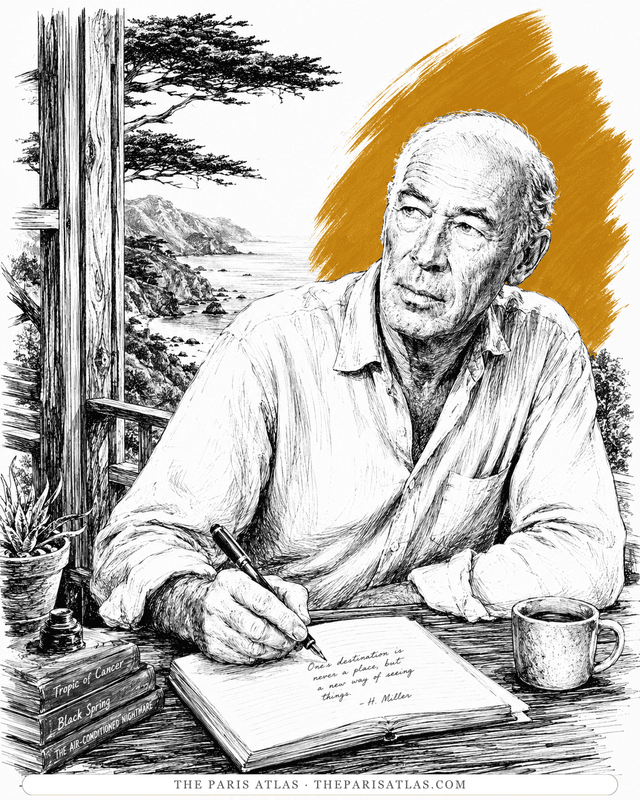
The Brooklyn dropout who arrived in Paris broke at thirty-eight and wrote the exuberant, banned books that ended American censorship.
View authorThe sources below include the primary text, editions, scholarship, archival materials, and other records that informed this page. They document The Marble Faun, its publication, and its place in literary history.


A scan of the 1860 Ticknor and Fields first edition, for the preface, which the Project Gutenberg text leaves out.
The primary text of the second volume, with the Conclusion added in 1860.

Émile Montégut's 1860 review in the Revue des Deux Mondes, as transcribed on French Wikisource.
The Bibliothèque nationale de France record for the 1949 Paris translation.
The BnF record for Roger Kann's 1994 translation.
Library catalogue records for every modern ISBN listed.
The primary text represented by this page, used for descriptions of the work’s contents and for any quoted passages shown here.
The primary text is the baseline reference for every book page. Additional references document publication history, interpretation, and historical context where that evidence is available.
 Explore more resources