Author of The Scarlet Letter, who passed through Paris for one week in January 1858 on his way from the American consulate at Liverpool to Italy — and wrote it all down. He found the city more magnificent than London and colder than anything in America: "new, bright, magnificent, and desperately cold." He left saying he was quite tired of Paris and longed for home.
5 books on our shelves
Details
Lived
1804–1864
Born
1804
Birthplace
Salem, Massachusetts
Died
1864
Place of death
Plymouth, New Hampshire
Nationality
American
Profession
Novelist and short-story writer
Major works
The Scarlet Letter, The House of the Seven Gables, Twice-Told Tales, The Marble Faun
Married
Sophia Peabody · 1842–1864
Roles
Author
About Nathaniel Hawthorne
Nathaniel Hawthorne wrote the first great American novel about guilt, and he did it after four years of counting cargo on a wharf. Born in Salem, Massachusetts, in 1804, descended from a judge who had sat at the Salem witch trials, he spent twelve years after college writing stories almost nobody read, then took government jobs to eat. He was Surveyor of the port of Salem in the town's Custom House when the incoming administration removed him in 1849. Furious and unemployed, he wrote The Scarlet Letter in a few months, and it changed American literature.
His Paris is a brief, honest, thoroughly cold episode. In 1853 his old college friend Franklin Pierce, newly elected President of the United States, made him American consul at Liverpool; when the post ended he took his family to Italy, and the route ran through Paris. They arrived on a freezing afternoon in January 1858, took rooms at the Hôtel du Louvre with the Musée du Louvre literally across the street, and stayed a week. Hawthorne recorded it day by day in the notebook later published as Passages from the French and Italian Note-Books: the frost on the carriage windows, the mud, the Zouave soldiers in the street, the sculpture galleries that exhausted him — and the verdict of a homesick New Englander that nothing in Paris really lives. It is one of the most useful accounts of the city we have, precisely because the man writing it did not want to be charmed.
Salem, and twelve years of silence
Hawthorne was born at Salem, Massachusetts, on 4 July 1804 — the national holiday, a coincidence he was teased about all his life. His family were old New England Puritans; one ancestor, John Hathorne, had been a judge at the Salem witchcraft trials of 1692, and the young writer is generally thought to have added the w to the family name to put distance between himself and that. His father, a sea captain, died abroad when the boy was four.[1]
He entered Bowdoin College in Brunswick, Maine, at sixteen. Two fellow students there shaped the rest of his life: Henry Wadsworth Longfellow, who became the most popular poet in America and later reviewed him generously, and Franklin Pierce, who became President of the United States. After graduating, Hawthorne went home to Salem and spent roughly twelve years writing tales in near-total obscurity, publishing them anonymously in magazines and gift books. Twice-Told Tales (1837) collected them; the book was admired by the few and bought by almost nobody.
Writing did not pay, so he took public salaries. He worked in the Boston Custom House from 1839 at $1,200 a year, spent a single summer in 1841 at Brook Farm — the utopian cooperative farm outside Boston where reformers proposed to live by shared manual labour, an experience he later turned into the novel The Blithedale Romance — and in July 1842 married Sophia Peabody. The couple moved into the Old Manse at Concord, the parsonage built by the grandfather of Ralph Waldo Emerson and the house where Emerson had written much of Nature. They stayed three years, and Hawthorne called them among the happiest of his life. He gave the house's name to his next collection, Mosses from an Old Manse (1846).[2]
The Custom House and the letter
In 1846 Hawthorne went back to Salem as Surveyor of the port, an appointment from President Polk's administration, working in the granite-and-brick Custom House built on Derby Wharf in 1819 — the office where merchants' cargoes were assessed for duty. The job paid, and it stopped him writing almost entirely. In 1849 a change of administration cost him the post. The dismissal was a public humiliation and it is the reason The Scarlet Letter exists: he wrote it in the months that followed.[3]
He put the Custom House itself into the book. The Scarlet Letter opens with a long, funny, bitter introductory sketch called "The Custom-House," in which the narrator — a surveyor exactly like Hawthorne — pokes around the building's unused upper storey and finds a package left by a predecessor, Surveyor Jonathan Pue. Inside is "a certain affair of fine red cloth, much worn and faded," embroidered in gold by a forgotten art, which on examination "assumed the shape of a letter. It was the capital letter A. By an accurate measurement, each limb proved to be precisely three inches and a quarter in length." He puts it on his chest and feels it burn. The device lets Hawthorne present his novel as a rediscovered document rather than an invention — and lets him settle scores with the customs service on the way in.[4]
The novel itself, published in 1850, is short and merciless. In Puritan Boston in the 1640s, Hester Prynne bears a child who is not her absent husband's and refuses to name the father. The court sentences her to wear a scarlet letter A, for adulteress, on her dress for life. She serves the sentence in public, raises her daughter, embroiders the badge into something magnificent and outlives the shame. The father, whom the reader identifies early, is the town's young minister, Arthur Dimmesdale, who says nothing and is destroyed from the inside by the concealment; the husband arrives under a false name and devotes himself to finding and torturing the guilty man. The point of the book is not the sin. It is that the confessed sinner survives and the concealed one rots — and that the community doing the punishing is the least admirable party in it.
It made him famous immediately. The House of the Seven Gables followed in 1851, a novel about an ancestral curse on a Salem family that is transparently about his own; The Blithedale Romance came in 1852. That year he wrote a short campaign biography of his old Bowdoin friend Franklin Pierce, who was running for President. Pierce won, was inaugurated on 4 March 1853, and appointed Hawthorne United States consul at Liverpool — a lucrative post in the busiest port in the British Empire, and the reason the Hawthornes spent the next seven years abroad.
Paris, January 1858
Hawthorne gave up the consulate at the close of 1857 and set off for Italy with his wife and children. They left London on a bitter Tuesday morning before dawn, in two cabs, with a dozen trunks and half a dozen carpet-bags, and crossed from Folkestone to Boulogne with tin foot-warmers full of hot water that did not work. Frost clouded the carriage windows all the way down through Amiens. "At five we reached Paris," he wrote, and they drove to the Hôtel du Louvre, where a waiter lit a wax candle in every room of their suite.
The cold ran through the whole week. "It was so fearfully cold this morning," he wrote on 8 January, "that I really felt little or no curiosity to see the city," and until one o'clock he knew nothing of Paris but the lights he had seen the night before far below the window in the narrow Rue Saint-Honoré and the rumble of wheels that started again before dawn. When he finally went out along the Rue de Rivoli, the city hit him harder than he expected: "The splendor of Paris, so far as I have seen, takes me altogether by surprise: such stately edifices, prolonging themselves in unwearying magnificence and beauty… I never knew what a palace was till I had a glimpse of the Louvre and the Tuileries; never had my idea of a city been gratified till I trod these stately streets." He had lived four years in England and did not soften it: "London is not to be mentioned, nor compared even, with Paris."[5]
What I have seen of Paris is wholly unlike what I expected; but very like an imaginary picture which I had conceived of St. Petersburg, — new, bright, magnificent, and desperately cold.[5]
He knew why it looked new: the emperor Napoleon III was in the middle of rebuilding the city, and Hawthorne, walking through the results, remarked drily that a traveller "ought to wish him a long reign and arbitrary power, since he makes it his policy to illustrate his capital with palatial edifices, which are, however, better for a stranger to look at, than for his own people to pay for." He went down the Rue Saint-Honoré to the spot where Henri IV was assassinated, along the Rue Saint-Denis, and out to the Madeleine, the great colonnaded church he judged "glorious and gorgeous" and permanently pagan-looking. He noted the Zouaves in the street — French colonial infantry in turbans and long mantles — and admitted, flatly and without apology, "Truly, I have no sympathies towards the French people."
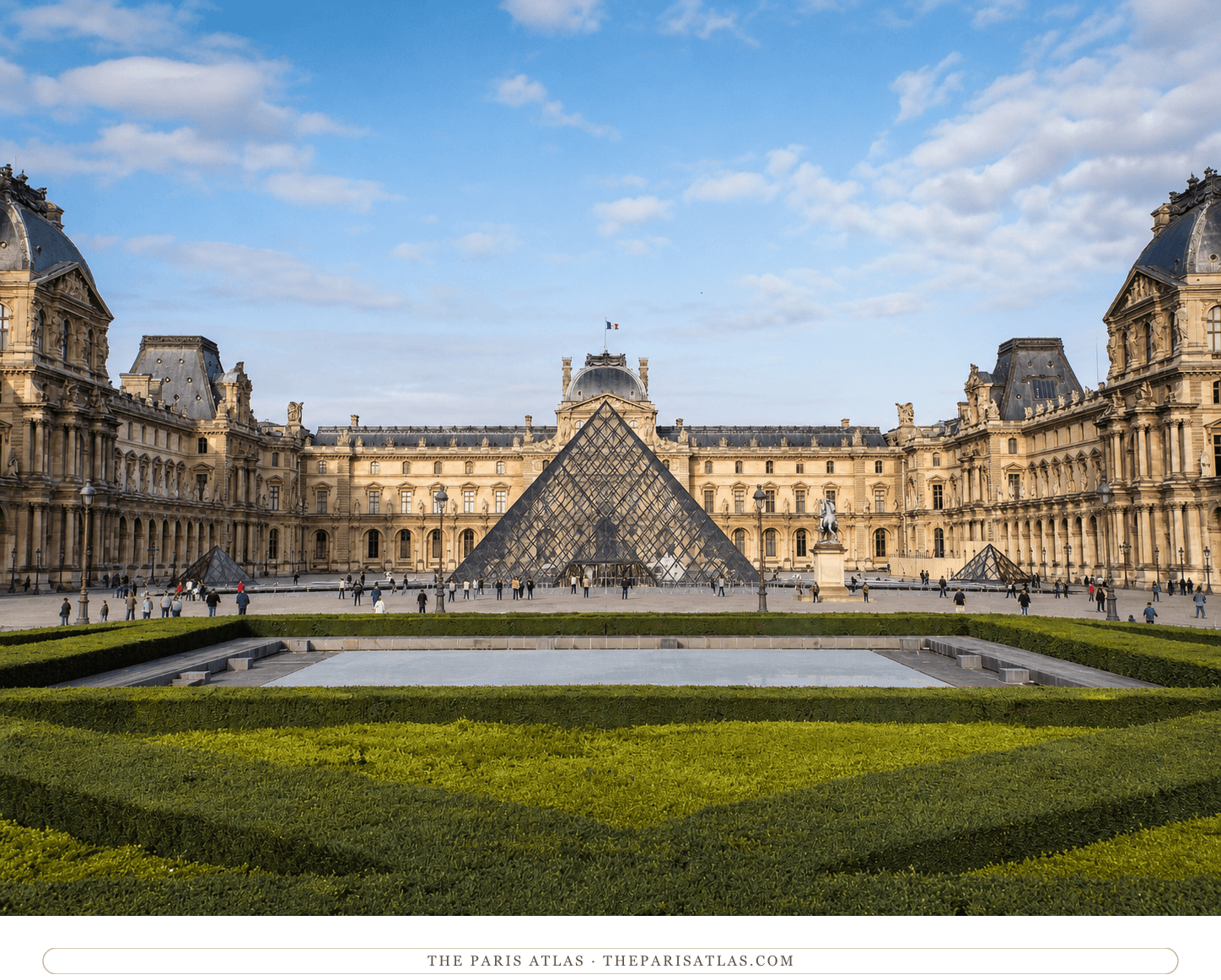
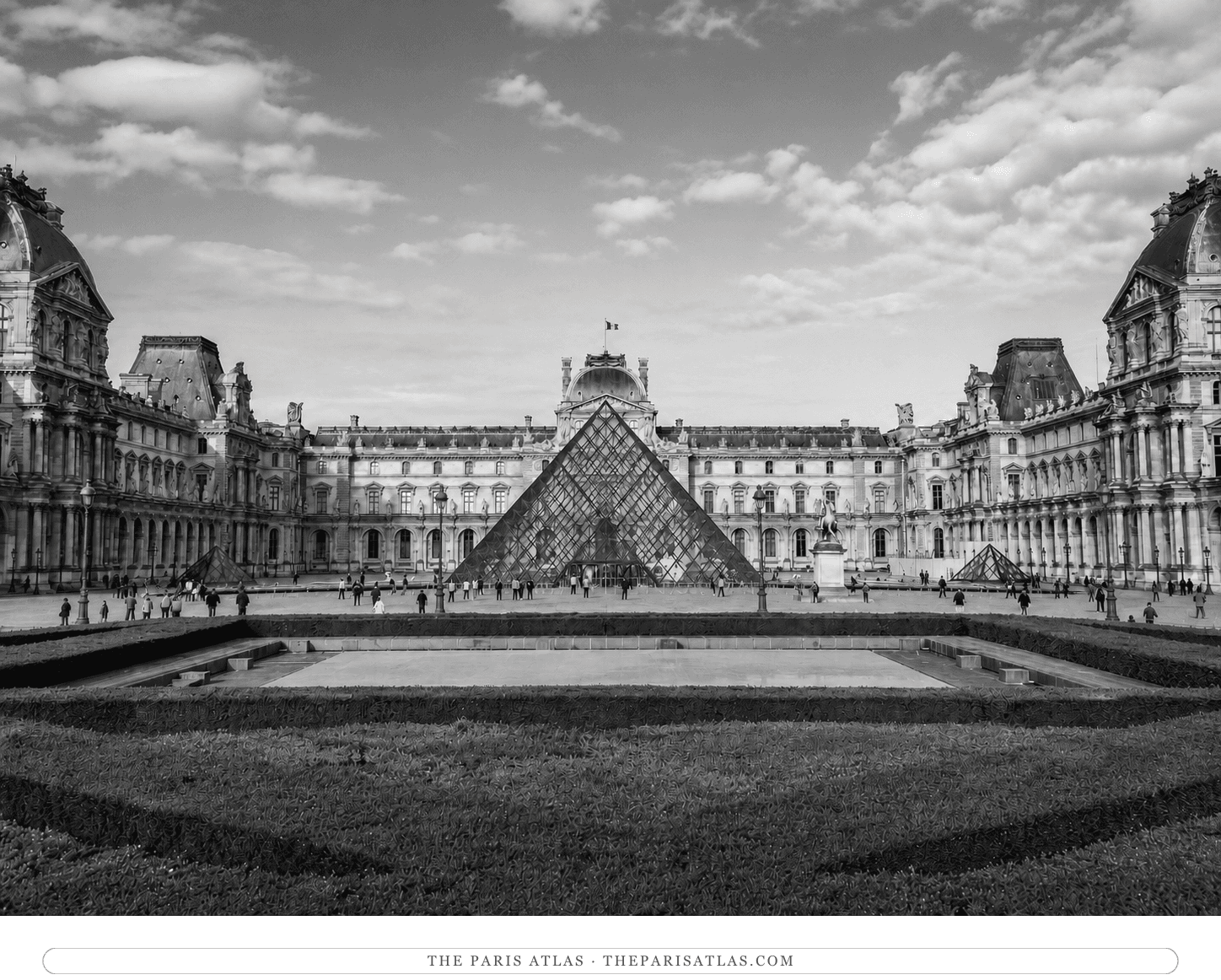
On Sunday 10 January the weather was too bad to reach the cathedral, "so we merely went across the street to the Musée du Louvre." They had come for the collection of master drawings — Raphael, Leonardo, Michelangelo, Rubens, Rembrandt — and Hawthorne, who was not a visual man, wilted. "To an artist, the collection must be most deeply interesting: to myself, it was merely curious, and soon grew wearisome… I was wearied to death with the drawings." He liked two miniature portraits of Benjamin Franklin, one with cloud-like white hair, and spent much of the visit watching the Sunday crowd instead of the art: soldiers with Crimean medals, policemen in cocked hats with swords, working women in coloured gowns and caps. Pressed on for the sculpture galleries, he walked hall after hall of polished marble and confessed he was more impressed by the French genius for arranging antiquities than by the antiquities.[5]
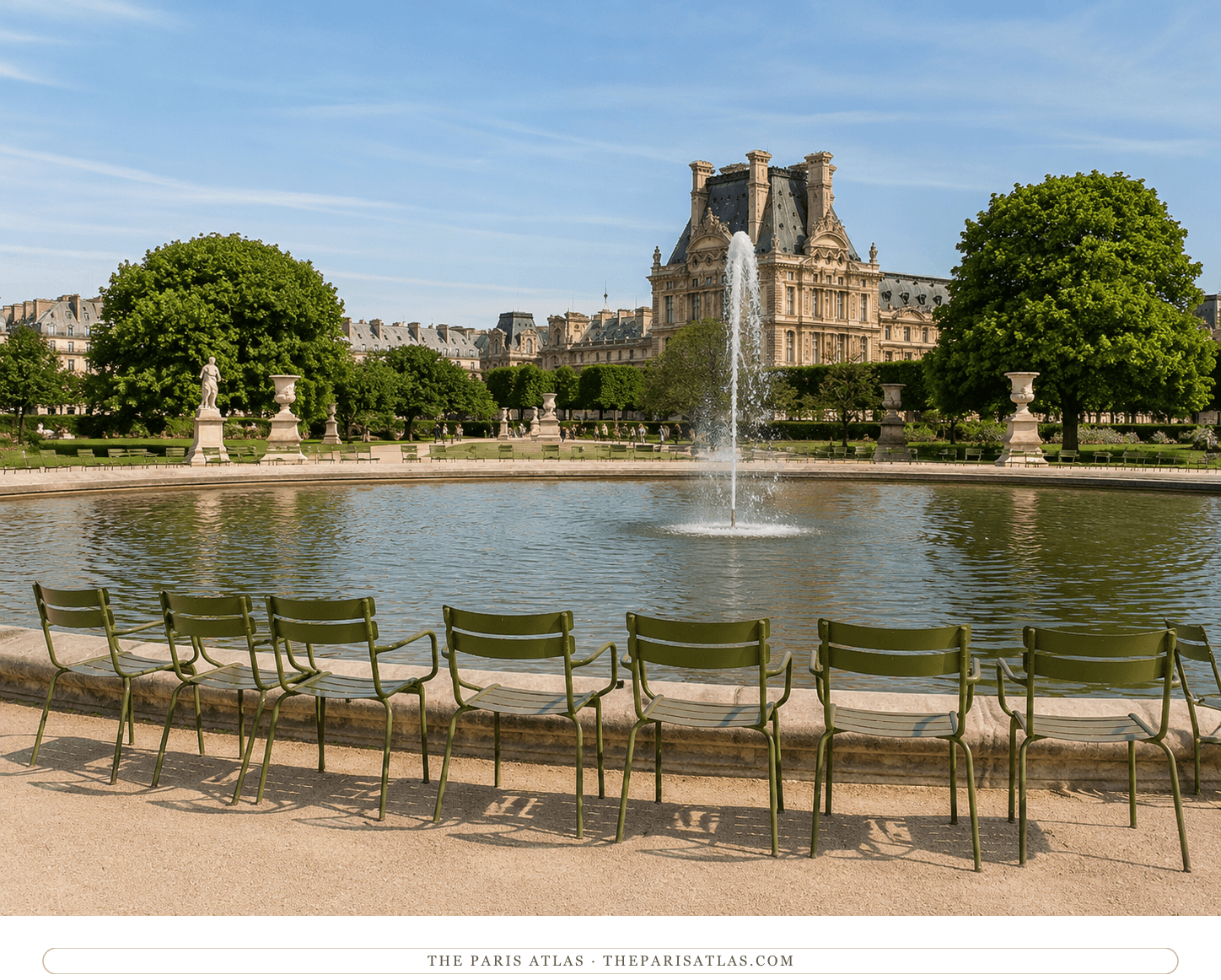
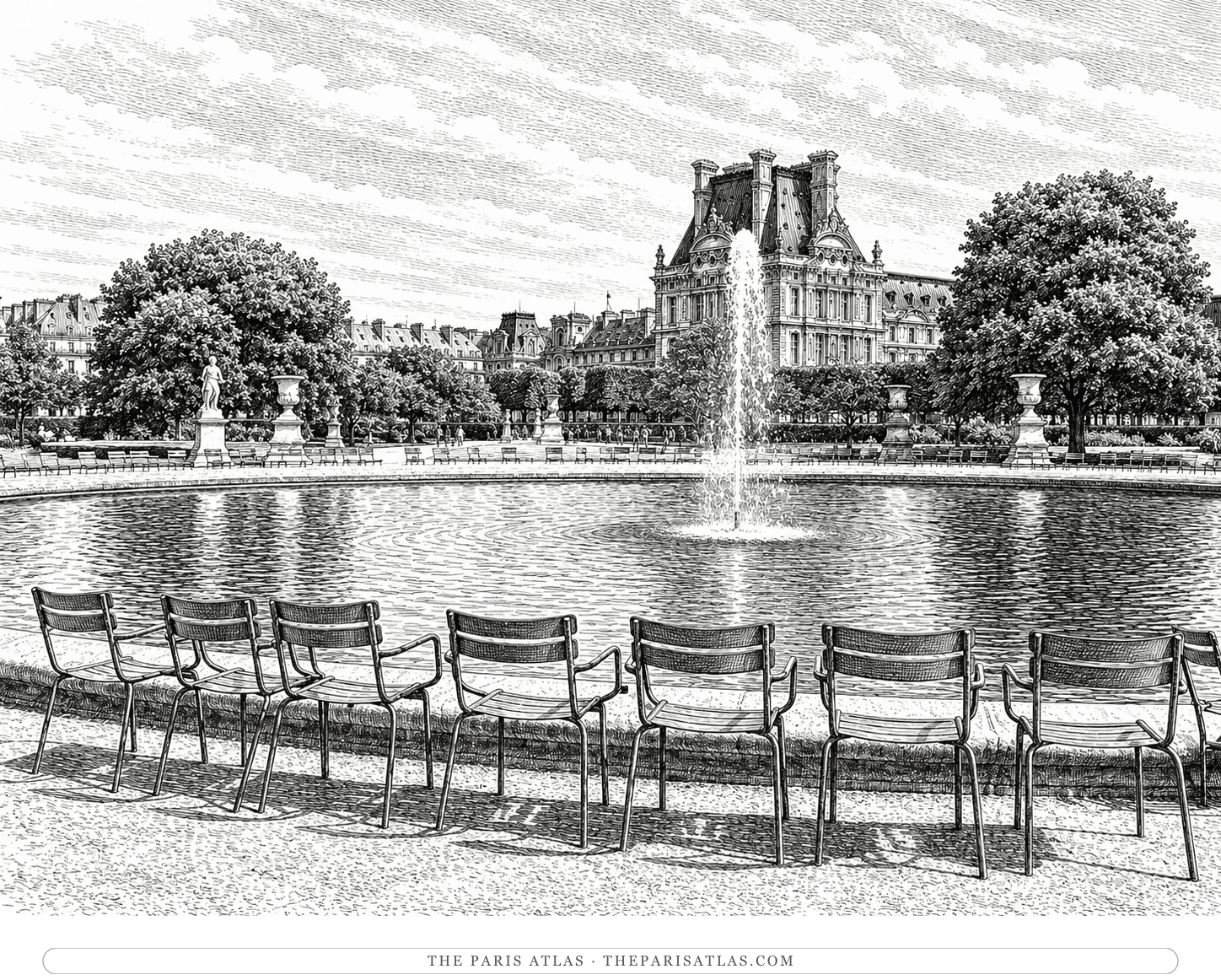
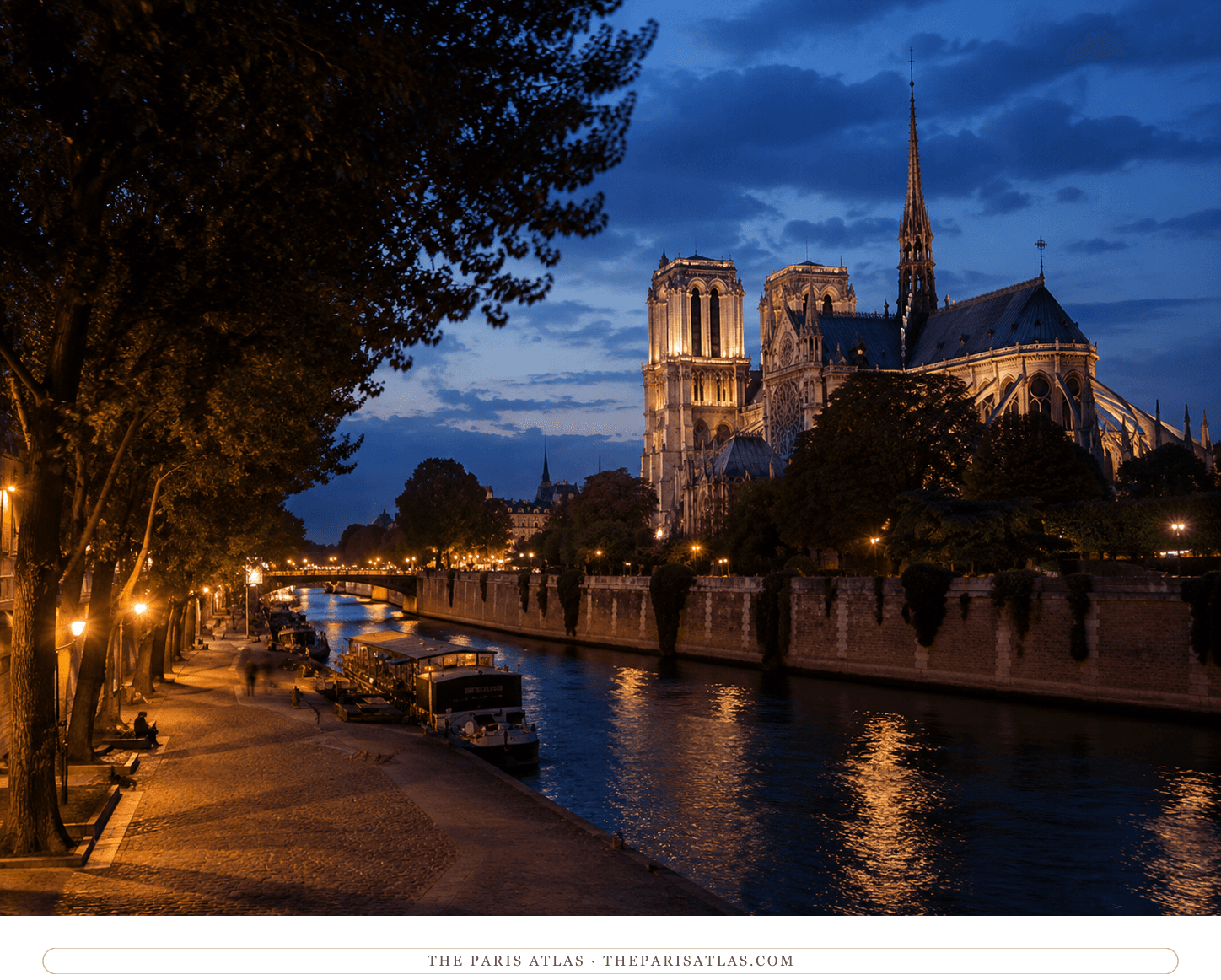
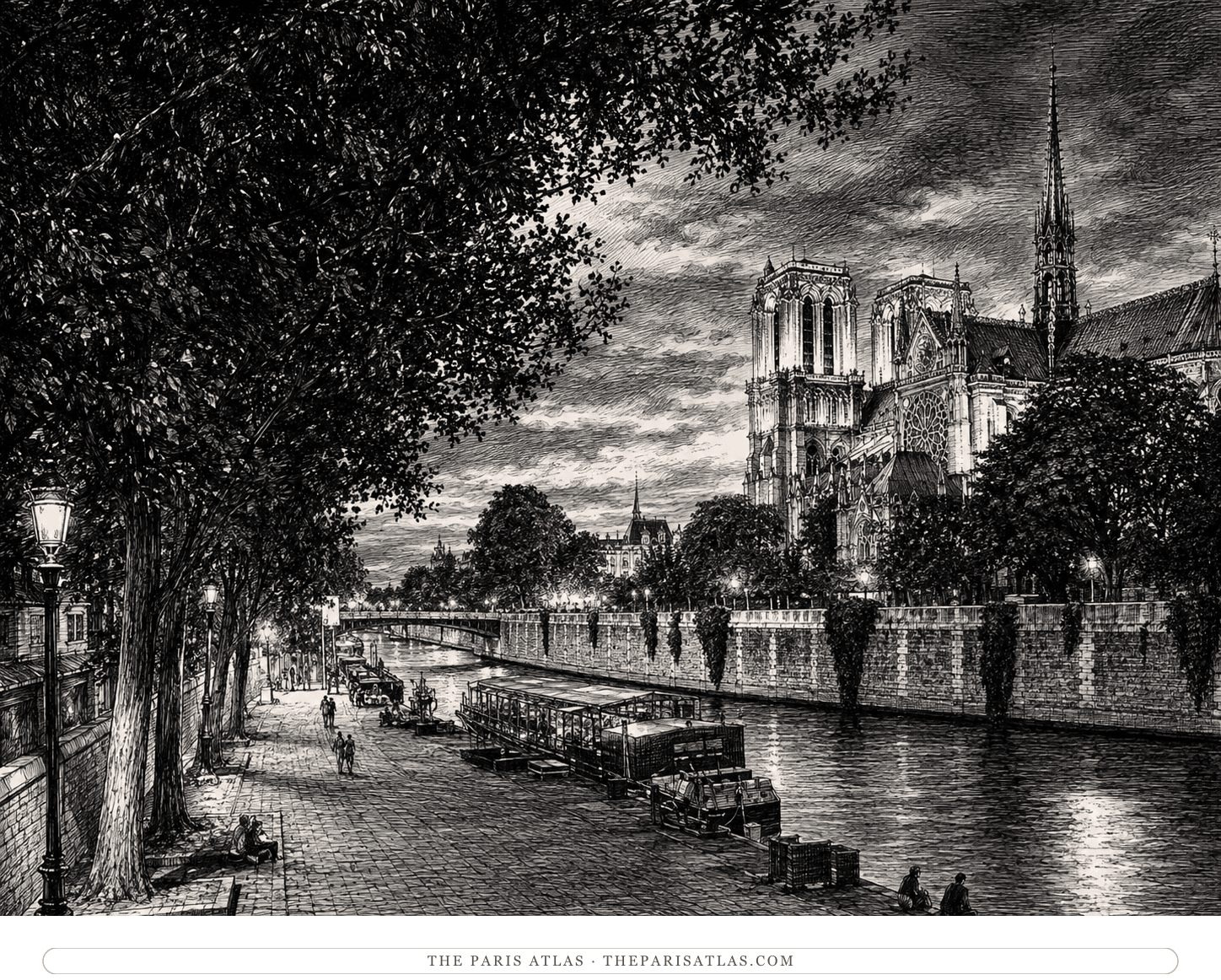
He went twice to Notre-Dame and studied the carved histories in the arches of its three west doorways, but got "no sense of immensity from it, not even that of great height, as from many of the cathedrals in England"; behind it he found a poor quarter and an old woman selling crucifixes of pearl and wood at the door, from whom the family bought two. He complained about the mud — "I never before saw a pavement so universally overspread with mud-padding as that of Paris" — and walked in the Jardin des Tuileries at dusk, worried about being locked in behind the railings, noting that the ground was bare earth rather than grass and the trees needed replacing every few years.[5]
That observation produced his verdict on the city, and it is characteristic — a note about park maintenance that turns into a judgement on a civilisation. "The same is true of the human race," he wrote, "families becoming extinct after a generation or two of residence in Paris. Nothing really thrives here; man and vegetables have but an artificial life, like flowers stuck in a little mould, but never taking root. I am quite tired of Paris, and long for a home more than ever." On Tuesday morning, 12 January, they left the Hôtel du Louvre for Marseilles, driving out past the square where the Bastille had stood. He never came back.
Italy, decline, and a room in New Hampshire
Italy gave him his last novel. After nearly two years in Rome and Florence he wrote The Marble Faun (1860), a long, strange book about four young artists and a killing in Rome, built out of the same notebooks that hold the Paris week. The family returned to America in 1860 after seven years abroad, to a country sliding into civil war.[1]
He wrote little more. Four novels were begun and abandoned; his health failed without any nameable disease; and his public loyalty to Franklin Pierce, by then reviled in the North for his conciliation of the slave states, cost him friends. In May 1864 Pierce proposed a carriage tour through the New Hampshire mountains to see whether a change of air would help. They got as far as Plymouth, New Hampshire, and stopped at the Pemigewasset House, a large white hotel by the railway station. Going into his friend's room early in the morning, Pierce found that Hawthorne had died in his sleep during the night of 18–19 May 1864, without a sound. He was buried at Concord, on the ridge at Sleepy Hollow Cemetery where Ralph Waldo Emerson would be laid eighteen years later, and where Henry David Thoreau already lay.
The house on Turner Street in Salem that had suggested The House of the Seven Gables is now a museum, and the Custom House on Derby Wharf is preserved by the National Park Service with his office in it. Herman Melville, who had met him at a Berkshire picnic in 1850 and dedicated Moby-Dick to him the following year, outlived him by twenty-seven years and was himself forgotten for most of them. Hawthorne never was: The Scarlet Letter has not been out of print since 1850.
Life events
1804
Born at Salem, Massachusetts, on 4 July, into an old Puritan family.
— Henry James, Hawthorne (English Men of Letters series) (1879)
1821
Enters Bowdoin College at Brunswick, Maine, in his seventeenth year; his fellow students include Henry Wadsworth Longfellow and the future president Franklin Pierce.
— Henry James, Hawthorne (English Men of Letters series) (1879)
1837
Twice-Told Tales collects a dozen years of anonymous magazine stories.
— Henry James, Hawthorne (English Men of Letters series) (1879)
1842
Marries Sophia Peabody in July and moves into the Old Manse at Concord, the Emerson family parsonage, for three years.
— Henry James, Hawthorne (English Men of Letters series) (1879)
1846
Returns to Salem as Surveyor of the port, working in the Custom House on Derby Wharf; he all but stops writing.
— Henry James, Hawthorne (English Men of Letters series) (1879); Nathaniel Hawthorne — the museum's collection notes on his Salem customs documents
1850
Dismissed from the surveyorship the year before, he publishes The Scarlet Letter, prefaced by the Custom-House sketch in which the letter is found in an attic package.
— Nathaniel Hawthorne, The Scarlet Letter (Project Gutenberg etext, including the introductory sketch The Custom-House) (1850); Henry James, Hawthorne (English Men of Letters series) (1879)
1851
The House of the Seven Gables; The Blithedale Romance follows in 1852.
— Henry James, Hawthorne (English Men of Letters series) (1879)
1853
Franklin Pierce, for whom Hawthorne wrote a campaign biography, is inaugurated on 4 March and appoints him United States consul at Liverpool; he takes up the post at midsummer.
— Henry James, Hawthorne (English Men of Letters series) (1879)
1858
Reaches Paris at five o'clock after crossing from Folkestone to Boulogne, and takes a suite at the Hôtel du Louvre; the notebook entries run from 6 to 12 January.
— Nathaniel Hawthorne, Passages from the French and Italian Note-Books, Volume 1 (Project Gutenberg etext) (1871)
1858
10 January: crosses the street to the Louvre for the master drawings and the sculpture galleries — "I was wearied to death with the drawings."
— Nathaniel Hawthorne, Passages from the French and Italian Note-Books, Volume 1 (Project Gutenberg etext) (1871)
1858
Leaves for Marseilles on Tuesday morning, 12 January, having written: "Nothing really thrives here… I am quite tired of Paris, and long for a home more than ever."
— Nathaniel Hawthorne, Passages from the French and Italian Note-Books, Volume 1 (Project Gutenberg etext) (1871)
1860
Publishes The Marble Faun, drawn from the Italian notebooks, and returns to America after seven years abroad.
— Henry James, Hawthorne (English Men of Letters series) (1879)
1864
Dies in his sleep at Plymouth, New Hampshire, during the night of 18–19 May, on a carriage tour with Franklin Pierce; buried at Sleepy Hollow Cemetery, Concord.
— Henry James, Hawthorne (English Men of Letters series) (1879)
People Nathaniel Hawthorne Knew
Relationships with other people, with sources for each connection.
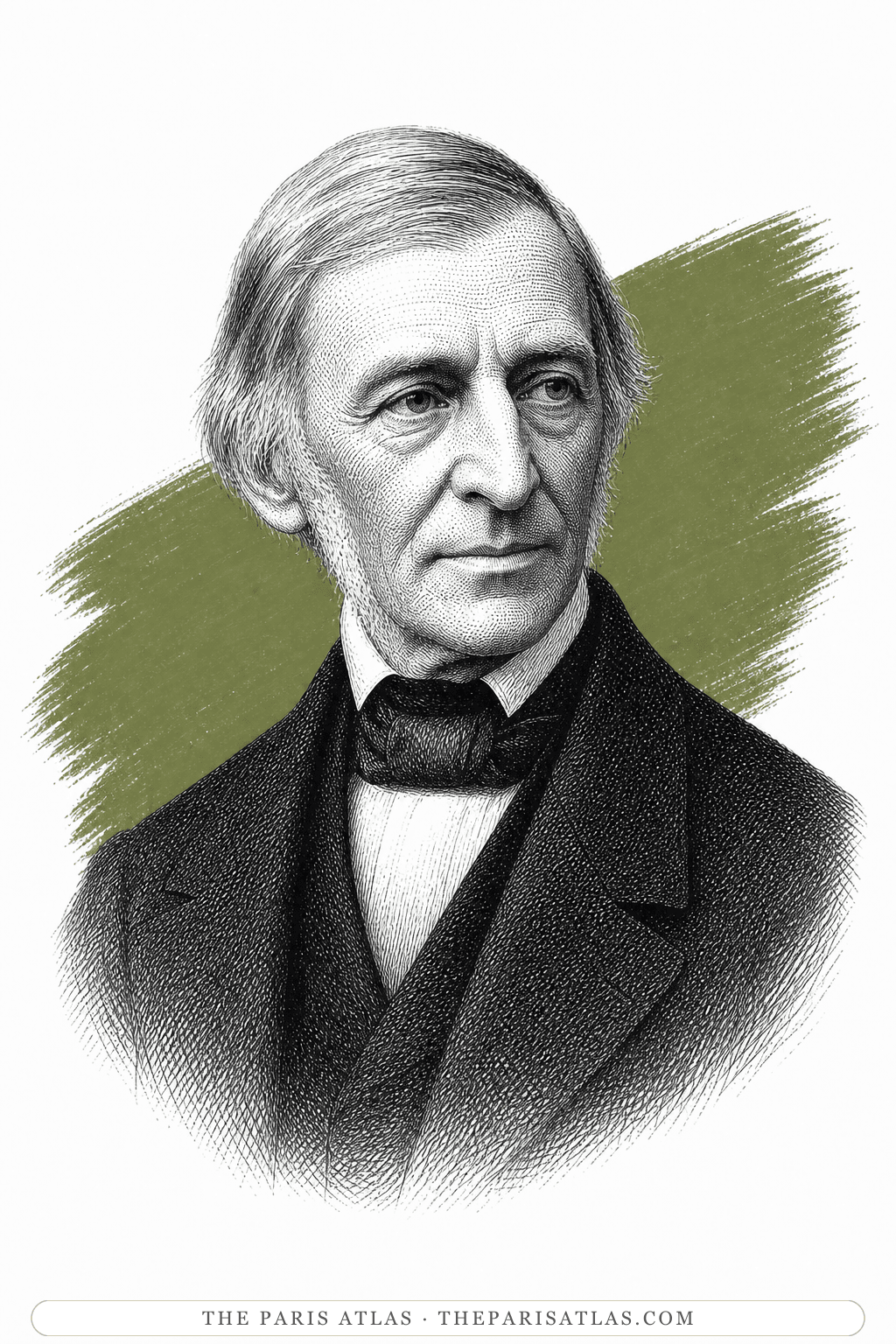
Neighbours at Concord from 1842, when the newly married Hawthornes took the Old Manse — the parsonage built by Emerson's grandfather, where Emerson had written much of Nature. Hawthorne was no Transcendentalist and said so, but left one of the best descriptions of Emerson anyone wrote. Both are buried at Sleepy Hollow Cemetery in Concord.
— Henry James, Hawthorne (English Men of Letters series) (1879), Chapter IV, Brook Farm and Concord; James Elliot Cabot, A Memoir of Ralph Waldo Emerson, in two volumes (1887)
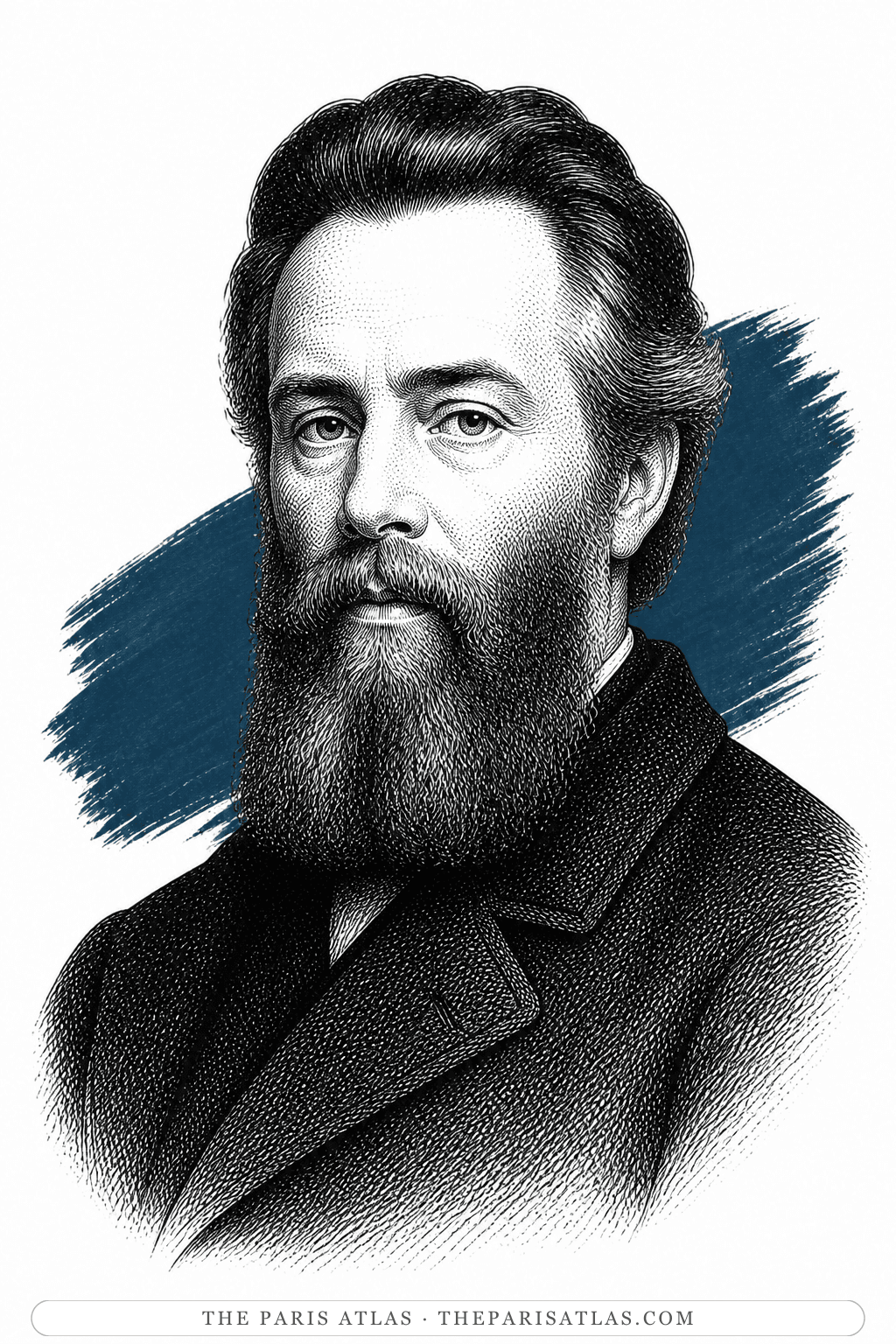
At a walking picnic up Monument Mountain in the Berkshire hills in the summer of 1850, the year both writers settled there. Melville was thirty-one and midway through the whale book; Hawthorne was forty-six and newly famous for The Scarlet Letter.
— Herman Melville and Arrowhead — the museum's account of the Pittsfield years; Raymond M. Weaver, Herman Melville, Mariner and Mystic (1921), Chapter XV, A Neighbour of Hawthorne's
Who Nathaniel Hawthorne Inspired
People who found inspiration in Nathaniel Hawthorne’s work.
Melville met Hawthorne in the summer of 1850 while writing Moby-Dick, and put his name on the front of the finished book. The dedication is the evidence in Melville's own words.
— Herman Melville, Moby-Dick; or, The Whale (Project Gutenberg etext, dedication and text) (1851), Dedication; Raymond M. Weaver, Herman Melville, Mariner and Mystic (1921), Chapter XV, A Neighbour of Hawthorne's
Once, for a week, in January 1858 — travelling from the American consulate at Liverpool to Italy with his wife and children. They crossed from Folkestone to Boulogne, reached Paris at five in the afternoon, and stayed at the Hôtel du Louvre, directly across the street from the museum. He kept a daily notebook, published after his death as Passages from the French and Italian Note-Books, with entries running from 6 to 12 January. It is a full, unglamorous, precisely observed account, and it is the only time he saw the city.
What did Hawthorne think of Paris?
Magnificent and lifeless. He was startled by the architecture — "I never knew what a palace was till I had a glimpse of the Louvre and the Tuileries" — and blunt that it beat the city he had just spent four years in: "London is not to be mentioned, nor compared even, with Paris." But he was frozen the whole week, disgusted by the mud, and had no warmth towards the people. His parting judgement came out of the bare earth in the Tuileries gardens: "Nothing really thrives here; man and vegetables have but an artificial life, like flowers stuck in a little mould, but never taking root. I am quite tired of Paris, and long for a home more than ever."
What is The Scarlet Letter about?
Puritan Boston in the 1640s. Hester Prynne has a child by a man who is not her husband and refuses to name him, and the court sentences her to wear a scarlet letter A — for adulteress — on her dress for the rest of her life. She serves the sentence in the open, raises her daughter Pearl alone, and embroiders the badge into something splendid. The father is the young minister Arthur Dimmesdale, who keeps silent and is eaten alive by the secret; the wronged husband turns up under a false name and dedicates himself to torturing whoever it was. The novel's argument is that public shame is survivable and private concealment is not — and that the punishing community is the worst actor in the story.
What is "The Custom-House" chapter, and is it part of the novel?
It is the introductory sketch printed at the front of The Scarlet Letter, and it is not fiction in the ordinary sense: it is Hawthorne describing his own years as Surveyor of the port of Salem, sardonically, and settling scores over his dismissal. Its plot function is to plant the manuscript. The narrator finds, in the Custom House's disused attic, a package left by a long-dead surveyor named Jonathan Pue containing "a certain affair of fine red cloth" that turns out to be the letter A, three and a quarter inches to a limb — and, with it, the record of Hester Prynne's story. Many readers skip it. It is the best comic prose Hawthorne wrote.
Why did Hawthorne work in a custom house?
Because writing did not feed a family. Custom houses collected duty on imported cargo, and their posts were political appointments in the gift of whichever administration was in power. Hawthorne worked in the Boston Custom House from 1839 and was made Surveyor of the port of Salem in 1846, in the Custom House built on Derby Wharf in 1819 and now preserved by the National Park Service. Government pay stopped him writing almost completely. When a change of administration cost him the Salem post in 1849, he sat down and wrote The Scarlet Letter.
What was Hawthorne's connection to Emerson and Concord?
He was Emerson's tenant and then his neighbour. After marrying Sophia Peabody in 1842 the Hawthornes moved into the Old Manse in Concord — the parsonage built by Ralph Waldo Emerson's grandfather, where Emerson himself had written much of Nature — and lived there three years, which Hawthorne counted among his happiest. He was not a Transcendentalist and said so, but he wrote one of the finest descriptions of Emerson anyone managed: it was good, he said, to meet him in the wood-paths "with that pure intellectual gleam diffused about his presence, like the garment of a shining one." They are buried in the same Concord cemetery.
What was the Liverpool consulship?
A government job, and the most profitable thing Hawthorne ever did. He wrote a short campaign biography of his old Bowdoin classmate Franklin Pierce, who won the presidency in 1852; Pierce was inaugurated on 4 March 1853 and made Hawthorne United States consul at Liverpool, then the busiest port in the British Empire, where the consul's fees on shipping business made the post lucrative. He served from midsummer 1853 until the close of 1857, and the family's seven years abroad — England, then France for a week, then Italy — produced the English, French and Italian notebooks and his last novel, The Marble Faun.
How did Nathaniel Hawthorne die?
In his sleep, at sixty. He had been failing for a year with nothing a doctor could name, and in May 1864 Franklin Pierce took him on a carriage tour through the New Hampshire mountains for the air. They stopped at the Pemigewasset House hotel in Plymouth, New Hampshire; going into his room early in the morning, Pierce found he had died quietly during the night of 18–19 May 1864. He was buried at Sleepy Hollow Cemetery in Concord, with most of the distinguished men in the country at the graveside.
Connections and Sources
Nathaniel Hawthorne’s connections to people, places, and works, with the sources behind each one.
Melville met Hawthorne in the summer of 1850 while writing Moby-Dick, and put his name on the front of the finished book. The dedication is the evidence in Melville's own words.
— Herman Melville, Moby-Dick; or, The Whale (Project Gutenberg etext, dedication and text) (1851), Dedication; Raymond M. Weaver, Herman Melville, Mariner and Mystic (1921), Chapter XV, A Neighbour of Hawthorne's
Neighbours at Concord from 1842, when the newly married Hawthornes took the Old Manse — the parsonage built by Emerson's grandfather, where Emerson had written much of Nature. Hawthorne was no Transcendentalist and said so, but left one of the best descriptions of Emerson anyone wrote. Both are buried at Sleepy Hollow Cemetery in Concord.
— Henry James, Hawthorne (English Men of Letters series) (1879), Chapter IV, Brook Farm and Concord; James Elliot Cabot, A Memoir of Ralph Waldo Emerson, in two volumes (1887)
A dusk walk in January 1858, cut short for fear of being locked in behind the railings. The bare earth under the trees prompted the sentence that became his verdict on the whole city — that nothing in Paris takes root.
— Nathaniel Hawthorne, Passages from the French and Italian Note-Books, Volume 1 (Project Gutenberg etext) (1871), Hotel de Louvre, January 12th [1858]
Sunday 10 January 1858, from the Hôtel du Louvre across the street. He came for the master drawings, wearied of them, walked the sculpture galleries, and spent much of the visit watching the Sunday crowd instead.
— Nathaniel Hawthorne, Passages from the French and Italian Note-Books, Volume 1 (Project Gutenberg etext) (1871), Hotel de Louvre, January 10th [1858]
January 1858, on two successive days. He studied the carved histories in the arches of the west front, walked right round the building, and came away unmoved by its scale after the English cathedrals.
— Nathaniel Hawthorne, Passages from the French and Italian Note-Books, Volume 1 (Project Gutenberg etext) (1871), Hotel de Louvre, January 12th [1858]
At a walking picnic up Monument Mountain in the Berkshire hills in the summer of 1850, the year both writers settled there. Melville was thirty-one and midway through the whale book; Hawthorne was forty-six and newly famous for The Scarlet Letter.
— Herman Melville and Arrowhead — the museum's account of the Pittsfield years; Raymond M. Weaver, Herman Melville, Mariner and Mystic (1921), Chapter XV, A Neighbour of Hawthorne's
References
References
The sources below include biographies, scholarly essays, interviews, and primary materials that informed this page. They reflect both the historical record and ongoing critical conversations about Nathaniel Hawthorne and their work.
These references anchor the page in the documented record and in the scholarly conversations around Nathaniel Hawthorne. Every claim on this page traces back to one or more of the works listed here.




 View source