

Mentioned in passing
Tropic of Cancer
Crossed mid-stride in the novel's walking prose — the garden as route between the two banks of Miller's Paris.
André Le Nôtre's great axis between the Louvre and the Concorde — the garden every walker in these pages crossed sooner or later, palace or no palace.
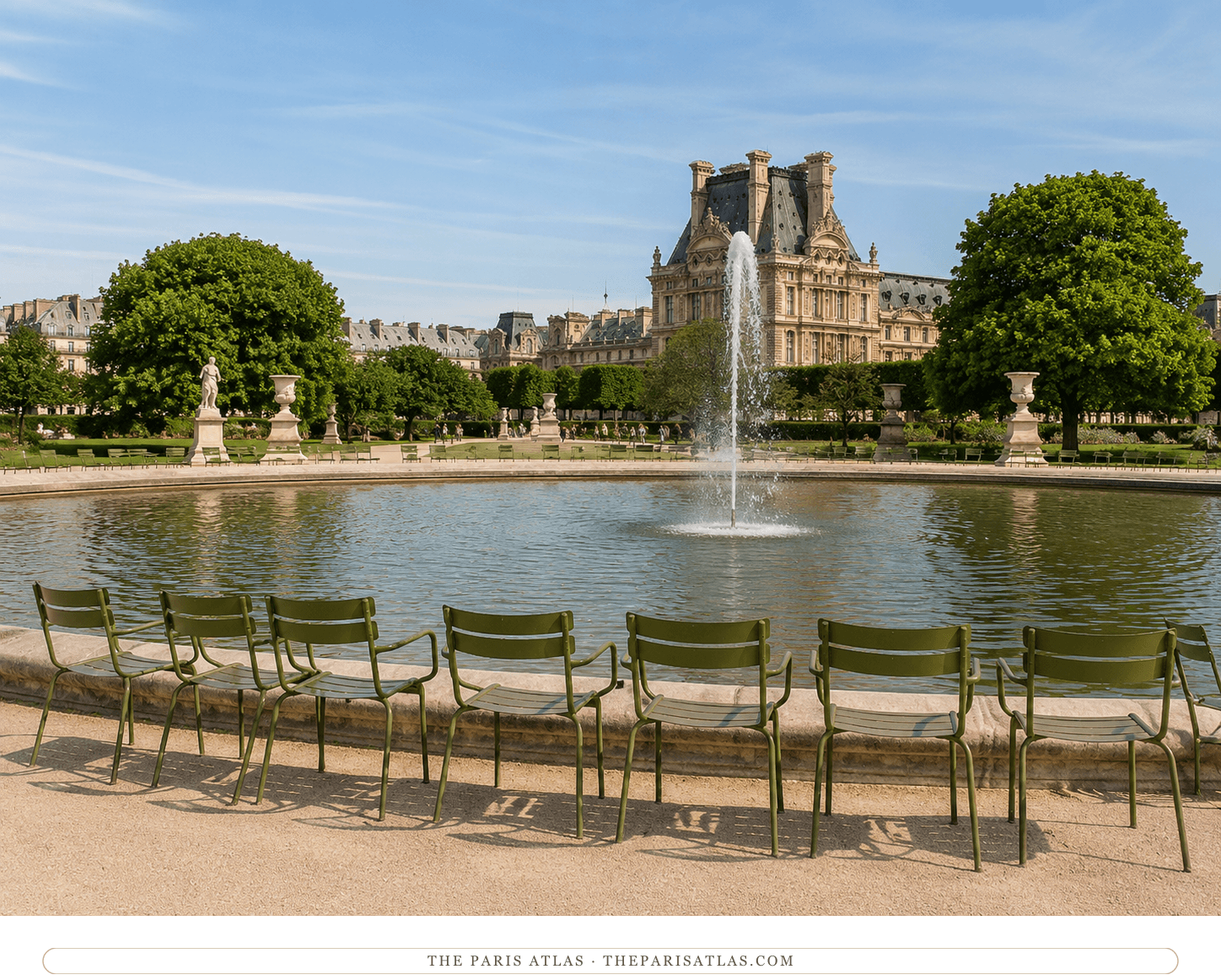
The Tuileries is the oldest walking route in central Paris: Le Nôtre drew its axis for Louis XIV in the 1660s, and Paris has promenaded it ever since. The palace that named it burned with the Commune in 1871 and was never rebuilt. What the 1920s inherited was a palace-less royal garden, all gravel, statuary, and chestnut shade, running from the Louvre's arms to the Place de la Concorde.
For the expatriates it was connective tissue: the grand, free, unavoidable crossing between the Right Bank of money and offices and the bridges home to the Left. Miller logs the crossing in Tropic of Cancer in a single walking breath — the garden as verb rather than destination — which is honest to how the era used it. Its neighbors tell the same story: the Crillon at its west gate, the old Gare d'Orsay across the river at its south.
The garden has since collected the Orangerie's water lilies, the Jeu de Paume, and several restorations, but Le Nôtre's geometry — and the walk — are exactly where the era left them.
…walking through the Jardin des Tuileries…
Le Nôtre lays out the garden on the royal axis.
The palace burns in the Commune's last week; the garden carries the name alone.
Miller's generation crosses it as the twenties crowd did — on foot, between banks.
Open end to end; the axis runs unbroken from the Louvre to the Concorde.
Mentioned in passing
Crossed mid-stride in the novel's walking prose — the garden as route between the two banks of Miller's Paris.

Visited by · 1858
A dusk walk in January 1858, cut short for fear of being locked in behind the railings. The bare earth under the trees prompted the sentence that became his verdict on the whole city — that nothing in Paris takes root.
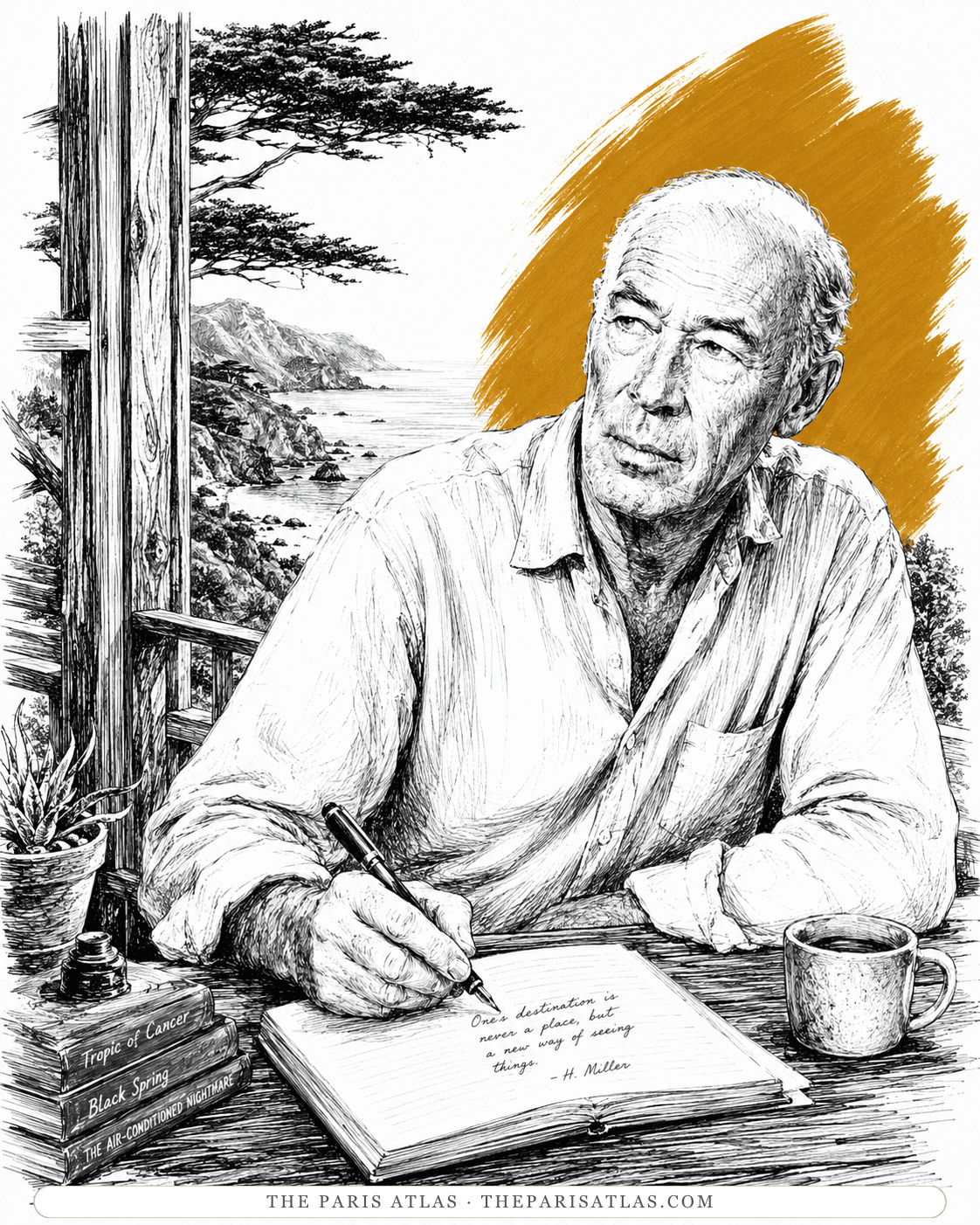
Henry Miller wrote about Jardin des Tuileries in Tropic of Cancer.
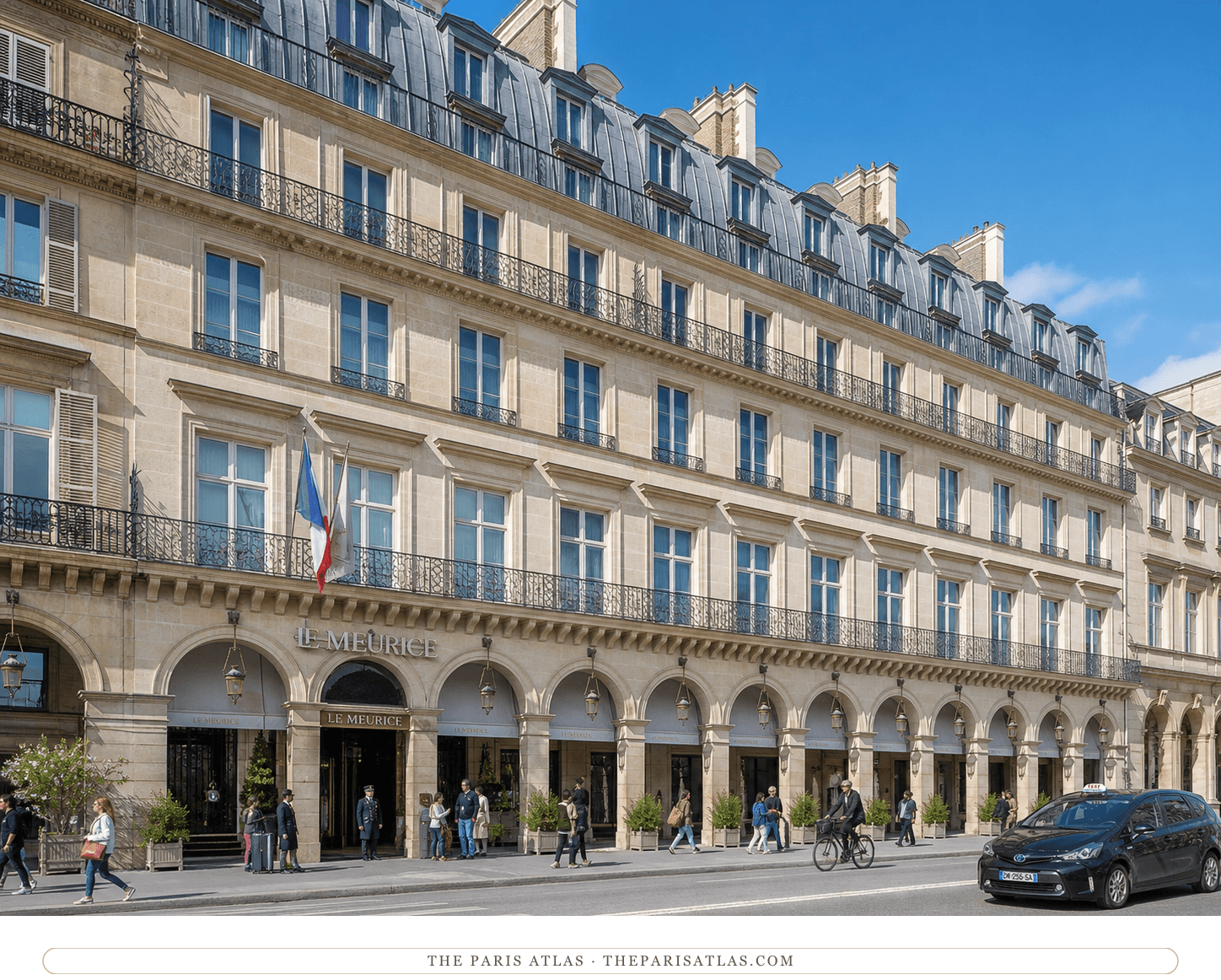
A grand hotel on the rue de Rivoli facing the Tuileries, and the Paris address Salvador Dalí returned to for roughly thirty years — arriving for a month at a time with a retinue, and treating the suite as a studio, a stage and a place to be seen.
Visit the place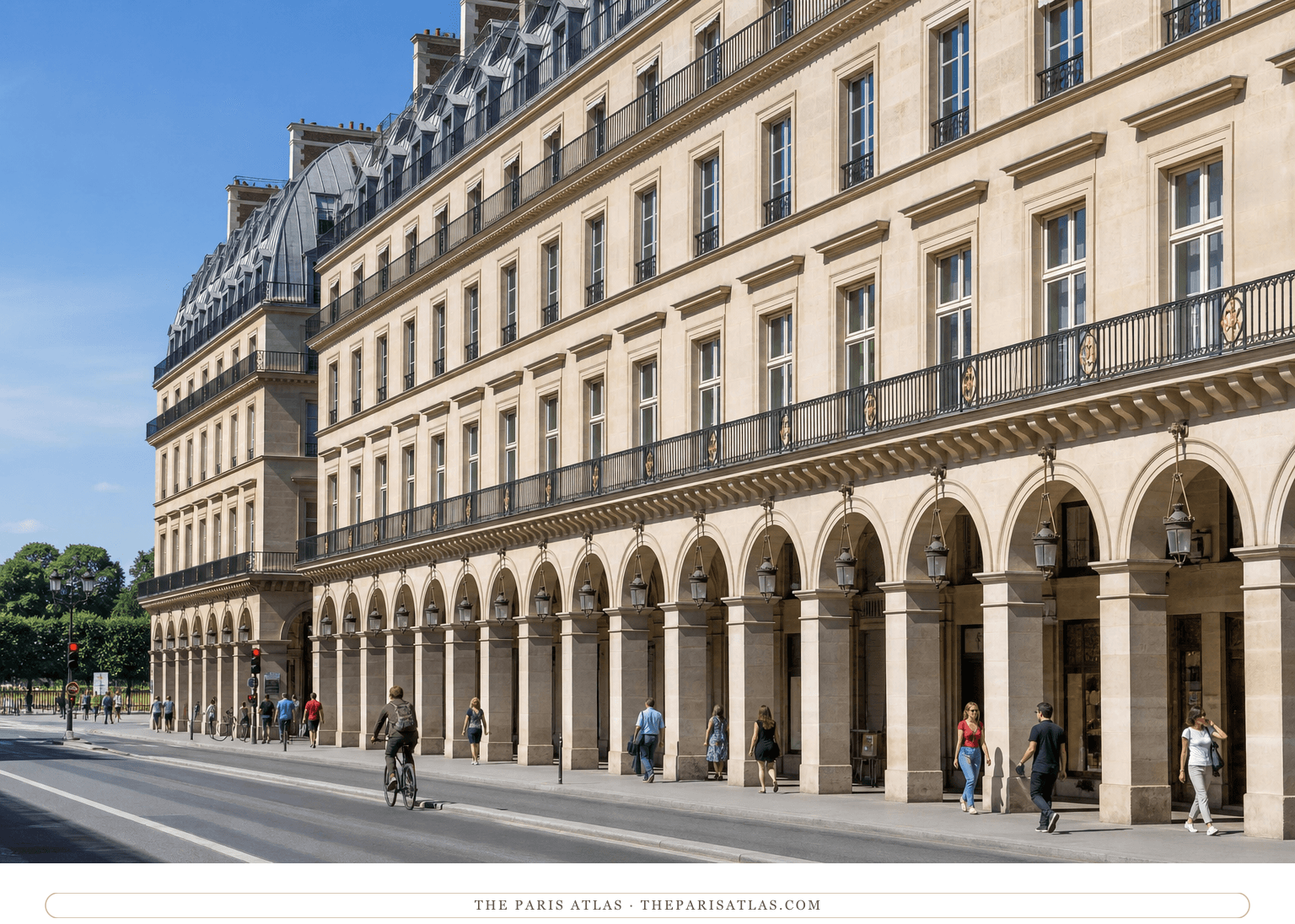
The apartment Camille Pissarro took for the first half of 1899, facing the Jardin des Tuileries — at least six versions of the garden came out of its windows, sorted by weather, hour and season.
Visit the place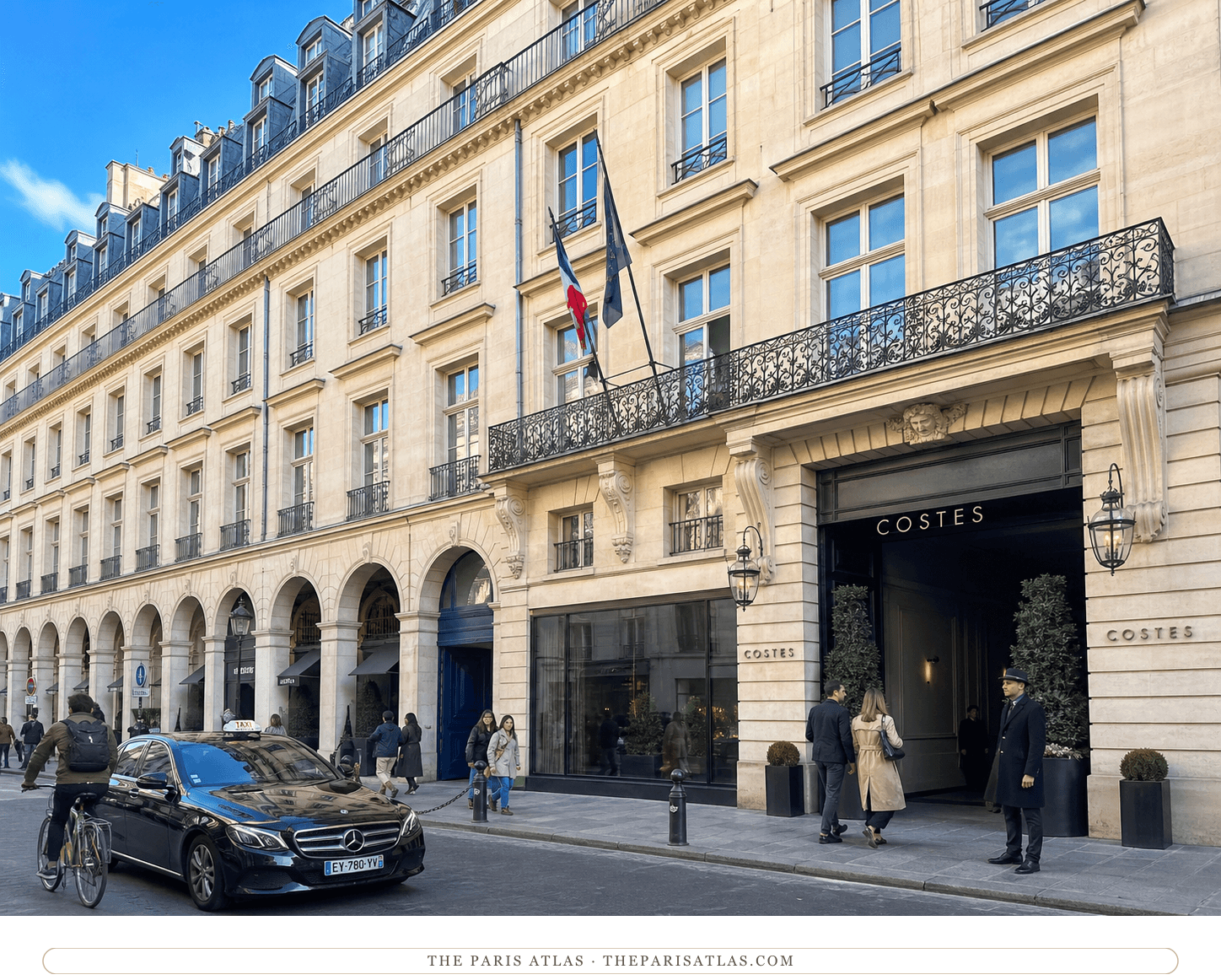
A luxury hotel on the rue de Castiglione, between the Tuileries and the place Vendôme. It is the strongest candidate for the "Hotel X" of Down and Out in Paris and London — the vast, filthy basement kitchen where George Orwell worked seventeen-hour days as a plongeur. It trades today as part of the Hôtel Costes.
Visit the place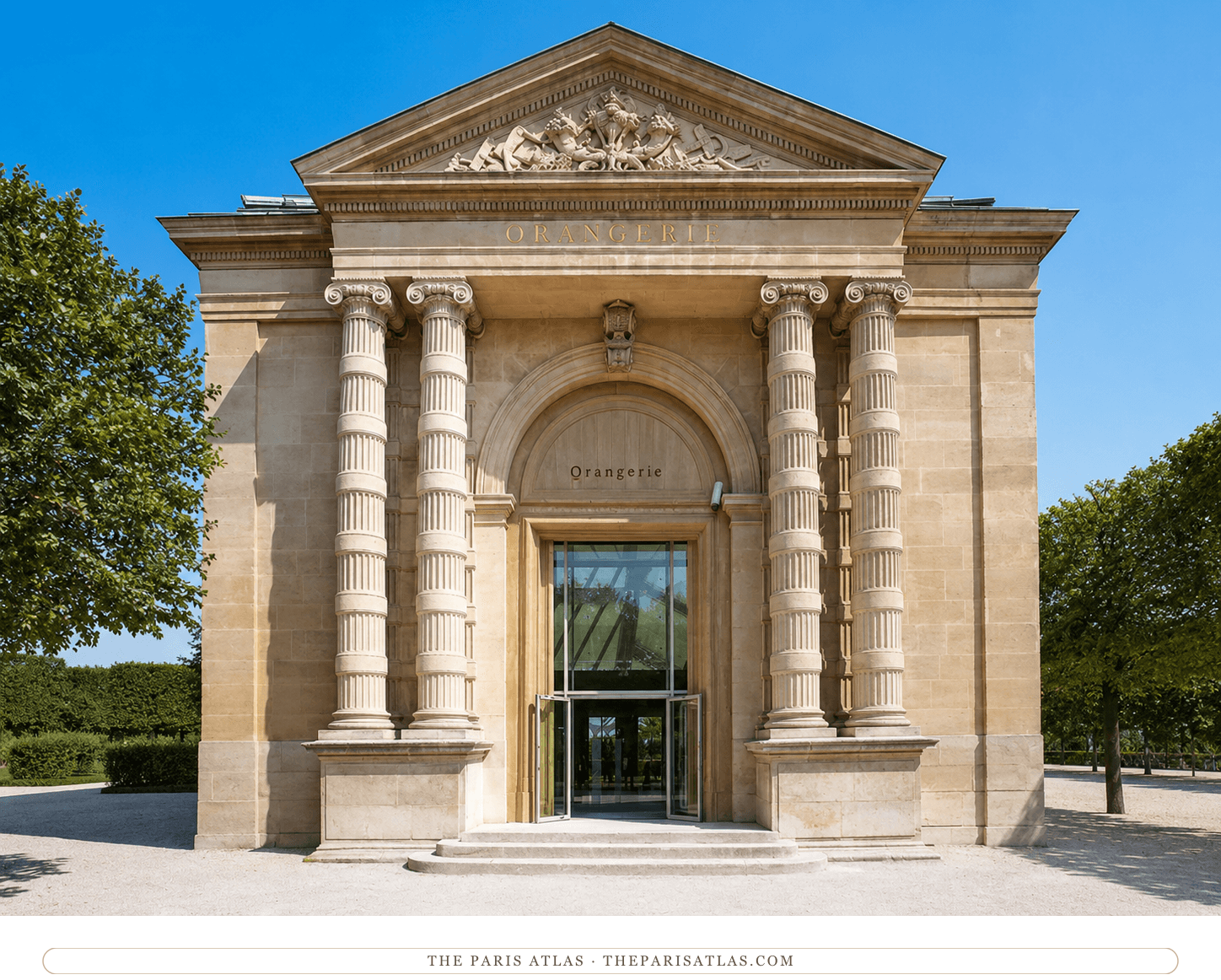
The 1852 orangery of the Tuileries garden, converted to Monet's specifications and opened in 1927 as the museum of the Water Lilies.
Visit the placeThe sources below include histories, archival materials, scholarly research, and official records that informed this page. They document Jardin des Tuileries, the people connected to it, and its place in Paris.


Primary text included as part of the documented record for Jardin des Tuileries.

Map data used to verify addresses, geographic coordinates, and the placement associated with Jardin des Tuileries.
Web source consulted for documented facts and historical context presented on the Jardin des Tuileries page.
Biographical evidence used to verify chronology, relationships, and historical context connected to Jardin des Tuileries.
These references provide the documented foundation for this page's history and context. Claim-level citations remain attached to the specific claims they support.
 Explore more resources
Newsletter
The cafés, studios, and walk-up flats where the work was made — one story from the map in every letter.


