The Paris AtlasCharting the artists, works, and places worth returning to.

Railway station · Faubourg Saint-Germain · 7e arrondissement

Gare d'Orsay

The buildingStanding, much changed
Getting inHours or admission
What's there nowThe Musée d'Orsay

Main-line service ended in 1939; the building has been the Musée d'Orsay since 1986.

The Beaux-Arts terminus on the Seine where Jake Barnes and Bill Gorton, in Ernest Hemingway's The Sun Also Rises, board the morning train south toward Spain — today the Musée d'Orsay.

Address
1 Rue de la Légion d'Honneur (Esplanade Valéry-Giscard-d'Estaing), 75007 Paris
Years
1900–1939
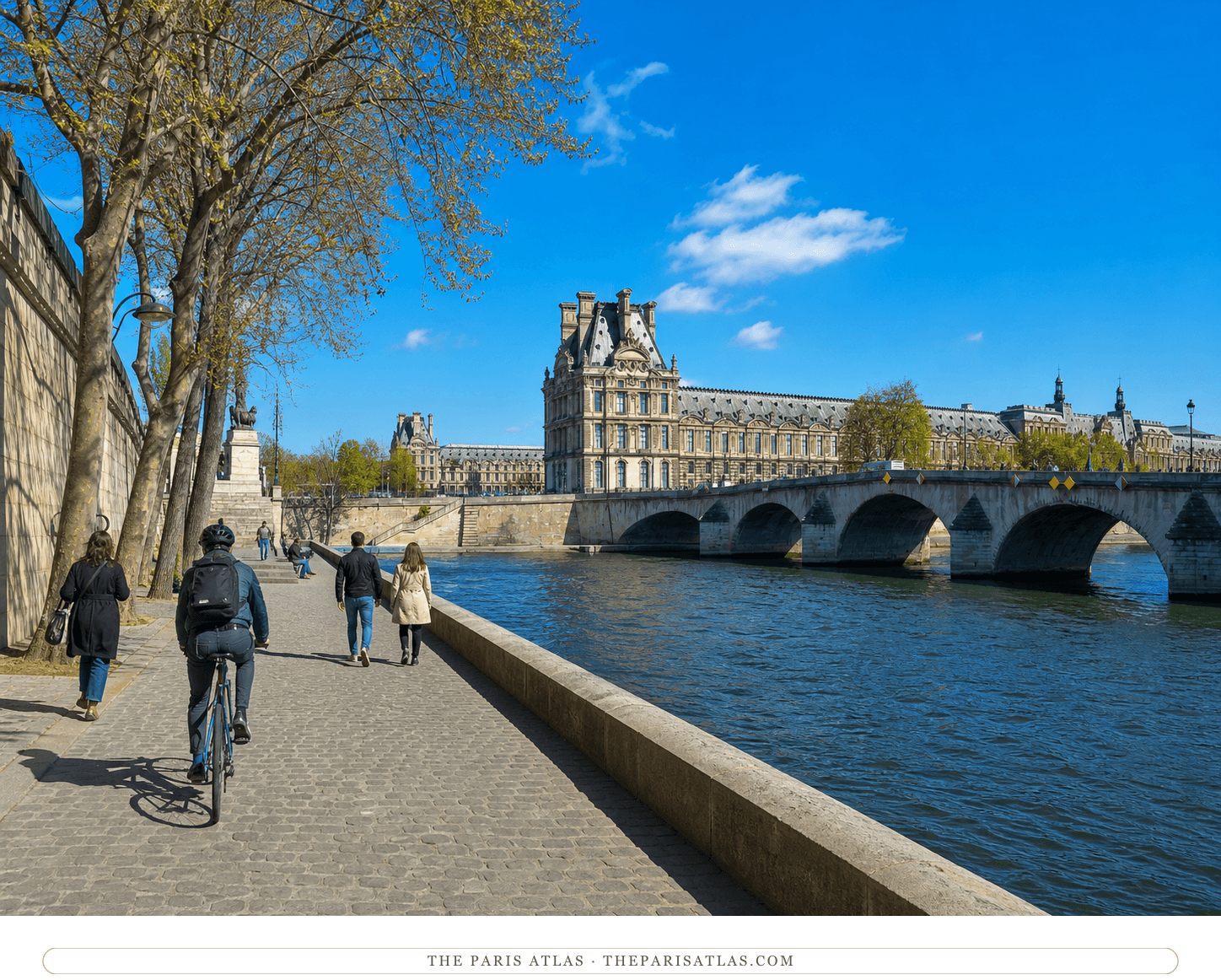
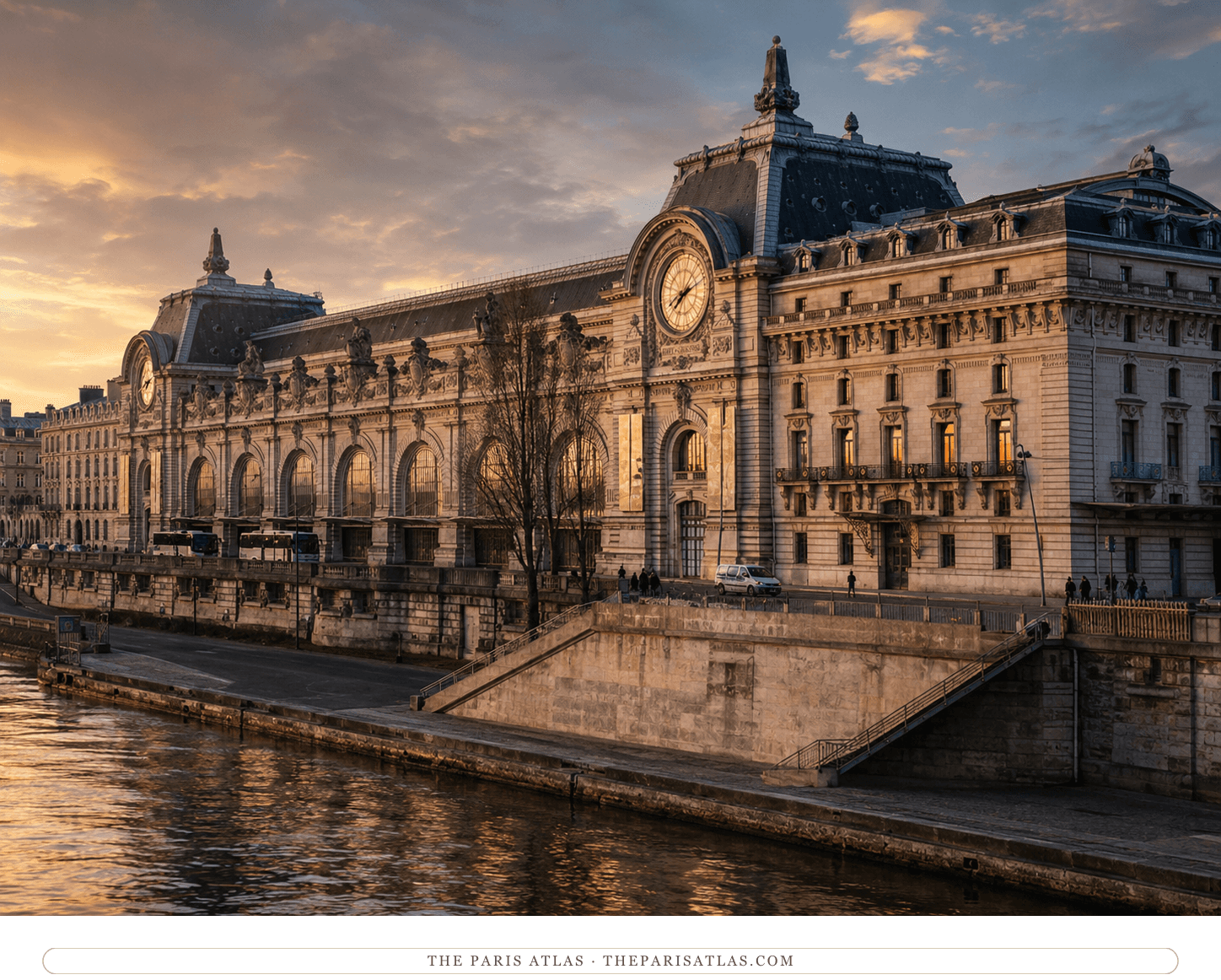
IllustrationThe Orsay building at sunset from across the Seine, golden light on the stone façade and the river in the foreground

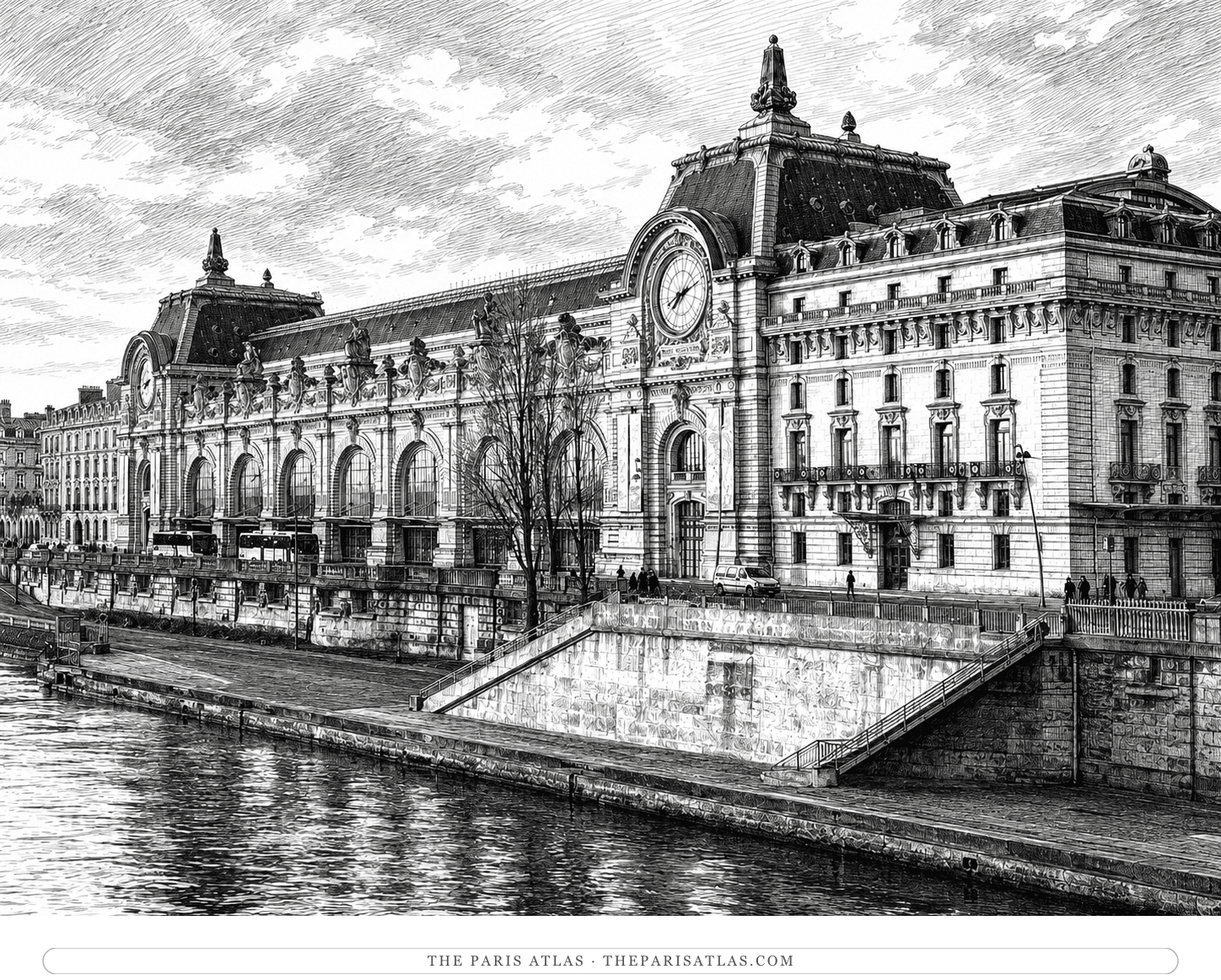
The same riverfront today — the trains gone, the Impressionists in residence.

Editorial illustration

The place, briefly

Victor Laloux built the Gare d'Orsay for the Exposition Universelle of 1900: a railway station disguised as a palace, facing the Tuileries across the river, and the first great urban terminus designed for electric traction — no smoke, so the trains could run under a decorated stone nave in the middle of the government quarter. It was the Paris gateway of the Orléans company's lines, which meant the southwest: the Loire, Bordeaux, and the Spanish frontier all began under its seven glass-and-coffered vaults.

That geography is why the biggest scene change in The Sun Also Rises happens here. When Paris ends and Spain begins, Jake Barnes — the novel's narrator — and his fishing companion Bill Gorton take the morning train from the Gare d'Orsay — breakfast in the dining car, the country beautiful from the start, a half-hour stop at Bordeaux, the pine country of the Landes at sunset, and Bayonne by nine at night. The station is on the page for one sentence, but it is the hinge the whole book turns on: everything before it is café, everything after it is fiesta.

The station's own second act is famous. By 1939 its platforms were too short for modern trains and main-line service ended; the building lingered as a mailing center, received returning prisoners and deportees in 1945, served Orson Welles as the set of The Trial in 1962, and escaped demolition by a margin that still embarrasses Paris. In 1986 it reopened as the Musée d'Orsay, and the hall Bill and Jake hurried through now holds the Impressionists under the same gilded coffers.

In their words

Bill and I took the morning train from the Gare d’Orsay. It was a lovely day, not too hot, and the country was beautiful from the start.
Ernest Hemingway, The Sun Also Rises (1926), Chapter 9

Key facts

Opened
1900, by Victor Laloux, for the Exposition Universelle
What it was
Terminus of the Orléans line — the trains for Bordeaux, Bayonne, and Spain
In the novel
The morning train south — the hinge between Paris and the fiesta
As a station
Main-line service ended 1939; platforms too short for modern trains
Today
The Musée d'Orsay, since 1986

Documentary photographs

Archival and present-day photographs, reproduced with rights verified.

Inside the great clock in July 2026: the railway building is not a shell around the museum but part of the visit. Photograph by Matthias Süßen.2026 · Matthias Süßen, Wikimedia Commons, CC BY-SA 4.0 · CC BY-SA 4.0
The former Gare d'Orsay on the Seine at sunset, 2015 — the station clock still marks the river façade. Photograph by Joe Desousa.2015 · Joe Desousa, Wikimedia Commons, CC BY 3.0 · CC BY 3.0
The station built like a palace, seen from across the river.Editorial illustration
The same riverfront today — the trains gone, the Impressionists in residence.Editorial illustration

Timeline

  1. 1900

    Opens for the Exposition — the first electrified grand terminus, a station built like a palace.

  2. 1926

    Hemingway sends The Sun Also Rises off to Bayonne from its platforms.

  3. 1939

    Main-line trains withdrawn; the great hall goes quiet.

  4. 1945

    Receives returning prisoners and deportees at the war's end.

  5. 1962

    Orson Welles films The Trial in the abandoned station.

  6. 1986

    Reopens as the Musée d'Orsay.

On the map

Related books

Cover of The Sun Also Rises by Ernest Hemingway

Setting of the story

The Sun Also Rises

Ernest Hemingway · 1926

The morning train south leaves from here — Bill and Jake ride it to the Spanish border, and the novel leaves Paris behind. The station is now the Musée d'Orsay.

Writers who knew this place

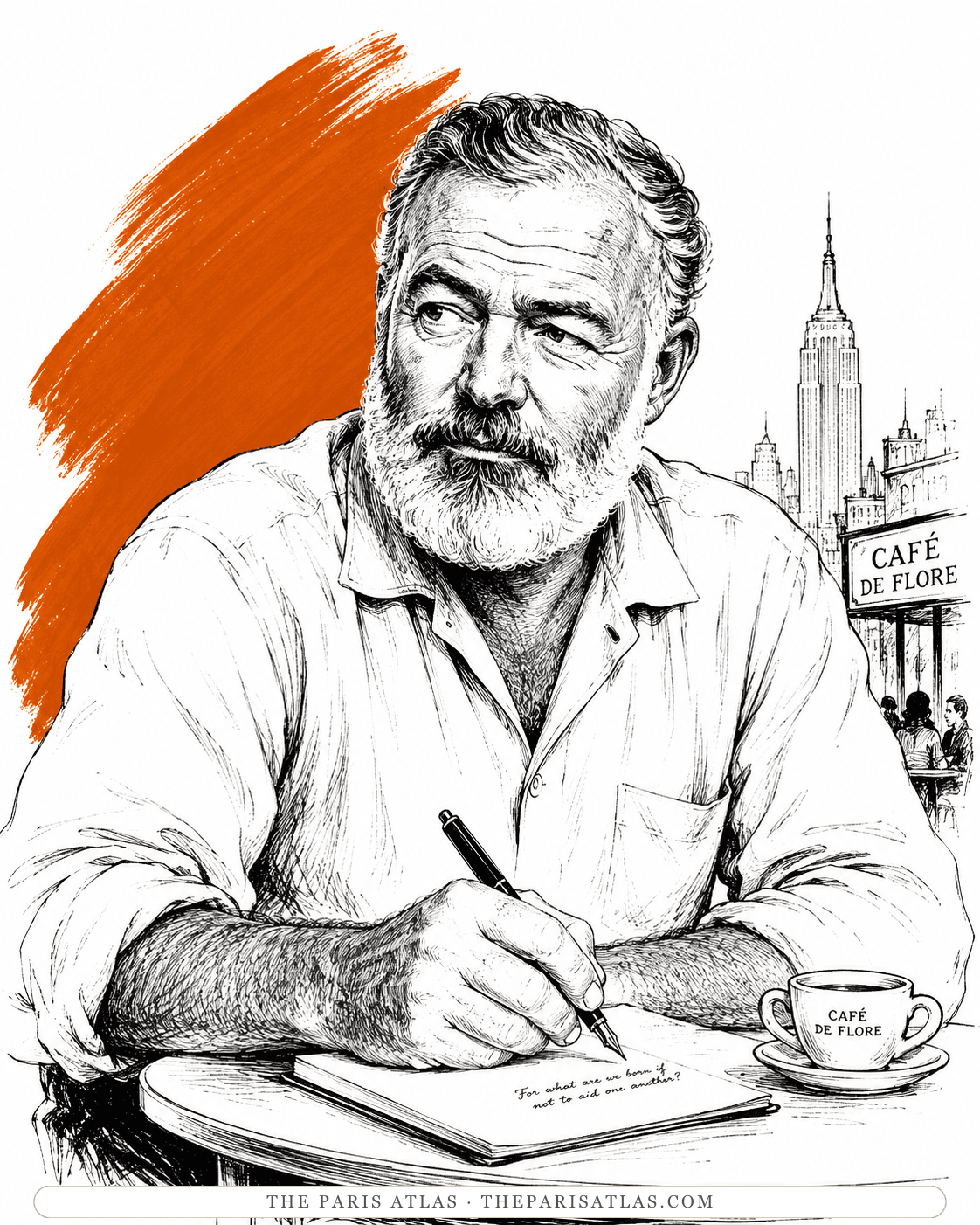
Illustrated portrait of Ernest Hemingway

Ernest Hemingway

American · Author of The Sun Also Rises and A Moveable Feast; his pared-down style, developed in 1920s Paris, became the most imitated in American prose.

Ernest Hemingway wrote about Gare d'Orsay in The Sun Also Rises.

Literary generation · c. 1921–1929

The Lost Generation gathered here

The writers remade by war and expatriate Paris — Hemingway, Fitzgerald, Stein, Pound, and the rooms, presses, and bookshops that turned their encounters into literature.

Enter the movement

Within walking distance

The Friday Letter

Paris, one address at a time.

The cafés, studios, and walk-up flats where the work was made — one story from the map in every letter.

One email a week. No spam, no selling your address. Unsubscribe anytime.