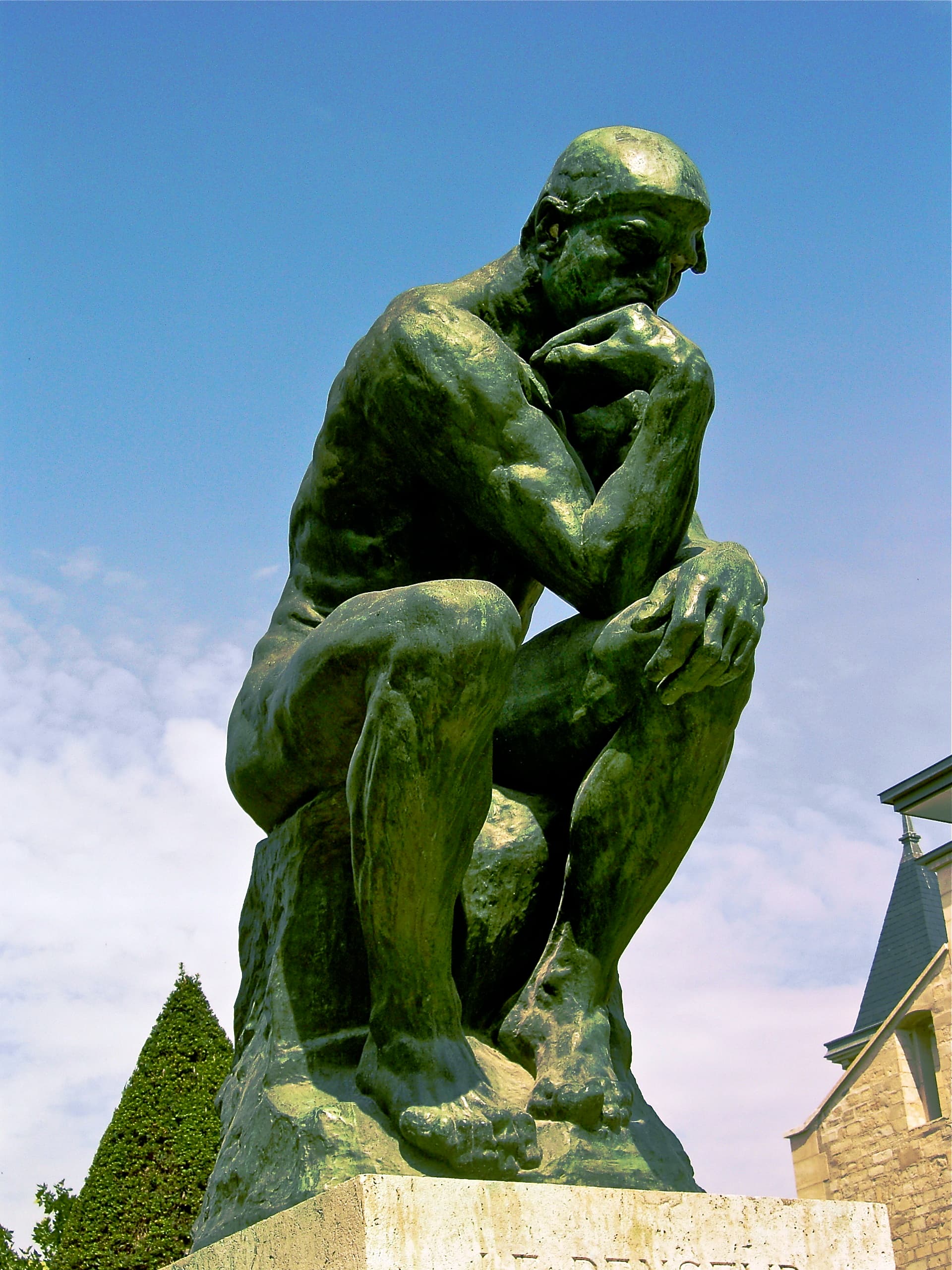

Depicts · 1880
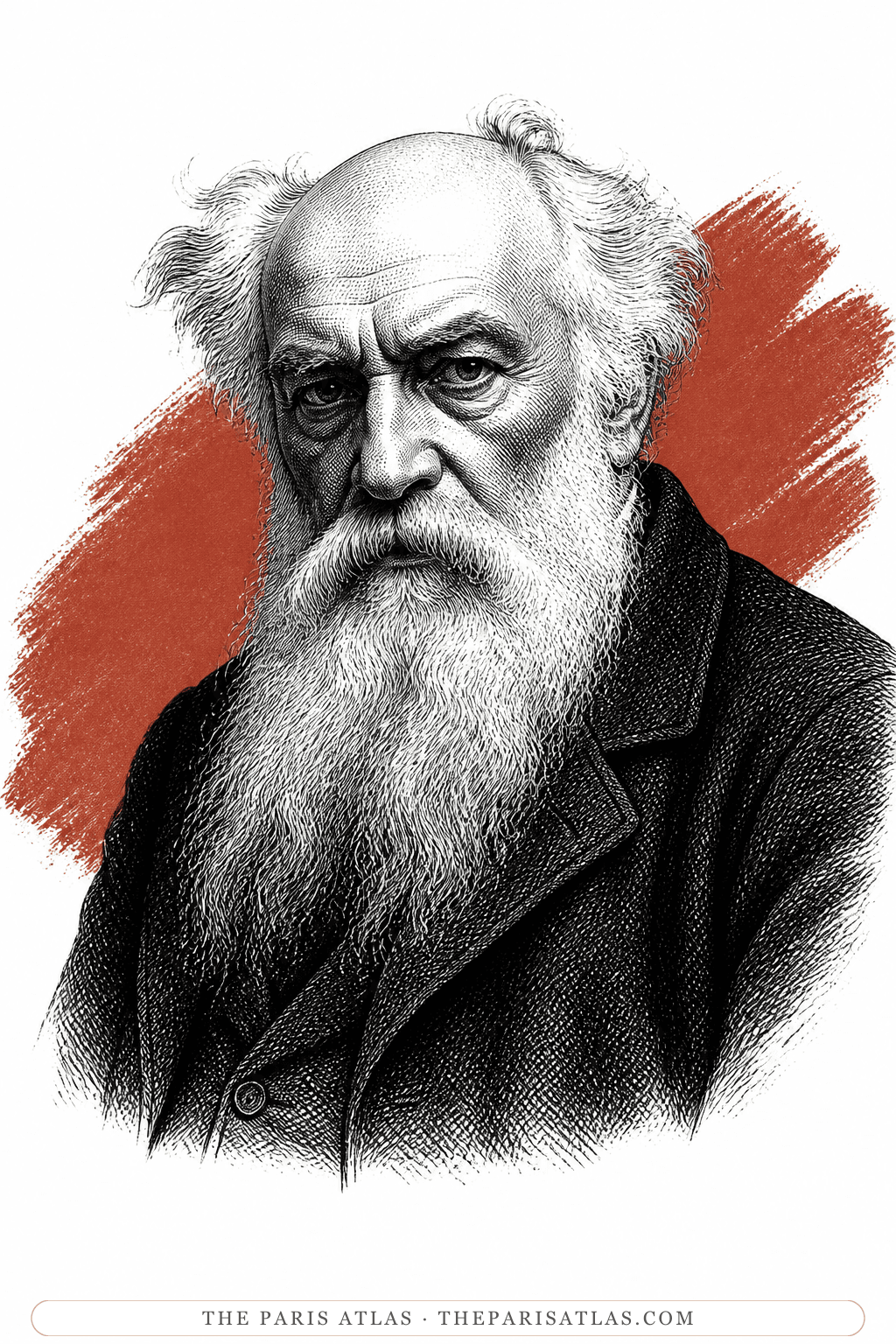
Dante Alighieri
The seated Poet above the doors was conceived as Dante Alighieri looking down on the Hell described in his Divine Comedy. The same figure later became the independent Thinker.
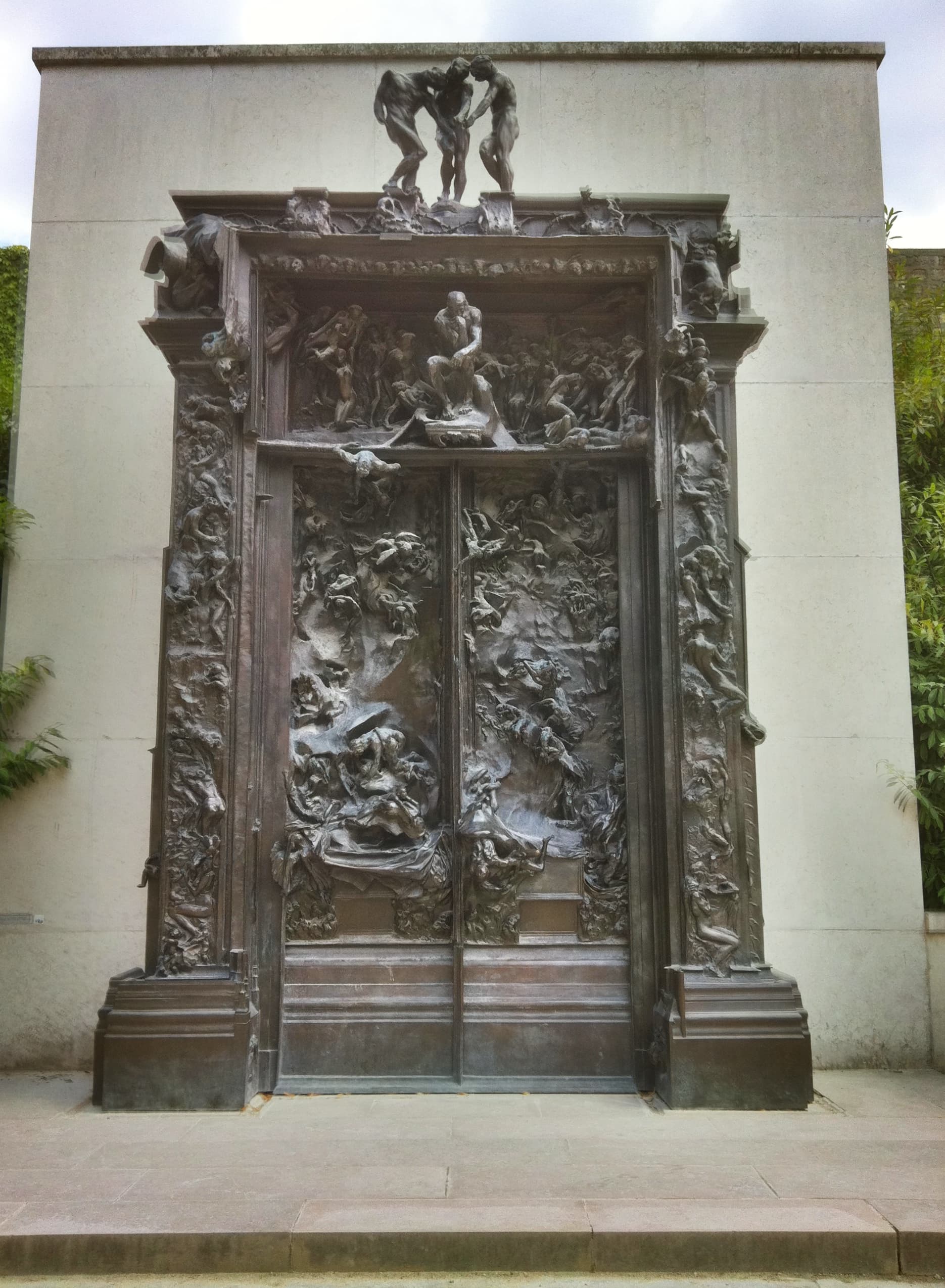
Auguste Rodin began this monumental doorway in 1880 for a Paris museum that was never built. Its crowded vision of Dante's Hell became the source of more than 200 figures and groups, including The Thinker, The Three Shades, and Ugolino and His Children.
Two tall door panels are almost buried under naked human bodies. Some figures fall, some cling to one another, and others seem to emerge from the bronze itself. The surface does not provide a calm architectural frame around separate scenes. Bodies repeatedly interrupt the edges, overlap one another, and make the doorway look unstable.
At the center above the doors sits The Thinker, originally conceived as the poet Dante Alighieri looking down on Hell. Above him, The Three Shades repeat one bent male body three times. Below and around them are figures drawn from Dante, the Bible, classical mythology, and Rodin's own invention. The Musée Rodin counts more than 200 figures and groups across the project.[1][2]
In 1880, the French state commissioned François-Auguste-René Rodin, known as Auguste Rodin, to make a monumental entrance for a planned Museum of Decorative Arts. The museum was supposed to rise on the burned site of the former Cour des Comptes. The building was never completed; the Gare d'Orsay and later the Musée d'Orsay eventually occupied the site.[1][3]
The commission called for reliefs based on Dante Alighieri's Divine Comedy. Rodin concentrated on Inferno, the poem's journey through Hell. He also looked to Lorenzo Ghiberti's fifteenth-century bronze doors for the Florence Baptistery, but he did not copy their orderly panels. Rodin turned the whole surface into one continuous field of falling, twisting, and repeated bodies.[1][4]
Dante supplies the basic setting and several identifiable stories, but the Gates are not a scene-by-scene illustration of the poem. The Thinker began as Dante. The Three Shades point toward the warning at Hell's entrance. Ugolino crawls over his dying children, and Paolo and Francesca appear among the falling bodies.[4][1]
Rodin kept changing the arrangement, reused the same body in different positions, and added figures whose identities are not fixed by Dante. The result is better understood as Rodin's visual response to Inferno: a world of desire, violence, fear, and physical collapse, built from literary characters and newly invented bodies.[4]
The Gates became a working source for Rodin's career. He removed figures and groups, enlarged or reduced them, changed their titles, and exhibited or cast them as independent sculptures. The Thinker is the best-known example: the small poet above the doors became a monumental public figure associated with thought itself.[1][2]
The Three Shades also became an independent group. Rodin made it by repeating one figure three times and rotating the bodies toward the same point. Ugolino and His Children moved from a prominent place on the doors into freestanding versions. Fugit Amor and several other groups followed the same path. This reuse was not an afterthought; recombining existing forms became central to Rodin's method.[5][6]
Yes, but not in the final arrangement. Rodin first placed Paolo and Francesca—the lovers killed by Francesca's husband in Dante's Inferno—on the left door. He removed the embracing couple in 1886 because their moment of happiness did not fit the surrounding scene of punishment.[7]
The group was exhibited separately in 1887 under the title Francesca da Rimini and later became known as The Kiss. A different Paolo and Francesca group remained on the Gates, where the lovers cling to one another while falling. The two versions answer different moments in the story: the independent sculpture shows desire before the murder; the Gates show the lovers in Hell.[7]
There is no simple yes-or-no answer. Rodin developed the project intensely during the 1880s and stopped sustained work around 1890, but he returned to it and continued changing individual elements. In 1900 he displayed a plaster version at his Paris retrospective. It was deliberately fragmentary: he left off many of the figures that projected furthest from the background because he felt the contrast was too strong.[1][3]
In 1917, Léonce Bénédite, the first curator of the future Musée Rodin, persuaded Rodin to authorize a reconstruction for bronze casting. Rodin died that November before seeing a bronze Gates. The Musée Rodin's garden cast was made by the Alexis Rudier foundry in 1928. It is an authorized posthumous bronze based on the reconstructed plaster, not an object Rodin personally inspected in metal.[1][3]
The Musée Rodin bronze is 6.35 metres high, 4 metres wide, and 85 centimetres deep—about 20 feet 10 inches by 13 feet 1 inch. The 1917 plaster at the Musée d'Orsay has the same height and width and is recorded as 94 centimetres deep. Without The Three Shades at the top, the plaster is 5.2 metres high.[1][3]
The scale matters because many photographs make the work look like an ordinary pair of doors. A standing visitor reaches only partway up the lower panels. The figures range from small bodies embedded in shallow relief to groups that project forcefully into the viewer's space.
The state commission produced a long-changing plaster model, not one bronze completed during Rodin's life. The 1917 plaster now shown at the Musée d'Orsay is closely tied to that commission. The bronze in the Musée Rodin garden was cast in 1928 from the reconstructed model. Other authorized bronze casts were made later for museum collections outside France.[1][3]
Calling only one version 'the original' hides how Rodin worked. He modelled in clay and plaster, assistants helped enlarge and assemble forms, and foundries translated approved models into bronze. The useful questions are which material, which assembly, which cast date, and which institution a label describes.
The best-known Paris bronze stands in the sculpture garden of the Musée Rodin at the Hôtel Biron. The museum identifies it as inventory S.01304 and a 1928 Alexis Rudier cast. Because museums lend works and change access routes, check the live object page before planning a visit around it.[1]
The full-size 1917 plaster is at the Musée d'Orsay. That placement has an unusual historical logic: the Orsay site is where the planned Museum of Decorative Arts was supposed to stand. The sculpture finally reached the location connected with its original commission, although it functions as an artwork inside a museum rather than as an opening door.[3]
Close reading
Rodin's doorway refuses to remain architecture: bodies project, fall, repeat, and nearly bury the doors beneath them. Close views show how figures later famous on their own remain embedded in a larger system of pressure and descent.
1.The Thinker began inside the crowd
Perched over the lintel, the compact figure bends toward the bodies below. Here thought is not an isolated abstraction: the poet's concentration is physically tied to the suffering he surveys.
2.The doors lose their edges beneath falling bodies
Figures emerge at different depths, some nearly absorbed by the bronze and others projecting into real space. Their overlap destroys any calm division into separate episodes.
3.The Three Shades repeat one body into a warning
Three nearly identical bodies lean inward and point down, turning repetition into collective force. Above the crowded doors, their shared gesture directs every arrival toward the world below.
4.One compact tragedy survives inside the larger crowd
Bodies gather around a central figure in a smaller drama embedded within the doors. Rodin lets individual stories emerge from the overall fall without giving them separate architectural compartments.
5.An embracing pair offers no escape from the surrounding fall
The joined bodies provide a moment of intimacy, but they remain caught in the same unstable surface as everyone else. Love does not create a protected space outside the doors' violence.
6.Rough modeling keeps the bronze visually unsettled
Some forms emerge clearly while others seem to return to the material around them. The uneven finish makes the entire structure feel active, as though bodies are still forming and collapsing.
16 August 1880
The French state commissions Rodin to make a monumental doorway for a planned Museum of Decorative Arts in Paris.
1881–1882
Rodin develops figures including Ugolino and His Children and the poet who becomes The Thinker.
By 1886
The Three Shades take their place above the Gates; Rodin removes the embracing Paolo and Francesca group that becomes The Kiss.
Circa 1890
After creating more than 200 figures and groups, Rodin stops sustained work on the full doorway but continues revisiting its parts.
1900
Rodin publicly exhibits a fragmentary plaster Gates at his solo retrospective near the Paris Universal Exposition.
1907
A proposed bronze-and-marble version for the Musée du Luxembourg comes close to realization but is not built.
1917
Léonce Bénédite secures Rodin's permission to reconstruct the work for casting; Rodin dies before a bronze is completed.
1928
The Alexis Rudier foundry casts the bronze now held by the Musée Rodin.
1986
The 1917 plaster is installed at the Musée d'Orsay, on the site associated with the unrealized decorative-arts museum.
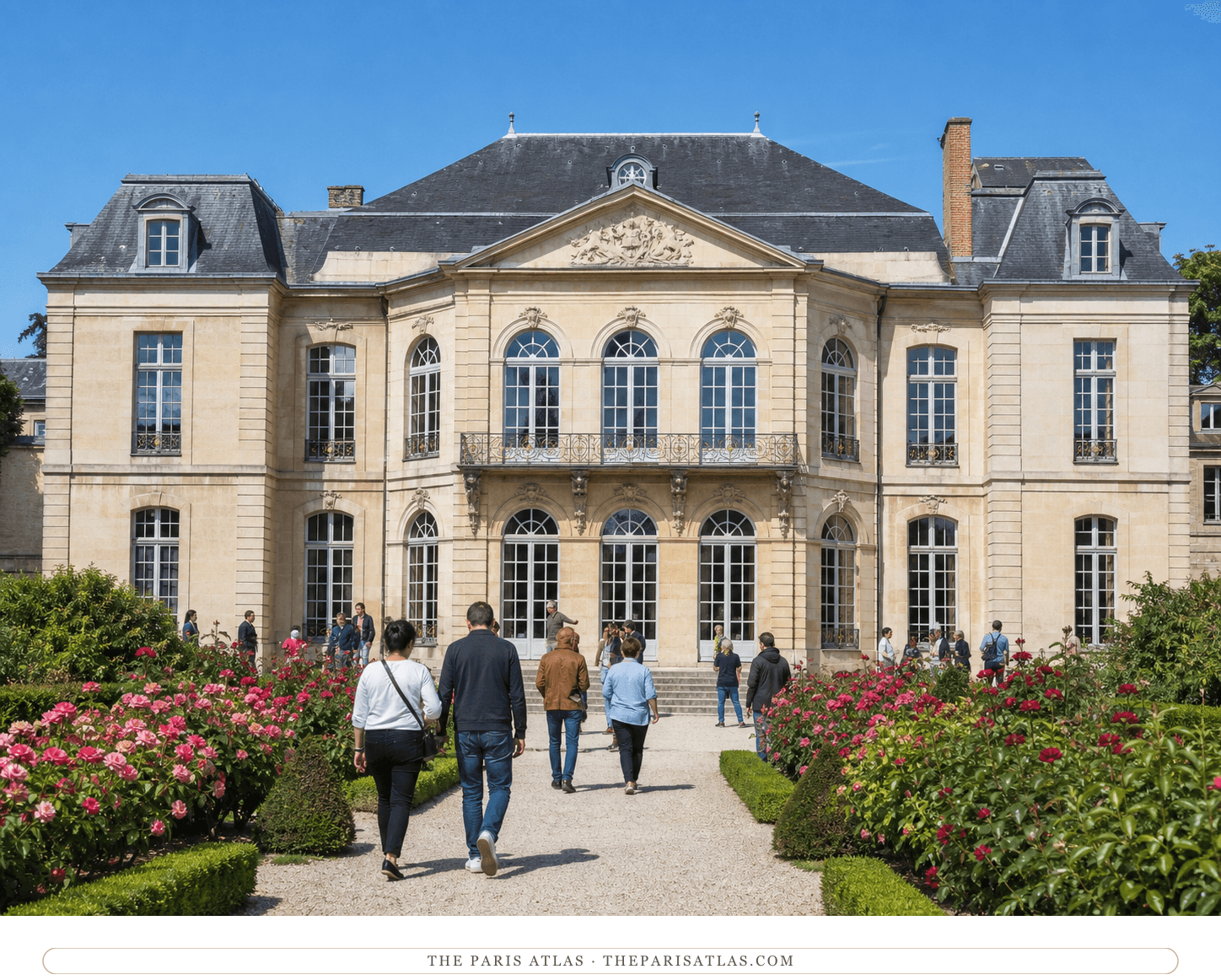
Musée Rodin, Paris
77 rue de Varenne, 75007 Paris, France
Displays and loans can change. Check whether this work is on view before making a special trip.
Plan your visitThe French sculptor Auguste Rodin began the work in 1880 after receiving a state commission. He developed its figures for decades, but he never saw the complete work cast in bronze.
They are based mainly on Inferno, the first part of Dante Alighieri's Divine Comedy. Rodin used Dante's setting and several characters but did not illustrate the poem scene by scene.
The most direct subject is humanity in Hell: bodies fall, struggle, desire, and suffer across a doorway that never opens. The work also shows Rodin's method of repeating and recombining figures rather than organizing them into a fixed sequence.
The Musée Rodin says Rodin created more than 200 figures and groups for the project. Counts can vary depending on whether repeated bodies and separate groups are counted individually.
Yes. The small figure sits above the doors and originally represented Dante looking down on Hell. Rodin later exhibited it separately, and it became the independent sculpture known as The Thinker.
An early version was. Rodin removed the embracing Paolo and Francesca group in 1886 because its happiness did not suit the surrounding punishment. He exhibited it separately, and it became The Kiss; a different image of the doomed lovers remains on the Gates.
He never settled one final bronze during his lifetime. He exhibited a deliberately incomplete plaster in 1900 and authorized a reconstruction in 1917, but died before the bronze was cast. The Musée Rodin bronze dates to 1928.
The Musée Rodin bronze is 6.35 metres high and 4 metres wide, or about 20 feet 10 inches by 13 feet 1 inch.
No. They are a monumental sculpture shaped like a doorway, not a working entrance. The museum for which they were commissioned was never built.
There is no single bronze original made during Rodin's life. The 1917 plaster tied to the state commission is at the Musée d'Orsay, while the best-known Paris bronze was cast in 1928 and stands in the Musée Rodin garden.
See the 1928 bronze in the Musée Rodin sculpture garden and the 1917 plaster at the Musée d'Orsay. Check each museum's live object page before visiting because displays and access can change.
Depicts · 1880
The seated Poet above the doors was conceived as Dante Alighieri looking down on the Hell described in his Divine Comedy. The same figure later became the independent Thinker.
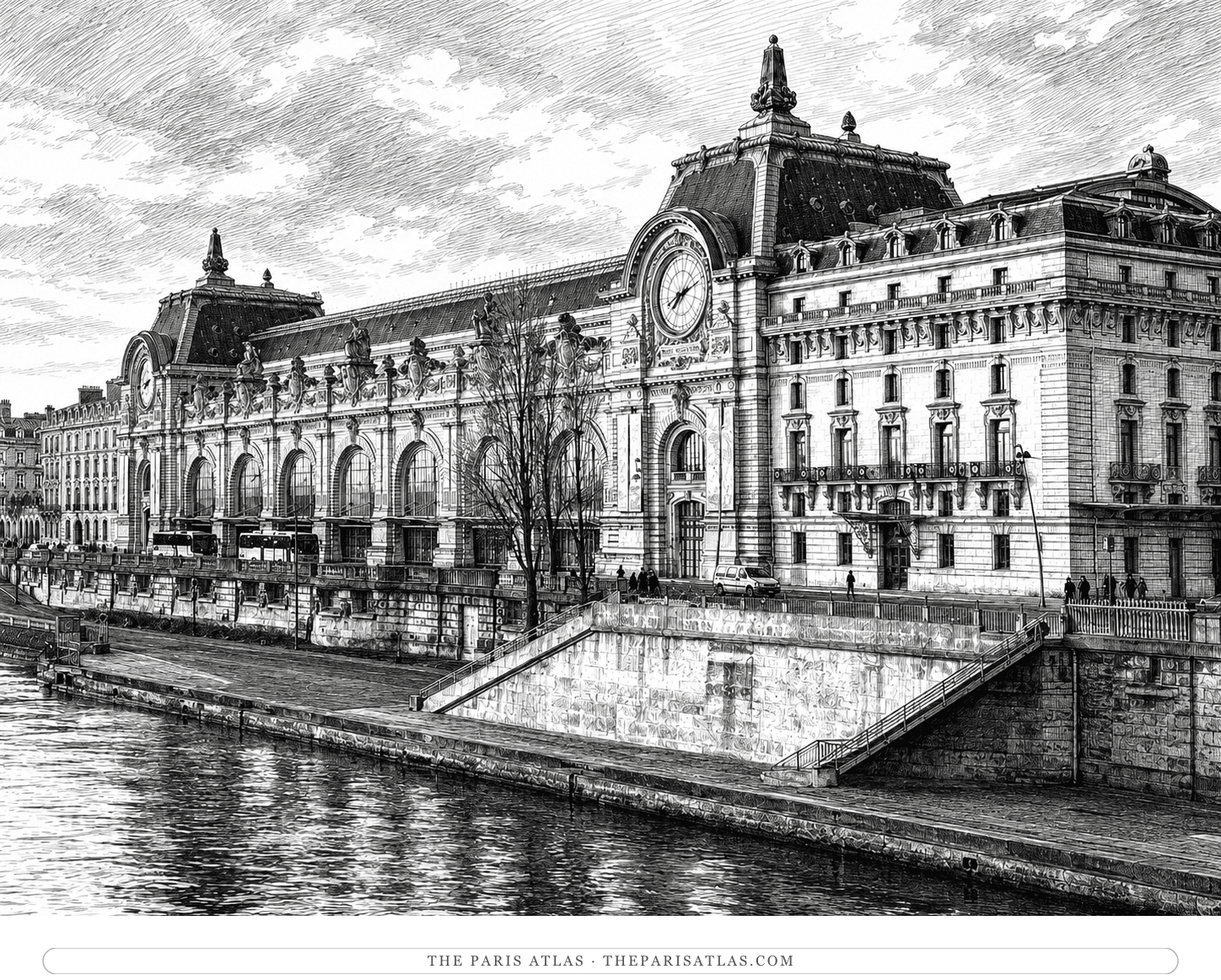
Displayed at · 1986
The 1917 plaster reconstruction is displayed inside the Musée d'Orsay, the museum that opened in the former Gare d'Orsay in 1986. The same site had been intended for the decorative-arts museum whose doorway Rodin was commissioned to make in 1880.
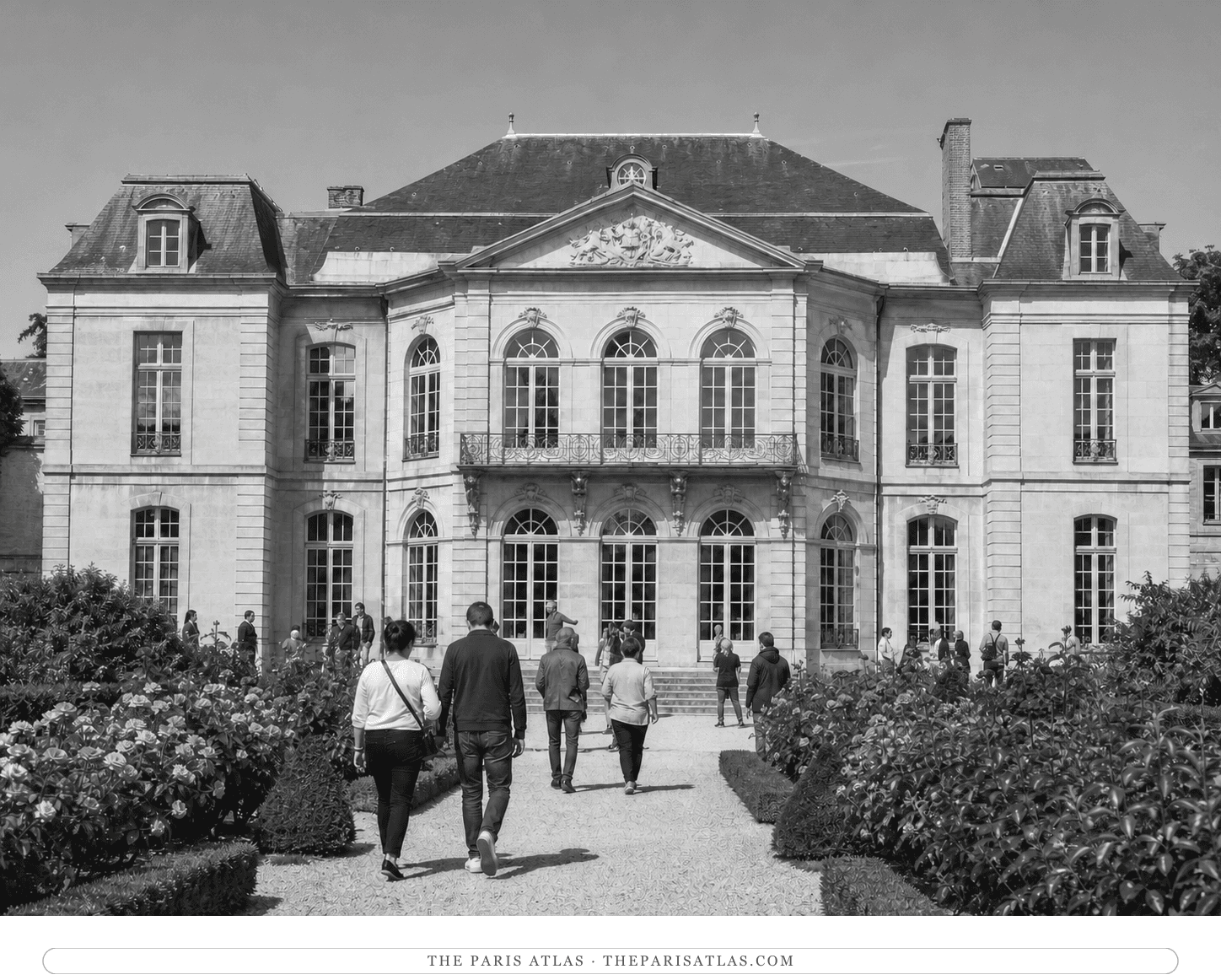
Displayed at
The doors Rodin worked on for the last thirty-seven years of his life and never finished, from which The Thinker was lifted out and enlarged. Shown at the Hôtel Biron, the house he gave the State on condition his work stayed in it.
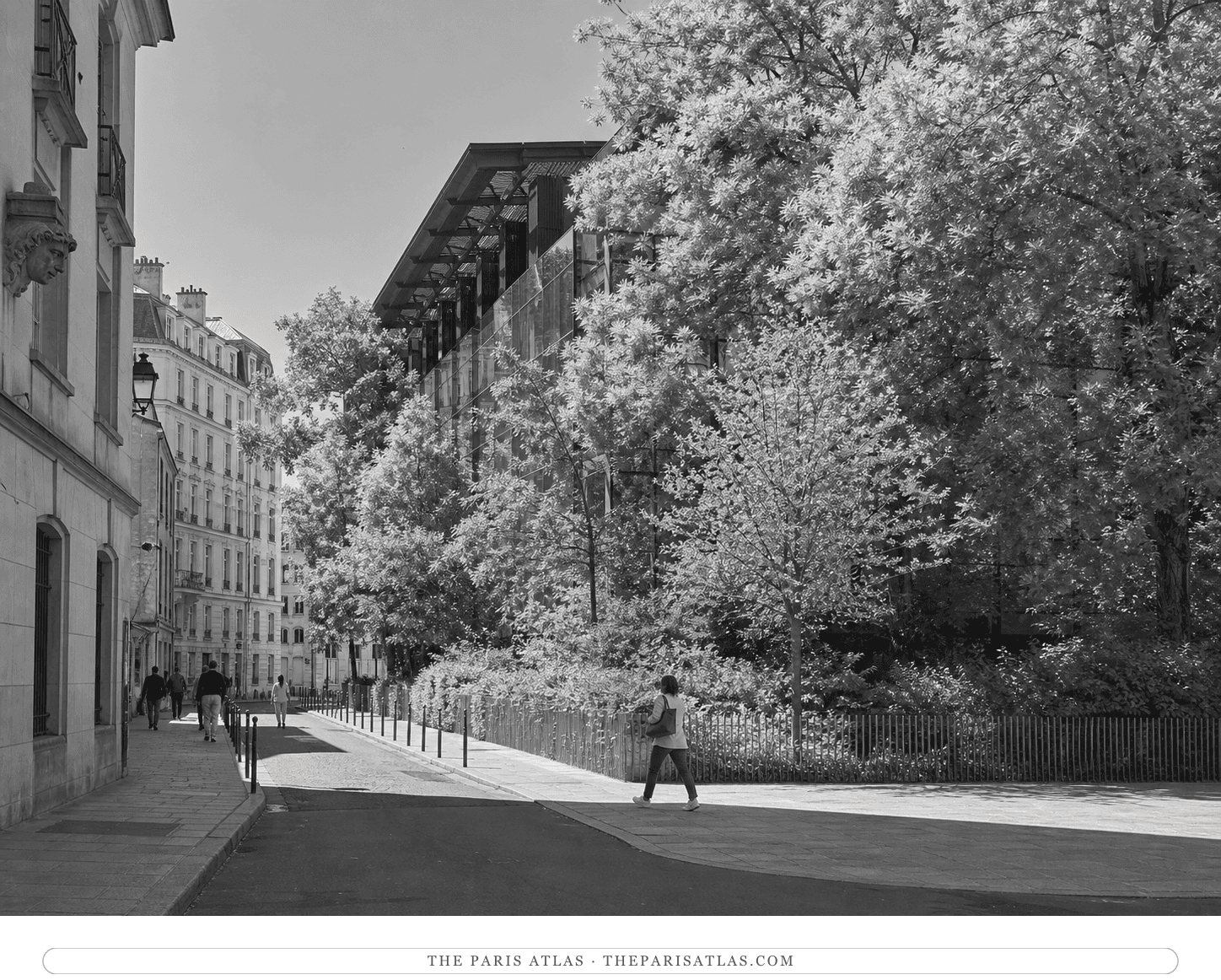
Created at · 1880
The state commissioned the doorway in 1880 and assigned Rodin a workshop at the Dépôt des Marbres to make it in. He worked on it there for the rest of his life and never finished it.
Explore sculptors from the same movements and circles.
French-American artist, lifelong friend of Yves Klein, and a founder of New Realism.
View artist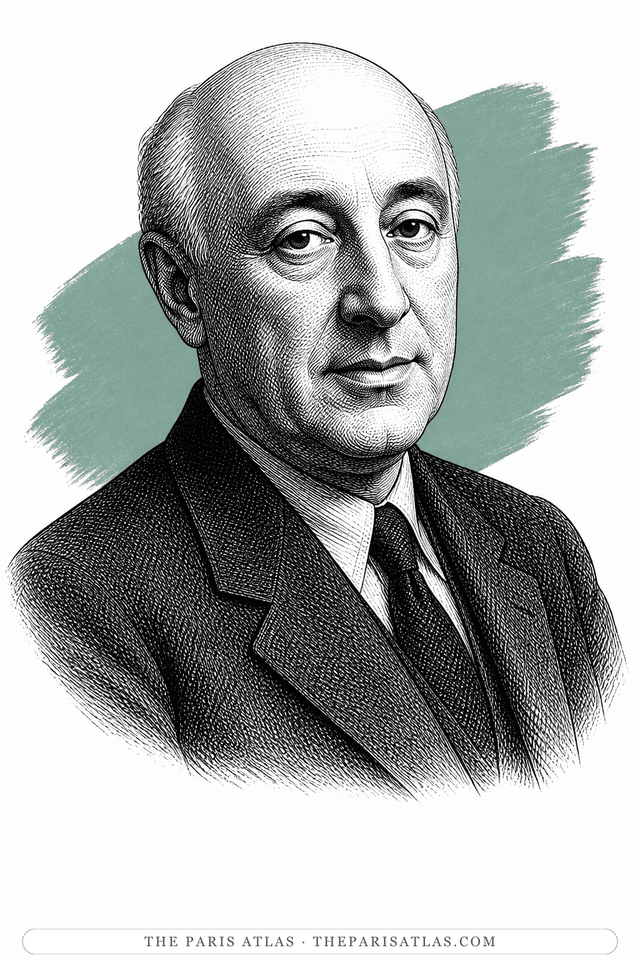
Strasbourg-born sculptor and poet — Hans in German, Jean in French, both all his life — who co-founded Dada at the Cabaret Voltaire in 1916, composed collages by dropping torn paper 'according to the laws of chance', and settled at Meudon outside Paris in a house his wife Sophie Taeuber-Arp designed.
View artist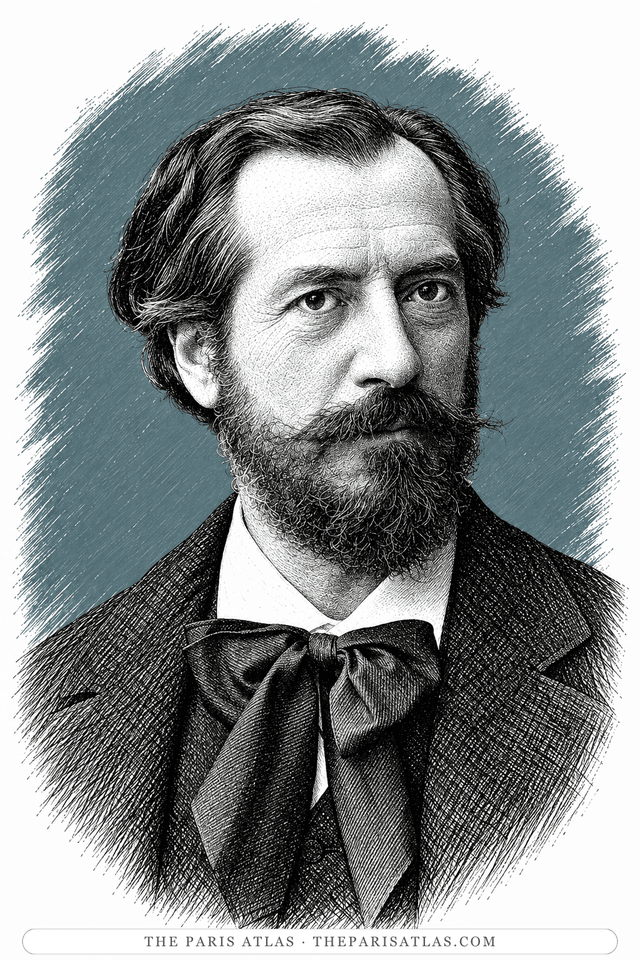
Frédéric Auguste Bartholdi was a French sculptor best known for designing the Statue of Liberty, dedicated in New York Harbor in 1886. Born in Colmar and based in Paris, he created public monuments that gave visible form to ideas of freedom, resistance and national memory. His other major works include the Lion of Belfort and the fountain in Lyon's Place des Terreaux.
View artistThe sources below include collection records, catalogues, scholarly research, and primary materials that informed this page. They document The Gates of Hell, its making, and its place in cultural history.


Web source consulted for documented facts and historical context presented on the The Gates of Hell page.
Web source consulted for documented facts and historical context presented on the The Gates of Hell page.
These references provide the documented foundation for this work's history and interpretation. Claim-level citations remain attached to the specific claims they support.
 Explore more resources