Made here
The Gates of Hell
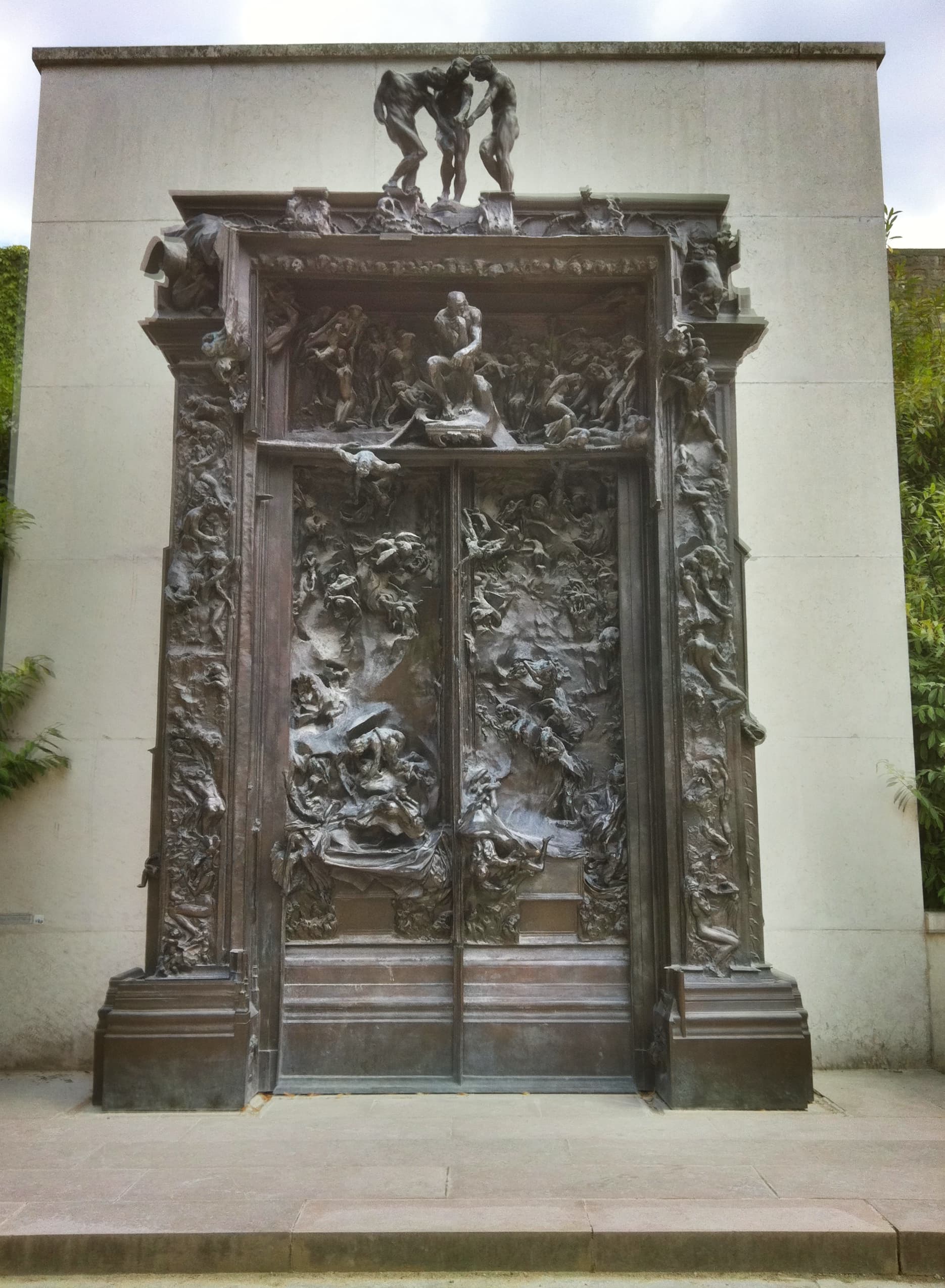
The state commissioned the doorway in 1880 and assigned Rodin a workshop at the Dépôt des Marbres to make it in. He worked on it there for the rest of his life and never finished it.
The state marble depot on the rue de l'Université where Auguste Rodin worked from 1880 until his death in 1917 — first in atelier M, later in ateliers H and J. It was his principal Paris studio, and where The Gates of Hell was developed. The compound is gone.

In 1880 the French state commissioned Auguste Rodin to design a monumental doorway for a projected museum of decorative arts — the commission that became The Gates of Hell — and assigned him a workshop to do it in. The workshop was at the Dépôt des Marbres, the state's marble depot on the rue de l'Université, then numbered 182.[1]
He never gave it up. The Musée Rodin's research describes the depot as his principal studio: he began in atelier M, which he shared with the sculptor Joseph Osbach, and later obtained ateliers H and J as well. He kept these workshops until his death in 1917 — thirty-seven years.[2]
So the division of Rodin's Paris is clear enough. The Hôtel Biron from 1908 is where he lived, received, and arranged his own museum. This is where he actually worked, for most of his career, in state-owned sheds among other people's marble.[3]
It was also where people came to find him. Rainer Maria Rilke, who later worked as his secretary, visited him at 182 rue de l'Université in 1902.
Nothing survives, and the address needs care. The depot's historical number 182 was renumbered 216, and the site now falls inside the block occupied by the Musée du quai Branly. Modern 182 rue de l'Université is a different point on the same street — a genuine trap for anyone mapping this from an old source.[4]
The coordinate here marks the former compound, not a doorway. Where exactly ateliers M, H and J stood within it is not established, and this page does not pretend otherwise.
The state commissions the doorway that becomes The Gates of Hell and assigns Rodin a workshop at the Dépôt des Marbres, 182 rue de l'Université.
He works in atelier M, shared with the sculptor Joseph Osbach, and later obtains ateliers H and J.
Rainer Maria Rilke visits him at 182 rue de l'Université.
Rodin takes rooms at the Hôtel Biron — where he lives, while continuing to work here.
Rodin dies, having kept these workshops to the end.
At the Dépôt des Marbres, the state marble depot on the rue de l'Université, from 1880 until his death in 1917. He began in atelier M, shared with the sculptor Joseph Osbach, and later took ateliers H and J as well. The Hôtel Biron, which became his museum, is where he lived from 1908 — the working life happened here.
The street was renumbered. The depot stood at historical no. 182 rue de l'Université, which the Archives nationales identify as today's no. 216. Modern no. 182 is a different point on the same street, so anyone mapping this from an old source will land in the wrong place.
No. The compound is gone and the site now falls within the Musée du quai Branly block. No Rodin studio survives here for the public. The map marks the former compound to within about 100–150 metres, not a surviving building or a workshop door.
The Gates of Hell, among other major commissions — the doorway the state commissioned in 1880 and which Rodin worked on for the rest of his life without finishing. The Thinker was lifted out of it and enlarged.
Made here
The state commissioned the doorway in 1880 and assigned Rodin a workshop at the Dépôt des Marbres to make it in. He worked on it there for the rest of his life and never finished it.
Assigned a workshop at the state marble depot in 1880 alongside the commission that became The Gates of Hell. He began in atelier M, shared with the sculptor Joseph Osbach, later took ateliers H and J, and kept them until his death — thirty-seven years, and his principal place of work throughout.
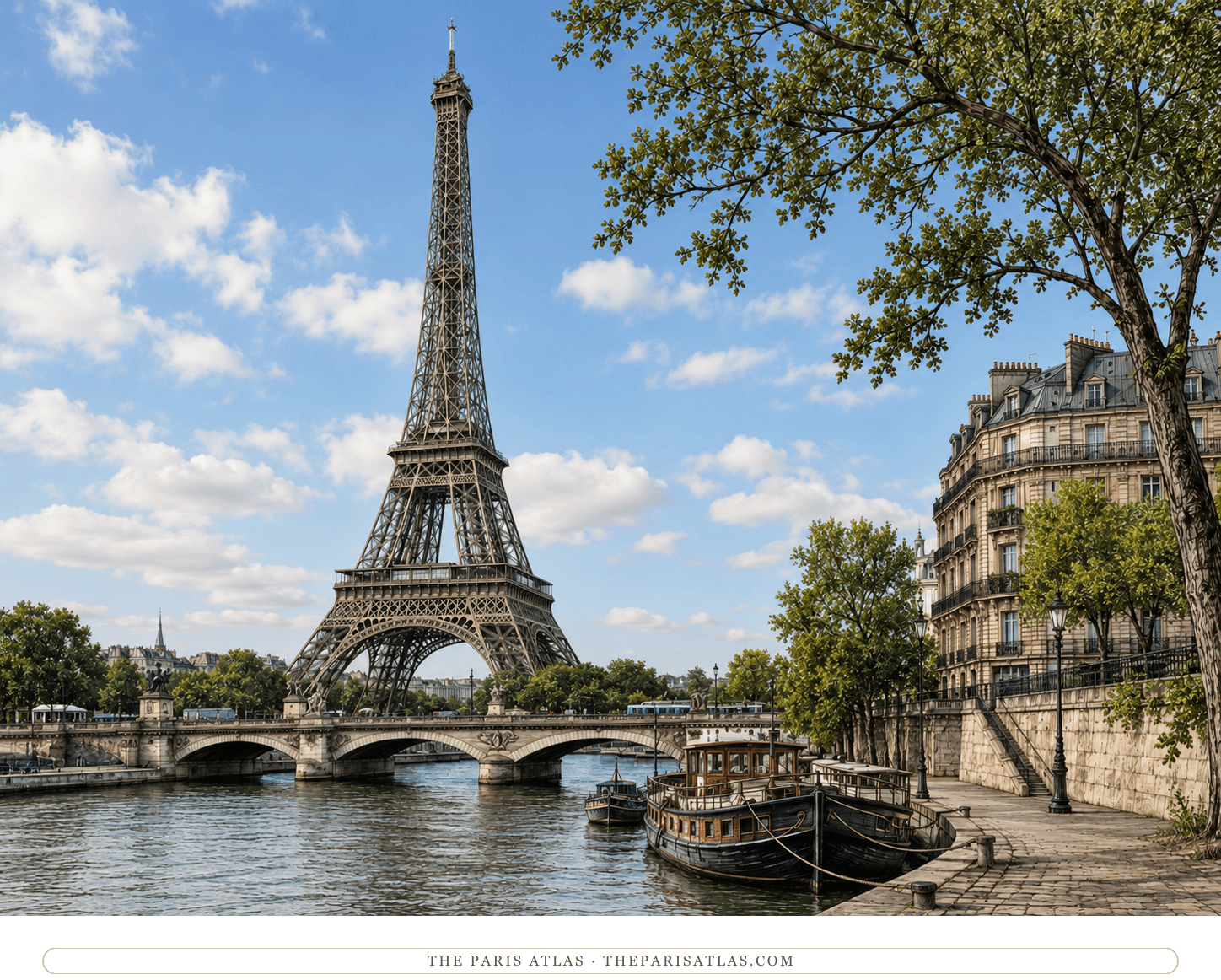
The tower at the era's edge of vision — and in the twenties and thirties, a champagne advertisement three hundred meters tall, fizzing in lights over everyone's night walks.
Visit the place
The address where the Jones family lived around 1868 to 1870, when the future Edith Wharton was a child of six or seven — the years that gave her fluent French and a lifelong sense that Europe was home.
Visit the place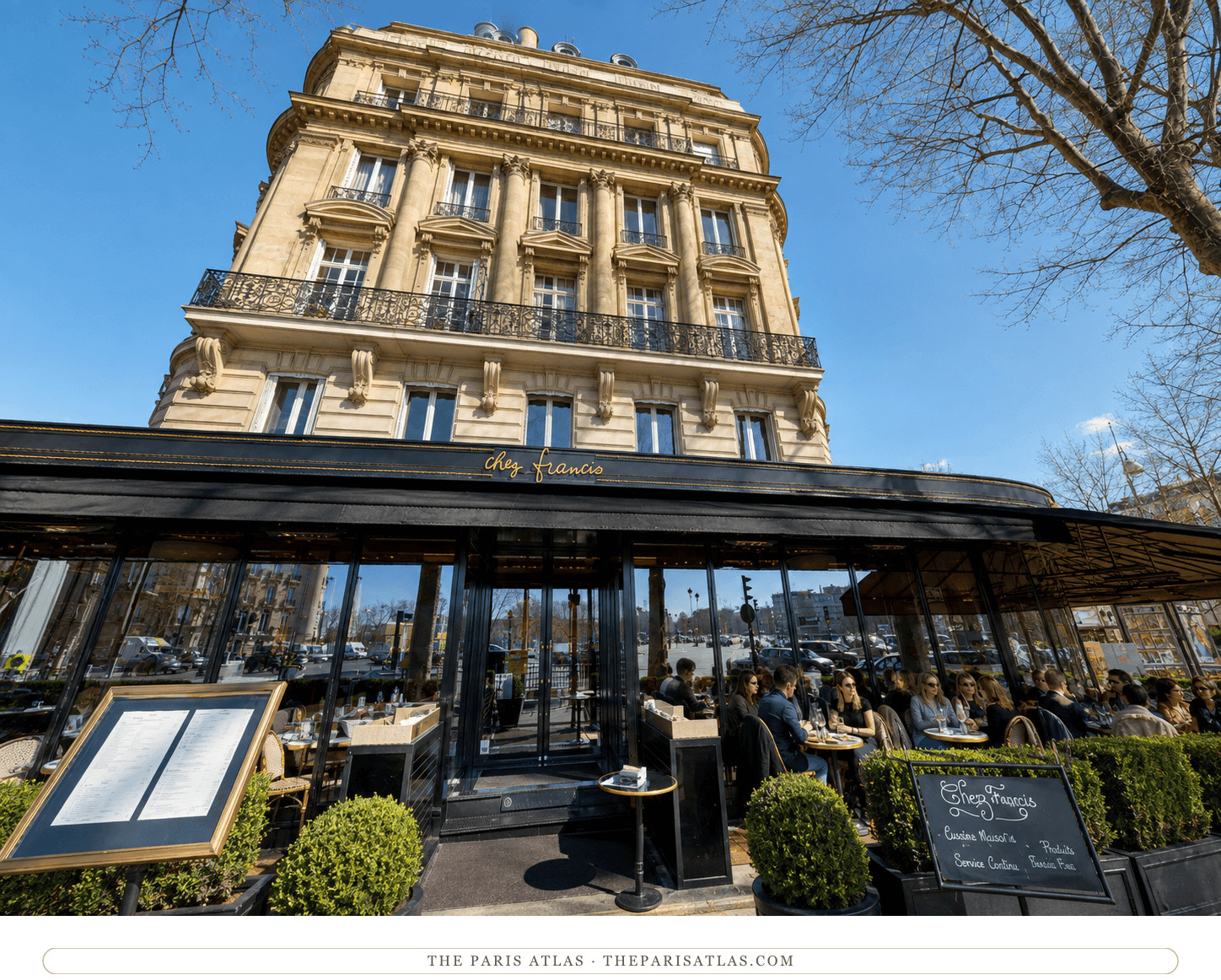
The brasserie on the Place de l'Alma that Cendrars scholarship names as one of the writer's regular stops — a Right Bank address in a café life mapped mostly through Montparnasse.
Visit the place
James Joyce's longest Paris address — the family flat in a quiet cul-de-sac off the rue de Grenelle, with the cool quiet study where Work in Progress cost twelve hundred hours a chapter.
Visit the placeThe sources below include histories, archival materials, scholarly research, and official records that informed this page. They document Auguste Rodin's studios at the Dépôt des Marbres, the people connected to it, and its place in Paris.


Web source consulted for documented facts and historical context presented on the Auguste Rodin's studios at the Dépôt des Marbres page.
The museum's research on the depot as Rodin's principal studio: atelier M shared with Joseph Osbach, the later ateliers H and J, and his retention of them until 1917.
Web source consulted for documented facts and historical context presented on the Auguste Rodin's studios at the Dépôt des Marbres page.

The Archives nationales identify the Dépôt des Marbres at historical no. 182 rue de l'Université as today's no. 216 — the renumbering this page depends on.
These references provide the documented foundation for this page's history and context. Claim-level citations remain attached to the specific claims they support.
 Explore more resources
Newsletter
The cafés, studios, and walk-up flats where the work was made — one story from the map in every letter.