
Mentioned in passing
Tropic of Cancer
Fizzing champagne over the night city — Miller catching the Citroën light-show years in a single image.
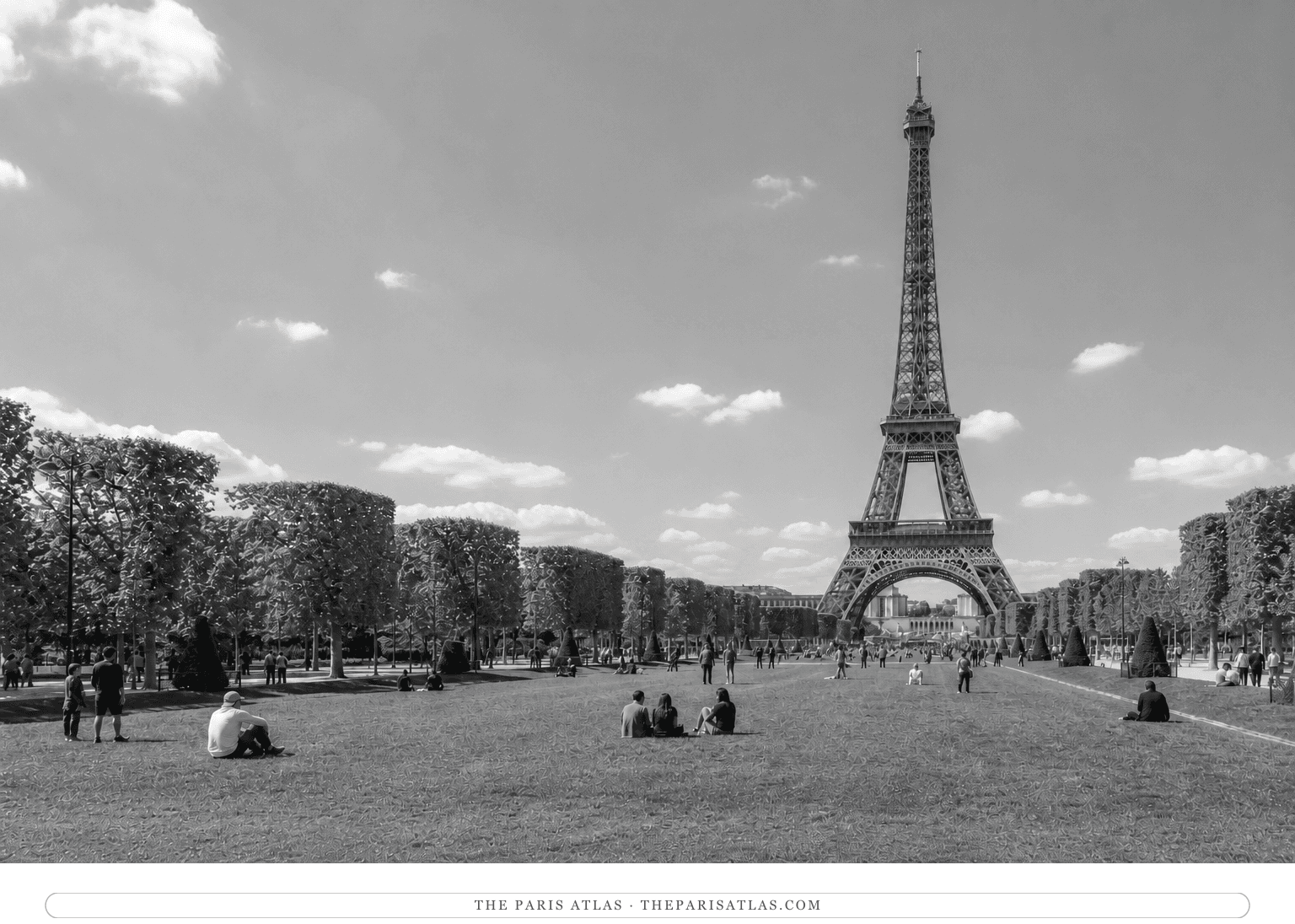
The tower at the era's edge of vision — and in the twenties and thirties, a champagne advertisement three hundred meters tall, fizzing in lights over everyone's night walks.
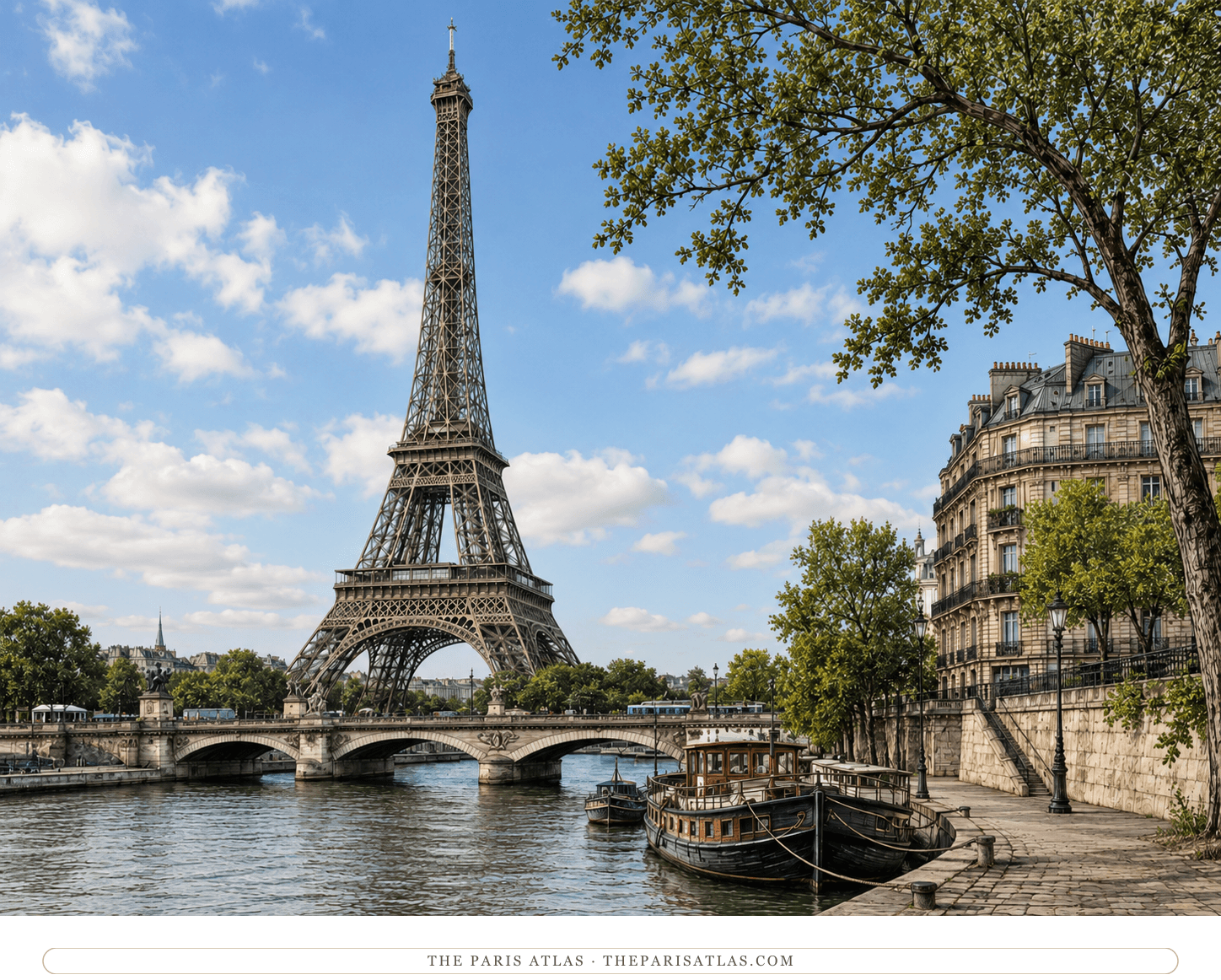
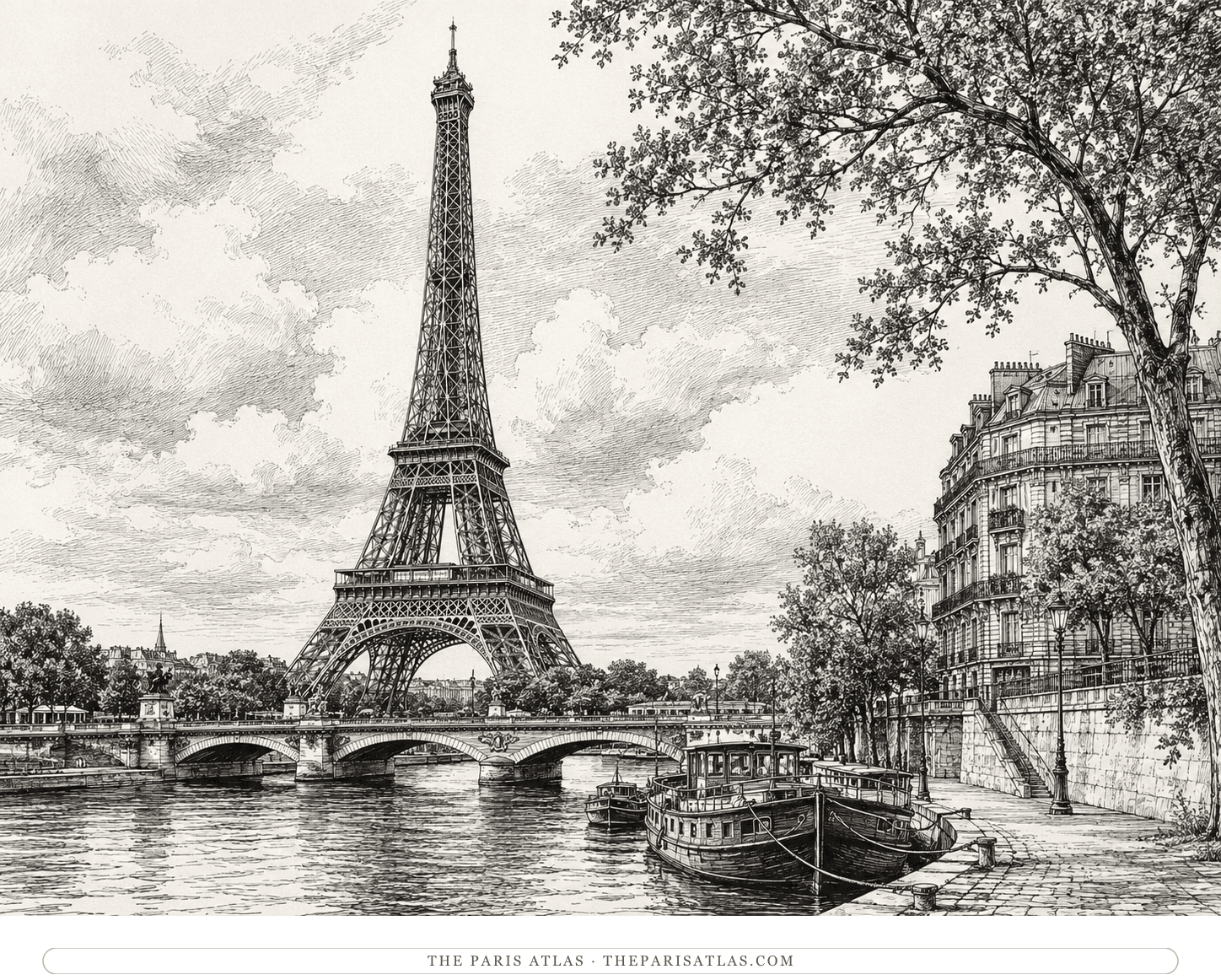
By the time the writers of the 1920s reached Paris, the Eiffel Tower had already survived its own scandal. It was built for the 1889 Exposition over the protests of the artistic establishment, meant to stand twenty years, and saved by its radio masts. The generation of 1920 inherited it not as novelty but as horizon — the thing at the end of every westward street.
The era gave it a second life the postcards forget: from 1925 the tower wore the Citroën name in a quarter-million bulbs, an animated light show — comets, zodiac signs, cascades of sparks — that ran for nearly a decade and turned the night sky over the Champ de Mars into an advertisement. That is the tower Miller saw: not iron but light, fizzing like something poured. The image in Tropic of Cancer is reportage as much as metaphor.
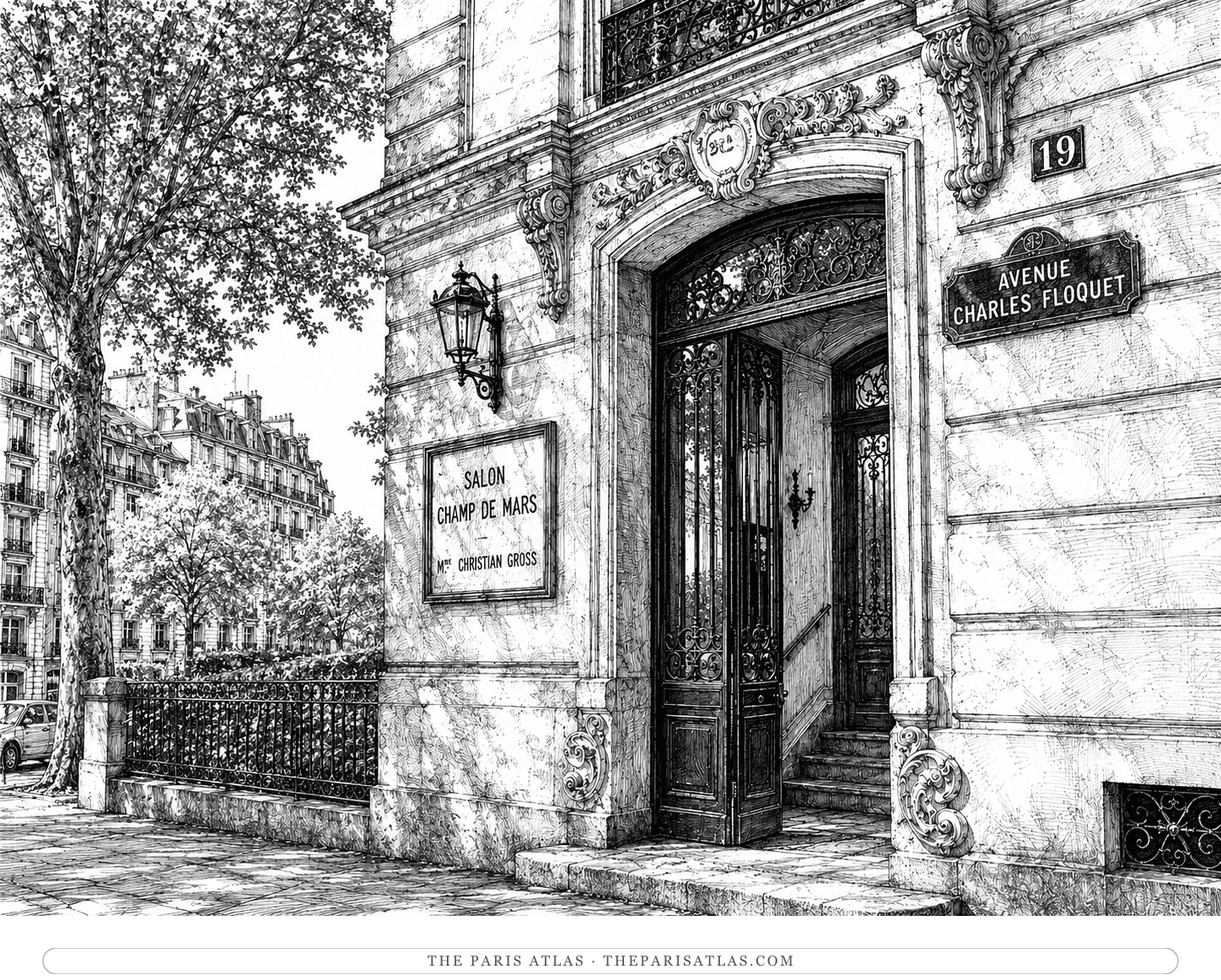
Its neighbors in these pages are the quarter's quieter rooms — the salon on the Avenue Charles Floquet in its shadow, Joyce's flat at Square de Robiac a few streets east — a reminder that the era's most private literary geography unfolded under the most public structure on earth.
…the Eiffel Tower is fizzing champagne…
Opens with the Exposition, tallest structure on earth, to the horror of the artistic establishment.
Saved from demolition by its value as a radio mast.
The Citroën illuminations begin — the tower becomes the world's largest advertisement.
Miller's night-walking Paris, the tower fizzing overhead.
Open, lit nightly — the sparkle now its own, not a carmaker's.
Mentioned in passing
Fizzing champagne over the night city — Miller catching the Citroën light-show years in a single image.
Frequented by · 1889
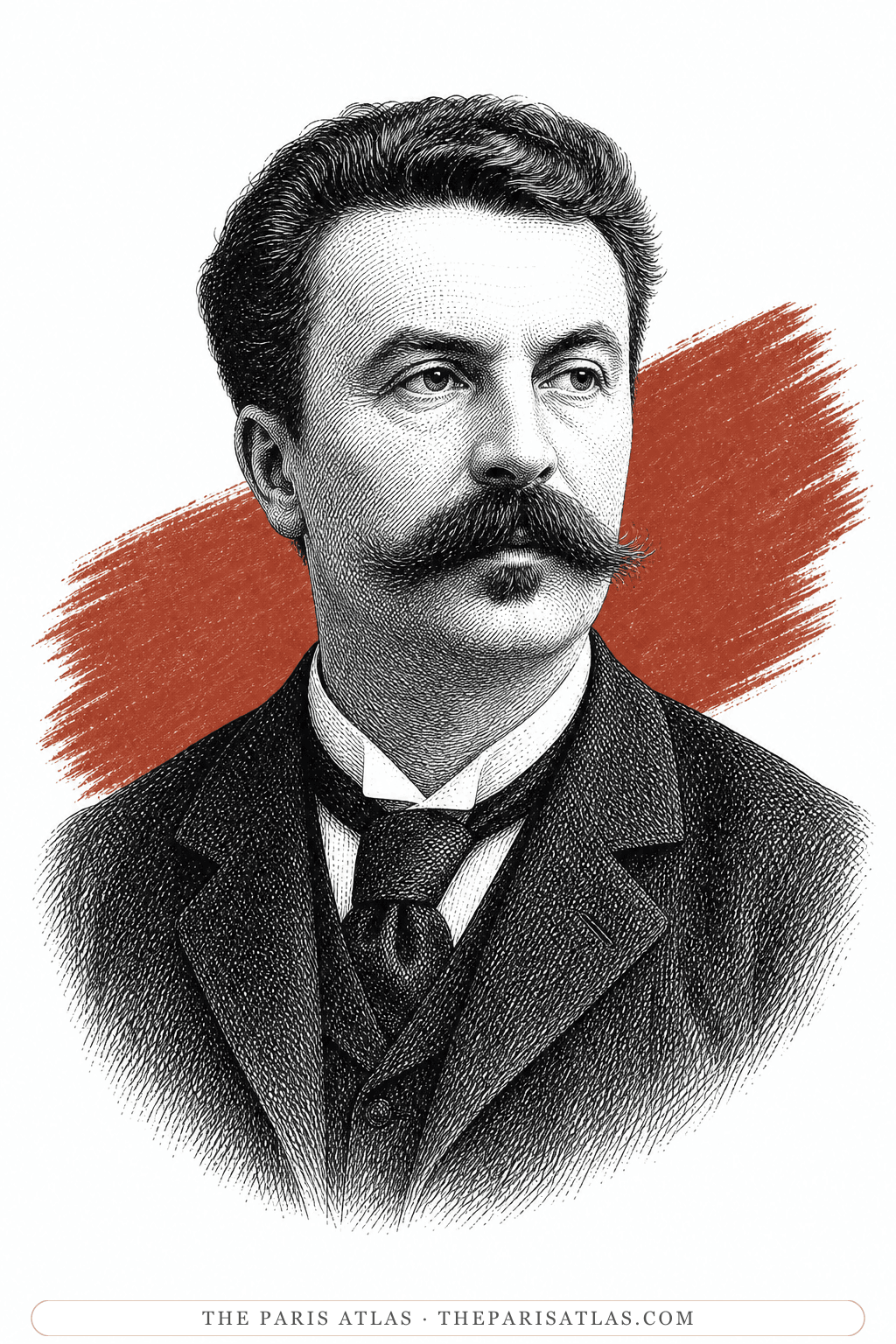
Maupassant was among the artists who signed the protest against the tower printed in Le Temps on 14 February 1887, three weeks after construction began, and described it in print as a giant ungainly skeleton aborting into a ridiculous skinny factory chimney. The tower's own official history then records that once it was built he said he often lunched on the first floor, because it was the only place in the city where he would not see it. The remark is reported as something he said rather than documented as a habit, so the visits are recorded here as probable — the line itself is the best-known joke ever made about the monument.
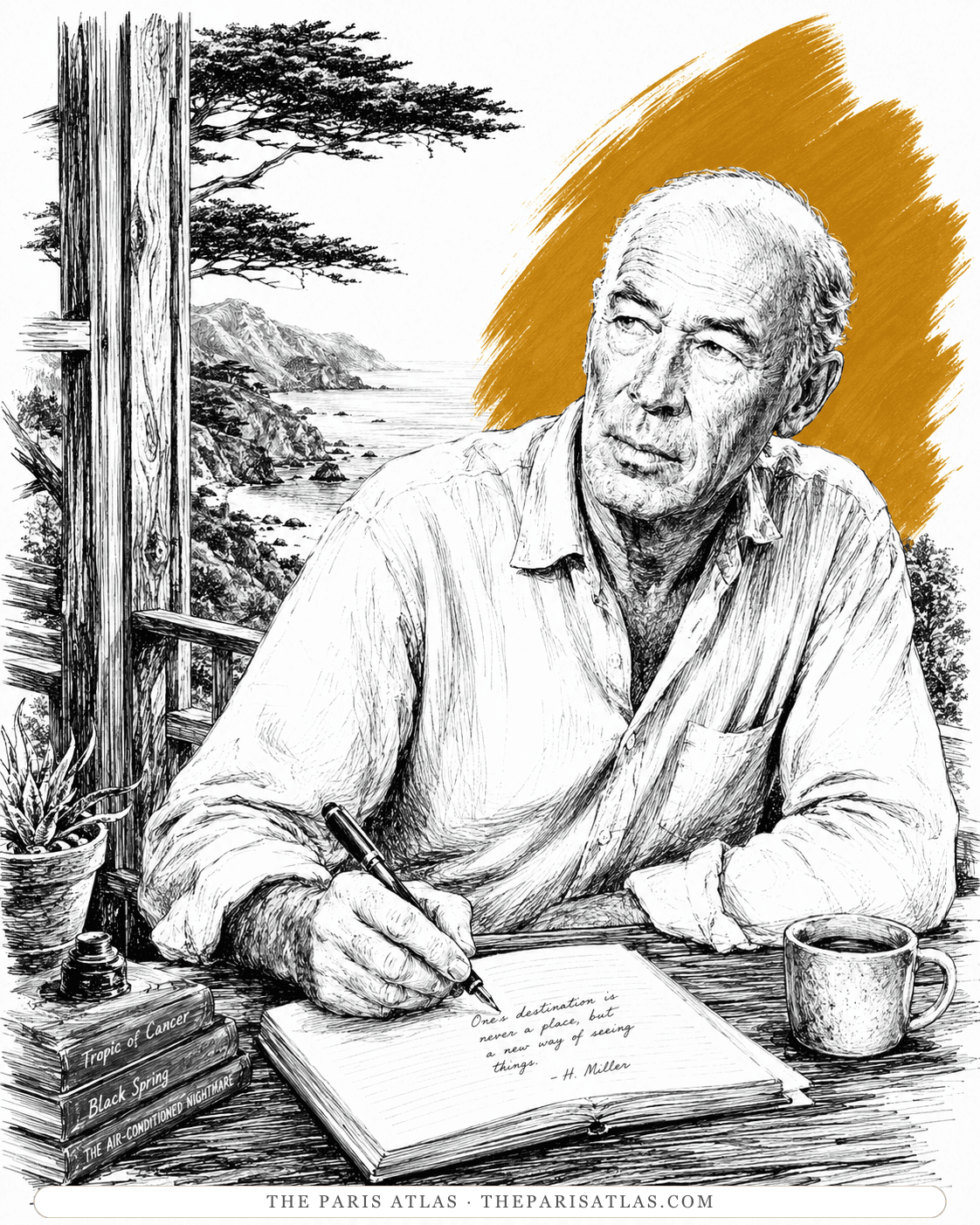
Henry Miller wrote about Eiffel Tower in Tropic of Cancer.
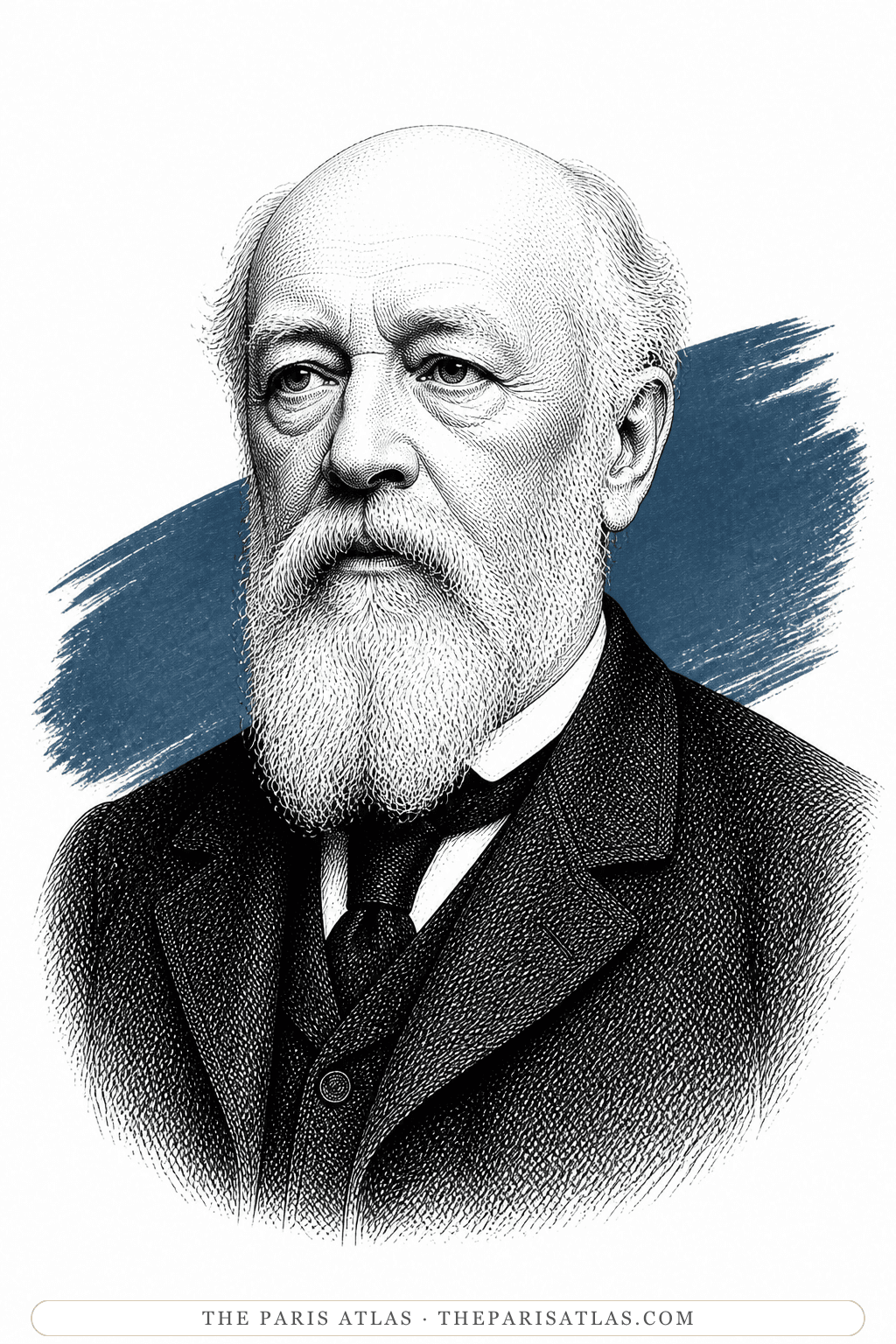
Eiffel kept roughly 100 square metres at the top of the tower, under the spire, as an office and laboratory - a sitting room with a piano and three desks, a kitchen and a bathroom, but no bedroom, and by the tower's own account he presumably never slept there. He received Thomas Edison in it on 10 September 1889 and used the structure for meteorology from the year it opened, for falling-body measurements from 1903 to 1905, and for wind-tunnel work at its foot from August 1909 to December 1911.
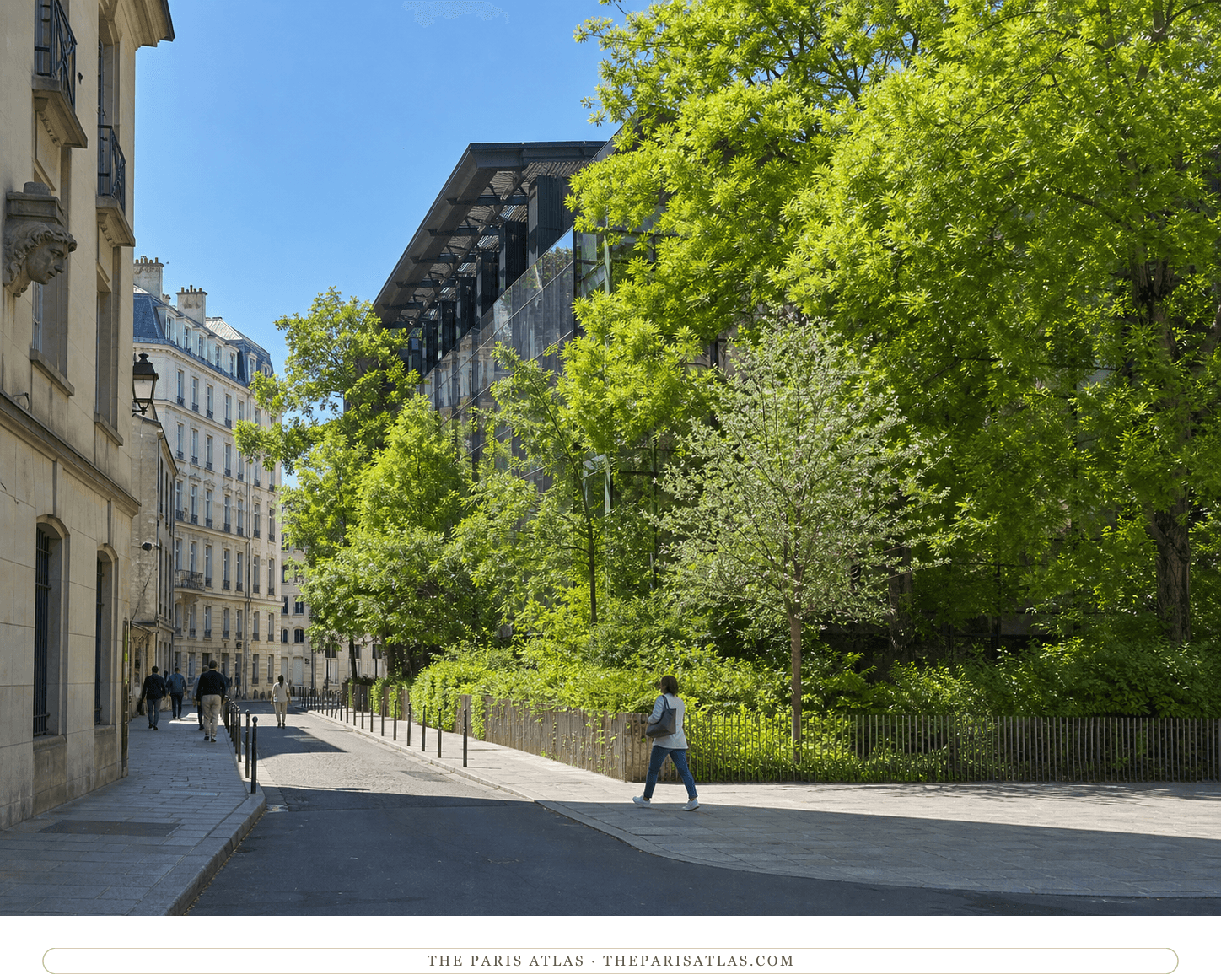
The state marble depot on the rue de l'Université where Auguste Rodin worked from 1880 until his death in 1917 — first in atelier M, later in ateliers H and J. It was his principal Paris studio, and where The Gates of Hell was developed. The compound is gone.
Visit the place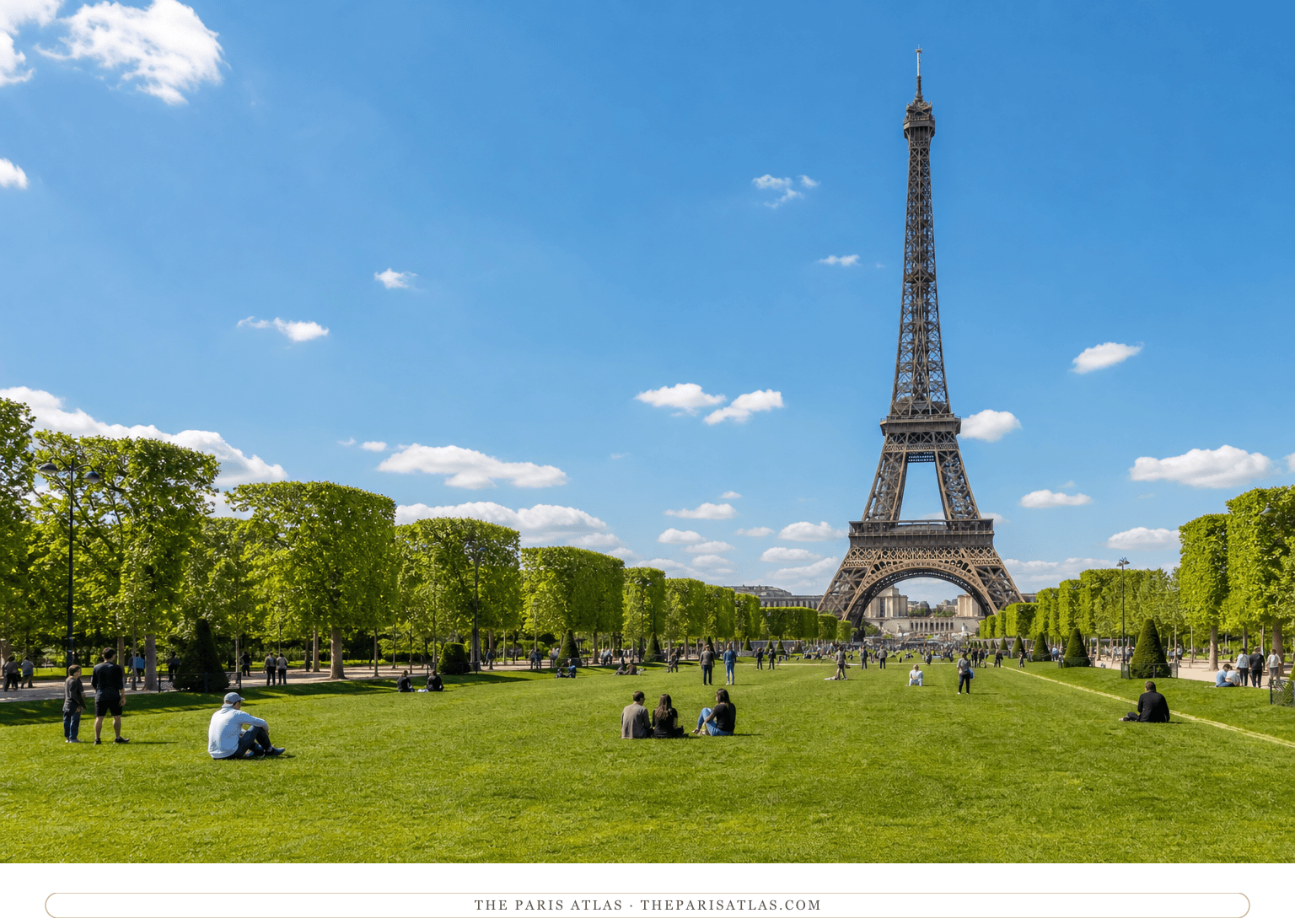
The great park below the Eiffel Tower, and the site of the 1889 Exposition Universelle — where Claude Debussy heard Javanese gamelan for the first time and never entirely got over it.
Visit the place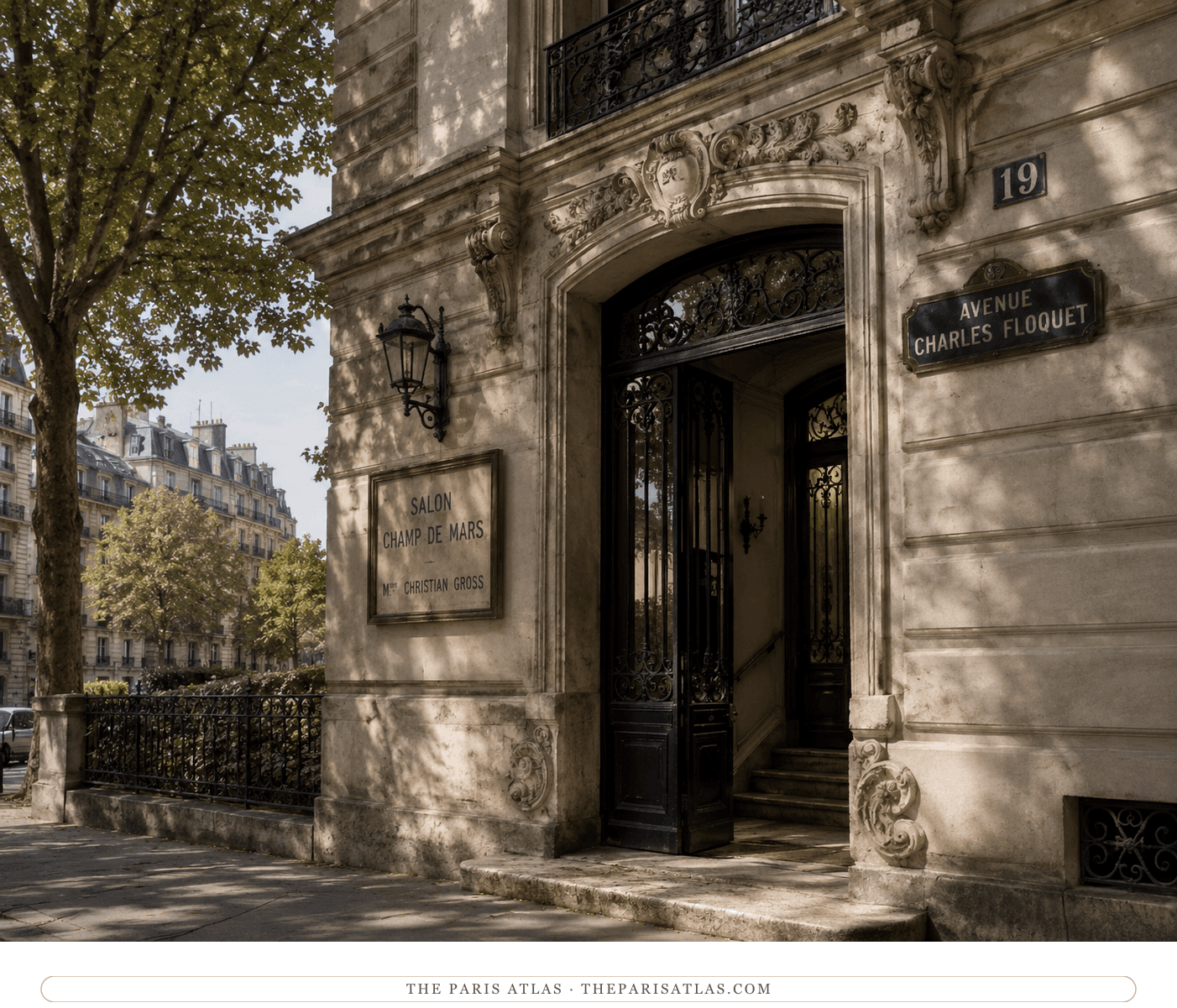
The drawing room by the Champ de Mars where Ezra Pound the composer made his debut — the Villon songs, heard by invitation before anyone believed he'd really done it.
Visit the place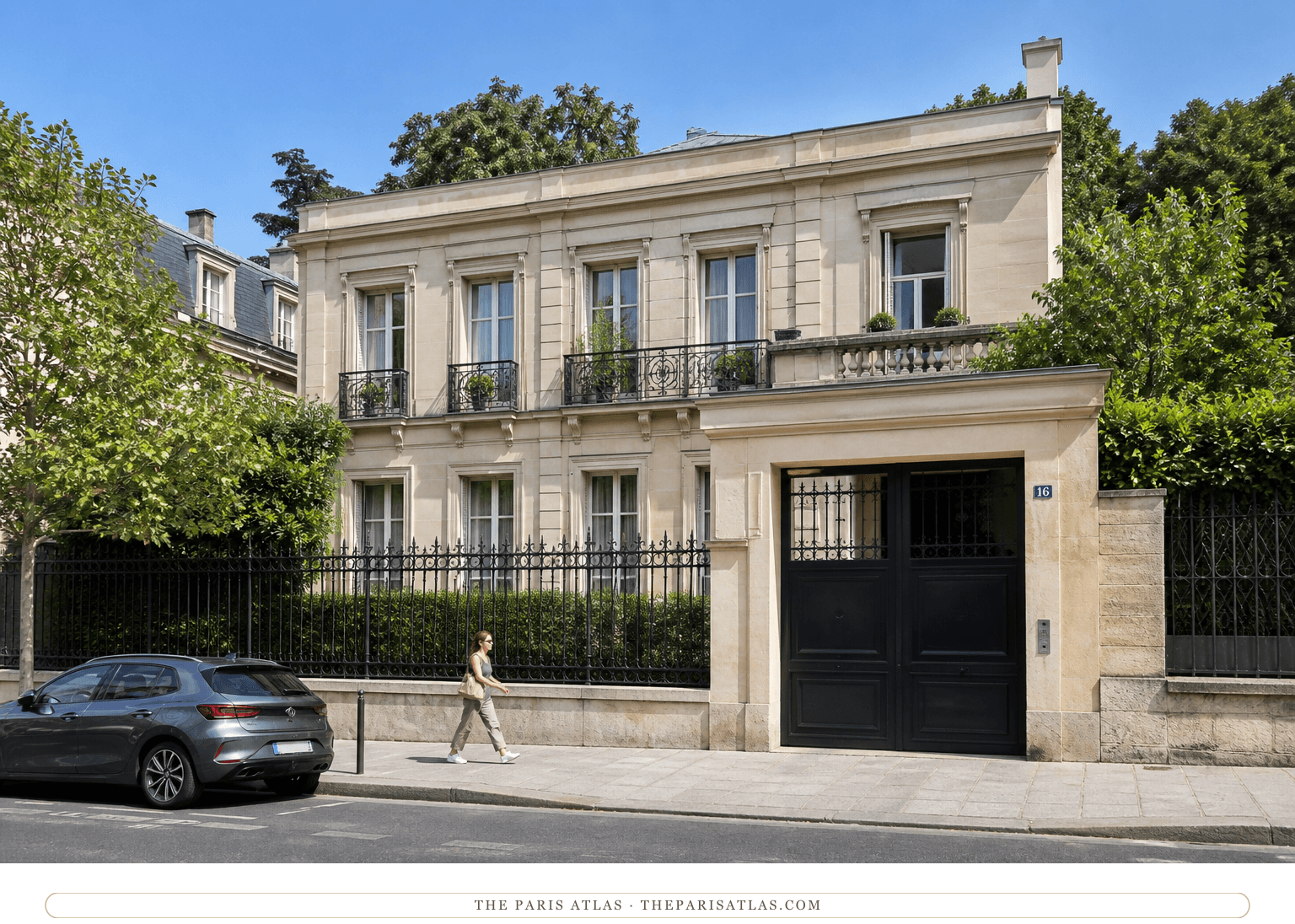
The Morisot family house in Passy where a studio was built in the garden for Berthe and her sister Edma — an unusually serious commitment to two daughters' painting for a bourgeois family of the 1860s.
Visit the placeThe sources below include histories, archival materials, scholarly research, and official records that informed this page. They document Eiffel Tower, the people connected to it, and its place in Paris.

Primary text included as part of the documented record for Eiffel Tower.

Map data used to verify addresses, geographic coordinates, and the placement associated with Eiffel Tower.
Web source consulted for documented facts and historical context presented on the Eiffel Tower page.
Web source consulted for documented facts and historical context presented on the Eiffel Tower page.
These references provide the documented foundation for this page's history and context. Claim-level citations remain attached to the specific claims they support.
 Explore more resources
Newsletter
The cafés, studios, and walk-up flats where the work was made — one story from the map in every letter.