The Paris AtlasCharting the artists, works, and places worth returning to.
  • Author
  • Journalist
· French · 1850–1893

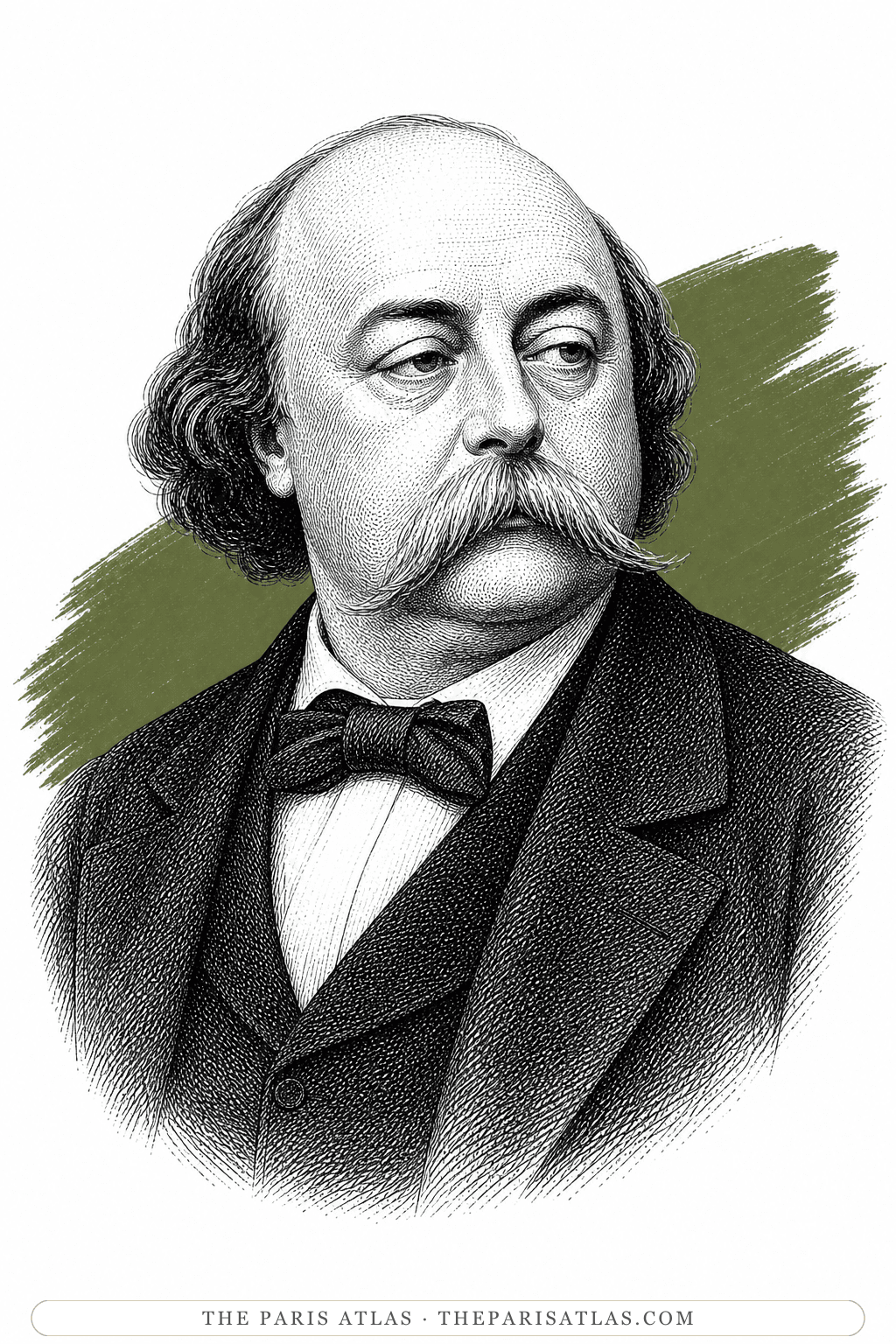
Guy de Maupassant

The greatest short-story writer in French, who spent eight years as a clerk in government ministries while the novelist Gustave Flaubert corrected his pages line by line, then wrote roughly three hundred stories and six novels in a decade before syphilis ended him at forty-two in an asylum at Passy, on the western edge of Paris. Bel-Ami — the nickname of its handsome, unscrupulous hero — is his portrait of the Paris press as an engine of corruption.

Details

Lived
1850–1893
Born
5 August 1850
Birthplace
Tourville-sur-Arques, Normandy, France
Died
6 July 1893 · aged 42
Place of death
Paris, France
Nationality
French
Profession
Short-story writer, novelist and journalist
Major works
Boule de Suif, Une vie, Bel-Ami, Pierre et Jean, Le Horla
Roles
AuthorJournalist

About Guy de Maupassant

Guy de Maupassant was born on 5 August 1850 at the Château de Miromesnil, in the Normandy village of Tourville-sur-Arques near Dieppe, and died on 6 July 1893 in Paris, a month short of his forty-third birthday. In between he became the most widely imitated short-story writer in any language — the man who taught the world that a story can be a small, hard, entirely unsentimental machine that turns over once at the end and changes everything you have just read.

The Paris in his work is the Paris he actually lived in: a dark ground-floor room at 2 rue Moncey, eight years of clerking at government ministries, boating parties on the Seine outside town, and then, once he was famous, newspaper offices, better addresses, and the world of the press and money that his novel Bel-Ami takes apart. His teacher was Gustave Flaubert, the novelist of Madame Bovary and a childhood friend of his mother's, who corrected his manuscripts for seven years and got him a better government job. He wrote at extraordinary speed from 1880 to 1890, went mad from syphilis, cut his own throat on 2 January 1892, and died eighteen months later in a clinic at Passy.

Normandy, and a mother who knew Flaubert

Maupassant was born on 5 August 1850 at the Château de Miromesnil, in the commune of Tourville-sur-Arques near Dieppe on the Normandy coast. His mother, Laure, was a cultivated woman and a childhood friend of Gustave Flaubert, the novelist who had just made his name with Madame Bovary — the fact that decides the rest of his life. In October 1859 the family put him into the lycée Napoléon in Paris, the school now called the lycée Henri-IV, but he lasted only a year there before going back to Normandy.

He returned to Paris for good in the spring of 1872, to a job: aspirant surnuméraire at the ministère de la Marine, the French navy ministry — an unpaid trainee clerkship, the bottom rung of the civil service. He took a dark ground-floor room at 2 rue Moncey, a short street below Place Clichy in the 9th arrondissement, and stayed there four years before moving to 17 rue Clauzel in July 1876. Nothing about the arrangement was literary. It was a young man copying documents for the state and writing at night.

Seven years of correction

What saved the clerk was the apprenticeship. Through 1873 and 1874 Maupassant went regularly to Gustave Flaubert's Paris apartment on the rue Murillo, beside the Parc Monceau in the 8th arrondissement, and put his pages in front of the most exacting prose writer in France. Flaubert was then in his fifties and had been through his own Paris ordeal — Madame Bovary, his novel about an adulterous country doctor's wife, was prosecuted for offending public morals in 1857, and acquitted. He treated the young man as a pupil rather than a protégé to be pushed forward: he corrected, refused, held him back from publishing, and repeated that if a writer has any originality in him the first task is to dig it out.

The tutelage was practical as well. On 18 December 1878, with Flaubert's help, Maupassant moved out of the navy ministry into the ministère de l'Instruction publique — the education ministry — as an attaché in the minister's private office, and by February 1879 he was working as secretary to the senior official Xavier Charmes under Jules Ferry, the education minister who would go on to make French primary schooling free, compulsory and secular. Meanwhile he rowed. From 1873 he spent his free days boating on the Seine at Argenteuil and, from 1874, at Bezons — the riverside world of hired skiffs, cheap restaurants and Sunday couples that runs through dozens of his stories.

Boule de Suif, and ten years at full speed

On 17 April 1880 a collective volume appeared: Les Soirées de Médan, 'Evenings at Médan' — six stories about the Franco-Prussian war of 1870 by Émile Zola and the younger writers who gathered at his house at Médan, outside Paris. The story that carried the book was Maupassant's: Boule de Suif, 'Ball of Fat', in which a coach of respectable French travellers fleeing the Prussian advance persuades a prostitute among them to sleep with an enemy officer so they can pass, and then cuts her dead for having done it. The success was immediate and total. Flaubert lived to read it and died three weeks later, on 8 May 1880.

Maupassant left the ministry that year and became a professional writer, which in the Paris of the 1880s meant a newspaper writer. He began contributing to the daily Le Gaulois on 31 May 1880 and to Gil Blas, another Paris daily, on 29 October 1881, and the papers were where most of the stories first appeared, a few columns at a time. What followed is one of the fastest careers in French literature: in roughly ten years he produced something like three hundred short stories, six novels and a great quantity of journalism. The novels came at a book every eighteen months or so — Une vie ('A Life') in April 1883, Bel-Ami in May 1885, Mont-Oriol in 1887, Pierre et Jean ('Pierre and Jean') in January 1888, Fort comme la mort ('Strong as Death') in 1889, Notre cœur ('Our Heart') in 1890. The addresses improved with the sales: 83 rue Dulong around the turn of 1881, 10 rue de Montchanin in July 1884, 14 avenue Victor-Hugo in December 1889, 24 rue Boccador in July 1890.

Bel-Ami: the Paris of newspapers and money

Bel-Ami — 'Handsome Friend', the pet name the women in the book give its hero — ran as a serial in the newspaper Gil Blas in 1885, which is part of its joke: a novel about the corruption of the Paris press, printed in the Paris press. Its hero, Georges Duroy, is a former railway clerk with no talent, no money and considerable looks, who climbs from a hack job on a newspaper to the directorship of it by way of a series of women, ending as 'du Roy de Cantel' — the same name respelled to sound like an aristocrat's.

Around him Maupassant assembles the scandals shaking France under the Third Republic — the parliamentary republic founded after the empire of Napoleon III collapsed in the defeat of 1870 — and shows how politicians, financiers and well-placed women actually move power between them. One character states the method plainly: it is still through women that a man arrives fastest. Critics have called Duroy a second-generation version of Rastignac, the ambitious provincial who claws his way up through Honoré de Balzac's novels, and the comparison holds with one difference: Balzac's climber has a conscience to lose, and Maupassant's does not.

The Eiffel Tower, and the lunch he is said to have taken there

On 14 February 1887, three weeks after work began on the tower the engineer Gustave Eiffel was building as the entrance arch of the Exposition Universelle, the Paris world's fair of 1889, the newspaper Le Temps printed a protest against it signed by some of the best-known artists in France. Maupassant signed. So did the composer Charles Gounod, the novelist Alexandre Dumas the younger, the poet François Coppée and Charles Garnier, the architect of the Paris Opéra. Maupassant's own published description of the Eiffel Tower called it a giant ungainly skeleton aborting into a ridiculous, skinny factory chimney.

Then comes the story everyone repeats, and it should be repeated accurately: it is an anecdote attributed to him rather than a documented daily habit. The tower's own official history records that after it was built Maupassant said he often went to lunch on the first floor — because it was the only place in the city where he would not have to see it. Whether he ate there weekly or said it once at a dinner table, nobody can now establish. As a line about how Parisians came to live with the thing they had objected to, it has never been improved on.

Passy

The illness had been there the whole time. Maupassant was infected with syphilis in the mid-1870s and the diagnosis was confirmed in January 1877, when he was twenty-six. In its late stage the disease attacks the brain, and through 1891 his letters and his conduct came apart: headaches, hallucinations, a conviction that his medicine was a person he could talk to. On 2 January 1892, after firing revolvers in his rooms, he cut his own throat with a Japanese paper knife. He survived it.

On 6 January 1892 he was taken to the asylum of Doctor Émile Blanche at Passy — then a quiet quarter on the western edge of Paris, absorbed into the 16th arrondissement, and the address where wealthy French families placed their mad. He never left it. He died there on 6 July 1893 of general paresis, the paralysis of the late disease, a month before he would have turned forty-three, and was buried after a funeral at the church of Saint-Pierre de Chaillot on 8 July. He had been a published writer for thirteen years.

Life events

  1. 1850

    Born on 5 August at the Château de Miromesnil, Tourville-sur-Arques near Dieppe, to a cultivated mother who had been a childhood friend of Gustave Flaubert.

    Maupassant, Guy de (1850–1893); Marlo Johnston, Guy de Maupassant — Biographie; Guy de Maupassant

  2. 1859

    Sent in October to the lycée Napoléon in Paris — today the lycée Henri-IV — and stays only a year.

    Marlo Johnston, Guy de Maupassant — Biographie

  3. 1872

    Enters the ministère de la Marine — the French navy ministry — in the spring as an unpaid trainee clerk, and takes a dark ground-floor room at 2 rue Moncey, below Place Clichy.

    Marlo Johnston, Guy de Maupassant — Biographie; Guy de Maupassant

  4. 1873

    Begins his years of boating on the Seine, first at Argenteuil and from 1874 at Bezons — the river world of dozens of the stories.

    Marlo Johnston, Guy de Maupassant — Biographie

  5. 1873–1874

    Goes regularly to Flaubert's apartment on the rue Murillo to have his manuscripts corrected.

    Marlo Johnston, Guy de Maupassant — Biographie

  6. 1877

    The syphilis he had contracted in the mid-1870s is confirmed by diagnosis in January.

    Marlo Johnston, Guy de Maupassant — Biographie; Guy de Maupassant

  7. 1878

    Moves on 18 December, with Flaubert's help, from the navy ministry to the education ministry as an attaché in the minister's office.

    Marlo Johnston, Guy de Maupassant — Biographie

  8. 1880

    Boule de Suif — 'Ball of Fat' — appears on 17 April in Les Soirées de Médan ('Evenings at Médan'), a collective volume of war stories by Émile Zola and the young writers around him, and is an immediate success; Flaubert dies three weeks later, on 8 May.

    Marlo Johnston, Guy de Maupassant — Biographie

  9. 1880

    Leaves the civil service to write full time and begins contributing to the newspaper Le Gaulois on 31 May; Gil Blas follows in October 1881.

    Marlo Johnston, Guy de Maupassant — Biographie; Guy de Maupassant

  10. 1883

    Publishes his first novel, Une vie — 'A Life' — on 10 April.

    Marlo Johnston, Guy de Maupassant — Biographie

  11. 1885

    Bel-Ami — 'Handsome Friend', the nickname of its social-climbing hero — runs as a serial in the newspaper Gil Blas and appears as a book on 15 May: the Paris of newspapers, financiers and social climbing, seen from inside.

    Bel-Ami; Marlo Johnston, Guy de Maupassant — Biographie

  12. 1887

    Signs the artists' protest against the Eiffel Tower, then rising as the gateway to the 1889 Paris world's fair, printed in the newspaper Le Temps on 14 February; he later says he lunches on the tower's first floor because it is the only place in Paris where he cannot see it.

    When the Eiffel Tower was a subject of controversy

  13. 1892

    Cuts his own throat on 2 January after firing revolvers in his rooms, and is committed on 6 January to Doctor Émile Blanche's asylum at Passy.

    Marlo Johnston, Guy de Maupassant — Biographie; Guy de Maupassant

  14. 1893

    Dies at Passy on 6 July of general paresis, a month before his forty-third birthday; the funeral is held at Saint-Pierre de Chaillot on 8 July.

    Marlo Johnston, Guy de Maupassant — Biographie; Maupassant, Guy de (1850–1893)

People they knew

Documented connections — every one carries its source.

Gustave Flaubert

  • Author
  • Playwright

Mentored by · 1873–1880

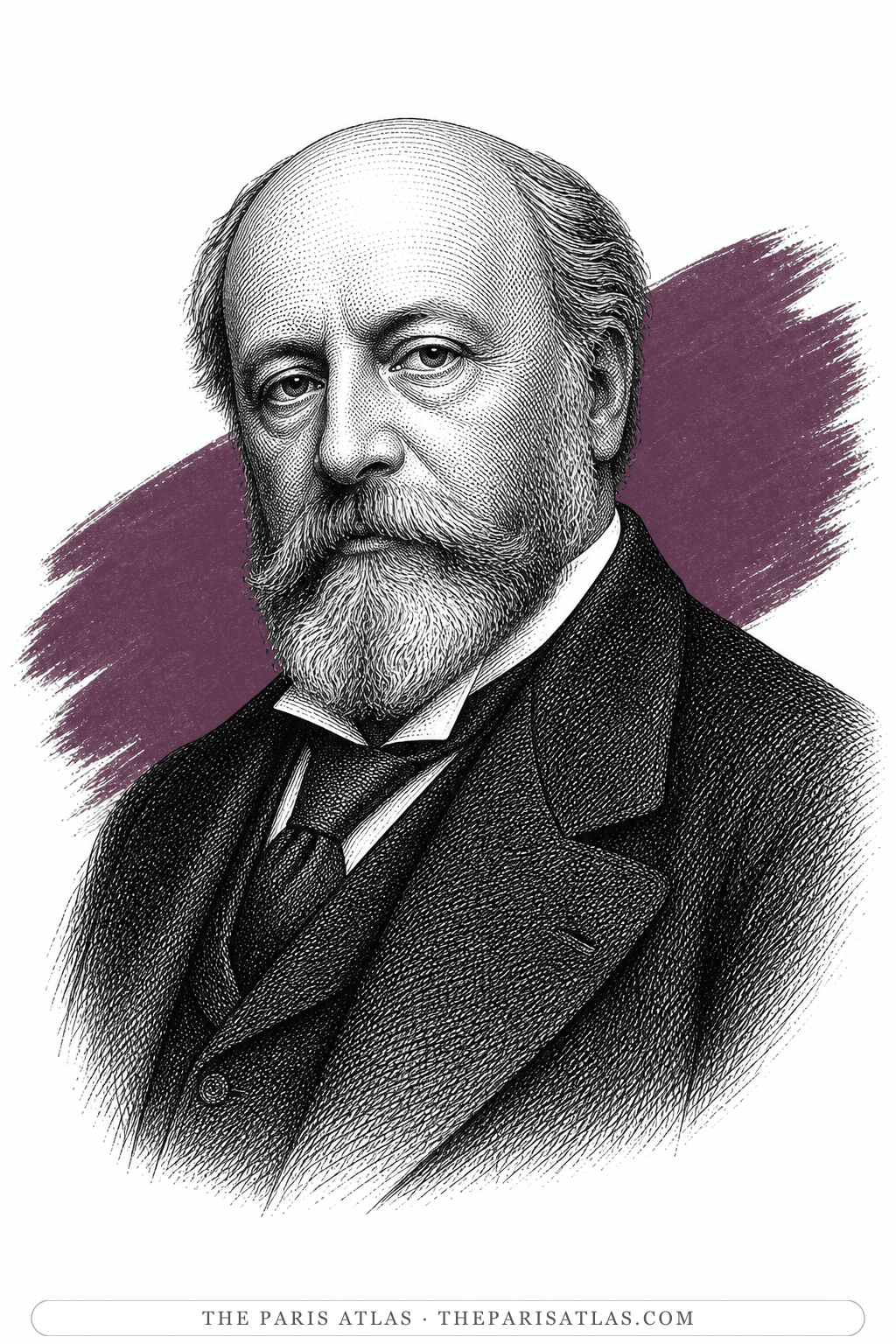
Maupassant's mother had been a childhood friend of Flaubert's, and from 1873 the young ministry clerk went regularly to Flaubert's Paris apartment on the rue Murillo to have his manuscripts corrected. Flaubert refused to let him publish too early, told him that a writer's first task is to dig out whatever is original in himself, and in December 1878 used his own connections to move him from the navy ministry to a better post at the education ministry. Maupassant's breakthrough story Boule de Suif appeared on 17 April 1880; Flaubert died three weeks later.

Gustave Flaubert; Marlo Johnston, Guy de Maupassant — Biographie; Guy de Maupassant

Henry James

  • Author
  • Critic

Met · 1876

Maupassant was Flaubert's pupil and one of the fixtures of the Sunday gatherings in Flaubert's Paris apartment. Percy Lubbock's account of James's Paris year records that Turgenev's friendship brought James into that group - Edmond de Goncourt, Alphonse Daudet, Guy de Maupassant and Emile Zola. Maupassant was twenty-six and unpublished as a story writer; his breakthrough came four years later.

Henry James, edited by Percy Lubbock, The Letters of Henry James, Volume I (1920)

Guy de Maupassant’s Places

The cataloged places connected to Guy de Maupassant — through the books, and through the documented record.

Places you can enter today appear first, followed by addresses to see from outside and sites that have vanished.

Questions about Guy de Maupassant

Who was Guy de Maupassant?

A French writer, born in Normandy in 1850 and dead in Paris in 1893, generally regarded as the greatest short-story writer in the French language. He worked as a government clerk through the 1870s while Gustave Flaubert taught him to write, broke through in 1880 with the story Boule de Suif ('Ball of Fat'), and then in about ten years produced roughly three hundred stories and six novels, including Bel-Ami, his novel of the Paris press. Syphilis destroyed his mind and he died at forty-two in an asylum at Passy, on the western edge of Paris.

Was Maupassant taught by Flaubert?

Yes, and it is the central fact of his career. Maupassant's mother had been a childhood friend of Gustave Flaubert, the novelist of Madame Bovary, and from the early 1870s the young clerk brought his manuscripts to Flaubert's Paris apartment on the rue Murillo to be corrected. The apprenticeship ran about seven years. Flaubert refused to let him publish too soon, told him that a writer's first duty is to dig out whatever is original in himself, and in December 1878 used his connections to move him from the navy ministry to a better post at the education ministry.

How many stories did Maupassant write?

Roughly three hundred short stories, alongside six novels and a large body of newspaper journalism — nearly all of it produced in the single decade from 1880 to 1890. Most of the stories appeared first in Paris newspapers, principally Le Gaulois, which he joined in May 1880, and Gil Blas, which he joined in October 1881, before being gathered into collections.

What is Boule de Suif about?

'Ball of Fat' — a coach of respectable French travellers escaping the Prussian advance in the Franco-Prussian war of 1870, and the prostitute travelling with them whom they persuade to sleep with an enemy officer so the coach can pass, and whom they then treat as untouchable for having agreed. It was published on 17 April 1880 in Les Soirées de Médan ('Evenings at Médan'), a collective volume of war stories by Émile Zola and the younger writers who met at his house outside Paris, was the outstanding success of that book, and made Maupassant's name overnight. Flaubert read it and died three weeks later.

What is Bel-Ami about?

Georges Duroy, a penniless ex-railway clerk with good looks and no scruples, who rises from a hack job on a Paris newspaper to running it, using a succession of women as steps; 'Bel-Ami', handsome friend, is what they call him. Serialized in the newspaper Gil Blas in 1885, the novel is a portrait of the press, politics and finance of the Third Republic — the parliamentary regime that followed France's defeat of 1870 — as a single corrupt machine — and one of its characters says outright that it is still through women that a man gets ahead fastest.

Did Maupassant really eat lunch at the Eiffel Tower to avoid seeing it?

That is the story, and it is an anecdote attributed to him rather than a documented routine. Maupassant genuinely opposed the tower: he was among the artists who signed the protest printed in the newspaper Le Temps on 14 February 1887, three weeks after construction began on what was to be the entrance arch of the 1889 world's fair. The tower's own official history then records that once it was built he said he often lunched on the first floor, because it was the only place in the city where he would not see it. Nobody can now establish how often he actually went.

How did Maupassant die?

Of late-stage syphilis. He was infected in the mid-1870s and diagnosed in January 1877; the disease eventually reached his brain. On 2 January 1892 he cut his throat with a paper knife and survived, and four days later he was committed to the asylum of Doctor Émile Blanche at Passy, on the western edge of Paris. He died there on 6 July 1893 of general paresis — the paralysis and mental collapse of the disease's final stage — a month short of forty-three.

Where did Maupassant live in Paris?

In a rising sequence of addresses that tracks his income exactly. As an unpaid ministry trainee from 1872 he had a dark ground-floor room at 2 rue Moncey, below Place Clichy; in July 1876 he moved to 17 rue Clauzel. After Boule de Suif made him money came 83 rue Dulong, then 10 rue de Montchanin in July 1884, then 14 avenue Victor-Hugo in December 1889 and 24 rue Boccador in July 1890 — by which time he was living in the expensive streets west of the Champs-Élysées that his own novels describe.

Sourced claims

Every connection the graph holds for Guy, with the evidence behind it.

Frequented · 1889

Eiffel Tower

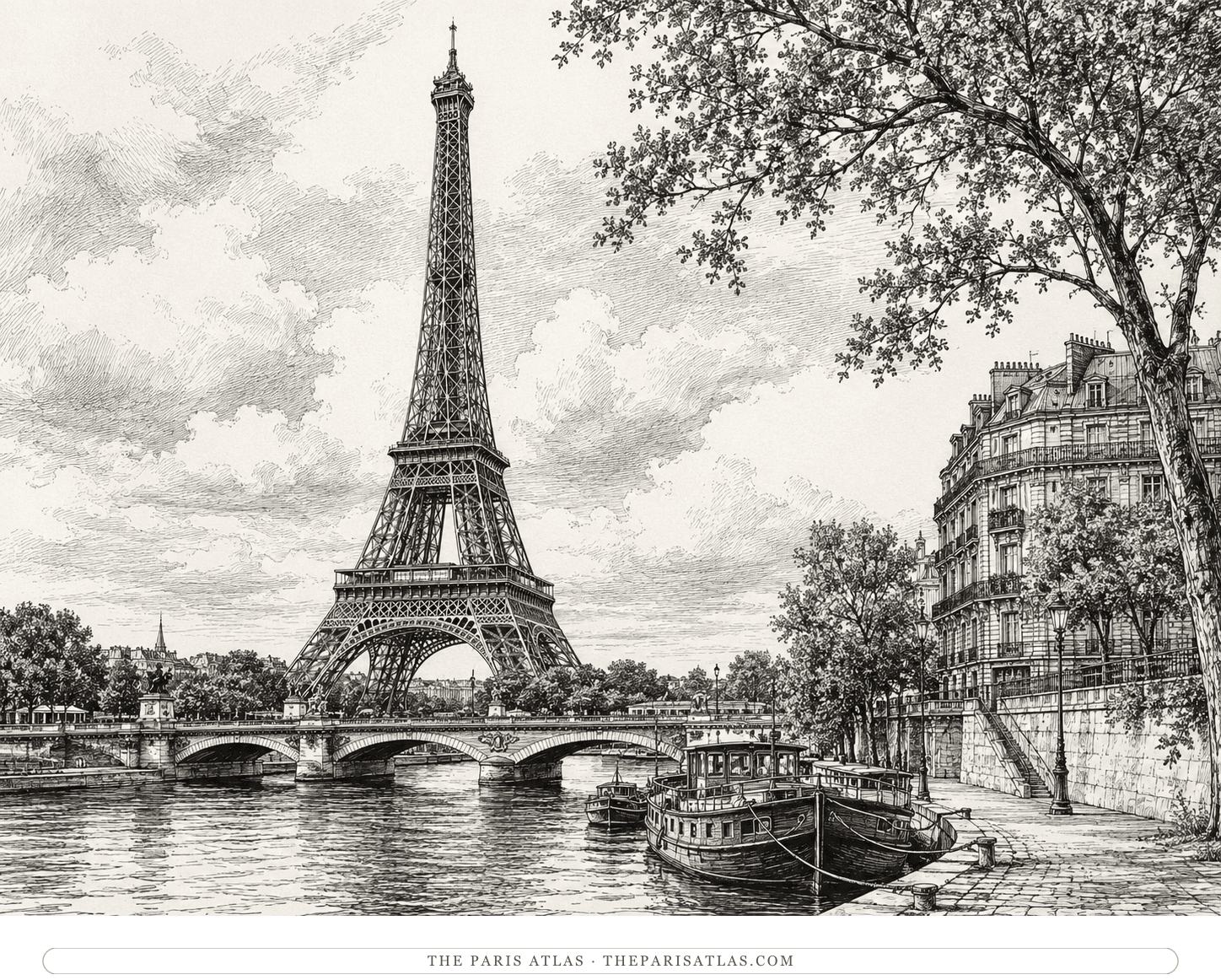
Maupassant was among the artists who signed the protest against the tower printed in Le Temps on 14 February 1887, three weeks after construction began, and described it in print as a giant ungainly skeleton aborting into a ridiculous skinny factory chimney. The tower's own official history then records that once it was built he said he often lunched on the first floor, because it was the only place in the city where he would not see it. The remark is reported as something he said rather than documented as a habit, so the visits are recorded here as probable — the line itself is the best-known joke ever made about the monument.

When the Eiffel Tower was a subject of controversy

Mentored by · 1873–1880

Gustave Flaubert

Maupassant's mother had been a childhood friend of Flaubert's, and from 1873 the young ministry clerk went regularly to Flaubert's Paris apartment on the rue Murillo to have his manuscripts corrected. Flaubert refused to let him publish too early, told him that a writer's first task is to dig out whatever is original in himself, and in December 1878 used his own connections to move him from the navy ministry to a better post at the education ministry. Maupassant's breakthrough story Boule de Suif appeared on 17 April 1880; Flaubert died three weeks later.
Gustave Flaubert; Marlo Johnston, Guy de Maupassant — Biographie; Guy de Maupassant

Met · 1876

Henry James

Maupassant was Flaubert's pupil and one of the fixtures of the Sunday gatherings in Flaubert's Paris apartment. Percy Lubbock's account of James's Paris year records that Turgenev's friendship brought James into that group - Edmond de Goncourt, Alphonse Daudet, Guy de Maupassant and Emile Zola. Maupassant was twenty-six and unpublished as a story writer; his breakthrough came four years later.

Henry James, edited by Percy Lubbock, The Letters of Henry James, Volume I (1920)

References

References

The sources below include biographies, scholarly essays, interviews, and primary materials that informed this page. They reflect both the historical record and ongoing critical conversations about Guy de Maupassant and their work.

  1. 1Maupassant, Guy de (1850–1893)

    Bibliothèque nationale de France

    The French national library's authority record — dates and places of birth and death.

    View source
  2. 2Guy de Maupassant — Biographie

    Les Amis de Flaubert et de Maupassant

    Marlo Johnston's dated chronology for the Flaubert and Maupassant society — the Paris addresses, the ministry posts, the illness and the end.

    View source
  3. 3Guy de Maupassant

    Encyclopédie Larousse

    Life, the Flaubert apprenticeship, the scale of the output, the syphilis and the Passy clinic.

    View source
  1. 4Bel-Ami

    Encyclopédie Larousse

    Bel-Ami's serialization in Gil Blas and its portrait of press and political corruption.

    View source
  2. 5When the Eiffel Tower was a subject of controversy

    Société d’Exploitation de la Tour Eiffel

    The Eiffel Tower's official history on the 1887 artists' protest and Maupassant's remark about lunching there.

    View source
  3. 6Gustave Flaubert

    Encyclopédie Larousse

    On Flaubert's guardianship of Maupassant, the son of a childhood friend.

    View source
i
Why these sources are here

These references anchor the page in the documented record and in the scholarly conversations around Guy de Maupassant. Every claim on this page traces back to one or more of the works listed here.

Explore more resources
Browse all authors