The Paris AtlasCharting the artists, works, and places worth returning to.
  • Author
  • Publisher
  • Printer
· French · 1799–1850

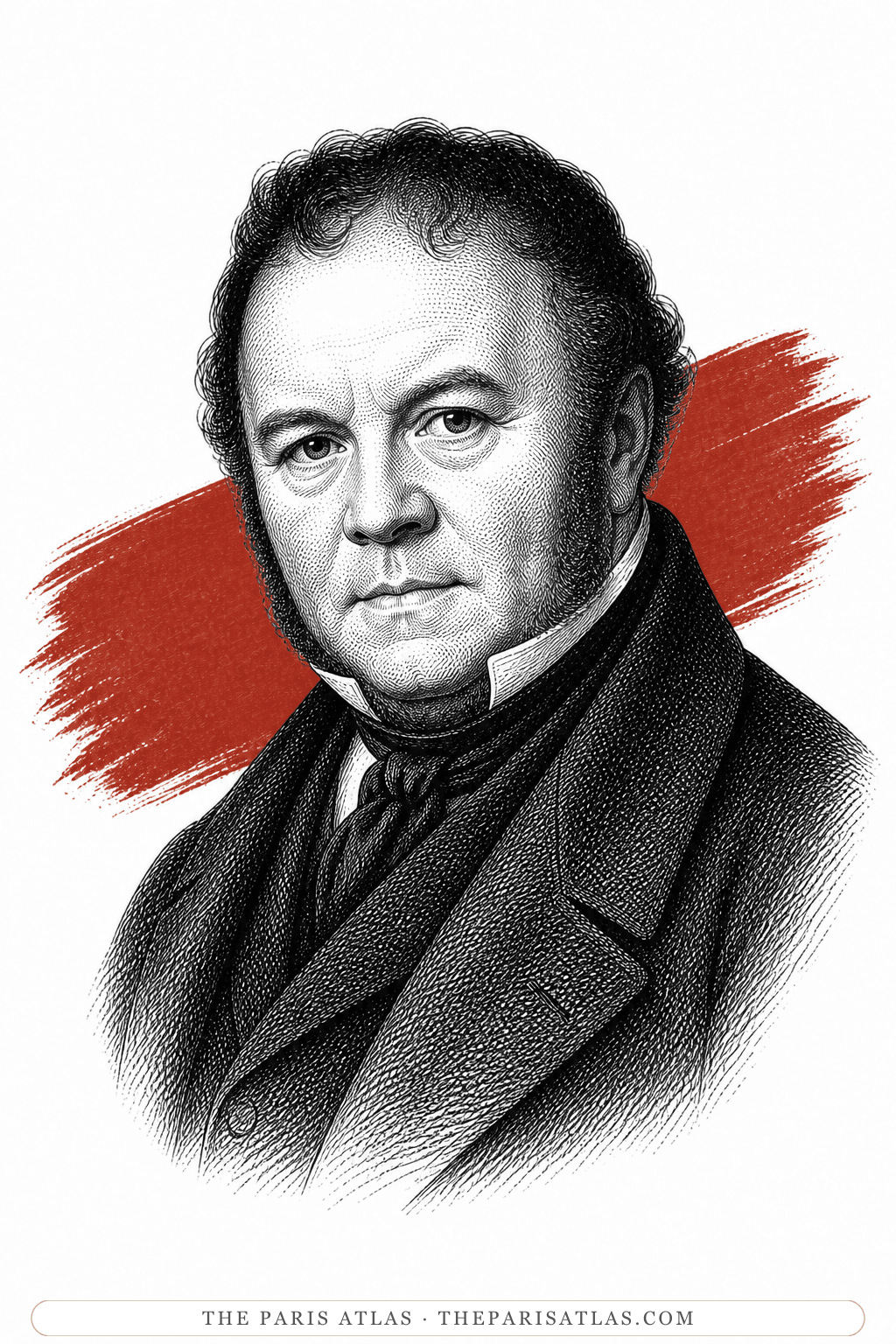
Honoré de Balzac

The novelist who set out to write the whole of French society as one connected system of books — La Comédie humaine, 'The Human Comedy', 137 titles planned and 90 finished, with more than two thousand characters walking from novel to novel. He wrote at night on coffee kept hot beside him, was ruined young by a printing business and never cleared the debt, and spent seven years in a house at Passy, then a village on the western edge of Paris, rented in someone else's name.

Details

Lived
1799–1850
Born
20 May 1799
Birthplace
Tours, France
Died
18 August 1850 · aged 51
Place of death
Paris, France
Nationality
French
Profession
Novelist
Major works
La Comédie humaine, La Peau de chagrin, Eugénie Grandet, Le Père Goriot, Illusions perdues
Married
Ève Hanska · 1850
Roles
AuthorPublisherPrinter

About Honoré de Balzac

Honoré de Balzac was born at Tours on 20 May 1799, sent to law school in Paris, and had already failed at two careers before he found the one that took him. The first failure was literary: a tragedy nobody wanted and years of pot-boilers published under invented names. The second was commercial and much worse — between 1825 and 1828 he was in turn a bookseller, a printer and the owner of a type foundry, and the collapse of that business left him with debts that Larousse, the standard French encyclopaedia, says weighed on him for the rest of his life. He went back to writing to pay them, and never stopped.

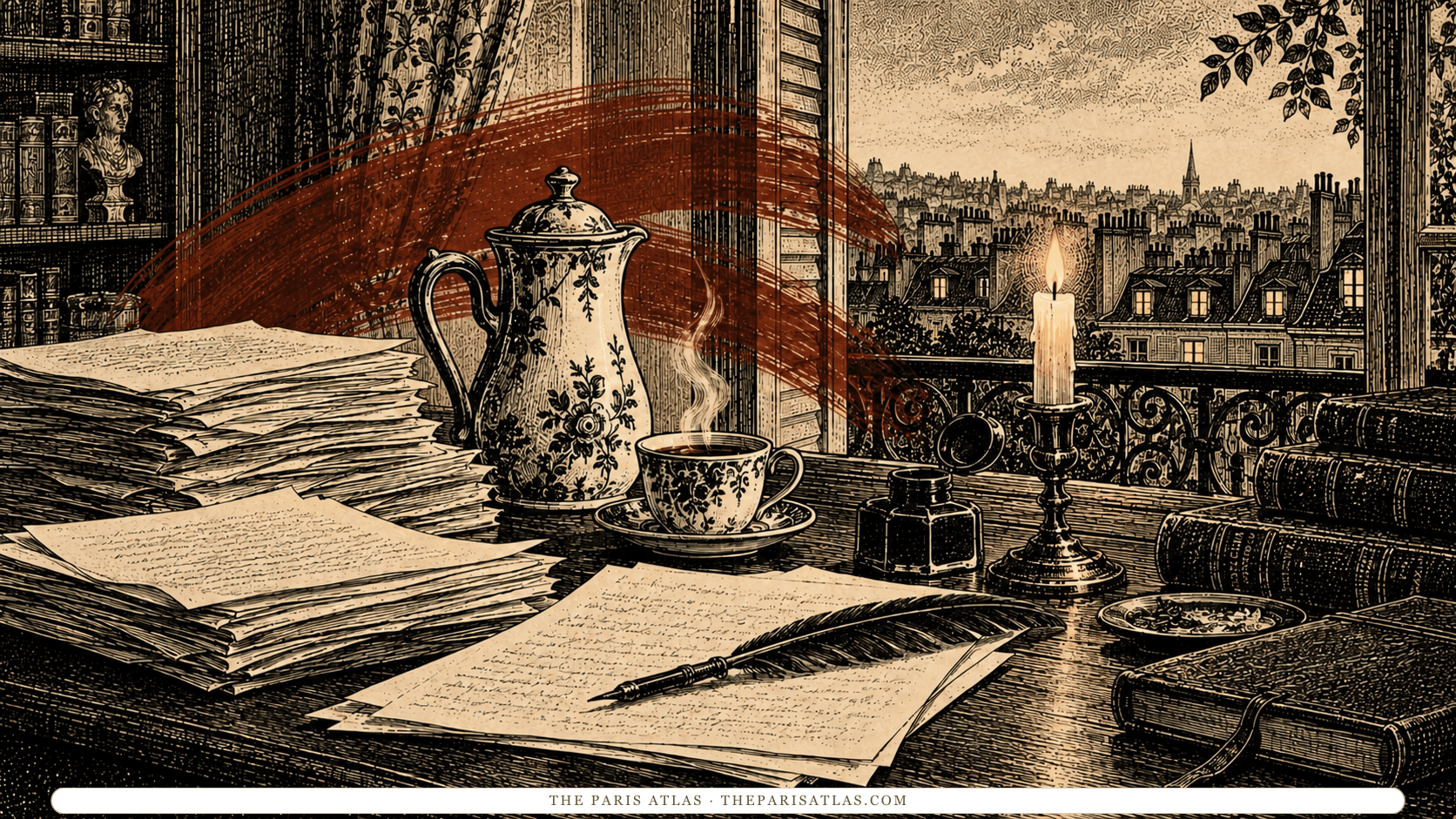
What came out of it was La Comédie humaine — 'The Human Comedy': not a series but a single connected structure of novels and stories, meant to hold the whole of French society from the Revolution of 1789 to the July Monarchy, the reign of Louis-Philippe that began in 1830 and was overthrown in 1848 — a plan of 137 titles, of which he finished 90, populated by more than two thousand characters who reappear from book to book. He worked at night, at a small table he refused to give up, with a warmer of Limoges porcelain, the fine French china made in that town, keeping his coffee hot. He married Ève Hanska, the Polish countess he had written to for seventeen years, in March 1850, and died in Paris that August. Victor Hugo, the poet and novelist who was then the most famous writer in France, spoke at his grave.

Tours, the law, and the failed printer

Balzac was born at Tours, in the Loire valley, on 20 May 1799, the son of Bernard-François Balzac and Laure Sallambier. He was boarded at the Collège de Vendôme from 1807 to 1813, then studied law in Paris between 1816 and 1819 — the training his family wanted and he did not. In 1819 he wrote a verse tragedy, Cromwell, about the soldier who overthrew the English monarchy, and it went nowhere; and through the first half of the 1820s he turned out novels under invented names, among them "lord R'Hoone" and "Horace de Saint-Aubin", the ordinary apprenticeship of a young man writing for money.

Then he tried to be a businessman. In 1825 he set up as a bookseller and publisher, in 1826 he bought a printing works, in 1827 a type foundry; in 1828 the whole enterprise collapsed and drove him back to writing. It is the hinge of his life. The money he borrowed to start it was never repaid, and the debt sat on him permanently — which is why a man who worked as hard as any writer of the century was still, twenty years later, renting under other people's names. In 1829 Les Chouans — 'The Chouans', a novel of the royalist peasant insurrection against the Revolution in Brittany — became the first he signed with his own, and from 1830 he was publishing as Honoré de Balzac and moving in the Paris salons, the private drawing rooms where literary reputations were made.

Nights, and the coffee

Balzac's working day started when other people's ended. The Maison de Balzac, the museum in his old apartment, still keeps the small table he wrote at — furniture he had owned since before he was a writer, and was fiercely attached to. He described it as the thing "which will have witnessed my thoughts, my anguish, my miseries", and said of its worn top that his arm had almost worn it smooth from travelling across it as he wrote. He imagined it, when he settled down at the beginning of the night, furnished with an inkwell, papers, a candlestick and a coffee pot. He left the table in his will to Ève Hanska, the woman he married months before his death.

The coffee was equipment. In 1833 he ordered from the Limoges makers Marchal, Nivet and Bellut, through his friend Zulma Carraud, a porcelain réchaud-veilleuse — a warming stand with a burner, designed to keep a pot hot for hours — so that the coffee stayed drinkable through the night's work; it is now in the museum's collection. He had read in the Physiologie du goût — 'The Physiology of Taste', the famous 1825 book on the pleasures of the table by the magistrate and gastronome Jean Anthelme Brillat-Savarin — that coffee "produces a great excitation in the cerebral powers", and he took the advice literally and permanently. Writing to Zulma Carraud in February 1832 about how the porcelain should be decorated, he was firm about restraint: put only the monogram on it.

What La Comédie humaine actually is

La Comédie humaine — "The Human Comedy", a deliberate echo of Dante's Divine Comedy — is not a novel and not a series. It is the umbrella Balzac built, from 1842 to 1848, over almost everything he had written and everything he still meant to write: one connected body of novels and stories designed as a portrait of French society from the Revolution of 1789 to the end of the July Monarchy — the reign of Louis-Philippe, the last French king, swept away by revolution in 1848. He first used the title in 1840. In 1845 he drew up the master plan, which called for 137 separate titles; 90 were finished. More than two thousand characters live in it.

The device that welds it together is the returning character. From Le Père Goriot (1834–35) — 'Old Goriot', the story of a father ruined by two daughters who are ashamed of him — onward, people walk out of one book and into another: a minor figure in one novel is the protagonist of the next, a young man's patron in one story is a ruined old man three books later, so that the reader accumulates a society rather than a plot. La Peau de chagrin ('The Wild Ass's Skin'), about a magic hide that grants its owner's wishes and shrinks with each one, launched his career in 1831; Eugénie Grandet, on a miser's daughter in a provincial town, confirmed it at the end of 1833; and Illusions perdues ('Lost Illusions'), written across 1837 to 1843, is the long central novel of provincial ambition arriving in Paris. The first sixteen volumes of the collected Comédie humaine were complete by 1846.

47 rue Raynouard, under another name

On 1 October 1840 a lease was signed for part of an outbuilding at what is now 47 rue Raynouard, in Passy — then a village on the western edge of Paris, now the 16th arrondissement. The owner, Étienne Désiré Grandemain, granted it to "Mademoiselle Philiberte Louise Breugnol Desraux", at 650 francs a year, with the use of a cellar and the garden. The tenant who actually moved in was Balzac. He had done this before: at the rue des Batailles he had used the feminine pseudonym "Veuve Durand", the Widow Durand.

Writing to Madame Hanska on Monday 16 November 1840, he gave her the new address in the borrowed name — "M. de Breugnol, rue Basse, n°19, at Passy, near Paris" — and told her, in his own words, "I am here, hidden for a while." He stayed hidden there for seven years, occupying part of the house from 1840 to 1847 before moving to the rue Fortunée, near the Champs-Élysées, which was renamed the rue Balzac after his death. The Passy rooms are the reason anything of his survives as a place to visit: a man of letters, Louis Baudier de Royaumont, rented the old apartment on 16 May 1908 and installed a museum in it; the State handed the premises to the City of Paris in 1949, and the Maison de Balzac reopened in 1960. It is free to enter, and the garden is still there.

Père-Lachaise, and the statue that was refused

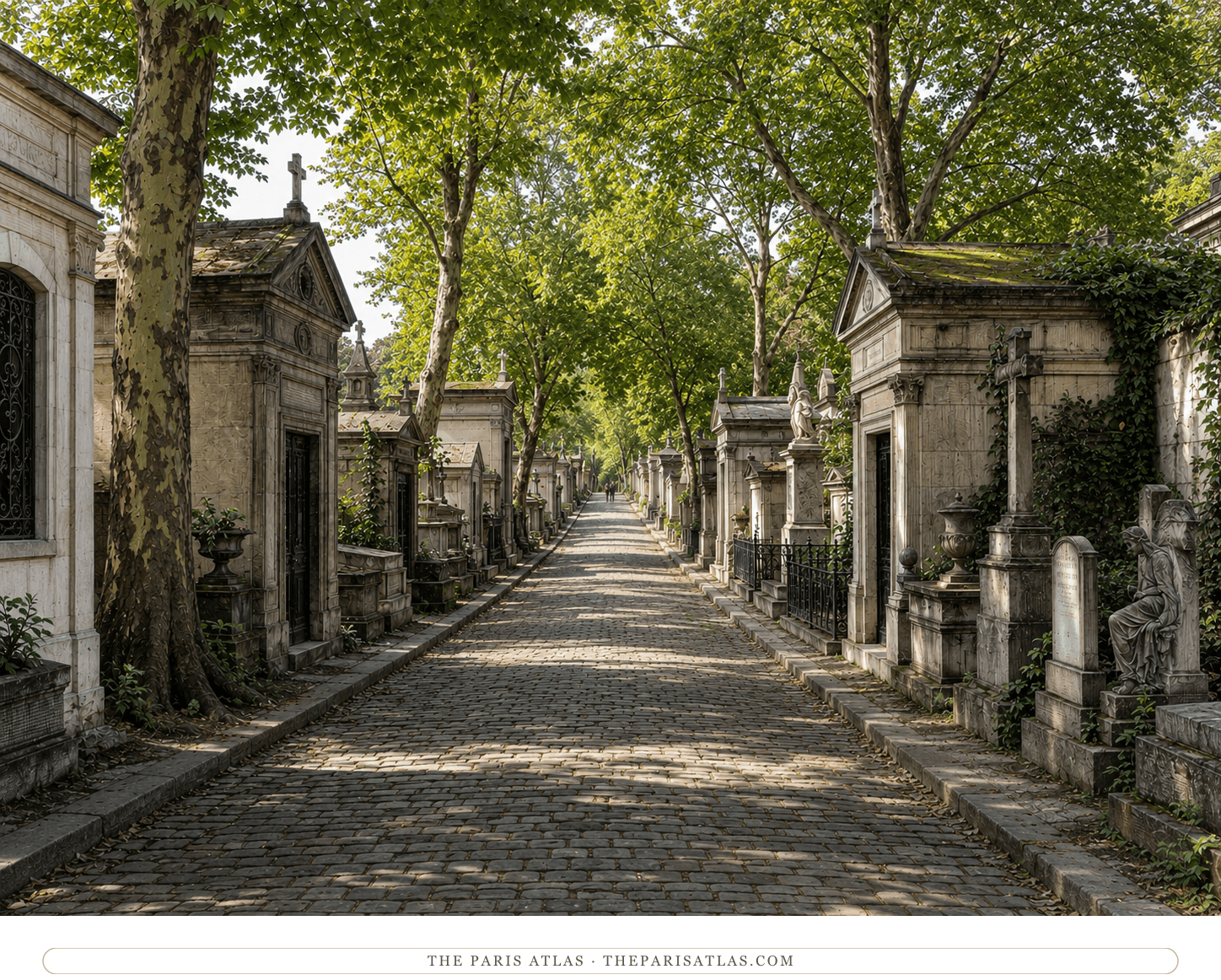
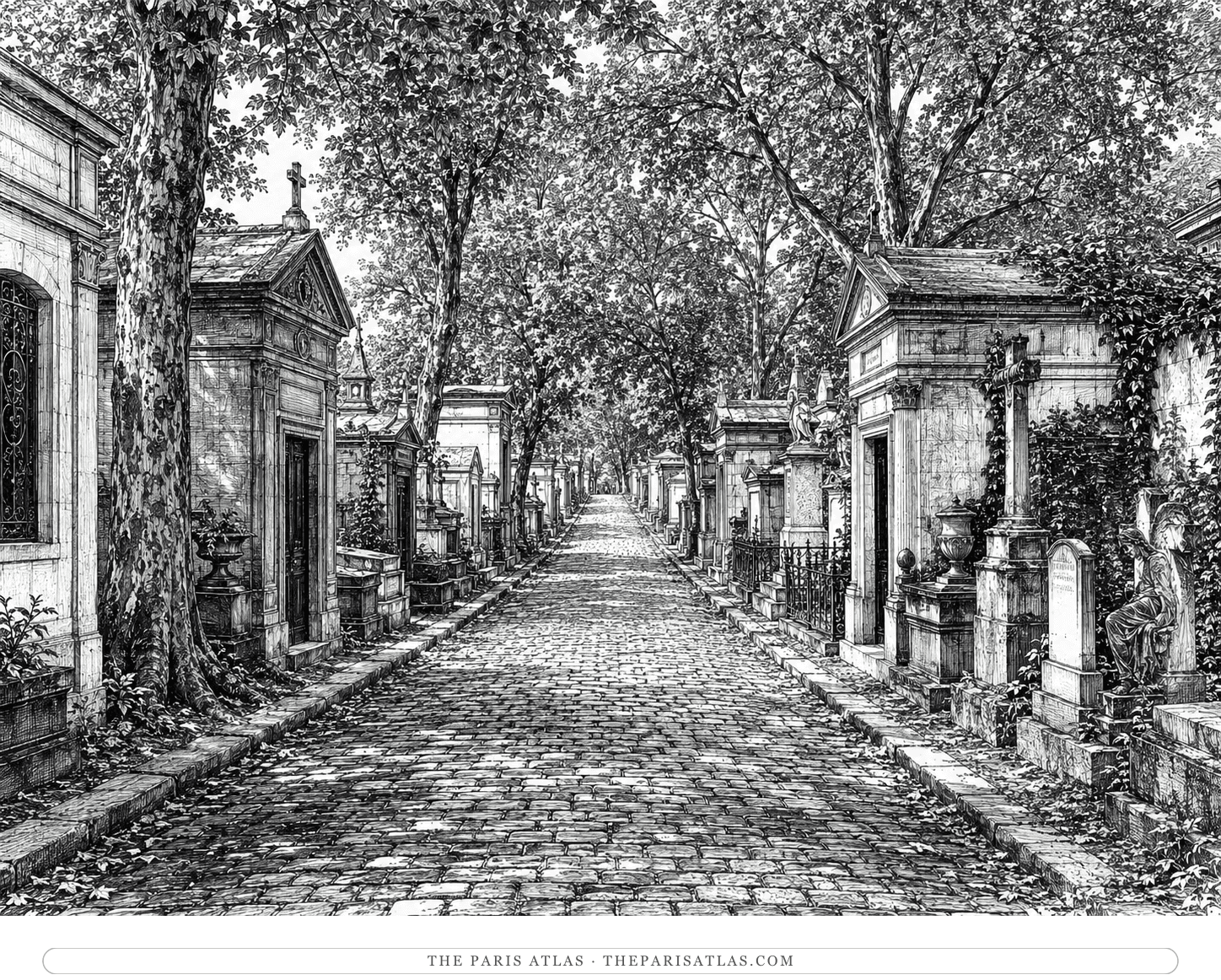
Balzac had been writing to Ewelina Hańska — Madame Hanska, a Polish countess who first contacted him as an admiring reader — since the early 1830s; they met in 1833 and married on 14 March 1850. He died in Paris five months later, on 18 August 1850, at fifty-one. He was buried at Père-Lachaise on 21 August, in division 48, and Victor Hugo delivered the funeral oration over the grave. The city turned out for it; the Père-Lachaise administration still lists Balzac's burial among the funerals that drew the homage of the Paris crowd.

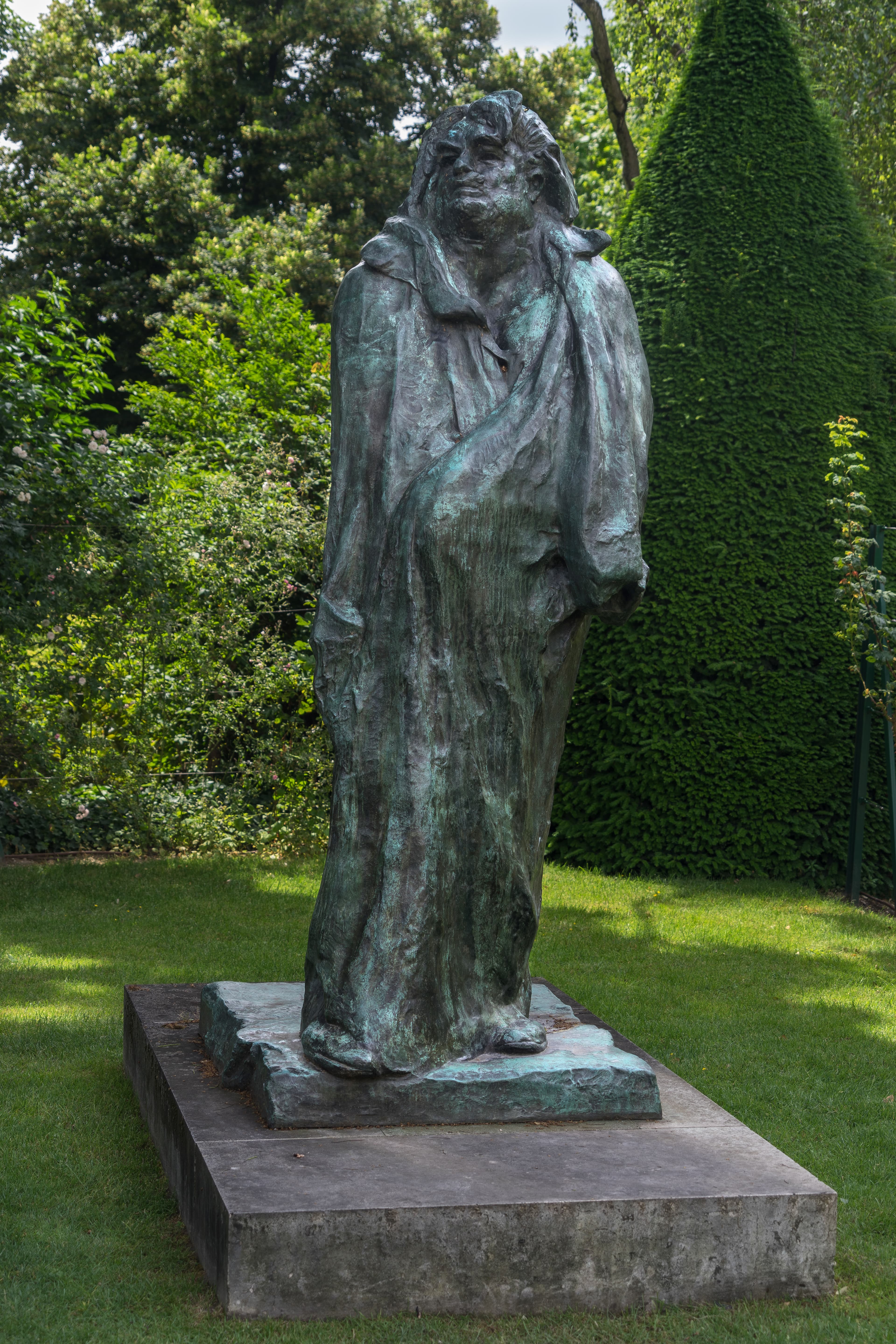
The monument took longer and went worse. In 1891 the Société des gens de lettres — the French writers' society, then presided over by the novelist Émile Zola — commissioned a Balzac monument from Auguste Rodin, the sculptor who was already the most argued-over artist in France. By 1894, when Zola left the presidency, it was still unfinished. Rodin finally showed the definitive plaster model at the Salon of 1898, the official annual exhibition where French art was judged in public: a massive figure swallowed in a dressing gown, more presence than portrait. The society, tired of waiting seven years and disappointed by what it saw, refused the work outright. Rodin kept plasters at his studio-villa at Meudon, on the southwestern edge of Paris and now an annexe of the Musée Rodin, the museum of his work in the city, and never saw the monument cast in bronze — the museum's own bronze was cast by the founder Alexis Rudier in 1935, eighteen years after Rodin died. One of the casts was finally set up in Paris in 1939, at the crossing of the boulevard Montparnasse and the boulevard Raspail, where it still stands.

Life events

  1. 1799

    Born at Tours on 20 May, son of Bernard-François Balzac and Laure Sallambier.

    Honoré de Balzac; Repères historiques — chronologie de Balzac

  2. 1825–1828

    Bookseller and publisher, then printer, then owner of a type foundry; the business collapses in 1828 and leaves debts he never clears.

    Repères historiques — chronologie de Balzac; Honoré de Balzac

  3. 1829

    Les Chouans, the first novel he signs with his own name; he begins moving in the Paris salons.

    Repères historiques — chronologie de Balzac; Honoré de Balzac

  4. 1831

    La Peau de chagrin — 'The Wild Ass's Skin', on a magic hide that grants wishes and shrinks with each one — launches his career.

    Honoré de Balzac

  5. 1833

    Eugénie Grandet confirms his success; he meets Madame Hanska, and orders the Limoges porcelain warming stand that will keep his coffee hot through the nights.

    Honoré de Balzac; La cafetière de Balzac

  6. 1834–1835

    Le Père Goriot — 'Old Goriot', the father ruined by daughters ashamed of him — introduces the returning characters who bind the books into one society.

    Honoré de Balzac; Repères historiques — chronologie de Balzac

  7. 1840

    First uses the title La Comédie humaine, and moves to Passy: the lease of 1 October is signed to "Mademoiselle Philiberte Louise Breugnol Desraux", and on 16 November he gives Madame Hanska his address as M. de Breugnol — "I am here, hidden for a while."

    Repères historiques — chronologie de Balzac; La maison de Balzac — histoire du 47 rue Raynouard

  8. 1842–1848

    Builds La Comédie humaine into one connected structure covering French society from the Revolution of 1789 to the fall of the July Monarchy, the reign of Louis-Philippe, in 1848, with more than 2,000 characters; the master plan he draws up in 1845 projects 137 titles, of which 90 novels will be finished.

    Honoré de Balzac

  9. 1847

    Leaves the Passy house after seven years and moves to the rue Fortunée, today the rue Balzac.

    La maison de Balzac — histoire du 47 rue Raynouard; Repères historiques — chronologie de Balzac

  10. 1850

    Marries Ève Hanska on 14 March; dies in Paris on 18 August and is buried at Père-Lachaise on 21 August, division 48, where Victor Hugo delivers the funeral oration.

    Honoré de Balzac; Cimetière du Père-Lachaise : plus de 200 ans d'histoire; Paris Discovery Guide — 101 Famous Graves in Père Lachaise Cemetery

  11. 1891

    The Société des gens de lettres — the French writers' society — presided over by the novelist Émile Zola, commissions a Balzac monument from the sculptor Auguste Rodin.

    Monument à Balzac, sculpture d'Auguste Rodin (1891-1898)

  12. 1898

    Rodin shows the definitive plaster at the Salon, the official annual art exhibition in Paris; the society, after seven years' wait, refuses the work. Rodin keeps plasters at Meudon and never sees it cast in bronze.

    Monument à Balzac, sculpture d'Auguste Rodin (1891-1898); Monument to Balzac — collection record

  13. 1908

    On 16 May, the man of letters Louis Baudier de Royaumont rents Balzac's old Passy apartment and installs a museum in it; the State cedes the premises to the City of Paris in 1949 and the Maison de Balzac reopens in 1960.

    La maison de Balzac — histoire du 47 rue Raynouard

  14. 1939

    A bronze cast of Rodin's Balzac is installed at the crossing of the boulevard Montparnasse and the boulevard Raspail.

    Monument à Balzac, sculpture d'Auguste Rodin (1891-1898)

People they knew

Documented connections — every one carries its source.

Stendhal

  • Author

Met · 1830

Marked probable because the source is: Larousse, running through the years around 1829–30 in which Balzac worked his way into the Paris press and publishing world, says he became Latouche's friend and "sans doute" — most likely — made Stendhal's acquaintance in person. Nothing here fixes a date, a room or an occasion, and the atlas should not invent one. What is not in doubt is that each read the other: Larousse has the young Balzac reading De l'amour with passion, and in 1840, in his own short-lived Revue parisienne, Balzac saluted La Chartreuse de Parme in terms the same encyclopedia calls surprising — very nearly the whole of the recognition Stendhal received in his lifetime.

Honoré de Balzac; Henry Beyle, dit Stendhal — littérature française

Honoré de Balzac’s Places

The cataloged places connected to Honoré de Balzac — through the books, and through the documented record.

Places you can enter today appear first, followed by addresses to see from outside and sites that have vanished.

Questions about Honoré de Balzac

Who was Honoré de Balzac?

A French novelist, born at Tours in 1799 and dead in Paris in 1850, who wrote La Comédie humaine — 'The Human Comedy', a single connected structure of novels and stories intended to portray the whole of French society between the Revolution of 1789 and the revolution of 1848. He planned 137 titles, finished 90, and filled them with more than two thousand characters who recur from book to book. Le Père Goriot ('Old Goriot'), Eugénie Grandet, La Peau de chagrin ('The Wild Ass's Skin') and Illusions perdues ('Lost Illusions') are the ones most read today.

What is La Comédie humaine?

The name Balzac gave, from 1840, to his entire body of fiction treated as one work — 'The Human Comedy', an echo of the Divine Comedy of the medieval Italian poet Dante. Between 1842 and 1848 he gathered and extended his novels and stories into a portrait of French society running from the Revolution of 1789 to the fall of the July Monarchy, Louis-Philippe's reign, in 1848. The master plan he drew up in 1845 called for 137 titles; 90 were completed. Its binding device is the returning character: figures move between books, so the reader gradually assembles a whole society rather than following one story.

Why did Balzac live under a false name in Passy?

The lease on the Passy apartment, signed on 1 October 1840, was made out not to Balzac but to "Mademoiselle Philiberte Louise Breugnol Desraux", at 650 francs a year. He gave Madame Hanska his address there as "M. de Breugnol" and wrote to her, "I am here, hidden for a while." It was a habit rather than a one-off — at his previous address on the rue des Batailles he had used the feminine pseudonym "Veuve Durand". Balzac's finances had never recovered from the collapse of his printing business in 1828, and the borrowed money behind it was never repaid.

How much coffee did Balzac drink?

More than was good for him, though the famous cup-counts come from legend rather than from record. What is documented is the equipment and the intent: in 1833 he ordered a Limoges porcelain warming stand — a burner designed to keep a pot hot for hours — so his coffee stayed drinkable through a night's work, and it is now in the Maison de Balzac's collection. He had read in the Physiologie du goût ('The Physiology of Taste', 1825), Jean Anthelme Brillat-Savarin's celebrated book on eating and drinking, that coffee produces "a great excitation in the cerebral powers", and he organised his working life around that claim, starting at the beginning of the night.

Can you visit the Maison de Balzac?

Yes. It is at 47 rue Raynouard in the 16th arrondissement, in part of the house Balzac occupied from 1840 to 1847, and it is a City of Paris museum: entry to the permanent collections is free, and it opens Tuesday to Sunday. The rooms hold his work table, the coffee warmer, his library and the corrected proofs of his novels. The museum exists because a man of letters, Louis Baudier de Royaumont, rented the apartment in 1908 and turned it into a museum; the State passed it to the City of Paris in 1949 and it reopened in its present form in 1960.

Where is Balzac buried?

At Père-Lachaise cemetery in eastern Paris, in division 48. He died on 18 August 1850 and was buried on 21 August, with the poet and novelist Victor Hugo delivering the funeral oration at the graveside — a funeral the cemetery's own history still lists among those that drew the homage of the Paris crowd.

Why is there a famous Rodin statue of Balzac?

Because the French writers' society wanted a monument and got something nobody expected. In 1891 the Société des gens de lettres, under the novelist Émile Zola's presidency, commissioned the sculptor Auguste Rodin to make one. Rodin took seven years, and the plaster he finally showed at the Salon of 1898 — the official annual art exhibition in Paris — was a looming figure lost inside a dressing gown rather than a conventional likeness. The society refused it. Rodin kept the plasters at his villa-studio at Meudon and died in 1917 without ever seeing the work cast in bronze; the Musée Rodin's bronze was cast by Alexis Rudier in 1935, and a cast was installed in Paris in 1939 at the corner of boulevard Montparnasse and boulevard Raspail.

Was Balzac in debt?

Permanently. Between 1825 and 1828 he ran a bookselling and publishing business, a printing works and a type foundry; all of it failed, and the loan that financed it was never repaid — the Larousse encyclopaedia records that it weighed on his whole life. He returned to writing partly to pay for the wreckage, and the pressure never lifted: the enormous output, the night work, and the apartments rented in other people's names all belong to the same story.

Sourced claims

Every connection the graph holds for Honoré, with the evidence behind it.

Buried at · 1850

Père-Lachaise Cemetery

Balzac died in Paris on 18 August 1850 and was buried at Père-Lachaise on 21 August, in division 48, with Victor Hugo delivering the funeral oration at the graveside. The cemetery's own history counts his funeral among those that drew the homage of the Paris crowd.

Honoré de Balzac; Cimetière du Père-Lachaise : plus de 200 ans d'histoire; Paris Discovery Guide — 101 Famous Graves in Père Lachaise Cemetery

Met · 1830

Stendhal

Marked probable because the source is: Larousse, running through the years around 1829–30 in which Balzac worked his way into the Paris press and publishing world, says he became Latouche's friend and "sans doute" — most likely — made Stendhal's acquaintance in person. Nothing here fixes a date, a room or an occasion, and the atlas should not invent one. What is not in doubt is that each read the other: Larousse has the young Balzac reading De l'amour with passion, and in 1840, in his own short-lived Revue parisienne, Balzac saluted La Chartreuse de Parme in terms the same encyclopedia calls surprising — very nearly the whole of the recognition Stendhal received in his lifetime.

Honoré de Balzac; Henry Beyle, dit Stendhal — littérature française

References

References

The sources below include biographies, scholarly essays, interviews, and primary materials that informed this page. They reflect both the historical record and ongoing critical conversations about Honoré de Balzac and their work.

  1. 1Honoré de Balzac

    Encyclopédie Larousse
    View source
  2. 2La maison de Balzac — histoire du 47 rue Raynouard

    Maison de Balzac, Paris Musées
    View source
  3. 3Repères historiques — chronologie de Balzac

    Maison de Balzac, Paris Musées
    View source
  4. 4La cafetière de Balzac

    Maison de Balzac, Paris Musées
    View source
  5. 5La table de travail de Balzac

    Maison de Balzac, Paris Musées
    View source
  1. 6Monument à Balzac, sculpture d'Auguste Rodin (1891-1898)

    Encyclopédie Larousse
    View source
  2. 7Monument to Balzac — collection record

    Musée Rodin
    View source
  3. 8Cimetière du Père-Lachaise : plus de 200 ans d'histoire

    Ville de Paris
    View source
  4. 9Paris Discovery Guide — 101 Famous Graves in Père Lachaise Cemetery

    View source
i
Why these sources are here

These references anchor the page in the documented record and in the scholarly conversations around Honoré de Balzac. Every claim on this page traces back to one or more of the works listed here.

Explore more resources
Browse all authors