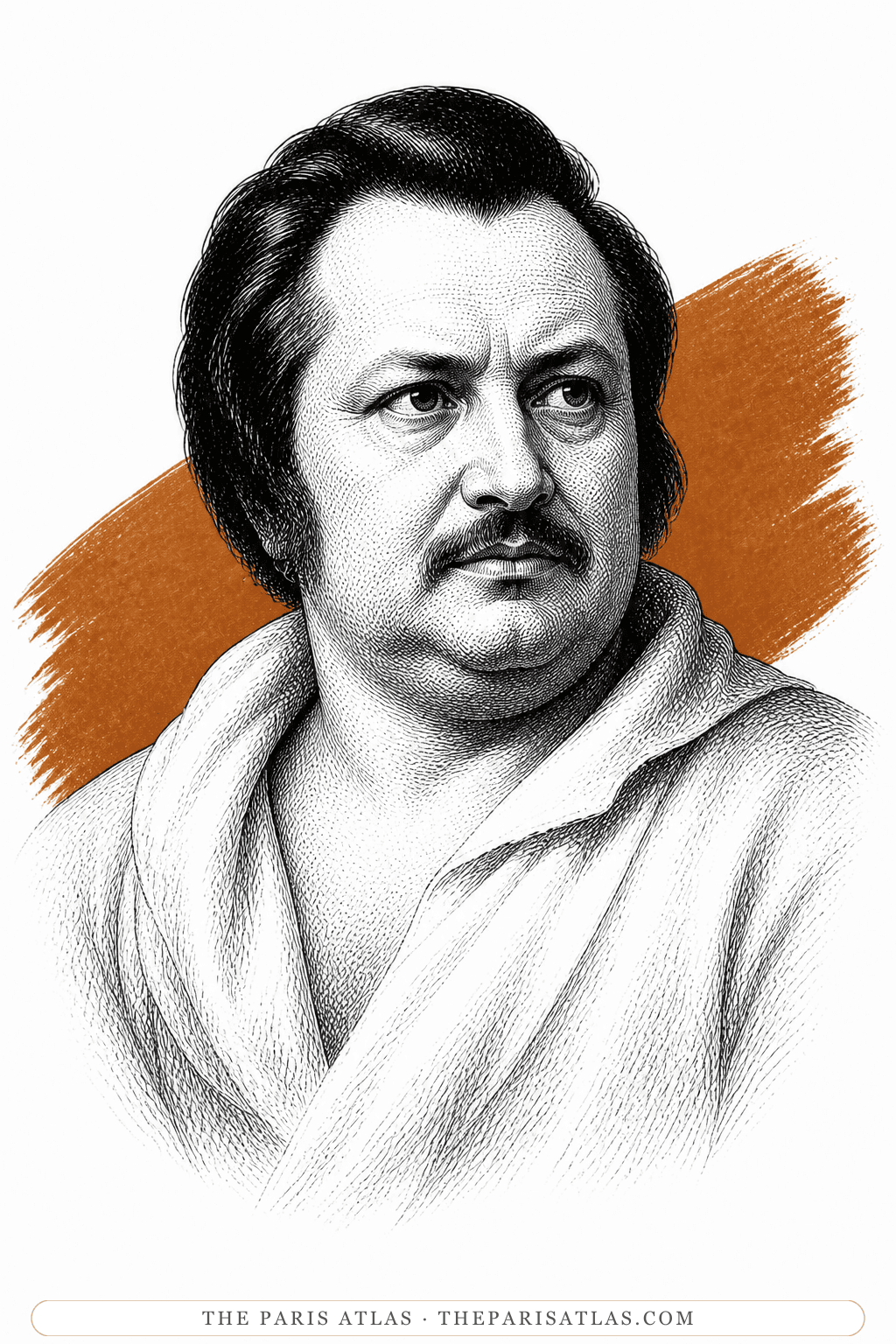
The Paris AtlasCharting the artists, works, and places worth returning to.
  • Author
· French · 1783–1842

Stendhal

The Grenoble boy who left at sixteen and never went back willingly, wrote Le Rouge et le Noir ('The Red and the Black') and La Chartreuse de Parme ('The Charterhouse of Parma') around a career as a French government official, and addressed his books to a readership that did not yet exist — "the happy few". He predicted the date they would arrive: "I shall be read in 1880." He was very nearly right — his manuscripts began to be published in the 1880s, and made him a classic.

Details

Lived
1783–1842
Born
23 January 1783
Birthplace
Grenoble, France
Birth name
Marie-Henri Beyle
Died
23 March 1842 · aged 59
Place of death
Paris, France
Nationality
French
Profession
Novelist and French consul
Major works
Le Rouge et le Noir, La Chartreuse de Parme, De l'amour, Vie de Henry Brulard
Roles
Author
Also known as
Henri Beyle · Marie-Henri Beyle

About Stendhal

Henri Beyle was born at Grenoble on 23 January 1783, lost his mother at seven, could not stand his father, and got out at sixteen. In 1799 he left for Paris, where a well-placed cousin, Pierre Daru — a senior official of the war administration — put him into the ministry of the armies, the government department that ran the French army. That clerkship was the start of a career that ran military, then administrative, then diplomatic, and that paid for his writing for the rest of his life. He published his books under a pen name, Stendhal, and kept the man who did the official work and the man who wrote the novels largely apart.

The two books that made him are Le Rouge et le Noir (1830) — 'The Red and the Black', the story of a poor young man climbing on ambition and hypocrisy through Restoration France, the fifteen years after Napoleon's fall when the Bourbon kings were back on the throne — and La Chartreuse de Parme (1839), 'The Charterhouse of Parma', an Italian novel he wrote in seven weeks. His true country, by his own account, was not France: Milan was his patrie de cœur, the homeland of his heart, and Italy the place where he thought real feeling was still possible. Almost nobody read him properly while he lived. The long, admiring review that the novelist Honoré de Balzac gave him in 1840 was the great exception, and Stendhal — who dedicated his books to "the happy few", the small, distant readership he knew he did not yet have — predicted his own audience with something close to accuracy: "I shall be read in 1880."

The Grenoble boy who wanted out

Henri Beyle was born at Grenoble, in the Alps of south-eastern France, on 23 January 1783. His father, Chérubin Beyle, was a lawyer at the Parlement du Dauphiné, the regional high court; his mother, Henriette Gagnon, was the daughter of one of the city's leading doctors, and she died when the child was seven. That death organised everything that followed. He detested his father and the pious, provincial, money-minded Grenoble he stood for, and he attached himself instead to his maternal grandfather, Dr Henri Gagnon, who became — in his grandson's own words in Vie de Henry Brulard, 'The Life of Henry Brulard', the autobiography he wrote under yet another invented name and never published — his real father and his intimate friend, and who opened up to him letters, the sciences and the books of the Enlightenment.

In 1799, aged sixteen, he left his native town for Paris and never made his life in Grenoble again. His hatred of the place was not a later literary pose: escaping it is what his best-known self-portrait, Vie de Henry Brulard, spends its energy on. The Musée Stendhal in Grenoble now occupies both the flat he was born in and his grandfather's apartment, and is built around exactly that pair of rooms and that pair of men — the father he fled and the grandfather he loved.

Paris, the ministry, and Milan

What Paris gave him first was a job. His cousin Pierre Daru, a senior official of the war administration who would rise to run Napoleon's military supply, got him into the ministry of the armies, and that clerkship opened a career that ran military, then administrative, then diplomatic — decades of official posts that funded a writer who could not have lived by writing. It also moved him around Europe, and the move that mattered was to Milan, where he lived until 1821 and which he called his patrie de cœur, the homeland of his heart. Italy, in his books, is the place where poetry and true feelings are still possible; France is where one calculates.

Milan also gave him the wound he wrote from. De l'amour (1822) — "On Love", presented as a treatise, structured like a system — is in substance the secret journal of an unhappy passion he had conceived at Milan for Métilde Dembowski, a Milanese noblewoman who did not return it. It is the book where his lifelong subject first shows itself whole: what a person feels, tracked with the coldness of an official report. Later he would be posted abroad again, this time as a French consul — the official who represents his country's citizens and trade in a foreign city — and the surviving portrait of him in consular uniform is one of the few images of the working half of his life.

The Paris decade, 1821–1830

The decade from 1821 to 1830 is his Paris decade, and it is the one that produced the novels. Forced out of Milan in 1821 and back in a country he liked much less, he lived in the capital as a man of the salons — the private drawing rooms where Restoration Paris did its talking, flirting and political calculation — and he wrote them from the inside. His novel of 1827 announces it in the title: Armance, ou Quelques scènes d'un salon de Paris en 1827 — "Armance, or a few scenes from a Paris salon in 1827". He is one of the few great French novelists whose Paris is not the street but the reception room, and whose subject there is what people say when they are calculating.

What Le Rouge et le Noir is about

Le Rouge et le Noir — The Red and the Black — was published in November 1830 and subtitled Chronique du XIXe siècle, "a chronicle of the nineteenth century". Julien Sorel is a carpenter's son with an education, too clever and too proud for the position society has for him. He becomes tutor in the household of M. de Rênal and has an affair with Madame de Rênal, his employer's wife; he goes to a seminary, the college where Catholic priests are trained; he rises into a great aristocratic house and makes Mathilde de La Mole, an arrogant young noblewoman, fall genuinely in love with him. When Madame de Rênal, out of jealousy, denounces him and destroys the marriage he has almost secured, he goes into a church and shoots her twice. At his trial he insists the crime was premeditated, and is sentenced to death — arriving, too late, at the understanding that succeeding in this society was never worth anything.

The title names two careers. Red is military glory, the route to advancement that Napoleon's wars had opened to poor and gifted young men and that the Restoration had closed again; black is the Church, and with it the careerism and calculated piety that had replaced glory as the way up. The plot was not invented: Stendhal took it from the trial of Antoine Berthet, a young man who had trained for the priesthood and was condemned to death at Grenoble in 1827 for shooting his former employer's wife in a church. What he drew from the case was that the energy and ambition of France had not disappeared — it had merely been pushed down into the class that had no legitimate use for it.

Seven weeks, and La Chartreuse de Parme

La Chartreuse de Parme — The Charterhouse of Parma, a charterhouse being a monastery of the silent Carthusian order — was written between 4 November and 26 December 1838 and published in 1839. It follows Fabrice del Dongo, a young Italian aristocrat who runs off to join Napoleon at Waterloo, the 1815 battle that ended the emperor for good, and wanders through it without ever grasping what is happening around him: the episode that made the book famous for showing a great historical event as a confused muddle at ground level. The rest is Italian court politics, imprisonment in the fortress of Parma, and Fabrice's love for Clélia Conti, the governor's daughter. It is the fullest version of the Italy he wanted: fast, passionate, indifferent to French self-accounting.

In 1840 Honoré de Balzac, then the most conspicuous novelist in France, devoted a long and resounding article to praising it in the Revue parisienne, the monthly magazine he was then writing and publishing almost single-handed. That review is very nearly the whole of Stendhal's contemporary recognition, and it came two years before he died.

"To the happy few"

Stendhal died in Paris on 23 March 1842, of a stroke. He was fifty-nine, and famous mainly among a small circle. He had spent his career writing for an audience he knew was not there — dedicating himself, in the English phrase he liked, "to the happy few" — and he was explicit about when they would arrive. "I shall be read in 1880," he wrote; and, "I shall be understood in 1935."

He was not far off. His private manuscripts — the journals, the unfinished novels, the autobiography Vie de Henry Brulard — were only studied and published from the 1880s onward, and it was that material, arriving forty years late, that produced the modern reading of him. Prosper Mérimée, the novelist and short-story writer who had known him, published a short memoir titled with his friend's initials — H. B., for Henri Beyle — barely seven years after his death, and closed it with a prophecy that has aged remarkably well: "I imagine that some critic of the twenty-first century will discover Beyle's books in the jumble of nineteenth-century literature, and will do them the justice they never found with his contemporaries."

Life events

  1. 1783

    Born Henri Beyle at Grenoble on 23 January, son of Chérubin Beyle, a lawyer at the Parlement du Dauphiné, and Henriette Gagnon.

    Henri Beyle, dit Stendhal (1783-1842)

  2. 1790

    His mother dies when he is seven; he turns to his maternal grandfather, Dr Henri Gagnon, who becomes his real father and his guide to letters and the Enlightenment.

    Henri Beyle, dit Stendhal (1783-1842)

  3. 1799

    Leaves Grenoble for Paris at sixteen; his cousin Pierre Daru, a senior figure in the war administration, gets him a clerkship in the ministry of the armies — the start of a military, then administrative, then diplomatic career.

    Henri Beyle, dit Stendhal (1783-1842)

  4. 1814–1821

    Lives in Milan, the city he calls his patrie de cœur — the homeland of his heart.

    Henry Beyle, dit Stendhal — littérature française

  5. 1821–1830

    The Paris decade: he lives among the salons — the private drawing rooms of Restoration France, the years of the restored Bourbon monarchy after Napoleon — and writes the books that come out of them.

    Henri Beyle, dit Stendhal

  6. 1822

    De l'amour — 'On Love' — a treatise that is in substance the secret journal of his unhappy passion at Milan for Métilde Dembowski.

    Henri Beyle, dit Stendhal

  7. 1827

    Armance, ou Quelques scènes d'un salon de Paris en 1827 — 'Armance, or a few scenes from a Paris salon in 1827' — his novel of the capital's drawing rooms.

    Henri Beyle, dit Stendhal

  8. 1830

    Le Rouge et le Noir — 'The Red and the Black', subtitled Chronique du XIXe siècle, 'a chronicle of the nineteenth century' — published in November, and drawn from the trial of Antoine Berthet, a former trainee priest condemned to death at Grenoble in 1827 for shooting his former employer's wife in a church.

    Le Rouge et le Noir, roman de Stendhal; Henri Beyle, dit Stendhal

  9. 1838

    Writes La Chartreuse de Parme — 'The Charterhouse of Parma' — between 4 November and 26 December; also publishes Mémoires d'un touriste, 'Memoirs of a Tourist', an account of travelling through the French provinces.

    La Chartreuse de Parme, roman de Stendhal; Henri Beyle, dit Stendhal

  10. 1839

    La Chartreuse de Parme published — Fabrice del Dongo, the bewildering Waterloo episode in which he blunders through Napoleon's last battle without understanding it, and the fortress of Parma.

    La Chartreuse de Parme, roman de Stendhal

  11. 1840

    The novelist Honoré de Balzac devotes a long and admiring article to La Chartreuse de Parme in the Revue parisienne, the magazine he wrote and published himself — very nearly the whole of Stendhal's recognition in his lifetime.

    La Chartreuse de Parme, roman de Stendhal; Henri Beyle, dit Stendhal (1783-1842)

  12. 1842

    Dies in Paris on 23 March of a stroke, aged fifty-nine.

    Henri Beyle, dit Stendhal (1783-1842); Henry Beyle, dit Stendhal — littérature française

  13. 1849

    The novelist Prosper Mérimée's short memoir H. B. — his friend's initials, for Henri Beyle — written barely seven years after Stendhal's death, closes by predicting that a critic of the twenty-first century will rediscover his books.

    Henri Beyle, dit Stendhal

  14. 1880s

    His private manuscripts — journals, unfinished novels, the autobiography Vie de Henry Brulard — begin to be studied and published, and the posthumous recognition he had predicted arrives.

    Henri Beyle, dit Stendhal (1783-1842)

People they knew

Documented connections — every one carries its source.

Honoré de Balzac

  • Author
  • Publisher
  • Printer

Met · 1830

Marked probable because the source is: Larousse, running through the years around 1829–30 in which Balzac worked his way into the Paris press and publishing world, says he became Latouche's friend and "sans doute" — most likely — made Stendhal's acquaintance in person. Nothing here fixes a date, a room or an occasion, and the atlas should not invent one. What is not in doubt is that each read the other: Larousse has the young Balzac reading De l'amour with passion, and in 1840, in his own short-lived Revue parisienne, Balzac saluted La Chartreuse de Parme in terms the same encyclopedia calls surprising — very nearly the whole of the recognition Stendhal received in his lifetime.
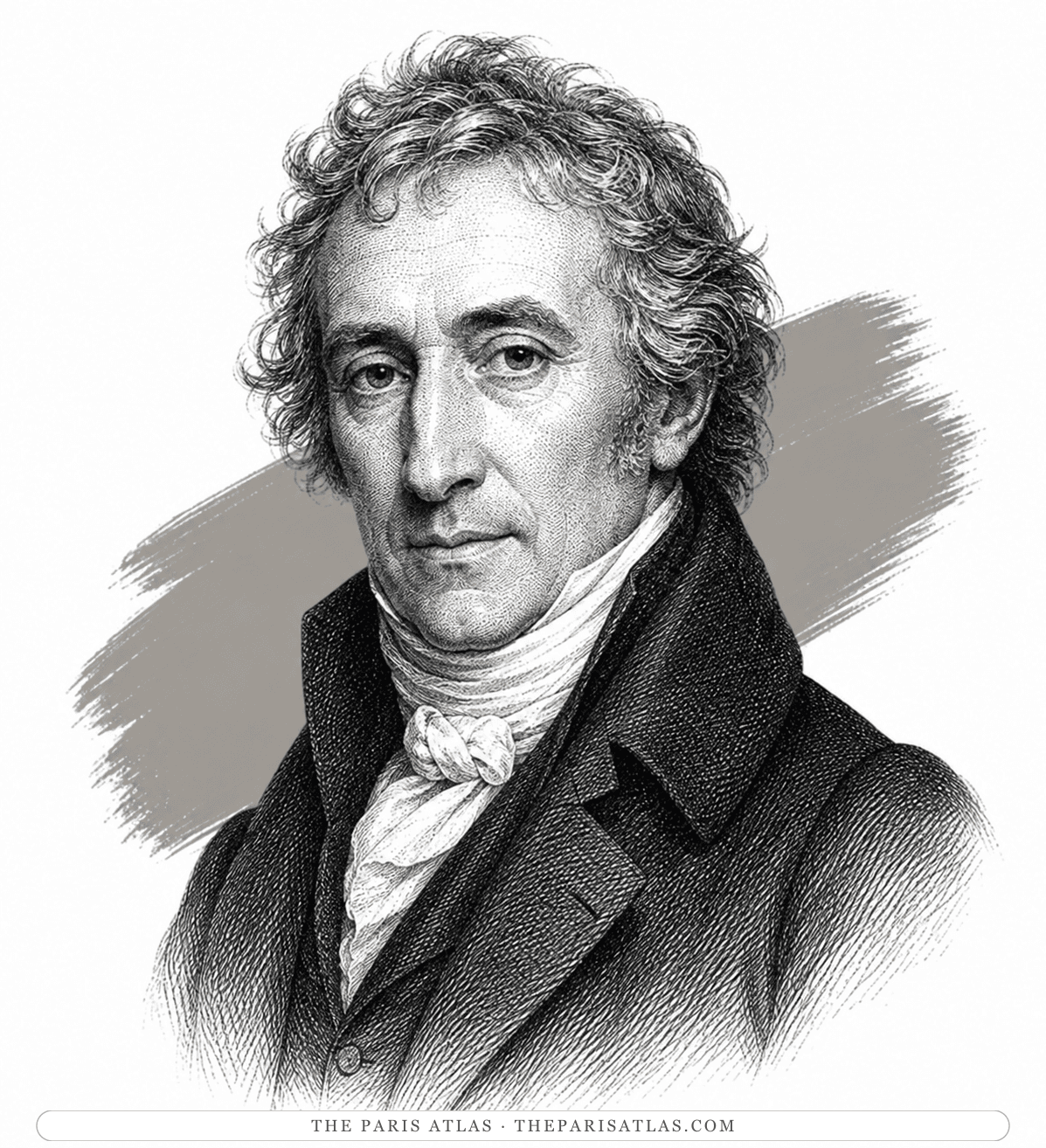

Honoré de Balzac; Henry Beyle, dit Stendhal — littérature française

Questions about Stendhal

Who was Stendhal?

A French novelist, born Henri Beyle at Grenoble in 1783 and dead in Paris in 1842, who wrote Le Rouge et le Noir (1830), 'The Red and the Black', and La Chartreuse de Parme (1839), 'The Charterhouse of Parma', alongside a working life as a French government official — a career that began in the ministry of the armies and later took him abroad as a consul, the official who looks after his country's citizens and trade in a foreign city. He was barely read in his lifetime and became, from the 1880s onward, one of the two or three novelists most argued over in French literature.

Why is Henri Beyle called Stendhal?

Stendhal is a pen name — he published his books under it while keeping his own name, Henri Beyle, for his official career. He used a great many pseudonyms across his life, and never left a clean explanation of this one. His self-portraits go further: the autobiography he left unpublished is called the Life of Henry Brulard, another invented name for himself.

What is Le Rouge et le Noir about?

A poor, clever, proud young man trying to rise in a society with no honest route up. Julien Sorel, a carpenter's son, becomes tutor in the Rênal household and has an affair with Madame de Rênal; he passes through a seminary, the college where priests are trained, enters a great aristocratic house in Paris, and makes the haughty Mathilde de La Mole fall in love with him. When Madame de Rênal denounces him out of jealousy and ruins the marriage he has nearly secured, he shoots her in a church, insists at his trial that he meant to, and is sentenced to death — realising too late that the success he was chasing was worthless. It was published in November 1830 and subtitled "a chronicle of the nineteenth century".

What does the title The Red and the Black mean?

The two uniforms of advancement. Red is the army — the glory that Napoleon's wars had made available to gifted poor young men, and that the restored Bourbon monarchy of 1815 onwards had closed off again. Black is the Church, and with it the careerism and calculated piety that had taken glory's place as the way to rise. Julien Sorel is born too late for the red and too honest, in the end, for the black.

Was Le Rouge et le Noir based on a true story?

Yes. Stendhal took the plot from a criminal case: Antoine Berthet, a young man who had trained for the priesthood, was condemned to death at Grenoble in 1827 for shooting his former employer's wife inside a church. What Stendhal drew from the trial was not the sensation but the diagnosis — that energy and ambition still existed in France, but had been driven down into the classes with no legitimate outlet for them.

How fast did Stendhal write La Chartreuse de Parme?

In about seven weeks: between 4 November and 26 December 1838. It was published the following year. The long, resounding article that Honoré de Balzac gave the novel in 1840, in the Revue parisienne he wrote and published himself, is very nearly the sum of the recognition Stendhal received while alive.

Who are "the happy few"?

The readers Stendhal knew he did not yet have. He used the English phrase, and it stands for the small, distant, sympathetic audience he wrote towards instead of the public of his own day. He was specific about the timetable: "I shall be read in 1880," he wrote, and "I shall be understood in 1935." His private manuscripts — journals, unfinished novels, the autobiography Vie de Henry Brulard — were indeed only studied and published from the 1880s, and it is largely on those that his modern reputation rests.

How did Stendhal die?

Of a stroke, in Paris, on 23 March 1842, at fifty-nine. He had spent most of his adult life as a French official and had published his best novels to near-silence; the recognition he had predicted for himself began about forty years later.

Sourced claims

Every connection the graph holds for Stendhal, with the evidence behind it.

Met · 1830

Honoré de Balzac

Marked probable because the source is: Larousse, running through the years around 1829–30 in which Balzac worked his way into the Paris press and publishing world, says he became Latouche's friend and "sans doute" — most likely — made Stendhal's acquaintance in person. Nothing here fixes a date, a room or an occasion, and the atlas should not invent one. What is not in doubt is that each read the other: Larousse has the young Balzac reading De l'amour with passion, and in 1840, in his own short-lived Revue parisienne, Balzac saluted La Chartreuse de Parme in terms the same encyclopedia calls surprising — very nearly the whole of the recognition Stendhal received in his lifetime.

Honoré de Balzac; Henry Beyle, dit Stendhal — littérature française

References

References

The sources below include biographies, scholarly essays, interviews, and primary materials that informed this page. They reflect both the historical record and ongoing critical conversations about Stendhal and their work.

  1. 1Henri Beyle, dit Stendhal (1783-1842)

    Musée Stendhal, Bibliothèque municipale de Grenoble
    View source
  2. 2Henri Beyle, dit Stendhal

    Encyclopédie Larousse
    View source
  3. 3Henry Beyle, dit Stendhal — littérature française

    Encyclopédie Larousse
    View source
  1. 4Le Rouge et le Noir, roman de Stendhal

    Encyclopédie Larousse
    View source
  2. 5La Chartreuse de Parme, roman de Stendhal

    Encyclopédie Larousse
    View source
i
Why these sources are here

These references anchor the page in the documented record and in the scholarly conversations around Stendhal. Every claim on this page traces back to one or more of the works listed here.

Explore more resources
Browse all authors
