Sculpture · Neoclassical sculpture
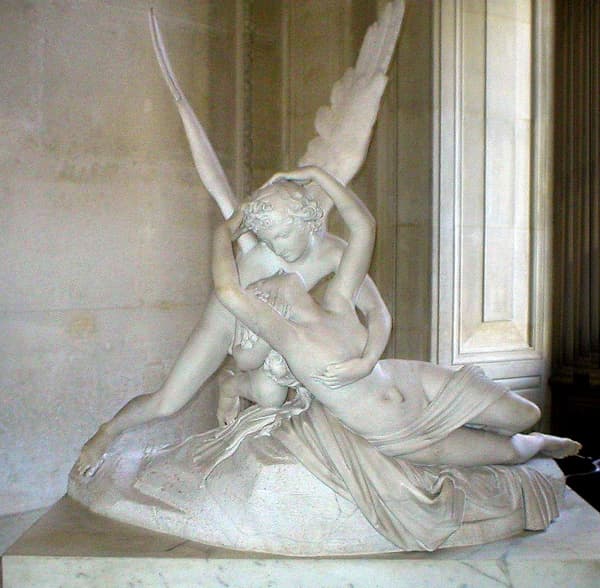
Psyche Revived by Cupid's Kiss
Antonio Canova's marble of Cupid waking Psyche with a kiss, carved 1787–1793 and in the Louvre since 1824 — the most famous embrace in Neoclassical sculpture.
Europe's most celebrated sculptor around 1800: carver of the Louvre's Psyche Revived by Cupid's Kiss, court sculptor to Napoleon, and the diplomat who marched into the Louvre in 1815 to take Italy's looted art home.
Antonio Canova was the most famous sculptor alive at the turn of the nineteenth century — the man patrons from popes to emperors queued for, and the artist who made cold Neoclassical marble look like breathing skin. Born in the Venetian hill town of Possagno in 1757 and trained in Venice, he ran the busiest studio in Rome, and his Psyche Revived by Cupid's Kiss has been one of the Louvre's most loved sculptures since 1824.
His Paris story has two acts. In the first he serves the empire: court sculptor to Napoleon from 1802, carver of the emperor's family. In the second, after Waterloo, he returns to Paris as the Pope's envoy and takes back the artworks Napoleon had stripped from Italy. He walked out of the Louvre with the Vatican's treasures, and earned the title Marquis of Ischia for it.[1]
Canova was born on 1 November 1757 in Possagno, a stonecutters' town in the Venetian hills, and raised by his grandfather, a stonemason, after his father's early death. Trained in Venice, he moved to Rome in his early twenties, where antiquity converted him: the smooth idealized bodies of Greek and Roman marble became his lifelong standard.[1]
By the 1790s his Roman studio led Europe. Psyche Revived by Cupid's Kiss, carved between 1787 and 1793 for a British collector on the Grand Tour, made his name for marble that seems to hover between stone and flesh. A second version went to Russia and is now in the Hermitage.[1]
In 1802 Napoleon summoned him to Paris as court sculptor. Canova, no admirer of the man who had dismembered his Venetian homeland, took the commissions anyway: a colossal nude Napoleon as Mars the Peacemaker, and his sister Pauline Borghese reclining as Venus. The works fixed the empire's image of itself in marble, even as the emperor filled the Louvre with art taken from Italy.[1]
After Waterloo, Pope Pius VII sent Canova to Paris to recover what French armies had looted from Rome and the Papal States. He arrived on 28 August 1815 as a diplomat armed with letters to the allied sovereigns, and argued Italy's case against the Louvre's directors, who fought to keep the collections.[2]
With the backing of Wellington and the British, he won. Convoys of sculpture and painting — the Laocoön and the Apollo Belvedere among them — left Paris for Rome that autumn. A grateful Pope made him Marquis of Ischia in 1816, and the mission remains a founding episode in every modern argument about looted art and restitution.[2]
Canova spent his last years between Rome and Possagno, where he designed and financed the Tempio Canoviano, a hilltop church crossing the Pantheon with the Parthenon. He died in Venice on 13 October 1822. His body is buried in Possagno's temple; his studio and plaster models fill the Museo Canova there, and his marbles fill the museums of Europe — with the Louvre's Psyche among the most visited of all.[1]
Born on 1 November in Possagno, in the hills of the Venetian Republic.
Begins Psyche Revived by Cupid's Kiss in Rome for the British collector Colonel John Campbell.
Becomes court sculptor to Napoleon in Paris.
Arrives in Paris on 28 August as the Pope's envoy and negotiates the return of Italy's looted art from the Louvre.
Pius VII names him Marquis of Ischia for recovering the looted collections.
Dies in Venice on 13 October; buried in the temple he built at Possagno.
Psyche Revived by Cupid's Kiss enters the Louvre.
Sculpture · Neoclassical sculpture
Antonio Canova's marble of Cupid waking Psyche with a kiss, carved 1787–1793 and in the Louvre since 1824 — the most famous embrace in Neoclassical sculpture.
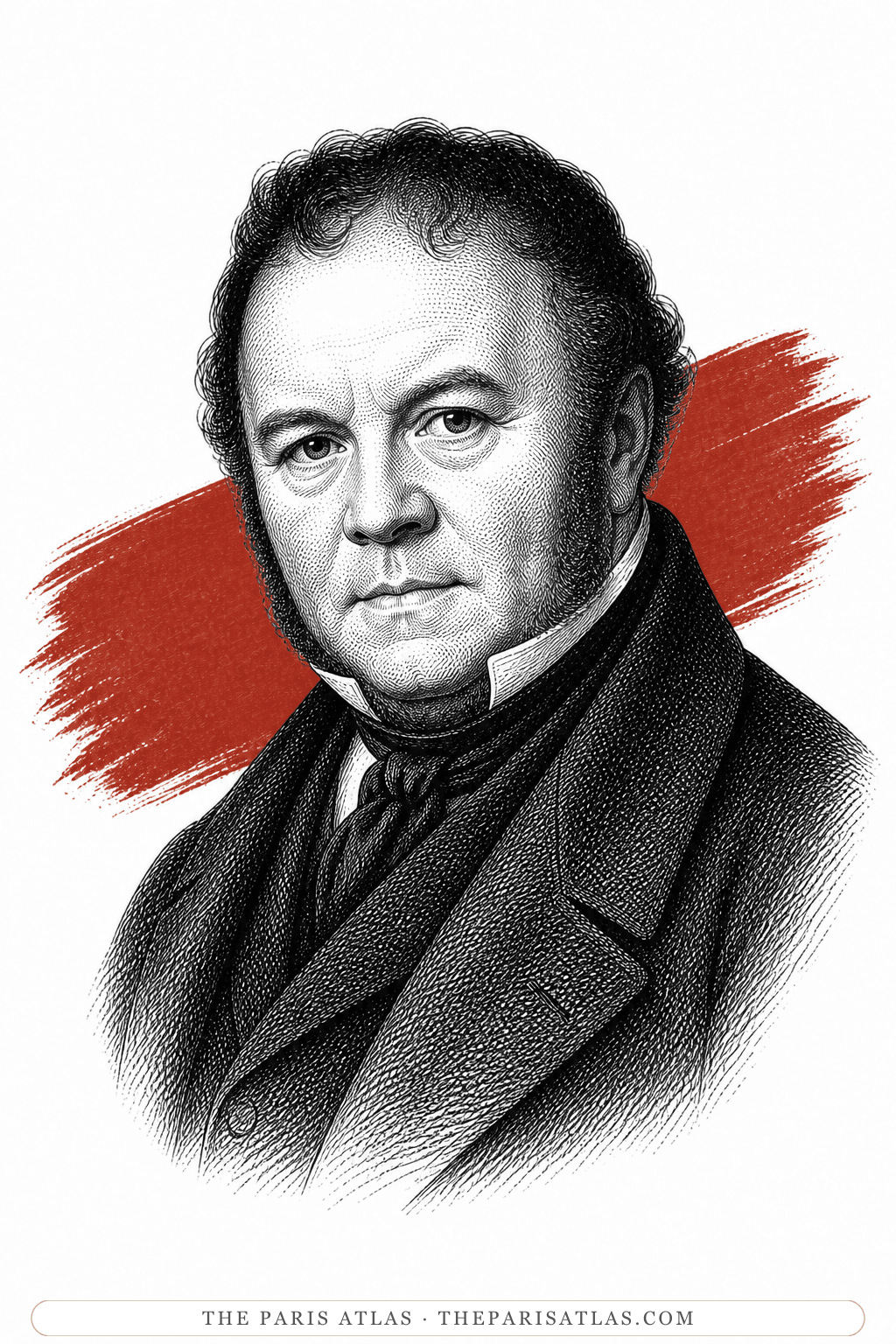
Stendhal built his idea of ideal beauty partly on Canova, following the sculptor's work from the Paris Salon of 1808 through Milan, Florence and Rome, and writing at Canova's death in 1824 that Rome had lost the man who invented a new kind of ideal beauty, closer to modern customs than to the Greeks. The scholarly literature treats Canova as a fixture of Stendhal's aesthetics.
For being the leading sculptor of Neoclassicism — the most celebrated artist in Europe around 1800. His marbles include Psyche Revived by Cupid's Kiss in the Louvre, Pauline Borghese as Venus in Rome, and the Three Graces; and he was court sculptor to Napoleon while remaining the Pope's favourite artist.
He took Italy's art back. Pope Pius VII sent him to Paris after Waterloo, and he arrived on 28 August 1815. Against fierce resistance from the museum, he negotiated the return of the works Napoleon's armies had looted from Rome, the Laocoön and Apollo Belvedere among them. The Pope made him Marquis of Ischia for it.
He served him warily. Napoleon had extinguished the Venetian Republic, Canova's homeland, yet summoned him as court sculptor in 1802. Canova accepted the imperial commissions — the colossal Napoleon as Mars, Pauline Borghese as Venus — and then, after the empire fell, led the recovery of the art Napoleon had taken from Italy.
At the Louvre, whose Psyche Revived by Cupid's Kiss (in the museum since 1824) is his most famous work in France. It stands in the Italian sculpture galleries of the Denon wing.
In Possagno, his birthplace north of Venice, inside the Tempio Canoviano — the Pantheon-like church he designed and paid for himself. The town's Museo Canova keeps his plaster models and studio.
Influenced
Stendhal built his idea of ideal beauty partly on Canova, following the sculptor's work from the Paris Salon of 1808 through Milan, Florence and Rome, and writing at Canova's death in 1824 that Rome had lost the man who invented a new kind of ideal beauty, closer to modern customs than to the Greeks. The scholarly literature treats Canova as a fixture of Stendhal's aesthetics.
The sources below include biographies, scholarly essays, interviews, and primary materials that informed this page. They reflect both the historical record and ongoing critical conversations about Antonio Canova and their work.

Web source consulted for documented facts and historical context presented on the Antonio Canova page.
Web source consulted for documented facts and historical context presented on the Antonio Canova page.
These references anchor the page in the documented record and in the scholarly conversations around Antonio Canova. Every claim on this page traces back to one or more of the works listed here.
 Explore more resources