Displayed at · 1824
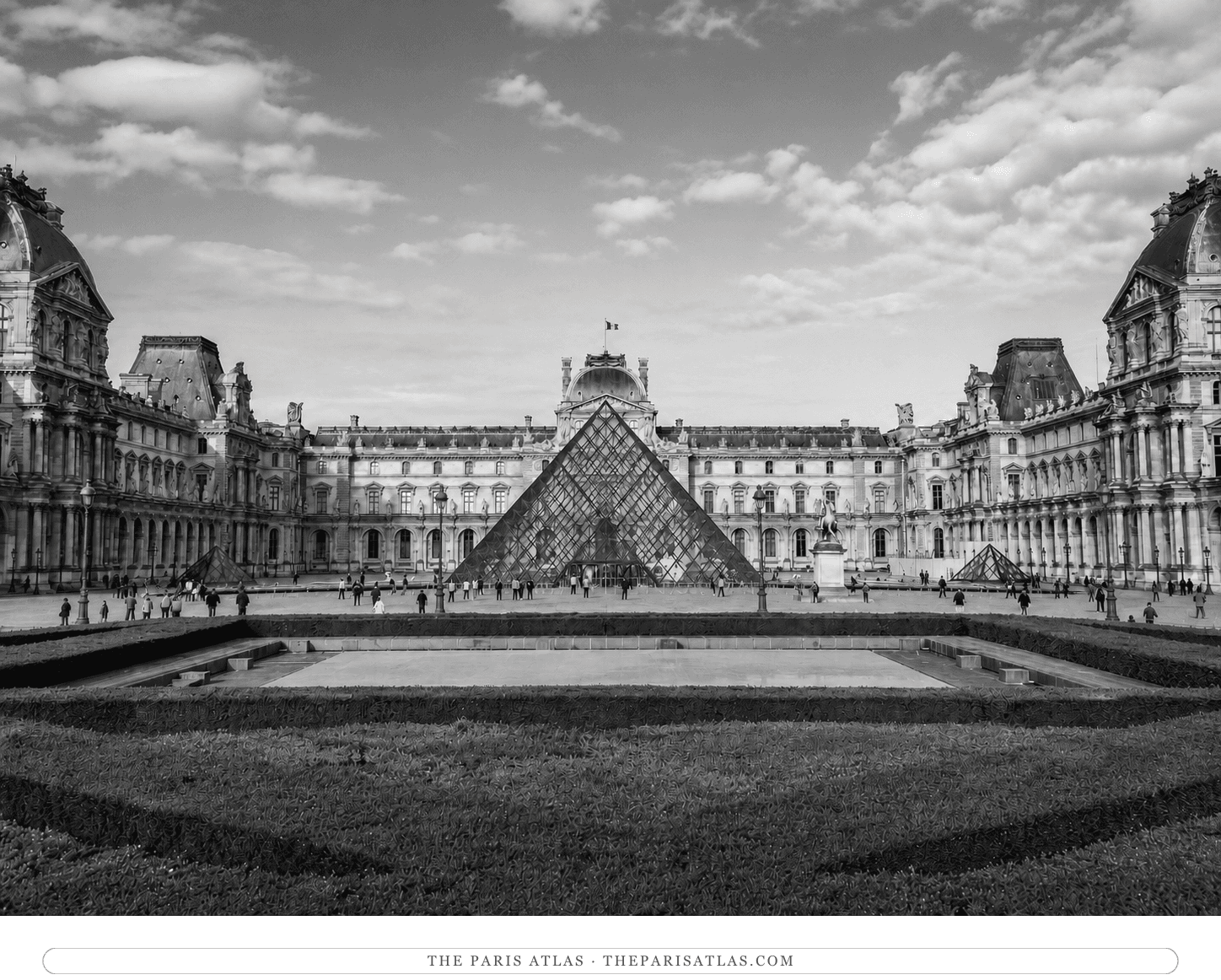
Musée du Louvre
In the Louvre since 1824, after Joachim Murat's collection passed to the museum; it stands in the Italian sculpture galleries of the Denon wing on the museum's masterpieces trail.
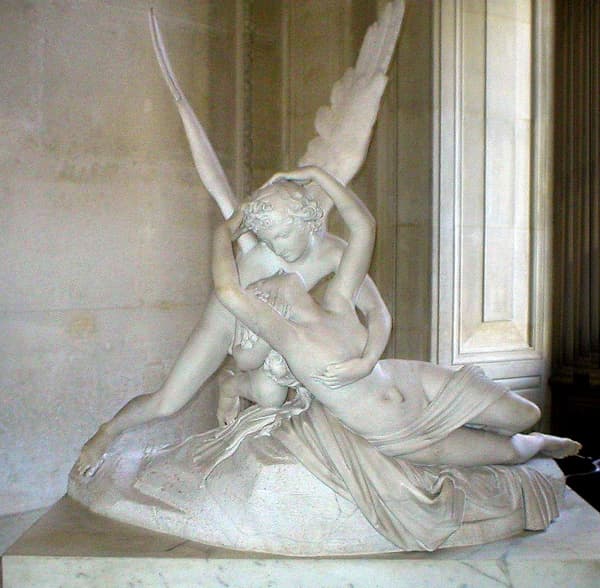
Antonio Canova's marble of Cupid waking Psyche with a kiss, carved 1787–1793 and in the Louvre since 1824 — the most famous embrace in Neoclassical sculpture.
The story comes from The Golden Ass of Apuleius. Psyche, ordered to bring back a flask from the underworld, opens it against instructions and falls into a deathlike sleep. Cupid, who loves her, flies down and wakes her. Canova carves the instant between sleep and waking: Psyche arches backward, arms rising, while the winged Cupid holds her head and breast, their faces a breath apart.
The composition is built on two crossing diagonals — Cupid's wings and Psyche's rising arms — locking into a kind of X at the point where the kiss is about to land. Visitors circle it because no single viewpoint holds the whole figure; the marble is polished to a softness contemporaries compared to skin.
Colonel John Campbell, a British collector on the Grand Tour, commissioned the group in 1787; Canova finished it in 1793 in Rome. It never reached Campbell. Joachim Murat — Napoleon's cavalry general and later King of Naples — acquired it in 1800, and after his fall the marble entered the Louvre in 1824, where it has remained.
Canova carved a second version with the same composition in the 1790s for the Russian collector Prince Yusupov; that marble is now in the Hermitage in Saint Petersburg. The Louvre group is the first and prime version.
The group stands in the Louvre's Italian sculpture galleries on the ground floor of the Denon wing, on the museum's own masterpieces trail. It is one of the most photographed sculptures in the building, and the wings and raised arms make it legible from across the gallery.
Close reading
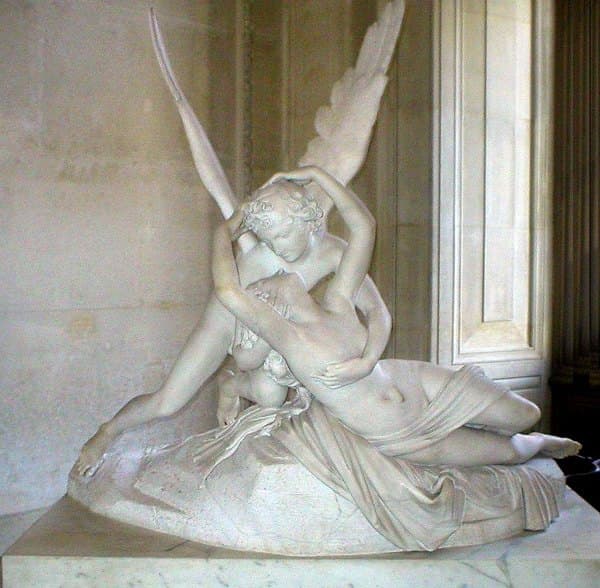
Canova suspends the myth at the instant between unconsciousness and embrace. The details show nearly touching faces, crossing arms and wings, and polished marble making awakening feel like movement beginning inside stone.
1.The kiss remains one breath away
Their faces approach without completing contact, concentrating the story in a narrow interval. The withheld kiss keeps the marble permanently at the threshold between sleep and awakening.
2.Arms and wings lock the group into an X
Psyche reaches upward while Cupid's wings and descending body move across her. The crossing diagonals stabilize a pose that would otherwise appear to keep rising and falling.
3.Cupid's hands make revival physical
One hand cradles the head while the other supports the torso. Canova translates supernatural revival into exact points of touch, letting the myth be understood through weight and care.
4.Psyche's hand tests the return to consciousness
Her fingers meet Cupid lightly rather than gripping him. The tentative contact makes revival appear gradual: she can respond, but her body has not yet fully recovered its own weight.
5.The legs keep the embrace from becoming weightless
Bent knees and crossing legs establish how the two bodies are supported on the rock. The complicated base gives physical credibility to the soaring circle made by their upper bodies.
6.Polished marble softens every transition
Light moves gradually across skin, wing, cloth, and stone even though all are carved from marble. Canova uses differences in finish and depth to make one material behave like several.
A viewing location has not yet been listed for this work.
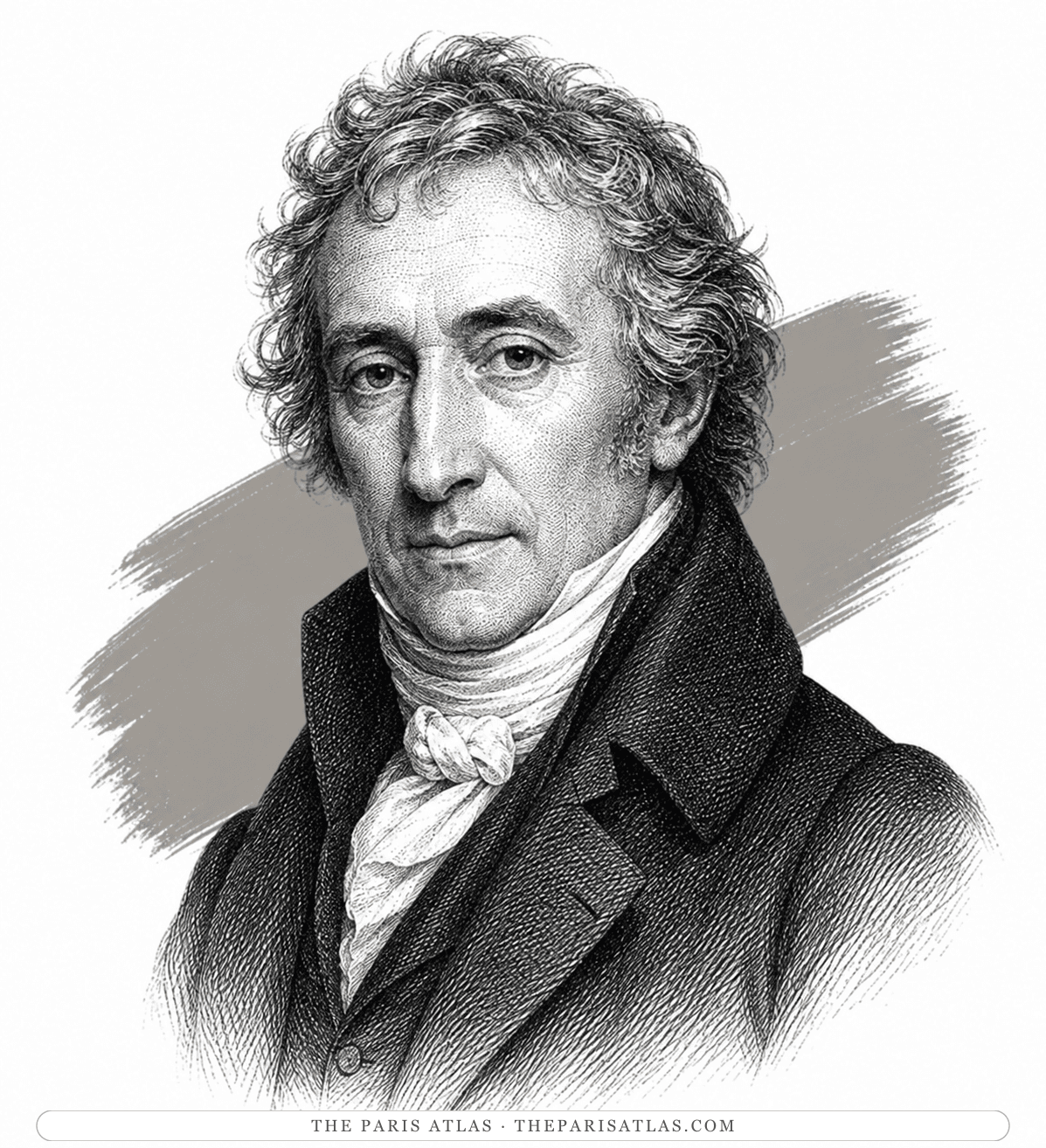
Antonio Canova, the leading Neoclassical sculptor in Europe, carved it in Rome between 1787 and 1793, on a commission from the British collector Colonel John Campbell.
The myth of Cupid and Psyche from Apuleius's Golden Ass. Psyche has opened a forbidden flask from the underworld and fallen into a deathlike sleep; Cupid wakes her with a kiss. The marble catches the instant just before their lips meet.
Through Napoleon's circle. The commissioning collector never received it; Joachim Murat, Napoleon's general and later King of Naples, bought it in 1800, and the marble entered the Louvre in 1824, where it has stayed.
Yes. Canova carved a second, closely similar group in the 1790s for Prince Yusupov, a Russian collector; it is now in the Hermitage in Saint Petersburg. The Louvre marble is the first version.
In the Italian sculpture galleries on the ground floor of the Denon wing, on the museum's masterpieces trail — a short walk from the Winged Victory of Samothrace stairs.
Displayed at · 1824
In the Louvre since 1824, after Joachim Murat's collection passed to the museum; it stands in the Italian sculpture galleries of the Denon wing on the museum's masterpieces trail.
Explore sculptors from the same movements and circles.
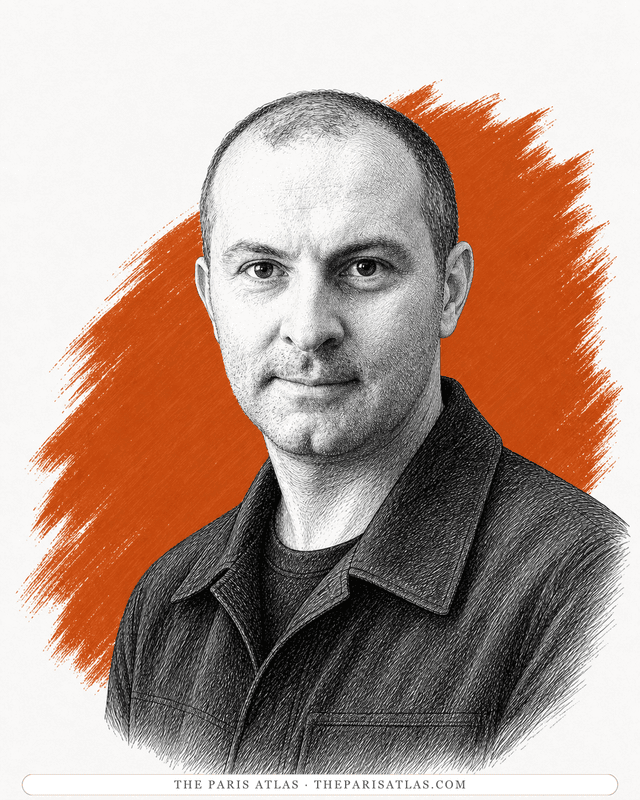
French-American artist, lifelong friend of Yves Klein, and a founder of New Realism.
View artist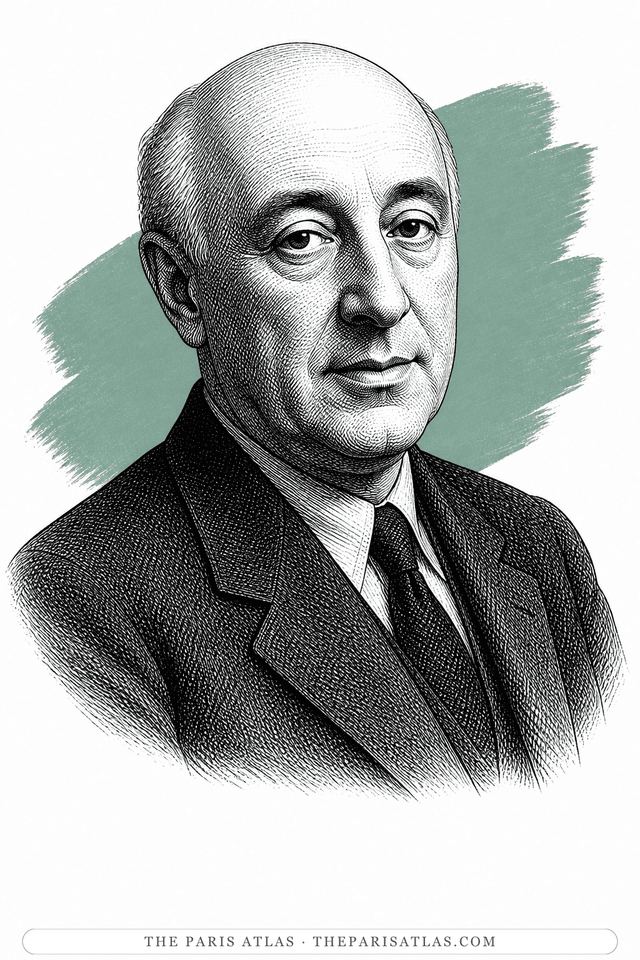
Strasbourg-born sculptor and poet — Hans in German, Jean in French, both all his life — who co-founded Dada at the Cabaret Voltaire in 1916, composed collages by dropping torn paper 'according to the laws of chance', and settled at Meudon outside Paris in a house his wife Sophie Taeuber-Arp designed.
View artist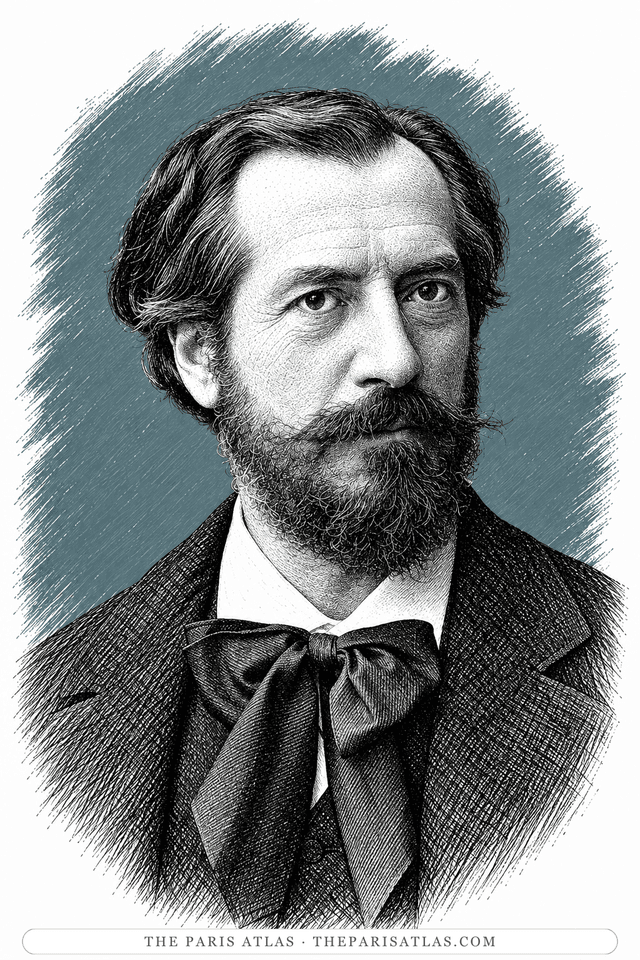
Frédéric Auguste Bartholdi was a French sculptor best known for designing the Statue of Liberty, dedicated in New York Harbor in 1886. Born in Colmar and based in Paris, he created public monuments that gave visible form to ideas of freedom, resistance and national memory. His other major works include the Lion of Belfort and the fountain in Lyon's Place des Terreaux.
View artistThe sources below include collection records, catalogues, scholarly research, and primary materials that informed this page. They document Psyche Revived by Cupid's Kiss, its making, and its place in cultural history.


Web source consulted for documented facts and historical context presented on the Psyche Revived by Cupid's Kiss page.
Web source consulted for documented facts and historical context presented on the Psyche Revived by Cupid's Kiss page.
Web source consulted for documented facts and historical context presented on the Psyche Revived by Cupid's Kiss page.
Web source consulted for documented facts and historical context presented on the Psyche Revived by Cupid's Kiss page.
These references provide the documented foundation for this work's history and interpretation. Claim-level citations remain attached to the specific claims they support.
 Explore more resources