The Paris AtlasCharting the artists, works, and places worth returning to.
  • Sculptor
· French · 1840–1917

Auguste Rodin

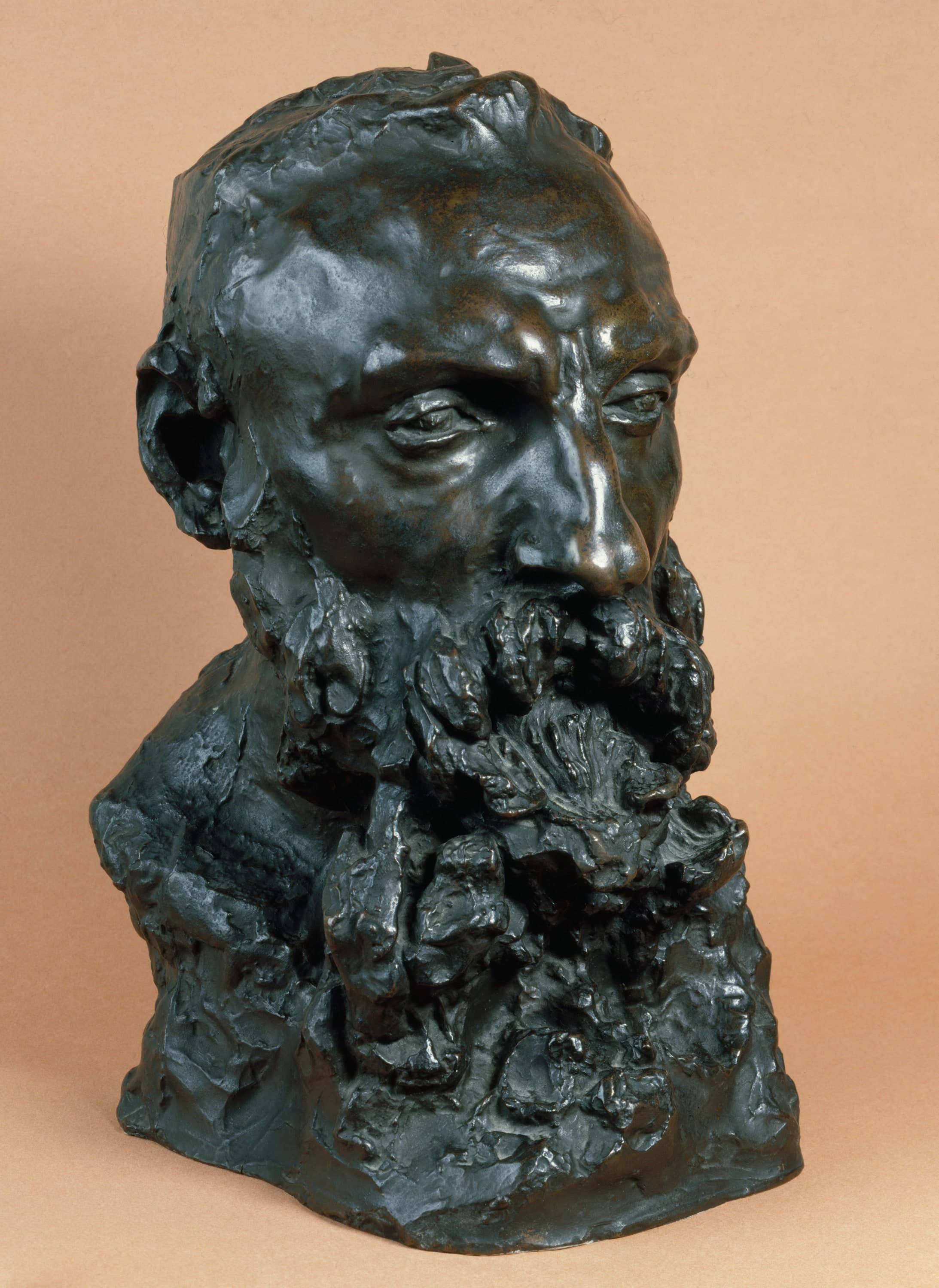
French sculptor whose Gates of Hell produced The Thinker and The Kiss, and whose refusal of the smooth neoclassical finish for a modelled, expressive surface made modern sculpture possible.

Details

Lived
1840–1917
Born
12 November 1840
Birthplace
Paris
Died
17 November 1917 · aged 77
Place of death
Meudon, near Paris
Nationality
French
Married
Rose Beuret · 29 January 1917 – 16 February 1917
Partner
Rose Beuret · c. 1864–1917
Children
Auguste-Eugène Beuret
Roles
Sculptor

About Auguste Rodin

François-Auguste-René Rodin (1840–1917) was a French sculptor whose Gates of Hell — commissioned in 1880 and never finished in his lifetime — produced The Thinker, The Kiss, and most of the individual figures the twentieth century learned to call modern sculpture. He worked from the model rather than the ideal, kept the surface visibly modelled by the hand instead of polishing it into neoclassical calm, and, over forty years, moved public sculpture from Beaux-Arts monument to something a viewer could stand inside.

He was rejected three times from the École des Beaux-Arts. He supported himself for two decades as an ornamental modeller. His long partnership with Rose Beuret produced a son in 1866, and only ended in a marriage two weeks before her death and nine months before his own. He was buried at Meudon in his own garden, under a bronze cast of The Thinker, and left his estate to the French state to establish the Musée Rodin at the Hôtel Biron in Paris.

Working-class Paris and three rejections from the Beaux-Arts

Rodin was born on 12 November 1840 in the 5th arrondissement of Paris, the second child of Jean-Baptiste Rodin, a police clerk from Normandy, and Marie Cheffer, a seamstress from Alsace. He was near-sighted, dyslexic, and considered a poor pupil. At fourteen he entered the École Impériale Spéciale de Dessin et de Mathématiques — the state's free 'Petite École' for training craftsmen — and there met the art educator Horace Lecoq de Boisbaudran, who taught him to draw from memory rather than from copies.

Between 1857 and 1862 Rodin applied three times to the École des Beaux-Arts and was refused each time. The rejections were, he later thought, decisive. He spent the next twenty years as an ornamental modeller in Paris and Belgium — carving caryatids, mantelpieces, and public building decorations for the architect Albert-Ernest Carrier-Belleuse — and learned the craft of sculpture in ways the Beaux-Arts would not have taught him. His sister Maria, whom he adored, died young in 1862; his brief novitiate in a religious order was cut short when its founder, Father Pierre-Julien Eymard, told him his true vocation was the studio.

Italy, and the scandal of The Age of Bronze

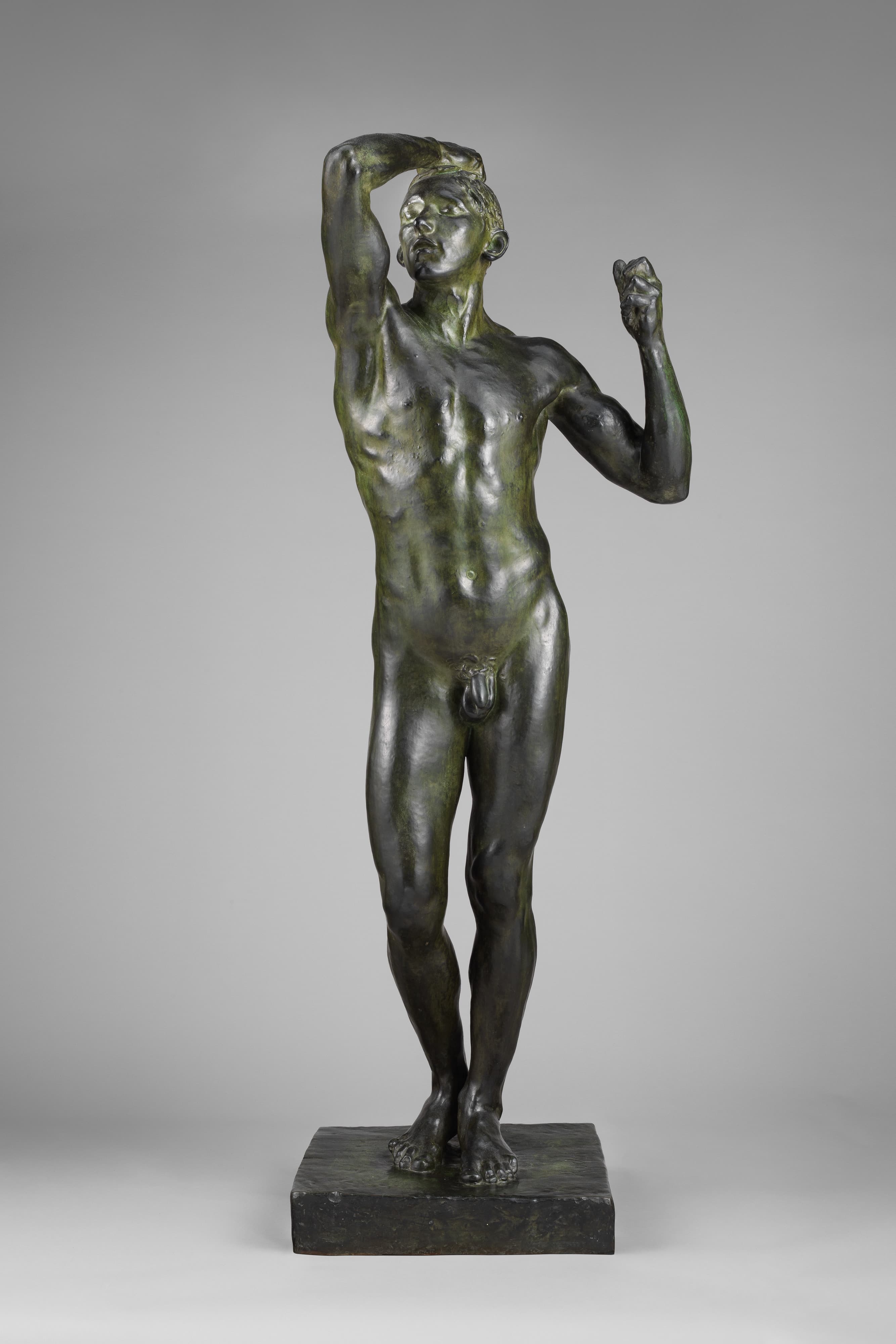
In 1875 Rodin travelled to Italy on his own money, went straight to the Sistine Chapel, and studied Michelangelo. He returned to Brussels in 1876 with the argument the rest of his career would make — that sculpture had to work from the modelled body outward, not from the classical ideal inward. The immediate result was The Age of Bronze, exhibited at the Cercle Artistique et Littéraire in Brussels in 1877 and at the Paris Salon the same year.

The statue's anatomy was so accurate that Rodin was accused of casting it directly from his model, the Belgian soldier Auguste Neyt. He denied the charge and eventually cleared his name — the state acquired the bronze in 1880 — but the scandal made him. He had proved he could model a body as living tissue, and the sculpture world had noticed.

The Gates of Hell

In August 1880 the French state commissioned Rodin, at the recommendation of Edmond Turquet, Undersecretary of Fine Arts, to design a bronze door for the future Musée des Arts Décoratifs, on a theme drawn from Dante's Inferno. He was given a studio at the Dépôt des Marbres on the rue de l'Université, a state salary, and a hundred and twenty thousand francs for the commission. He worked on the doors, on and off, for the next thirty-seven years and never delivered a completed cast in his lifetime.

The Gates of Hell were the workshop for almost every free-standing sculpture that followed. The Thinker started as the figure of Dante meditating above the tympanum. The Kiss began as Paolo and Francesca on the left panel. The Three Shades stood on top of the doors. Ugolino and his sons, Fugit Amor, She Who Was the Helmet-Maker's Once-Beautiful Wife, and Adam and Eve at the flanks — all appear on the Gates, all became separate works. Two full-scale plaster models were assembled by his death; the first bronze cast was poured only in 1926, nine years after he died.

  • The Gates of Hell

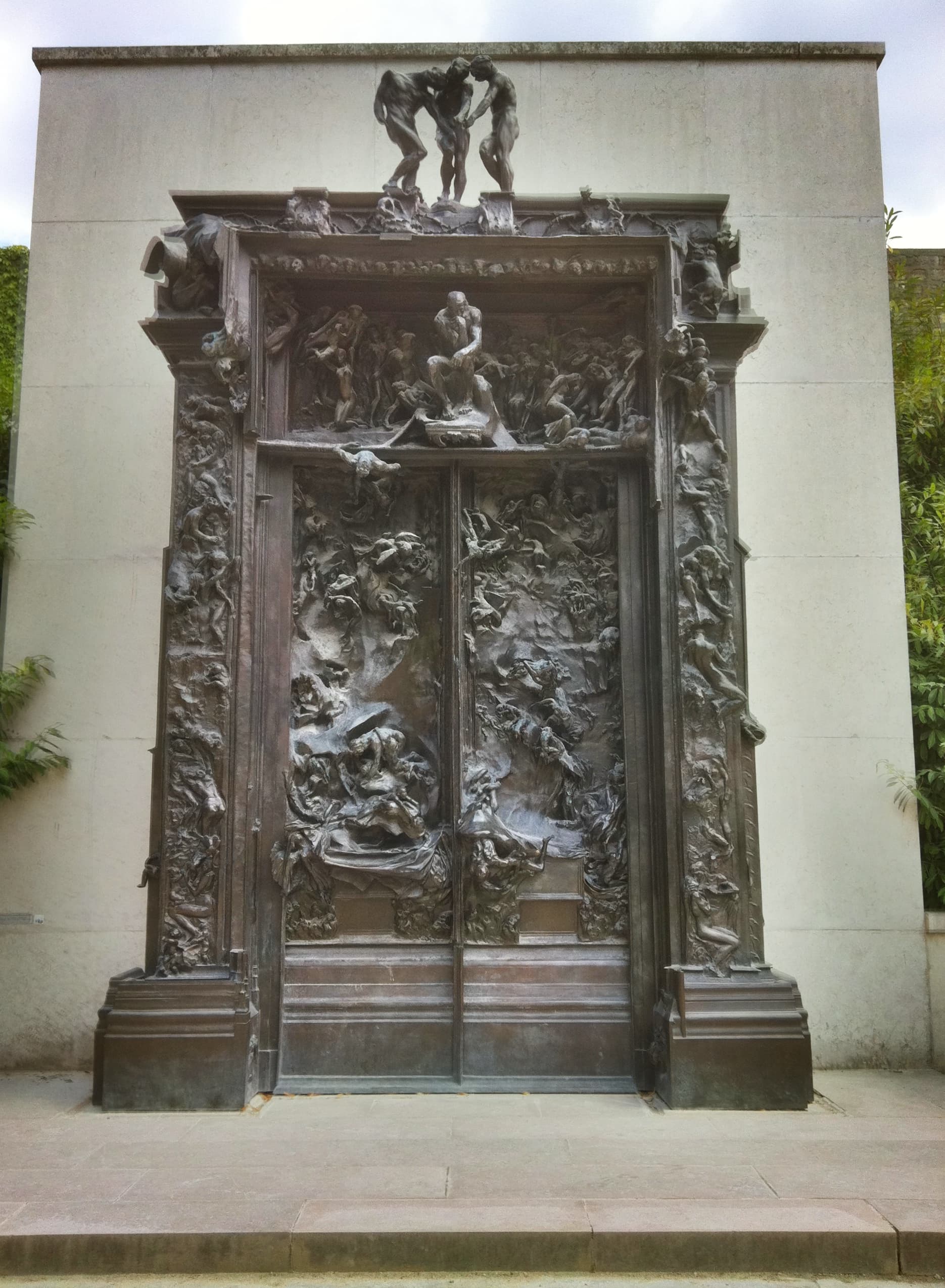
    The unfinished bronze door — the thirty-seven-year commission, the two plaster assemblies, and the Musée Rodin cast at the Hôtel Biron.

  • The Thinker

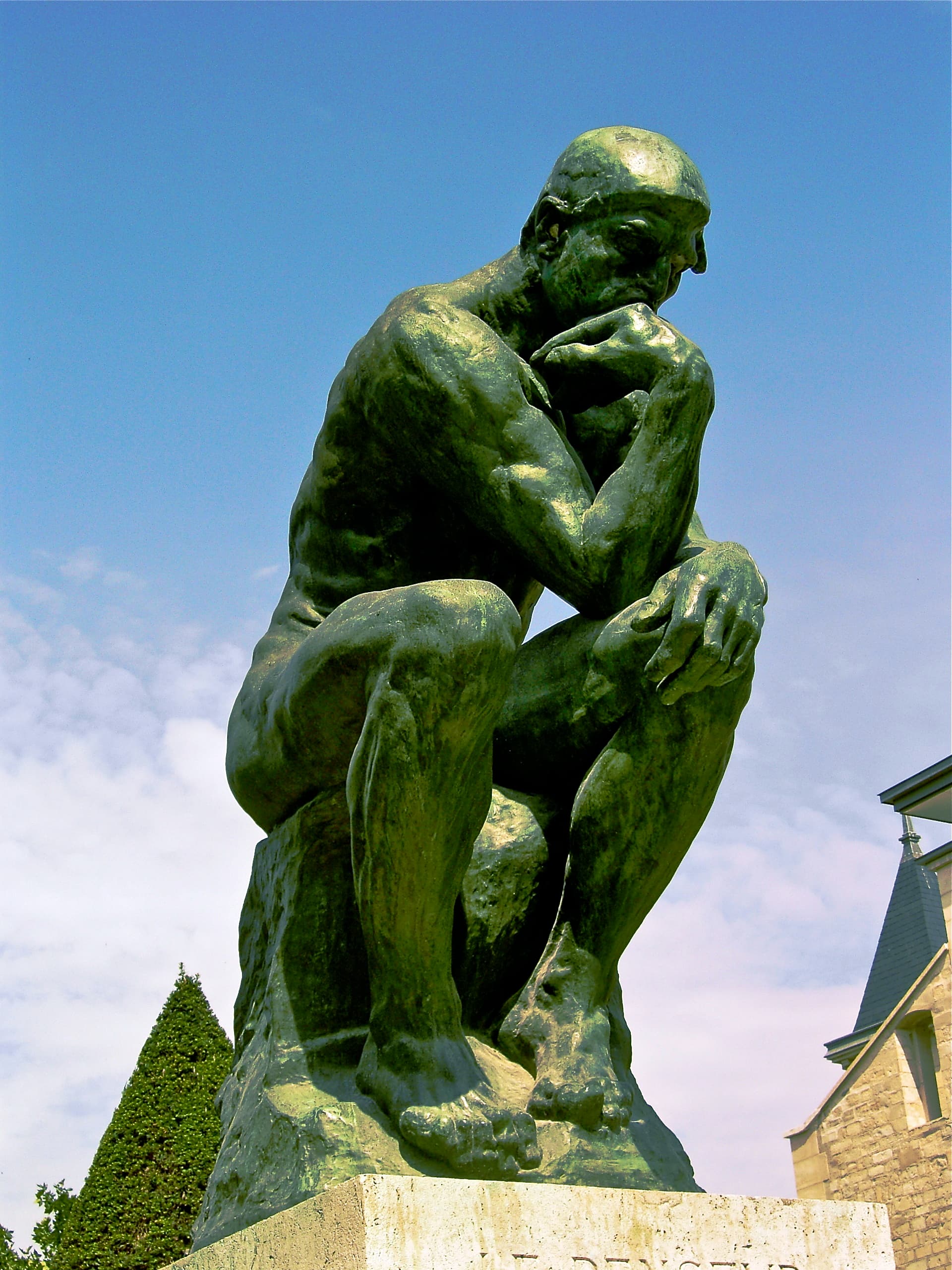
    Originally the figure of Dante above the Gates; enlarged and cast as an independent monument at the request of a public subscription in 1904.

Rose Beuret and Camille Claudel

Rose Beuret was a young seamstress from the Champagne region whom Rodin met around 1864, the year he began modelling for himself in earnest. She lived with him for the next fifty-three years, ran the household, minded his son Auguste-Eugène Beuret (born 1866), took his plaster casts down from the shelves during raids by the Prussian army in 1870, and moved with him from Paris to Brussels and back and finally to the Villa des Brillants at Meudon in 1893. He married her on 29 January 1917. She died sixteen days later.

In 1884 Camille Claudel, a young sculptor working in her own studio on the boulevard du Montparnasse, joined the Rodin workshop. She was nineteen; he was forty-three. Their affair was open by 1888 and lasted at least until 1892. Claudel modelled for Danaïd, Aurora, and several of the couples on the Gates, and did substantial work on the hands and feet of Rodin's larger commissions. The relationship ended badly around 1898; her subsequent thirty-year confinement at the asylum of Montfavet, and Rodin's continued financial support through intermediaries, are documented and separate from the affair itself.

The Burghers, the Balzac, and the fight over public sculpture

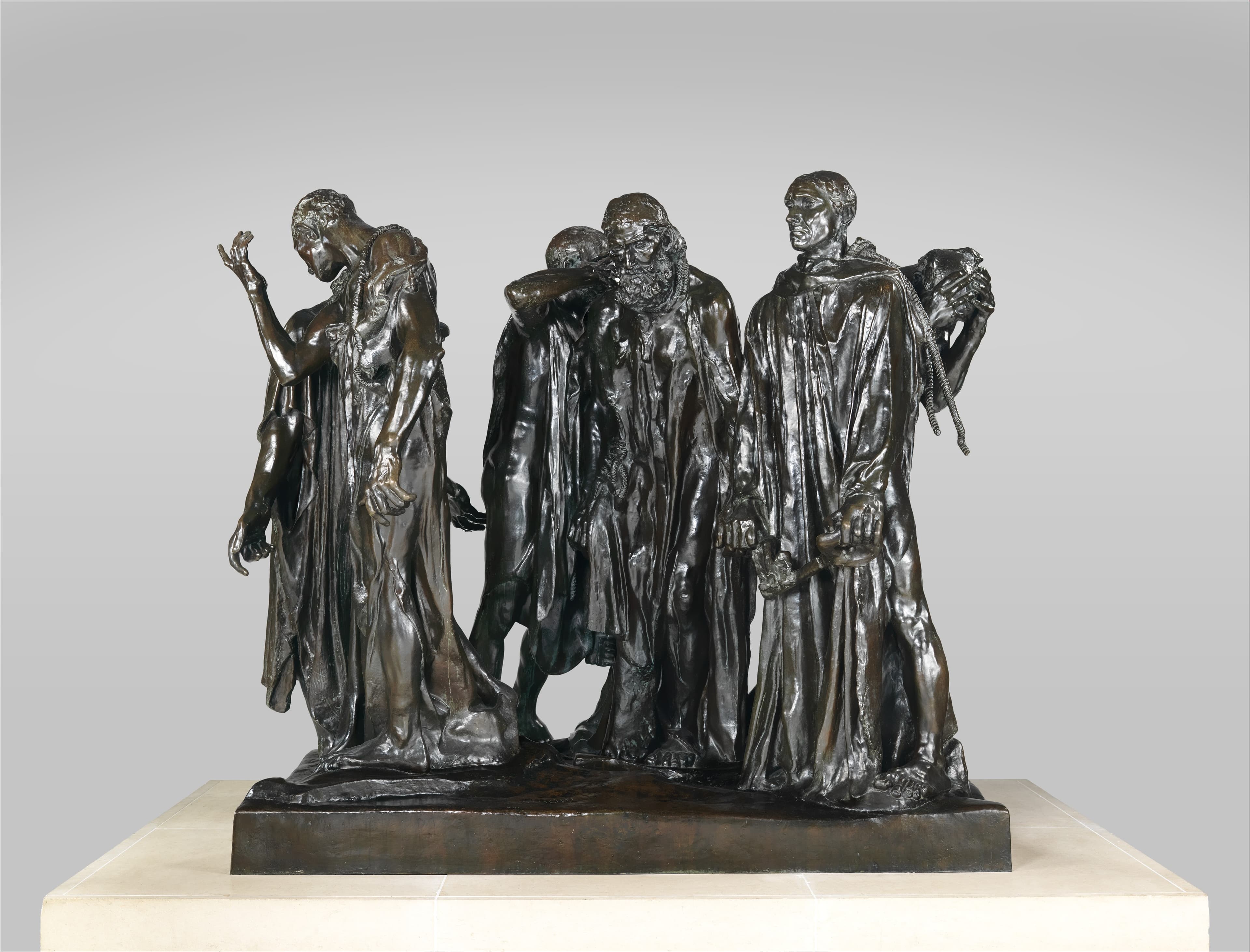
In 1884 the city of Calais commissioned Rodin to sculpt the six burghers who, in 1347, surrendered themselves to Edward III of England to save the town from siege. He gave them each an individual pose — Eustache de Saint-Pierre in the centre with his hand at his throat, Jean d'Aire clasping the key to the city, Andrieu d'Andres with his head buried in his hands — and asked that the monument stand at ground level with the passing citizens, not on a plinth. Calais installed it on a tall pedestal anyway; the ground-level installation the city now shows was a 1920s reconstruction.

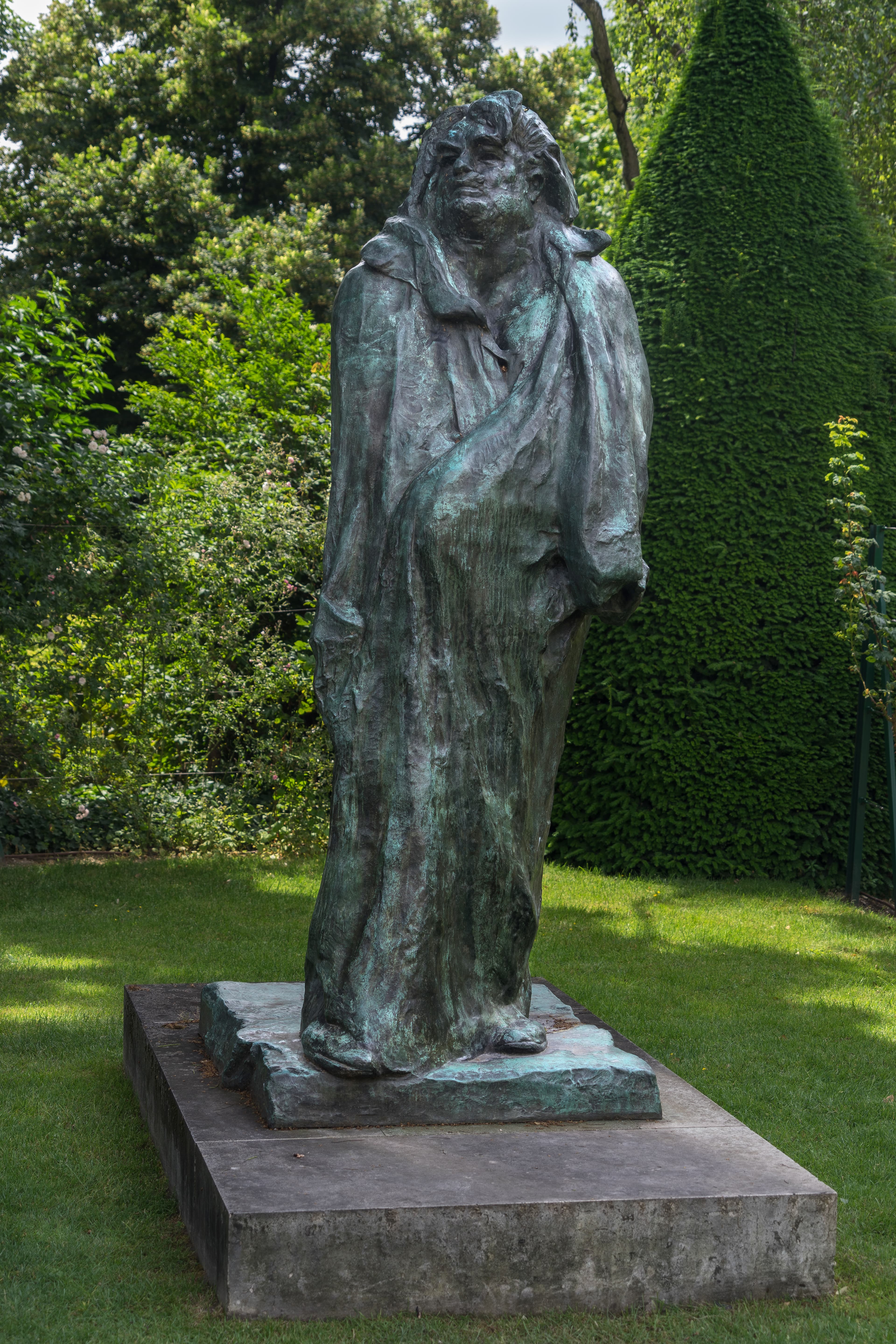
The Société des Gens de Lettres commissioned a monument to Honoré de Balzac in 1891. Rodin worked on it for seven years, produced dozens of nude and clothed studies, and delivered a plaster in 1898 of Balzac wrapped in his dressing gown, staring past the viewer. The Society rejected it. The plaster went first to Meudon; the first bronze cast, made in 1939, now stands at the intersection of Boulevard Raspail and Boulevard du Montparnasse in Paris. The rejection was, Rilke would later write, the moment Rodin's contract with public sculpture ended, and modern sculpture began.

Meudon, the Hôtel Biron, and the Musée Rodin

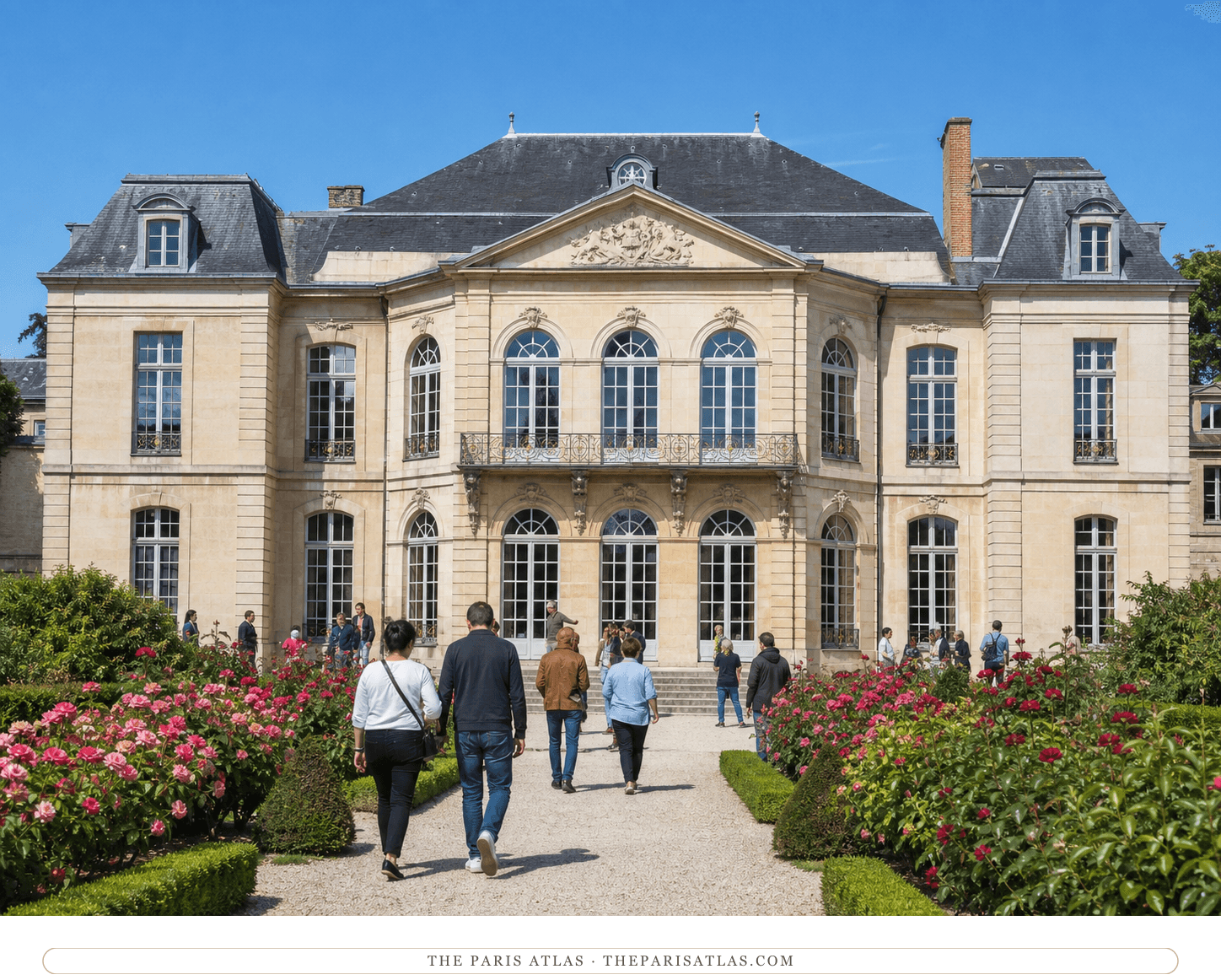
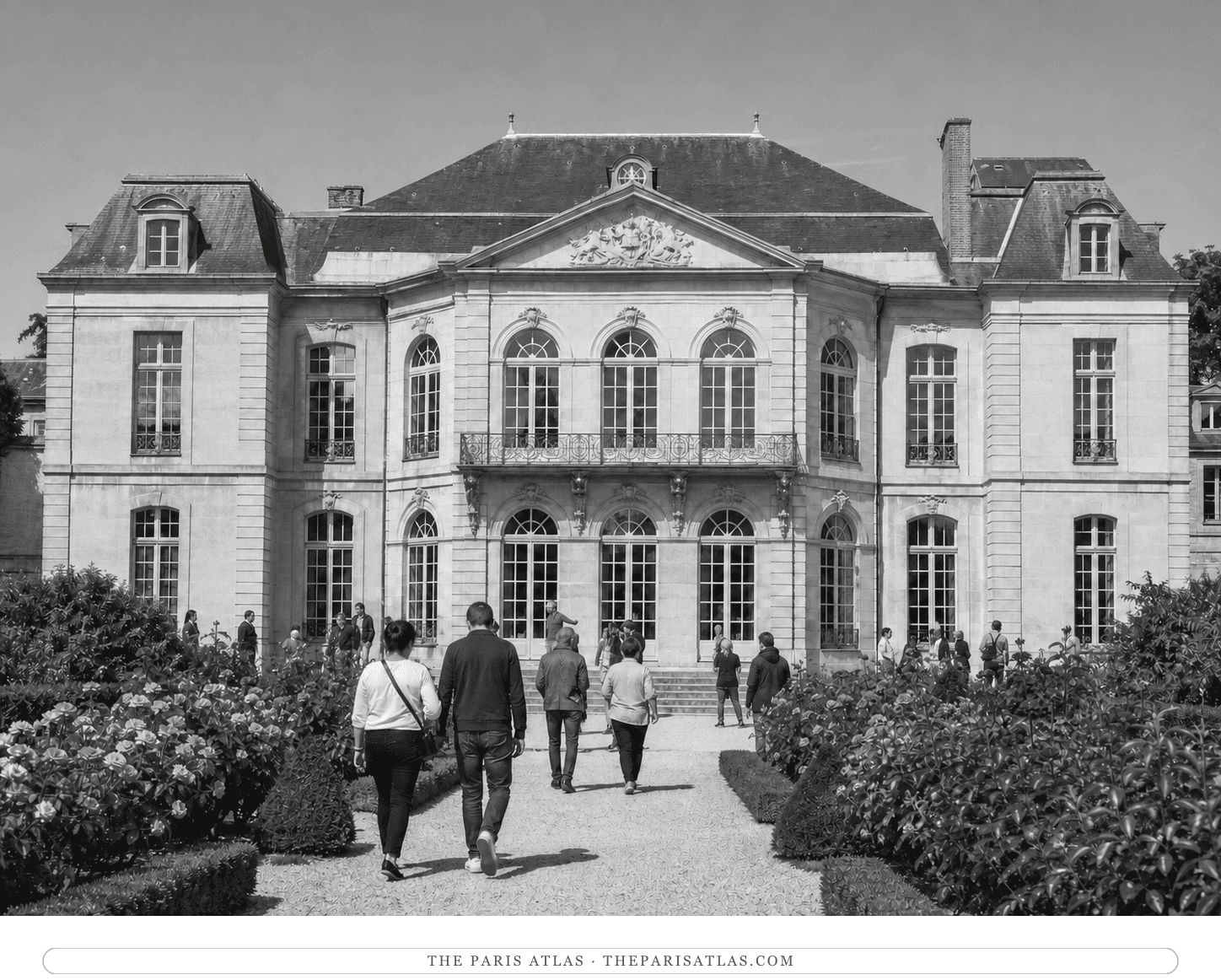
In 1893 Rodin bought the Villa des Brillants at Meudon, on the western outskirts of Paris. He extended the house with a copy of a Louis XIII pavilion, added a large glass studio, and moved his plaster models to the garden. In 1908 he began renting a ground-floor apartment at the Hôtel Biron in the 7th arrondissement of Paris. The building was a former convent and had been requisitioned for demolition; other tenants included Rainer Maria Rilke (who had been Rodin's secretary from 1905 to 1906), Henri Matisse, Isadora Duncan, and Jean Cocteau.

In 1916 Rodin donated his sculptures, drawings, personal collection, and the entire Hôtel Biron to the French state on the condition that the building become a museum in his name. Parliament passed the law in December 1916. He and Rose Beuret married on 29 January 1917 in the state's presence; she died of pneumonia on 16 February. Rodin himself died at Meudon on 17 November 1917, of influenza and the cold of the unheated Villa. He was buried in the garden at Meudon under a bronze cast of The Thinker. The Musée Rodin opened at the Hôtel Biron in August 1919.

What Rodin left the century

Almost every serious European sculptor born after 1870 spent time in Rodin's studio or in front of his work. Constantin Brâncuși worked briefly for him in the spring of 1907 and left, as he put it, because 'nothing grows under big trees' — a rejection that turned into the smooth pared reduction of Bird in Space and Sleeping Muse. Antoine Bourdelle and Aristide Maillol both apprenticed and then formalised against him. Camille Claudel, in her own studio and then in the asylum, worked out an argument with him for the rest of her life.

Rodin's contribution was not one style of sculpture but a change in what the surface could carry. Fragments were finished works. Torsos without heads were finished works. The pressure of the modelling hand stayed visible on the bronze. Every subsequent argument in twentieth-century sculpture — Brâncuși's smoothness, Bourdelle's stylisation, Giacometti's thinness — was made possible by the moment Rodin refused to polish The Age of Bronze into a classical youth.

Life events

  1. 12 November 1840

    Born in Paris to Jean-Baptiste Rodin, a police clerk, and Marie Cheffer, a seamstress.

  2. 1854–1857

    Attends the École Impériale Spéciale de Dessin et de Mathématiques (the 'Petite École') under Horace Lecoq de Boisbaudran.

  3. 1857–1862

    Applies three times to the École des Beaux-Arts; refused each time.

  4. c. 1864

    Meets Rose Beuret; the two live together for the next fifty-three years.

  5. 1866

    Their son Auguste-Eugène Beuret is born.

  6. 1875–1876

    Travels to Italy; studies Michelangelo in the Sistine Chapel.

  7. 1877

    The Age of Bronze exhibited at Brussels and Paris; Rodin is accused of casting it from a living model.

  8. 1880

    Commissioned to design the Gates of Hell for the future Musée des Arts Décoratifs.

  9. 1884

    Camille Claudel joins his studio. The Burghers of Calais is commissioned.

  10. 1889

    Joint retrospective with Claude Monet at the Galerie Georges Petit.

  11. 1893

    Buys the Villa des Brillants at Meudon and moves his plaster models to the garden.

  12. 1898

    The Société des Gens de Lettres rejects his plaster Balzac. Break with Camille Claudel.

  13. 1900

    Universal Exhibition in Paris; Rodin's own pavilion at Place de l'Alma exhibits over 150 of his works.

  14. 1905–1906

    Rainer Maria Rilke serves as his secretary.

  15. 1908

    Begins renting a ground-floor apartment at the Hôtel Biron in the 7th arrondissement of Paris.

  16. 1916

    Donates the Hôtel Biron and his collection to the French state to establish the Musée Rodin. Parliament passes the enabling law in December.

  17. 29 January 1917

    Marries Rose Beuret at Meudon.

  18. 16 February 1917

    Rose Beuret dies of pneumonia.

  19. 17 November 1917

    Rodin dies at Meudon of influenza and cold. Buried in the garden under a bronze cast of The Thinker.

  20. August 1919

    The Musée Rodin opens at the Hôtel Biron in Paris.

Selected works

Cataloged from the holding institutions' records. Reproductions appear only where the rights are verified.

Sculptures

Auguste Rodin's monumental bronze Thinker in the Musée Rodin garden: a nude man seated on a rock, leaning forward with his chin against his right hand

Artwork reproduction

Sculpture · Modern sculpture

The Thinker

1880; enlarged 1903–1904 · Bronze

Auguste Rodin conceived this tense seated figure in 1880 as Dante above The Gates of Hell. He later exhibited it alone, renamed it The Thinker, and enlarged it into the monumental form now in the Musée Rodin garden.

Musée Rodin, Paris

Auguste Rodin, The Thinker, 1880; enlarged 1903–1904. Musée Rodin, Paris. Image: public domain.

Auguste Rodin's monumental bronze Gates of Hell in the Musée Rodin garden in Paris, covered with falling and twisting human figures beneath The Thinker and The Three Shades

Artwork reproduction

Sculpture · Modern sculpture

The Gates of Hell

Conceived 1880–circa 1890; Paris bronze cast 1928 · Bronze

Auguste Rodin began this monumental doorway in 1880 for a Paris museum that was never built. Its crowded vision of Dante's Hell became the source of more than 200 figures and groups, including The Thinker, The Three Shades, and Ugolino and His Children.

Musée Rodin, Paris

Auguste Rodin, The Gates of Hell, Conceived 1880–circa 1890; Paris bronze cast 1928. Musée Rodin, Paris. Image: CC BY 3.0.

Who drew from them

Influence running outward — the writers and artists who built on their work.

Illustrated portrait of Constantin Brâncuși

Constantin Brâncuși

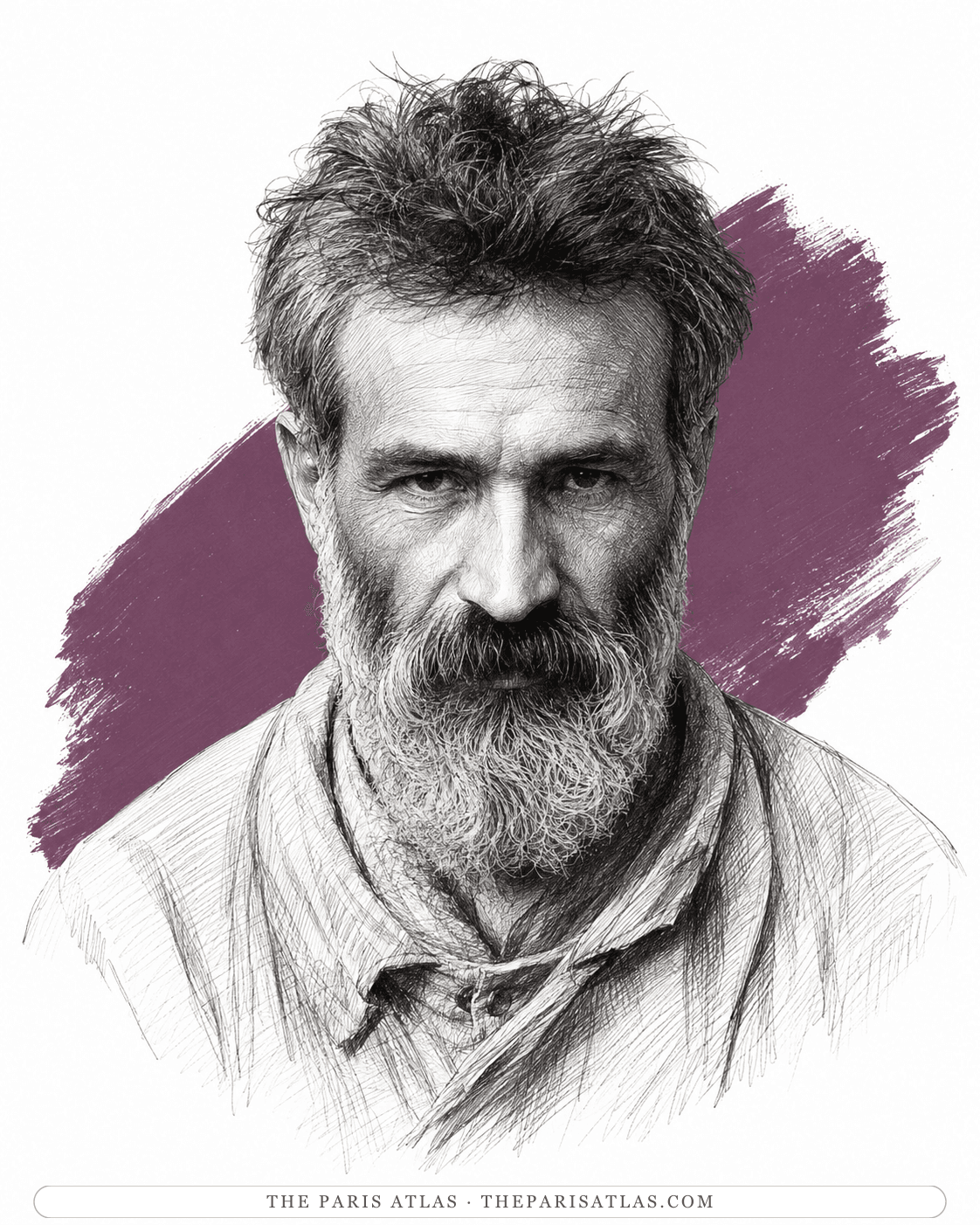
Brâncuși worked briefly as a studio assistant to Rodin in spring 1907 and left after less than a month, saying — in the sentence every subsequent modernist sculptor would learn — that 'nothing grows under big trees.' The exit was itself the influence: Brâncuși's later refusal of Rodin's textured surface for the smooth pared reduction of Sleeping Muse (1910) and Bird in Space (1923) is a direct answer to the modelling method he had just watched at close range.

Auguste Rodin — Encyclopaedia Britannica; Musée Rodin, Auguste Rodin: 1840–2015 chronology (2026)

Questions about Auguste Rodin

Who was Auguste Rodin?

Auguste Rodin (1840–1917) was the French sculptor whose Gates of Hell commission produced The Thinker, The Kiss, and most of the individual figures the twentieth century learned to call modern sculpture. His refusal of the polished neoclassical finish, in favour of a visibly modelled surface, is the point at which sculpture stops being classical and becomes modern.

What are Auguste Rodin's most famous sculptures?

The Thinker (1880 onwards), The Kiss (1882), The Burghers of Calais (1884–89), and the standing Balzac (1891–97) are the four that a general reader knows. All were produced, directly or indirectly, from the same underlying commission — the Gates of Hell, which Rodin worked on for thirty-seven years and never delivered as a finished bronze in his lifetime.

Where can you see Rodin's work today?

The Musée Rodin has two sites — the Hôtel Biron at 77 rue de Varenne in the 7th arrondissement of Paris, and the Villa des Brillants at Meudon on the western edge of Paris, where Rodin lived and is buried. Individual bronzes are held by the Rodin Museum in Philadelphia, the Metropolitan Museum in New York, the Musée d'Orsay in Paris, and by every major national museum in Europe.

How did Auguste Rodin die?

He died of influenza and the cold of his unheated Villa des Brillants at Meudon on 17 November 1917, aged seventy-seven, nine months after marrying Rose Beuret and two weeks after suffering a stroke.

What was Rodin's relationship with Camille Claudel?

Camille Claudel joined Rodin's studio in 1884 as an assistant, aged nineteen. Their affair was open by 1888 and ended around 1898, after which Claudel worked alone until she was committed to the asylum at Montfavet in 1913. Claudel modelled for several of Rodin's figures and did substantial work on the hands and feet of his commissions. Rodin continued to support her financially, through intermediaries, until his death.

Was Auguste Rodin trained at the École des Beaux-Arts?

No. He applied to the École des Beaux-Arts three times, between 1857 and 1862, and was refused each time. He was trained instead at the state's free 'Petite École' for craftsmen and then spent nearly twenty years as an ornamental modeller in Paris and Brussels before his sculpture was recognised.

Sourced claims

Every connection the graph holds for Auguste, with the evidence behind it.

Influenced · 1907

Constantin Brâncuși

Brâncuși worked briefly as a studio assistant to Rodin in spring 1907 and left after less than a month, saying — in the sentence every subsequent modernist sculptor would learn — that 'nothing grows under big trees.' The exit was itself the influence: Brâncuși's later refusal of Rodin's textured surface for the smooth pared reduction of Sleeping Muse (1910) and Bird in Space (1923) is a direct answer to the modelling method he had just watched at close range.

Auguste Rodin — Encyclopaedia Britannica; Musée Rodin, Auguste Rodin: 1840–2015 chronology (2026)

Sources and further reading

  • Musée Rodin, Auguste Rodin: 1840–2015 chronology (2026)
  • Auguste Rodin — Encyclopaedia Britannica
  • Musée Rodin, The Gates of Hell — S.01304 (2026)
  • Musée Rodin, The Thinker — Paris cast S.01295 (2026)