
Depicts · 1880
Dante Alighieri
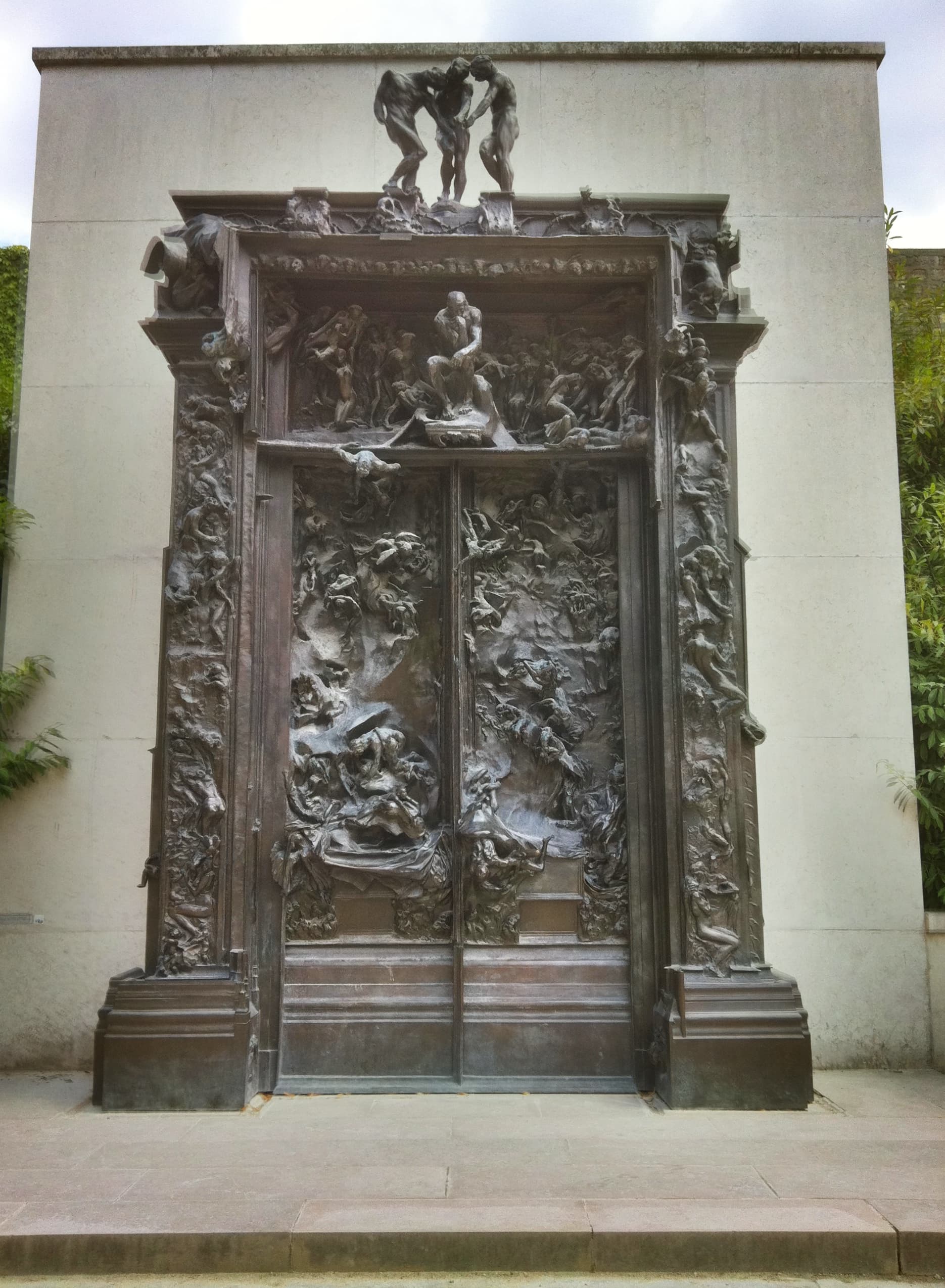
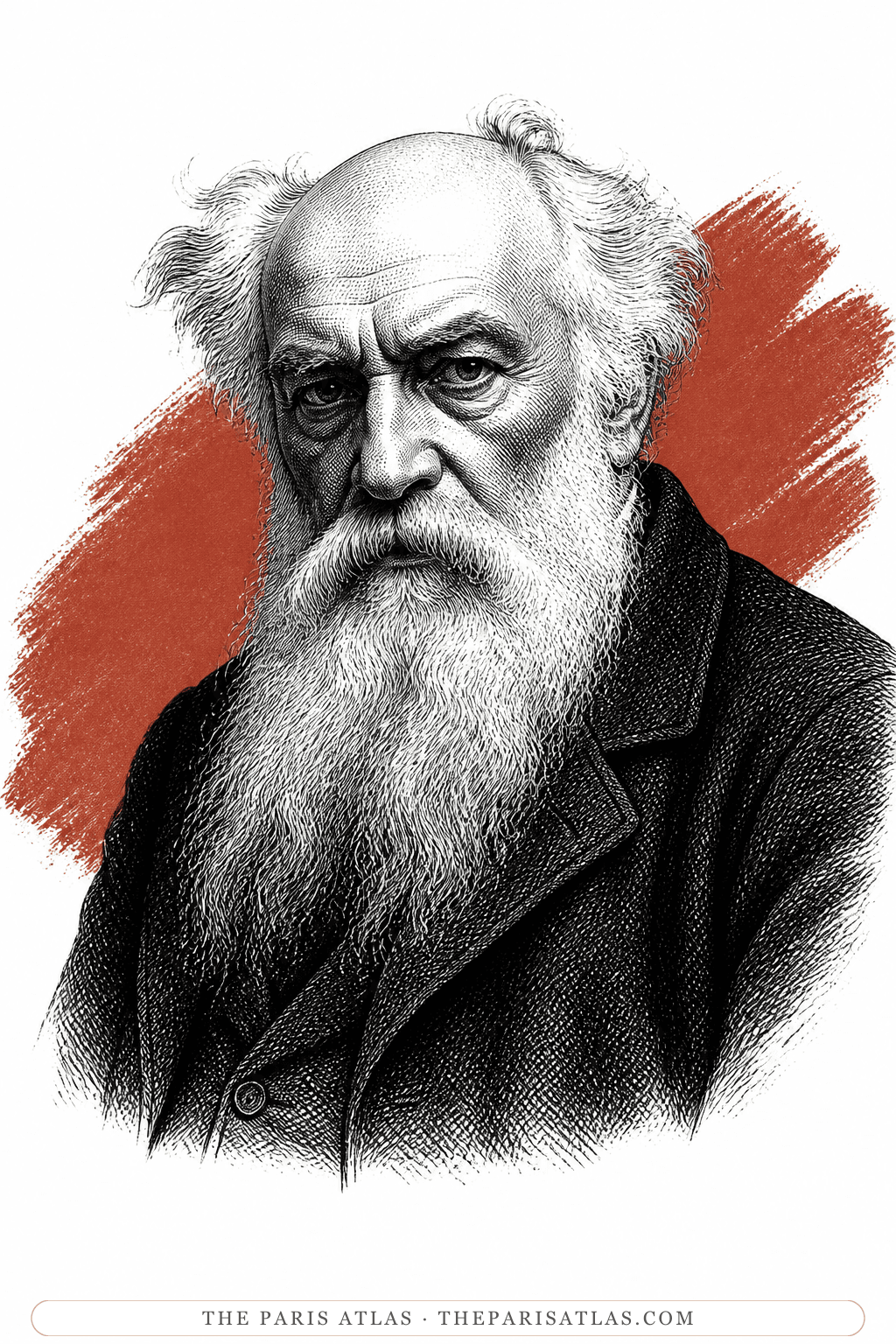
Rodin first titled the figure The Poet and conceived it as Dante Alighieri leaning over The Gates of Hell. As he exhibited it independently, the title and meaning broadened into The Thinker.
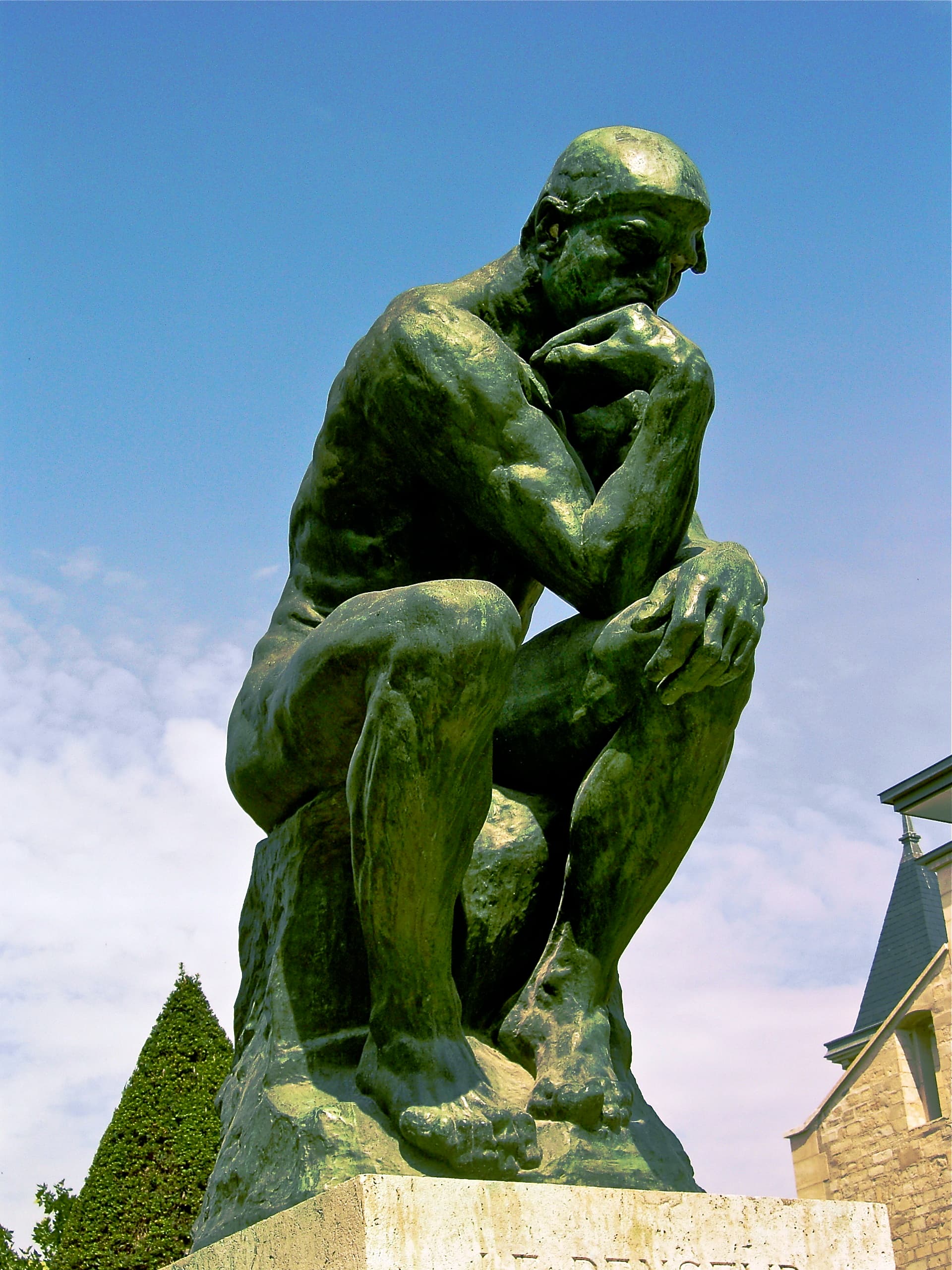
Auguste Rodin conceived this tense seated figure in 1880 as Dante above The Gates of Hell. He later exhibited it alone, renamed it The Thinker, and enlarged it into the monumental form now in the Musée Rodin garden.
A nude man sits on a rock and bends forward. His right elbow crosses to his left knee, and the back of that hand presses under his chin. The crossed pose twists the torso instead of letting it settle squarely over the hips. His other hand hangs near one knee, while the feet grip the rock at different heights.
The familiar hand-to-chin gesture is only one part of the pose. The brow contracts, the mouth compresses, the back rounds, and the muscles of the arms, legs, and torso stay active. Rodin made thought visible as an effort of the whole body. The figure is still, but it is not at rest.
In 1880, the French state commissioned François-Auguste-René Rodin, known as Auguste Rodin, to design a monumental doorway for a projected Museum of Decorative Arts in Paris. Rodin based The Gates of Hell on the Inferno, the first part of Dante Alighieri's Divine Comedy. He placed the seated figure above the doors, looking down toward the suffering bodies below.[1]
Rodin first called the figure The Poet. It was Dante contemplating both the damned and the poem that would describe them. The Musée Rodin characterizes this first identity as double: a body caught in suffering and a free mind trying to pass beyond suffering through poetry.[2]
Rodin exhibited the approximately 70-centimetre figure independently in 1888 while keeping it in the design of the Gates. Once separated from Dante's story and the crowded doorway, the solitary body invited a wider reading. Exhibition records used The Poet and Poet/Thinker; by 1896, the shorter title The Thinker had taken hold.[2]
The change did not erase Dante, but it made the figure less like an illustration of one writer. The National Gallery of Art explains that the nudity also helped turn him into a general image of the poet or creator rather than a portrait in fourteenth-century clothing. Thinking here can mean composing, judging, imagining, or struggling to make a work.[3]
The most direct meaning is mental work expressed physically. The figure does not calmly possess an answer. His uneven pose and tightened body show concentration under pressure. In the original setting, the pressure came from the scene below: Dante watched the circles of Hell while considering how to turn them into poetry.[2]
As an independent sculpture, the same body became open enough to stand for thought itself. That does not make every interpretation equally historical. Calling him Dante, a poet, or a creator follows the work's documented development. Assigning a specific modern philosophy or diagnosing the figure's private emotion goes beyond the evidence.
Sculpture rewards walking around it. The Thinker's pose looks familiar from photographs of the front, but the composition Rodin built is a three-dimensional tension that only shows itself at the sides and back. Six parts of the body carry six different weights, and each is worth stopping in front of.
The right hand is not held to the chin in the natural gesture, which would put the elbow on the same-side knee. Rodin crossed the arm to the opposite knee, so the back of the hand — knuckles rather than palm — presses under the jaw. The right elbow digs into the top of the left thigh with visible weight. The pose is physically uncomfortable, and Rodin used that discomfort to show thought as physical effort rather than as a philosopher's calm posture.
The mouth is compressed. The brow contracts. Under the beard, the muscles of the neck stand out on the side the head is tipped toward. Rodin gave the face the physical signals of a person holding their breath.
The back is the passage most photographs of the sculpture miss. Read from behind, the spine curves in a heavy arc from the shoulders down through the buttocks. The muscles of the trapezius are bunched from the strain of the crossed arm, and the whole musculature is engaged as if the figure were about to lift something heavy. Rodin was studying Michelangelo's work at the Louvre in the years around 1880, and the back of The Thinker uses the same muscular language as Michelangelo's Slaves — bodies straining, in Michelangelo's case, against the block of marble they are still partly inside.
The left hand rests loose on the left knee. It is the only relaxed part of the body — an open palm and curled fingers cupped over the kneecap, in contrast to the right hand held as a fist under the chin. Rodin uses the left hand as a visual rest, a pause among the tensed muscles that lets the tension elsewhere register by contrast. If the left hand had also been clenched, the sculpture would have read as a diagram of physical stress; because the left hand is open and relaxed, the rest of the body reads as a person under pressure.
The feet grip the rock at different heights. The right foot is planted flat and forward. The left foot is pulled back and up on its toes, pressed against the rock, adding another asymmetry to the twist through the torso. The Thinker is not resting on the rock — every point of contact between the figure and the rock is under load, and the figure is bracing against it.
Up close, the bronze surface preserves the record of Rodin's fingers in the original clay. Ridges, pockets, and pressure marks are visible because Rodin refused to smooth them out. The monumental 1904 cast enlarges these marks until they carry across the sculpture garden. When the German poet Rainer Maria Rilke wrote his 1903 book on Rodin (Rilke worked as Rodin's secretary from 1905 to 1906), he described these surfaces as the sculpture's real subject: the way light catches the marked bronze does as much work of expression as the pose itself.[4]
Rodin's first Thinker was about 70 centimetres high. The National Gallery of Art's cast in that scale measures 71.5 centimetres; the Metropolitan Museum of Art's measures 70.2 centimetres. These figures preserve the scale made for the top of the Gates.[5]
In 1903, Rodin had the figure enlarged. The monumental Paris bronze cast by the Alexis Rudier foundry in 1904 is 189 centimetres high, 98 centimetres wide, and 140 centimetres deep. Enlargement did more than make the statue easier to see outdoors. It magnified the ridges, depressions, and modelling marks, giving the tense surface a different public force.[6]
Sculpture does not follow the same one-object logic as a painting. Rodin modelled forms in clay and plaster, assistants could enlarge or reduce them, and a foundry translated an approved model into bronze. The date of the model and the date of a particular cast are therefore different facts. A label such as 'modelled about 1880, cast about 1910' is not a contradiction.[4]
The National Gallery of Art reports more than fifty known casts in the original approximately 70-centimetre size. Monumental casts form another history. Under current French rules, an original bronze edition is limited to twelve numbered casts, including artist's copies; the Musée Rodin oversees editions from the models and molds Rodin left to the state. Museum-authorized casts, later reproductions, and unauthorized aftercasts should not be collapsed into one count.[5]
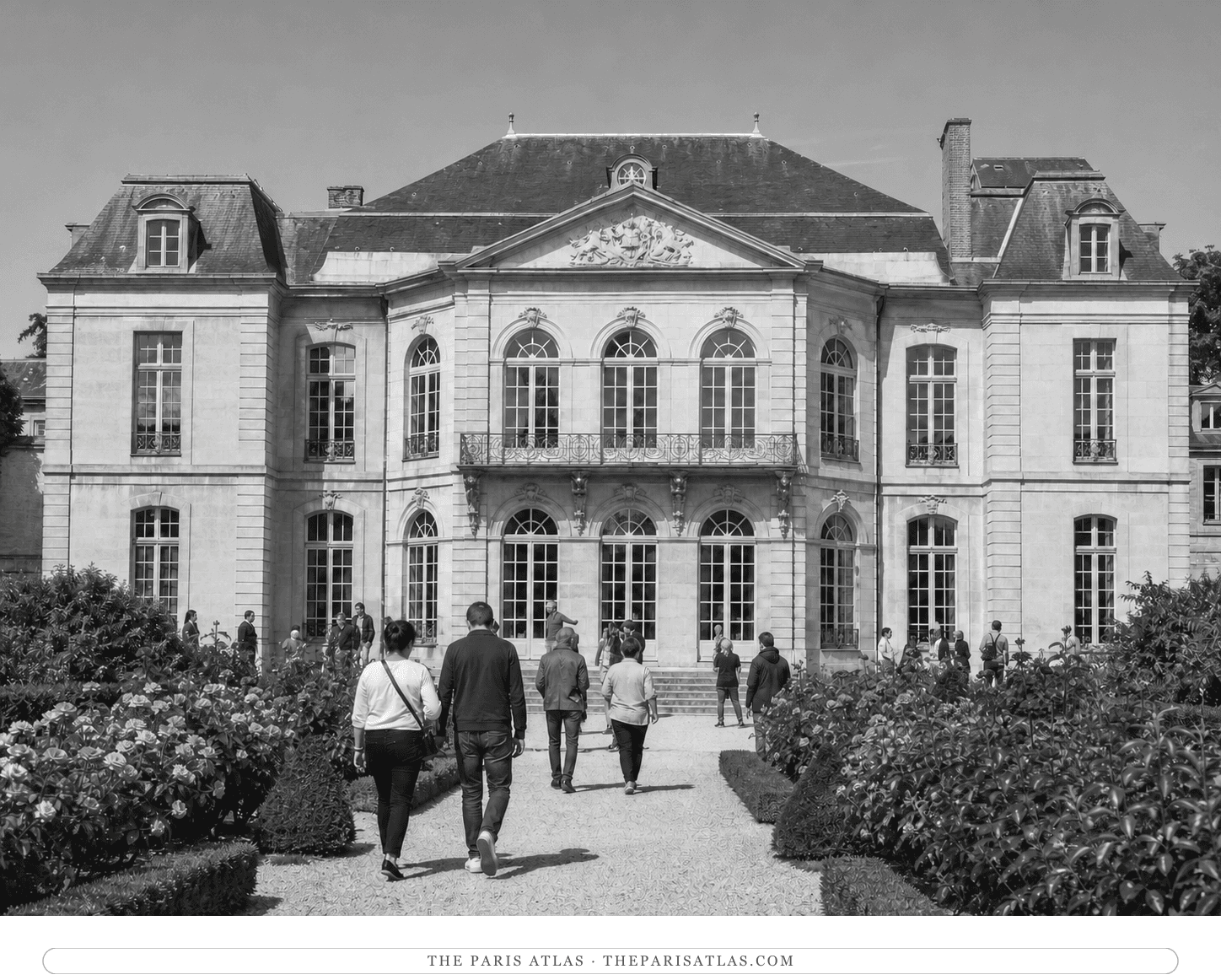
The monumental bronze most closely tied to Paris is in the sculpture garden of the Musée Rodin at the Hôtel Biron. It was cast by Alexis Rudier in 1904, offered to the City of Paris, and installed outside the Panthéon in 1906. It was transferred to the Musée Rodin in 1922. The museum warns that works can go on loan, so check the live object page before making a visit around one sculpture.[2]
A second monumental Thinker stands at the Musée Rodin's Meudon site on the shared tomb of Rodin and his wife, Rose Beuret. Legitimate casts in the smaller size also belong to museums including the National Gallery of Art in Washington and the Metropolitan Museum of Art in New York. When asking where 'the original' is, the useful next question is which model, size, and cast date the museum means.[7]
1880
The French state commissions The Gates of Hell; Rodin conceives the approximately 70-centimetre Poet as Dante above its doors.
1888
Rodin exhibits the seated figure independently while retaining it in the composition of The Gates of Hell.
By 1896
The title settles into The Thinker, allowing the figure's identity to broaden beyond Dante alone.
1900
Rodin unveils the plaster Gates at his Paris retrospective in a fragmentary state, without its most projecting independent figures mounted.
1903–1904
Rodin enlarges the figure to monumental scale; Alexis Rudier casts the Paris bronze in 1904.
1906
The monumental cast is installed outside the Panthéon as a gift to the City of Paris.
1916
Rodin donates his works, models, molds, and associated rights to the French state to establish a museum.
1917
Auguste Rodin dies in Meudon; a monumental Thinker stands over the shared grave of Rodin and Rose Beuret there.
1919
The Musée Rodin opens to the public at the Hôtel Biron in Paris.
1922
The former Panthéon cast is transferred to the Musée Rodin, where it remains associated with the sculpture garden.
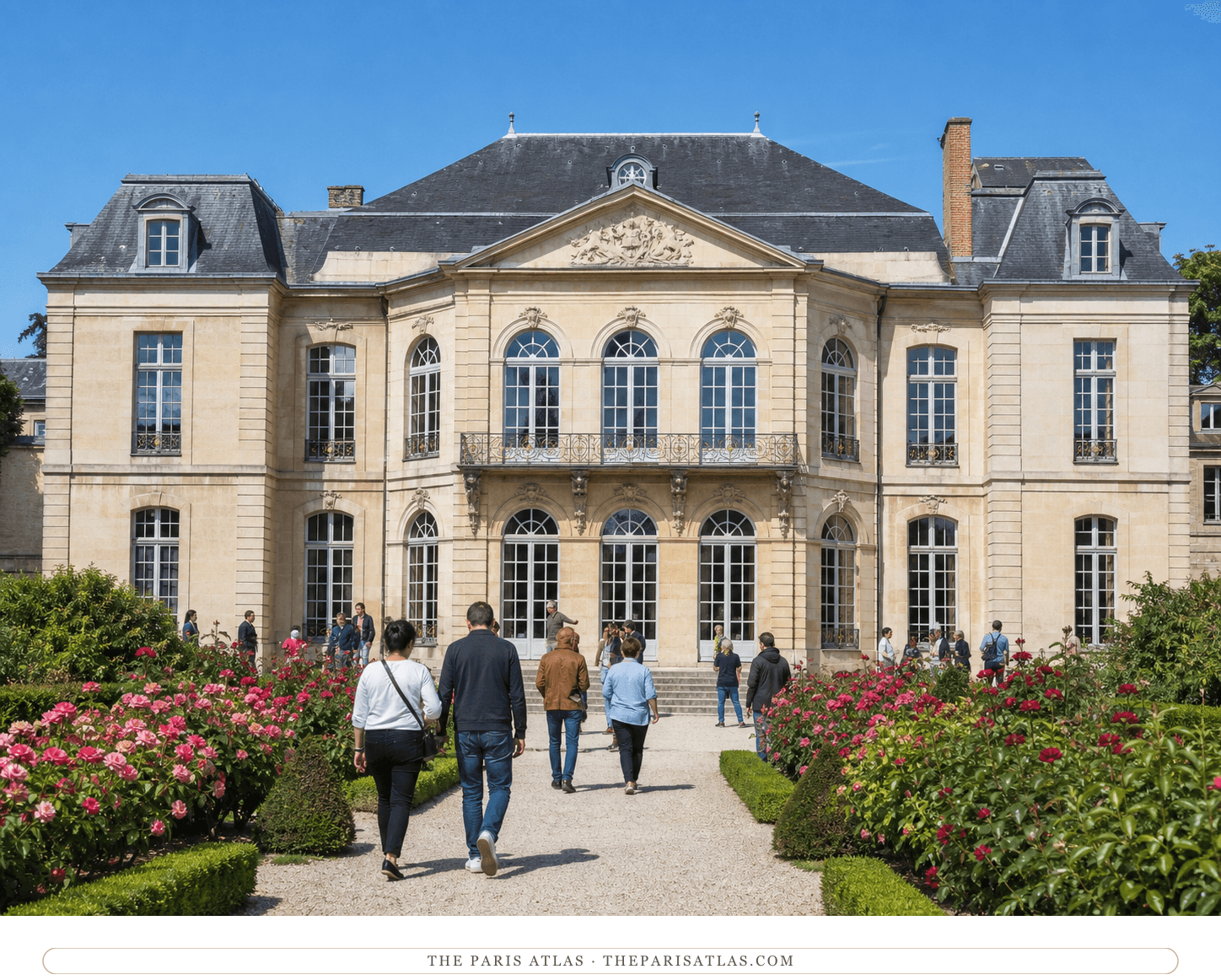
Musée Rodin, Paris
77 rue de Varenne, 75007 Paris, France
Displays and loans can change. Check whether this work is on view before making a special trip.
Plan your visitThe French sculptor Auguste Rodin conceived The Thinker in 1880. Rodin made the model and authorized foundries to cast bronzes; the Musée Rodin later inherited his models, molds, and rights.
The figure originally represented Dante Alighieri, author of the Divine Comedy, contemplating the circles of Hell and his own poem. After Rodin exhibited the figure independently, it became a broader image of the poet, creator, and thinking person.
It makes mental effort physical. The clenched, crossed, and uneven pose shows thought as strain and creative work rather than passive daydreaming; in its first setting, the figure was Dante looking down on the damned in The Gates of Hell.
The nudity removes the period costume of a literal Dante portrait and helps the figure read as a universal poet or creator. It also lets Rodin show thought through the contraction of the entire body.
Yes. Rodin designed the small figure for the central position above The Gates of Hell. He first exhibited it separately in 1888, but it remained part of the Gates composition as it became an independent work.
The first version is approximately 70 centimetres high. The monumental bronze in the Musée Rodin garden is 189 centimetres high, 98 centimetres wide, and 140 centimetres deep, before counting its stone pedestal.
There is no useful single count across every size, authorized edition, and reproduction. The National Gallery of Art reports more than fifty known casts in the original approximately 70-centimetre size, while monumental casts and later reproductions have separate histories.
The question needs a specific model, size, and cast date because sculpture can exist in legitimate editions. The best-known Paris monumental cast, made by Alexis Rudier in 1904, is in the Musée Rodin garden; original-size lifetime casts are held by institutions including the National Gallery of Art and the Metropolitan Museum of Art.
The monumental Paris cast is normally displayed in the sculpture garden of the Musée Rodin at the Hôtel Biron. Its live collection page notes that works may be lent, so confirm its presence before visiting specifically to see it.
Yes. The monumental bronze was installed outside the Panthéon in 1906 after being offered to the City of Paris. It was transferred to the Musée Rodin in 1922.
Depicts · 1880
Rodin first titled the figure The Poet and conceived it as Dante Alighieri leaning over The Gates of Hell. As he exhibited it independently, the title and meaning broadened into The Thinker.
Displayed at
The monumental enlargement stands in the garden of the Hôtel Biron, where much of the museum's sculpture is shown outdoors — closer to how the bronzes were meant to be seen than a room would allow.
Explore sculptors from the same movements and circles.
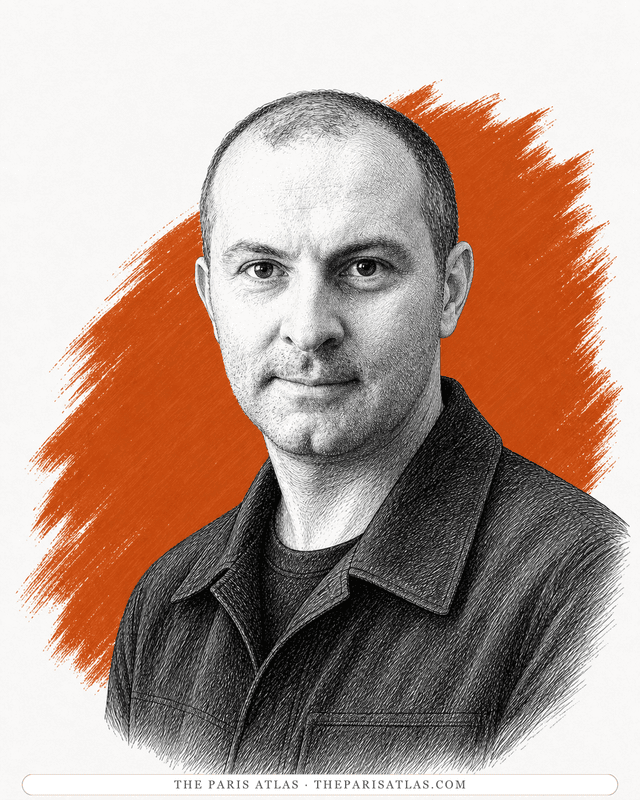
French-American artist, lifelong friend of Yves Klein, and a founder of New Realism.
View artist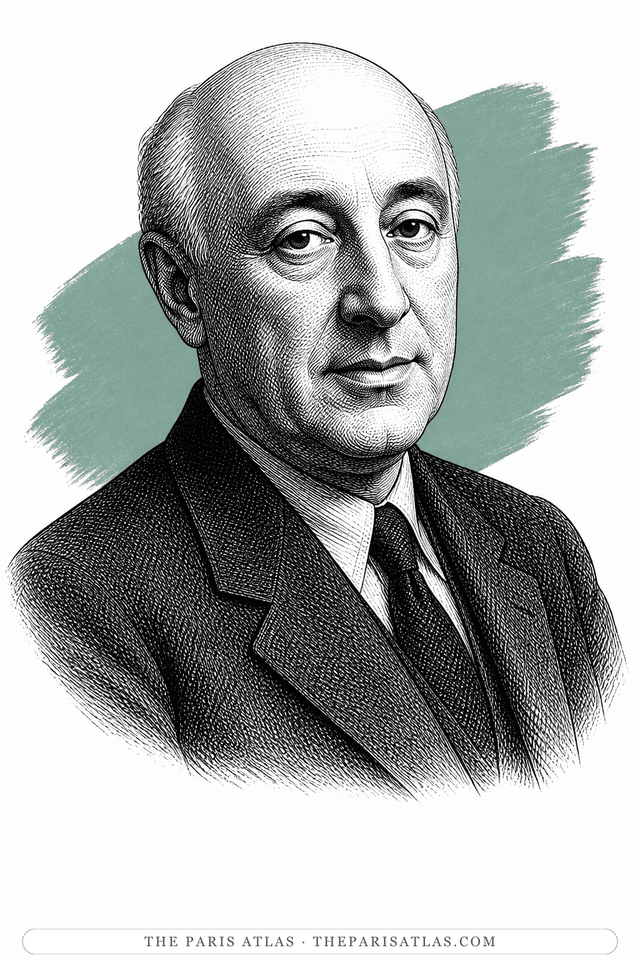
Strasbourg-born sculptor and poet — Hans in German, Jean in French, both all his life — who co-founded Dada at the Cabaret Voltaire in 1916, composed collages by dropping torn paper 'according to the laws of chance', and settled at Meudon outside Paris in a house his wife Sophie Taeuber-Arp designed.
View artist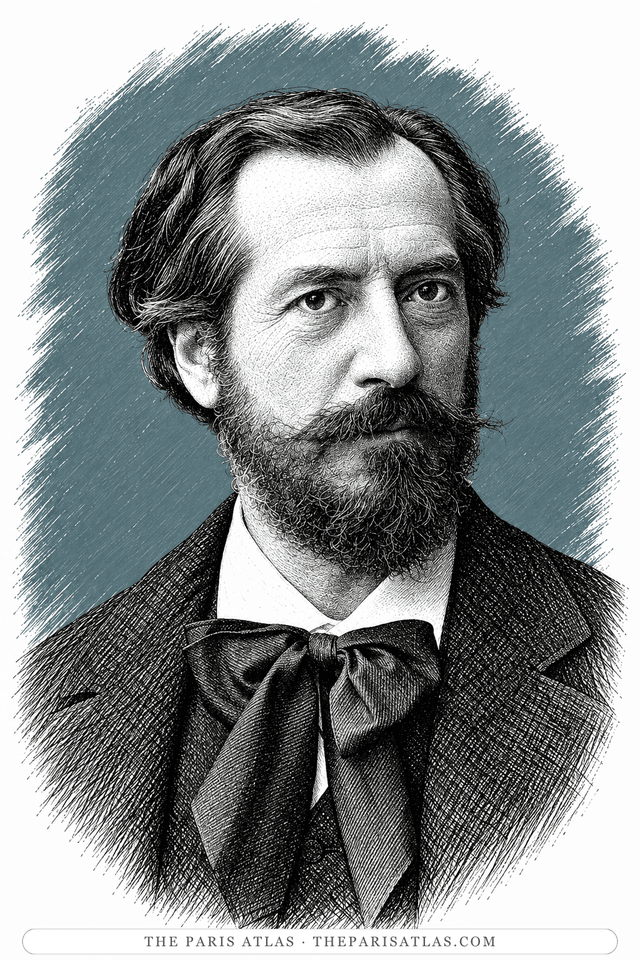
Frédéric Auguste Bartholdi was a French sculptor best known for designing the Statue of Liberty, dedicated in New York Harbor in 1886. Born in Colmar and based in Paris, he created public monuments that gave visible form to ideas of freedom, resistance and national memory. His other major works include the Lion of Belfort and the fountain in Lyon's Place des Terreaux.
View artistThe sources below include collection records, catalogues, scholarly research, and primary materials that informed this page. They document The Thinker, its making, and its place in cultural history.


Web source consulted for documented facts and historical context presented on the The Thinker page.
Web source consulted for documented facts and historical context presented on the The Thinker page.
Web source consulted for documented facts and historical context presented on the The Thinker page.
Web source consulted for documented facts and historical context presented on the The Thinker page.
These references provide the documented foundation for this work's history and interpretation. Claim-level citations remain attached to the specific claims they support.
 Explore more resources