The Paris AtlasCharting the artists, works, and places worth returning to.
  • Author
  • Playwright
· French · 1821–1880

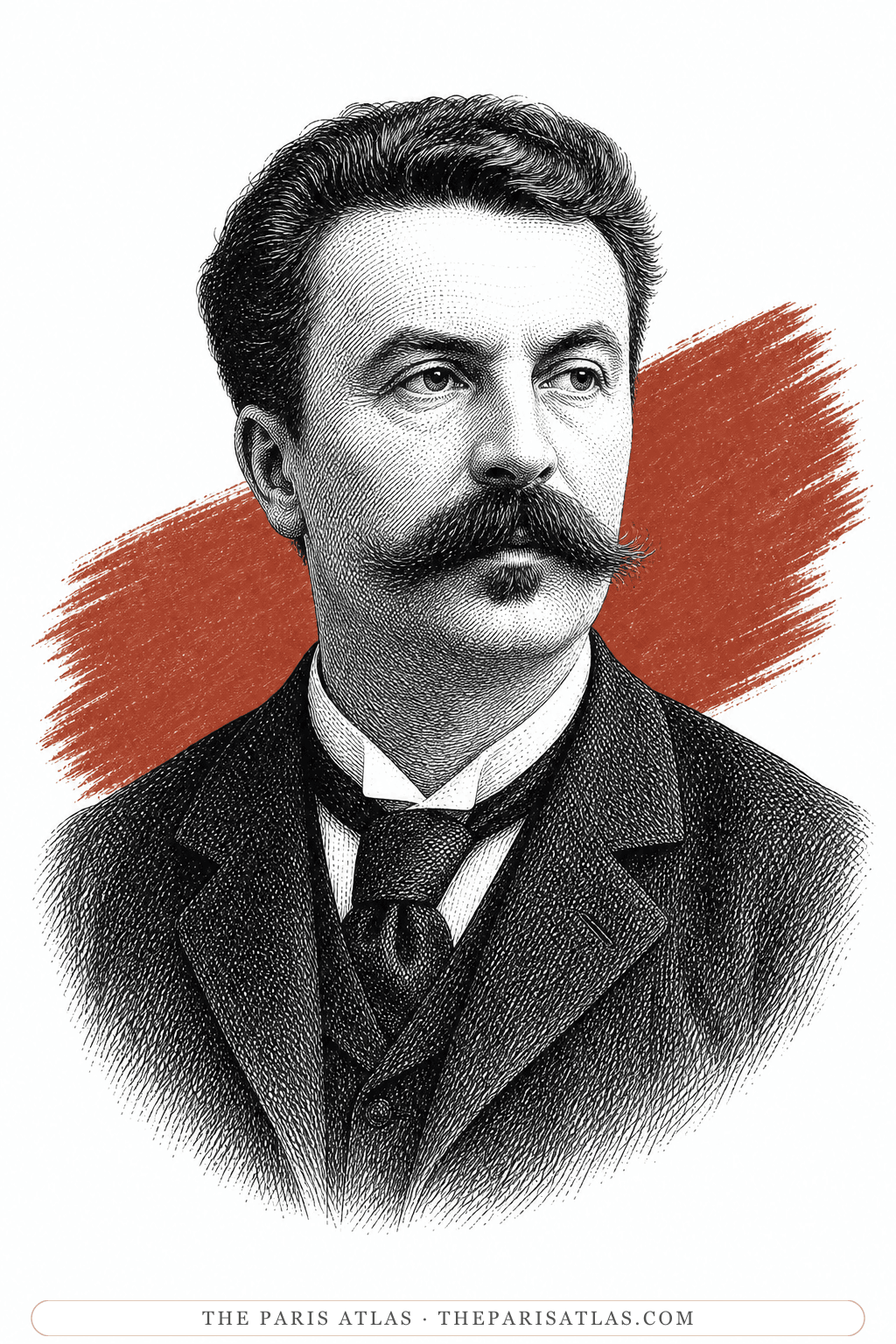
Gustave Flaubert

The novelist who worked in a garden house on the Seine outside Rouen, sentence by sentence, read aloud, for years at a time — and whose Madame Bovary, the story of a country doctor's wife who takes lovers, runs up debts and poisons herself, was prosecuted in a Paris courtroom in 1857 for offending public morals and acquitted. Months later the same chamber of the same court condemned Les Fleurs du mal ('The Flowers of Evil'), the one book of poems by Charles Baudelaire. His L'Éducation sentimentale ('Sentimental Education') is the great novel of Paris in the revolution of 1848.

Details

Lived
1821–1880
Born
12 December 1821
Birthplace
Rouen, France
Died
8 May 1880 · aged 58
Place of death
Croisset, near Rouen, France
Nationality
French
Profession
Novelist
Major works
Madame Bovary, Salammbô, L’Éducation sentimentale, Trois contes, Bouvard et Pécuchet
Roles
AuthorPlaywright

About Gustave Flaubert

Gustave Flaubert was born on 12 December 1821 inside the Hôtel-Dieu, the city hospital of Rouen in Normandy, and died on 8 May 1880 at Croisset, a riverside hamlet a few miles downstream from it. Between those two addresses he wrote five books, very slowly, in a room whose windows looked at the Seine. He is the writer who made the sentence the unit of the novel — who would spend a week on a paragraph, read it aloud at full volume to test its rhythm, and throw it out if it did not hold.

Paris is where the consequences happened. His first novel, Madame Bovary — a doctor's wife in a Norman village destroys herself out of boredom, adultery and debt — ran as a serial in a Paris review in the autumn of 1856; in January 1857 the French state put him in a Paris courtroom for offending public morals and religion, and lost. Months later, in the very same chamber of the same court, the poet Charles Baudelaire was condemned for Les Fleurs du mal, 'The Flowers of Evil', and lost six poems to the judgment: they had to be cut from every copy. Flaubert then kept a Paris apartment for the season, sat in the literary salons (the private drawing rooms where writers and editors met), took on the young Guy de Maupassant, later the most celebrated short-story writer in French, as a pupil, and wrote L'Éducation sentimentale, 'Sentimental Education' — the novel that follows a young man through the Paris of the 1848 revolution and finds him missing all of it.

A hospital childhood, and a law degree abandoned

Flaubert was born on 12 December 1821 in the Hôtel-Dieu de Rouen — not a house but a hospital, the great charitable infirmary of the Norman city, where his family lived on the premises. Rouen sits on the Seine about eighty miles downstream from Paris, and the river connects the two ends of his life: he grew up beside it and he died beside it.

From 1841 to 1843 he was in Paris reading law, which he had no appetite for. In January 1844 the first of the nervous seizures that would recur for the rest of his life struck him down, and he went home to Rouen for good. It was the luckiest catastrophe of his career: the illness ended the legal profession as a possibility and left him, at twenty-two, with nothing to do but write.

On 21 May 1844 the family bought a house at Croisset, on the bank of the Seine just outside Rouen, and by May 1846 Flaubert had installed himself there. He kept that room for thirty-four years. From 1849 to 1851 he broke the pattern once, on a long journey through Egypt, the Levant and Greece with his friend the writer and photographer Maxime Du Camp, and came back to Croisset to begin the book about a doctor's wife in a Norman village — Madame Bovary.

The gueuloir, and le mot juste

What Flaubert did at Croisset was unlike ordinary authorship, and it is the reason writers still talk about him. He drafted, then corrected the drafts, then took them into a room set aside for the purpose and read them out loud at full voice — the gueuloir, from gueuler, French slang for to bawl or bellow. A sentence that could not be shouted without stumbling was a sentence with something wrong in it. He would keep a page for days.

The doctrine behind the method is usually named with the phrase le mot juste — 'the exact word', the belief that for any thing to be said there is precisely one right word and one right shape for the sentence carrying it, and that the writer's whole job is to find them. Flaubert put the principle more starkly: the idea, he held, exists only by virtue of its form. Style was not decoration laid over content; style was the content, and a badly made sentence was a false statement. He said he wanted to write a book about nothing, held together by the internal force of its style alone.

Madame Bovary in a Paris courtroom, 1857

Madame Bovary appeared first as a serial, in instalments in the Revue de Paris — a leading Paris literary magazine — between 1 October and 15 December 1856, and as a book in April 1857. It is the story of Emma Rouault, the daughter of a prosperous Norman farmer, who marries Charles Bovary — a decent, dull country doctor — finds provincial life unbearable, takes two lovers, ruins herself in debt, and kills herself with arsenic. Flaubert narrates all of it without ever once telling the reader what to feel, which is precisely what got him prosecuted.

The government of Napoleon III — nephew of the first Napoleon, elected president of the French republic and then, from 1852, emperor — charged Flaubert, the manager of the review and the printer with offending public morals and religion; the book, said the prosecution, glorified adultery. The case against him was argued by Ernest Pinard, the avocat impérial: the government's own advocate, the state prosecutor of the imperial courts. The defence answered that the novel does the opposite of glorifying anything — that showing the horror of vice is an argument for virtue — and in February 1857 the court acquitted all three men, praising the book's seriousness and its coherence. The trial made Flaubert famous overnight, which is the standard result of a failed prosecution and was not what the state had in mind.

The parallel case is worth setting beside it plainly, because the two are almost always confused. Later that same year, 1857, the 6th chamber of the Tribunal correctionnel de la Seine — the court that tried Paris misdemeanours, the same one that had just heard Madame Bovary — took up Les Fleurs du mal, 'The Flowers of Evil', the one book of poems by Charles Baudelaire, and condemned it. Six poems were ordered struck out of every copy, and the second edition of 1861 appeared without them. Same year, same courthouse, same charge of outraging public morals: the novelist walked free and the poet did not.

The Paris seasons: salons, and the pupil

After the acquittal, the hermit came to town. Flaubert began keeping a Paris apartment and spending the season in it, and he moved through the literary salons — the private drawing rooms where writers, editors and titled hosts met to talk, which in nineteenth-century Paris did the work that publishing parties and prize juries do now. He became close to the novelist George Sand, to the powerful critic Charles-Augustin Sainte-Beuve, to the diarist brothers Edmond and Jules de Goncourt, and to Princess Mathilde Bonaparte, a cousin of the emperor whose salon was the most useful address in Paris for a writer.

By the early 1870s his Paris flat was on the rue Murillo, a short street along the edge of the Parc Monceau in the 8th arrondissement, and the most consequential visitor to it was a young man from Normandy called Guy de Maupassant — the son of a childhood friend of Flaubert's, then a clerk in a government ministry and later the most famous short-story writer in the French language, who came regularly through 1873 and 1874 to be taught. Flaubert took the apprenticeship seriously for seven years: he corrected the young man's pages, kept him from publishing too early, told him that if a writer has an originality the first job is to dig it out, and used his own connections to move him into a better ministry post in 1878. Maupassant's breakthrough story Boule de Suif — 'Ball of Fat', in which respectable travellers press a prostitute to sleep with a Prussian officer and then shun her for it — appeared in April 1880; Flaubert lived to read it and died the following month.

L’Éducation sentimentale: Paris, 1848

Between Madame Bovary and his death Flaubert published Salammbô (1862), a violent, jewelled novel set in ancient Carthage, the North African city Rome destroyed, and then in 1869 the book that is his Paris book. L'Éducation sentimentale — 'Sentimental Education' — follows Frédéric Moreau from September 1840 to the spring of 1867: a provincial young man who arrives in the capital, sees a married woman named Marie Arnoux on a riverboat — 'it was like an apparition', the novel says — and spends the next twenty-seven years wanting her, starting a thousand projects and abandoning them.

Running underneath is the revolution of February 1848, when Parisians overthrew King Louis-Philippe and founded the Second Republic, and the June days that followed four months later, when the army crushed a workers' rising in the streets of Paris with thousands of dead. Flaubert's decision — the one that made the book strange in its own time and standard equipment for every modern novelist since — is that his hero follows the revolution only from a distance, wandering past history rather than into it. The novel is a sequence of missed chances and unfulfilled wants, life as a run of petty and disconnected events. Critics were hostile: the novelist and critic Jules Barbey d'Aurevilly dismissed it as a stroll through the insignificant, the vulgar and the abject. It is now generally read as the truest novel anyone wrote about the 1848 generation.

Ruin, three stories, and the last sentence

The last years went badly in the ordinary way. His niece and her husband were ruined in business, and Flaubert — who had lived on family money all his life so that he would never have to write for a market — spent much of his own to save them, and ended in serious financial trouble. He kept working. Trois contes ('Three Tales'), published in 1877, is three short pieces of almost inhuman polish and remains the shortest route into what he could do.

He was still writing Bouvard et Pécuchet — the comic novel about two copying-clerks that he never finished — when he died at Croisset on 8 May 1880, at fifty-eight. It was published incomplete in 1881. He had given roughly five years each to books other novelists would have written in one, and left behind the working principle that everyone after him had to answer: that a sentence is either exactly right or it is wrong, and that there is no third condition.

Life events

  1. 1821

    Born on 12 December in the Hôtel-Dieu, the city hospital of Rouen in Normandy.

    Flaubert, Gustave (1821–1880); Gustave Flaubert — Biographie

  2. 1841–1843

    Reads law in Paris without enthusiasm.

    Gustave Flaubert — Biographie

  3. 1844

    In January the first of his nervous seizures forces him back to Rouen; in May the family buys the house at Croisset on the Seine.

    Gustave Flaubert — Biographie

  4. 1846

    Settles at Croisset, the riverside room he will write in for the rest of his life.

    Gustave Flaubert — Biographie

  5. 1849–1851

    Travels through Egypt, the Levant and Greece with Maxime Du Camp — his one long absence.

    Gustave Flaubert — Biographie

  6. 1856

    Madame Bovary runs as a serial in the Revue de Paris from 1 October to 15 December.

    Madame Bovary

  7. 1857

    Tried in Paris for offending public morals and religion — Ernest Pinard, the avocat impérial or state prosecutor, arguing the case for the government of Napoleon III — and acquitted in February. The book appears in April and sells on the scandal.

    Madame Bovary; Gustave Flaubert

  8. 1857

    Later the same year the same chamber of the Seine criminal court condemns Les Fleurs du mal ('The Flowers of Evil'), the book of poems by Charles Baudelaire, and orders six poems cut from every copy — on the same charge Flaubert had just beaten.

    Les Fleurs du mal

  9. 1862

    Publishes Salammbô, a novel of ancient Carthage.

    Gustave Flaubert

  10. 1869

    Publishes L'Éducation sentimentale — 'Sentimental Education' — following Frédéric Moreau through the Paris of the 1848 revolution and past every chance he is offered.

    L’Éducation sentimentale

  11. 1873–1874

    The young Guy de Maupassant comes regularly to Flaubert's Paris apartment on the rue Murillo, beside the Parc Monceau, to be taught.

    Marlo Johnston, Guy de Maupassant — Biographie

  12. 1875

    His niece and her husband are ruined; Flaubert spends much of his own money on them and falls into serious financial difficulty.

    Gustave Flaubert

  13. 1877

    Publishes Trois contes — 'Three Tales' — three short stories of extreme finish.

    Gustave Flaubert; Gustave Flaubert — Biographie

  14. 1880

    Dies at Croisset on 8 May, aged fifty-eight, with Bouvard et Pécuchet — his comic novel about two copying-clerks who retire to try every branch of human knowledge in turn — unfinished; it is published in 1881.

    Gustave Flaubert — Biographie; Gustave Flaubert

People they knew

Documented connections — every one carries its source.

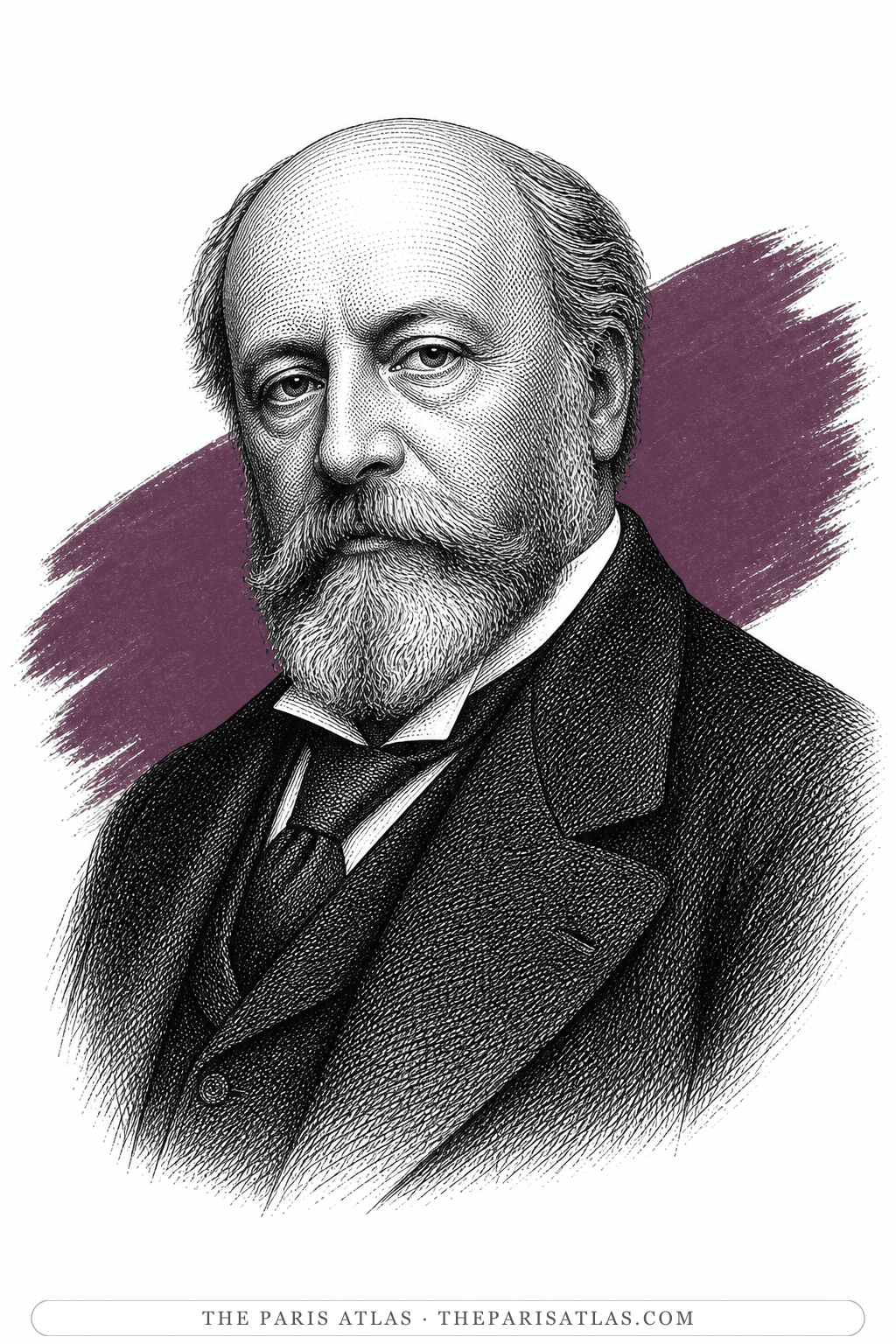
Guy de Maupassant

  • Author
  • Journalist

Mentored · 1873–1880

Maupassant's mother had been a childhood friend of Flaubert's, and from 1873 the young ministry clerk went regularly to Flaubert's Paris apartment on the rue Murillo to have his manuscripts corrected. Flaubert refused to let him publish too early, told him that a writer's first task is to dig out whatever is original in himself, and in December 1878 used his own connections to move him from the navy ministry to a better post at the education ministry. Maupassant's breakthrough story Boule de Suif appeared on 17 April 1880; Flaubert died three weeks later.
Gustave Flaubert; Marlo Johnston, Guy de Maupassant — Biographie; Guy de Maupassant

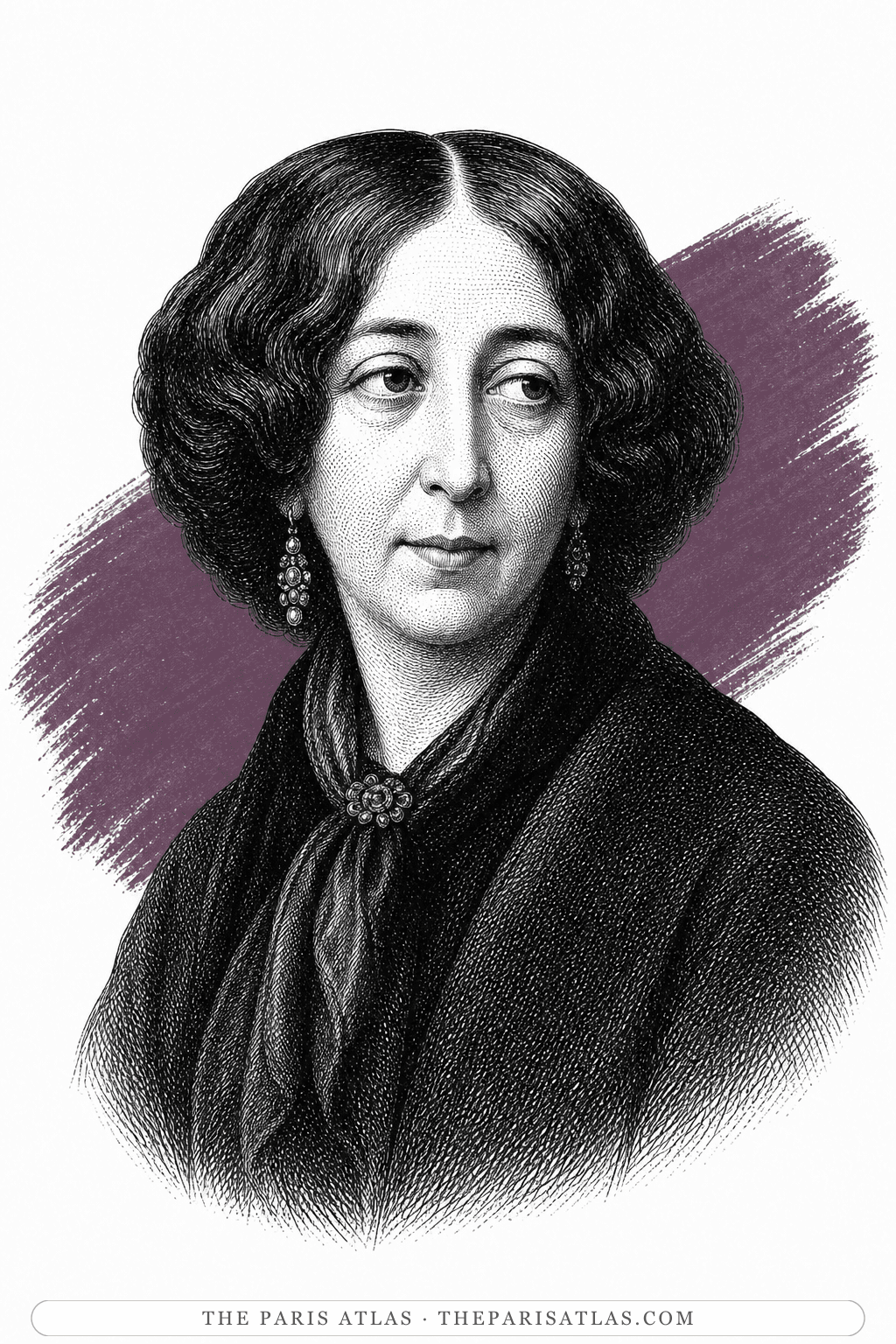
George Sand

  • Author
  • Journalist
  • Playwright

Met

After the acquittal of Madame Bovary in 1857 made him famous, Flaubert began moving through the Paris literary salons and became close to George Sand — by then the most widely read French novelist of her century — alongside the critic Charles-Augustin Sainte-Beuve, the brothers Edmond and Jules de Goncourt, and Princess Mathilde Bonaparte. The friendship with Sand, twenty years older and his opposite in temperament and politics, ran until her death in 1876.

Gustave Flaubert

Henry James

  • Author
  • Critic

Met · 1876

During his one Paris year James was a regular at Flaubert's Sunday receiving hours, brought there by the Russian novelist Ivan Turgenev. He wrote to his father in April 1876 that he had had Flaubert alone for an hour and liked him more each time he called - 'wonderfully simple, honest, kindly, and touchingly inarticulate' - and heard him recite Theophile Gautier's sonnets. It was the closest an American of his generation got to the inside of French letters, and James still concluded that the circle was shut.

Henry James, edited by Percy Lubbock, The Letters of Henry James, Volume I (1920)

Questions about Gustave Flaubert

Who was Gustave Flaubert?

A French novelist, born in Rouen in 1821 and dead at nearby Croisset in 1880, who is generally regarded as the writer who turned prose style into a discipline. He wrote very few books — Madame Bovary (1857), Salammbô (1862), L'Éducation sentimentale (1869, 'Sentimental Education'), Trois contes (1877, 'Three Tales') and the unfinished Bouvard et Pécuchet — spending years on each, and worked in one riverside room outside Rouen for thirty-four years.

Why was Madame Bovary put on trial in 1857?

Because the government of Napoleon III — the emperor who had ruled France since 1852 — said it glorified adultery. After the novel ran as a serial in the Paris literary magazine the Revue de Paris in late 1856, the state charged Flaubert, the review's manager and the printer with offending public morals and religion. Ernest Pinard, the avocat impérial or state prosecutor, argued the case; the defence argued that showing the horror of vice is an argument for virtue. In February 1857 the court acquitted all three, and the publicity turned the book into a bestseller.

Was Flaubert's trial the same as Baudelaire's?

Same year, same court, opposite outcome — and they are constantly confused. Flaubert was acquitted in February 1857. Later that year the 6th chamber of the Tribunal correctionnel de la Seine, the same Paris criminal court, condemned Les Fleurs du mal ('The Flowers of Evil'), the book of poems by Charles Baudelaire, and ordered six poems removed from every copy; the second edition of 1861 came out without them. The novelist got off and the poet did not.

What does le mot juste mean?

Literally 'the exact word'. It is the phrase attached to Flaubert's working belief that for anything a writer wants to say there is one right word and one right sentence shape, and that finding them is the whole job — style is not a coating over the content, it is the content. He said the idea exists only by virtue of its form. In practice this meant rewriting a page for days and testing the result by reading it aloud.

What was Flaubert's gueuloir?

A room at his house in Croisset set aside for shouting. The word comes from the French slang gueuler, to bawl or bellow. Flaubert corrected his drafts and then read them out at full voice in that room: if a sentence tripped the tongue or its rhythm sagged, something in it was wrong and it went back for rewriting. It is the most literal test of prose any major novelist has left behind.

Did Flaubert live in Paris?

Only part-time, and mostly after he was famous. He read law there from 1841 to 1843, hated it, and left after his first nervous seizure in 1844 for the house at Croisset outside Rouen, where he did nearly all his writing. From the late 1850s he kept a Paris apartment for the season — by the early 1870s on the rue Murillo, beside the Parc Monceau in the 8th arrondissement — and moved in the literary salons, the private drawing rooms where writers and editors met, becoming close to the novelist George Sand, the critic Charles-Augustin Sainte-Beuve, the diarist brothers Edmond and Jules de Goncourt, and Princess Mathilde Bonaparte, the emperor's cousin, whose salon was the most useful address in Paris for a writer.

Did Flaubert teach Guy de Maupassant?

Yes, for about seven years. Maupassant was the son of a childhood friend of Flaubert's, and from the early 1870s he came regularly to Flaubert's Paris apartment on the rue Murillo to have his pages corrected. Flaubert held him back from publishing too soon, told him that a writer's first duty is to dig out whatever is original in himself, and in 1878 used his connections to get the young clerk a better ministry job. Maupassant's breakthrough story Boule de Suif — 'Ball of Fat' — appeared in April 1880, weeks before Flaubert died.

What is L'Éducation sentimentale about?

'Sentimental Education' — a young provincial named Frédéric Moreau who comes to Paris, falls in love at first sight with a married woman, Marie Arnoux, and spends from 1840 to 1867 failing to do anything about it or about anything else. The revolution of February 1848 — when Parisians overthrew King Louis-Philippe — happens around him while he drifts past it. Published in 1869 and savaged by contemporary critics, it is now read as the definitive novel of that generation and of the modern city as a place where the important things are missed.

Sourced claims

Every connection the graph holds for Gustave, with the evidence behind it.

Mentored · 1873–1880

Guy de Maupassant

Maupassant's mother had been a childhood friend of Flaubert's, and from 1873 the young ministry clerk went regularly to Flaubert's Paris apartment on the rue Murillo to have his manuscripts corrected. Flaubert refused to let him publish too early, told him that a writer's first task is to dig out whatever is original in himself, and in December 1878 used his own connections to move him from the navy ministry to a better post at the education ministry. Maupassant's breakthrough story Boule de Suif appeared on 17 April 1880; Flaubert died three weeks later.

Gustave Flaubert; Marlo Johnston, Guy de Maupassant — Biographie; Guy de Maupassant

Met

George Sand

After the acquittal of Madame Bovary in 1857 made him famous, Flaubert began moving through the Paris literary salons and became close to George Sand — by then the most widely read French novelist of her century — alongside the critic Charles-Augustin Sainte-Beuve, the brothers Edmond and Jules de Goncourt, and Princess Mathilde Bonaparte. The friendship with Sand, twenty years older and his opposite in temperament and politics, ran until her death in 1876.

Gustave Flaubert

Met · 1876

Henry James

During his one Paris year James was a regular at Flaubert's Sunday receiving hours, brought there by the Russian novelist Ivan Turgenev. He wrote to his father in April 1876 that he had had Flaubert alone for an hour and liked him more each time he called - 'wonderfully simple, honest, kindly, and touchingly inarticulate' - and heard him recite Theophile Gautier's sonnets. It was the closest an American of his generation got to the inside of French letters, and James still concluded that the circle was shut.

Henry James, edited by Percy Lubbock, The Letters of Henry James, Volume I (1920)

References

References

The sources below include biographies, scholarly essays, interviews, and primary materials that informed this page. They reflect both the historical record and ongoing critical conversations about Gustave Flaubert and their work.

  1. 1Flaubert, Gustave (1821–1880)

    Bibliothèque nationale de France

    The French national library's authority record — dates, places, and how it files him.

    View source
  2. 2Gustave Flaubert

    Encyclopédie Larousse

    Life, the trial and its prosecutor, the Paris salons, the gueuloir and the doctrine of form.

    View source
  3. 3Gustave Flaubert — Biographie

    Les Amis de Flaubert et de Maupassant

    The Flaubert and Maupassant society's dated chronology of his life.

    View source
  4. 4Madame Bovary

    Encyclopédie Larousse

    The Revue de Paris serialization, the charge, the defence, and the February 1857 acquittal.

    View source
  1. 5L’Éducation sentimentale

    Encyclopédie Larousse

    The novel's Paris years, Frédéric Moreau, and the 1848 revolution behind him.

    View source
  2. 6Les Fleurs du mal

    Encyclopédie Larousse

    That the same chamber of the Seine criminal court condemned Baudelaire the same year.

    View source
  3. 7Guy de Maupassant — Biographie

    Les Amis de Flaubert et de Maupassant

    Maupassant's regular visits to Flaubert's rue Murillo apartment in 1873–1874.

    View source
i
Why these sources are here

These references anchor the page in the documented record and in the scholarly conversations around Gustave Flaubert. Every claim on this page traces back to one or more of the works listed here.

Explore more resources
Browse all authors