The Paris AtlasCharting the artists, works, and places worth returning to.
  • Poet
  • Critic
  • Translator
· French · 1821–1867

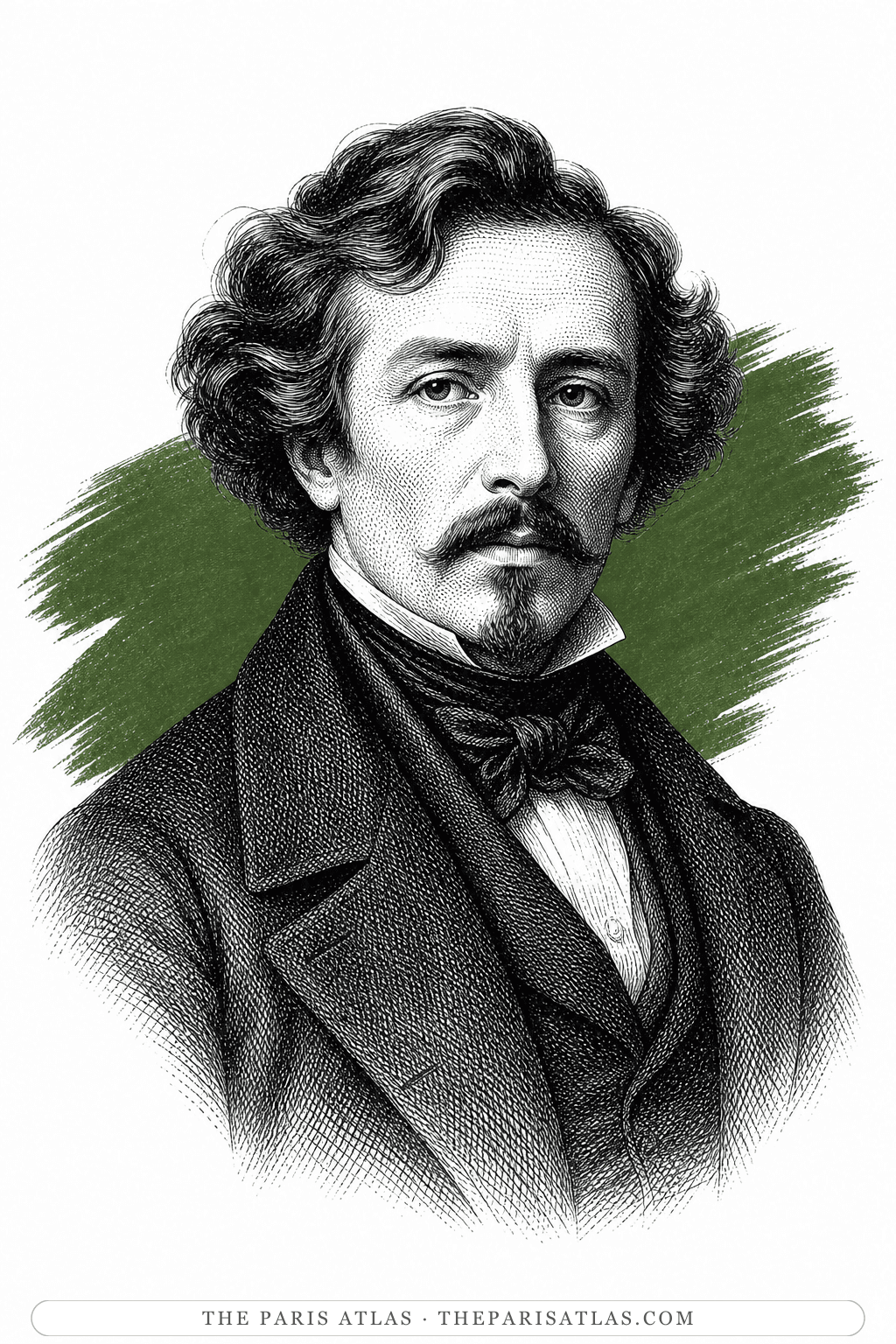
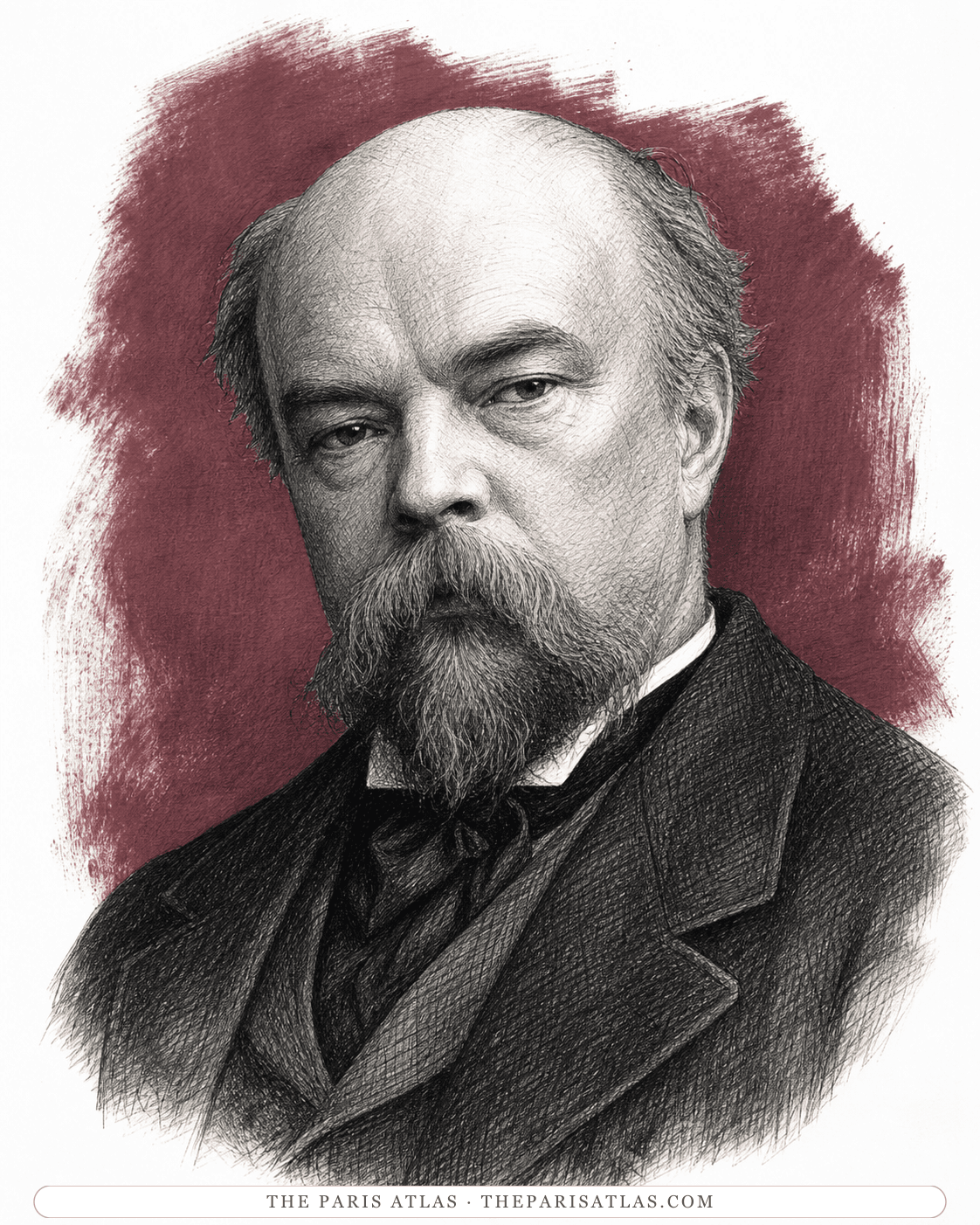
Charles Baudelaire

The poet who made modern Paris a subject fit for poetry — and was prosecuted for it in 1857, losing six poems of Les Fleurs du mal ('The Flowers of Evil') to a court order that stood until 1949. He also gave seventeen years to translating the American writer Edgar Allan Poe, whom he called his twin.

Details

Lived
1821–1867
Born
9 April 1821
Birthplace
Paris, France
Died
31 August 1867 · aged 46
Place of death
Paris, France
Nationality
French
Profession
Poet, art critic and translator
Major works
Les Fleurs du mal, Le Spleen de Paris, Le Peintre de la vie moderne, the translations of Edgar Allan Poe
Roles
PoetCriticTranslator

About Charles Baudelaire

Charles Baudelaire was born in Paris on 9 April 1821 and died in Paris on 31 August 1867, aged forty-six. He left it twice for any length of time — a sea voyage in 1841 that he abandoned halfway, and two wretched years in Brussels at the end — and hated both absences. He is the poet of Paris as it actually was in his lifetime — a capital being torn up and rebuilt, full of crowds, beggars, gaslight, prostitutes and old women nobody looked at — and he insisted that this was a proper subject for the highest poetry, at a time when nearly everyone thought poetry was about lakes and Greeks.

His one great book of verse, Les Fleurs du mal ("The Flowers of Evil"), appeared in 1857 and was prosecuted within weeks. Six poems were struck out by order of the court and stayed banned in France until 1949, eighty-two years after his death. He supported himself as an art critic, invented the figure of the flâneur — the man who walks the city and reads it — and spent some seventeen years translating Edgar Allan Poe, an American writer he had never met and described as a twin soul. The Bibliothèque nationale de France, the national library, still files him in three words: poet, art critic, translator of Edgar Allan Poe.

A Paris childhood, and a stepfather

Baudelaire was born on the rue Hautefeuille, a short street in the Latin Quarter on the left bank of the Seine, and his Paris story begins with a death. His father, Joseph-François Baudelaire, an elderly civil servant with a taste for pictures, died when the boy was six. His mother Caroline then married an ambitious army officer, Major Jacques Aupick, who rose to general and ambassador, and who wanted the stepson to be anything other than a poet. The family moved to Lyon in 1833 and returned to Paris; Baudelaire was expelled from his Paris school and took his degree anyway.

In 1841 his family put him on a ship to India, hoping distance and commerce would settle him. He got as far as the Indian Ocean, refused to go further, and was back in Paris in 1842 — with the tropical light and the sea in his poems permanently, and nothing else to show for it. Coming of age that year he inherited his father's money and spent it at speed on clothes, pictures, hashish and rent, living as a dandy on the Île Saint-Louis, the smaller of the two islands in the Seine at the centre of Paris. By 1844 his mother and stepfather had gone to court and obtained a conseil judiciaire — a legal trusteeship that handed his fortune to a lawyer, Narcisse Ancelle, who paid him an allowance. Baudelaire was twenty-three, and he lived on that allowance, humiliated and permanently short, for the rest of his life.

Around 1842 he began the long, wretched, decisive relationship of his life, with Jeanne Duval, an actress and dancer of Haitian descent whom his family loathed and whom he supported, quarrelled with and returned to for twenty years. She is the presence behind the group of poems in Les Fleurs du mal that readers came to call the Black Venus cycle.

The hashish club on the Île Saint-Louis

In the mid-1840s Baudelaire lodged at the Hôtel de Lauzun, a seventeenth-century mansion at 17 quai d'Anjou on the Île Saint-Louis, built between 1656 and 1660 and known in his day as the hôtel Pimodan. The painter Joseph Ferdinand Boissard de Boisdenier rented the grand first-floor apartment, and the writer Théophile Gautier was another of the house's tenants and visitors.

There, in the words of the institute that occupies the building today, "the salons of the hôtel de Lauzun, then known as hôtel Pimodan, were regularly devoted to the very private parties of the Haschichins club" — the Club des Hachichins, a small circle of writers and artists who met to take hashish, in the form of a green paste, and to record what happened. Baudelaire drew on those evenings for Les Paradis artificiels ("Artificial Paradises", 1860), a book about hashish and opium that is neither a celebration nor a temperance tract but a cold study of what a drug does to a mind that lives by its imagination. The Hôtel de Lauzun belongs to the City of Paris and is not open to the public.

Les Fleurs du mal, and the trial

Les Fleurs du mal was published in June 1857 by Auguste Poulet-Malassis, a printer from Alençon who became Baudelaire's friend and eventually went bankrupt over him. It is a single book of about a hundred poems arranged as a sequence — a movement from ideal beauty down through the city, drink, sex and despair to death — and its Tableaux parisiens ('Parisian scenes') section gave French poetry the modern city: the swan escaped into a building site, the seven old men multiplying in the fog, the widows in the parks, the passer-by glimpsed once and lost in traffic.

The prosecution came within weeks. The French state charged the book with offending public morals — the same machinery of censorship that had gone after Gustave Flaubert's novel Madame Bovary earlier that year, and lost. Against Baudelaire it won. The court fined him and his publisher and ordered six poems cut from the book: pieces dealing with lesbian lovers and with a vampire, which the authorities held to be obscene. The condemnation was not a symbolic gesture that quietly lapsed. The ban on those six poems was not lifted in France until 1949, when a court finally quashed the judgment — eighty-two years after the poet's death.

Baudelaire's response was to write more. A second, enlarged edition of Les Fleurs du mal appeared in 1861 without the banned poems, and he began the prose poems eventually published after his death as Le Spleen de Paris (also called Petits poèmes en prose, 1869) — short pieces in prose, city sketches with a twist of cruelty, invented so that poetry could carry the rhythm of a walk through Paris rather than the rhythm of a metre.

The flâneur, and the painters

Baudelaire earned what money he legitimately earned as an art critic, reviewing the Salon — the official annual exhibition that decided a French painter's career — from 1845 onward, and he was a good one: an early and loud champion of the painter Eugène Delacroix, and a defender of Édouard Manet, whose paintings scandalised Paris in the 1860s and who became a close friend in the poet's last years.

His most consequential piece of criticism is the essay Le Peintre de la vie moderne ("The Painter of Modern Life"), published in 1863. Ostensibly it is about a minor illustrator, Constantin Guys, who sketched carriages and soldiers and women for the newspapers. In fact it is a manifesto. Beauty, Baudelaire argues there, has two halves: an eternal one and a transient one, and the transient half — la modernité, "modernity", his own coinage in this sense — is the fashion, the manners and the streets of the present hour, and an artist who refuses it is refusing half of art.

The essay's central character is the flâneur — a French word meaning, roughly, a stroller or saunterer, which Baudelaire turned into a way of seeing. The flâneur walks the city with no errand, at home in the crowd the way other people are at home indoors, watching, and turning what he sees into art. He is the reason so much of what came after — Impressionist painting, modern photography, the whole idea that a city is something you read — is built on the assumption that walking through Paris with your eyes open is intellectual work.

Poe, Brussels, and Montparnasse

Running underneath everything else is the strangest labour of Baudelaire's life. In the late 1840s he read Edgar Allan Poe, an American magazine writer who had just died broke in Baltimore, and found — as he put it — not just subjects he had dreamed but sentences he had already thought. He called Poe a twin soul and gave roughly seventeen years to translating him. His 1852 essay on Poe was the first general study of the American to appear in any language but English; revised in 1856, it introduced his volumes of the tales. The consequence is that Poe is a classic in French, and largely because of one poet's obsession.

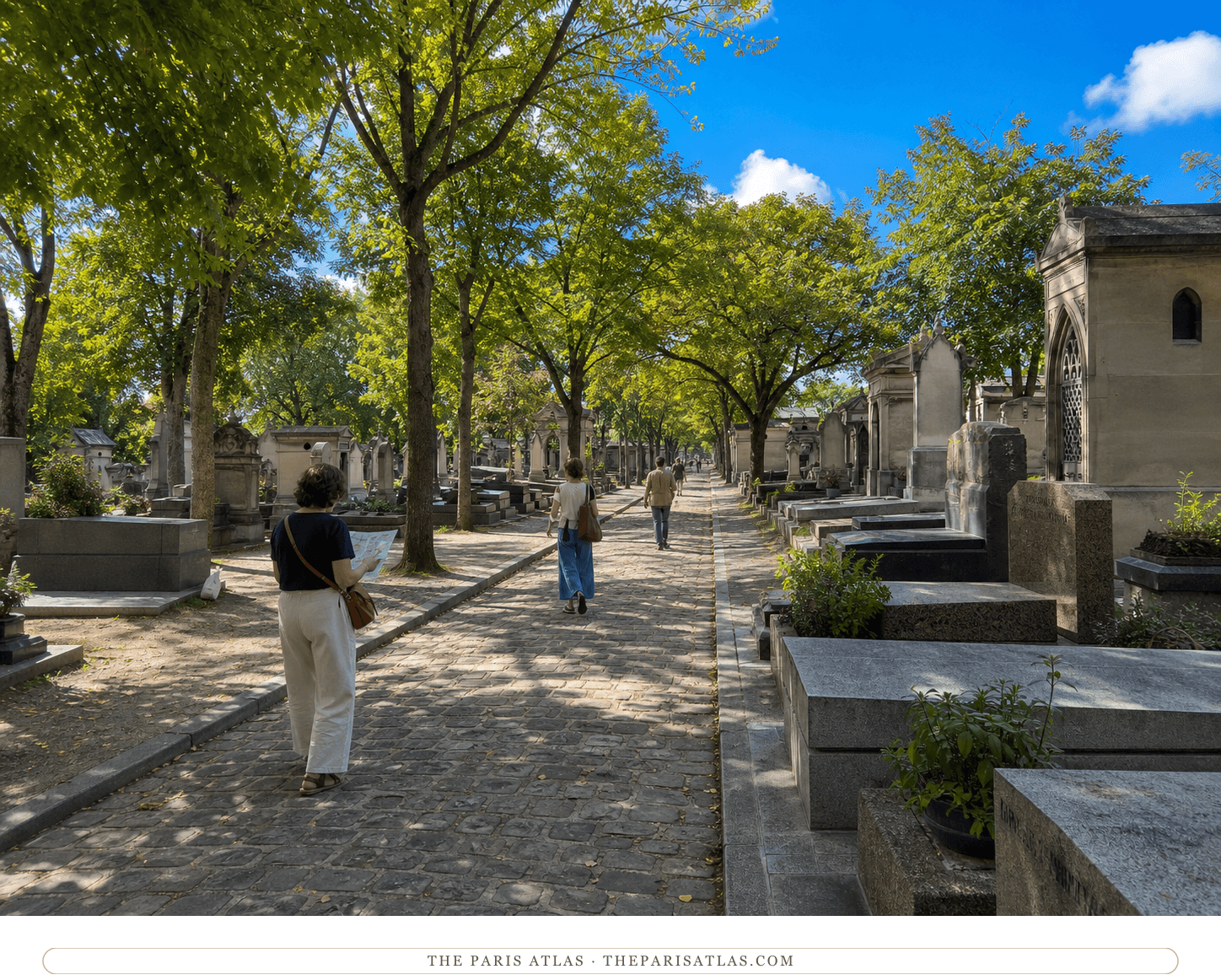
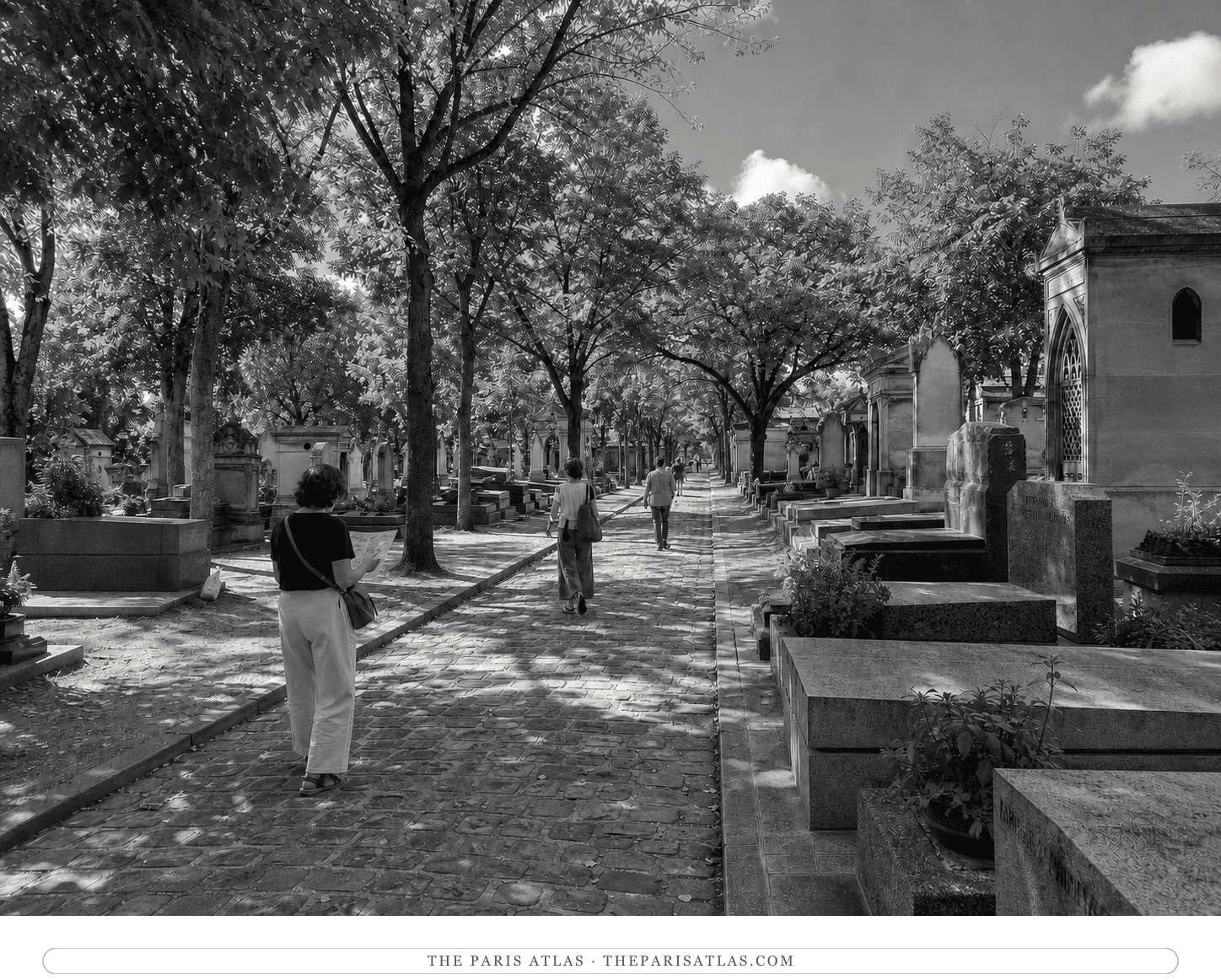
The end was bad. Deep in debt, Baudelaire went to Brussels in 1864 to give lectures and find a publisher, and did neither well; he loathed Belgium and said so at length. In 1866 he collapsed with a stroke that left him paralysed on one side and unable to speak — an aphasia particularly cruel in a man who had made a life out of exact words. His mother brought him back to Paris, and he died there on 31 August 1867, aged forty-six. He is buried in the Cimetière du Montparnasse on the left bank, in the same grave as the stepfather he had spent his life resisting, General Aupick.

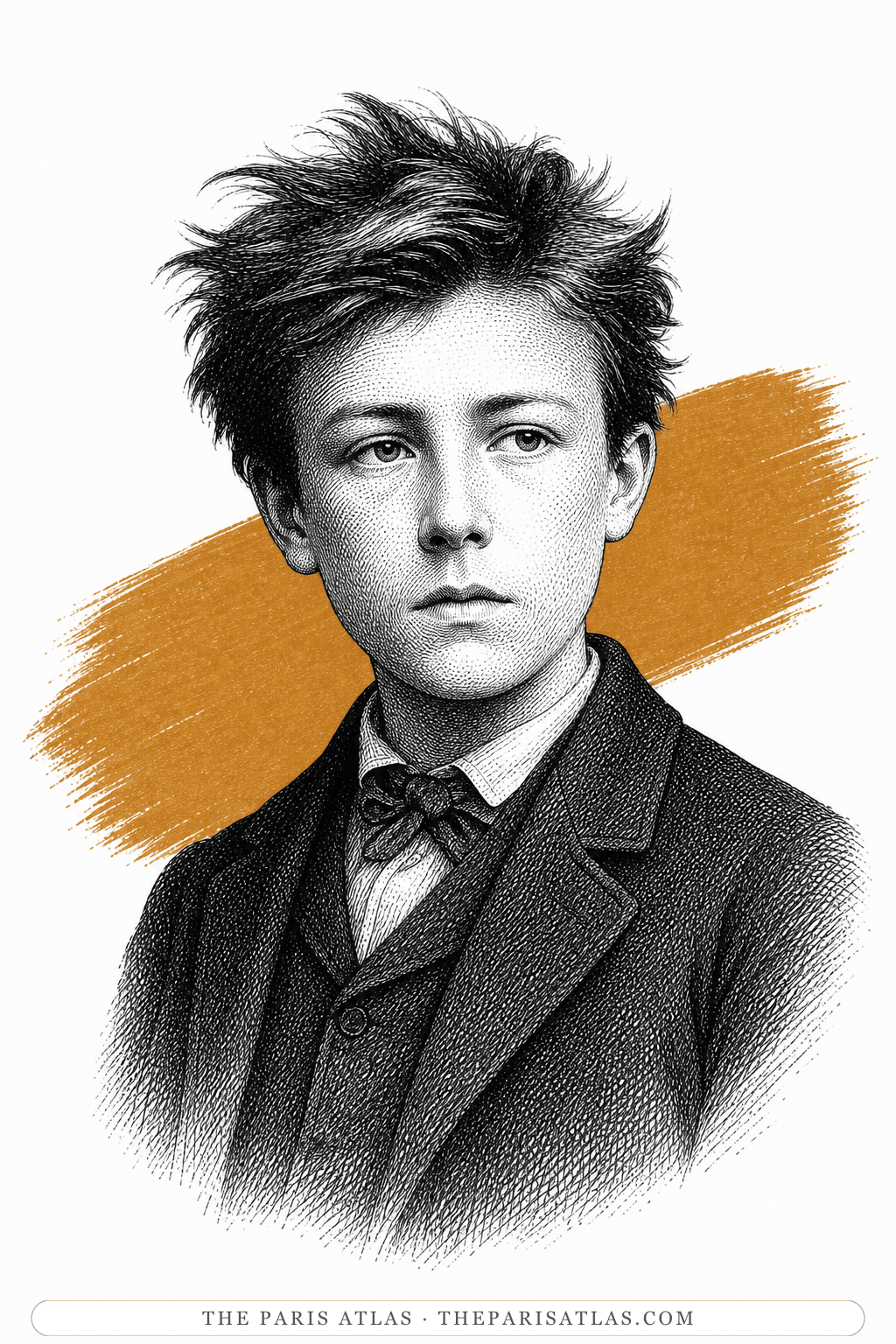
Almost none of it looked like success at the time: one book of verse, mutilated by a court; a second book left in pieces; an art criticism written for money; a translation project that ate two decades. It was enough to make him the poet from whom modern French poetry descends — the poets Stéphane Mallarmé, Paul Verlaine and Arthur Rimbaud all read him as the beginning — and to make Paris, the actual working city of crowds and building sites, permanently available as a subject for art.

Life events

  1. 1821

    Born in Paris on 9 April, on the rue Hautefeuille in the Latin Quarter.

    Baudelaire, Charles (1821–1867); Claude Pichois and Jean Ziegler, Baudelaire (1987)

  2. 1827

    His father dies; his mother Caroline soon marries the army officer Jacques Aupick, later a general and ambassador.

    Charles Baudelaire

  3. 1841–1842

    Sent by his family on a ship toward India, he abandons the voyage and returns to Paris, comes into his father's money, spends it as a dandy, and begins his twenty-year relationship with Jeanne Duval.

    Charles Baudelaire

  4. 1844

    His family obtains a court order placing his fortune under a lawyer's control, leaving him on an allowance for life.

    Charles Baudelaire

  5. 1840s

    Lodges at the Hôtel de Lauzun, 17 quai d'Anjou on the Île Saint-Louis, whose salons host the private hashish evenings of the Club des Hachichins.

    The Hôtel de Lauzun

  6. 1852

    Publishes his essay on Edgar Allan Poe — the first general study of Poe in any language but English. Revised in 1856, it prefaces his first volume of Poe translations.

    W. T. Bandy, The Influence and Reputation of Edgar Allan Poe in Europe (1962)

  7. 1854–1855

    Publishes his translations of Poe, whom he calls a twin soul.

    Charles Baudelaire

  8. 1857

    Les Fleurs du mal is published in June and prosecuted; the court fines him and orders six poems removed as obscene.

    Charles Baudelaire; Claude Pichois and Jean Ziegler, Baudelaire (1987)

  9. 1860

    Publishes Les Paradis artificiels, his study of hashish and opium.

    Claude Pichois and Jean Ziegler, Baudelaire (1987)

  10. 1861

    A second, enlarged edition of Les Fleurs du mal appears, without the six banned poems.

    Claude Pichois and Jean Ziegler, Baudelaire (1987)

  11. 1863

    Publishes Le Peintre de la vie moderne, the essay that defines modernité and makes the flâneur a way of seeing the city.

    Charles Baudelaire, Le Peintre de la vie moderne (The Painter of Modern Life) (1863)

  12. 1864

    Goes to Brussels to lecture and find a publisher; the trip fails and he stays two years.

    Claude Pichois and Jean Ziegler, Baudelaire (1987)

  13. 1866–1867

    A stroke leaves him paralysed on one side and unable to speak; his mother brings him back to Paris, where he dies on 31 August 1867, aged forty-six, and is buried in the Cimetière du Montparnasse.

    Baudelaire, Charles (1821–1867); Claude Pichois and Jean Ziegler, Baudelaire (1987)

  14. 1949

    France lifts the ban on the six condemned poems of Les Fleurs du mal, eighty-two years after Baudelaire's death.

    Charles Baudelaire

People they knew

Documented connections — every one carries its source.

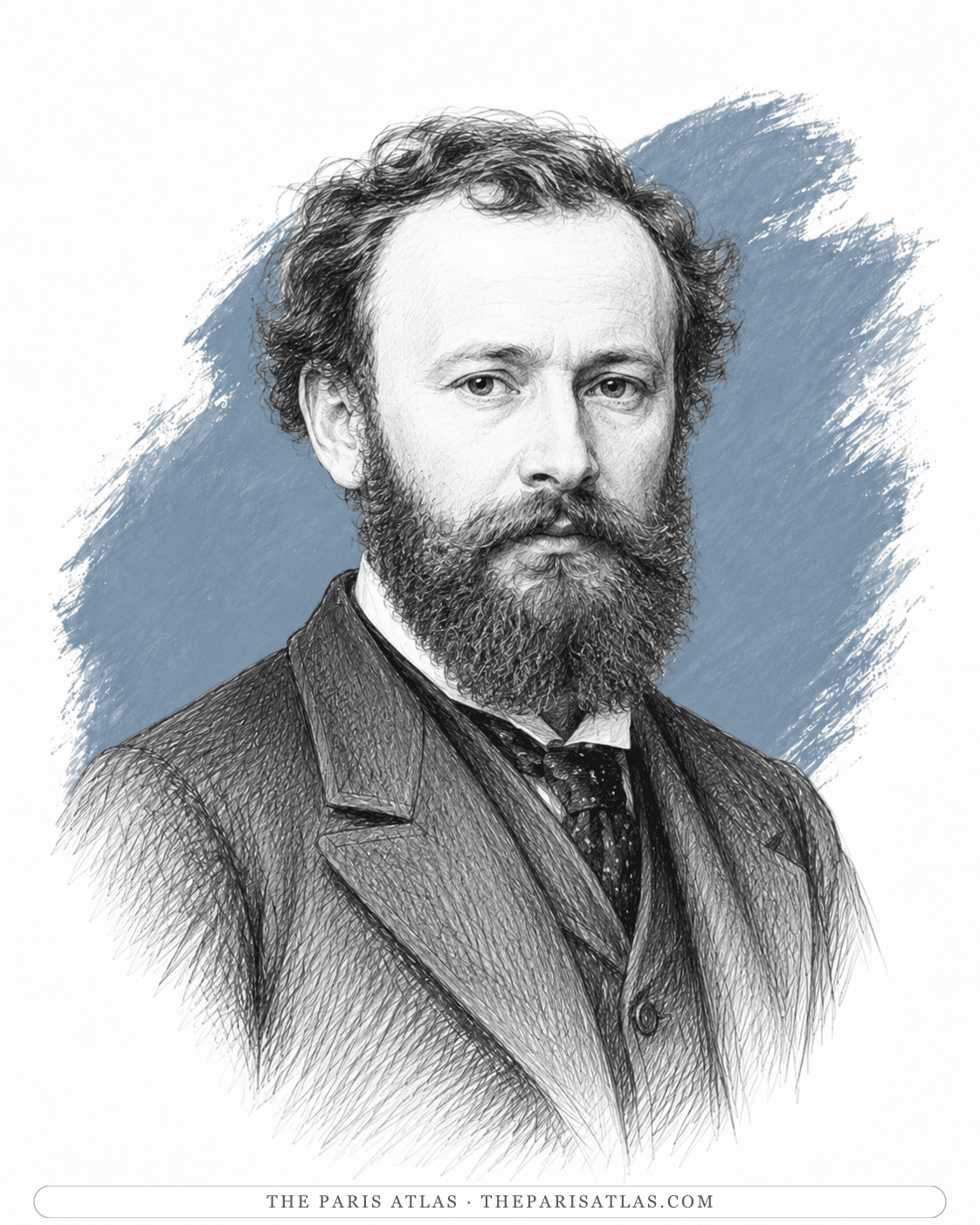
Illustrated portrait of Édouard Manet

Édouard Manet

  • Painter

Met · 1858–1867

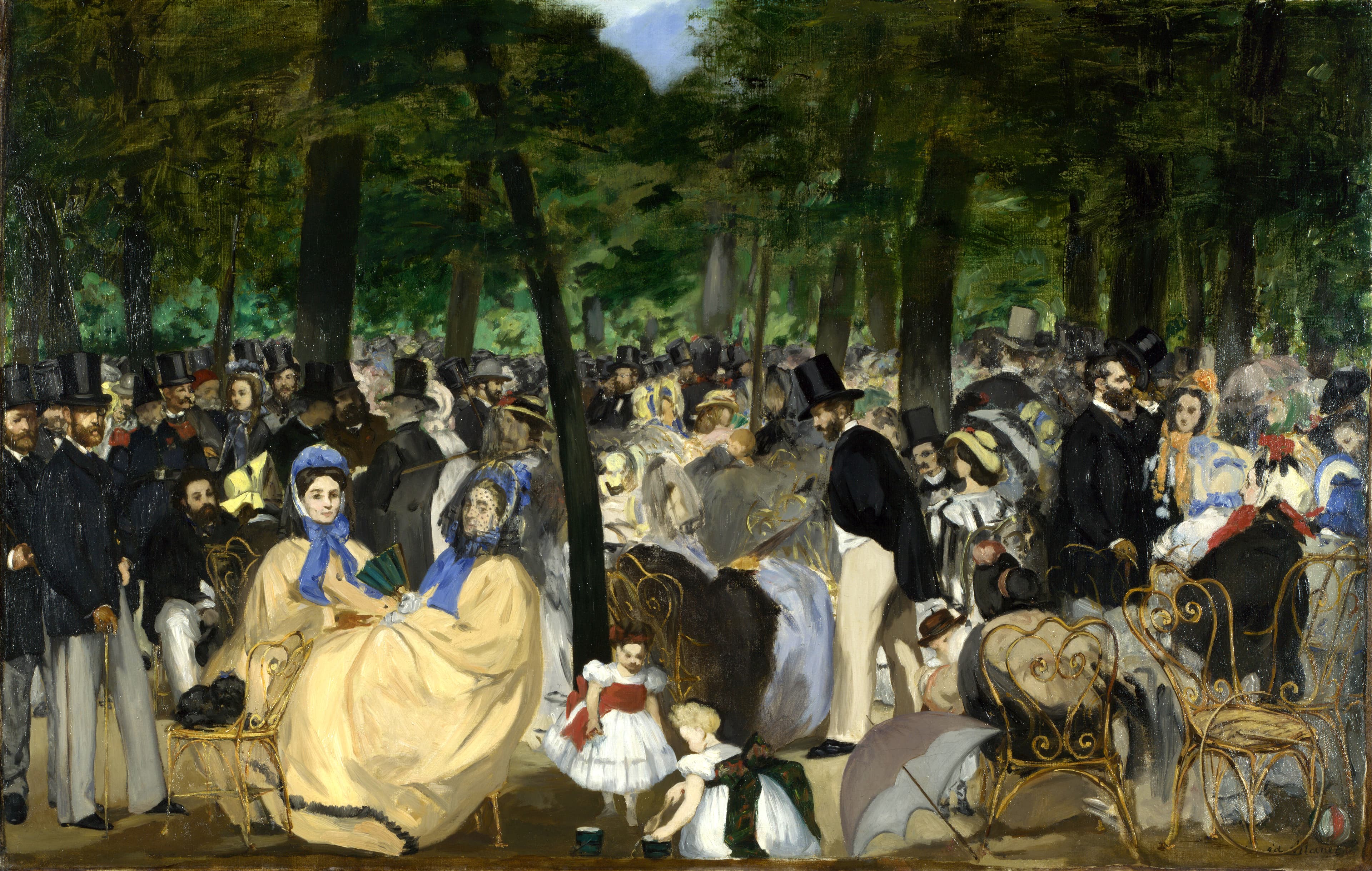
Close friends through the last decade of the poet's life. Baudelaire, by then the most feared art critic in Paris, defended Manet's paintings while the Salon public was jeering them, and Manet put him in the crowd of La Musique aux Tuileries (1862). The friendship ran until Baudelaire's stroke in 1866 and his death the following year.

Françoise Cachin, Charles S. Moffett and Juliet Wilson-Bareau, Manet, 1832–1883 (1983)

Who they drew from

Influence running inward — the writers and artists whose work fed theirs. Admiration is not acquaintance; these edges claim neither a meeting nor a friendship.

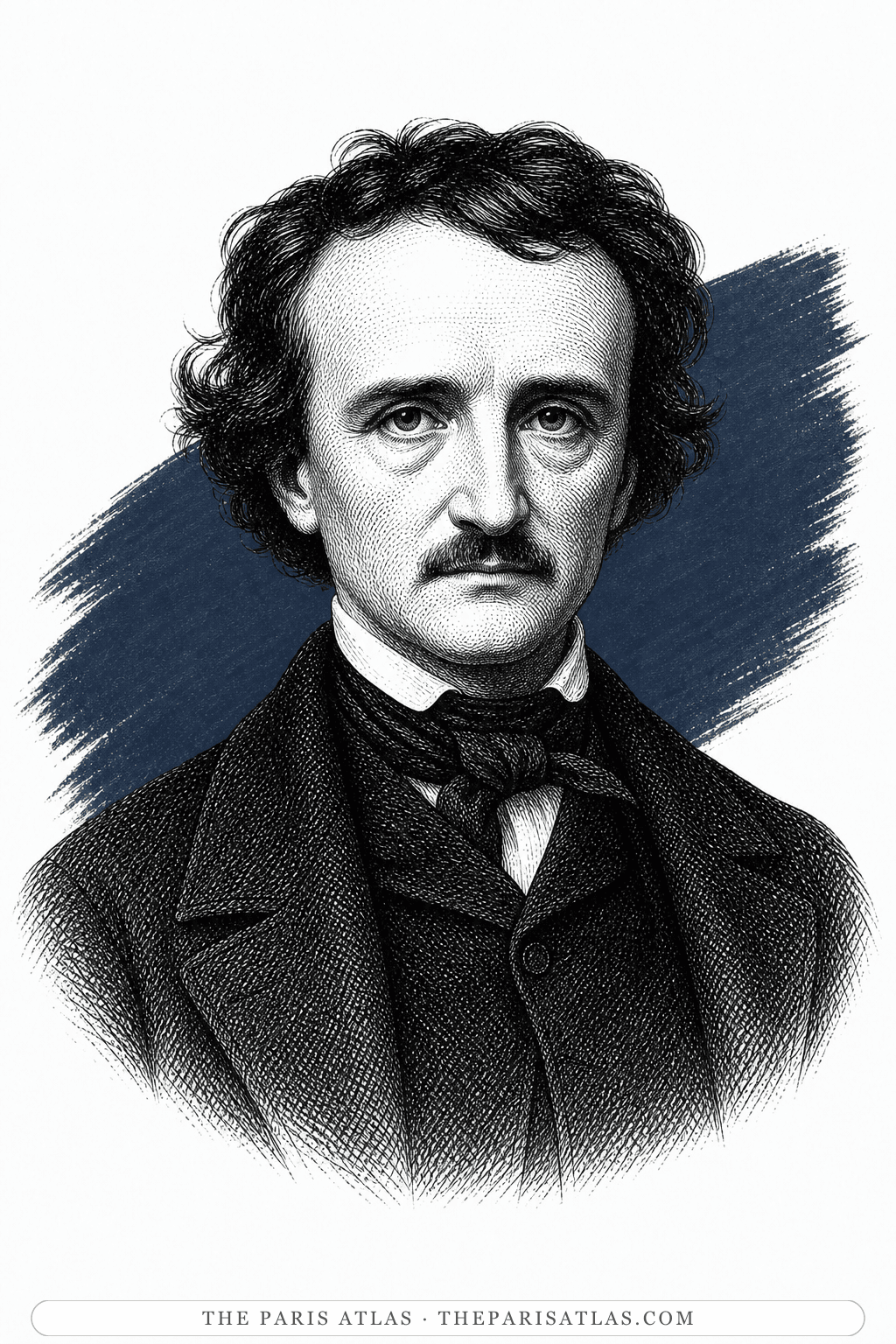
Edgar Allan Poe

The two never met — Poe died in Baltimore in 1849 and never crossed the Atlantic as an adult. Baudelaire read him in French magazine translations, called him a twin soul, and gave some seventeen years to translating him, often at the expense of his own writing. His 1852 essay on Poe was the first general study of Poe published in any language but English; revised in 1856, it prefaced the first volume of his translated tales. Asked why he had worked so patiently, Baudelaire answered: "Parce qu'il me ressemblait" — because he resembled me.

Gary Wayne Harner, Edgar Allan Poe in France: Baudelaire's Labor of Love (1990); W. T. Bandy, The Influence and Reputation of Edgar Allan Poe in Europe (1962); Charles Baudelaire

Eugène Delacroix

Baudelaire defended Delacroix throughout his working life as an art critic and, in the weeks after the painter's death in 1863, published the memorial essay L'Œuvre et la vie d'Eugène Delacroix — the founding text of Delacroix's reputation as the great modern painter of the century.

Charles Baudelaire, L'Œuvre et la vie d'Eugène Delacroix (1863)

Questions about Charles Baudelaire

Who was Charles Baudelaire?

A French poet, art critic and translator, born in Paris in 1821 and dead there in 1867. His one book of verse, Les Fleurs du mal (1857), made the modern city a subject for serious poetry and was prosecuted for obscenity within weeks of publication. He also invented the figure of the flâneur, coined the modern sense of the word modernité, and spent some seventeen years translating Edgar Allan Poe into French.

What happened at the 1857 trial of Les Fleurs du mal?

The French state prosecuted the book for offending public morals, months after failing to convict Gustave Flaubert over Madame Bovary. Baudelaire lost. The court fined him and his publisher, Auguste Poulet-Malassis, and ordered six poems — pieces concerning lesbian lovers and a vampire — struck from every copy. The ban on those six poems was not lifted in France until 1949.

What is a flâneur?

In ordinary French, a stroller or idler. Baudelaire made it a way of seeing, most fully in his 1863 essay Le Peintre de la vie moderne ("The Painter of Modern Life"): the flâneur walks the city with no errand and no destination, perfectly at home in a crowd, watching everything, and converts what he sees into art. It is the idea behind a great deal of modern painting, photography and city writing — the claim that walking around Paris with your eyes open is real intellectual work.

Where was Charles Baudelaire born in Paris?

On the rue Hautefeuille, a short street in the Latin Quarter on the left bank, on 9 April 1821. He lived most of his life in Paris — the Île Saint-Louis in the 1840s, then a long series of rented rooms as his debts followed him around the city — and died in Paris on 31 August 1867.

Why did Baudelaire translate Edgar Allan Poe?

Because he thought Poe was him. Asked why he had worked at the translations so patiently, Baudelaire answered that it was because Poe resembled him: on first opening a book of Poe's, he said, he found with horror and delight not only subjects he had dreamed of but sentences he had already thought, twenty years earlier. He gave roughly seventeen years to the work, often at the cost of his own writing, and made Poe a classic of French literature in the process.

What was the Club des Hachichins?

A small private circle of Paris writers and artists in the 1840s who met to take hashish and record the results. They gathered in the salons of the Hôtel de Lauzun at 17 quai d'Anjou on the Île Saint-Louis, then called the hôtel Pimodan, where Baudelaire lodged and the writer Théophile Gautier was among the company. Baudelaire's book Les Paradis artificiels (1860) came out of those evenings. The building belongs to the City of Paris today and is not open to the public.

Where is Charles Baudelaire buried?

In the Cimetière du Montparnasse in the 14th arrondissement (one of the numbered districts Paris is divided into), in the family grave — which means he shares it with General Jacques Aupick, the stepfather he spent his life resisting, and later his mother. A separate cenotaph, a stone effigy of the poet, stands elsewhere in the same cemetery.

What is Le Spleen de Paris?

Baudelaire's book of prose poems, published after his death in 1869 and also known as Petits poèmes en prose — around fifty short pieces, most of them city scenes with a sting in them. He wanted a form supple enough to follow the movement of a walk through a modern capital rather than the movement of a metre, and the prose poem as later writers used it essentially starts here.

Sourced claims

Every connection the graph holds for Charles, with the evidence behind it.

Met · 1858–1867

Édouard Manet

Close friends through the last decade of the poet's life. Baudelaire, by then the most feared art critic in Paris, defended Manet's paintings while the Salon public was jeering them, and Manet put him in the crowd of La Musique aux Tuileries (1862). The friendship ran until Baudelaire's stroke in 1866 and his death the following year.

Françoise Cachin, Charles S. Moffett and Juliet Wilson-Bareau, Manet, 1832–1883 (1983)

Influenced by · 1852–1865

Edgar Allan Poe

The two never met — Poe died in Baltimore in 1849 and never crossed the Atlantic as an adult. Baudelaire read him in French magazine translations, called him a twin soul, and gave some seventeen years to translating him, often at the expense of his own writing. His 1852 essay on Poe was the first general study of Poe published in any language but English; revised in 1856, it prefaced the first volume of his translated tales. Asked why he had worked so patiently, Baudelaire answered: "Parce qu'il me ressemblait" — because he resembled me.

Gary Wayne Harner, Edgar Allan Poe in France: Baudelaire's Labor of Love (1990); W. T. Bandy, The Influence and Reputation of Edgar Allan Poe in Europe (1962); Charles Baudelaire

Influenced by

Eugène Delacroix

Baudelaire defended Delacroix throughout his working life as an art critic and, in the weeks after the painter's death in 1863, published the memorial essay L'Œuvre et la vie d'Eugène Delacroix — the founding text of Delacroix's reputation as the great modern painter of the century.

Charles Baudelaire, L'Œuvre et la vie d'Eugène Delacroix (1863)

References

References

The sources below include biographies, scholarly essays, interviews, and primary materials that informed this page. They reflect both the historical record and ongoing critical conversations about Charles Baudelaire and their work.

  1. 1Baudelaire, Charles (1821–1867)

    Bibliothèque nationale de France

    The French national library's authority record — dates, places, and how it files him.

    View source
  2. 2Charles Baudelaire

    Academy of American Poets (poets.org)

    Biographical outline, the trial, and the Poe translations.

    View source
  3. 3The Hôtel de Lauzun

    Paris Institute for Advanced Study

    The Île Saint-Louis house and the Club des Hachichins.

    View source
  4. 4Le Peintre de la vie moderne (The Painter of Modern Life)

    Le Figaro, Paris, 1863

    His own essay — modernity and the flâneur.

  1. 5Edgar Allan Poe in France: Baudelaire's Labor of Love

    The Edgar Allan Poe Society of Baltimore, 1990

    On the seventeen years of Poe translation.

    View source
  2. 6The Influence and Reputation of Edgar Allan Poe in Europe

    The Edgar Allan Poe Society of Baltimore, 1962

    On the 1852 Poe essay and its European effect.

    View source
  3. 7Baudelaire

    Fayard, 1987

    The standard biography.

i
Why these sources are here

These references anchor the page in the documented record and in the scholarly conversations around Charles Baudelaire. Every claim on this page traces back to one or more of the works listed here.

Explore more resources