The Paris AtlasCharting the artists, works, and places worth returning to.
  • Poet
· French · 1854–1891

Arthur Rimbaud

The schoolboy from the Ardennes — the forest country of France's far north-east, on the Belgian border — who mailed his poems to Paul Verlaine, an established Paris poet ten years older, was invited to Paris at sixteen, wrote everything he is famous for in about five years, and then gave up literature entirely for a trader's life in Africa — dead at thirty-seven, and famous ever since for both halves of that.

Details

Lived
1854–1891
Born
20 October 1854
Birthplace
Charleville, Ardennes, France
Died
10 November 1891 · aged 37
Place of death
Marseille, France
Nationality
French
Profession
Poet, and afterwards a trader in Africa
Major works
Le Bateau ivre ("The Drunken Boat"), Une saison en enfer ("A Season in Hell"), Illuminations
Roles
Poet

About Arthur Rimbaud

Arthur Rimbaud was born in the small northern French town of Charleville on 20 October 1854 and died in a Marseille hospital on 10 November 1891, aged thirty-seven. He is one of the strangest careers in literature: he wrote all of his poetry between about 1870 and 1875 — from fifteen to twenty — and then stopped, completely, and spent the rest of his life as a commercial traveller and trader in Cyprus, in Aden — the British-run port at the mouth of the Red Sea, in what is now Yemen — and in the Ethiopian highlands. The poems were still making his name in Paris while he was loading caravans two thousand miles away, and he showed no interest in the news.

Paris is where the poetry happened. In September 1871 he arrived at the invitation of Paul Verlaine, an established poet ten years older who had read the verse a schoolboy sent him and wrote back telling him to come. Rimbaud carried in his pocket the poem that would make him famous, "Le Bateau ivre" ("The Drunken Boat"). Within months he had scandalised the literary dinners that welcomed him, wrecked Verlaine's marriage, and left with him for London and Brussels — where, on 10 July 1873, a drunk Verlaine shot him in the wrist and went to prison for it. Rimbaud went home to his mother's farm and wrote Une saison en enfer ("A Season in Hell"), the only book he ever published himself. Then he stopped writing and left.

The boy from Charleville

Rimbaud was born on 20 October 1854 in Charleville, a garrison town in the Ardennes near the Belgian border. His father was a junior army officer who left the family for good; his mother, from farming stock, raised four children alone and hard. At school he was a prodigy of the old-fashioned kind, sweeping the prizes for Latin verse, and at fifteen he began writing poems in French that his teacher, Georges Izambard, was clear-eyed enough to encourage against the wishes of everyone else. Charleville itself he found unbearable, and from the age of fifteen he kept running away from it.

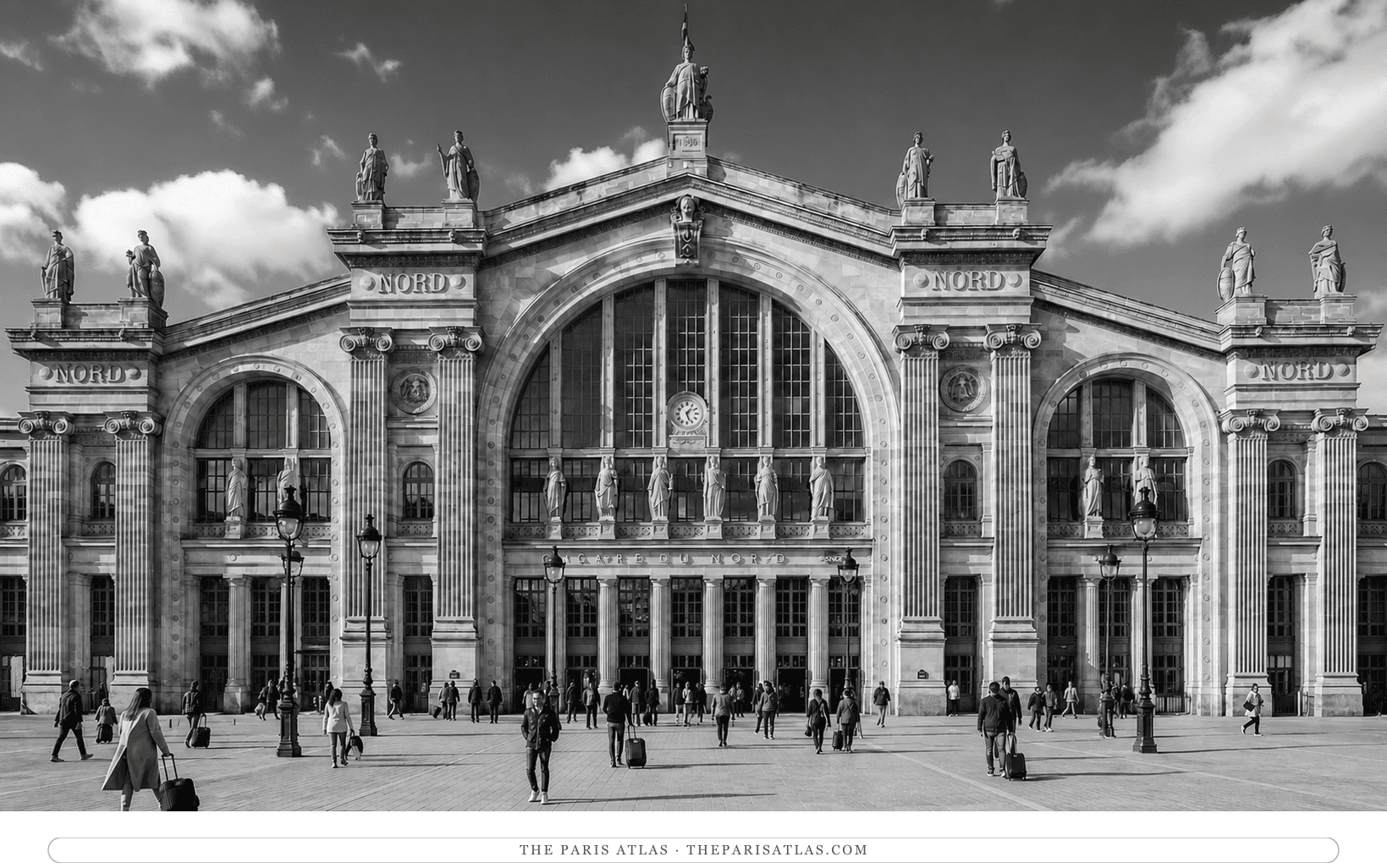
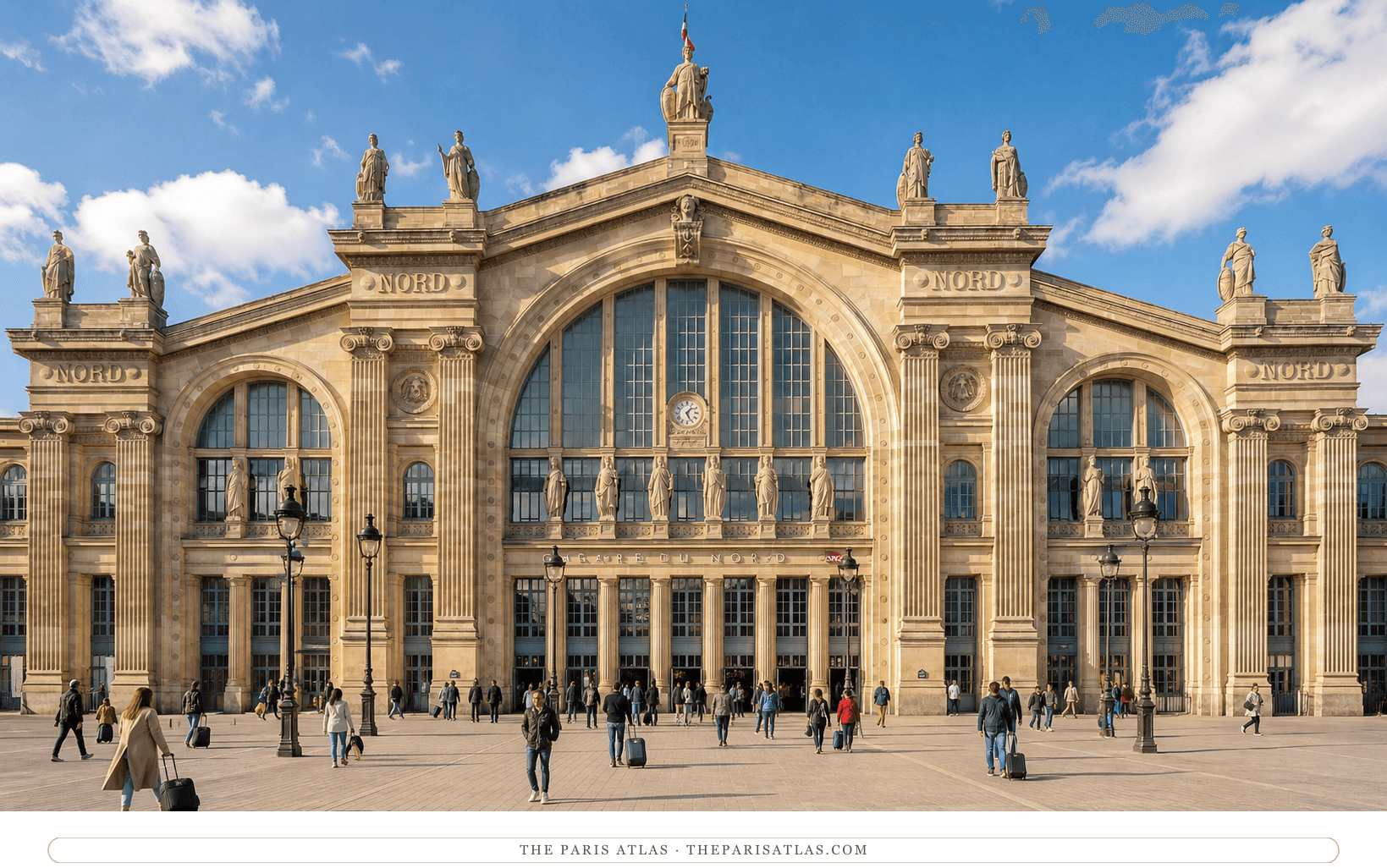
The first escape, in August 1870, ended badly: he took the train to Paris without a ticket, was arrested on arrival at the Gare du Nord — the great northern railway station where trains from the Ardennes come in — and was held at Mazas, the Paris prison used for men awaiting trial, until Izambard paid for him and took him home. He ran again through 1871, on foot and by rail, each time returning to a mother who did not want a poet in the house. The poems of these vagrant months are among the ones French schoolchildren still learn: "Les Effarés" ("The Dazed Ones"), about hungry children watching bread being baked, and "Le Dormeur du val" ("The Sleeper in the Valley"), about a young soldier lying in the grass, who turns out on the last line to be dead.

The derangement of the senses, explained plainly

In May 1871, aged sixteen, Rimbaud wrote two letters that set out what he thought poetry was for. To Izambard on 13 May he wrote: "C'est faux de dire : Je pense. On devrait dire : On me pense" — "It is false to say: I think. One should say: I am thought." Two days later, to another poet, Paul Demeny, he sent the letter that became known as the lettre du voyant — the "seer's letter". The poet, he argued, must make himself a seer, and gets there by what he called "un long, immense et raisonné dérèglement de tous les sens": a long, immense and reasoned derangement of all the senses.

a long, immense and reasoned derangement of all the senses

un long, immense et raisonné dérèglement de tous les sens

Rimbaud to Paul Demeny, 15 May 1871 — the lettre du voyant

The phrase has been misread for a century and a half as a licence to get wrecked, and Rimbaud did drink and take hashish. But the sentence says something more deliberate. The middle word is raisonné — reasoned, systematic. He meant that a poet should attack his own ordinary habits of seeing, on purpose and methodically, until the senses stop reporting the usual world and start reporting something else, and that the poet then writes down what comes back. What came back, in his case, was a new kind of French: hallucinated, image-crammed, faster than the syntax of the day, and often abandoning rhyme and metre altogether. "J'écrivais des silences, des nuits, je notais l'inexprimable" — "I wrote silences, nights; I set down the inexpressible."

Summoned to Paris, September 1871

That summer he posted a batch of his poems to Paul Verlaine, then twenty-seven, newly married and already a name in Paris poetry. Verlaine's reply was an invitation to come and stay. Rimbaud arrived in Paris in September 1871, not yet seventeen, carrying the manuscript of "Le Bateau ivre" — a hundred lines spoken by a boat that has lost its crew and its steering and goes where the sea takes it, written by a boy who had never seen the sea. He read it aloud to the Vilains Bonshommes ("Ugly Fellows"), the monthly dinner club of Paris poets that Verlaine brought him to, and the room understood immediately that the provincial teenager was better than they were.

He then set about making himself impossible. He was filthy on principle, drank the table's absinthe, insulted the older poets, and at one dinner slashed a guest with a swordstick; the Vilains Bonshommes expelled him. He was also, briefly, a member of the Zutistes — roughly "the Damn-It-Alls", from zut, the mild French curse — a joke-name circle of young poets whose album of obscene parodies he filled with contributions. His Paris career lasted months, not years, and he never held an address of his own here: he lodged with Verlaine's in-laws until they threw him out, then in whatever room friends paid for. The most famous portrait of that moment is the painter Henri Fantin-Latour's group canvas Un coin de table ("A Corner of the Table", 1872), now in the Musée d'Orsay, the Paris museum of nineteenth-century art, where Rimbaud sits beside Verlaine at the end of a table of respectable literary men, the youngest person in the picture by a decade.

Verlaine, London, and the shot in Brussels

By 1872 Rimbaud and Verlaine were lovers, and Verlaine had left his wife Mathilde and their infant son to travel with him. The two spent about two years moving between Paris, Brussels and London, mostly broke, teaching a little French, quarrelling violently and writing some of the best work either of them produced. Verlaine's Romances sans paroles ("Songs Without Words") comes out of those months; so do most of the prose poems — pieces written as paragraphs rather than in lines of verse — that Rimbaud later gathered as Illuminations.

It ended on 10 July 1873 in a Brussels hotel room. Verlaine, drunk and frantic that Rimbaud was leaving him, bought a revolver and fired two shots at him, wounding him in the wrist. Rimbaud was bandaged at hospital and set off for the station; when Verlaine followed him through the street with his hand in his pocket, Rimbaud appealed to a policeman. Verlaine was arrested, tried, and sentenced to two years in the Belgian prison at Mons. Rimbaud, eighteen, went back to his mother's farm at Roche in the Ardennes and finished the book he had been writing.

A Season in Hell, and the silence

Une saison en enfer ("A Season in Hell", 1873) is a short, furious book of prose broken by verse — the account of a man taking apart his own project, including the seer's programme of the 1871 letters, and finding it a lie he told himself. It is the only work Rimbaud ever put into print himself, at a Brussels printer's, on credit. He collected a few author's copies, and the rest of the edition stayed in the printer's basement, unclaimed and unpaid for, until it was rediscovered in 1901. The book that announced the end of his career was, in the most literal sense, never published in his lifetime.

Then he stopped. There were a few more prose poems, and travel with the poet Germain Nouveau in London in 1874, but by about 1875 — aged twenty — Rimbaud had given up literature and did not go back to it. He never explained why, and no letter survives in which he mourns it; when old friends wrote to him about his growing fame he answered about money and mules. The prose poems he had left behind were published in Paris in 1886 as Illuminations, in the short-lived literary review La Vogue, by editors who were not entirely sure whether the author was still alive.

Aden, Harar, and the leg

The second life is as documented as the first and much duller in the telling, which is part of its power. He learned German in Stuttgart, crossed the Alps on foot, enlisted in the Dutch colonial army in 1876 for the passage to Java, in the Dutch East Indies that are now Indonesia, and deserted within weeks, worked in Cyprus as a quarry foreman, and from 7 August 1880 was in Aden, the British-run port at the mouth of the Red Sea, buying coffee and hides for a French trading house. From 1881 he was based at Harar, in what is now eastern Ethiopia — one of the few Europeans there — running caravans inland, trading coffee, and in 1887 selling a consignment of rifles to Menelik II, the king who would soon rule all Ethiopia. The gun deal lost money.

In early 1891 a tumour grew in his right knee. He had himself carried on a stretcher for twelve days to the coast, sailed to Marseille, and on arrival in May had the leg amputated. He convalesced at the family farm, could not settle, and returned to the Hôpital de la Conception, a hospital in Marseille, where he died on 10 November 1891, aged thirty-seven, his sister Isabelle beside him. In Paris, the poems he had abandoned sixteen years earlier were by then being read as the beginning of modern French poetry, and the young men in the cafés of the Latin Quarter — the student and publishing district on the Left Bank of the Seine — spoke of him as a legend rather than a man with an address in Ethiopia.

Life events

  1. 1854

    Born on 20 October at Charleville in the Ardennes, second son of an army officer who soon abandoned the family.

    Rimbaud, Arthur (1854-1891); Arthur Rimbaud

  2. 1870

    Runs away to Paris without a ticket in August, is arrested at the Gare du Nord railway station and jailed at Mazas prison until his teacher Georges Izambard fetches him home.

    Arthur Rimbaud

  3. 1871

    Writes the "lettre du voyant" of 15 May, calling for "a long, immense and reasoned derangement of all the senses", and finishes "Le Bateau ivre".

    Arthur Rimbaud

  4. 1871

    Arrives in Paris in September at Paul Verlaine's invitation, not yet seventeen, and reads "Le Bateau ivre" to the Vilains Bonshommes dinner club — which soon expels him for his behaviour.

    Arthur Rimbaud; Paul Verlaine

  5. 1872

    Verlaine leaves his wife and infant son; the two poets live between Paris, Brussels and London, writing what became Romances sans paroles and Illuminations.

    Arthur Rimbaud; Paul Verlaine

  6. 1873

    On 10 July, in a Brussels hotel room, a drunk Verlaine fires two revolver shots and wounds Rimbaud in the wrist; Verlaine is sentenced to two years in the prison at Mons.

    Arthur Rimbaud; Arthur Rimbaud

  7. 1873

    Finishes Une saison en enfer at the family farm at Roche and has it printed in Brussels at his own expense — the only book he publishes himself. Most of the edition stays in the printer's basement until 1901.

    Arthur Rimbaud; Arthur Rimbaud

  8. 1875

    At about twenty, gives up literature for good after roughly five years of writing.

    Arthur Rimbaud; Arthur Rimbaud

  9. 1876

    Enlists in the Dutch colonial army for the passage to Java and deserts within weeks; years of wandering follow across Germany, Italy, Scandinavia and Cyprus.

    Arthur Rimbaud

  10. 1880

    Reaches Aden — the British-run port at the mouth of the Red Sea — on 7 August and goes to work for a French trading house buying coffee and hides.

    Arthur Rimbaud

  11. 1881

    Settles at Harar in Abyssinia — the empire that is now Ethiopia — running caravans inland; in 1887 he sells a consignment of rifles to King Menelik II, soon to rule the whole country, at a loss.

    Arthur Rimbaud; Graham Robb, Rimbaud (2000)

  12. 1886

    Illuminations is published in Paris in the magazine La Vogue while he is trading in Africa; the poet is becoming famous in his absence.

    Arthur Rimbaud

  13. 1891

    Carried by stretcher to the coast with a tumour in his knee, he reaches Marseille in May and has the leg amputated.

    Arthur Rimbaud; Arthur Rimbaud

  14. 1891

    Dies on 10 November at the Hôpital de la Conception in Marseille, aged thirty-seven.

    Rimbaud, Arthur (1854-1891); Arthur Rimbaud

People they knew

Documented connections — every one carries its source.

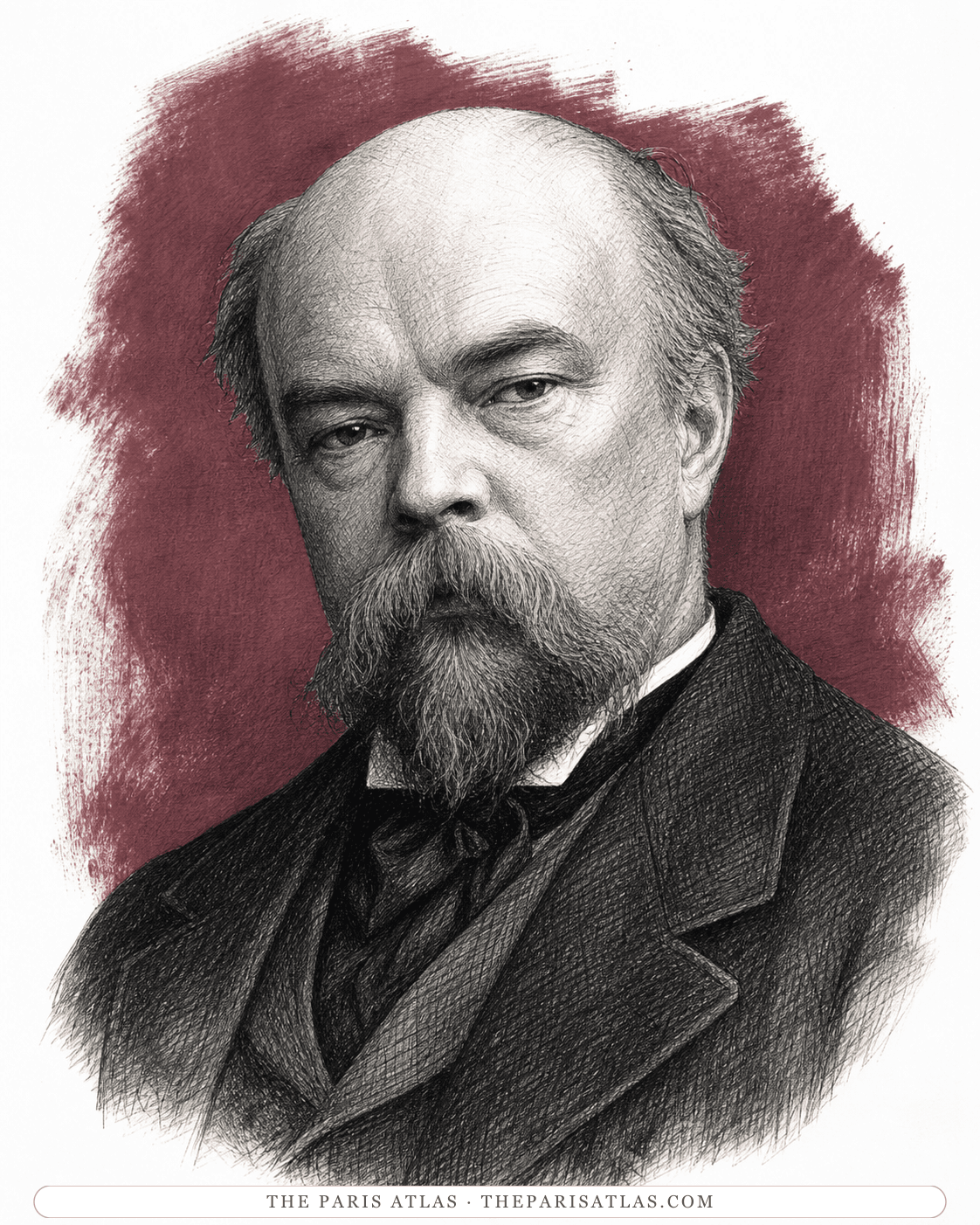
Illustrated portrait of Paul Verlaine

Paul Verlaine

  • Poet
  • Critic

Met · 1871

They met by post before they met in person: in the summer of 1871 the sixteen-year-old Rimbaud sent poems from Charleville to Verlaine, an established Paris poet of twenty-seven, who answered with an invitation to come and stay. Rimbaud arrived in Paris in September 1871 carrying the manuscript of "Le Bateau ivre" and read it to the Vilains Bonshommes, the monthly dinner club of Paris poets Verlaine brought him to.

Arthur Rimbaud; Paul Verlaine; Paul Verlaine

Partner of · 1871–1873

The most consequential love affair in French poetry, and one of the shortest. Verlaine, married in August 1870 and a father by October 1871, left his wife Mathilde and their infant son in 1872 to travel with Rimbaud, ten years his junior; the two lived between Paris, Brussels and London for roughly two years, writing the poems that became Romances sans paroles and Illuminations. It ended on 10 July 1873, when Verlaine, drunk in a Brussels hotel room, fired two revolver shots and wounded Rimbaud in the wrist — for which he served about eighteen months of a two-year sentence in the Belgian prison at Mons.
Paul Verlaine; Arthur Rimbaud; Arthur Rimbaud; Paul Verlaine

Who they drew from

Influence running inward — the writers and artists whose work fed theirs. Admiration is not acquaintance; these edges claim neither a meeting nor a friendship.

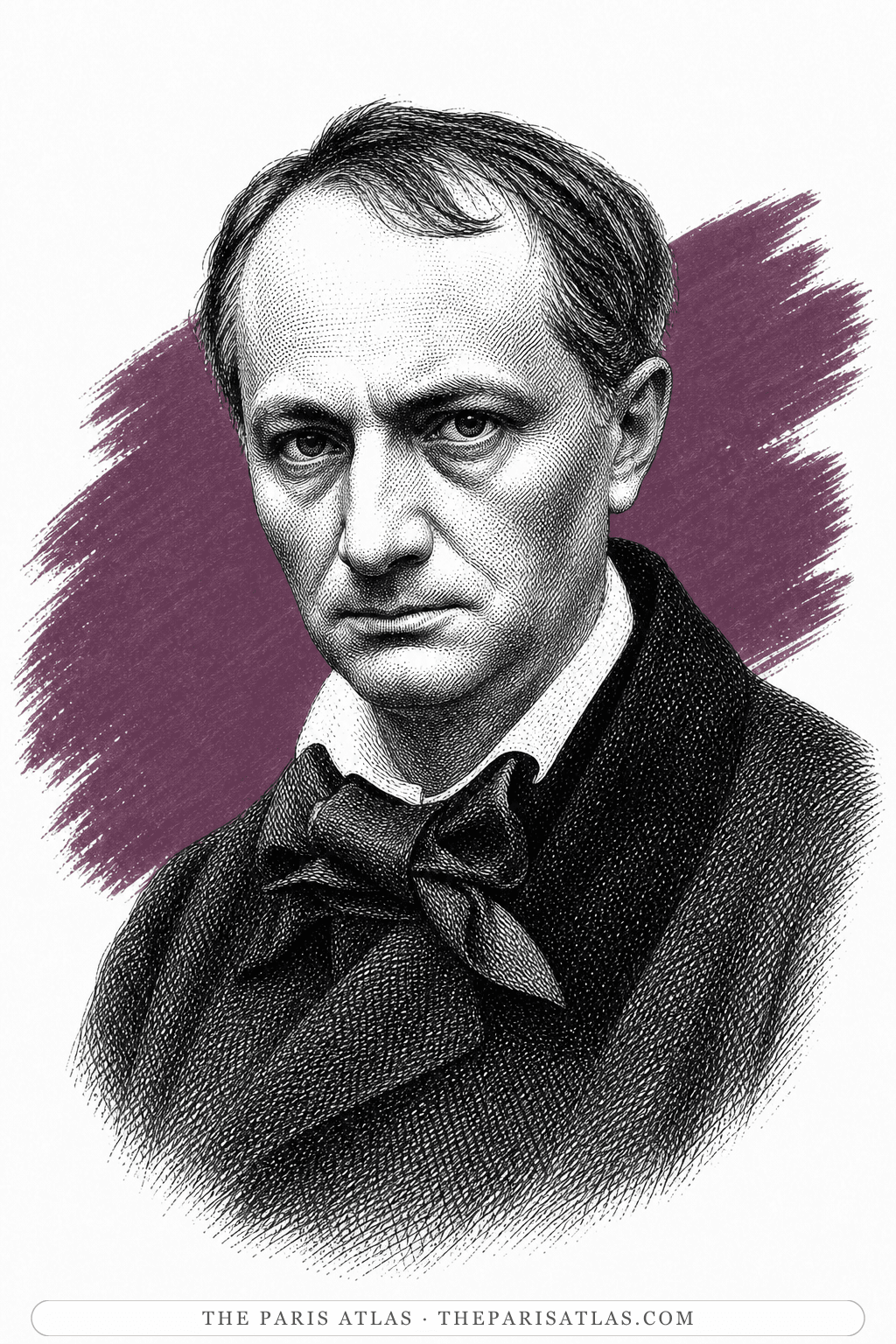
Charles Baudelaire

They never met: Baudelaire died in 1867, when Rimbaud was twelve. Larousse records that Les Fleurs du mal was "admiré d'emblée par Rimbaud, Verlaine et Mallarmé" — admired from the first by Rimbaud, Verlaine and Mallarmé — and that the book turned French poetry towards Symbolism, so that it is fair to see in Baudelaire "l'inventeur du symbolisme et l'initiateur de la poésie moderne". Rimbaud's letters of May 1871, written at sixteen, take Baudelaire as the point a new poetry has to start from and go beyond.

Charles Baudelaire

Arthur Rimbaud’s Places

The cataloged places connected to Arthur Rimbaud — through the books, and through the documented record.

Places you can enter today appear first, followed by addresses to see from outside and sites that have vanished.

Questions about Arthur Rimbaud

Why did Rimbaud stop writing poetry?

Nobody knows, because he never said. The facts are simply these: he wrote everything he is famous for between roughly 1870 and 1875, gave it up at about twenty, and spent the next sixteen years as a wanderer and then a trader in Aden and Ethiopia, writing home about money, tools and health. Une saison en enfer (1873) reads like a man dismantling his own poetic project, which is why it is often taken as a farewell — but that is a reading of the book, not a statement of his reasons.

What did Rimbaud mean by the "derangement of the senses"?

In a letter of 15 May 1871, written at sixteen, he said the poet must make himself a seer through "un long, immense et raisonné dérèglement de tous les sens" — "a long, immense and reasoned derangement of all the senses". The key word is raisonné: reasoned, systematic. He meant deliberately attacking your own habits of perception so that the senses stop delivering the ordinary world, and then writing down what they deliver instead. Drink and hashish were part of his method; the programme itself was about perception, not intoxication.

Did Verlaine really shoot Rimbaud?

Yes. On 10 July 1873, in a Brussels hotel room, Paul Verlaine — drunk, and desperate that Rimbaud was about to leave him — bought a revolver and fired two shots, wounding Rimbaud in the wrist. Rimbaud was treated at hospital and, when Verlaine followed him through the street afterwards, appealed to a policeman. Verlaine was arrested and sentenced to two years in the Belgian prison at Mons. The wound was not life-threatening; the relationship was over.

How old was Rimbaud when he wrote his poems?

A schoolboy. He was fifteen when he began writing seriously in 1870, sixteen when he wrote the "seer" letters and "Le Bateau ivre", eighteen when he wrote Une saison en enfer, and about twenty when he stopped. The complete works of one of the most influential poets in the French language were written in roughly five years by a teenager.

What is A Season in Hell about?

Une saison en enfer (1873) is a short book of prose with passages of verse, written at his mother's farm in the Ardennes just after the Brussels shooting. In it the narrator goes back over his own life and his own poetics — the visionary programme, the "alchemy of the word", the pride, the damnation — and takes them apart. It was the only book Rimbaud ever published himself, printed in Brussels on credit; he never collected the edition, and it sat in the printer's basement until 1901.

What did Rimbaud do in Africa?

Trade. From 1880 he worked at Aden, the British-controlled port at the mouth of the Red Sea, buying coffee and hides for a French firm, and from 1881 he was based inland at Harar, in what is now eastern Ethiopia, one of very few Europeans in the town. He organised caravans, traded coffee and other goods, wrote geographical reports, and in 1887 sold a shipment of rifles to Menelik II, the future emperor of Ethiopia — a venture that lost him money. He was there for about ten years and never wrote poetry again.

How did Rimbaud die?

Of cancer. A tumour in his right knee grew through early 1891; he was carried on a stretcher for twelve days from Harar to the coast, sailed to Marseille, and had the leg amputated in May. He went home to the Ardennes, could not settle, returned to the Hôpital de la Conception in Marseille, and died there on 10 November 1891, aged thirty-seven, with his sister Isabelle at his side.

Where can you follow Rimbaud in Paris?

Paris made him and he never settled in it — an honest answer has to say so. He arrived at the Gare du Nord in August 1870 and was arrested on the platform; he came back in September 1871 as Verlaine's guest and lodged with other people, never in a place of his own; the literary dinners that first cheered and then expelled him met in restaurants that are gone. What survives of his Paris is in the collections: Henri Fantin-Latour's group portrait Un coin de table ("A Corner of the Table", 1872), painted the winter after he arrived, hangs in the Musée d'Orsay, with Rimbaud seated second from the left beside Verlaine.

Sourced claims

Every connection the graph holds for Arthur, with the evidence behind it.

Met · 1871

Paul Verlaine

They met by post before they met in person: in the summer of 1871 the sixteen-year-old Rimbaud sent poems from Charleville to Verlaine, an established Paris poet of twenty-seven, who answered with an invitation to come and stay. Rimbaud arrived in Paris in September 1871 carrying the manuscript of "Le Bateau ivre" and read it to the Vilains Bonshommes, the monthly dinner club of Paris poets Verlaine brought him to.

Arthur Rimbaud; Paul Verlaine; Paul Verlaine

Visited · 1870

Gare du Nord

Rimbaud's first arrival in Paris, in August 1870, ended on the platform. The fifteen-year-old had run away from Charleville and travelled without a ticket; he was arrested on arrival at the Gare du Nord and held at the Mazas prison until his schoolteacher Georges Izambard paid what was owed and took him home. He came back thirteen months later as Verlaine's invited guest.

Arthur Rimbaud

Influenced by

Charles Baudelaire

They never met: Baudelaire died in 1867, when Rimbaud was twelve. Larousse records that Les Fleurs du mal was "admiré d'emblée par Rimbaud, Verlaine et Mallarmé" — admired from the first by Rimbaud, Verlaine and Mallarmé — and that the book turned French poetry towards Symbolism, so that it is fair to see in Baudelaire "l'inventeur du symbolisme et l'initiateur de la poésie moderne". Rimbaud's letters of May 1871, written at sixteen, take Baudelaire as the point a new poetry has to start from and go beyond.

Charles Baudelaire

Partner of · 1871–1873

Paul Verlaine

The most consequential love affair in French poetry, and one of the shortest. Verlaine, married in August 1870 and a father by October 1871, left his wife Mathilde and their infant son in 1872 to travel with Rimbaud, ten years his junior; the two lived between Paris, Brussels and London for roughly two years, writing the poems that became Romances sans paroles and Illuminations. It ended on 10 July 1873, when Verlaine, drunk in a Brussels hotel room, fired two revolver shots and wounded Rimbaud in the wrist — for which he served about eighteen months of a two-year sentence in the Belgian prison at Mons.
Paul Verlaine; Arthur Rimbaud; Arthur Rimbaud; Paul Verlaine

References

References

The sources below include biographies, scholarly essays, interviews, and primary materials that informed this page. They reflect both the historical record and ongoing critical conversations about Arthur Rimbaud and their work.

  1. 1Arthur Rimbaud

    Encyclopédie Larousse

    The standard French encyclopedia life, used throughout for dates and places.

    View source
  2. 2Rimbaud, Arthur (1854-1891)

    Bibliothèque nationale de France

    The Bibliothèque nationale de France authority record: birth, death, profession.

    View source
  3. 3Arthur Rimbaud

    Academy of American Poets (poets.org)

    The Academy of American Poets biography, in English.

    View source
  1. 4Rimbaud

    Picador, 2000

    Graham Robb's biography, the standard modern account in English of both halves of the life.

  2. 5Un coin de table — Henri Fantin-Latour, 1872

    Encyclopédie Larousse

    The Fantin-Latour group portrait of 1872 — its sitters, and the museum that holds it.

    View source
i
Why these sources are here

These references anchor the page in the documented record and in the scholarly conversations around Arthur Rimbaud. Every claim on this page traces back to one or more of the works listed here.

Explore more resources