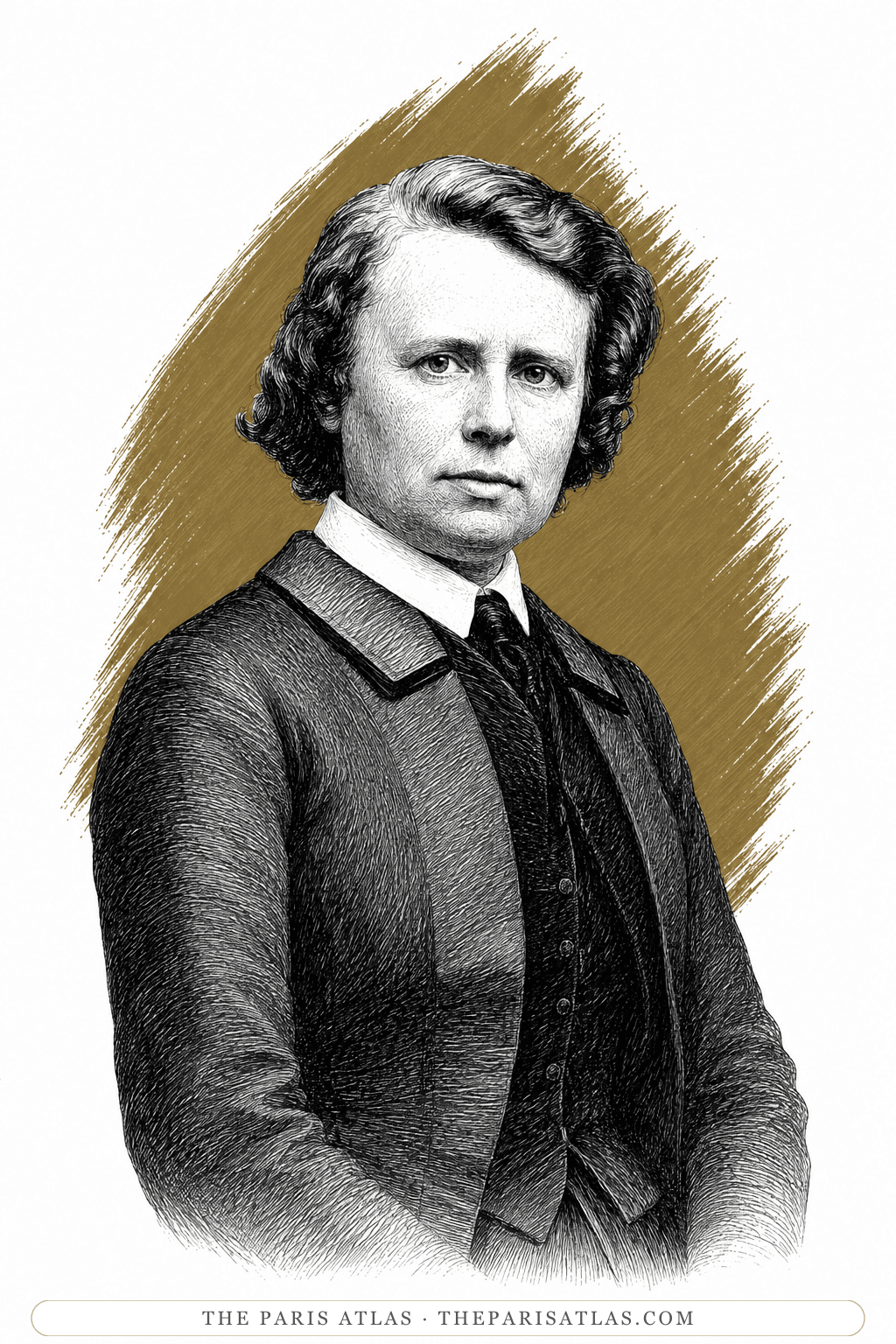
Théodore Géricault
- Painter
Met · 1815
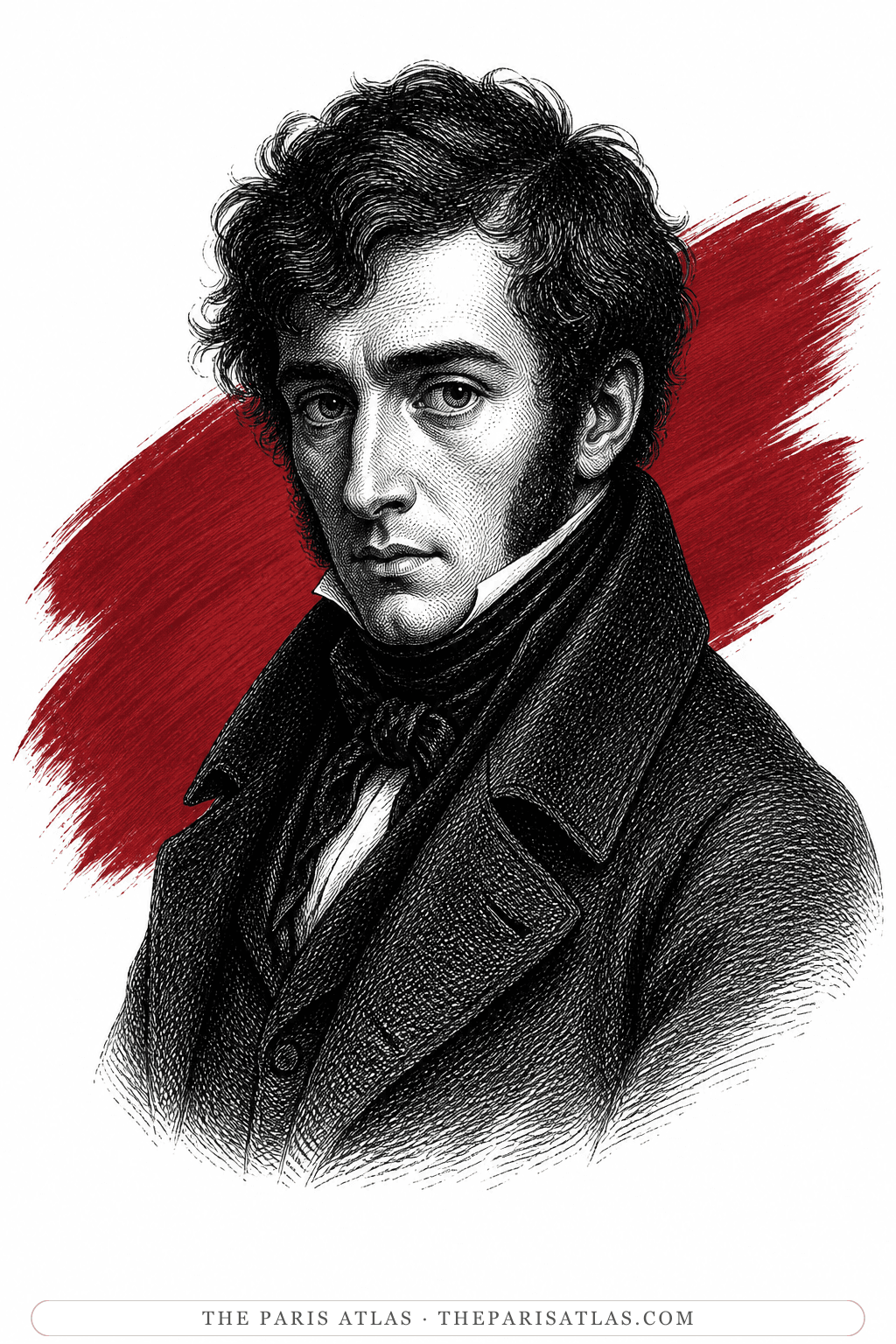
They were students together in Pierre-Narcisse Guérin's Paris studio, which Delacroix entered in 1815. Delacroix posed for one of the figures in Géricault's The Raft of the Medusa, shown at the Salon of 1819.
The leading painter of French Romanticism, who put a barricade of the 1830 revolution on the wall of the Salon — the state's official art exhibition — in Liberty Leading the People, spent twelve years on a chapel in the church of Saint-Sulpice, and died in the small apartment on the rue de Furstemberg that is now a museum.
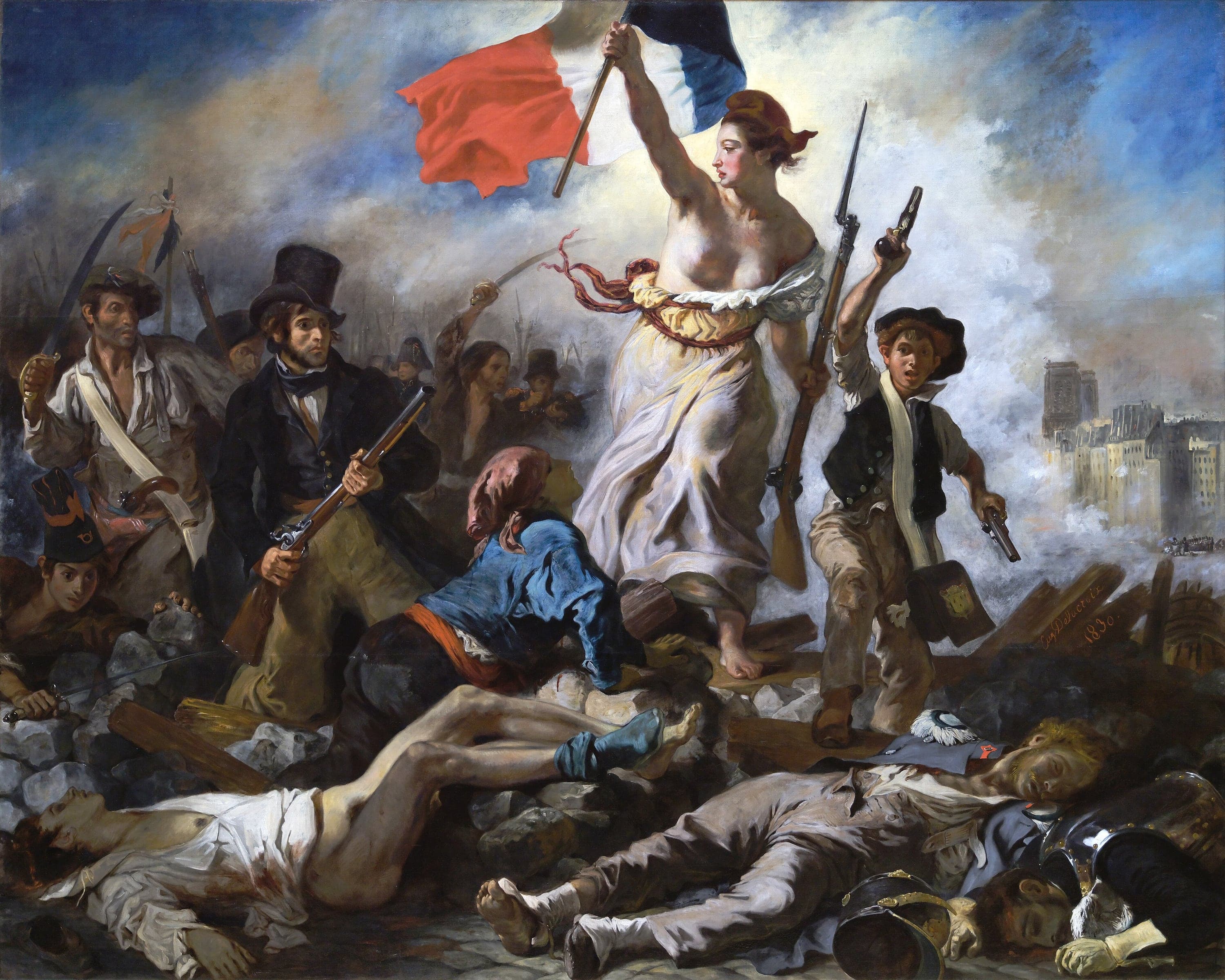
Eugène Delacroix painted the picture most people can call to mind before they can name its painter: a woman with a bare chest and a tricolour flag stepping over the dead of a Paris street. He made it in the months after the three-day uprising of July 1830, and it hangs in the Louvre today. He was the leading figure of French Romanticism, the movement that argued a painting should move a viewer through colour, motion and feeling rather than through the cool, drawn perfection the classical school demanded.
The Paris story is a story of walls. From the 1830s the French state handed Delacroix its ceilings and its libraries, and he spent the second half of his working life on them: the Palais Bourbon, the library of the Palais du Luxembourg, the Galerie d'Apollon at the Louvre, and finally a small chapel in the church on Place Saint-Sulpice that took him twelve years. In 1857 he moved house to be nearer that chapel. He died in those rooms in 1863, and they are now the Musée national Eugène-Delacroix.
Delacroix was born on 26 April 1798 at Charenton-Saint-Maurice, just outside Paris, the youngest of four children. His father, Charles Delacroix, was a politician who had served as France's minister of foreign affairs and later as ambassador to Holland; he died when Eugène was six. His mother, Victoire, was the daughter of the cabinetmaker Jean-François Oeben, whose furniture had gone to the court at Versailles. Eugène went to the Lycée Impérial, the Paris school now called the Lycée Louis-le-Grand, and made friendships there that lasted his whole life.
His mother died in 1814, when he was sixteen, and the money went with her. His uncle Henri-François Riesener, himself a painter, got him a place in 1815 in the Paris studio of Pierre-Narcisse Guérin, one of the established teachers of the day. In the same studio was a slightly older student who mattered more to him than the teacher did: Théodore Géricault, who was then building the enormous shipwreck picture that would become The Raft of the Medusa. Delacroix posed for one of its figures. He was twenty-one when the finished canvas went on show in 1819, and he had seen at close range what a young painter could do to an audience with a recent catastrophe and a very large canvas.
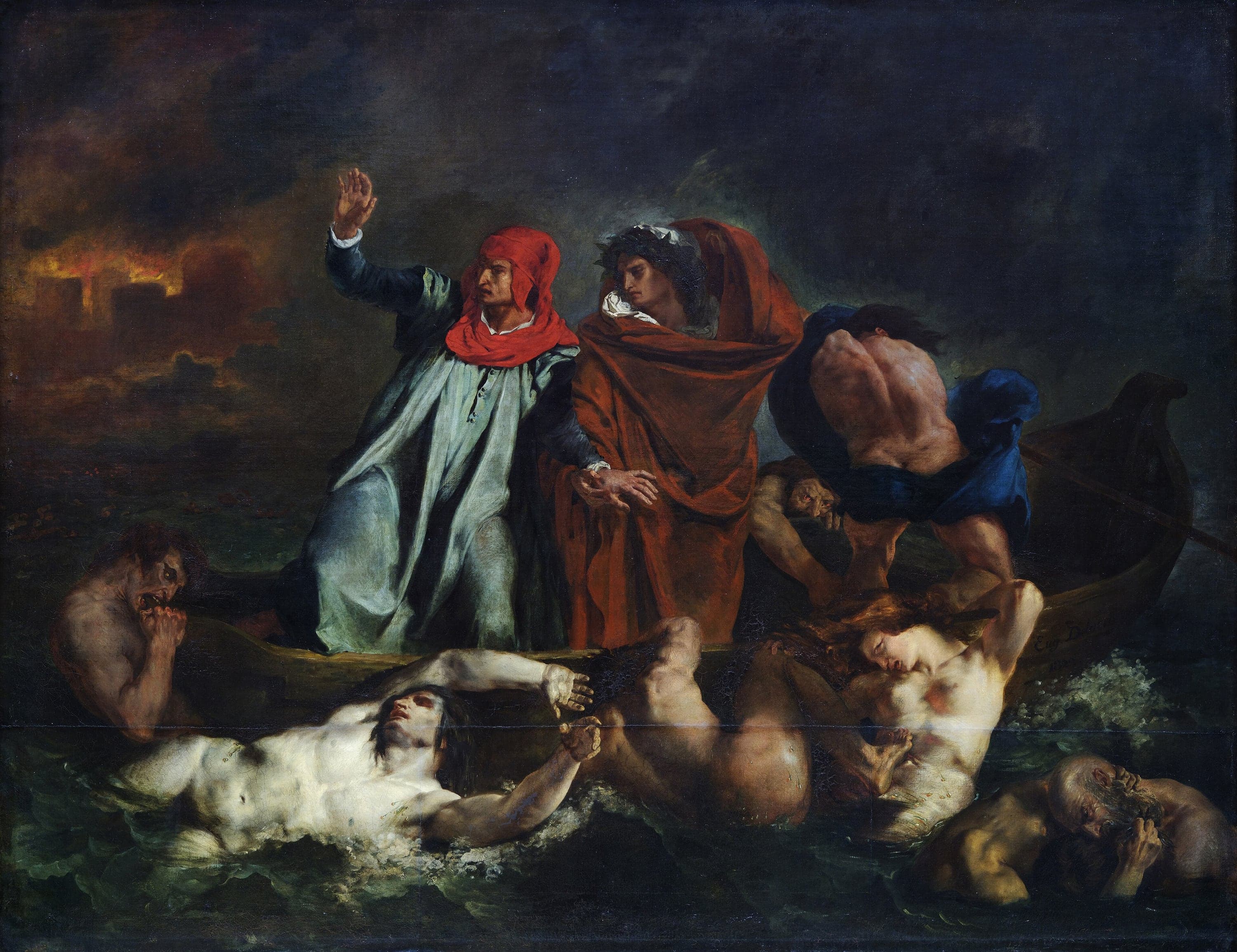
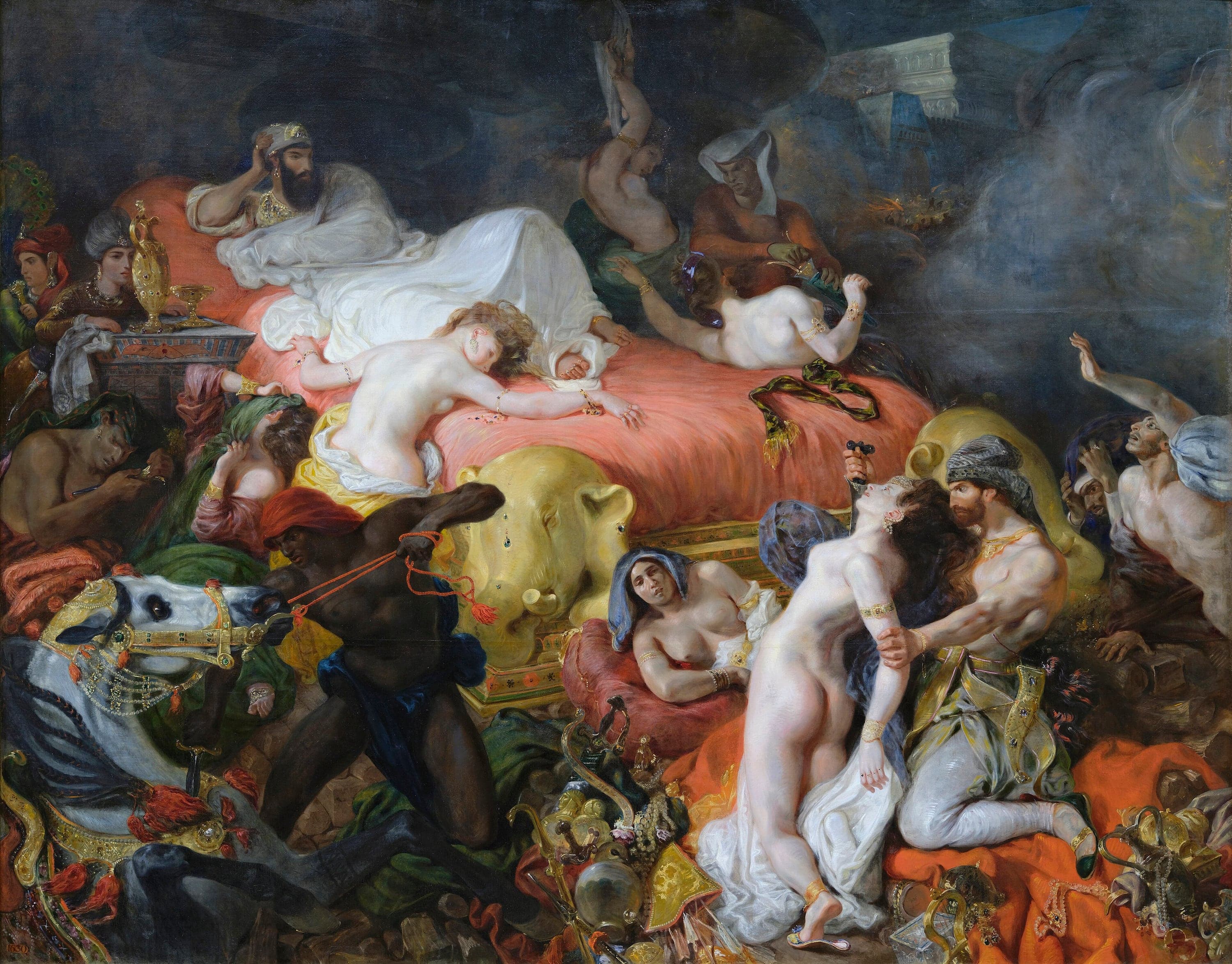
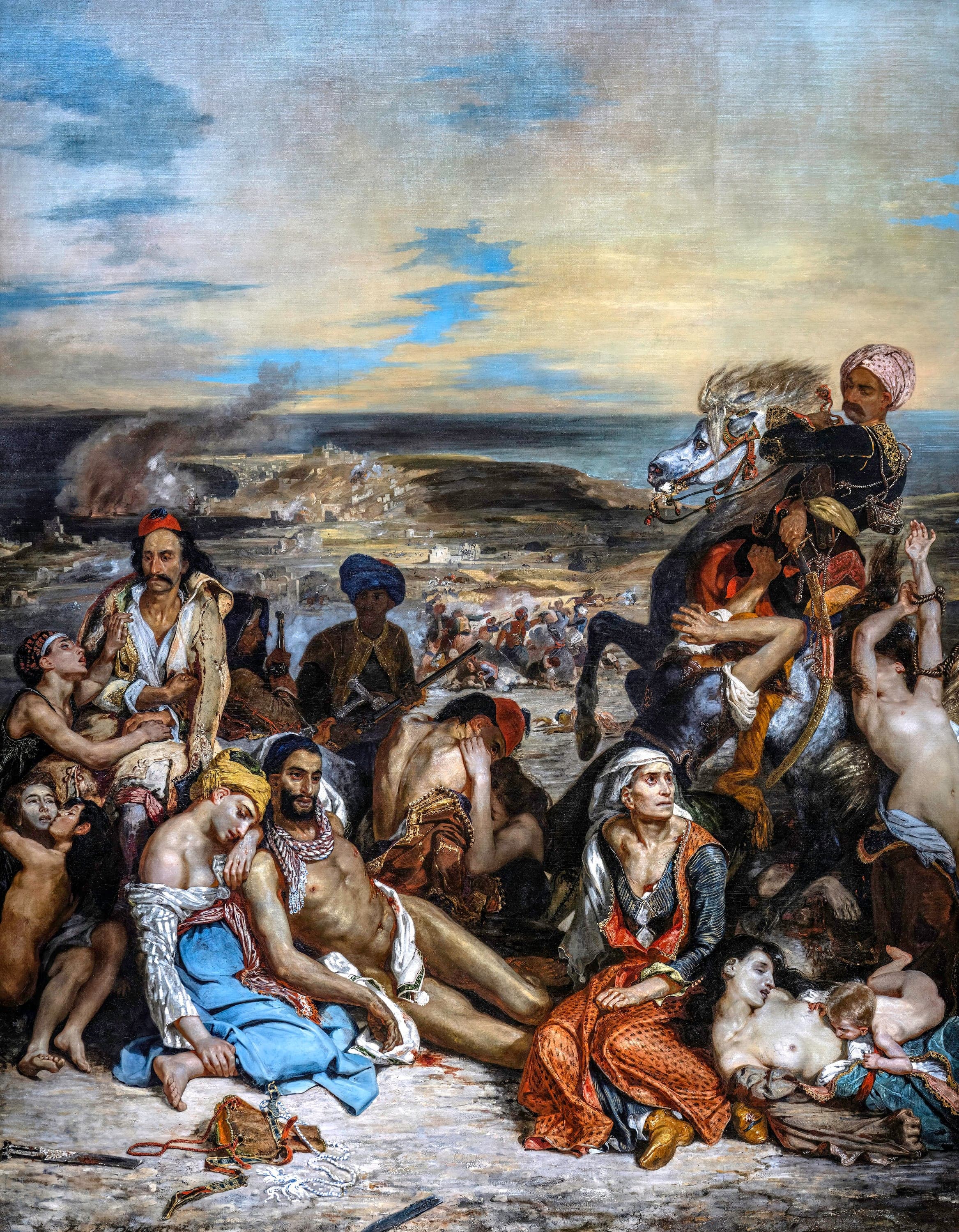
Everything in a French painter's career then ran through the Salon, the state's official exhibition in Paris, which was where reputations, government commissions and sales were made or lost. Delacroix arrived there in 1822, at twenty-four, with Dante and Virgil in Hell, also called The Barque of Dante: two poets crossing a black lake while the damned claw at the boat. The Massacre at Chios followed at the Salon of 1824, painted out of the news of the Greek war of independence, when Ottoman troops killed and enslaved the Greek population of the island of Chios. In 1827 came The Death of Sardanapalus, an Assyrian king having his women and horses killed around him as his palace falls.
These pictures made him the standard-bearer of Romanticism and gave the classical school something to aim at. The argument between the two was about what a painting was for. The classical side, whose leading figure was the painter Jean-Auguste-Dominique Ingres, held that drawing came first: a clear, firm outline, calm figures built on Greek and Roman models, everything subordinate to line. Delacroix put colour first, and with it movement, violence and the brushmark left visible. The quarrel was carried on in the press and at the Salon for thirty years, and it is the reason so much nineteenth-century writing about French painting is organised as a contest between line and colour.
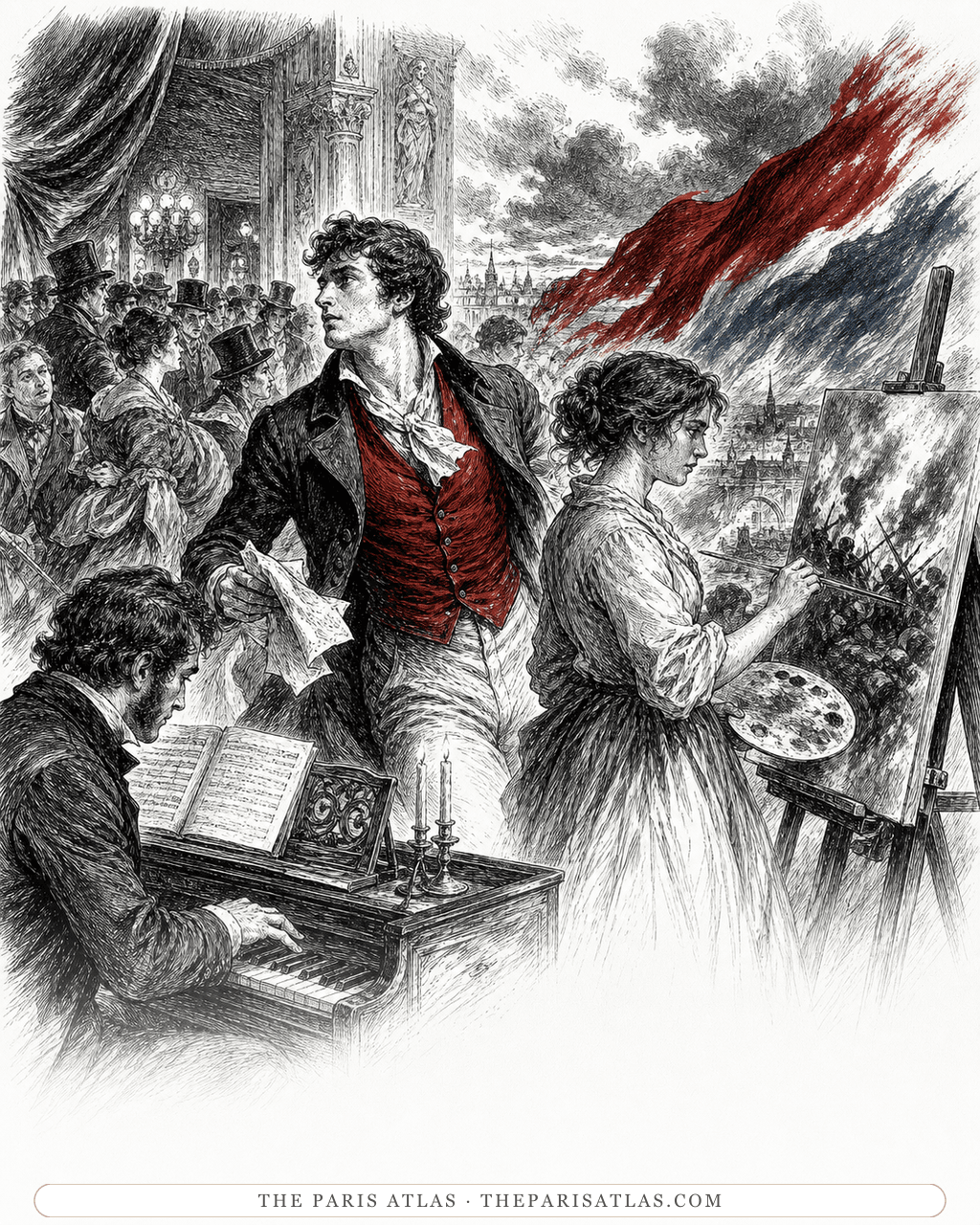
In July 1830 the government of King Charles X suspended press freedom and rewrote the voting rules, and Paris rose. The fighting lasted three days, the king lost his throne, and the French remember the episode as the Trois Glorieuses, the three glorious days. Delacroix painted it almost immediately. The Louvre, which owns the picture, describes it as showing the three-day uprising of July 1830 when Parisians took to the streets to defend their freedoms.
What he did with it was new. In the centre of the canvas he put an allegorical figure of Liberty, a woman carrying the tricolour flag over a barricade, and rather than the smooth goddess a classical painter would have supplied, the Louvre notes, he made her a sensual and vibrant woman of the people. Around her he set the men who had actually fought: a boy with two pistols, a factory worker, a man in a top hat. Real corpses lie in the foreground. It went to the Salon of 1831, and it is the single image by which most people know both the July Revolution and Delacroix.
In 1832 Delacroix joined a French diplomatic mission to Morocco led by the Comte de Mornay. He filled notebooks throughout the journey, and the trip supplied him for the rest of his life: more than seventy paintings with Moroccan subjects came out of it over the following three decades.
From the mid-1830s the French state gave him its buildings, and mural painting took over his working life. He decorated the Salon du Roi — the King's Room — at the Palais Bourbon, the seat of the lower house of parliament, from 1834, and went on to the ceiling of its library in 1837. In the mid-1840s he painted the library of the Palais du Luxembourg, where the upper house sits. In the early 1850s he was given the ceiling of the Galerie d'Apollon at the Louvre, the long gilded room built for Louis XIV. This is the part of his career least visible to visitors, because most of it is inside working government buildings, and it is the part he cared about most.
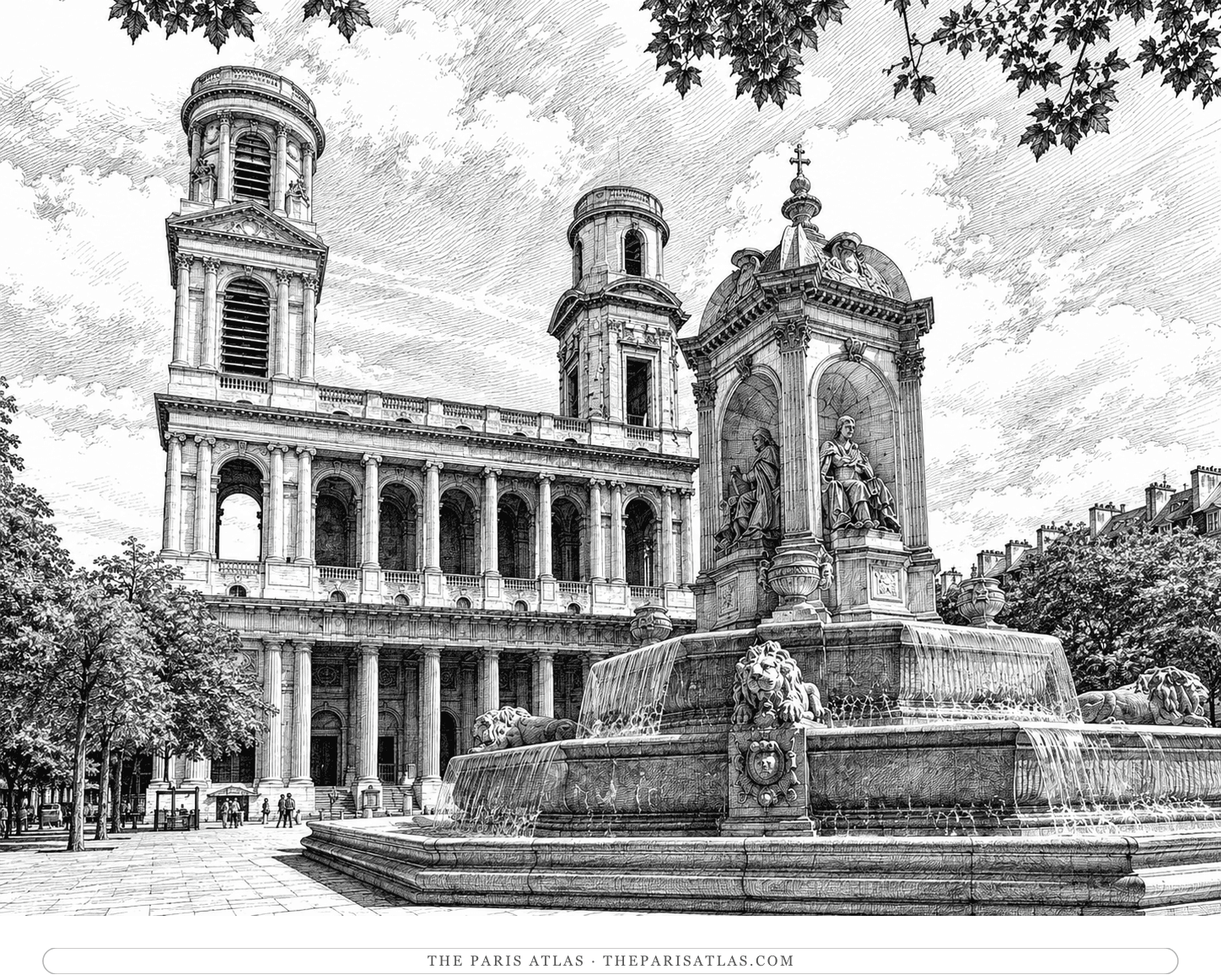
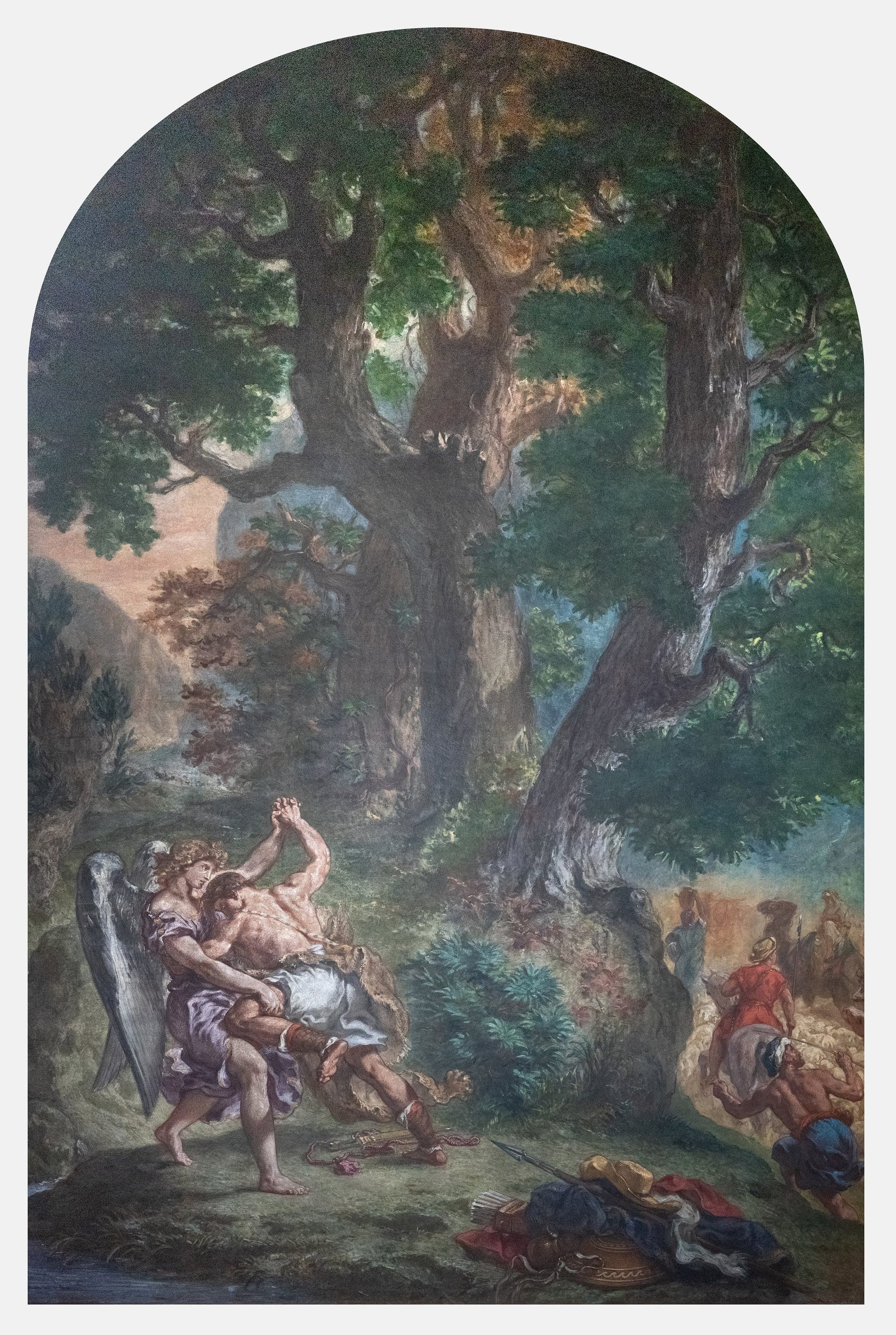
In 1847 he was commissioned to decorate a chapel in Saint-Sulpice, the enormous church on the Left Bank whose square is Place Saint-Sulpice. The commission was for the Chapelle des Saints-Anges, the chapel of the holy angels. He worked on it, with his assistant Pierre Andrieu, from 1849 until 1861. He painted Jacob Wrestling with the Angel on one wall and Heliodorus Driven from the Temple facing it, with Saint Michael Defeating the Devil overhead.
The work nearly beat him. By the mid-1850s he was tired and often ill, and the daily journey across Paris from his studio on the rue Notre-Dame-de-Lorette, in the 9th arrondissement, had become more than he could manage. On 28 December 1857 he moved to a ground-floor apartment at 6 rue de Furstemberg in Saint-Germain-des-Prés, a few minutes' walk from the church; a friend, the paint dealer and restorer Étienne Haro, found it for him. The deciding factor, according to the museum that now occupies the rooms, was the garden he would have to himself, where a studio could be built. He wrote in his journal of waking to see the most gracious sun on the houses opposite his window.
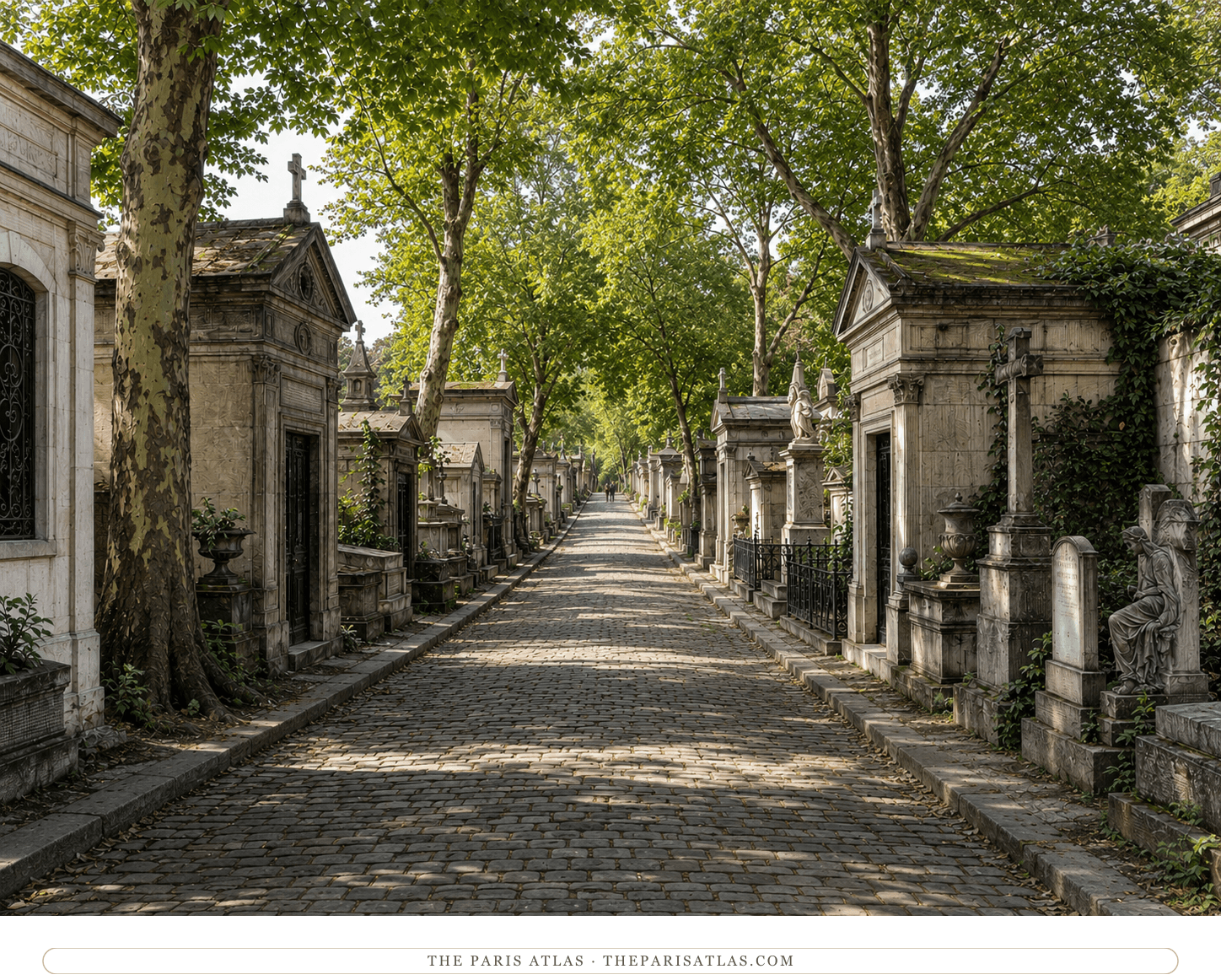
The chapel was inaugurated in August 1861. Earlier that year, on 12 January, he had written in his journal that for several months he had been doing a job that had restored the health he thought lost. The other recognition came at the same late hour: in January 1857 the Académie des Beaux-Arts, France's official body of artists, finally elected him, on his seventh attempt. He died in the rue de Furstemberg apartment on 13 August 1863, at sixty-five, and was buried at Père-Lachaise, the great cemetery in eastern Paris, in division 49.
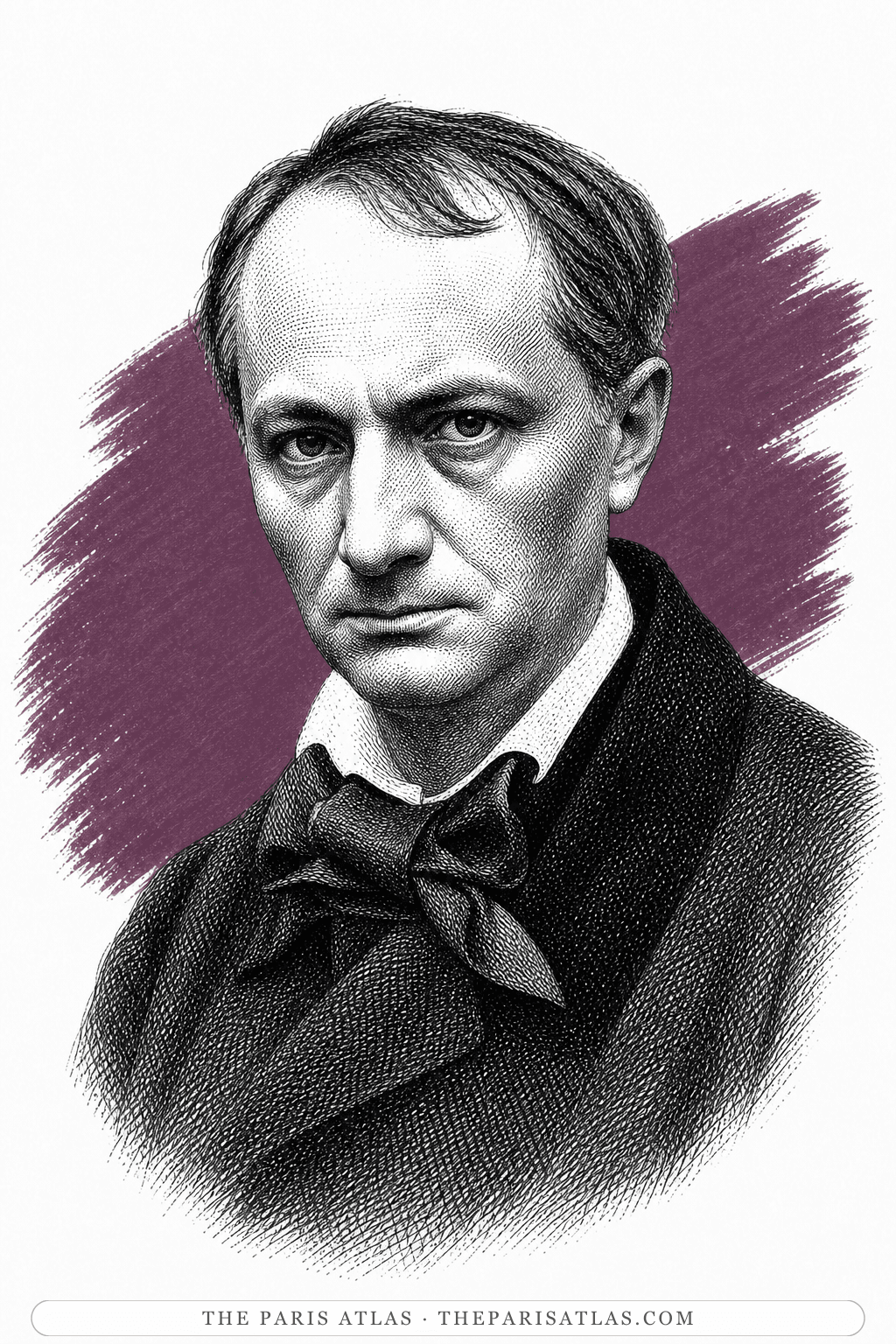
His reputation was built by writers as much as by painters, and by one writer above all. The poet Charles Baudelaire, who reviewed exhibitions for the Paris press, defended Delacroix throughout his own career as a critic, and in 1863, in the weeks after the painter's death, published a long essay called The Life and Work of Eugène Delacroix. A second posthumous document did the rest. Delacroix had kept detailed notebooks his whole life; they were found after his death and published as the Journal, which is where his own account of his working life survives.
The rooms themselves were saved by artists. In the late 1920s the apartment and garden studio were threatened with demolition, and a group of painters and collectors formed the Société des Amis d'Eugène Delacroix — a friends-of-Delacroix society — chaired by the painter Maurice Denis, to buy and keep them. They opened the place to the public in 1932 as the Atelier Delacroix. It became a national museum in 1971, was listed as a historic monument in 1991, and since 2004 has been run as part of the Louvre. It is still a small apartment off a quiet square with a garden behind it, which is exactly what it was on the day its tenant died in it.
Born on 26 April at Charenton-Saint-Maurice, outside Paris, youngest child of the politician Charles Delacroix.
Enters Pierre-Narcisse Guérin's Paris studio, a year after his mother's death, on his uncle Henri-François Riesener's arrangement.
Poses for one of the figures in Géricault's The Raft of the Medusa, shown at the Salon that year.
Salon debut at twenty-four with Dante and Virgil in Hell.
The Massacre at Chios at the Salon, painted from the news of the Greek war of independence.
The Death of Sardanapalus — the picture that fixed him as Romanticism's standard-bearer and the classical school's target.
Paints Liberty Leading the People after the three-day July uprising in Paris; it is shown at the Salon of 1831.
Travels to Morocco on a diplomatic mission with the Comte de Mornay; more than seventy Moroccan paintings follow over his lifetime.
Decorates the Salon du Roi at the Palais Bourbon, then the ceiling of its library — the start of two decades of state mural commissions.
Commissioned to decorate a chapel in the church of Saint-Sulpice.
Elected to the Académie des Beaux-Arts in January at the seventh attempt; on 28 December moves to 6 rue de Furstemberg to be near Saint-Sulpice.
The Chapelle des Saints-Anges is inaugurated in August, twelve years after he began painting it.
Dies at the rue de Furstemberg apartment on 13 August; buried at Père-Lachaise in division 49. Baudelaire publishes The Life and Work of Eugène Delacroix.
The apartment and garden studio, saved from demolition by the Société des Amis d'Eugène Delacroix under Maurice Denis, open as the Atelier Delacroix.
Met · 1815
They were students together in Pierre-Narcisse Guérin's Paris studio, which Delacroix entered in 1815. Delacroix posed for one of the figures in Géricault's The Raft of the Medusa, shown at the Salon of 1819.
The Musée national Eugène-Delacroix records Géricault's influence on the younger painter as significant. Delacroix modelled for The Raft of the Medusa at twenty-one and carried its argument — recent catastrophe painted at monumental scale — into The Massacre at Chios and Liberty Leading the People.
Baudelaire defended Delacroix throughout his working life as an art critic and, in the weeks after the painter's death in 1863, published the memorial essay L'Œuvre et la vie d'Eugène Delacroix — the founding text of Delacroix's reputation as the great modern painter of the century.

Buried in division 49 after his death on 13 August 1863 at his apartment on the rue de Furstemberg.
Visit the place
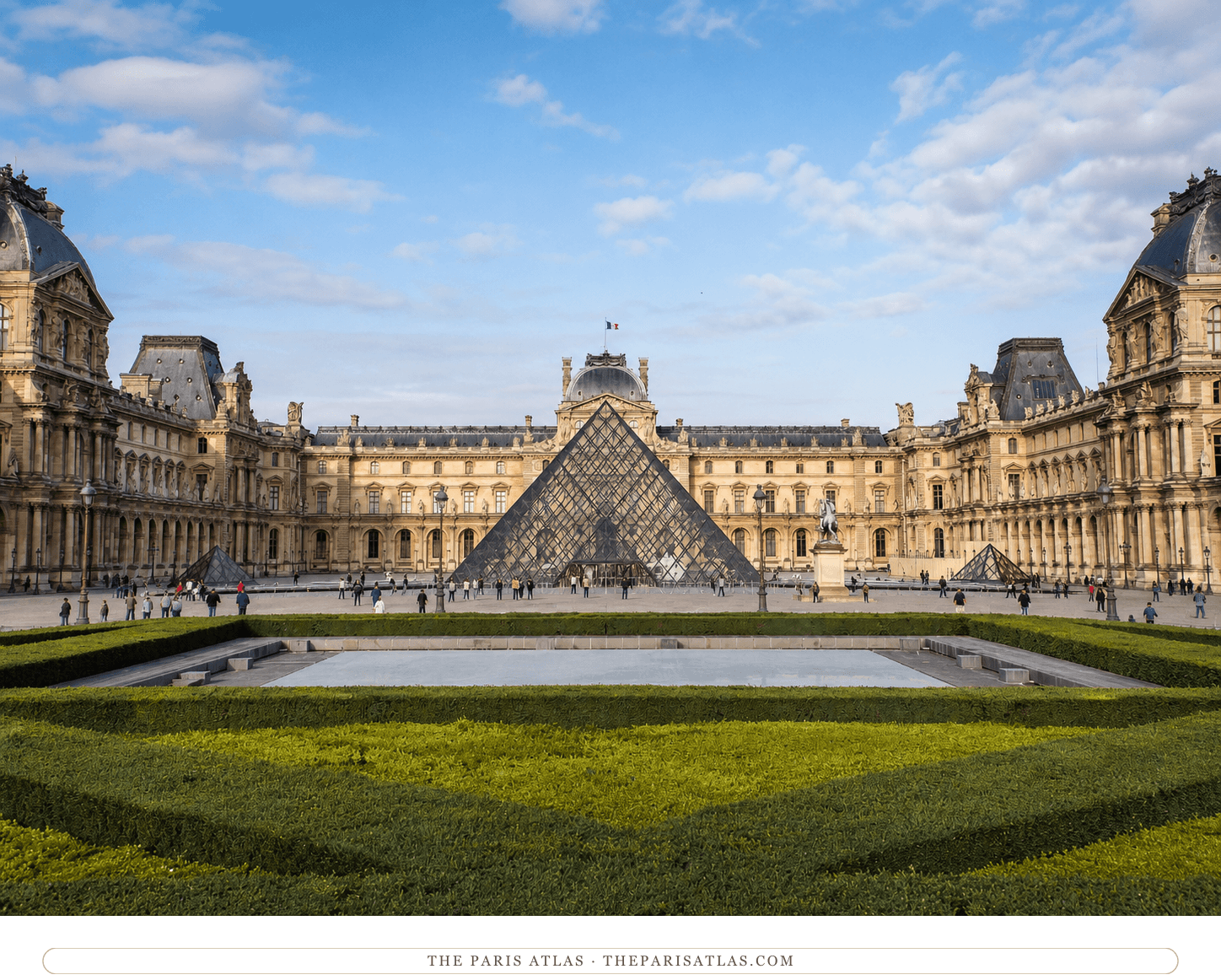
In the early 1850s Delacroix painted the ceiling of the Galerie d'Apollon, the long gilded room built for Louis XIV — one of the state mural commissions that occupied the second half of his career. Liberty Leading the People hangs in the same building.
Visit the place
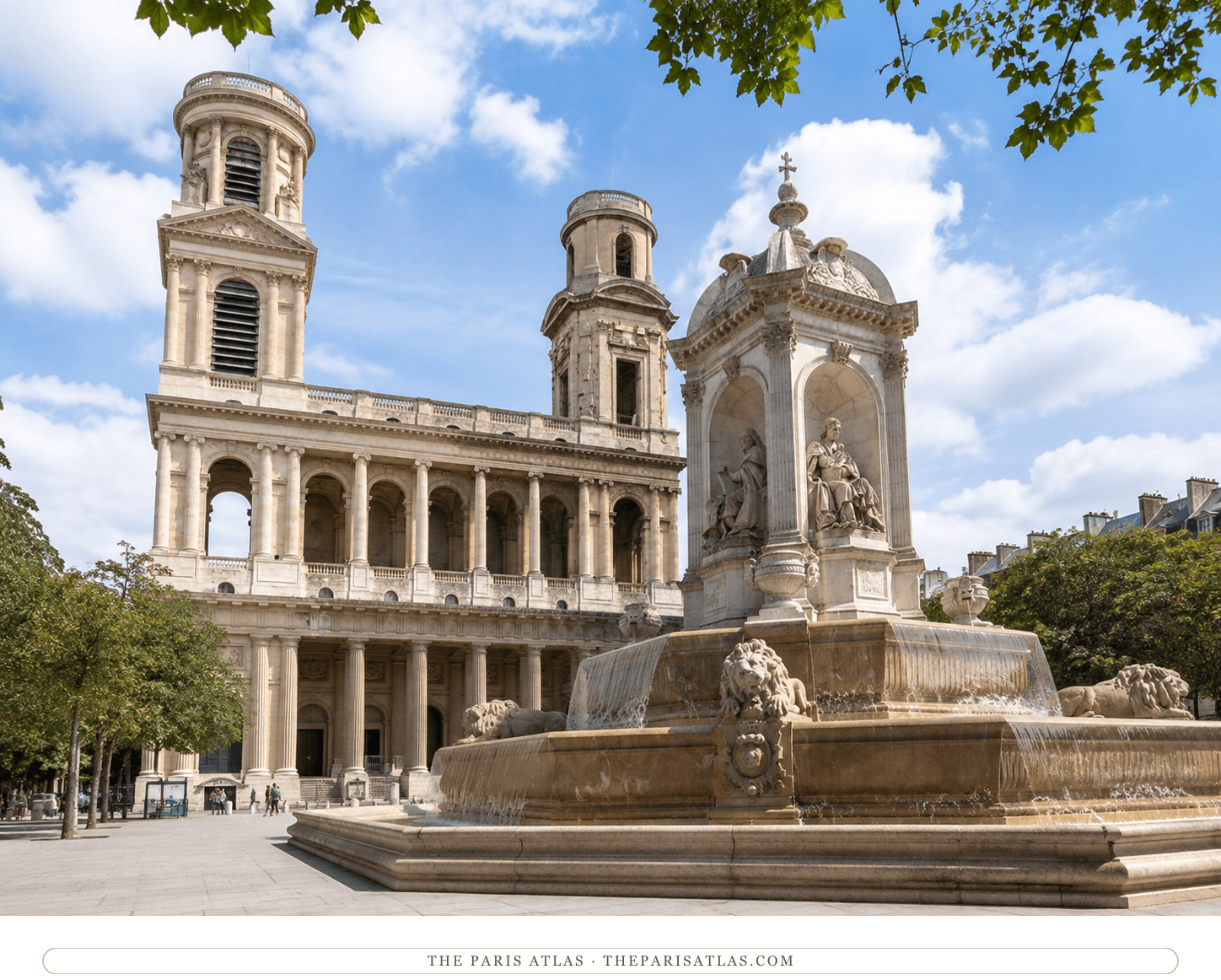
The murals in the Chapelle des Saints-Anges, inside the church that gives the square its name: Jacob Wrestling with the Angel, Heliodorus Driven from the Temple, and Saint Michael Defeating the Devil on the ceiling. Commissioned in 1847, painted with his assistant Pierre Andrieu, and inaugurated in August 1861.
Visit the placeThe July Revolution of 1830 in Paris. King Charles X suspended press freedom and changed the voting rules, Parisians fought in the streets for three days, and the king lost his throne. Delacroix painted the scene immediately: an allegorical figure of Liberty carrying the French tricolour over a barricade, surrounded by the ordinary Parisians who did the fighting, with the dead in the foreground. It was shown at the Salon of 1831 and hangs in the Louvre.
Because he led the side of an argument that split French painting for thirty years. The classical school, whose leading painter was Jean-Auguste-Dominique Ingres, held that a picture is built on drawing — firm outlines, calm figures, models taken from Greek and Roman art. Delacroix built pictures on colour, movement and visible brushwork, and chose subjects that were violent, exotic, literary or ripped from recent news. That preference for feeling and colour over line is what Romanticism meant in painting.
Yes. He moved to a ground-floor apartment at 6 rue de Furstemberg, in Saint-Germain-des-Prés, on 28 December 1857, and built a studio in the garden behind it. He died there on 13 August 1863. Artists and collectors saved the rooms from demolition in the late 1920s and opened them to the public in 1932; the place became a national museum in 1971 and has been run as part of the Louvre since 2004.
Four main sites. The Chapelle des Saints-Anges in the church of Saint-Sulpice, painted from 1849 to 1861 and open to anyone who walks in. The ceiling of the Galerie d'Apollon at the Louvre, from the early 1850s. And two parliamentary buildings that are far harder to see: the Salon du Roi and library at the Palais Bourbon, and the library of the Palais du Luxembourg.
Three works in one small chapel. Jacob Wrestling with the Angel on one wall, Heliodorus Driven from the Temple facing it, and Saint Michael Defeating the Devil on the ceiling. He worked on them with his assistant Pierre Andrieu from 1849, moved house in 1857 to shorten the journey, and saw the chapel inaugurated in August 1861. He called the work, in his journal, a job that had restored the health he thought lost.
The poet Charles Baudelaire was his most important champion. Baudelaire wrote art criticism for the Paris press throughout his career and defended Delacroix in it, and in 1863, in the weeks after the painter's death, published a long memorial essay, The Life and Work of Eugène Delacroix. It is the founding text of Delacroix's reputation as the great modern painter of his century.
Yes. He was a student in Pierre-Narcisse Guérin's studio alongside Théodore Géricault, who was then at work on the huge canvas of shipwreck survivors, and he modelled for one of its figures. The painting was shown at the Salon of 1819, when Delacroix was twenty-one, three years before his own Salon debut.
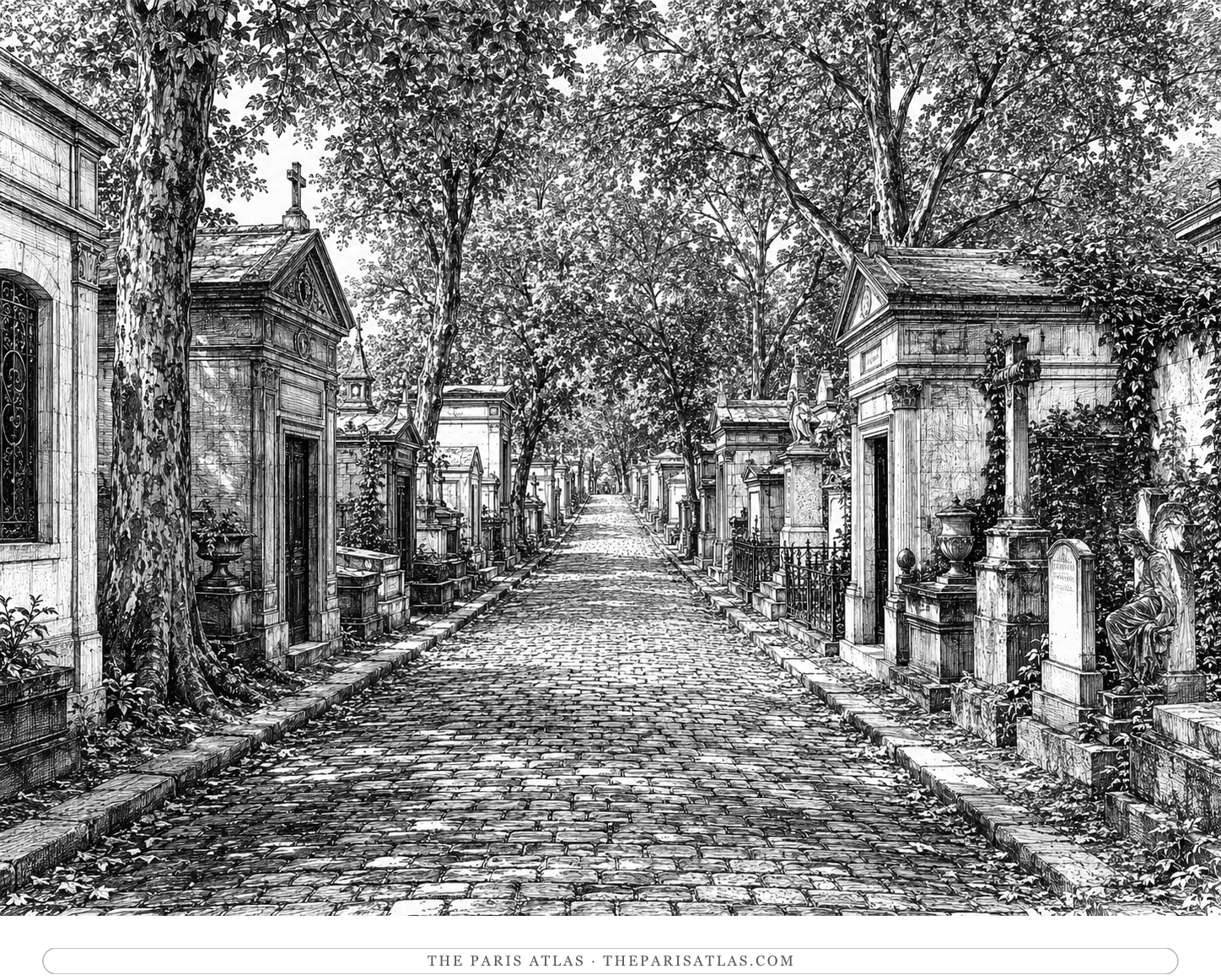
At Père-Lachaise cemetery in eastern Paris, in division 49. He died on 13 August 1863 at his apartment on the rue de Furstemberg, which is now the Musée national Eugène-Delacroix.
Buried at · 1863
Buried in division 49 after his death on 13 August 1863 at his apartment on the rue de Furstemberg.
Influenced
Baudelaire defended Delacroix throughout his working life as an art critic and, in the weeks after the painter's death in 1863, published the memorial essay L'Œuvre et la vie d'Eugène Delacroix — the founding text of Delacroix's reputation as the great modern painter of the century.
Met · 1815
They were students together in Pierre-Narcisse Guérin's Paris studio, which Delacroix entered in 1815. Delacroix posed for one of the figures in Géricault's The Raft of the Medusa, shown at the Salon of 1819.
Worked at · 1850
In the early 1850s Delacroix painted the ceiling of the Galerie d'Apollon, the long gilded room built for Louis XIV — one of the state mural commissions that occupied the second half of his career. Liberty Leading the People hangs in the same building.
Worked at · 1849–1861
The murals in the Chapelle des Saints-Anges, inside the church that gives the square its name: Jacob Wrestling with the Angel, Heliodorus Driven from the Temple, and Saint Michael Defeating the Devil on the ceiling. Commissioned in 1847, painted with his assistant Pierre Andrieu, and inaugurated in August 1861.
Influenced by · 1819
The Musée national Eugène-Delacroix records Géricault's influence on the younger painter as significant. Delacroix modelled for The Raft of the Medusa at twenty-one and carried its argument — recent catastrophe painted at monumental scale — into The Massacre at Chios and Liberty Leading the People.
The sources below include biographies, scholarly essays, interviews, and primary materials that informed this page. They reflect both the historical record and ongoing critical conversations about Eugène Delacroix and their work.

The museum's own life chronology, in the artist's last apartment.
How the rue de Furstemberg rooms were found, lived in, and turned into a museum.
The Saints-Anges chapel murals and the journal entries written while painting them.
The Louvre's Romanticism trail, which covers Liberty Leading the People alongside Géricault's Raft.
Baudelaire's memorial essay, the founding text of Delacroix's critical reputation.
Locates the grave at Père-Lachaise, division 49.
These references anchor the page in the documented record and in the scholarly conversations around Eugène Delacroix. Every claim on this page traces back to one or more of the works listed here.