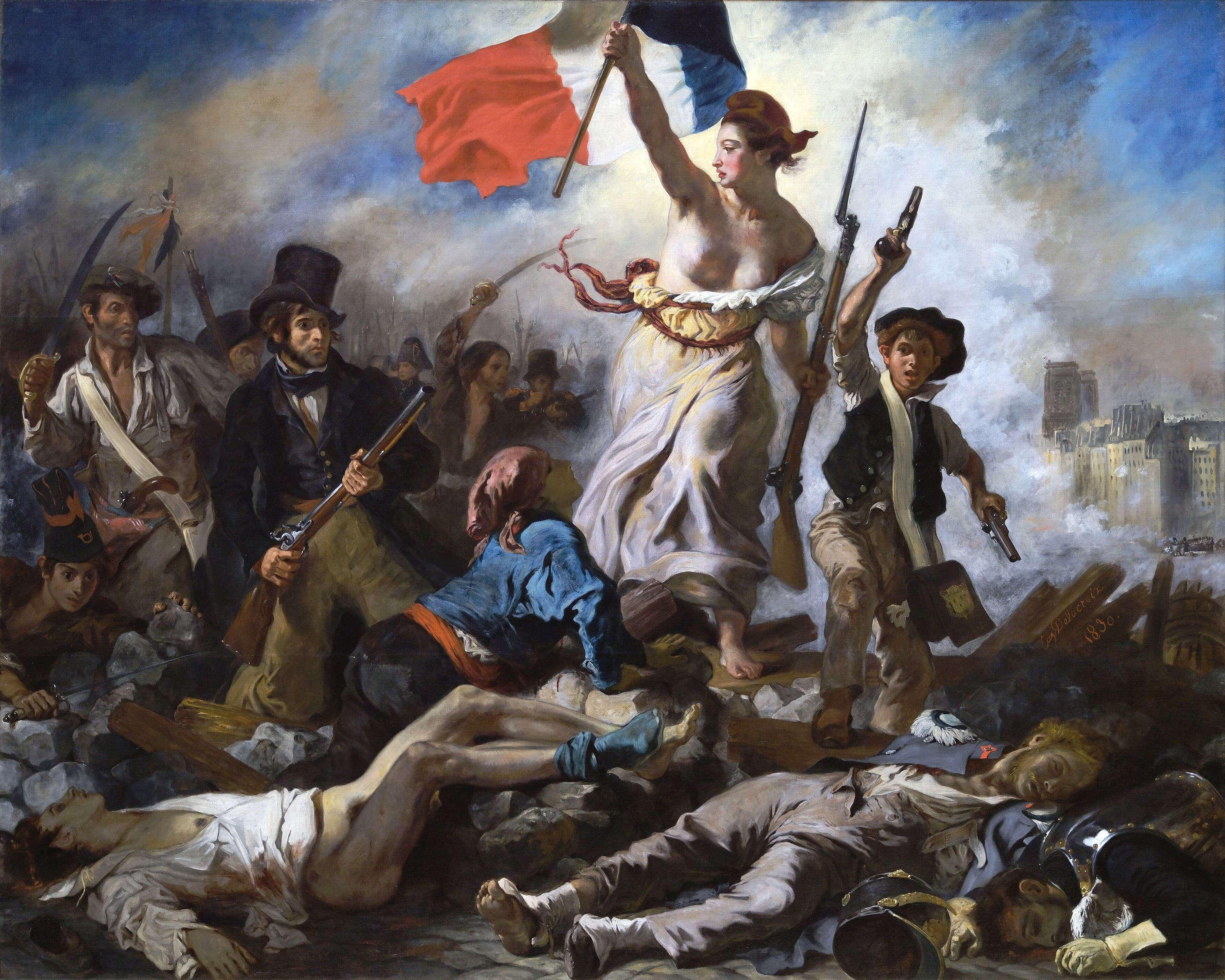
Liberty Leading the People
A woman climbs a barricade of paving stones and bodies, the French tricolour in one hand and a bayoneted musket in the other. Eugène Delacroix painted it between September and December 1830, two months after the street fighting in Paris that removed Charles X from the throne. The French state bought it at the Salon of 1831 for 3,000 francs, then kept it out of public view for most of the next forty years. A cleaning finished in April 2024 took off eight layers of varnish and showed that her dress is light grey shot with gold, not the yellow it had looked for decades.
- 1830
- Oil on canvas
About Eugène Delacroix
What the painting shows
A woman strides up a heap of paving stones and dead bodies. She is barefoot, her dress has fallen from her shoulders, and she wears a Phrygian cap — the soft red cap that had stood for liberty since the Revolution of 1789. In her raised right hand is the French tricolour; in her left, a musket with a bayonet fixed. She is not a portrait of anyone. She is Liberty herself, painted as a real woman on a real barricade, which is what made the picture difficult for the government that bought it.
Fighters come up around her. A boy carries a pistol in each hand and wears a velvet beret; the 2024 cleaning established that he is running in front of her rather than alongside. A man in a top hat and a black coat holds a hunting gun — his clothes place him in the middle class. A worker in a white shirt kneels at her feet with a sabre and a red waist sash. Two dead soldiers lie across the foreground, one stripped to his shirt. Delacroix put the fighting in the smoke at the right, where the towers of Notre-Dame rise above the rooftops with a small tricolour flying from one of them.
The canvas is 260 by 325 centimetres — roughly eight and a half feet by ten and a half. The figures in front are life size, so a visitor standing at the Louvre's hanging height meets the dead soldier at eye level before anything else.
The three days it records
The Louvre's full title for the painting is Le 28 juillet 1830. La Liberté guidant le peuple — the 28th of July 1830, Liberty leading the people. That date is the middle day of three. On 26 July 1830 Charles X issued ordinances dissolving the newly elected chamber and cutting press freedom. Printers and journalists protested the next day, barricades went up across central Paris on the 27th, and by the evening of the 29th the crowd held the Tuileries and the Louvre. Charles X abdicated and left for England, and Louis-Philippe took the throne as a constitutional monarch.
Delacroix was thirty-two and did not fight. He painted the picture afterwards, in his studio on the Quai Voltaire, working from September to December 1830.
The Salon of 1831 and the state's 3,000 francs
The painting was first put forward in January 1831 for an exhibition raising money for people wounded in the fighting, listed in that catalogue simply as Une Barricade — a barricade. That showing did not happen. The Salon jury admitted it on 13 April 1831, and it hung at the Louvre from 1 May to 15 August that year under the title that names the date.
In August 1831 the government bought it for 3,000 francs through the Ministry of Commerce and Public Works. The purchase replaced a commission that had been cancelled: a picture of Louis-Philippe visiting the cottage where he had lodged near Valmy. The state had bought a painting of the revolution that had just put the king on the throne, which is a straightforward political decision, and then had to decide where to put it.
Forty years mostly in storage
It hung at the Musée du Luxembourg in 1832 and 1833, then went into reserve. Around 1839 Delacroix took it back and left it with his aunt Félicité Riesener at Frépillon, outside Paris. The director of the national museums reclaimed it in March 1848, after another revolution had removed Louis-Philippe; Delacroix asked to be paid more for it and was refused.
From May 1848 to March 1849 it was lent to the painter Alphonse Jame for an exhibition in Lyon. It sat in Louvre storage from 1850 to 1855, came out for the Universal Exposition of 1855, and went back into storage until 1863. It hung at the Luxembourg again from 1863 to 1874, and moved to the Louvre permanently in November 1874. It was formally inventoried there in 1875.
Both world wars moved it out of Paris. It went to the Jacobins convent at Toulouse from 1914 to 1918, to the château de Chambord in 1939, to the château de Sourches on 29 September 1943, and back to the Louvre on 16 June 1945.
The 2024 cleaning
Bénédicte Trémolières and Laurence Mugniot cleaned the painting and worked on its paint layer between October 2023 and April 2024. It was the first such treatment since 1949, when Raymond Lepage and Paul Maridat relined the canvas and Georges Zezzos thinned the varnish and retouched the surface. Lucien Aubert had cleaned it in 1920, and David Cueco and Claire Bergeaud replaced the stretcher in early 1999.
Eight layers of varnish had gone on over two centuries, and taking them off changed what visitors see. Liberty's dress turns out to be light grey with gold in it rather than the flat yellow it had appeared; the Louvre attributes the yellow to a deliberate change made during the 1949 work. A worn boot in the bottom left corner, hidden under darkened paving stones, came back. A brown mark on the dress was found not to be Delacroix's. Sébastien Allard, who directs the paintings department, put the general problem this way: "The whites, the shadows — all of this ended up melting together under these yellowish layers. We're the first generation to rediscover the color." The painting went back on view in the Salle Mollien on 2 May 2024.
The painting hangs in the Salle Mollien, room 700 of the Denon wing, where it has been since December 1995. It was in the same room from 1949 to 1969, and in the Salle Daru in between.
Close reading
Reading the work, detail by detail
The picture is built to be read from the bottom up. Delacroix puts the dead in the foreground at the viewer's eye level, the living fighters behind them, and Liberty above both. Working across it in close view shows how carefully the classes of the crowd are separated by clothing, and how much of the actual fighting he pushed into the smoke on the right.
1.A Phrygian cap, not a crown
She looks back over her shoulder rather than forward, which is what turns her from a symbol into someone leading. The soft red cap folding over at the point had meant liberty in France since 1789. It is the one piece of costume in the painting that is not ordinary street clothing.
2.The flag carries the whole top of the canvas
Red, white and blue are spread across the brightest part of the sky, and the same three colours are then scattered down through the crowd — in the kneeling man's sash, the boy's shirt, the cockades on the hats. The flag is the only pure colour in a picture otherwise painted in browns and greys.
3.A boy with a pistol in each hand
He is running ahead of Liberty rather than beside her, which the 2024 cleaning established. Both pistols are bigger than his hands. The satchel slung at his hip is a cartridge box taken from a soldier, so he is armed entirely with what has been picked up off the street.
4.The top hat places him in the middle class
The clothes are the argument. A tall hat, a good coat and a cravat put this man well above the worker beside him, and the gun in his hands is a sporting piece rather than a military musket. Delacroix is showing a rising that crossed the classes rather than one made by the poor alone.
5.The wounded man looking up at her
He is on the paving stones at her feet, holding himself up on one arm, and he is the only figure looking directly at her. The pink cloth tied round his head and the red sash at his waist mark him as a worker. Delacroix gives him the position a kneeling worshipper would occupy in a religious painting.
6.A dead man stripped below the waist
At the Louvre's hanging height this body is roughly at the viewer's eye level, so it is the first thing met on walking up. He has been stripped of his trousers and one shoe, which is what happened to the dead on a barricade. Nothing about him is heroic and nothing is tidied away.
7.Notre-Dame with a flag on the tower
The towers place the fighting on the Île de la Cité and the streets by the river. A small tricolour flies from the left tower, so the cathedral has already been taken by the time the picture shows. It is the only thing in the painting that fixes the scene to a real address.
Timeline
1830
Painted between September and December in Delacroix's studio on the Quai Voltaire, two months after the July Revolution of 27–29 July.
1831
Proposed in January for a benefit exhibition for the wounded, catalogued as Une Barricade. Admitted by the Salon jury on 13 April and shown at the Louvre from 1 May to 15 August.
1831
Bought by the State in August for 3,000 francs through the Ministry of Commerce and Public Works, replacing a cancelled Louis-Philippe commission.
1832–33
Exhibited at the Musée du Luxembourg, then placed in reserve.
1839
Taken back by Delacroix and left with his aunt Félicité Riesener at Frépillon.
1848
Reclaimed in March by the director of the national museums. Delacroix's request for further payment is refused.
1855
Shown at the Universal Exposition in Paris, between two spells in Louvre storage.
1874
Moved permanently to the Louvre in November; first inventoried there in 1875 as RF 129.
1914–18
Stored at the Jacobins convent in Toulouse for the First World War.
1939–45
Moved to the château de Chambord, then to the château de Sourches on 29 September 1943; returns to the Louvre on 16 June 1945.
2023–24
Cleaned by Bénédicte Trémolières and Laurence Mugniot between October and April — the first treatment of the paint layer since 1949. Eight layers of varnish come off; Liberty's dress proves to be light grey with gold rather than yellow. Back on view in the Salle Mollien on 2 May 2024.
Where to see it
Musée du Louvre, département des Peintures
A public viewing address has not yet been confirmed for this holding.
Frequently asked questions
Where is Liberty Leading the People?
The Musée du Louvre in Paris, in the Salle Mollien — room 700 of the Denon wing, on level 1, with the Romantic painters. Its inventory number is RF 129. It has hung in that room since December 1995.
What event does Liberty Leading the People show?
The July Revolution of 1830, and specifically 28 July, the middle of three days of street fighting in Paris. Charles X had dissolved the chamber and restricted the press on 26 July; barricades went up on the 27th, the crowd took the Tuileries and the Louvre by the 29th, and Charles X abdicated. Louis-Philippe replaced him.
Who is the woman in Liberty Leading the People?
She is not a real person. She is Liberty personified, identified by the Phrygian cap she wears — the soft red cap that had signified liberty in France since 1789 — and by the tricolour she carries. Delacroix painted her with the bare feet and dirt of someone actually on a barricade rather than as a classical goddess, which is part of why the picture unsettled its buyers.
How big is Liberty Leading the People?
260 by 325 centimetres, or about eight and a half feet by ten and a half. The figures in the foreground are life size.
Why was Liberty Leading the People kept in storage?
The state bought it in 1831 and showed it at the Luxembourg in 1832 and 1833, then put it in reserve. A painting that celebrated a successful uprising was awkward for a government that had come out of one and did not want another. Delacroix took it back around 1839 and stored it with his aunt at Frépillon; it spent most of the period to 1874 in reserve, on loan, or briefly out for the 1855 Universal Exposition.
When was Liberty Leading the People last restored?
Between October 2023 and April 2024, when Bénédicte Trémolières and Laurence Mugniot cleaned it and worked on the paint layer. They removed eight layers of varnish laid on over two centuries. The cleaning changed two things people thought they knew: Liberty's dress is light grey with gold in it, not yellow, and the boy with the pistols runs in front of her rather than beside her. Before 2024 the main interventions were a cleaning by Lucien Aubert in 1920, a relining and surface treatment in 1949, and a new stretcher in 1999.
Is Notre-Dame in Liberty Leading the People?
Yes. The towers of Notre-Dame stand in the smoke on the right-hand side of the canvas, with a small tricolour flying from one of them. It places the fighting on the Île de la Cité and in the streets on the Right Bank near the river.
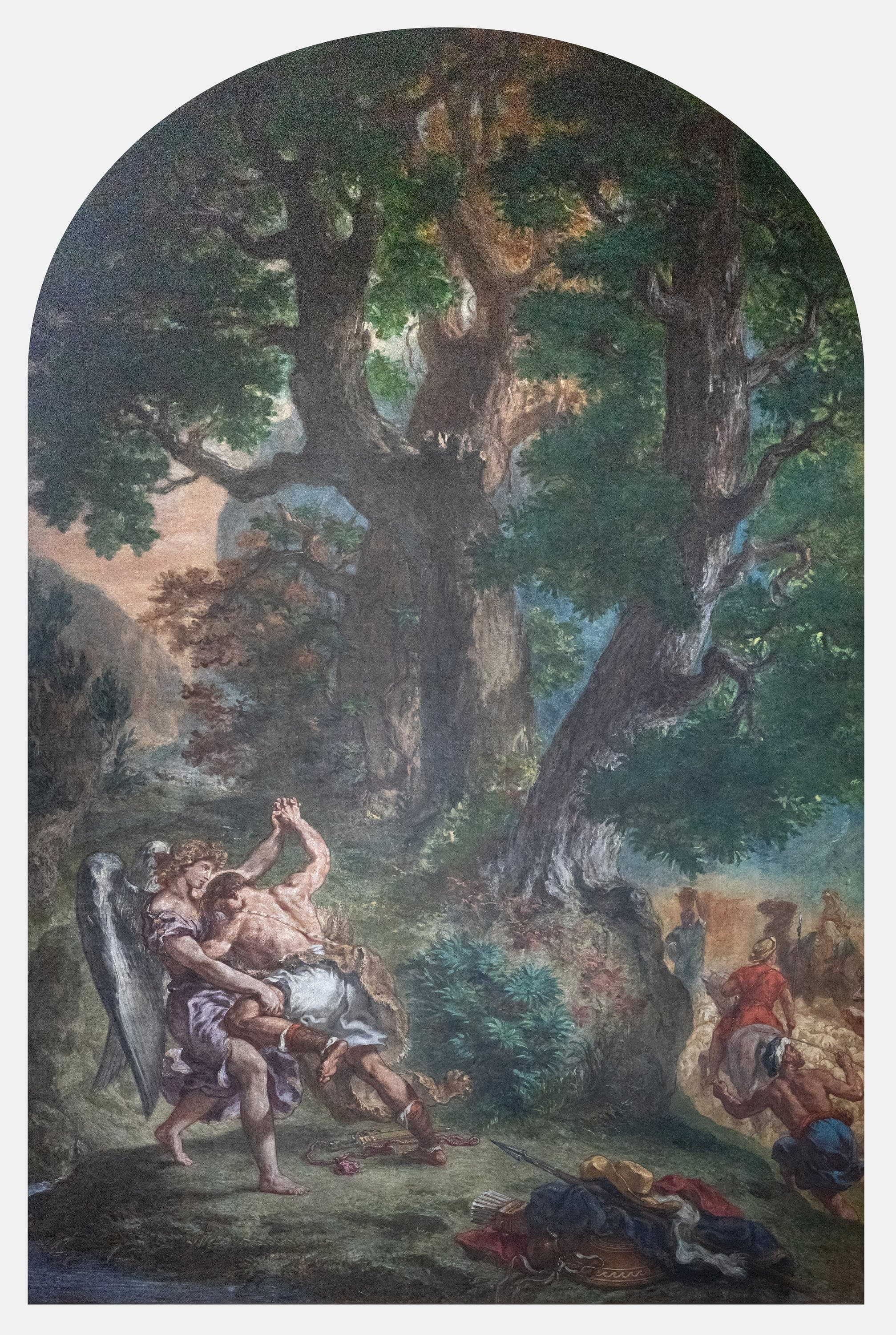
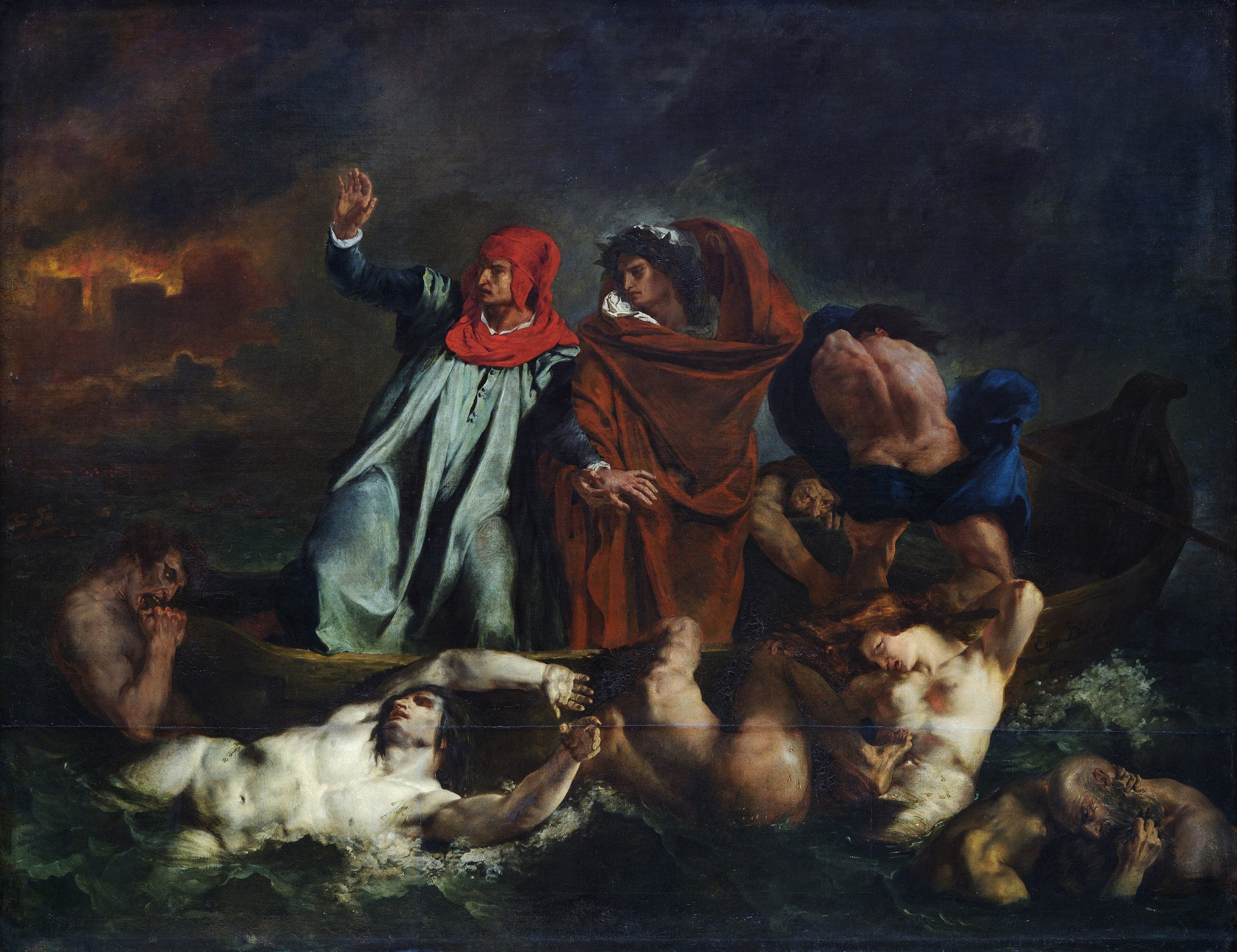
More by Eugène Delacroix
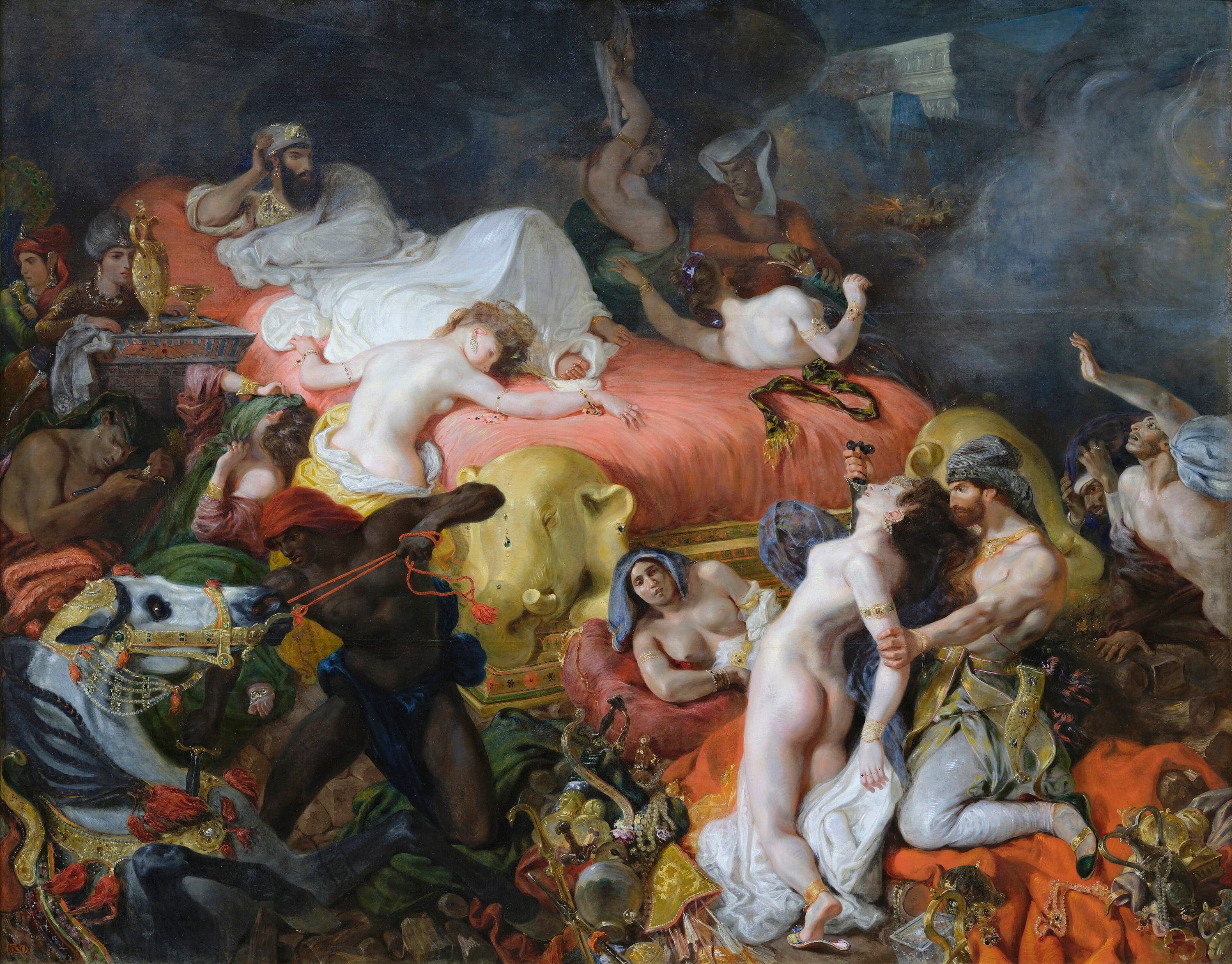
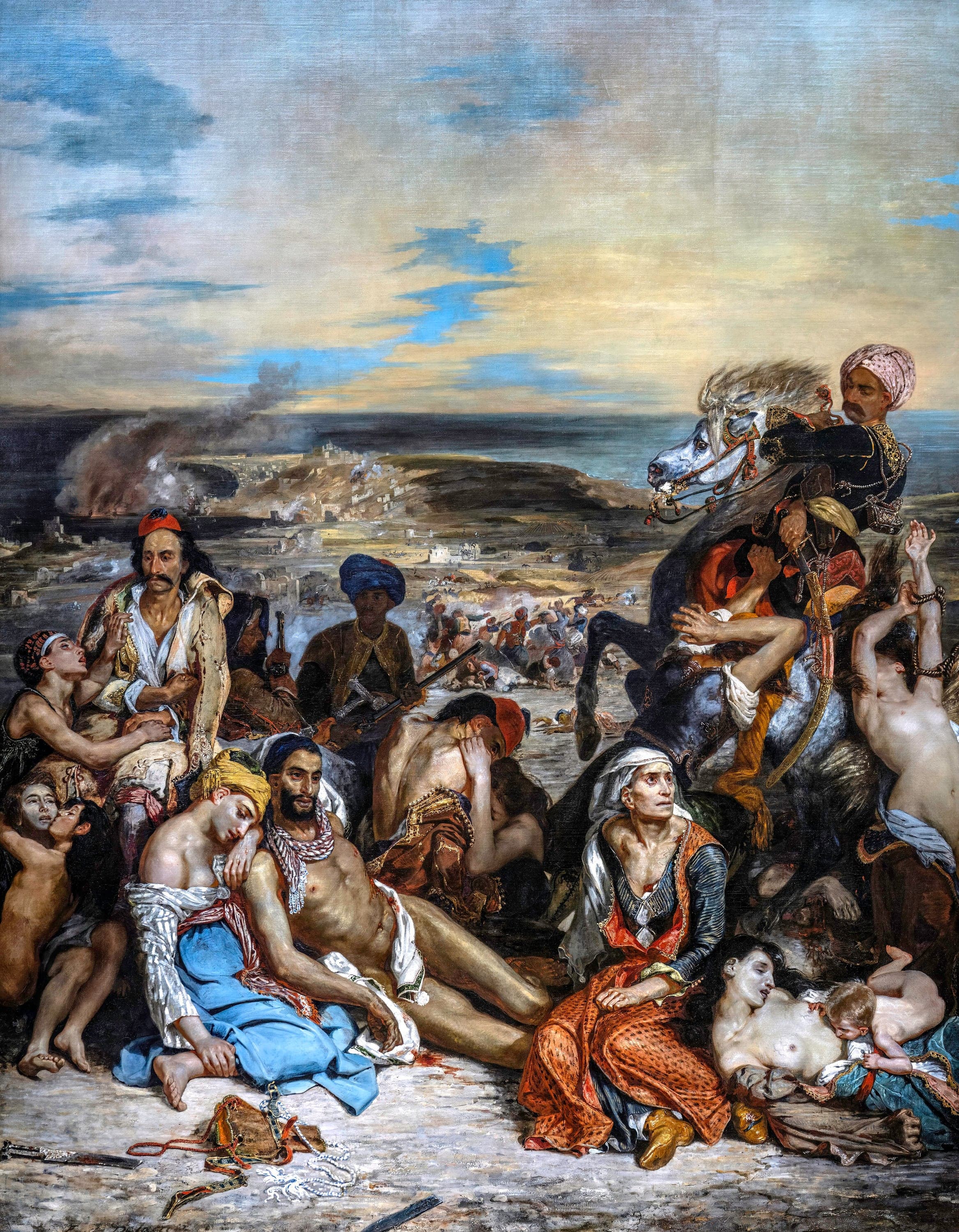
If you like Eugène Delacroix
Explore painters from the same movements and circles.
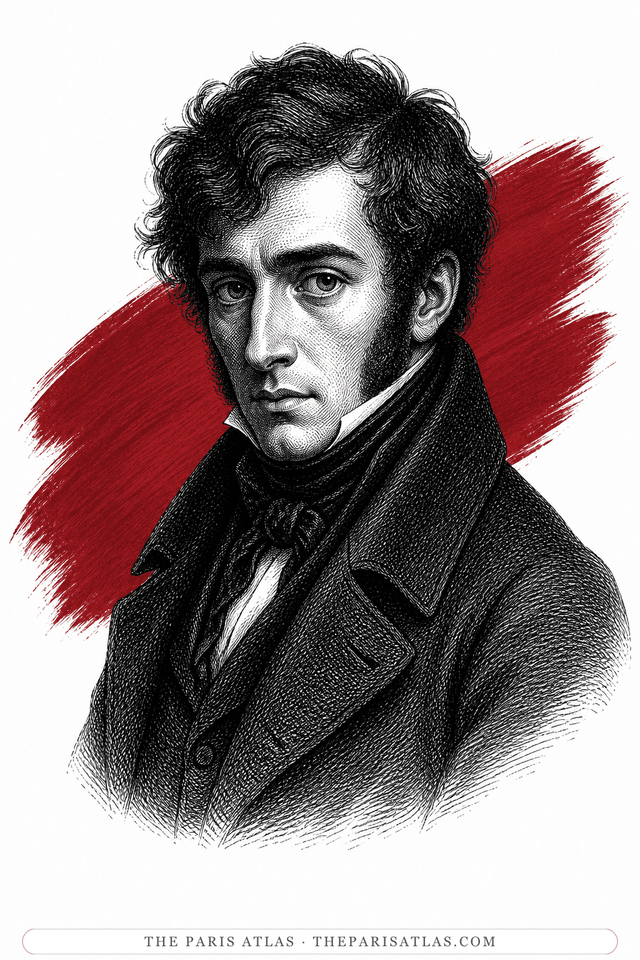
Théodore Géricault
French painter who turned the recent Méduse disaster into a monumental modern history painting and a defining work of French Romanticism.
View artist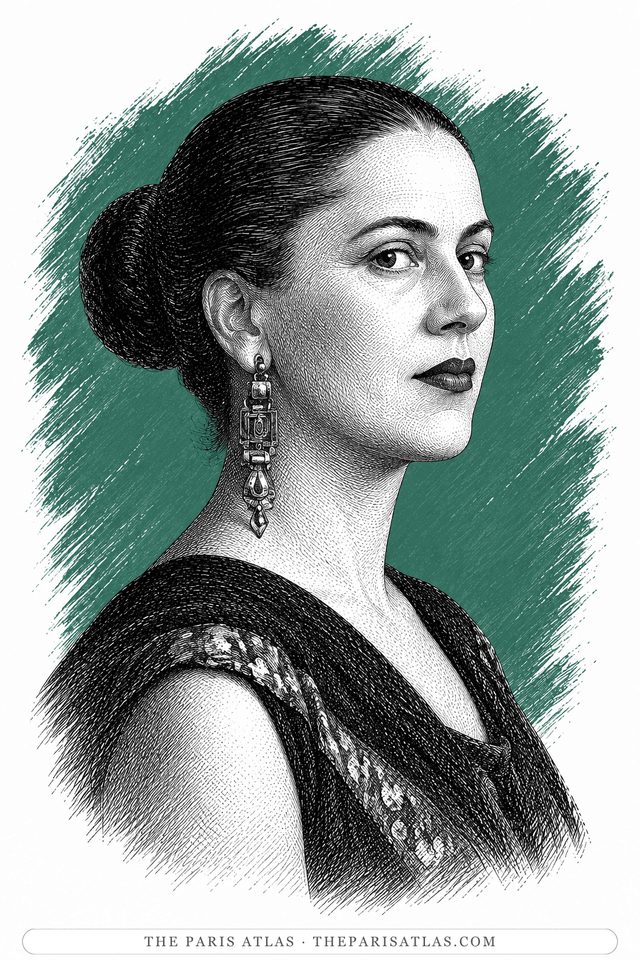
Tarsila do Amaral
Brazilian painter who spent the 1920s moving between São Paulo and Paris, studied Cubism under André Lhote, Albert Gleizes and Fernand Léger, and used what she learned to paint Brazilian towns, railways, plants and bodies. Her 1928 painting Abaporu prompted the manifesto that gave the Anthropophagic movement its name.
View artist
Arman
French-American artist, lifelong friend of Yves Klein, and a founder of New Realism.
View artist
References
The sources below include collection records, catalogues, scholarly research, and primary materials that informed this page. They document Liberty Leading the People, its making, and its place in cultural history.


1Le 28 juillet 1830. La Liberté guidant le peuple (RF 129)
Official recordMusée du Louvre, département des PeinturesUsed forOfficial record used to verify names, dates, institutional details, or other factual information on this page.

2Biography of Eugène Delacroix
WebsiteMusée national Eugène-Delacroix, 2026Used forWeb source consulted for documented facts and historical context presented on the Liberty Leading the People page.
3'Liberty Leading the People' Returns to the Louvre After a Breathtaking Restoration
PeriodicalSmithsonian MagazineUsed forContemporary reporting or criticism used to document the historical reception and context of Liberty Leading the People.
4Louvre, restored Delacroix's Liberty Leading the People: now we see the original colors
PeriodicalFinestre sull'ArteUsed forContemporary reporting or criticism used to document the historical reception and context of Liberty Leading the People.
These references provide the documented foundation for this work's history and interpretation. Claim-level citations remain attached to the specific claims they support.
 Explore more resources