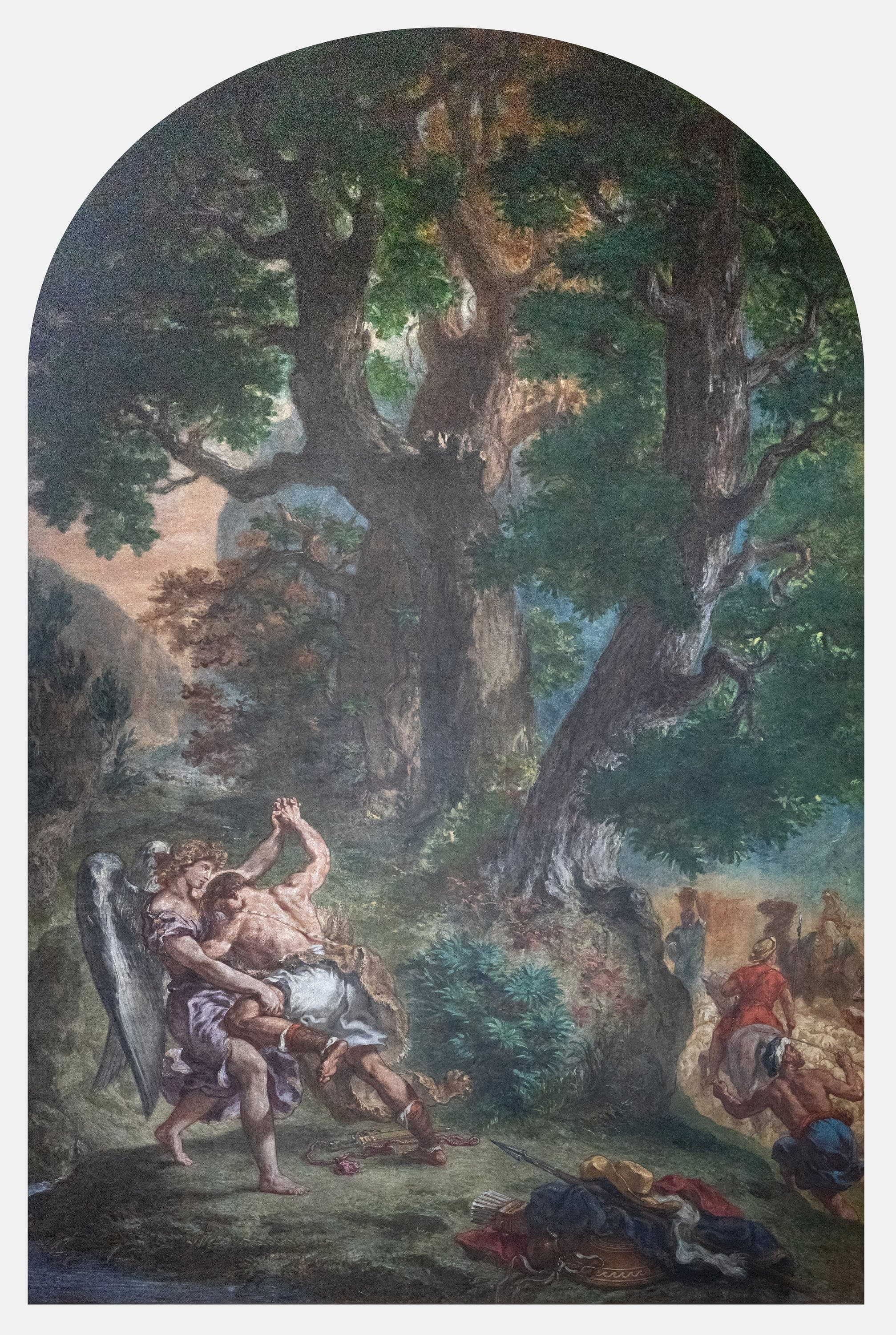
Jacob Wrestling with the Angel
Two figures grip each other under enormous trees while a party of men and animals rides away in the distance. Eugène Delacroix painted it straight onto the wall of the first chapel on the right at Saint-Sulpice, working from 1857 to 1861 with his assistant Pierre Andrieu. It was inaugurated in August 1861, two years before his death, and it is still in the church, free to look at.
- 1857–1861
- Oil on plaster
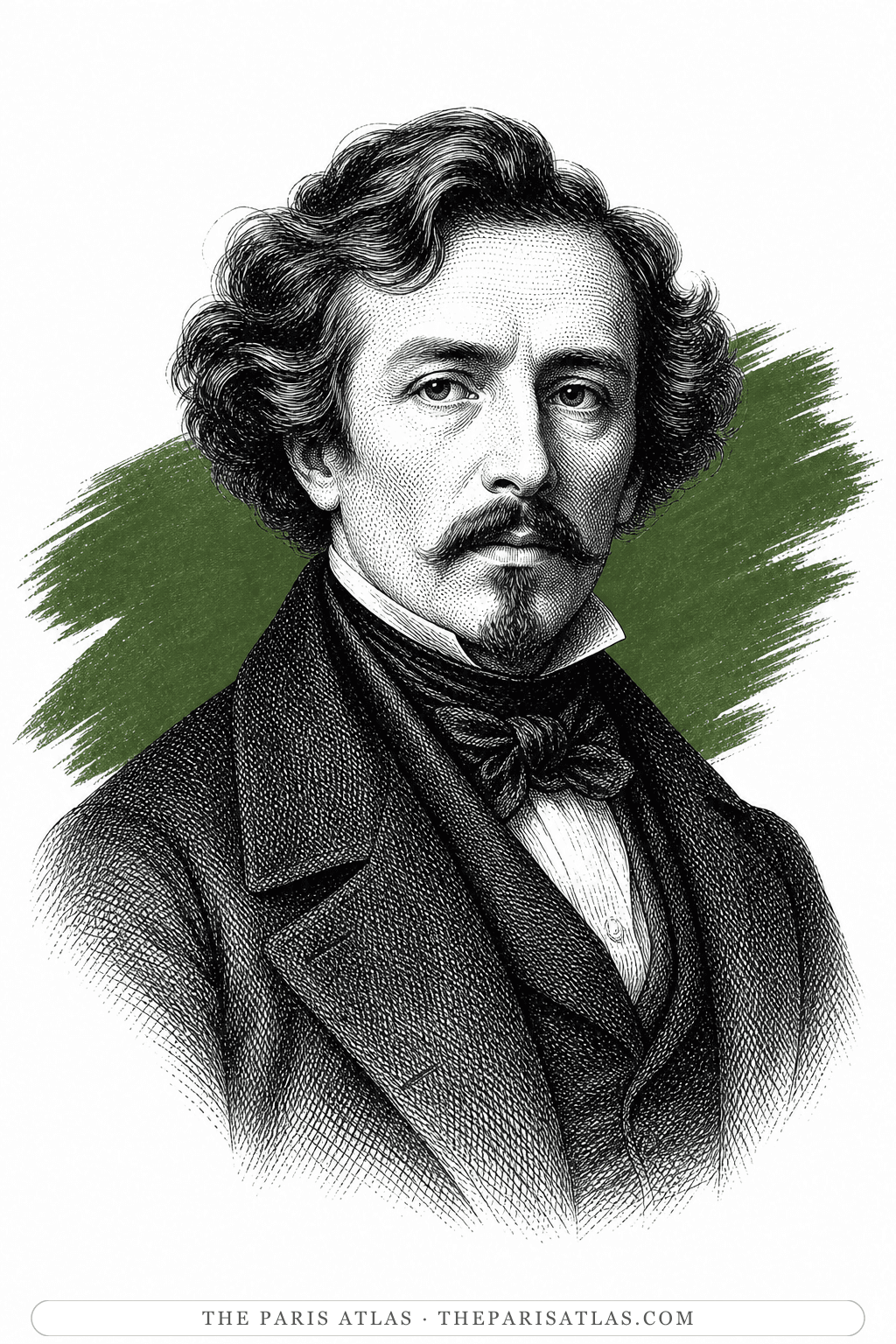
About Eugène Delacroix
What the painting shows
Jacob is stripped to the waist and driving forward, both arms locked overhead against a winged figure who barely shifts. The angel stays clothed and level-faced, holding him off almost absently. Jacob's quiver, spear, hat, cloaks and a gold bowl lie heaped in the grass at the front of the picture, everything he put down to fight. Neither figure looks like winning soon.
The two men are small against the setting. A stand of oaks fills most of the height of the painting and blocks out the sky, and the trunks are painted with as much attention as the wrestlers. In the middle distance a train of men, horses and pack animals moves away to the right through a broad valley — Jacob's household and flocks, sent on ahead. The story is in Genesis 32: Jacob sends his family and possessions across the ford of the Jabbok, stays behind alone, and wrestles a stranger until daybreak.
The painted surface is 758 by 491 centimetres, about twenty-five feet high by sixteen wide. It is oil laid on plaster rather than on canvas, painted in place on the chapel wall.
The chapel and the commission
The commission came in 1847, for the Chapelle des Saints-Anges — the chapel of the holy angels — the first chapel on the right as you enter Saint-Sulpice. Delacroix had three surfaces to fill. Jacob Wrestling with the Angel is on one wall, Heliodorus Driven from the Temple faces it, and Saint Michael Defeating the Devil is overhead on the ceiling. All three take angels as their subject, which is what the chapel's dedication asked for.
He did not start painting until 1857 and finished in 1861, working with Pierre Andrieu, the assistant who stayed with him through the late decorative commissions. Conservation work on the chapel has since confirmed that the compositions are Delacroix's own throughout. The chapel was inaugurated in August 1861.
His last major work
Delacroix was sixty-three when the chapel opened and died on 13 August 1863, at his apartment on the rue de Furstemberg — now the Musée national Eugène-Delacroix, a few minutes' walk from the church. He had taken the apartment in 1857 partly to be near Saint-Sulpice while he worked on the chapel.
The picture sits oddly in his career. The painter known for shipwrecks, massacres and revolutions spent his last working years on two men holding on to each other in a wood, with the action pushed into the background. The wrestling itself is quiet. Most of the painting is trees.
Seeing it
The chapel is inside the church of Saint-Sulpice on the place Saint-Sulpice in the 6th arrondissement, and there is no admission charge. It is the first chapel on the right-hand side. The paintings are on walls in a working church rather than in a museum, so the light depends on the time of day and the chapel is sometimes closed for services.
Close reading
Reading the work, detail by detail
The wall is about twenty-five feet high and the two wrestlers occupy only the bottom left of it. Everything above them is oak. Reading it closely shows how much of the picture Delacroix gave to trees, and how the story's other half — the household crossing the ford — is tucked into the right edge where it is easy to miss.
1.Four hands locked above the struggle
The hands are the highest point of the two bodies and the place the whole composition turns on. Neither pair is winning. Delacroix puts the effort in the forearms and leaves both faces almost expressionless, which is what makes the fight look like it has been going on all night.
2.The angel is not straining
Jacob is bare to the waist and working. The angel is clothed, calm and holding him off almost absently. The wings are painted a flat grey-green, closer to a goose than to anything golden, and they fold down behind rather than spreading.
3.A bare foot dug into the slope
The foot is where the force in the picture is. It is pressed flat into the bank, toes spread, and the whole body above it is angled forward off that one point of contact. Genesis has the angel injure Jacob's hip in this struggle; Delacroix paints the moment before that.
4.His belongings dropped in the grass
A quiver, a spear, a broad yellow hat, two cloaks and a gold bowl are stacked at the front of the picture. Jacob has put down everything he was carrying in order to fight. The pile sits almost at the viewer's feet and is painted as carefully as either figure.
5.Trees take two-thirds of the wall
Delacroix gave most of a twenty-five foot wall to a stand of oaks. They close off the sky almost completely and press the figures into the bottom corner. He was sixty-three and had spent four years on this chapel; the trees are the part he worked hardest.
6.The family sent on ahead
In Genesis, Jacob sends his wives, children, servants and flocks across the ford of the Jabbok and stays behind alone. That crossing is here, pushed into the right-hand edge and painted small. Most visitors read the wrestling and never notice the reason he is by himself.
Timeline
1847
Commissioned to decorate the Chapelle des Saints-Anges at Saint-Sulpice.
1857
Begins painting, ten years after the commission. He moves to the rue de Furstemberg the same year, closer to the church.
1861
Finishes the three paintings with his assistant Pierre Andrieu. The chapel is inaugurated in August.
1863
Delacroix dies on 13 August at the rue de Furstemberg apartment, two years after the chapel opens.
Where to see it
Église Saint-Sulpice, Paris — Chapelle des Saints-Anges
A public viewing address has not yet been confirmed for this holding.
Frequently asked questions
Where is Delacroix's Jacob Wrestling with the Angel?
In the church of Saint-Sulpice, place Saint-Sulpice, in the 6th arrondissement of Paris. It is painted on the wall of the Chapelle des Saints-Anges, the first chapel on the right as you come in. There is no charge to see it.
What story does Jacob Wrestling with the Angel tell?
The episode in Genesis 32 where Jacob sends his family, servants and flocks across the ford of the Jabbok, stays behind alone, and wrestles a stranger through the night until daybreak. Delacroix paints the departing household in the middle distance and the struggle itself in the foreground.
When did Delacroix paint the Saint-Sulpice chapel?
He was commissioned in 1847 but only began painting in 1857, finishing in 1861 with his assistant Pierre Andrieu. The chapel was inaugurated in August 1861. It was his last major commission; he died in August 1863.
What else did Delacroix paint in the chapel?
Two more works. Heliodorus Driven from the Temple is on the facing wall, and Saint Michael Defeating the Devil is on the ceiling. All three subjects involve angels, which is what the chapel's dedication to the holy angels called for.
How big is Jacob Wrestling with the Angel?
758 by 491 centimetres — about twenty-five feet high and sixteen wide. It is painted in oil directly onto the plaster of the chapel wall rather than on canvas, so it cannot be moved or lent.
Why are the trees so large in Jacob Wrestling with the Angel?
Delacroix gave most of the wall to a stand of oaks and kept the two wrestlers small at the bottom of it. The trees close off the sky and press the struggle into a corner of the picture. It is a quieter arrangement than the crowded, violent compositions he was known for, and it is the last thing he painted at scale.
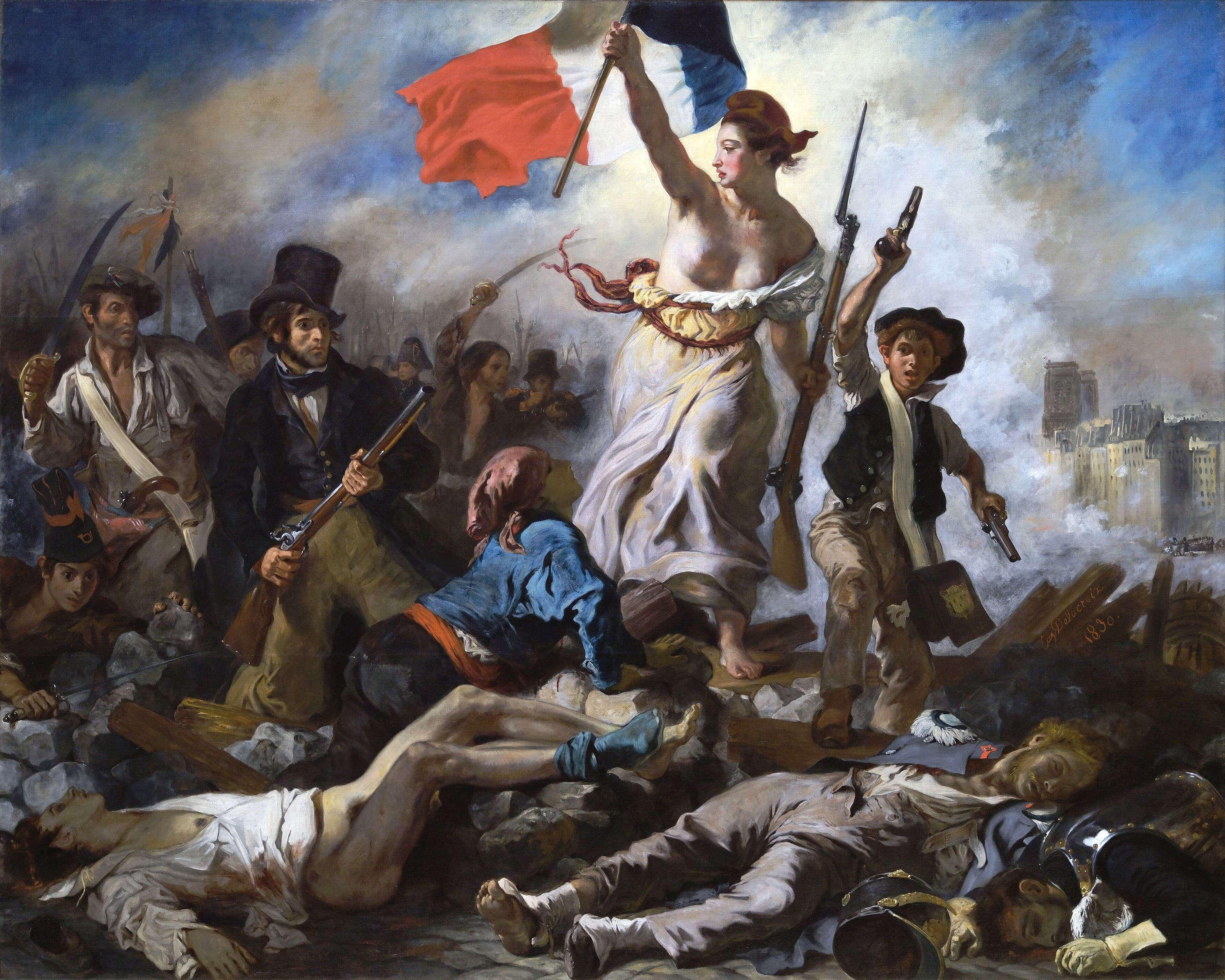
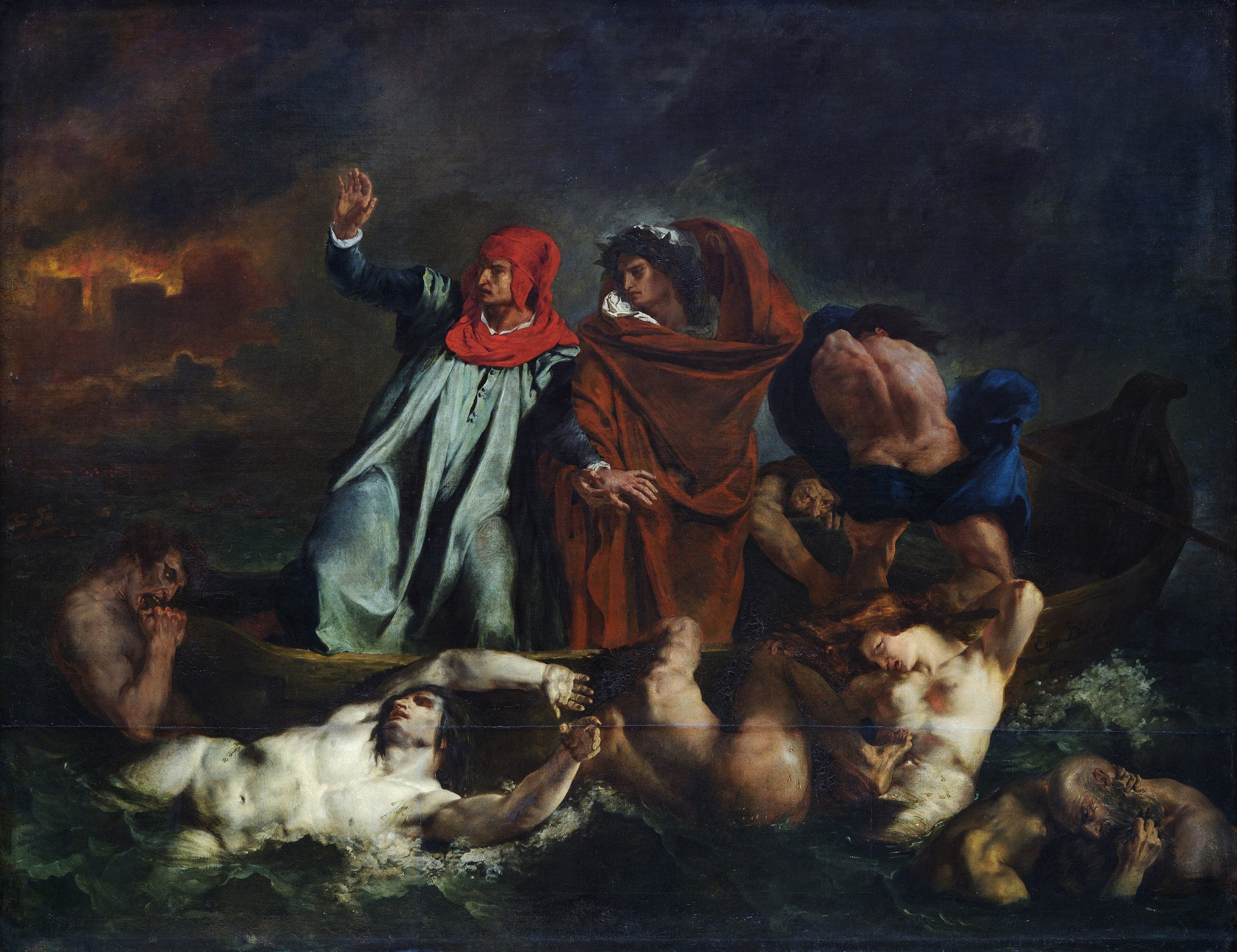
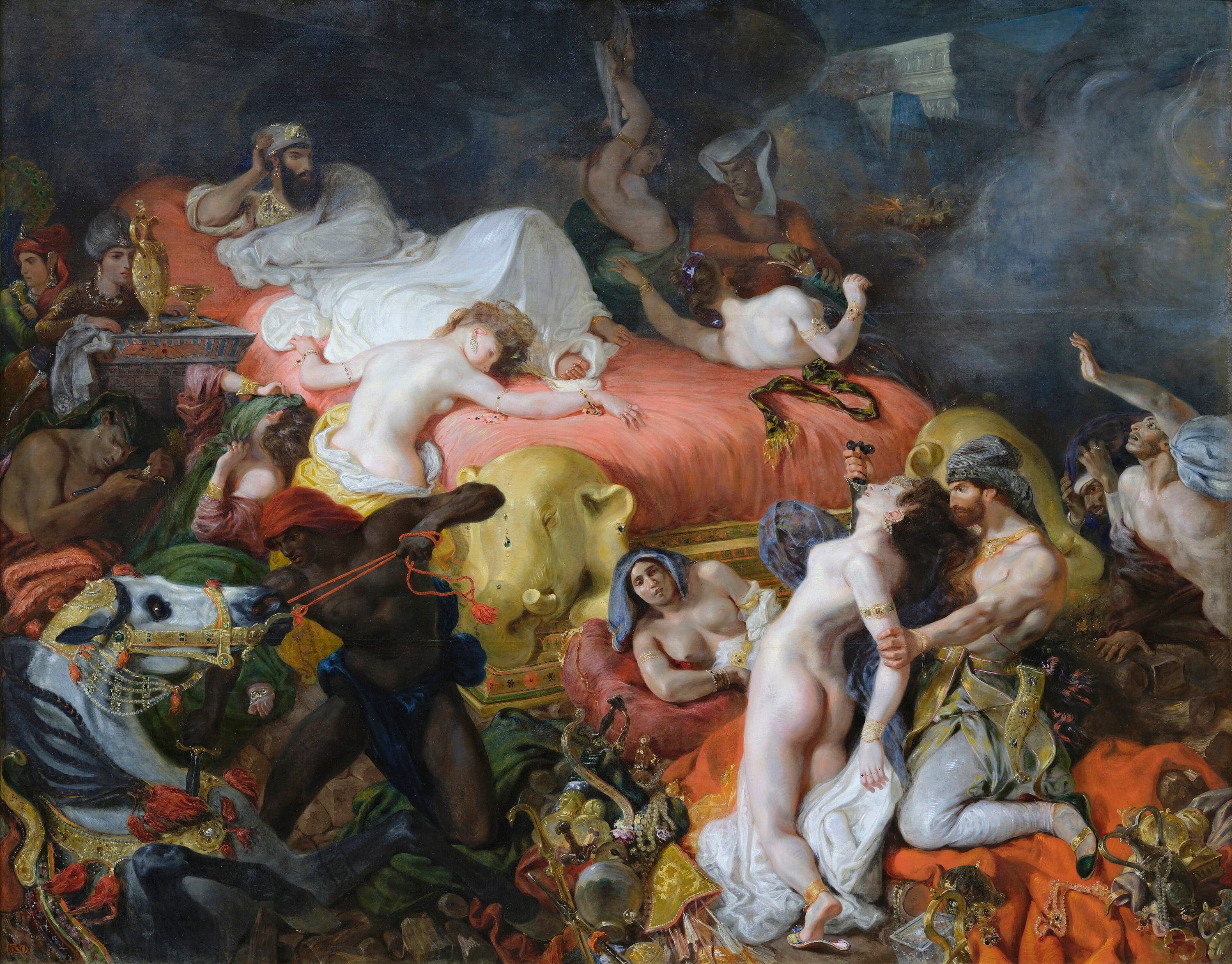
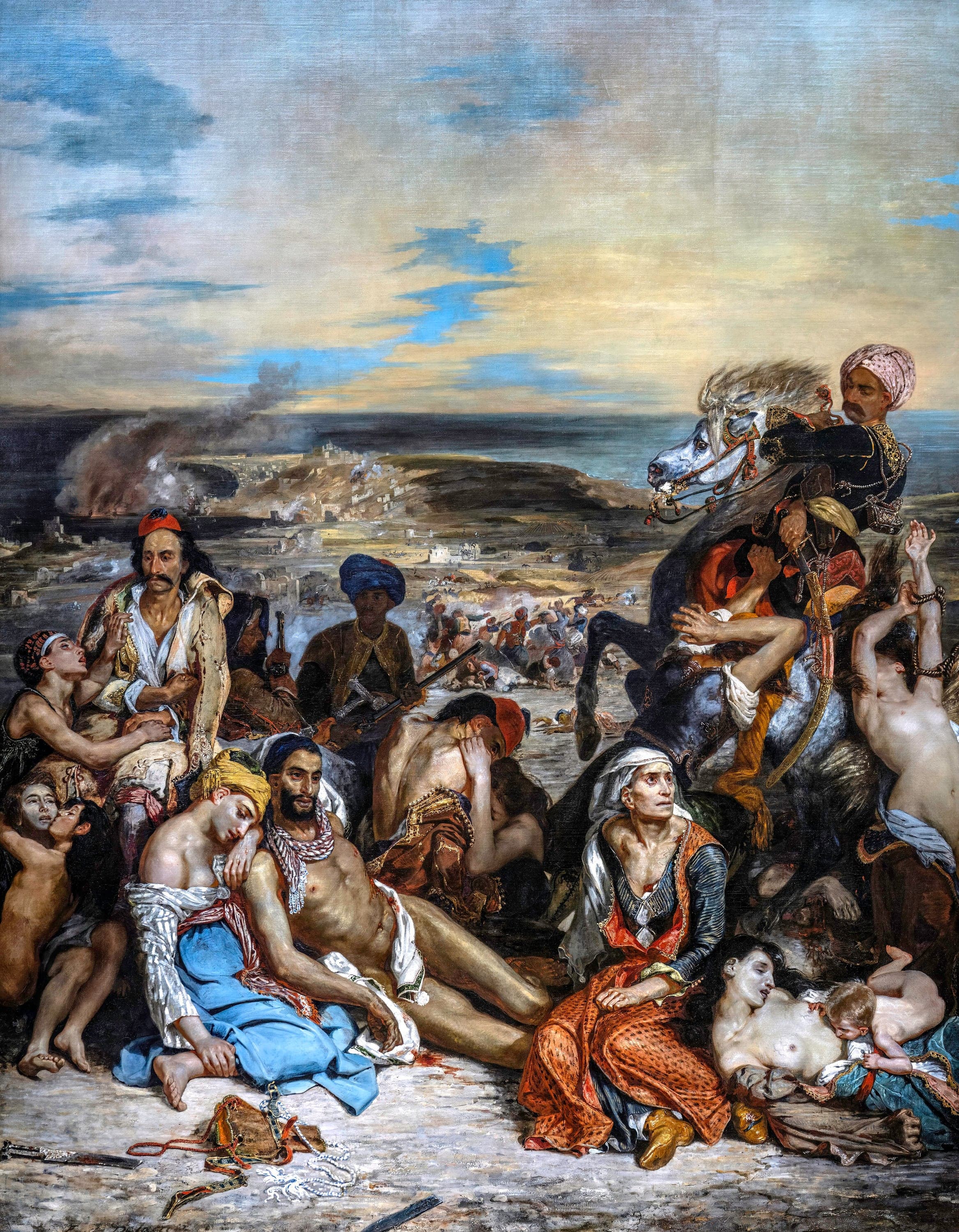
More by Eugène Delacroix
If you like Eugène Delacroix
Explore painters from the same movements and circles.
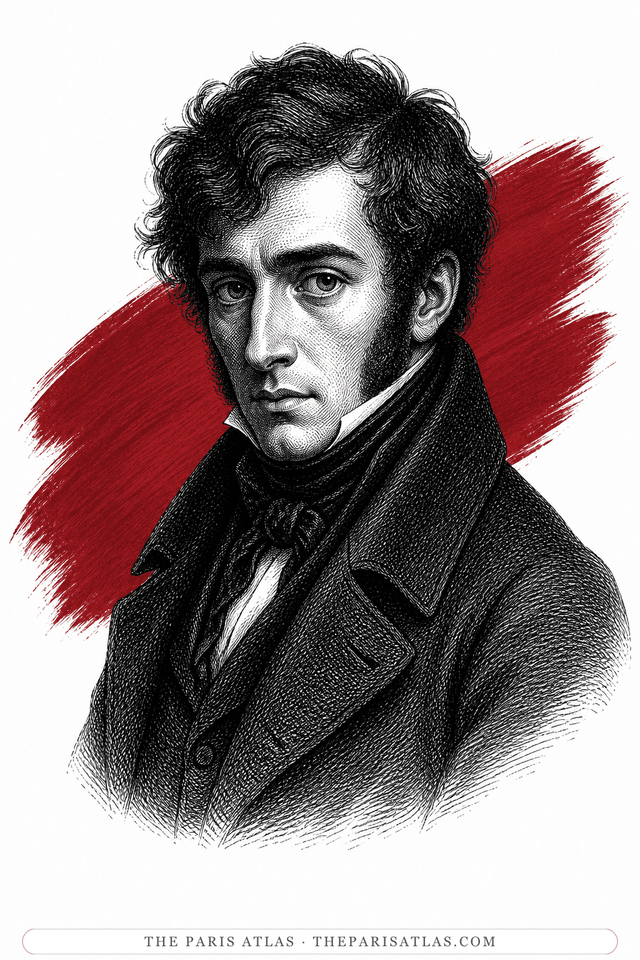
Théodore Géricault
French painter who turned the recent Méduse disaster into a monumental modern history painting and a defining work of French Romanticism.
View artist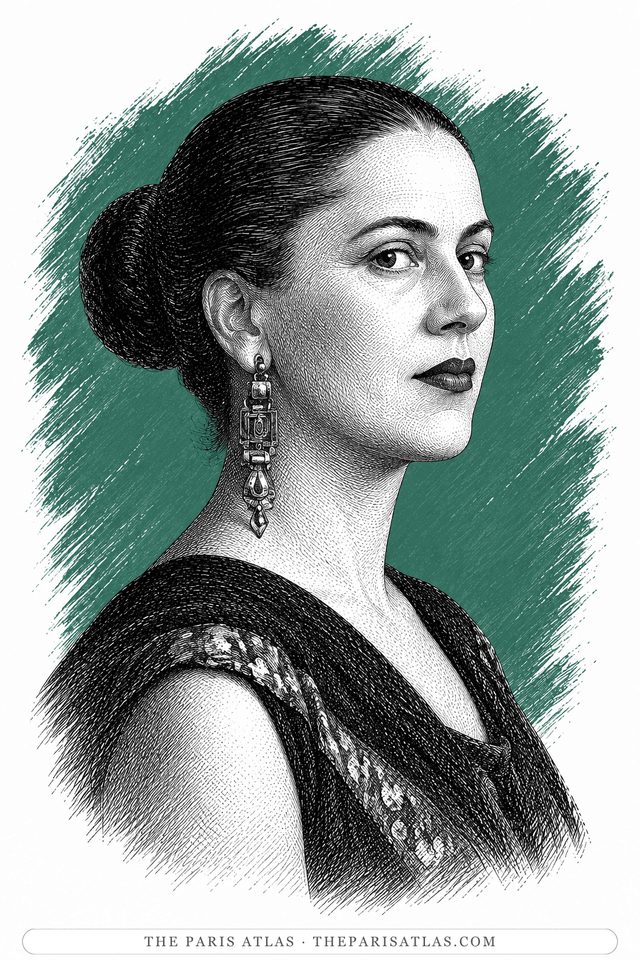
Tarsila do Amaral
Brazilian painter who spent the 1920s moving between São Paulo and Paris, studied Cubism under André Lhote, Albert Gleizes and Fernand Léger, and used what she learned to paint Brazilian towns, railways, plants and bodies. Her 1928 painting Abaporu prompted the manifesto that gave the Anthropophagic movement its name.
View artist
Arman
French-American artist, lifelong friend of Yves Klein, and a founder of New Realism.
View artist
References
The sources below include collection records, catalogues, scholarly research, and primary materials that informed this page. They document Jacob Wrestling with the Angel, its making, and its place in cultural history.


1Delacroix at Saint-Sulpice
WebsiteMusée national Eugène-Delacroix, 2026Used forWeb source consulted for documented facts and historical context presented on the Jacob Wrestling with the Angel page.
2Biography of Eugène Delacroix
WebsiteMusée national Eugène-Delacroix, 2026Used forWeb source consulted for documented facts and historical context presented on the Jacob Wrestling with the Angel page.
3From Studio to Museum
WebsiteMusée national Eugène-Delacroix, 2026Used forWeb source consulted for documented facts and historical context presented on the Jacob Wrestling with the Angel page.

4The Figural Sources of Delacroix's 'Jacob Wrestling with the Angel'
EssaysRACAR: revue d'art canadienne / Canadian Art Review, vol. 10, no. 2Used forPublished analysis and historical context used in preparing the Jacob Wrestling with the Angel page.
These references provide the documented foundation for this work's history and interpretation. Claim-level citations remain attached to the specific claims they support.
 Explore more resources