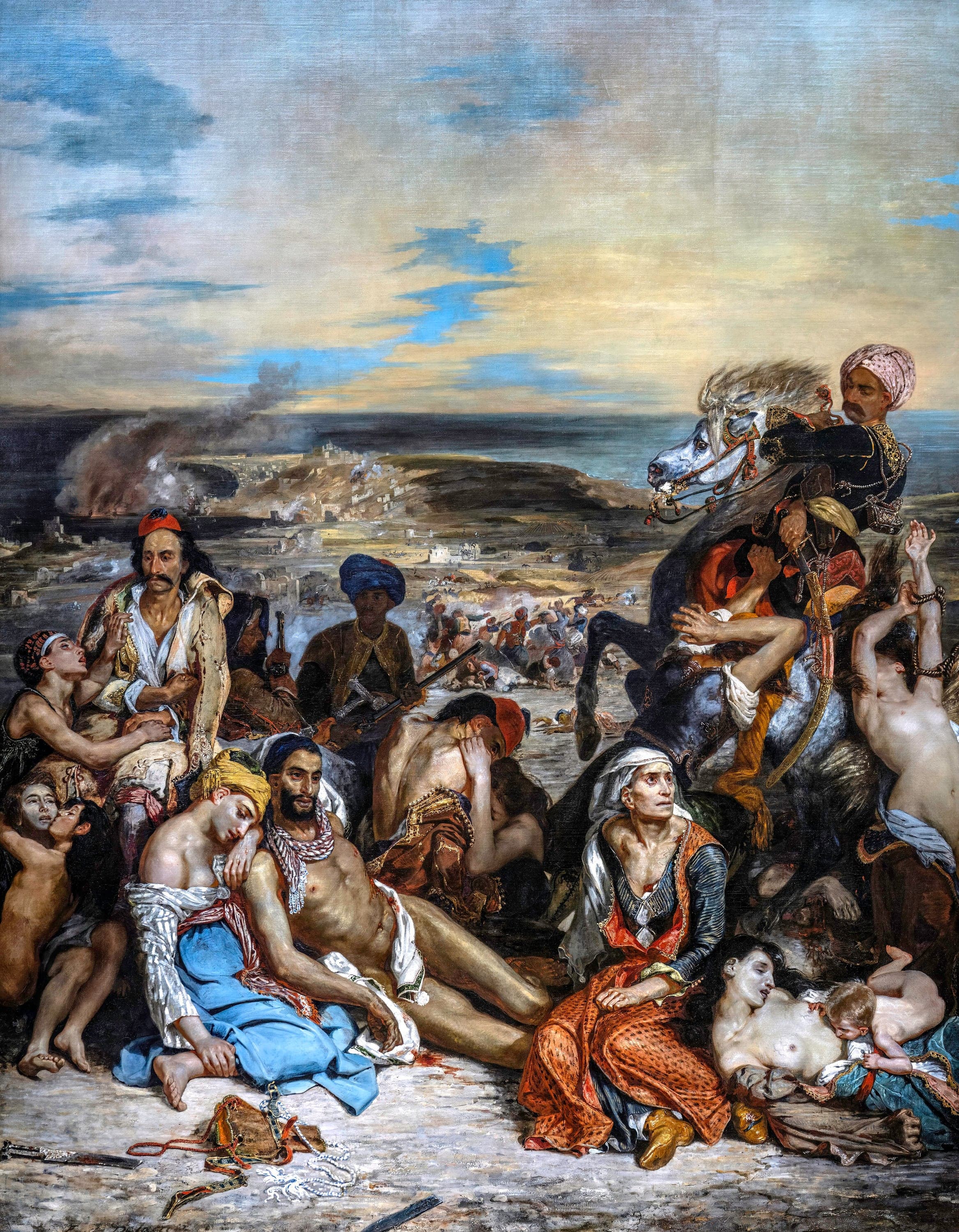
The Massacre at Chios
Greek families sit and lie on open ground, waiting. Eugène Delacroix painted it between January and July 1824, two years after Ottoman forces killed or enslaved most of the population of the island of Chios. The full French title says what is happening: Greek families awaiting death or slavery. The state bought it on 23 September 1824 for 6,000 francs.
- 1824
- Oil on canvas
About Eugène Delacroix
What the painting shows
Nobody in the foreground is fighting. A group of Greek civilians is spread across the bottom of a canvas nearly fourteen feet high, in loose clusters, mostly sitting or lying down. A young man and woman lean together at the left. An old woman stares out past the viewer with her hands in her lap. At the centre a wounded man props himself on one arm.
The worst detail is at the lower right, where a naked infant reaches at the breast of a woman who is already dead. Above them an Ottoman horseman turns a rearing horse with a naked woman roped across the saddle behind him. Behind the figures the ground falls away to a bay, and smoke rises over a burning town on the far left.
Delacroix gives the front of the picture to people who have stopped resisting and pushes the violence to the edges and the distance. That arrangement is the point. The painting is about what happens after a battle has been decided, not during one.
What happened on Chios
Chios is an island in the eastern Aegean, close to the Anatolian coast. In March 1822, during the Greek war of independence, Ottoman forces landed to put down a rising there. Over the following weeks tens of thousands of islanders were killed and many thousands more sold into slavery. The reports reached western Europe quickly and did a great deal to turn public opinion in France and Britain towards the Greek side.
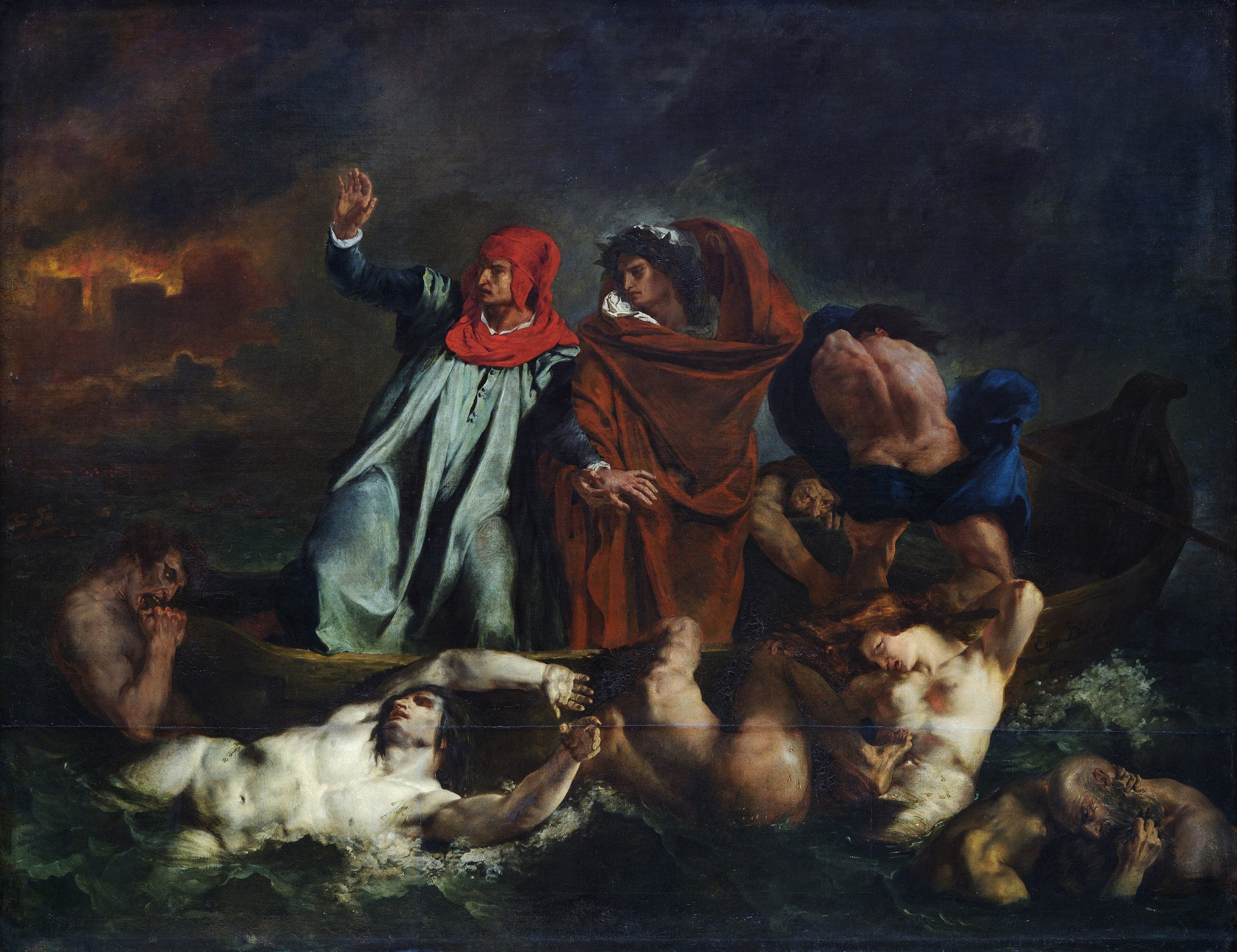
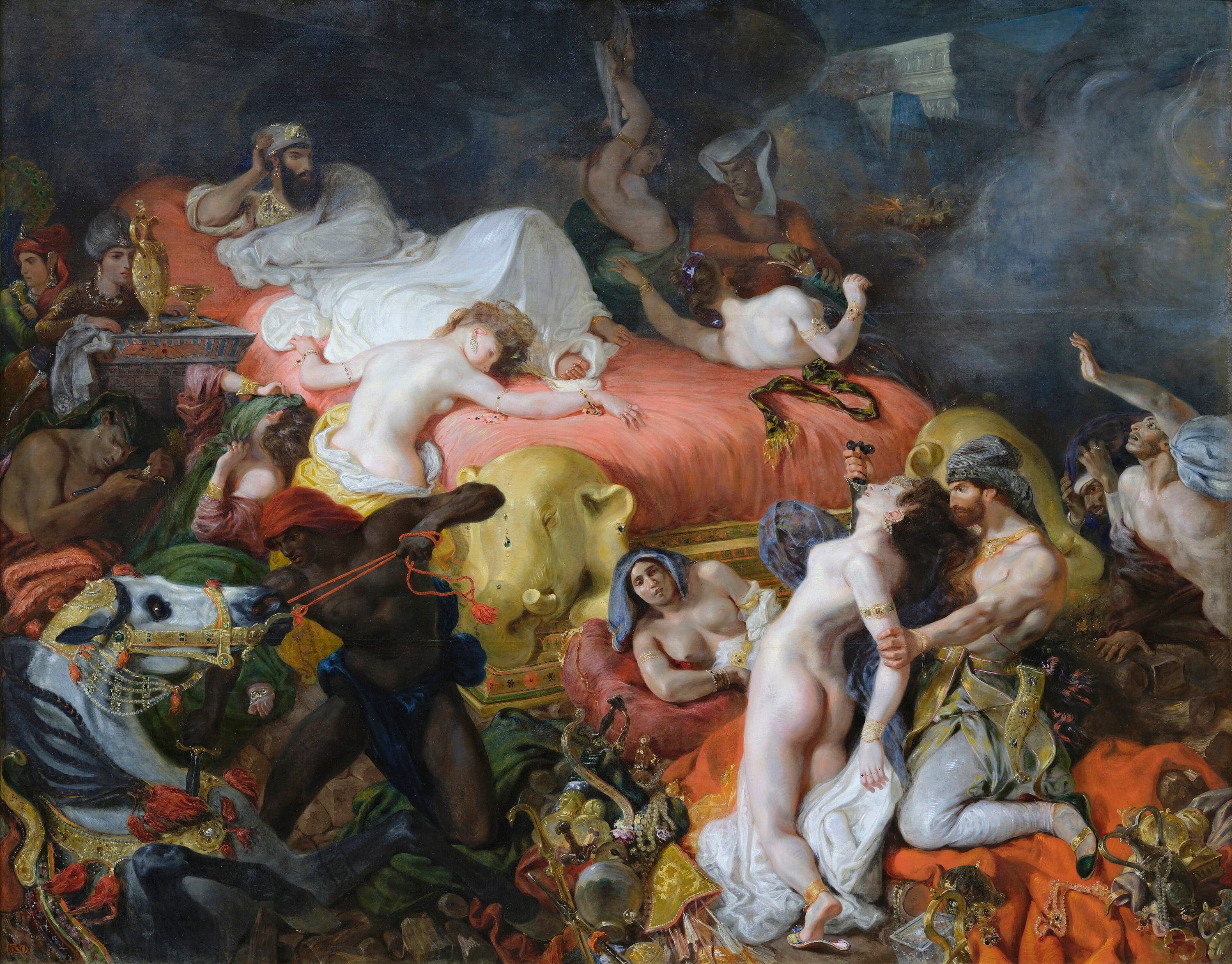
Delacroix painted it two years later, from January to July 1824, without having been there. Lord Byron, whose poems had already given Delacroix the subject of his Sardanapalus, sailed to Greece to support the independence fighters and died at Missolonghi in April 1824, while this canvas was being painted. Edmond Estève's study of Byron's influence on French Romanticism sets out how closely the two currents ran together in Paris.
The Salon of 1824
The Salon jury admitted the painting on 6 August 1824 and it went on public view from 25 August, as catalogue number 450. The Ministry of the Royal Household bought it directly from Delacroix on 23 September for 6,000 francs — three times what the state had paid for The Barque of Dante two years earlier.
The picture moved between the Louvre, Versailles and the Musée du Luxembourg from 1826 until 1874, and came to the Louvre permanently that November. The conservator Frédéric Villot re-inventoried it at some point between 1852 and 1860. It now hangs in the Salle Mollien, room 700 of the Denon wing, alongside Liberty Leading the People and The Death of Sardanapalus.
After Géricault
Théodore Géricault had shown The Raft of the Medusa at the Salon of 1819: a recent disaster, painted at the size the Salon reserved for classical and religious subjects. Delacroix had modelled for one of its figures and took the method up here. Géricault died in January 1824, while Delacroix was at work on this canvas.
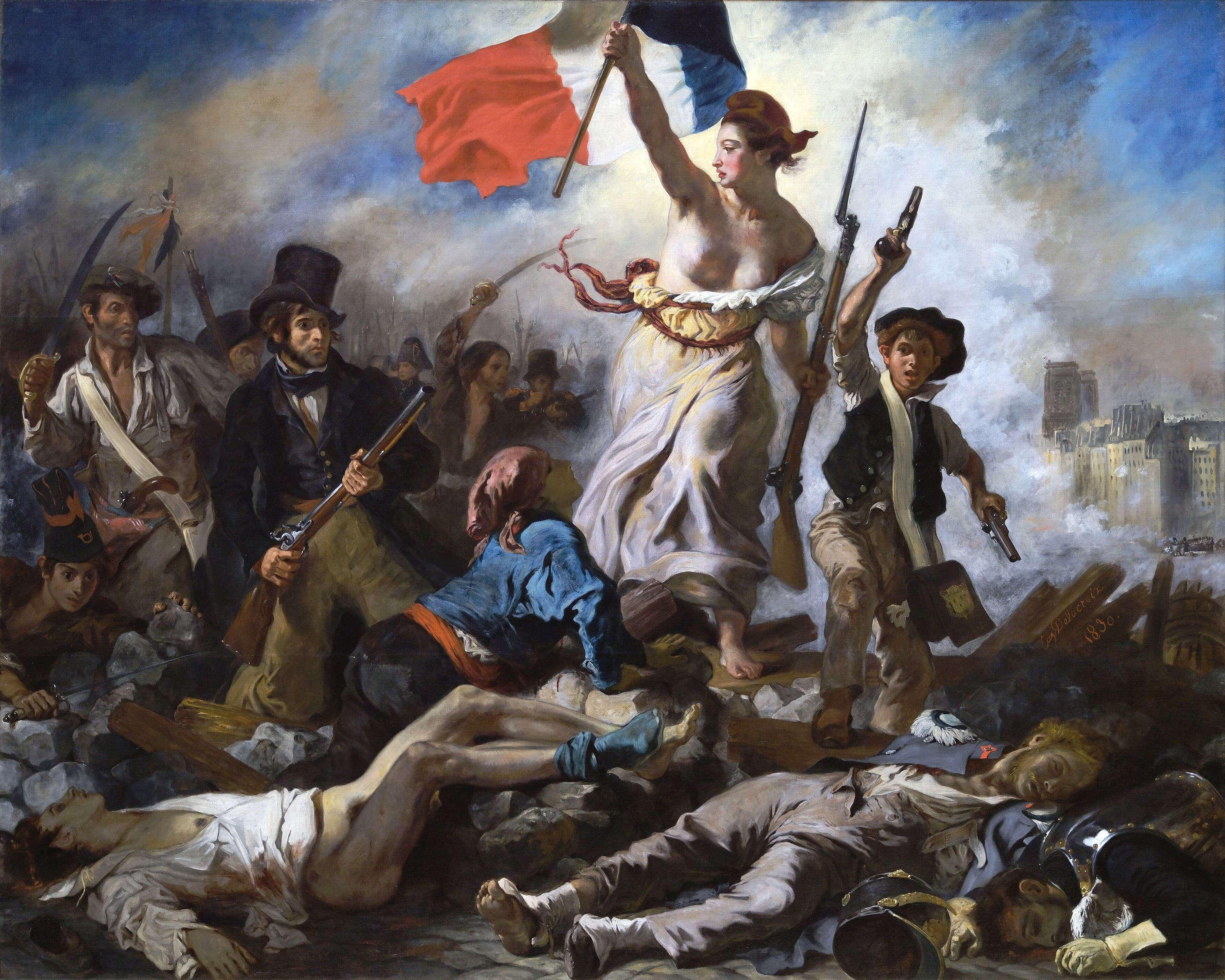
The Massacre at Chios does the same thing with a news story two years old, and Liberty Leading the People would do it again in 1830 with one two months old.
Close reading
Reading the work, detail by detail
The canvas is nearly fourteen feet high and almost all of the people in it have stopped moving. Working across it in close view shows how the violence is arranged: none of it happens in the foreground, where the figures simply sit and wait, and all of it is pushed to the right edge or into the distance.
1.A baby at a dead woman's breast
She is dead and the child is still feeding. Delacroix puts the pair at the bottom edge of a canvas fourteen feet high, so at the Louvre's hanging they sit near a standing visitor's waist. It is the only part of the picture that shows what has already happened rather than what is about to.
2.An old woman looking past everyone
She is the most finished head in the painting. She is not looking at the horseman, the dead woman or the viewer, but somewhere above all of them, and her hands are folded and still. Delacroix gives the picture's one moment of composure to the oldest person in it.
3.The rider, and the woman roped behind him
This is the only figure in the painting who is doing anything. He is at the far right edge, half out of the frame, and the woman tied behind him is the picture's statement of what slavery means here. Everyone in the foreground has their back to it.
4.A wounded man and the woman leaning on him
Neither is looking for help. He is bleeding onto the blue cloth beneath him and she has simply leaned into his shoulder and shut her eyes. The two of them take up the width of the foreground, in a pose closer to a lament over a dead Christ than to a battlefield.
5.Smoke over the town, far left
The burning is small, pale and a long way off. Delacroix puts the event that caused all this at the edge of the canvas and at the size of a postage stamp, and gives the whole foreground to people sitting on dry ground afterwards.
6.A scabbard and beads on the ground
The bottom strip of the painting is empty ground with a few dropped objects on it: a scabbard, a blade, some beads. Delacroix leaves the front of the canvas almost bare, which pushes the crowd back and makes the space in front of them feel exposed.
Timeline
1822
Ottoman forces put down the rising on Chios from March onward; tens of thousands of islanders are killed or enslaved. Reports reach western Europe within weeks.
1824
Painted between January and July. Géricault dies that January; Byron dies at Missolonghi in April.
1824
Admitted by the Salon jury on 6 August and shown from 25 August as catalogue number 450. Bought by the Ministry of the Royal Household on 23 September for 6,000 francs.
1826–74
Moves between the Louvre, Versailles and the Musée du Luxembourg; re-inventoried by the conservator Frédéric Villot between 1852 and 1860.
1874
Enters the Louvre permanently in November, as INV 3823.
Where to see it
Musée du Louvre, département des Peintures
A public viewing address has not yet been confirmed for this holding.
Frequently asked questions
Where is The Massacre at Chios?
The Musée du Louvre in Paris, in the Salle Mollien — room 700 of the Denon wing, on level 1. Its inventory number is INV 3823. It hangs in the same room as Liberty Leading the People and The Death of Sardanapalus.
What event does The Massacre at Chios show?
The killing and enslavement of the population of Chios, an island in the eastern Aegean, by Ottoman forces from March 1822 during the Greek war of independence. Delacroix shows the aftermath — families waiting to be killed or taken — rather than the fighting itself.
How big is The Massacre at Chios?
419 by 354 centimetres, close to fourteen feet high by twelve wide. Delacroix painted a recent news event at the scale the Salon normally kept for classical history and religious subjects, which was part of the argument he was making.
Did Delacroix witness the massacre at Chios?
No. He never went to Chios and painted the picture in Paris between January and July 1824, two years after the events, working from written reports. His first journey outside Europe was to Morocco and Algeria in 1832.
How much did the French state pay for The Massacre at Chios?
6,000 francs, paid by the Ministry of the Royal Household directly to Delacroix on 23 September 1824, after the Salon jury admitted the painting on 6 August. That was three times what the state had paid for The Barque of Dante in 1822.
How is The Massacre at Chios related to The Raft of the Medusa?
Théodore Géricault showed The Raft of the Medusa at the Salon of 1819, painting a recent catastrophe at monumental scale. Delacroix had posed for one of its figures in 1819 and applied the same approach here to an event from 1822. Géricault died in January 1824, while this canvas was being painted.
More by Eugène Delacroix
If you like Eugène Delacroix
Explore painters from the same movements and circles.
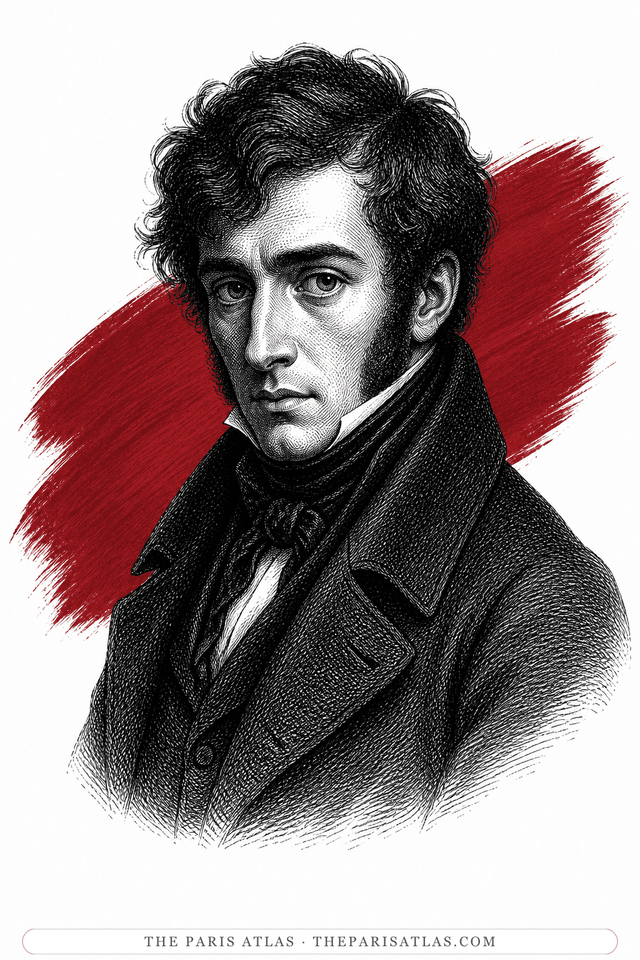
Théodore Géricault
French painter who turned the recent Méduse disaster into a monumental modern history painting and a defining work of French Romanticism.
View artist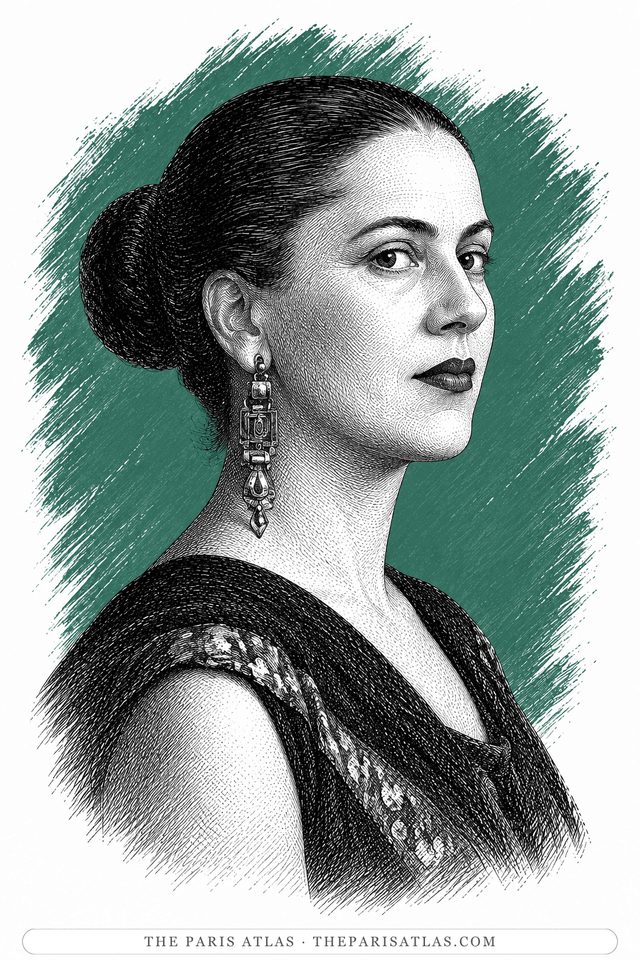
Tarsila do Amaral
Brazilian painter who spent the 1920s moving between São Paulo and Paris, studied Cubism under André Lhote, Albert Gleizes and Fernand Léger, and used what she learned to paint Brazilian towns, railways, plants and bodies. Her 1928 painting Abaporu prompted the manifesto that gave the Anthropophagic movement its name.
View artist
Arman
French-American artist, lifelong friend of Yves Klein, and a founder of New Realism.
View artist
References
The sources below include collection records, catalogues, scholarly research, and primary materials that informed this page. They document The Massacre at Chios, its making, and its place in cultural history.


1Scènes des massacres de Scio. Familles grecques attendant la mort ou l'esclavage (INV 3823)
Official recordMusée du Louvre, département des PeinturesUsed forOfficial record used to verify names, dates, institutional details, or other factual information on this page.

2Biography of Eugène Delacroix
WebsiteMusée national Eugène-Delacroix, 2026Used forWeb source consulted for documented facts and historical context presented on the The Massacre at Chios page.

3Byron et le romantisme francais: essai sur la fortune et l'influence de l'oeuvre de Byron en France de 1812 a 1850
NonfictionHachette, Paris, 1907Used forPublished analysis and historical context used in preparing the The Massacre at Chios page.
4Le radeau de la Méduse (INV 4884)
WebsiteMusée du Louvre, 2026Used forWeb source consulted for documented facts and historical context presented on the The Massacre at Chios page.
These references provide the documented foundation for this work's history and interpretation. Claim-level citations remain attached to the specific claims they support.
 Explore more resources